




Likes
36
Share


@GYOweed
Follow
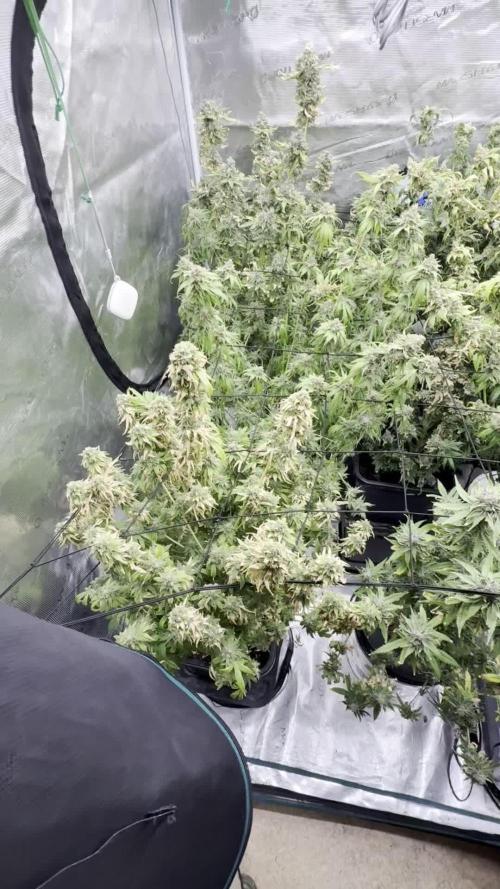
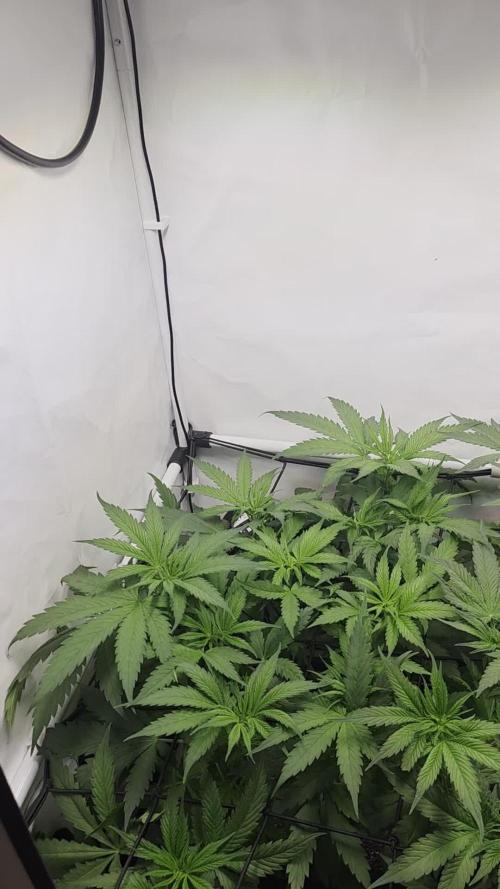
Cytokinins stopped stretch so ima keep lights at current height given havent seen burn or bleaching.
One pheno sharp candy getting sweeter n milder, 2nd pheno is similar to my bubba diagonal i grew here.
I guess not bad for week 4 in 3 gallon bags but i hope they start filling in?

Likes
4
Share

@FourTwenty_Plants
Follow
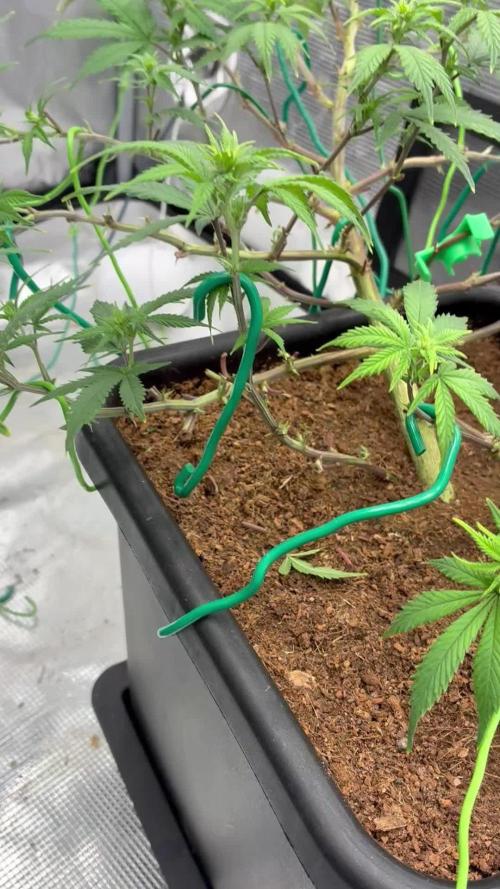
So about 11 days since I flipped the light.
Would say shes starting to flower the 1st pistils are „stacking“ on the top of the nodes.
Also did a strong defoliation today
Likes
16
Share


@420DeepGrow
Follow
Gracias al equipo de Sweet Seeds, Marshydro, XpertNutrients y Trolmaster, sin ellos esto no sería posible.
💐🍁: Big Devil Fast Version:
Atendiendo a las peticiones de nuestros amigos y clientes, presentamos la versión feminizada y fotodependiente de nuestra apreciada variedad Big Devil Auto (SWS15).
Para el desarrollo de esta variedad utilizamos nuestras mejores cepas seleccionadas de Big Devil Auto. Hemos eliminado el carácter autofloreciente de la Big Devil Auto hibridando estas cepas seleccionadas con un clon élite de características muy semejantes a la Big Devil Auto original.
El resultado es una planta muy vigorosa, de gran porte y de muy alta producción, con cogollos muy densos y repletos de resina. Desarrolla un fuerte tallo principal y largas ramas laterales. Conserva el aroma y sabor de nuestra Big Devil Auto original, muy dulce e inciensado.
💡TS-3000 + TS-1000: se usaran dos de las lámparas de la serie TS de Marshydro, para cubrir todas las necesidades de las plantas durante el ciclo de cultivo, uso las dos lámparas en floracion para llegar a toda la carpa de 1.50 x 1.50 x 1.80.
https://marshydro.eu/products/mars-hydro-ts-3000-led-grow-light/
🏠 : Marshydro 1.50 x 1.50 x 1.80, carpa 100% estanca con ventanas laterales para llegar a todos los lugares durante el grow
https://marshydro.eu/products/diy-150x150x200cm-grow-tent-kit
🌬️💨 Marshydro 6inch + filtro carbon para evitar olores indeseables.
https://marshydro.eu/products/ifresh-smart-6inch-filter-kits/
💻 Trolmaster Tent-X TCS-1 como controlador de luz, optimiza tu cultivo con la última tecnología del mercado, desde donde puedes controlar todos los parametros.
https://www.trolmaster.com/Products/Details/TCS-1
🍣🍦🌴 Xpert Nutrients es una empresa especializada en la producción y comercialización de fertilizantes líquidos y tierras, que garantizan excelentes cosechas y un crecimiento activo para sus plantas durante todas las fases de cultivo.
Consigue aqui tus Nutrientes:
https://xpertnutrients.com/es/shop/
📆 Semana 1:
Ha sido una buena semana, ella ha dado otro gran cambio en su lugar definitivo 😎.
La carpa está ocupada al 75% y comienza una floracion explosiva gracias a @Marshydro y @Xpertnutrients y @Trolmaster con esta gran genética 💪.
A partir de ahora se riega manualmente con las dosis recomendadas por el fabricante.

Likes
7
Share


@Krissci
Follow
Day 3
1st bit of training this week.
Looking healthy.
My aim is to allow lowest bud sites to keep up with the main heads..
LST LST LST LST LST
During this stage is most important to train Ur plant into the shape u want.

Likes
7
Share


@TheNotoriousWeed
Follow
Esta es la segunda semana cambia a las bases de la floración y las chicas se comportan de manera exelente ya han sexado todas. Saludos y buena semana colegas


Likes
4
Share

@Brotan1ker
Follow
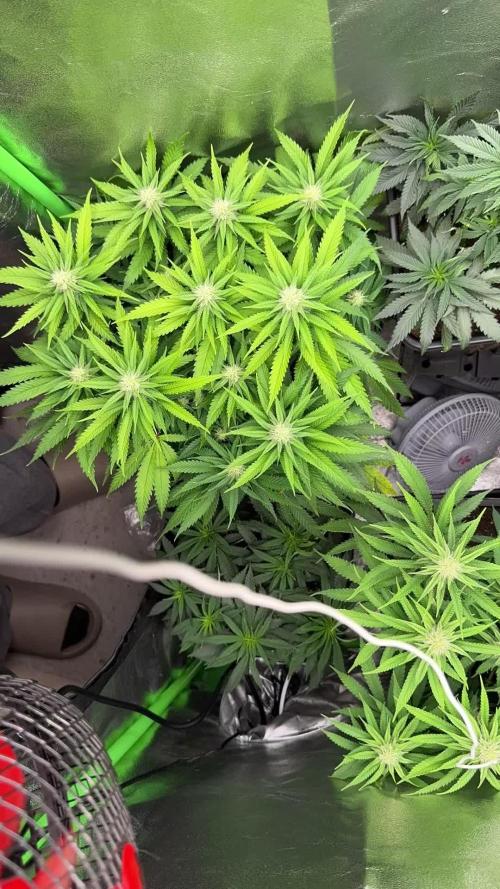
I started to notice that my leaves started to turn yellow. Maybe my led was to bright.
So I turned it down a bit.


Likes
209
Share


@Rock_n_Roll_Randy
Follow
Day 24 for the 54 plant grow. 42 different strains of photoperiods and 12 different autoflower strains in the:
8X8 GROW TENT WITH THE NEW FC-E6500, FC4800 AND TSW2000 and green buzz all organic/vegan fertilizers🤘
The girls are loving their home and everything is doing good and looking pretty nice and getting bigger👍
BREEDERS AND SEEDS:
DIVINE SEEDS:
MAZAR, OPIUM, WHITE WIDOW, OG KUSH, PABLO ESCOBAR, DIVINE INDICA.
AUTO WHITE WIDOW
AUTO PABLO ESCOBAR
AUTO WHITE RUSSIAN
AUTO FRACTAL
AUTO MONTREAL
AUTO OPIUM
AUTO KABUL
AUTO MAZAR.
WEEDSEED EXPRESS:
GREEN CRACK, GHOST TRAIN HAZE, LITHIUM OG, CHEESE.
DOCTORS CHOICE:
DC KUSH, AUTO NIAGARA, AUTO ROCK MACHINE.
EXOTIC SEEDS:
HIPPIE BERRY, MALASANA GELATO, EXOTIC ANIMAL.
GENE/MEME SEEDS:
BLACK HELL.
ORIGINAL SENSIBLE SEEDS:
PURPLE PUNCH COOKIES, WEDDING CAKE, PURE KUSH, GORILLA COOKIES.
SWEET SEEDS:
BLACK JACK, GORILLA GIRL, SWEET ZKITTLES.
EMERALD TRIANGLE SEEDS:
GORILLA GLUE, MASTODON KUSH.
SEEDSMAN SEEDS:
BLACK SUGAR, PEYOTE FORUM, PEYOTE WIFI, BADAZZ COOKIES OG, PURPLE GHOST CANDY, STRAWBERRY BANANA GRAPE, L.A. PEYOTE KUSH, PEYOTE WIFI CBD, FUEL DOG, CRITICAL PURPLE KUSH.
AMSTERDAM MARIJUANA SEEDS:
GIRL SCOUT COOKIES EXTREME, GREEN CRACK.
QUEBEC CANNABIS SEEDS:
BRUCE BANNER, GREEN CRACK, QUEBEC CBD 20:1.
I 💚 GROWING MARIJUANA:
SKYWALKER OG, BANANA KUSH, BLUEBERRY CBD.
FOR EVERYTHING MARS HYDRO VISIT:
www.mars-hydro.com
PROMO CODE: rocknroll
VISIT THE ALIEXPRESS STORE:
@marshydro_aliexpress2
Instagram: @marshydropenny
https://youtube.com/channel/UChU5ZWwNi-DvnO3oWVU3ceA
https://greenbuzzliquids.com/
#greenbuzzliquids
@GreenBuzzLiquids
https://greenbuzzliquids.com/en/shop/
PROMO CODE: rocknroll
https://www.youtube.com/watch?v=8hEqyS1jPpI
https://growdiaries.com/diaries/112437-grow-journal-by-rock-n-roll-randy/week/593118
Thanks for taking the time to read and check out my shit🤜🤛
New FC-E6500 Led Grow Light-FC-E6500 grow light with 3978pcs OSRAM BridgeLux Diodes & Moso Driver, market-leading PPF 2.7 µmol/J, Max 2.5g yield/watt with 30% higher Average PPE, more cost-effective compared with other same type lights.Only consumes 650W, perfectly cover 5x5ft (personal), 4x4ft (commercial) grow space.Innovative Precise Uniform Lighting-Built-in removable bars interval & dimmability enable the exact & dynamic PPFD control over each of the plant growing stages, FC-E6500 detachable bars deliverSuperior Heat Dissipation: Real Aluminum heatsink together with 6 slim profile passive cooled bars (THINNER & LARGER surface) and detachable Meanwell Driver, create less heat, save 50% energy than other old grow lights! Driver can be mounted remotely on the side of a grow tent/rack or on an adjacent wall to remove heat from grow space.Full Spectrum UV IR LED: With Yield Max spectrum (660nm Osram enhanced Deep Red,2800k-5000k,730-740nm IR,380-410nm UV LEDs), Average PPFD FC-E6500 LED grow lamp enable cultivators to produce Density Buds, perfect for full-cycle hydroponic,soil,grow tent/room growing.
Dimmable Commercial Grow Light: Cost-efficient,easy dimming & daisy chain max up to 20 lights, IP65 Waterproof, master light easily controlled for commercial & home horticulture.
GET THE MAX FROM MARS👍: Welcome one of the newest members of the Mars Hydro family🤜🤛🤘. The Mars Hydro FC 4800 480W LED Grow Light can accommodate up to a 4' x 4' area for flowering. It has OVER 2000 LED chips consisting of the best selling Samsung LM301B diodes which has a Luminous Efficacy of: 220 lm/W
0.2 W, 3 V mid power,
Osram 660nm Diodes, Infrared light and UV LIGHT👍. It boasts the incredible efficiency of 2.8 µmol/J, maximum 2.5gram yield per watt with 30% higher Average PPFD. This High-intensity spectrum is beneficial for plants at all stages - from veg to bloom, and creates Big dense Buds👍. achieve 50% higher yields & quality compared with the old lights! Only consumes 480W for 4x4ft personal grows, and 3x3ft for commerical grow. It comes with a dimmer and daisy chain function with a maximum of up to 15 lights, the master light controls the rest👍. Wide 6-bar design offers even & wide canopy coverage and can maximizes your grow space. slim 180° FOLDABLE DESIGN... YES I SAID FOLDABLE🤘🤣 , making it compact and easy to install, it's IP65 WATERPROOF and will give you no worries while growing in a humid environment and makes it a flexible high performance commercial grow light for enormous SUPER FROSTY yields.😛😛😛. MARS GETS EM FROSTY BOYS👍
AWESOME HEAT DISSIPATION: The Low energy consumption FC4800 growing light has 6 passive-cooled bars and an aluminum heat-sink a removable driver you can upgrade later or have it outside your tent. with zero noise you can save up to 50% in your electricity bill compared to HID's or HPS lights!
It also has a removable driver so you can upgrade it in the future or have it outside your grow space for better heat control in your growroom👍
UPGRADED FULL SPECTRUM: Yield Max Spectrum with enhanced red (Top-Bin Samsung 3000k-5000knm, Osram 660nm Deep Red), speed up blooming & fruiting, perfectly suited for full-cycle growing. The FC4800 LED grow lamp was born for Big Buds, perfect for commercial, grow tent, grow room, hydroponics, and all soil grows.👍
THE BEST SAMSUNG DIODES: THE FC4800 has Top Bin genuine Samsung Osram Diodes, combined with remarkable 2.8 µmol/J Efficacy, 30% higher Average PPFD, 50% less energy consumption, to maximize your yields. They give you a TRUSTED 3 years warranty 100% Satisfactory guaranteed!!!
The MARS HYDRO 8x8 Grow Tent interior is made of a unique diamond design mylar which is highly reflective. (Other companies mylar and reflective rate is as low as 50%, and it won't provide efficient light. They use thick 1680D oxford canvas, and being double stitched, it is tear proof and perfect for locking in the light. Their grow tent keeps 100% of the light inside the tent and helps your plants absorb more light. EXTRA-THICK material means No light leaks or rips at all.👍
Strong Stable metal corner adapters and poles are the trustful supporters of the tent. It's very sturdy, neither rusting or paint flaking off. quick and easy tool-free setup. They use heavy-duty metal zippers, with double layer black lining, by far the best on the market which creates a light-proof seal.
The Easy observation windows are made by double layers of cloth. Observe the growing conditions of your plants without opening the tent and avoid disturbing your plants. The observation windows also serves to dissipate heat and ventilate the air.
The tent includes 2 removable waterproof floor trays to hold soil and water. The removable tray can be taken out to wash easily.
They guarantee the grow tents are easy to install even if you've never done something like this before. Clear Instructions and no tools needed! They also offer 30-day unconditional refunds for quality problems. Just contact their friendly 24 hours customer service 👍
• New FC-E6500 Led Grow Light-FC-E6500 grow light with 3978pcs OSRAM BridgeLux Diodes & Moso Driver, market-leading PPF 2.7 µmol/J, Max 2.5g yield/watt with 30% higher Average PPE, more cost-effective compared with other same type lights.Only consumes 650W, perfectly cover 5x5ft (personal), 4x4ft (commercial) grow space.
• Innovative Precise Uniform Lighting-Built-in removable bars interval & dimmability enable the exact & dynamic PPFD control over each of the plant growing stages, FC-E6500 detachable bars deliver
• Superior Heat Dissipation: Real Aluminum heatsink together with 6 slim profile passive cooled bars (THINNER & LARGER surface) and detachable Meanwell Driver, create less heat, save 50% energy than other old grow lights! Driver can be mounted remotely on the side of a grow tent/rack or on an adjacent wall to remove heat from grow space.
• Full Spectrum UV IR LED: With Yield Max spectrum (660nm Osram enhanced Deep Red,2800k-5000k,730-740nm IR,380-410nm UV LEDs), Average PPFD FC-E6500 LED grow lamp enable cultivators to produce Density Buds, perfect for full-cycle hydroponic,soil,grow tent/room growing.
Dimmable Commercial Grow Light: Cost-efficient,easy dimming & daisy chain max up to 20 lights, IP65 Waterproof, master light easily controlled for commercial & home horticulture.
FOR EVERYTHING MARS HYDRO VISIT:
www.mars-hydro.com
PROMO CODE: rocknroll
VISIT THE ALIEXPRESS STORE:
@marshydro_aliexpress2
Instagram: @marshydropenny
https://youtube.com/channel/UChU5ZWwNi-DvnO3oWVU3ceA
Likes
18
Share


@TheItalianGrower
Follow
Hi guys, this week has been great for plant growth..they are 85cm tall and I think they will grow a little longer. You can see the future buds that will be covered with flowers.
From this growth I am learning that the FIM technique is better because the buds will all be at the same height and look much more (as you can see in plant number 4). Pistils begin to appear and in the next week I hope to see more pistils.
Stay Tuned 🦍
Likes
49
Share

@RockoCalenberg
Follow
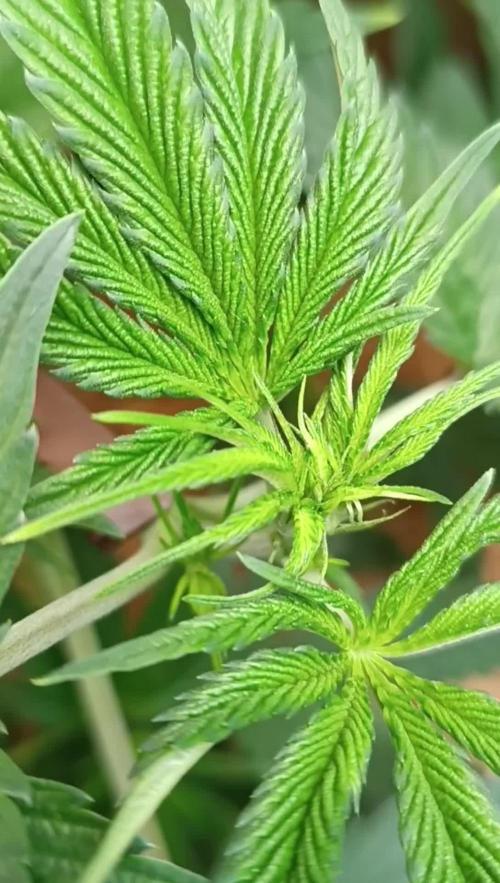
Tag 35 – gut eingegroovt, jetzt wird Struktur sichtbar
Nach dem Umtopfen haben sich inzwischen alle drei gut gefangen und merklich stabilisiert. Der Wechsel in die großen Töpfe wurde insgesamt ordentlich verkraftet, gerade auch in Kombination mit der Mikrobengabe nach dem Umtopfen. Man sieht, dass sie das gut angenommen haben und jetzt wieder sauber durchstarten.
Größenmäßig liegen wir aktuell so bei rund 29–30 cm, wobei Chicken & Waffles klar die Nase vorn hat und aktuell den Spitzenreiter stellt.
Chicken & Waffles geht im Moment am meisten ab. Sehr robust, wächst zügig weiter und zeigt eine kompakte, aber gleichzeitig angenehm luftige Struktur mit guten Internodienabständen. Macht insgesamt den stabilsten Eindruck im Feld.
Fruit Bomb Punch bleibt dagegen die empfindlichste. Das Toppen und die „heiße“ Erde wirken immer noch leicht nach, auch wenn sie natürlich weiterläuft. Sie braucht einfach länger, um sich komplett einzugrooven. Auch auf Training reagiert sie aktuell eher zurückhaltend und wirkt insgesamt sensibler als die anderen.
Strawberry AK läuft dafür unauffällig, aber auf einem richtig starken Niveau mit. Sehr kompakt, schöne Struktur und insgesamt ein sehr sauberer, stabiler Wuchs. Bin ich aktuell echt zufrieden mit.
Unterm Strich wird jetzt immer deutlicher, wie unterschiedlich die drei Kandidaten ticken: von sensibel bis robust, von kompakt bis luftig. Genau das macht den Run gerade spannend.
Der Terp-Test läuft – am Ende entscheidet das Glas. 🌱
🇬🇧 Day 35 – settling in, structure is starting to show
After the transplant, all three plants have recovered well and clearly stabilized. Moving into the bigger pots was handled nicely overall, especially in combination with the microbial watering afterwards. You can see they responded well and are now picking up momentum again.
Height-wise, they’re currently around 29–30 cm, with Chicken & Waffles clearly taking the lead as the current front runner.
Chicken & Waffles is pushing the hardest right now. Very robust, growing fast, with a compact yet nicely airy structure and good internodal spacing. Overall, it looks like the strongest and most stable plant in the run at the moment.
Fruit Bomb Punch remains the most sensitive one. The topping and the “hot” soil are still slightly affecting her, even though she keeps progressing. She just needs a bit more time to fully settle in. She’s also reacting more cautiously to training and overall feels more delicate compared to the others.
Strawberry AK is running quietly but on a very strong level. Very compact, great structure, and overall a clean, stable growth pattern. Really happy with her at this stage.
All in all, the differences between the three are becoming more and more obvious: from sensitive to robust, from compact to airy. That’s exactly what makes this run interesting.
The terp test is on – in the end, the jar decides. 🌱


Likes
3
Share


@CordersGreen
Follow
Día 23/5:
Estamos por su 2º semana de floración💪
pues nuestro jardín va cogiendo forma, después de su poda magistral tenemos un manto verde incleible!😱 a la espera de unas flores abundantes😍
Vemos que van creciendo sin ningún tipo de problema y están sanísimas con un color y aspectos saludables, hemos aumentado el porcentaje de nuestro foco lumatek al máximo a su 100%.
abonamos como siempre con nuestra tabla de advanceds nutrients y con agua opmotizada 30L.
🙌 ¡¡ YA NOS FALTA MENOS !! 🙌
Día 26/5:
Abonamos de nuevo con su 2º semana de Floración!!
Agua opmotizada 25L y nuestro abonos de advanced nutrients.
Likes
8
Share


@Fenriz
Follow
Describes the process of making CBD infused MCT oil at home! This short tutorial requires a Rosin press, but a Hair Iron or a regular Iron can be used instead - just remember to keep pressure on the cannabis flowers while having a good idea of what the temperature is! I would recommend using more than one extraction, because only a little amount will be hard to Decarb! This example used 2 grams of dried flowers, but the final amount decarboxylated was extracted from approx 35 grams of dried buds. It amounted to 6 grams of pure Rosin, which I mixed in a ratio of 10:1 MCT oil. Final results were 6 x 10ml tinctures. So 1000mg CBD rosin, and 9ml MCT oil in each tincture.

Likes
4
Share

@Piratenarm
Follow
Hab die Damen jetzt in die Blüte geschickt. Sie wachsen extrem, so dass ich immer mal wieder die Blätter, die die Blütenansätze verdecken, beschneiden muss bis jetzt sieht alles super und gesund aus, bin echt gespannt 😋.


Likes
15
Share


@Siriuz
Follow
Yo guys whats up
Check out my videos and lemme know
Im trying my best to keep up
MY girls are doing very good
Im just too busy right now with my son
He is 10 months old now and sometimes I have to leave behind the girls thank God I had built over the past months a great setup and I keep improving every time I have budget so it is very kind of you every like you give and every Comment is a blessings for us as a family you guys help us a lot to continue promoting and growing the best medicine in this world, thanks brothers happy growing and keep enjoying our diaries we will keep posting once we get the time and space for sure stay tuned
Now this
PPM 1000 lowering down to
800/600/400
Until we are done for the remaining weeks
Also we stop adding nutes for like 2 weeks now or so
We only add water every Day
Like 300ml at least to keep them hydrated
But for us is best to add one 1.5 liters then wait for them to drain and leave them like that for like 3-4 days until water in the bottom is full absorb this forces the roots to go and drink water which makes the plant grow bigger...
I know THESE are autos but you would be impress depending on the genetics of what they're capable of
The only thing that really f them up is time
They dont go back just forward so yeah
Got to be quick
Anyways how you doing guys
Happy growing thanks for everything


Likes
22
Share


@rickle
Follow
Alles gut. Die beiden Orions verbrauchen 250 ml am Tag und die beiden Amnesien brauchen 500 ml. Ich bewässere jeden 2. Tag.
Das Wachstum scheint vorerst beendet zu sein, aber die Knospen werden immer dicker. Nächste Woche werde ich die CO2 Zufuhr beenden.

Likes
29
Share


@PlainFieldPuff
Follow
So week 4 of flower has come to an end. I have finally started feeding full nutes with 50% N this morning. Plants seem to be handling it well. The double cola Malasaña in the back has an amazing bud structure, and such a heavy resin production on her, I really wish I had cloned her. I include 3 pictures of that one. Also, I tied down a bunch of taller colas so I could turn up my light to 100% with an even canopy. Buds have not been swelling much this week ! But with the reintroduction of feeding at a regular level I hope to see lots of progress in the coming weeks . Also I noticed substantially heavier trichome production on the plants nearest the UV light, might just be coincidence though. Well have to see the outcome of future grows during a monocrop .

Likes
35
Share


@Jacks_Pot
Follow
The 3th week of 12/12 is history and flowering has entered the grow room. 😋
I marked day 53 (day 17 of 12/12) as the first day of actual flowering.
Everyday I've checked if there were fungus gnats trapped on the yellow sticky traps and I've spotted a few. So not a total infestation.
I've also checked for signs of hermies and I haven't seen any.
I've had one a few years ago and it pretty much ruined the whole grow. Seeds everywhere. But that was another breeder and strain.
Under the screen I did some final pruning and above a minor defoilation.
The Runtz are stretching nicely and the screen is filled pretty much like I wanted it to.
Gonna leave them alone now, done with bending those shoots under the screen.
This weeks temperatures stayed between 20,6°C (69°F) and 24,2 °C (75,5°F) and humidity levels between 44 – 56 %
Light pressure was raised from 244 watt at 70cm (27 inch) to 260 watt at 63cm (25 inch).
Their diet consisted of ph adjusted tapwater (ph 6,38 – ec 0,49) most of the week.
They were barely fed for 1 day. Gonna keep it that way as long as I don't see any signals of shortages or surpluses.
Naturally, ec leves will rise next week but one day of feeding seems enough for now.
Smell is coming in slightly, but the CAN-lite carbon filter is doing it's job.
There's a 600m³ one hanging in the grow room connected to a 550m³ Airfan foam softbox that's dimmed at 40% since the start of this grow.
That was the most important info for this week. Up to next week's flowers!✋
Do you want to grow this strain?
👉 https://www.zamnesia.com/6000-zamnesia-seeds-runtz-feminized.html 👈