




Likes
17
Share


@4chuk
Follow
Nov. 6 - Week 5 begins. I am seeing calyx in a few spots so I expect pistils at any moment. Her smell is also starting to develop and I suspect she'll be a real stinker in the near future.
Nov. 11 - It is not doing good but is still growing.
Nov. 12 - I moved her to the 3'x3' I considered putting King Tut in, with some better light. I also removed 6 or 8 fan leaves from the main stalk and almost took off some lower branches but decided against doing so.


Likes
15
Share


@dinni5yn
Follow
Day 36: Feed this morning but kind of switched out Bud Blood for Igniter. The Buds are growing.
My training skills are weak and I'm completely overwhelmed trying to even start defoliation. Kind of like an ok parent but don't care if your kids need a haircut and when you take em to the shop they cry when the barber combs to cut.
Besides that though my 1st grow is pretty epic. Looking @ what I've been doing and seeing them from seed to what I have now. I don't know the formula for life but maybe this gives me The Blueprint. (D.O.C & Jay-z like).
Observing and watching the light's and Temps. Trying to stay in that 85 degree 54% humidity range.
Shout out to Weedexpress for checking my grow. All Seeds germinated!!!
Day 37: Think I have been over-feeding my plants so fed them....lol yep just a solution of sensi-cal,Voodo, B-2, Superbud xfactor and mikes og tea......no more bud blood and gonna ride out with the igniter.
Woke up an hour b4 they did and snatched each one out the tent and defoliated. Each one I spent about 20 minutes on defoliating and getting rid of bottom layer. They looked a bit lollipopish and getting ready to cast this net. I have some huge branches and some of the buds are starting to look like the picture you see in the grows. I really am appreciating the work that it takes and the thought behind growing.
9ish: starting some training and pulled the branches down, tied and put some trainers of 2 of my plants. I got plans to train my GC's since they are stretching.
That canopy is pretty open so think gonna get good light inside canopy!
Thinking about my next feeding 2morrow, which usually equates to when I get off work. I'm gonna stay with my veg base and go again with Bud Blood. I like the way it made my buds kind of dazzle into sun burst buds. I'm pretty dialed into my veg mixture and am going to start mixing in a 5 gallon jug only to ensure that I have enough for 2 feeds. My plants are really devouring these nutrients and have had very little nutrition burn.
Trying to make sure that my root system is healthy so that I can get a decent yield to hold me over the winter. Of course with the winter comes the holiday season and what better gift to give
420 candy canes sprinkled with kief....these are a few of my favorite things!!!!!
When the leaves shake
When the Buds break
I'm feeling crank
I simply remember my favorite things
And then I just smoke.... my dank!!!!
Day 40: igniter definitely creates more bud blooms areas...my growth is so thick and the buds pretty big. Got a feeding lined up in the morning and probably gonna with heavy feeding and touch all my roots. Going heavy on igniter again.
My grow lights beneath the canopy is doing amazing work as the buds beneath
are also amazingly big.
Also spay with a mix of Grease and Green Goddess maybe twice a day to keep nutrition in the foliage.
Day 41 or 42 and possibly even 43:
Somewhere but I'm in my 2nd week of flower and working this week on Igniting my grow b4 going into OverDrive. Gave an honest feeding a day later than normal.
The Buds are popping and you can kind of see what the Bud Ignite is doing as far as the multiple bloom locations are a plenty.
Went with the net but took back down, want more height and not disturb the current situation but have a feeling will need it a bit later to help with these heavy bud limbs!
Day 47: So my babies have bigs buds and an issue. Defoliation day was ah coming and did I have to cut. Spent like 20 minutes on each plant cutting, 🍭 'n and manicuring. They are incredibly stout and
stretching.
Got a few more feeds b4 I flush so gonna stick with the Overdrive and Ignite.
Day 48: fed da girls and went with Bud Blood instead of Ignite.
Day 49: so I'm checking out my grow and for some reason I grabbed some water only....just felt like I've been so caught up in the nutrients forgetting basics. So since in the last 3 weeks gonna concentrate on budding and k
Defoliation.
My buds are definitely gonna be huge and ripe.
So getting closer to curing and got a bunch of huge mason jars @ TJ Max. For curing along with Bovida 65% packs.
As for a drying tent gonna go with hanging in paper bags.
Getting into curing mode so that when these are ready I can get my FF's potted and 🎄 grow on.
I want to clone a few if these FF's 4sure for Christmas gifts and have plenty of holiday cheer to share.


Likes
22
Share


@Zengrower
Follow
The Titan is growing as I had hoped. The many side branches are growing larger and in the center is a nice main cola. Beside the LST clips a few weeks ago, no more training is needed it seems. I did some defoilation to optimize the airflow and to give the developing buds in the side branches more light. More pics and updates coming later this week.
The Titan is developing a really nice flowery/citrus like smell. I added some Bio Tabs Bio PK 5-8 to the mix to support the many buds she is forming.
Likes
4
Share

@Samsationalseeds
Follow
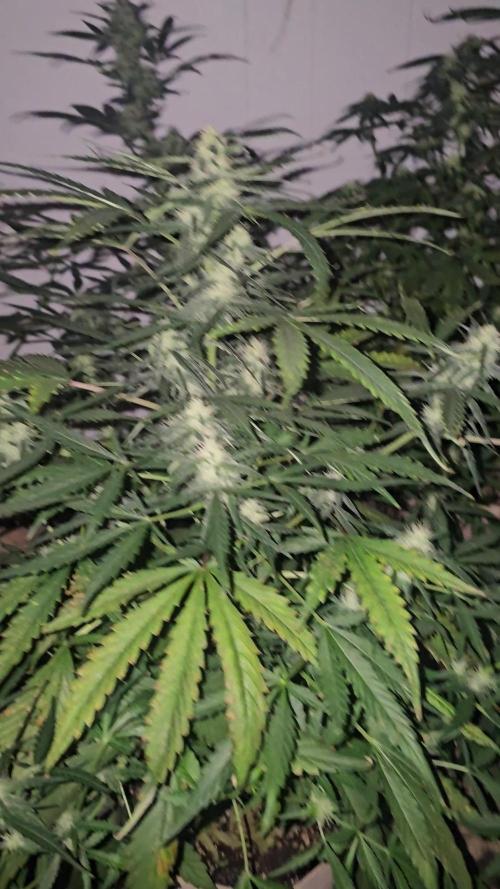
Most of the autos are being moved into my dad's garden or the backyard.
Likes
12
Share


@Canakine_Skygrower
Follow
Enfin ma première récolte de fini. Je suis assez fière de la qualité des bourgeons et de l’arôme des plantes. Je vais finir le curring gentiment mais je suis très satisfait de la Sweet tangerine tango auto

Processing
Likes
49
Share


@Ganjagrandaddy
Follow
Hi all. This week has been a busy one with a bit of defol and lst on the 2 big ladies .
FFT#8 is still a tiny shade on her cousins in this grow. She is getting better and now showing some vertical growth. Her colour is getting better too. She will hopefully be flower able within a couple of weeks.
FFT#9 has raced ahead this week and shows real promise for a big girl finish. Her quad and 5th node fim are putting out some excellent mains. They have a lot of growth on each tip to help form some nice stacked colas. I thinned her out fair bit and have tied her out a little wider too. She is around 2.5 ft wide now and has plenty of space for lateral growth. She will be flowered with the sp250 and the tsl2000 so will have lots of lumens to exploit.
FFT#10 is also a great grower and is beginning to look very kush and indica style. She wants to go vertical and keeping her lower is hard with her thick stems. A little thinning out has given a nice airflow around base now. Like her cousin she is around 2.5 ft at this point and looks like she will be another big lady. I am looking forward to the next weeks growth . Be safe

Likes
39
Share


@DogDoctorOfficial
Follow
These one is by far my favorite tester, not only i love them number 9 as i said before, but she is evolving in to a very , very beautiful plant covered in resin, i mean for her age the numbers are just out of the world.
with the week evolving she keeps getting better and better and now she starts to smell also and i am felling some mint notes , but mb is just me, too soon so say whatever actually but one thing is for sure , this one will be AMAZING amazing amazing just from the looks now
cut the caMAg boost , she does not need it anymore , she looks kind happy and great as she is so hihihihihi
As always thank you all for stopping by, for the love and time you guys spend on my stuff, i fell blessed and humble, many thanks to you all <3<3<3
Genetics - Fast Buds Tester 2309
Ligth - LUMATEK ZEUS 465 COMPACT PRO
Food - APTUS HOLLAND
#aptus #aptusplanttech #aptusgang #aptusfamily #aptustrueplantscience #inbalancewithnature #trueplantscience #fastbuds #dogdoctorofficial #growerslove
With true love comes happiness <3 <3 <3 Always believe in your self and always do things expecting nothing and with an open heart , be a giver and the universe will give back to you in ways you could not even imagine so <3 <3 <3
All info and full product details can be find in can find @
https://2fast4buds.com/ wen released
https://aptus-holland.com/
https://autopot.co.uk/
https://lumatek-lighting.com/
Have a bunch more diaries going on, fell free to drop by and say hi dont be shy <3 <3 <3
<3 <3 <3 Growers love to you all <3 <3 <3

Likes
21
Share


@CanadianFillmore
Follow
Welcome growfessors to another episode of growfessor theatre, 4x4 edition!
Flush time, just water for LSD, Green Crack and Mandarin dreams!! Do-si-dos gets another week of feed before flush.
I'm very impressed with the bud sizes, trichomes and smell of each plant, mandarin dreams is especially ooozing with resin, it's almost like liquid soap touching your skin.
The Mars-Hydro TSW2000 light has been killing it! This light delivers way more than expected!
Thanks for stopping by growfessors, tune in next time 👽🌳💚


Likes
34
Share


@The_Bearded_Grower
Follow
Welcome to week 5 of flower. Things have gone very well so far a tiny amount of burning on a leaf text but I have corrected it before it became a real problem. I cut back the nutrient level to 2 mg of micro Bloom and flour as opposed to three and things seem to be going pretty good. The bud sites are fattening rather nicely considering it's only going into week 5.

Likes
8
Share

@NoHarry
Follow
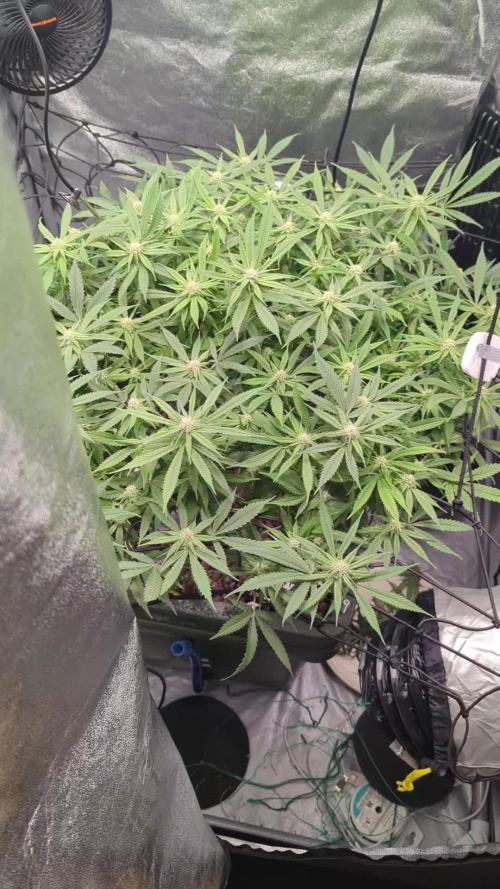
Classic me, jumped the gun again on the nutes and went a bit too heavy on the PK for this stage. Normally, she would’ve handled it like a pro, but the weather threw me a curveball. Temps in the tent dipped to 22°C during the day, and she straight-up went on a hunger strike.
I had to crank up the heat in the room to lock the tent temps at a steady 25-26°C. As soon as it warmed up, she perked right back up and crushed her 730ppm ration without a hitch. It’s becoming clear that even though she grows bushy like an Indica, she craves the heat like a true Sativa. Definitely never a dull moment here. Next week marks the start of the most beautiful and intriguing phase of flowering. Smash that like button and subscribe so you don't miss out, haha! :)


Likes
52
Share


@MadeInGermany
Follow
Flowering day 3 since time change to 12 / 12 h
Hey guys .
My cutting heating broke 3-4 weeks ago, which was fixed immediately and everything went wonderfully.
Now, 3 days ago, the central heating broke down in the entire room, so that at night I only have temperatures of around 13 degrees :-( .
One or the other lady is slowly starting to see a phosphorus blockage, as this can no longer be absorbed at temperatures below 15 degrees, like many other nutrients :-( .
A friend looked at the heating yesterday and came to the conclusion that a real company had to do it, which is by no means possible for a stranger to enter my room.
I quickly ordered heating mats for all the boxes so that the ladies could at least get warm feet.
That's all I have this winter full can do .
Let's hope everything will be fine 🙏🏻.
As soon as the heating mats are attached in the coming days, I will post them in the pictures.
Now for the update.
Despite the severe cold, the ladies are still doing well and have made good progres .
The ladies only had to be watered once this week, each time with 1 l, because it absorbs the water very slowly because of the cold and I don't want to overwater it.
I took every single plant in the pot to take a close look at their roots.
These are snow white and look very healthy 🙏🏻.
It was also the last time neem oil sprayed so that the last trips are finally gone.
Otherwise everything was checked and a lot of planning was done, like I do with the heating mats.
Since a friend had the same problem in one winter and the heating mats got 10 degrees plus on the pots, I am very confident that it will at least bring something for the last cold month 😃
🙏🏻.
I've started flowering even if some are still a bit small, but otherwise they'll get too wide from training and end up taking up space :-)
until then have fun and stay healthy 🙏🏻
👇🏼👇🏼👇🏼👇🏼👇🏼👇🏼👇🏼👇🏼👇🏼👇🏼👇🏼👇🏼
You can buy this Nutrients at :
https://greenbuzzliquids.com/en/shop/
With the discount code: Made_in_Germany you get a discount of 15% on all products from an order value of 100 euros.
👇🏼👇🏼👇🏼👇🏼👇🏼👇🏼👇🏼👇🏼👇🏼👇🏼👇🏼👇🏼
You can buy this strain at :
https://www.ripperseeds.com/en/feminized/kmintz-feminized-cannabis-seeds
Water 💧 💧💧
Osmosis water mixed with normal water (24 hours stale that the chlorine evaporates) to 0.2 EC. Add Cal / Mag to 0.4 Ec Ph with Organic Ph - to 5.8 - 6.4
MadeInGermany

Likes
8
Share


@4F1M6
Follow
Pollination is well underway. The ladies are prego and the seeds are developing very rapidly! A few of the first flowers to get hit have there flower bracts already torn open. Exposing the growing seeds(still very green and immature). They are coating there flowers with protective trichomes like crazy! Sucess.
All three ladies I have in there are heavily seeded! Now I'm watching them work their magic. Producing me some new killer crosses to phenohunt.
The male flowers have been dried and stored. I'm slowly sifting the pollen into a vile. Whenever I get a chance to play with pollen lmfao. I've only made a dent in my freezer bag supply.
Until next update. Happy growing and stay lit fam.

Likes
2
Share

@Mars8_8
Follow
4/30:
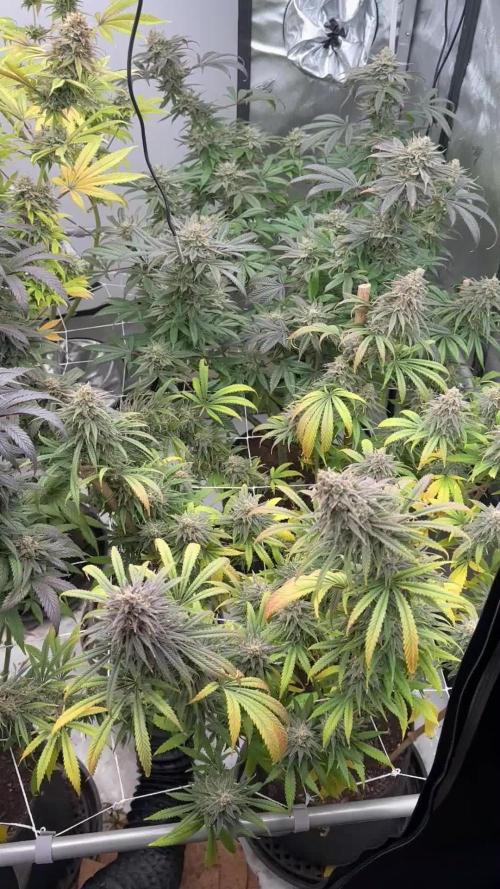
Almost harvest time, 1-2 more weeks I’ll start checking the comies in the next few days.
chem brulee kicked my butt in 3 gallon pots I couldn’t keep up and I ended up semi herming the back one. I took clones and got them in 5 gallon pots in my veg tent imma try to master because this thing grew like nothing else.
5150 was a free seed and honestly it’s blown away my expectations. Straight GAS and it’s the one I’m most excited to smoke. Also the terps on the fan leaves and the oils it leaves on my finger is a really good sign for some rosin 🤙🏻
Northern Lights is earthy with a tad a sweet, not dense nuts buts its chunking out and does have a tasty smell to here.


Likes
47
Share


@Mrs_Larimar
Follow
April, 5th
We are coming to an End.
The Triple G sits in 15l Smartpots filled with my Soilmix and
amended with EASY BOOST ORGANIC NUTRITION from RQS
Iam Watering them with Beneficals and Bloom Fertilisers from @GreenBuzzLiquids
One Plant was already Harvested, the other ones coming soon
Iam going to do a single Application with "Clean Fruits" and then Iam going on with Feeding them until Harvestday
The Last Days ,Buds were maturating, Pistils turned more orange, and the smell......hmmmmmmmm
i think 10-14 more Days
#keep on Growing
Likes
16
Share


@Mrg7667
Follow
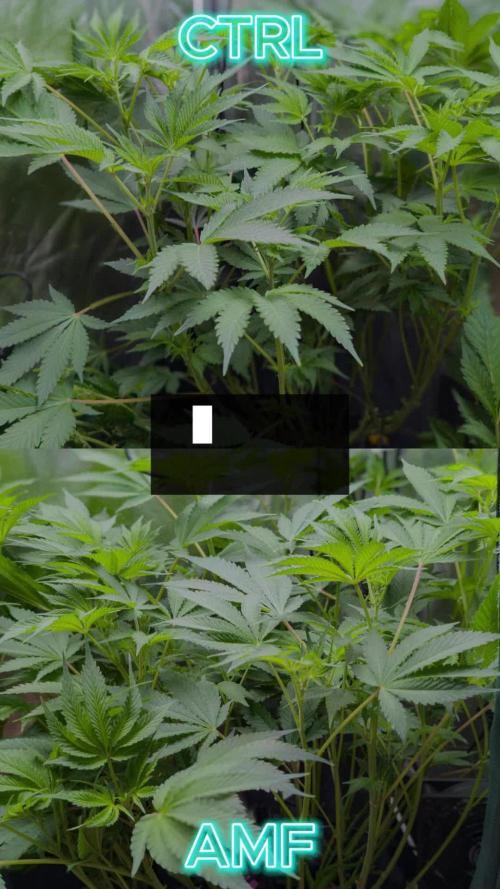
I finally feel like we are getting some good vertical growth! And all cut spots have put on at least 2inches. So i flipped into flower this is day 1-0



Likes
6
Share

@bkickstand
Follow
Week 9: Transitioning and Training
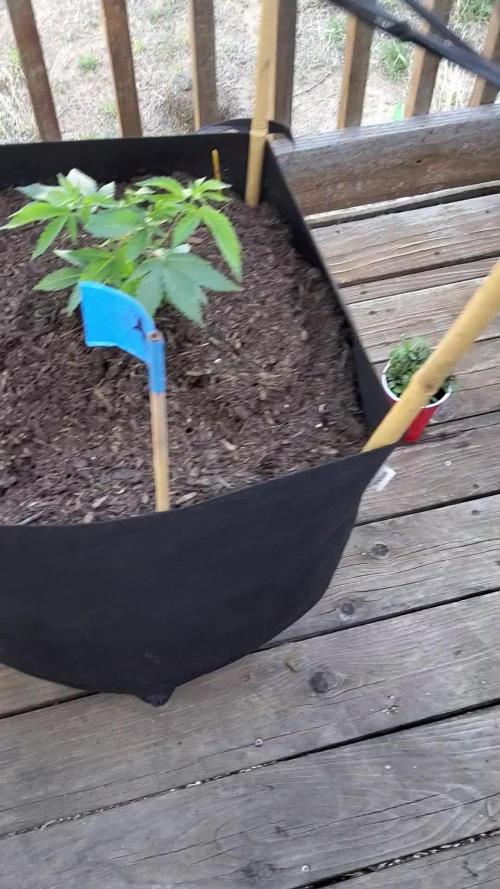
The Durban Poison photoperiods are officially settling into their long-term homes and showing some impressive vigor. After the successful transplant into the 25-gallon fabric pots, the root systems are clearly enjoying the extra breathing room. This week is all about managing that explosive growth and setting a solid foundation for the structure of the plants.
#Environmental Conditions
Location: Outdoor Deck
Climate: High plains (Variable temperatures and shifting winds)
Sunlight: Full sun (approx. 14+ hours of daylight)
Garden Updates & Maintenance
The focus this week has shifted from recovery to Low Stress Training (LST). Given how tall this Sativa-dominant landrace can get, keeping the canopy managed is a priority.Train: Implementing a DIY bamboo trellis system. I’m gently pulling the main branches outward to encourage lateral growth and ensure better airflow through the center of the plant.
Irrigation: The dual-timer manifold is up and running. The custom-drilled hoses are delivering a consistent soak, which is crucial as the Colorado sun starts to intensify.
Nutrients:Sticking with the **FOOP Organic** regimen. The leaves are a deep, healthy green with no signs of transplant shock or nutrient burn.
Pest Management: The **African Marigolds** are positioned as sentinels around the fabric bags. So far, the companion planting is doing its job—no signs of mites or aphids.
Observations
The nodal spacing is starting to stretch slightly, which is expected for Durban Poison. The stalks are thickening up nicely, becoming sturdy enough to handle the afternoon gusts.
Plans for Week 10
* Continue adjusting the ties on the LST setup.
* Monitor for any early signs of "the stretch."
