Likes
Comments
Share



Likes
41
Share


@gottagrowsometime
Follow
Both plants grew very differently. The organic grew like a normal indica based plant. Decent sized main cola that was surrounded by shorter side nodes that still had some pretty sized buds. She had an overall lovely structure. Took to LST like a champ. And was 1 of my most trouble free auto grows to date. She's a beginners delight. Her bounty was 69g on harvesting. And 3g in test I took last week. She grew to 58cm. Vegged out at 25 days, and took another 50 to flower. As I kept a steady temperature throughout their entire life(s), (especially pre flower) there was no unwanted stretching in all my plants. She was very compact allowing the light to reach every part of the plant, done some light lollipoppoing during and before pre flower, not much, as there was no need. She took a lovely natural shape, and with LST. It allowed me to put all buds into the light. And she gave me some seriously lovely bud. I've no doubt when I run them again in coco I'll get a much bigger yield. But 10☆ all the way.
The Synthetic. She grew totally differently, she acted as though she was topped and grew all nodes pretty much the same size. Wasn't as dense as the organic but there was a lot of the bud was pretty much the same size buds. She never really grew beyond 42cm. She picked up a pigment mutation and was a little more demanding feeding this girl on Synthetic nutrients. Whereas the organic was apply powder twice to soil and then bioenhancer feeds (every 2 weeks). But, every week she got a low ppm feed never exceeding 700ppm (the Synthetic). Learning to grow more with less nutrients.. gave no trouble really. Had no hard defs/toxs..picked up what I thought was early fade during flowering, just turned out to be wanting a little bit more P and she settled down. Again, Took to LST really well. And was no trouble. Really easier growers, both girls.
ROUND UP OF BOTH PHENOS (Organic
Synthetic)
Both girls, may have differed in the way they grew. But, if you put both strains together, as they are, (uncured) there is no way I'd be able to tell the difference if I done a blind taste/smell test. Both girls gave roughly 115g in 75 days. They both have deep long orange pistils with very tight buds that are packed with flavours galore, and very sticky and stinky. Mainly berries (blackcurrant) at the moment has a grip on them with hints of pine with a citrus undertone. We will see if their profile changes much with a nice long cure. I should have a smoke report in before contest closes to give a true measure of these ladies. Shows how solid and steady these phenos are, as they are so closely in smell, taste and so on. Is a testament of good genes and Dutchs hard work to make all phenos more or less be similar.
So, any beginner would have a very good experience growing these type of auto. Can't wait to try more from Dutch-Passion. And, you can get the same results, or near the same tasres/smells and big quality.
EQUIPMENT USED.
I used a 100w mainly to do these girls. I was swapping around in their early stages of life, trying to give them a higher ppfd. But, been hit with fungus gnats hampered me, by doing this. So, sadly they were only given a 100w mainly for most of their flowering life. They did get a dose of my FC 3000 from marshydro but, not enough time under it to do anything substantial. But, I'm sure it did have some impact on these. As most of my autos came out a little airy whereas these 2 phenos are nice and dense.
The Synthetic was dry after 7 days. The organic took a day longer to be fully dry. Everything has been put to the cure. And smoke reports will soon follow with pictures of cured bud.

Likes
58
Share


@Rap_a_cap
Follow
Usual summer week here in the south, every day above 86 ° F (max 100 ° F). My pheno is a medium sized plant, is not a beast but is growing well, drinking 2 gallons per day of spring water showing only few signs of heat stress. She's in full stretch. I fed her half the recommended dose of Biobizz Grow 'cause is too hot and don't want to burn her. I think we are 10 days before flowering. I covered her with a PVC net in order to give her a little shield from the sun and give me more privacy ;-)
P. S. She has an unbelievable smell, it remember to me Kashmir pollen hash

Processing
Likes
4
Share


@Skillgrower
Follow
Estamos a meio da 2° semana a crescer bem ja cm boa ramificação mas a dar indicios de falta de magnezio, mais uma semana começa o lst
Afinal vai começou mais cedo q o esperado.. a crescer muito rápido, mais uns dias estamos no inicio da 3°semana

Likes
6
Share


@Ninjabuds
Follow
Permant marker the one seedling I could not be more happy with. It has a distinct different look to it than any other plant in the tent with strong growth going on. I'm sad about the other seedling thou the 1st set of leaves were kinda deformed and it has like a spiral thing going on where new growth comes from. Hopefully it comes back around, I always like seeing atleast 2 phenos of a strain I feel it gives you a better idea of what a strain is.
It's looking like a good start to a week the plants are strong they are getting to the point I can let the dried dry out completely. I'm thinking by the end of this week the plants will be starting to be sold.
Last week I put all the plants into my bigger 2x4 tent with my medicgrow mini sun 2 the 500w version. Only a few of the plants were ready for that light. Seems like the only plants that really have good resistance and have a strong start are the weedseedsexpress.com seeds. Shout out to weedseedsexpress.com for the strong plants.
I ended up putting all the plants back into my 2x2 tent with the 55w amazon light it has alot more blue light in its spectrum. It's kinda weird b4 I switched the plants to the 2x4 tent they were getting 220umol under my amazon 55w led then when I put them under the 500w light 25% strength about 50in from plants and they were getting only about 195umol in that tent but it was stressing most the plants. I assume a larger light has more side lighting hitting the plants. I think when useing larger lights it's good to measure umols from the top but also coming from the sides. I think durring seedling stage they only need about 50% the umols coming from the side the plants as the top is receiving.
When I put the plants back in the small tent about the same umols as they were getting b4 the switch and they were still a little stressed. So for a few days I put the small light at the top the tent giving them 100umols for a few hrs then 130umols the rest the day.

Likes
10
Share


@steadfast_grower
Follow
#########################################
HARVEST (Day 93 / June 4)
#########################################
-----------------------------------------------------------
GROW SUMMARY
-----------------------------------------------------------
Grown in 4x4 tent - but I only used 2x2 space because of heater and dehumidification and other plants (Outlier Z). This plant used a dedicated CMH 315 light. The plant was grown in hydroponics using a custom single-site PA hydroponics clone RDWC system with Advanced Nutrients Sensi Coco line, Microbial Mass and Orca for beneficials. I also experimented with Rapid start in the RDWC system, but I didn't see explosive root growth relying on Rapid Start as an additive to the system verse using it when starting in rapid rooters which worked well.
All around a pretty easy grow and things went very well. Topped twice for a mainline structure and she really spread out. Sparkling golf ball size nugs down the branches and spaced out nicely. The scent off her was like burned rubber/tires or maybe fresh blacktop. A single water change which was only performed when switching to bloom nutrients around week 7.
-----------------------------------------------------------
HARVEST
-----------------------------------------------------------
No dark period and no flush. On day 93 she was chopped and hung to dry.
-----------------------------------------------------------
DRYING
-----------------------------------------------------------
Entire plant hung upside down for 15 days. The temps were dialed in at 60F by using the S6 intake fan pulling air from the AC through intake vent on side of the tent. Humidity was dialed in at 63%/60F for 24hr, 62%/60F for the next 48hr. Then 60%/60F for the third day and onward. AC Infinity T6/S6 exhaust and intake fans were on the setting of '2' during drying until day 7, then I could turn down to a setting of '1' once the plants were not transpiring excess moisture. Trimmed on day 18. Then the jars were left open in the tent for another 12 more days for a full 30 day dry at 60%/60F while rolling the jars frequently. Also ran dehumidifier in the tent but it only ran for 1-2 minutes every hour because the AC was doing most of the dehumidification on the intake.
-----------------------------------------------------------
TRIMMING
-----------------------------------------------------------
Trimming was an absolute breeze. All swelled nuggets, very little sugar leafs left to trim.
-----------------------------------------------------------
CURING
-----------------------------------------------------------
Flower product was transferred to 1L mason jars averaging 35g of product per jar. I added a mini hygrometer to each jar and chose not to use a boveda this time. The RH averaged 62-64% when trimmed flowers went in jars.
Jars were left open in the tent for a total dry time of 30 days from harvest keeping the tent at 60%/60F.
Once closed, the jars were burped once a day for the first seven days, once every other day for the next seven days, rolling jars often. The burp was only for 3-5 second for air exchange until a. 62% was maintained in the jar.
-----------------------------------------------------------
YIELD
-----------------------------------------------------------
* Weight calculated at 62% humidity after 30-day dry and 14-day cure.
==============================
FLOWER PRODUCT
==============================
180.41g (6.44oz)
==============================
TRIM PRODUCT
==============================
57g (2.03oz)
** All major fan leaves, stems, and branches removed from trim product.
==============================
TOTAL OVERALL YIELD
==============================
Total: 238.41g (8.51oz)
==============================
SPACE YIELD
==============================
238.41g / 4 sqft (2x2 canopy) = 59.60g per sqft
==============================
WATTAGE YIELD
==============================
315 Watts / 4 Square Foot (3x4 canopy) = 78.75 watts per sqft.
238.41g / 315 watts = 0.76 grams per watt
-----------------------------------------------------------
PRODUCT TEST
-----------------------------------------------------------
Bag appeal is top-notch. Trichome covered, with aromas of that unique 'kush' you can quickly identify based on experience.
Best OG Kush I've ever tried, hands down! The flavour is kushy, smoke is smooth and definitely my favorite strain in my tote of cured harvests at the moment. I can't keep my hands off of the jars. Definitely not a daytime strain, even for experienced users, although I'll use it in the afternoon when life is throwing curve balls. The effects rise you up, then sets you right down and will wash away all that anxiety after a long day. Put it this way....if I puff a few hours before bed, I still feel it the next morning when I peel my eyes open. No joke.
I'll definitely be growing this one again, maybe even next run because I'll be sad when I run out.
-----------------------------------------------------------
REGRETS
-----------------------------------------------------------
Not running more of this amazing plant.
-----------------------------------------------------------
NEXT RUN
-----------------------------------------------------------
This was the first run at my new residence so it will take some time to get it dialed in. I had some calibration issues which are now fixed. I'm going to be shooting for 1gram per watt on the next run.
-----------------------------------------------------------
FINAL THOUGHTS
-----------------------------------------------------------
DarkOwl is the best autoflower I've grown yet. I'm now eager to give the Bruce Banner #3 they released a run and will surely acquire future releases from DarkOwl.
-----------------------------------------------------------
THE END
-----------------------------------------------------------
Thanks for checking out my diary! I typically journal in my notebook but I put some time and effort into documenting my grows on this platform in hopes it will help a new or experienced grower with their DWC journey. Any questions or suggestions are welcomed.
Happy growing!

Likes
25
Share


@pifflestikkz
Follow
Day 43
12/08/24 Monday
Feed today, it was warm again so they drank the whole 300ml each so I have topped up another 150ml to see run off to prevent salt build up.
Thriving 😍✌️💚
Day 45
14/08/24 Saturday
Another watering today using de-chlorinated tap water pH 6 only.
Day 48
17/08/24 Saturday
Another watering today using de-chlorinated tap water pH 6 only.
Picture and video update ✌️ 💚

Likes
16
Share


@TheCannaProphet
Follow
Soil ph resolved, back to 6.7. End of this week all will get their final top dress and then will just be getting ph'd water with CalMag+ through the remainder of flower. I do plan on adding molasses 2-3 tbsp/gl every 3 to 4 days to feed the microbes. PP has such a strong fruity aroma, WW is hashy, GSD still smelling like a bag of candy. The BD has not really impressed me with growth, tricomes or environmental tolerance....finicky bitch! GSD looks like hell as well with continuing leaf purpling and yellowing. The GSD would have been absolutly FIRE if it had gotten flipped way earlier (note to self for future runs with it).

Likes
3
Share


@Elguacho420
Follow
Muy buenas a tod@s!!! Bueno arrancamos con las semanas de floración para estas green poison, de momento van creciendo bien, mas q alguna que marca falta de nutrientes( fallo mío, perdón) van creciendo bien y fuertes, hay buena recompensa está vez, ojalá, ya veremos, de momento ampliamos la gama de advanced que me parece genial, así q vamos a probar q tal funcióna y los resultados q da... Vamos a ver q tal sigue esta semana... Un saludos y buenos humos para tod@s! 💨💨🔥🔥👍🏻👍🏻
😎💎⚕️
🇦🇷🤝🏻🇪🇦

Likes
6
Share


@ZeroKnown
Follow
i noticed some good signs of flowering so i started feed her with bio bloom and top max
Likes
57
Share


@nonick123
Follow
Día 69 (01/07) Riego con 1,25 Litro H2O + Regulator 0,15 ml/l + K-Boost 1 ml/l + CaMg-Boost 0,3 ml/I + TopBooster 0,3 ml/l - pH 6.2
Día 70 (02/07) Riego con 1 Litro H2O + Regulator 0,15 ml/l + K-Boost 1 ml/l + CaMg-Boost 0,3 ml/I + TopBooster 0,3 ml/l - pH 6.2
Día 71 (03/07) Riego con 1 Litro H2O + Regulator 0,15 ml/l + K-Boost 1 ml/l + CaMg-Boost 0,3 ml/I + TopBooster 0,3 ml/l - pH 6.2
Día 72 (04/07) Riego con 1 Litro H2O + Regulator 0,15 ml/l + K-Boost 1 ml/l + CaMg-Boost 0,3 ml/I + TopBooster 0,3 ml/l - pH 6.2
Está acelerando muy rápido la senescencia de las hojas a pesar de que sus cogollos no están maduros (revisión de tricomas con microscopio)
También se nota que está llegando al final porque ha reducido ligeramente el consumo de agua a pesar de las altas temperaturas (32 ºC en las horas centrales del día)
Día 73 (05/07) Riego con 1 Litro H2O + Regulator 0,15 ml/l + K-Boost 1 ml/l + CaMg-Boost 0,3 ml/I + TopBooster 0,3 ml/l - pH 6.2
Día 74 (06/07) Riego con 1 Litro H2O + Regulator 0,15 ml/l + K-Boost 1 ml/l + CaMg-Boost 0,3 ml/I + TopBooster 0,3 ml/l - pH 6.2
Reviso los tricomas y aún no está lista. A pesar de que que muestra senescencia en las hojas, los tricomas están en su mayoría trasparentes
Día 75 (07/07) Riego con 1 Litro H2O + Regulator 0,15 ml/l + K-Boost 1 ml/l + CaMg-Boost 0,3 ml/I + TopBooster 0,3 ml/l - pH 6.2
💦Nutrients by Aptus Holland - www.aptus-holland.com
🌱Substrate PRO-MIX HP BACILLUS + MYCORRHIZAE - www.pthorticulture.com/en/products/pro-mix-hp-biostimulant-plus-mycorrhizae

Likes
11
Share


@IndoorOrganix
Follow
They've started to grow their first sets of leaves and although temperature was a little higher than I'd liked they're coming along nicely. You can see the difference from just three days growth and then 3 days afer that! Adding a small amount of bio canna vega and molasses.
Likes
5
Share

@Ninjabuds
Follow
My gas tax plant is looking absolutely incredible right now. It's got these massive buds that are super dense and have this awesome dark color to the leaves. I'm so excited to see how it turns out when it's finally ready to be harvested. I've been checking the height, the thickness of the stem, and the density of the buds to get an idea of how much longer I have to wait. I think I might start flushing it soon.
The past few weeks have been so beautiful, watching the plants grow and change. It's amazing how something so small and fragile can turn into something so strong and vibrant. Now that they're getting ready to bloom, it feels a little bittersweet. I'm so excited to see the finished product, but I'll definitely miss having them around while they're growing.
Likes
2
Share


@Ryno1990
Follow
Strawberry Banana from canuk seeds is on her flush week an she is looking very nice sparkling with her nice trichrome covered solid buds an smelling of sweetness she grew some amazing buds an can't wait to try them out
Likes
4
Share

@CheeRz
Follow
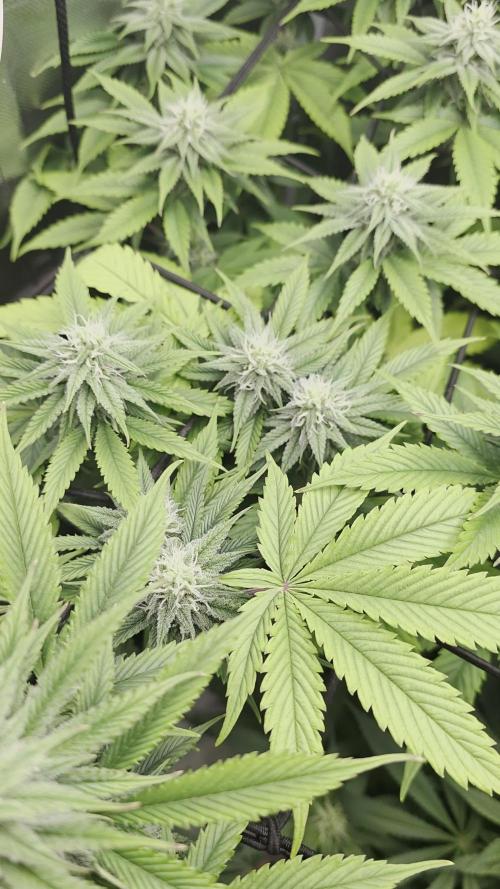
It's week five of flowering, and the plants are doing really well. The CalMag deficiency has been remedied, and bud production is slowly picking up speed. The buds are becoming frosty, and the aroma is intensifying. 💚💚💚
Likes
2
Share


Likes
3
Share


@French__flair
Follow
N'hésitez pas à me contacter si vous avez des questions!
Pour préparer votre solution, dans votre réservoir ou arrosoir :
Mettre en premier la base (Iguana)
Ensuite Ancient Earth
Et enfin les bactéries
ASSUREZ-VOUS D'UTILISER UNE EAU DE BONNE QUALITE (EC < 0,2) POUR DE MEILLEURS RESULTATS.
J'utilise un substrat non enrichi pour permettre le meilleur départ à mes plantes.
Il s'agit du Promix de Plagron, il a une EC proche de 0, c'est pour cette raison que je commence les engrais assez fort dès le début. Les plantes sont très gourmande sous LED haute intensité et l'enracinement est rapide.
J'arrose tous les 3 jours environ avec 2 arrosages à l'engrais et 1 à l'eau par semaine. Je n'attend pas que le substrat sèche complétement sinon ça réduit l'efficacité de l'arrosage, ça détruit la faune et éventuellement facilite la cristallisation des minéraux.
Au niveau du volume d'arrosage, il faut prendre en compte 1/3 de la taille du pot. Pour un pot de 1L je vais donc arroser environ 300ml. Pour un Pot de 10L je vais arroser environ 3L.
Il est important d'arroser doucement pour éviter que l'eau ne coule tout de suite au fond.
Il est important d'avoir au moins 15% de drain pour s'assurer d'évacuer tous les nutriments non consommé et faire la place aux nouveaux.
IL EST PRIMORDIALE D'EVACUER L'EAU AU FOND DES COUPELLES, c'est une eau qui est chargée en nutriments non consommé et on ne veut pas qu'elle remonte dans les pots car cela risquerait de créer des blocages.
Au niveau de la technique de taille de formation, je réalise tout de suite une FIM que je reproduirai dès que l'apex aura repoussé. La première FIM est la plus longue mais les suivantes sont très rapide car la plante s'habitue à la technique et cela la stress beaucoup moins. En général il faut reproduire la FIM tous les 3 à 4 jours en fonction de la vigueur. C'est une technique très facile à mettre en œuvre et ne demande aucun matériel. C'est aussi la plus rapide pour obtenir des buissons.
N'hésitez pas à me contacter si vous avez des questions concernant la FIM!
Je retire également les feuilles supérieur (pas toute pour éviter de ralentir la plante) qui cache les secondaires pour augmenter l'efficacité de la FIM sur la croissance des secondaires.
Likes
2
Share
@HavelGrower
Follow
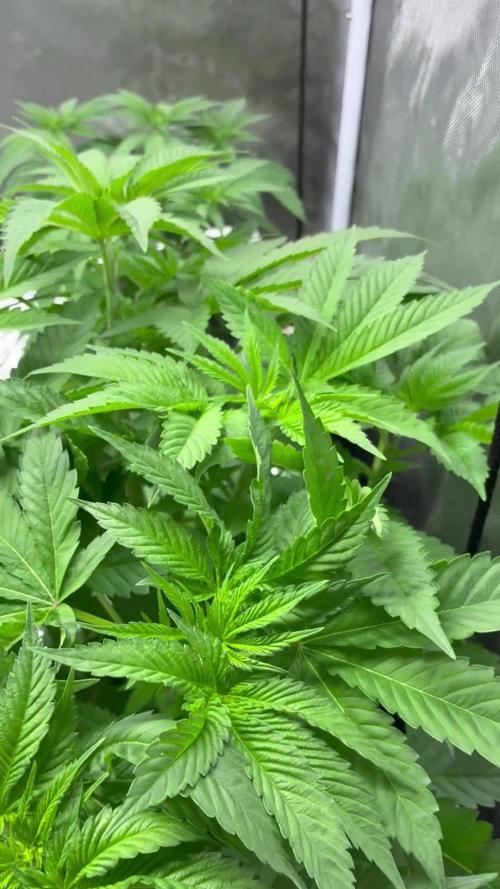
I stayed on the same conditions because I don’t want to accelerate growth right now. In 4-10 days they will move to the bigger space. So far so good … they are prey thirsty. 3 Liters per day. I hope the 2 small plants will catch up a bit.
Did nothing with the plants. Just keeping Nutrientsolution in the reservoir.
Right now I’m not sure if I keep all of them or if i dump 2 of them and just scrog the others bigger.
Conditions of the Grow:
💡 PPFD: 500 umol/m2/s
☀️ DLI: 32.4 mol/day
🌓 Lightcycle: 18/6 h
💨 Humidity: 55-60 %
🌡️ 🌞Daytime Temp.: 25-26 *C
🌡️ 🌙Nighttime Temp.: 21-22 *C
🌡️🌱Leaf Temperature: 23 *C
🌡️💧Water Temperature: 19-21 *C
Water TDS: 900ppm | EC: 1.8 us/cm
🚰Watersource: Rainwater (TDS: 15ppm | EC: 0.03 us/cm
Vegetation Equipment:
🔦 Lamp: Pro-Emit DIY-M-KIT 300W
📤Container: 2x DIY 63L Euro-Box with lid
Pot: Netpot 2 inch
💦Pump: M.R.S. Standard Whisper Powerpump 8.5 bar
🚿Nozzles: 12x 0.2mm
🫧Waterfilter: 150 microns
🌬️Fan: 2x Clipfan
🌪️Duct-Fan: AC Infinity 100 mm with Controller and no Filter
🍶Nutrient Brand: Terra Aquatica
🔬Sensors: Waterstation (EC, TDS, Temp, PH, Salt), CO2, Air Temp. & Humidity (VPD), Temperature-Sensor Root Container

Processing
Likes
15
Share


@AK1210
Follow
The bud sites are just covered in tricomes, I had my magnifying glass out to check the colour and most are milky but not as much as I thought by going by the pistol coloring, as they are mostly brown.
There is a more of a spicy dank smell to her now and the fan leaves have mostly died or are close to dying.
Hopefully I can start the flush process soon but will not do this till I'm happy with the tricome colouring.

Likes
10
Share

@RooftopFarmer
Follow
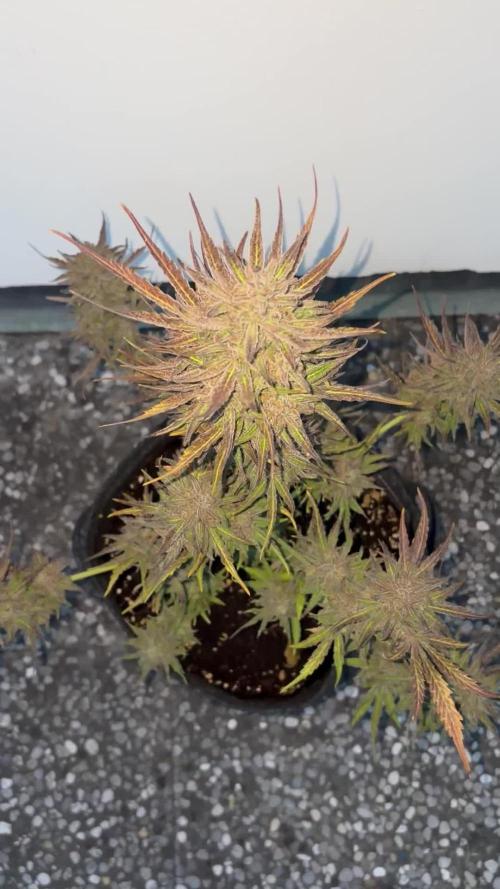
Guava Runtz – Week 11 (Fast Buds Outdoor 2026)
Guava Runtz is done. She was harvested and lightly wet trimmed, then properly trimmed after drying. She is now in the jar for curing.
Final dried weight came out at 34 g. Beautiful red colors throughout and a strong fruity smell that hits hard. Really happy with how she turned out.
Likes
Comments
Share

@Firefly
Follow
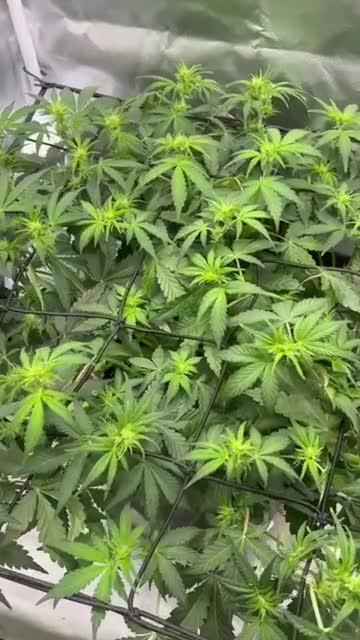
Week 5! End of Veg? Preflower? Flower? Very eventful week. Throughout this week at ever watering the plant got a round of LST+Tucking. At this point I'm trying to maximize the amount of growth sites getting light exposure and also trying to keep the canopy relatively flat/level. Full strength nutrients per normal. About this point I was getting really worried about space, particularly giving the genetics of this plant tend to the larger side. Impulse purchased a net and on 9/17/25 the ScrOG net was installed and I did my best to use it to curate the canopy. ~placed about 8" from the top of the pot and besides that I just gave it my best go, not exactly sure if I did it right or not. Towards the end of this week pistols become pretty apparent on most of the plant! Some very light defoliation was done, just a couple of oversized fan leaves that weren't getting much light anyway. LED was set to 100% (and slightly raised) per manufacture specification towards the end of this week.
Wouldn't be a first grow without a scare of the week. 😵 Last week we had an accidental topping, this week we have roots growing all outside the pot. On 9/16/25 I noticed the root growth out the bottom of the pot. My wildly unintelligent drain pan setup used bows to space the pot up and they collected runoff, leaving the roots with a nice bath of runoff water to grow into. Learning every week, this week I learned about air-pruning. Went ahead and cut these root growths off, purchased a 1$ Lowes runoff pan, and returned three bowls and a nice Pyrex dish back to the kitchen. About the same time of my root issue, within the next 2 days a good amount of leaves had slight yellow tips...