


Likes
Comments
Share


@Roberts
Follow
This was a lost grow from dudding disease that got brought over from another run, it did not come from AMS. Plants were destroyed. Thank you Spider Farmer, and AMS. 🤜🏻🤛🏻🌱🌱🌱
Www.amsterdammarijuanaseeds.com
Thank you grow diaries community for the 👇likes👇, follows, comments, and subscriptions on my YouTube channel👇. ❄️🌱🍻
Happy Growing 🌱🌱🌱
https://youtube.com/channel/UCAhN7yRzWLpcaRHhMIQ7X4g
Spider Farmer G300w: https://amzn.to/3S2zvsd
Spider Farmer 10X20 Heat Mat Kit - https://amz.fun/lsa0J
Spider Farmer Amazon Store: https://www.amazon.com/spiderfarmer
Spider Farmer Official Site: https://spider-farmer.com
Discount code: saveurcash

Likes
48
Share


@Nvchods3
Follow
transplante a maceta de 5.5 litros
se le aplico microrrizas
mas un potenciador genetico Knactive


Likes
27
Share


@adam_pawloski87
Follow
First off I just want to say for some reason it’s not letting me change the right temperatures on my diaries ! Each time when I put it in they stay at 50. My day air stays 75 degrees an , night degrees is 70 !
Today is day 58 for all these ladies! This week has been really great ! Girls really progressed a lot , especially for one the Forbiddin Runtz, looks like is gonna finish up in a week or 2 ! Other then that they are coming along well! Keep those eyes peeled for next week! Cheers😶🌫️💨💨💨💨

Likes
55
Share


@MadeInGermany
Follow
Info:
Unfortunately, I had to find out that my account is used for fake pages in social media.
I am only active here on growdiaries.
I am not on facebook instagram twitter etc All accounts except this one are fake.
Hey guys :-) .
Week after week goes by and the lady is developing great :-).
The training has ended because she will be in the flower tent in the next 10 days :-).
It has become very bushy and I am very curious to see how it will develop again in bloom.
It was poured twice this week with 1.2 l each.
(See table above for nutrient addition).
It was cleaned and the plant health checked.
Stay healthy 🙏🏻
You can buy this Nutrients at :
https://greenbuzzliquids.com/en/shop/
With the discount code: Made_in_Germany you get a discount of 15% on all products from an order value of 100 euros.
You can buy This Strain at :
www.Zamnesia.com
☝️🏼☝️🏼☝️🏼☝️🏼☝️🏼☝️🏼
Strain
Gelato clone from mother (Zamnesia )
☝️
Genetics: Wedding Cake x Gelato x Gelato 33
Vega lamp:
2 x Todogrow Led
Quantum Board 100 W
💡
Bloom Lamp :
2 x Todogrow Led
Cxb 3590 COB 3500 K 205W
💡💡☝️🏼
Soil :
Canna Coco Professional +
☝️🏼
Nutrients :
Green Buzz Liquids :
Organic Grow Liquid
Organic Bloom Liquid
Organic more PK
More Roots
Fast Buds
Humic Acid Plus
Growzyme Big Fruits
Clean Fruits
Cal / Mag
Organic Ph - Pulver
☝️🏼🌱
Water: Osmosis water mixed with normal water (24 hours stale that the chlorine evaporates) to 0.2 EC. Add Cal / Mag to 0.4 Ec Ph with Organic Ph - to 5.8

Likes
32
Share


@Felloffthegrid420
Follow
Wow I'm love these two lady idk how I'm going chop and idk how close they are any tip are they ready now I was hoping they fill in but I don't want over do it when should I cut today my last day of feeding??
Processing
Likes
5
Share


@710_Squish
Follow
I don't think she is in full flower yet but well on her way. She has taken all the lst and defoliation I throw at her. I added a silica additive since I want this lady to have superman stems to take my torture.
Day 32 - She is really drinking a lot right now. I had to water earlier than expected and will also increase the amount I am giving.

Likes
92
Share


@CachimboDaPaz
Follow
Last week before leaving the plants in the dark for 2 days.
I can't really wait to get the results and waiting for. Even though I've made some mistakes due to not enough time to take care of them, I am really happy my first grow.



Likes
13
Share

@Borberad
Follow
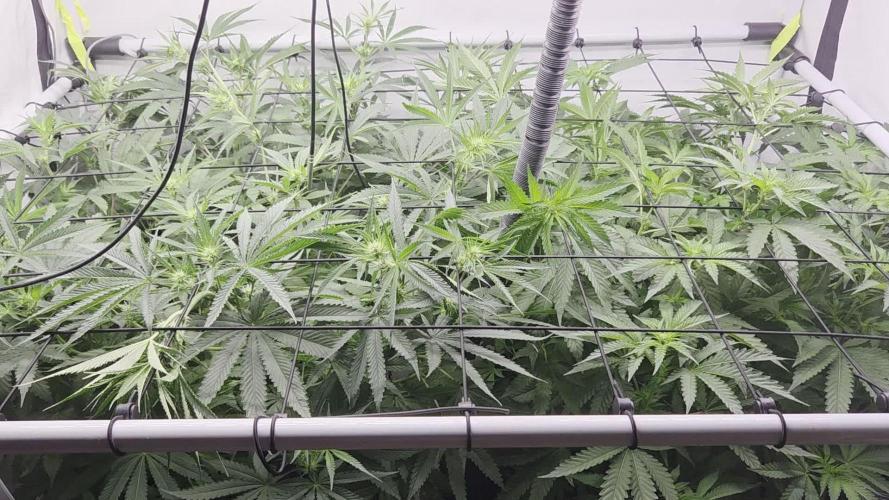
Woche 9
.. und die Pflanze eskaliert vollständig.🤭
Aus Sorge ihr Wachstum mit für uns üblichen Methoden nicht mehr wirklich bändigen zu können, nutzen wir Gummizüge als "Scroglines" in der Hoffnung zumindest die Richtung des Wuchses vorgeben zu können.🌳 Scrog möchten wir es trotzdem nicht nennen.🤷♂️



Likes
16
Share


@valiotoro
Follow
A wonderful genetic thank you Fast Buds ❤️🔥🤩
The trim was super easy the buds are FAT & FROSTY full of resin 🤤
I’m very happy with the harvest 142g !!
For the light i’ve used the Mars Hydro SP-6500💡


Likes
79
Share


@Salokin
Follow
Hello Growmies! 🌿👋
Welcome to Week 17 of our Epic Buzz journey! We're observing some noticeable progression in our plants, and we're nearly at the finish line with the next entry poised to be our final harvest week!
Here’s the breakdown for our Epic Buzz phenotypes:
Pheno #1 is thriving with its buds thickening up nicely, showcasing a frosty appearance that promises high-quality resin production.
Pheno #2 remains a bit smaller in comparison, yet it's catching up with an increase in bud density and trichome development.
Pheno #3 stands out with its robust growth and resin-packed buds that are slightly ahead in terms of maturity compared to its siblings.
As we approach the harvest, maintaining optimal environmental conditions—consistent humidity and temperature—is more crucial than ever to maximize their potential.
Stay tuned for our final week's update, and as always, stay lifted! 🚀🌱

Likes
57
Share


@Silverback_Guerilla
Follow
10/26:
Germinated two Sweet Zkittlez and a single Black Jack seed.
10/29:
Decided to plant another Black Jack seed...
11/2:
Had other germ failures, so planted a pair of Gorilla Girls as replacements.
Likes
1
Share

@pareto
Follow
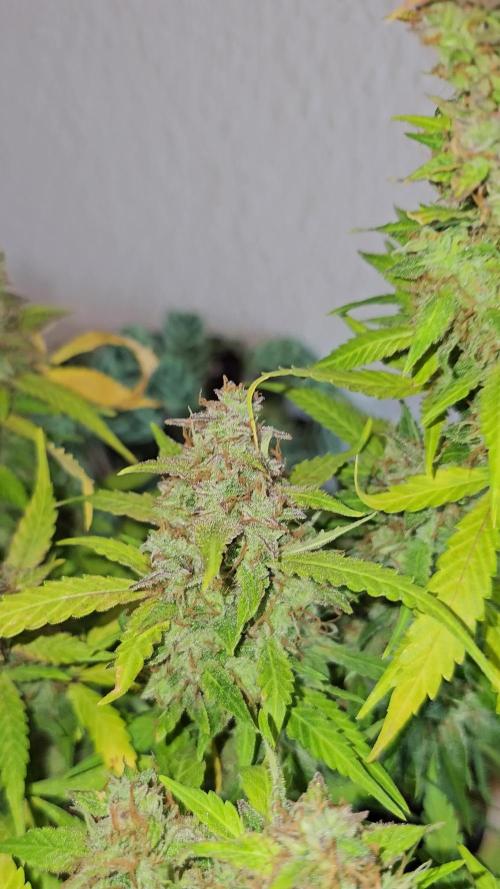
The summer was super wet and humid so she lost 2 of the big buds to mold.
Other than that she did great! really big, vigorous and heavy, dense buds. All arround winner. Really looking forward to the seeds.
These plants are not mine. I am just documenting them.
Total Runtime: 81 days
--------------------------------------------------------------------------------------------------------------------------------------------------------------------------------
Set up cost (fixed costs)
-Lamp: 40€
-Timer: 3,5€
-Pot: 4€
-Total fixed costs: 47,5€
Given 5 years (or 15 grows) usage time translates to around 3,17€ per grow in materials.
Variable costs:
-Seeds: 13,17€
-Soil: 6€
-Fertilizer: 3,50€
-Power (100 days 18h/day): ~25,92€ (exact figure after harvest)
-Total variable costs: ~48,59€
-Total costs per grow: ~51,76€

Likes
111
Share


@Dahoola
Follow
______________
An interim update:
______________
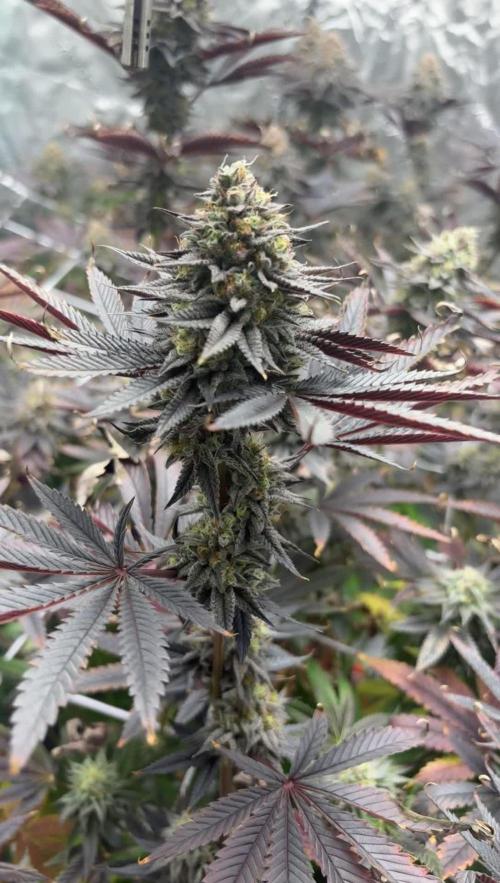
The pre-bloom has started. The plant is preparing for its last growth spurt. The growth in the last days is therefore substantial. For the time being no real problems. Apart from the additives that I provide, no additional nutrients have been added. A little too much N, because of this there is a little bit of burned leaftips. But hopefully a bit of a push can not hurt too much;) a new update at the end of the week.
_________________
End of week 4 update:
_________________
The bloom has begun. The growth was very exuberant this week. 25 centimeters larger than at the beginning of the week. There are a lot of shoots with budsites. Have given some flowering nutrients for the first time, albeit a low dose. The problem with the burned leaf tips has also been solved. A little too much of N did not hurt the plant. The grow mix of plagron is perhaps a bit too 'powerful' for young plants. But no real negative consequences, so no problem. I gave the plant also a nice 'shower' today with iron spray. She seems to like it. On to the real first week of flowering

Processing
Likes
21
Share


@Dunk_Junk
Follow
Almost doubled her height this week since transplant!
Lets see how she goes over the next few weeks.
Likes
19
Share

@adam_pawloski87
Follow
Let’s Go Day day 61 from seed !!! This week went real well! As you can see all these girls are starting to stack very well! Everything is pretty much the same, we have switched to fully bloom an these ladies are just Looking super healthy , we are getting a nice smell of grapes on these Ogreberrys ! Bruce Banner is packing crystals like a Mofo too an super stanky , all very happy about this run ! Still got a nice few more weeks of bloom to go let’s watch em stack ! Lets grow lil ladies let’s grow !! Hope you all enjoy an have an amazing productive day ! Peace love an positive vibes to all you Growmies out there Cheers 😶🌫️💨💨💨💨💨🤙🏻 If there’s any questions please just ask I’ll be glad to help !!
