





Likes
5
Share

@KannaGrowing
Follow
VARIEDAD EN FASE DE TEST. NO DISPONIBLE COMERCIALMENTE. RESULTADOS EN EVALUACIÓN POR KANNABIA.
Ya estamos en prefloración, así que comenzamos a añadir a nuestra mezcla de fertilizantes, Bio Flores y Bio Boost.
Sin eliminar Bio Vega y Bio Rhizotonic, por el momento.
Regamos una vez con agua y otra con fertilizantes, solo cuando el sustrato se ha secado.
Mantenemos las luminarias y extracción a máxima potencia.
Likes
19
Share


@Alice_in_Wonderland
Follow
Ladies are smelling strong and ready to be harvested. Chopping Venezia to be hung out to be dried tonight. Cheech can still go another day or two under the light with the lower pistols still a little blush.

Processing
Likes
88
Share


@No_Clout
Follow
01/08/18 - I fed them all 1 litre each, one of them seems to be praying up but the other two Seem a little bit droopy still.
02/08/18 - #3 is praying like usual and the other two are getting better Day by day I’m going to be giving them another feeding tomorrow, I have seen roots stretching out to the sides of the pots so I might saturate the whole pot.
04/08/18 - horrible sight today looks like rusty cracks in some leaves , not got a clue what this.
05/08/18 - browning has continued since last night and it’s all on the new leafs not the older ones. i fed them without any calmag , so I think it could be a deficiency of some sort (cal/mag).the mad thing is, it’s only two of the girls, one of them is completely fine nice green leaves not yellow marks that turn orange/brown. It definitely has nothing to do with my ph or all three girls would be showing some symptoms seeing as they all get fed with the same soloution.✌️🏻
07/08/18 - everything’s cleared up their was slight nute burn in the process but everything seems a lot better so I decided to start LST. all the new leaves are the colour they should be with no nute burns or calcium deficiency 🙏🏻
Likes
1
Share


@Dr_Med_Rasen
Follow
Hey,
just wanted to show my little experiment. A selfmade grow bucket. Lemon Cherry Cookies Auto by Fastbuds. Plant is 4 Weeks old now, was in soil before in a 1L Pot. Changed to Hydro because other plants having trouble with my ph or magnesium problems. I dont know. Because my last grow in this bucket went pretty well i tried to give it another chance before i buy myself a better dwc system with more buckets.
👉Update Day 32
Removed 2 large leaves to give the shoots underneath more access to light.
Also added an AC Infinity 60x60 SCROG net and set it up in a way that the lower shoots give the upper ones more space, allowing them to get better light exposure.
------------German----------
Hey,
wollte nur mein kleines Experiment zeigen. Ein selbstgebauter DWC-Kübel, bestehend aus nem Airpot, nem Eimer und ner Aquariumpumpe mit Luftstein. Dazu noch n günstiger Füllstandsanzeiger von Amazon.
Lemon Cherry Cookies Auto von Fastbuds. Die Pflanze ist jetzt 4 Wochen alt, war vorher in Erde in einem 1L Topf. Bin auf Hydro umgestiegen, weil andere Pflanzen Probleme mit meinem ph-Wert oder Magnesiumprobleme hatten. Ich weiß es nicht. Da meine letzter Grow in diesem Bucket gut lief wollte ich DWC eine weitere Chance geben, bevor ich mir ein besseres System kaufe.
👉Update Tag 32
2 große Blätter mehr entfernt um den Trieben darunter mehr Licht zur Verfügung zu stellen.
Zudem noch ein AC Infinity 60x60 Scrognetz bekommen und so gespannt dass die unteren Triebe die oberen etwas freier stehen lassen und diese sich besser mit Licht versorgen können.


Likes
4
Share

@DogDoctorOfficial
Follow
🌸 Lava Cake – Week 7 (3rd Week Flower) | Blossoms Rising
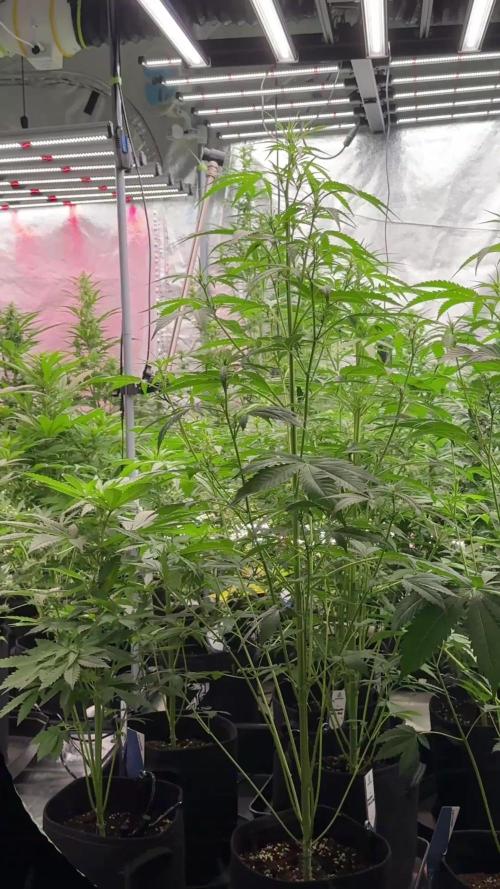
The third week of flower has arrived, and our Lava Cakes are stepping fully into bloom. Both girls are looking beautiful, symmetrical, and strong, with thick white pistils reaching out and leaves still praying to the light. Their similarity in structure makes this run feel almost like growing twins, each reflecting the same genetics, each glowing with energy.
⸻
🔙 Looking Back – The Road Here
From seeds sprouting in soft cups → to vigorous veg under Future of Grow and ThinkGrow LEDs → to the careful transplant and expansion in the 8x8 ecosystem, every stage has been about setting a solid foundation.
• Feeding: Aptus core line + Plagron boosters
• Training: Gentle guiding, letting them branch freely
• Environment: Tuned by the TrolMaster brain, with sensors guiding irrigation and VPD
All of this has brought us here: lush plants in early bloom, no signs of stress, and a canopy built for flower stacking.
⸻
🍽️ Current Recipe – Staying Steady
This week, we keep the same feed — consistency is key as the flowers set.
Per L Water:
• Aptus Regulator – 0.15 ml
• Aptus CalMag Boost – 0.25 ml
• Aptus Top Booster – 0.5 ml
• Plagron Power Buds – 1 ml
• Plagron Sugar Royal – 1 ml
• Plagron Green Sensation – 1 ml
With the Aptus All-in-One Liquid still paused, the soil’s embedded nutrition + pellets are helping balance things out while these bloom boosters do the heavy lifting.
⸻
🌡️ Room & Rhythm
• Temps: ~31–34°C (still awaiting the AC unit for stabilization)
• Humidity: ~60%, bringing VPD near 1.9 kPa
• Watering: Daily — plants are drinking heavily, irrigated once substrate moisture falls near 19–20%
• Monitoring: TrolMaster WCS substrate sensor + Tent-X keep us informed on EC, moisture, and temps directly in-soil
Even with warm conditions, the Lava Cakes are thriving, drinking more, praying more, and pushing out flowers with confidence.
⸻
🌸 Week 3 Flower – What We See
• White Hairs: Thick, long, and vibrant, covering the tops like cotton clouds.
• Flower Formation: Calyxes stacking, pistils reaching — no signs of hesitation.
• Leaf Posture: Still upright, showing photosynthesis and metabolism are strong.
• Uniformity: Both plants showing the same pace and morphology, a sign of stable genetics and consistent environment.
⸻
🔮 Looking Ahead – What to Expect / Not to Expect
✅ Expect:
• Rapid stacking in the next 2 weeks — buds will start to swell noticeably.
• Aroma development — sweet Lava Cake terpenes may start teasing the air soon.
• Nutrient demands rising steadily as flowers form.
❌ Not to expect:
• Big trichome coverage just yet — resin production typically comes later.
• A slowdown — stretch is nearly over, but flower development is just beginning.
⸻
✨ Closing Thoughts
The Lava Cakes are shining this week. Both are aligned in their growth, both are drinking and feeding with rhythm, and both are showing that the careful setup, from lights to irrigation to sensors, is paying off.
Week 3 of flower is a promise — not yet the harvest, but the first real glimpse of what’s coming. Thick pistils today, heavy buds tomorrow. With consistency in feeding, environment, and care, these girls are well on their way to becoming the stars of the room.
📲 Don’t forget to Subscribe and follow me on Instagram and YouTube @DogDoctorOfficial for exclusive content, real-time updates, and behind-the-scenes magic. We’ve got so much more coming, including transplanting and all the amazing techniques that go along with it. You won’t want to miss it.
• GrowDiaries Journal: https://growdiaries.com/grower/dogdoctorofficial
• Instagram: https://www.instagram.com/dogdoctorofficial/
• YouTube: https://www.youtube.com/@dogdoctorofficial
⸻
Explore the Gear that Powers My Grow
If you’re curious about the tech I’m using, check out these links:
• Genetics, gear, nutrients, and more – Zamnesia: https://www.zamnesia.com/
• Environmental control & automation – TrolMaster: https://www.trolmaster.eu/
• Advanced LED lighting – Future of Grow: https://www.futureofgrow.com/
• Root and growth nutrition – Aptus Holland: https://aptus-holland.com/
• Nutrient systems & boosters – Plagron: https://plagron.com/en/
• Soil & substrate excellence – PRO-MIX BX: https://www.pthorticulture.com/en-us/products/pro-mix-bx-mycorrhizae
• Curing and storage – Grove Bags: https://grovebags.com/
⸻
We’ve got much more coming as we move through the grow cycles. Trust me, you won’t want to miss the next steps, let’s push the boundaries of indoor horticulture together!
As always, this is shared for educational purposes, aiming to spread understanding and appreciation for this plant. Let’s celebrate it responsibly and continue to learn and grow together.
With true love comes happiness. Always believe in yourself, and always do things expecting nothing and with an open heart. Be a giver, and the universe will give back in ways you could never imagine.
💚 Growers love to all 💚


Processing
Likes
49
Share


@Ganjagrandaddy
Follow
Day 63 Flowering: Well folks we have reached that point where it has all been focused on.
The Fft#9 has been a great performer from seed to finish amd i cannot fault the genetics at all. She has responded to all the training with no issues at all. Easy to work with and hardy enough to take some punishment with supercropping ect... Buds smell fruity with a hint of diesel to them and are so sticky icky now too. Her trichs are all cloudy and she has a nice proportion of emerging Amber's so tonight she will goninto 48 hrs dark before inhanf her for drying alongside the FFT@10 who has had a week hanging in approx 4°C and 18°C as the outside temps drop. She is still a waybof dry and will possibly be another week if I leave her in this position in the roof space. Once I hang the FFT#9 in the tent and begin her drying , I will move the fft10 too. I could not be happier with these twontesters as they have performed excellently. brilliant job fast buds. roll on harvest time.

Likes
15
Share


@MrJones
Follow
MrJones Ztrawberriez Auto
🍓╰⊰🍓´🍓⊱╮🍓╰⊰🍓´🍓⊱╮🍓╰⊰🍓´🍓⊱╮🍓╰⊰🍓´🍓⊱╮🍓
💧 Feeding - Using Gaia Green Grow / Bloom and Compost Teas
🍃Training / LST-Defoliation-Topping TBA
🕷️ IPM - Will be using Green Cleaner" 1 OZ per Gallon, and CannControl from Mammoth alternating between products each month for Integrated Pest
🍓╰⊰🍓´🍓⊱╮🍓╰⊰🍓´🍓⊱╮🍓╰⊰🍓´🍓⊱╮🍓╰⊰🍓´🍓⊱╮🍓
▶️Saturday 11.11.23 - These girls continue to look good, the smaller one is doing better, it will be small, but healthy, Week 4, this week most FB strains begin to stretch into flower, today I started a compost tea, see recipe below, and will be feeding tomorrow. Moved the plants into my stealth closet, under 2 Vipar Spectare XS 1500s.
🍓´🍓⊱╮🍓╰⊰🍓´🍓⊱╮🍓╰⊰🍓´🍓⊱╮🍓╰⊰🍓´🍓⊱╮🍓
▶️Bud Description Ztrawberriez Auto produces long and fat buds with a beautiful light green shade with oftentimes purplish hues and a thick layer of resin that starts at the top of the flowers and continues all the way to the tip of the sugar leaves. It’s the typical bud structure you would expect from hybrid varieties topped with an explosion of fruity terps that’ll hit you in the face with a blend of creamy, fruity, and sweet aromas as soon as you break the buds open. Definitely a must for terp heads and extractors looking for exaggerated flavors and aromas
🍓╰⊰🍓´🍓⊱╮🍓╰⊰🍓´🍓⊱╮🍓╰⊰🍓´🍓⊱╮🍓╰⊰🍓´🍓⊱╮🍓
▶️SOIL MIX
40% ProMix HP
40% Coco Coir 70/30
15% Worm Castings
05% Malibu Compost
🍓╰⊰🍓´🍓⊱╮🍓╰⊰🍓´🍓⊱╮🍓╰⊰🍓´🍓⊱╮🍓╰⊰🍓´🍓⊱╮🍓
Compost Tea
3 Gallons of Dechlorinated H20
3 Cups Malibu Compost
2T Molasses
2 T Alfalfa Meal (DTE)
2 T Kelp Meal (DTE)
1 T Bat Guano (DTE)
1 teaspoon Rootwise Bio Elixir
1)- I used a small paint strainer to hold my composts, placing an air stone right in the bag and zip-tie it nice and tight - this allows air bubbles to really agitate the micro matter off of the compost and into your tea
2)- I like to mix in the molasses (microbe food) and start my main air stone, the dry amendments and Rootwise can be just measured in the bubbles
3) - Keep the temp of the water warm to 75F/85F - too cool and the microbes reproduce too slowly and too hot will kill them.
I do not delete my teas and let the plant pots dry out slightly before feeding.


Likes
55
Share


@Ultraviolet
Follow
What's in the soil? What's not in the soil would be an easier question to answer. 16-18 DLI @ the minute. +++ as she grows.
Probably not recommended, but to get to where it needs to be, I need to start now.
Vegetative @1400ppm 0.8–1.2 kPa 80–86°F (26.7–30°C) 65–75%, LST Day 10, Fim'd Day 11
CEC (Cation Exchange Capacity):
This is a measure of a soil's ability to hold and exchange positively charged nutrients, like calcium, magnesium, and potassium. Soils with high CEC (more clay and organic matter) have more negative charges that attract and hold these essential nutrients, preventing them from leaching away.
Biochar is highly efficient at increasing cation exchange capacity (CEC) compared to many other amendments. Biochar's high CEC potential stems from its negatively charged functional groups, and studies show it can increase CEC by over 90%. Amendments like compost also increase CEC but are often more prone to rapid biodegradation, which can make biochar's effect more long-lasting. biochar acts as a long-lasting Cation Exchange Capacity (CEC) enhancer because its porous, carbon-rich structure provides sites for nutrients to bind to, effectively improving nutrient retention in soil without relying on the short-term benefits of fresh organic matter like compost or manure. Biochar's stability means these benefits last much longer than those from traditional organic amendments, making it a sustainable way to improve soil fertility, water retention, and structure over time. Needs to be charged first, similar to Coco, or it will immobilize cations, but at a much higher ratio.
a high cation exchange capacity (CEC) results in a high buffer protection, meaning the soil can better resist changes in pH and nutrient availability. This is because a high CEC soil has more negatively charged sites to hold onto essential positively charged nutrients, like calcium and magnesium, and to buffer against acid ions, such as hydrogen.
EC (Electrical Conductivity):
This measures the amount of soluble salts in the soil. High EC levels indicate a high concentration of dissolved salts and can be a sign of potential salinity issues that can harm plants.
The stored cations associated with a medium's cation exchange capacity (CEC) do not directly contribute to a real-time electrical conductivity (EC) reading. A real-time EC measurement reflects only the concentration of free, dissolved salt ions in the water solution within the medium.
98% of a plants nutrients comes directly from the water solution.
2% come directly from soil particles.
CEC is a mediums storage capacity for cations. These stored cations do not contribute to a mediums EC directly.
Electrical Conductivity (EC) does not measure salt ions adsorbed (stored) onto a Cation Exchange Capacity (CEC) site, as EC measures the conductivity of ions in solution within a soil or water sample, not those held on soil particles.
A medium releases stored cations to water by ion exchange, where a new, more desirable ion from the water solution temporarily displaces the stored cation from the medium's surface, a process also seen in plants absorbing nutrients via mass flow. For example, in water softeners, sodium ions are released from resin beads to bond with the medium's surface, displacing calcium and magnesium ions which then enter the water. This same principle applies when plants take up nutrients from the soil solution: the cations are released from the soil particles into the water in response to a concentration equilibrium, and then moved to the root surface via mass flow.
An example of ion exchange within the context of Cation Exchange Capacity (CEC) is a soil particle with a negative charge attracting and holding positively charged nutrient ions, like potassium (K+) or calcium (Ca2+), and then exchanging them for other positive ions present in the soil solution. For instance, a negatively charged clay particle in soil can hold a K+ ion and later release it to a plant's roots when a different cation, such as calcium (Ca2+), is abundant and replaces the potassium. This process of holding and swapping positively charged ions is fundamental to soil fertility, as it provides plants with essential nutrients.
Negative charges on soil particles: Soil particles, particularly clay and organic matter, have negatively charged surfaces due to their chemical structure.
Attraction of cations: These negative charges attract and hold positively charged ions, or cations, such as:
Potassium (K+)
Calcium (Ca2+)
Magnesium (Mg2+)
Sodium (Na+)
Ammonium (NH4+)
Plant roots excrete hydrogen ions (H+) through the action of proton pumps embedded in the root cell membranes, which use ATP (energy) to actively transport H+ ions from inside the root cell into the surrounding soil. This process lowers the pH of the soil, which helps to make certain mineral nutrients, such as iron, more available for uptake by the plant.
Mechanism of H+ Excretion
Proton Pumps: Root cells contain specialized proteins called proton pumps (H+-ATPases) in their cell membranes.
Active Transport: These proton pumps use energy from ATP to actively move H+ ions from the cytoplasm of the root cell into the soil, against their concentration gradient.
Role in pH Regulation: This active excretion of H+ is a major way plants regulate their internal cytoplasmic pH.
Nutrient Availability: The resulting decrease in soil pH makes certain essential mineral nutrients, like iron, more soluble and available for the root cells to absorb.
Ion Exchange: The H+ ions also displace positively charged mineral cations from the soil particles, making them available for uptake.
Iron Uptake: In response to iron deficiency stress, plants enhance H+ excretion and reductant release to lower the pH and convert Fe3+ to the more available form Fe2+. The altered pH can influence the activity and composition of beneficial microbes in the soil. The H+ gradient created by the proton pumps can also be used for other vital cell functions, such as ATP synthesis and the transport of other solutes. The hydrogen ions (H+) excreted during photosynthesis come from the splitting of water molecules. This splitting, called photolysis, occurs in Photosystem II to replace the electrons used in the light-dependent reactions. The released hydrogen ions are then pumped into the thylakoid lumen, creating a proton gradient that drives ATP synthesis.
Plants release hydrogen ions (H+) from their roots into the soil, a process that occurs in conjunction with nutrient uptake and photosynthesis. These H+ ions compete with mineral cations for the negatively charged sites on soil particles, a phenomenon known as cation exchange. By displacing beneficial mineral cations, the excreted H+ ions make these nutrients available for the plant to absorb, which can also lower the soil pH and indirectly affect its Cation Exchange Capacity (CEC) by altering the pool of exchangeable cations in the soil solution.
Plants use proton (H+) exudation, driven by the H+-ATPase enzyme, to release H+ ions into the soil, creating a more acidic rhizosphere, which enhances nutrient availability and influences nutrient cycling processes. This acidification mobilizes insoluble nutrients like iron (Fe) by breaking them down, while also facilitating the activity of beneficial microbes involved in the nutrient cycle. Therefore, H+ exudation is a critical plant strategy for nutrient acquisition and management, allowing plants to improve their access to essential elements from the soil.
A lack of water splitting during photosynthesis can affect iron uptake because the resulting energy imbalance disrupts the plant's ability to produce ATP and NADPH, which are crucial for overall photosynthetic energy conversion and can trigger a deficiency in iron homeostasis pathways. While photosynthesis uses hydrogen ions produced from water splitting for the Calvin cycle, not to create a hydrogen gas deficiency, the overall process is sensitive to nutrient availability, and iron is essential for chloroplast function.
In photosynthesis, water is split to provide electrons to replace those lost in Photosystem II, which is triggered by light absorption. These electrons then travel along a transport chain to generate ATP (energy currency) and NADPH (reducing power). Carbon Fixation: The generated ATP and NADPH are then used to convert carbon dioxide into carbohydrates in the Calvin cycle. Impaired water splitting (via water in or out) breaks the chain reaction of photosynthesis. This leads to an imbalance in ATP and NADPH levels, which disrupts the Calvin cycle and overall energy production in the plant. Plants require a sufficient supply of essential mineral elements like iron for photosynthesis. Iron is vital for chlorophyll formation and plays a crucial role in electron transport within the chloroplasts. The complex relationship between nutrient status and photosynthesis is evident when iron deficiency can be reverted by depleting other micronutrients like manganese. This highlights how nutrient homeostasis influences photosynthetic function. A lack of adequate energy and reducing power from photosynthesis, which is directly linked to water splitting, can trigger complex adaptive responses in the plant's iron uptake and distribution systems.
Plants possess receptors called transceptors that can directly detect specific nutrient concentrations in the soil or within the plant's tissues. These receptors trigger signaling pathways, sometimes involving calcium influx or changes in protein complex activity, that then influence nutrient uptake by the roots. Plants use this information to make long-term adjustments, such as Increasing root biomass to explore more soil for nutrients. Modifying metabolic pathways to make better use of available resources. Adjusting the rate of nutrient transport into the roots. That's why I keep a high EC. Abundance resonates Abundance.
Likes
26
Share


@pifflestikkz
Follow
Day 43
12/08/24 Monday
Feed today, it was warm again so they drank the whole 300ml each so I have topped up another 150ml to see run off to prevent salt build up.
All thriving 😍✌️💚
ACOP and Melonade Runtz structure is stunning 💪
Divines Overdose is getting chunky and showing nice stack potential 👌
Leaving these to just run there natural course, will allow me to best pick my next SOG run with micro autos indoor 😎
Video update
Day 45
14/08/24 Wednesday
De-chlorinated tap water pH 6 only today.
Day 48
17/08/24 Saturday
Another watering today using de-chlorinated tap water pH 6 only.
Orange bud is tall!! Top her next time.
Critical orange is lovely and compact.
Overdose is nice and compact,
Melonade Runtz nice compact structure also.
Picture and video update ✌️ 💚


Likes
167
Share


@Bloombuster
Follow
Цветение набирает силу, растение вытягивается, относительно равномерный рост, с виду - всё в порядке, растение выглядит здоровым и сильным. 💪

Likes
32
Share


@Compassionate_Gardener
Follow
Shortly after they were switched to flowering (after week 3) the plants continue to stretch and then start to develop their first flowers. Now in week 7 all plants have very nice flower clusters all over the plant and side branches. They have grown to 45 cm (=Shiva Skunk on left side) and 40 cm (Serious Kush on right side of aisle) in height respectively and all plants have a nice dark green color, which shows they are healthy and also that the Advanced Nutrients schedule works like a treat. The Q6W-Gen.2 LED-Lamps are now dimmed to 100% (=three green LEDs on the dimmer) and work on FULL POWER, which ensures full fledged flower production. Both varieties have now started to exude their typical aroma. The Shiva Skunk starts to smell musky and sweet, while the Serious Kush smells 'gassy' and 'fuely' like its OG-Kush heritage. The flower clusters on the Serious Kush appear to grow denser than the clusters on the Shiva Skunk.


Likes
70
Share

@MrJones
Follow
Sky Walker
~~~~~INDOOR~~~~~
DAY 155 Above Dirt
💬Saturday 02.10.24 - Just watering every day and managing the environment, the buds continue to pack on weight and are starting to cause the flowers to leen, they are not huge but lots of golfball size hard rocks in there, and the smells are amazing, dank and earthy, with a fruit citrus funk, pretty damn nice!
📝 REAL GROWERS RECHARGE -is a mix-and-pour soil microbe superpack. It works like an instant compost tea. The soil microbes in Recharge go out and grab the nutrients in your soil, help break them down, and bring them back to your plant's root zone.
~~~~~~~~~~~~~~~
🌱Sky Walker
👨🌾Sativa Jones
🌤️@Medicgrow420
📝SeedBank Seeds
📝@gaiagreenorganics
📝Bokashi Biochar
📝Real Growers Recharge
📝 ProMix-HP
~~~~~~~~~~~~~~~
📝 Skywalker OG Strain is a top-shelf Indica dominant hybrid. It is a cross of Original Amsterdam Blueberry, OG Kush, and the indica strain Mazar from Afghanistan, and is best known for its super potent effects and sky-high THC levels.


Likes
58
Share


@MadeInGermany
Follow
Flowering day 3 since time change to 12 / 12 h
Hey guys .
My cutting heating broke 3-4 weeks ago, which was fixed immediately and everything went wonderfully.
Now, 3 days ago, the central heating broke down in the entire room, so that at night I only have temperatures of around 13 degrees :-( .
One or the other lady is slowly starting to see a phosphorus blockage, as this can no longer be absorbed at temperatures below 15 degrees, like many other nutrients :-( .
A friend looked at the heating yesterday and came to the conclusion that a real company had to do it, which is by no means possible for a stranger to enter my room.
I quickly ordered heating mats for all the boxes so that the ladies could at least get warm feet.
That's all I have this winter full can do .
Let's hope everything will be fine 🙏🏻.
As soon as the heating mats are attached in the coming days, I will post them in the pictures.
Now for the update.
Despite the severe cold, the ladies are still doing well and have made good progres .
The ladies only had to be watered once this week, each time with 1 l, because it absorbs the water very slowly because of the cold and I don't want to overwater it.
I took every single plant in the pot to take a close look at their roots.
These are snow white and look very healthy 🙏🏻.
It was also the last time neem oil sprayed so that the last trips are finally gone.
Otherwise everything was checked and a lot of planning was done, like I do with the heating mats.
Since a friend had the same problem in one winter and the heating mats got 10 degrees plus on the pots, I am very confident that it will at least bring something for the last cold month 😃
🙏🏻.
I've started flowering even if some are still a bit small, but otherwise they'll get too wide from training and end up taking up space :-)
until then have fun and stay healthy 🙏🏻
👇🏼👇🏼👇🏼👇🏼👇🏼👇🏼👇🏼👇🏼👇🏼👇🏼👇🏼👇🏼
You can buy this Nutrients at :
https://greenbuzzliquids.com/en/shop/
With the discount code: Made_in_Germany you get a discount of 15% on all products from an order value of 100 euros.
👇🏼👇🏼👇🏼👇🏼👇🏼👇🏼👇🏼👇🏼👇🏼👇🏼👇🏼👇🏼
You can buy this strain at :
https://www.thegratefulseeds.com/shop/feminized-seeds/limited-edition/blue-javaz/
Water 💧 💧💧
Osmosis water mixed with normal water (24 hours stale that the chlorine evaporates) to 0.2 EC. Add Cal / Mag to 0.4 Ec Ph with Organic Ph - to 5.8 - 6.4
MadeInGermany


Likes
37
Share


@Wrongholn519
Follow
First and foremost.. .
I apologize on the tardiness of my diaries. I came down with Covid 2 weeks ago and it really put me down for a little bit. I'm finally feeling a bit more like myself and am spending more time in my garden again.
In my last journal I was talking about the different mutations I had with both these ladies from the germination stage. After doing some research I found out that the blackberry auto is actually a triploid mutation and I'm glad I kept her.. she's looking amazing despite a slight nitrogen toxicity... maybe the soil was a little hot for the blackberry auto compared to the other pheno's I'm growing. The blackberry auto is well into flower and looking great. I'm going to continue to strip as much vegetation off her as possible and lollipop upwards through flower.
There's not much I want to say about the Forbidden Runtz auto. She was a twin mutation and she has been stunted from day 1. She has grown lanky and thin, but I'm hoping to get some bud to press as soon as I harvest. She currently is looking a little stressed out, I've been feeding her at various pH and E.C. ranges just to see what happens. Please note the curling of the oldest fan leaves.