




Likes
13
Share


@DeepRootsGrowTrees
Follow
JOANNE'S CBD / ROYAL QUEEN SEEDS
WEEK #20 OVERALL
WEEK #8 FLOWER
This week she's looking good and she's doing great her buds are getting bigger and they even got a little trichome coverage just a few more weeks!! Stay Growing!!!
Thank you for stopping by and taking a look it's much appreciated!!!
THANK YOU ROYAL QUEEN SEEDS!!!
JOANNE'S CBD / ROYAL QUEEN SEEDS

Likes
19
Share


@Dunk_Junk
Follow
She grew 9cm this week.
Doing her thing, no input from me other than watering/nutrients.

Likes
8
Share


@Cdn_Chronic
Follow
All three seeds popped so I planted them into some 5 gallon fabric pots. Have them all just plain PH water (1 gallon for all three). First grow using coco so wish me luck

Likes
43
Share


@Growshh
Follow
I added another 4 tablespoons of pridelands bloom top dressed after defol. Still watering in brix, green aminos, armor si, calmag and great white everyday till max saturation


Likes
14
Share


@LokalGrenz
Follow
Got a dehumidifier it’s reading different from what mine controller 69 is saying but I have it set at 40% it’s the lowest so it’s going pull humidity regardless right now it’s about 53% which is okay would like it to get down to the 40’s I also changed the light schedule today to 20/4 the humidity raises at in my tent when lights are out so I figured change it to 20/4 instead of the 18/6 I’ve been running so if humidity does go over it won’t be for as long as before hopefully this works just trying to avoid any mold situation
So far the Amneisa Haze 2 is at stretching she’s going be big I can but the haze 2 is done seems to just be flowering the sour diesel is looking good as well so far I’m happy with its looking like left town for two days and the auto watering pots worked!


Likes
18
Share


@Master058
Follow
Fiets time growing Indoor, and with 2 x mars hydro t’s 1000 im supprised about the final result. Tent 1.20x2,00 3 plants iguess 200 g dry 1 week until drying


Likes
10
Share


@KushKeeper420
Follow
This week continues to be all about the stretch. The plant is still growing steeply upwards. I’m holding off on a more aggressive defoliation in the center for now to avoid stressing the plant too much during the stretch. However, I’ve been gradually trimming underneath the net. Small flower sites are now appearing everywhere. I'm curious to see how long it will keep stretching. Watering continues every other day with 2.6 liters, with minimal drainage.
On day 49, I was asked why I had started defoliating the top—but no, it’s actually just the stretch. Growing 3-5 cm per day! Crazy stuff.

Likes
68
Share

@Ultraviolet
Follow
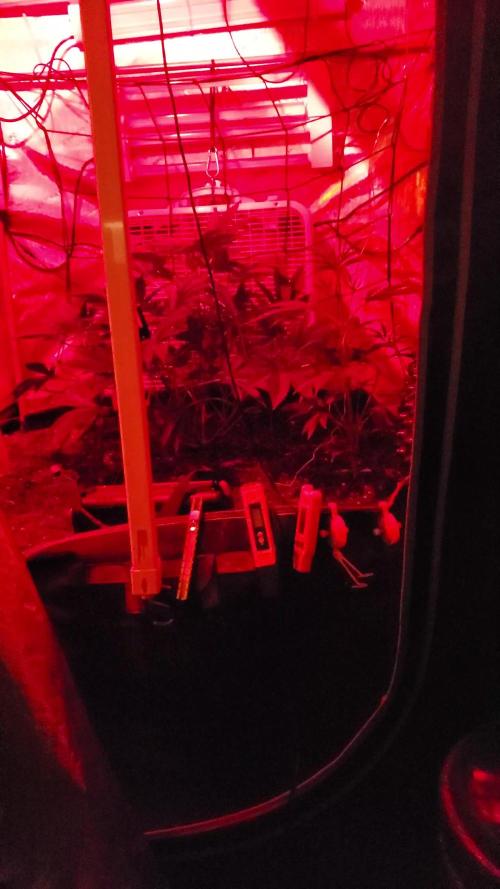
Removed autoflower and put her in her own pot outside the tent.
Foliars applied in strong blue 430nm with 4000Hz tone. 20-minute dose prior to application.
In essence, you're seeing a combination of the infrared light reflected by the plant, which the camera perceives as red, and any residual visible blue light the plant reflects, which results in a purple hue.
I was doing more stretching of the stems, adjusting weights, just a little too much, and it snapped almost clean. I got a little lucky in that it was still connected, wrapped her almost instantly while holding her in place with yoyo's. The core framework is now in place.
If your soil has a high pH, it's not ideal; you want a pH of 6.4, 6.5, or 6.6, which is ideal. If you are over a pH of 7, you have no hydrogen on the clay colloid. If you want your pH down, add Carbon. If you keep the pH below 7, you will unlock hydrogen, a whole host of new microbes become active and begin working, the plant will now be able to make more sugar because she has microbes giving off carbon dioxide, and the carbon you added hangs onto water. Everything has electricity in it. When you get the microbes eating carbon, breathing oxygen, giving off CO2, those aerobic soil microbes will carry about 0.5V of electricity that makes up the EC. The microorganisms will take a metal-based mineral and a non-metal-based mineral with about 1000 different combinations, and they will create an organic salt! That doesn't kill them, that the plant loves, that the plant enjoys. This creates an environment that is conducive to growing its own food.
Metal-based: Could include elements like iron, manganese, copper, or zinc, which are essential nutrients for plants but can exist in forms not readily accessible.
Non-metal-based: Examples like calcium carbonate, phosphate, or sulfur are also important for plant growth and potentially serve as building blocks for the organic salt.
Chelation in a plant medium is a chemical process where a chelating agent, a negatively charged organic compound, binds to positively charged metal ions, like iron, zinc, and manganese. This forms a stable, soluble complex that protects the micronutrient from becoming unavailable to the plant in the soil or solution. The chelate complex is then more easily absorbed by the plant's roots, preventing nutrient deficiency, improving nutrient uptake, and enhancing plant growth. Chelation is similar to how microorganisms create organic salts, as both involve using organic molecules to bind with metal ions, but chelation specifically forms ring-like structures, or chelates, while the "organic salts" of microorganisms primarily refer to metal-complexed low molecular weight organic acids like gluconic acid. Microorganisms use this process to solubilize soil phosphates by chelating cations such as iron (Fe) and calcium (Ca), increasing their availability.
Added sugars stimulate soil microbial activity, but directly applying sugar, especially in viscous form, can be tricky to dilute. Adding to the soil is generally not a beneficial practice for the plant itself and is not a substitute for fertilizer. While beneficial microbes can be encouraged by the sugar, harmful ones may also be stimulated, and the added sugar is a poor source of essential plant nutrients. Sugar in soil acts as a food source for microbes, but its effects on plants vary significantly with the sugar's form and concentration: simple sugars like glucose can quickly boost microbial activity and nutrient release. But scavenge A LOT of oxygen in the process, precious oxygen. Overly high concentrations of any sugar can attract pests, cause root rot by disrupting osmotic balance, and lead to detrimental fungal growth. If you are one who likes warm tropical high rh, dead already. Beneficial, absolutely, but only to those who don't run out of oxygen. Blackstrap is mostly glucose, iirc regular molasses is mostly sucrose. Sugars, especially sucrose, act as signaling molecules that interact with plant hormones and regulate gene expression, which are critical for triggering the floral transition. When sucrose is added to the growth medium significantly influences its effect on floral transition.
Probably wouldn't bother with blackstrap given its higher glucose content. Microbes in the soil consume the sugar and, in the process, draw nitrogen from the soil, which is the same nutrient the plant needs. Glucose is not an oxygen scavenger itself, but it acts as a substrate for the glucose oxidase (GOx) enzyme, effectively removing oxygen from a system. Regular molasses (powdered if you can), as soon as she flips to flower or a week before, the wrong form of sugar can delay flower, or worse. Wrong quantity, not great either. The timing of sucrose application is crucial. It was more complicated than I gave it credit for, that's for sure. When a medium's carbon-to-nitrogen (C:N) ratio reaches 24:1, it signifies an optimal balance for soil microbes to thrive, leading to efficient decomposition and nutrient cycling. At this ratio, soil microorganisms have enough nitrogen for their metabolic needs, allowing them to break down organic matter and release vital nutrients like phosphorus and zinc for plants. Exceeding this ratio results in slower decomposition and nitrogen immobilization, while a ratio below 24:1 leads to faster breakdown and excess nitrogen availability.
Carbon and nitrogen are two elements in soils and are required by most biology for energy. Carbon and nitrogen occur in the soil as both organic and inorganic forms. The inorganic carbon in the soil has minimal effect on soil biochemical activity, whereas the organic forms of carbon are essential for biological activity. Inorganic carbon in the soil is primarily present as carbonates, whereas organic carbon is present in many forms, including live and dead plant materials and microorganisms; some are more labile and therefore can be easily decomposed, such as sugars, amino acids, and root exudates, while others are more recalcitrant, such as lignin, humin, and humic acids. Soil nitrogen is mostly present in organic forms (usually more than 95 % of the total soil nitrogen), but also in inorganic forms, such as nitrate and ammonium. Soil biology prefers a certain ratio of carbon to nitrogen (C:N). Amino acids make up proteins and are one of the nitrogen-containing compounds in the soil that are essential for biological energy. The C:N ratio of soil microbes is about 10:1, whereas the preferred C:N ratio of their food is 24:1 (USDA Natural Resource Conservation Service 2011). Soil bacteria (3-10:1 C:N ratio) generally have a lower C:N ratio than soil fungi (4-18:1 C:N ratio) (Hoorman & Islam 2010; Zhang and Elser 2017). It is also important to mention that the ratio of carbon to other nutrients, such as sulfur (S) and phosphorous (P) also are relevant to determine net mineralization/immobilization. For example, plant material with C:S ratio smaller than 200:1 will promote mineralization of sulfate, while C:S ratio higher than 400:1 will promote immobilization (Scherer 2001).
In soil science and microbiology, the C:S ratio helps determine whether sulfur will be released (mineralized) or tied up (immobilized) by microorganisms.
A carbon-to-sulfur (C:S) ratio smaller than 200:1 promotes the mineralization of sulfate, when the C:S ratio is low, it indicates that the organic matter decomposing in the soil is rich in sulfur relative to carbon. Microorganisms require both carbon and sulfur for their metabolic processes. With an excess of sulfur, microbes take what they need and release the surplus sulfur into the soil as plant-available sulfate
A carbon-to-sulfur (C:S) ratio higher than 400:1 will promote the immobilization of sulfur from the soil. This occurs because when high-carbon, low-sulfur materials (like sawdust) are added to soil, microbes consume the carbon and pull sulfur from the soil to meet their nutritional needs, temporarily making it unavailable to plants.
200:1 C:S 400:1: In this range, both mineralization and immobilization can occur simultaneously, making the net availability of sulfur less predictable.
This dynamic is similar to how the carbon-to-nitrogen (C:N) ratio regulates the availability of nitrogen in soil. Just as microbes need a certain amount of nitrogen to process carbon, they also require a balanced amount of sulfur. Both mineralization and immobilization are driven by the metabolic needs of the soil's microbial population.
Sulfur is crucial for protein synthesis. A balanced ratio is particularly important in relation to nitrogen (N), as plants need adequate sulfur to efficiently use nitrogen. A severely imbalanced C:S ratio can hinder the efficient use of nitrogen, as seen in trials where adding nitrogen without balancing sulfur levels actually lowered crop yields.
Maintaining a balanced carbon-to-sulfur (C:S) ratio is highly beneficial for plant growth, but this happens indirectly by regulating soil microbial activity. Unlike the C:N ratio, which is widely discussed for its direct effect on nutrient availability, the C:S ratio determines whether sulfur in the soil's organic matter is released (mineralized) or temporarily locked up (immobilized).
Applied 3-day drought stress.
Glucose will hinder oxygenation more than sucrose in a solution because glucose is consumed faster and has a higher oxygen demand, leading to a more rapid decrease in oxygen levels. When cells respire, they use oxygen to break down glucose, and this process requires more oxygen for glucose than for sucrose because sucrose must first be broken down into glucose and fructose before it can be metabolized.
In a growth medium, glucose is a more immediate and universal signaling molecule for unicellular and multicellular organisms because it is directly used for energy and triggers a rapid gene expression response. In contrast, sucrose primarily acts as a signaling molecule in plants to regulate specific developmental processes by being transported or broken down, which can be a more complex and slower signaling process.
Critical stuff.
During wakefulness (DC electric current) life can not entangle electrons and protons. During the daytime, the light is sensed as multiple color frequencies in sunlight. Coherence requires monochromatic light. Therefore, at night, IR light dominates cell biology. This is another reason why the DC electric current disappears during the night. The coherence of water is maintained by using its density changes imparted by infrared light released from mitochondria in the absence of light. This density change can be examined by NMR analysis, and water is found to be in its icosahedral molecular form. This is the state that water should be in at night. This is when a light frequency is lowest and when the wave part of the photoelectric effect is in maximum use.
3600
Likes
2
Share


@EyeMKing
Follow
In less than 48 hrs of being in a room temp water bottle in a dark area tap roots already started coming out.


Likes
8
Share


@Cargic
Follow
11/16 everything is going great! I went through and pulled all of the dead leafs off to prevent mold. She smells super sweet almost like a candy or butter sweet it’s odd but I’m not complaining!!! Very excited to try it!
Likes
22
Share


@fungrow
Follow
Missed week 2 but the grow is now fully engaged. The big board helps as can have individual plants nearly under a light each.... as brought back the SF2000. The 90 degree red clips really helped in getting a flat top of flowers. Trying to clone the lower branch cuttings...some in peat pots...some in a glass of water. I have to admit the stretch was.....minimal and if I grow this again I will veg to 7-8 weeks for bigger plants.

Likes
16
Share


Likes
3
Share

@GERGrowDesigns
Follow
Dear Growers ,
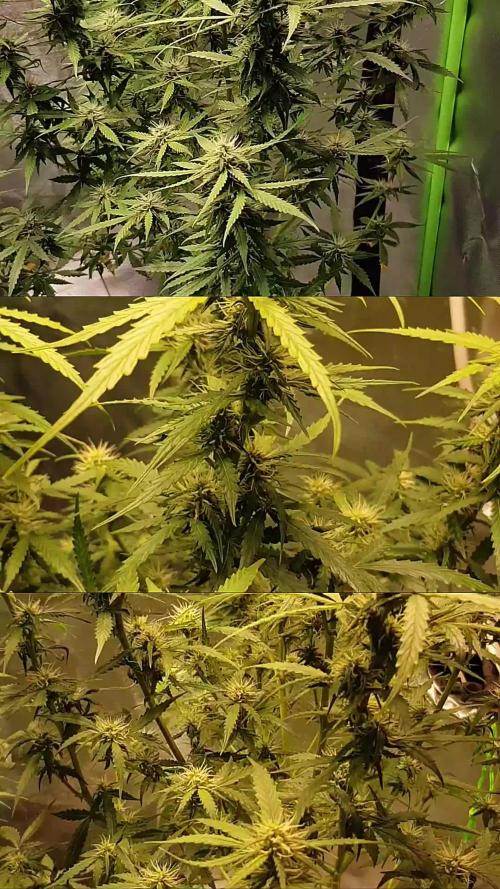
Over the next weeks, we’re excited to share a very special project with you: Sensi Seeds Supreme Jack F1 Automatic 2025 Release
With dedication, knowledge, and hands-on practice, we’ll guide you step by step through the journey—watch with us as growth, development, and small wonders unfold before your eyes.
Whether you're a beginner or an expert, you are warmly invited to join, ask questions, and share your own experiences along the way!
Project Setup & Conditions:
• Brand/Manufacturer: Sensi Seeds
• Tent: 120cmx60cmx80cm
• Light: 2x 200 Watt Full Spectrum
• Humidity: 90%
• Soil: Narcos Organix Mix
• Nutrients: Narcos Products
• pH Value: 6
A Special Thanks To
Sensi Seeds
for the amazing collaboration, trust, and generous support in making this project possible. Your contribution is truly appreciated!
Congratulations on Your Own Projects!
We celebrate your growth, your creativity, and the passion you bring to the table. It’s truly inspiring to witness at Each visit .
Stay curious and keep up Growing —we look forward to welcoming you back for the next chapter soon!
Likes
3
Share


@Kevs_Best
Follow
KEVS_BEST Woche 7 – Erste vollständige Blütewoche & Stretch-Boost
Nach dem holprigen Start zu Beginn der Blütephase in Woche 6 konnten die anfänglichen Nährstoffmängel durch die verspätete Umstellung auf Canna Terra Bloom erfolgreich ausgeglichen werden. Die Pflanzen zeigten sich zu Beginn der ersten vollen Blütewoche wieder vital und reagierten mit kräftigem Wachstum auf die neue Nährstoffversorgung.
Der Stretch nahm nun richtig Fahrt auf – mit einem durchschnittlichen Zuwachs von bis zu 2,5 cm pro Tag. Die Internodienabstände blieben dabei kompakt genug, um eine schöne Struktur für die spätere Blütenentwicklung zu ermöglichen.
Dank stabiler Umweltbedingungen (ca. 26 °C bei Tag, Luftfeuchtigkeit unter Kontrolle) verlief die Woche ohne neue Zwischenfälle. Die leicht zuvor beobachteten Mängel verschwanden vollständig.
Die Triebspitzen begannen nun sichtbar, erste Blütenansätze zu entwickeln – weiße Stigmen zeigten sich deutlich, das typische Anfangsstadium der Sherbzooka-Blüte setzte ein.
ENGLISH
KEVS_BEST Week 7 – First Full Week of Flower & Stretch Boost
After the bumpy start into the flowering phase during week 6, the initial deficiencies caused by the delayed switch to Canna Terra Bloom were successfully corrected. At the beginning of the first full flowering week, the plants recovered well and responded with vigorous growth.
Stretch really kicked in – with daily growth rates of up to 2.5 cm. Node spacing remained tight enough to support ideal flower stacking later on.
With stable environmental conditions (around 26 °C daytime, humidity under control), the week continued smoothly without further issues. The previous minor deficiencies completely faded.
The top sites started to form the first clear flower sets – with visible white pistils marking the official beginning of the Sherbzooka bloom phase.

Likes
10
Share


@cjaygrows
Follow
Broke a Top while trying to LST woke up and it was snapped.
All three plants are showing different types of growth
Plant 1 is Showing Sative Traits
PLant 2 is showing Indica.Satava Traits
Plant 3 is Short and stubby showing is hard Indica traits
Likes
9
Share


@TiRobotProds
Follow
4ème semaine de floraison. Cette dame ce porte a merveille ☠️☠️💀 irrigation tous les 3 jours environ 6L, 12L/Semaine.

Likes
5
Share


@Tommy716
Follow
What can I say? This Friday is amazing! Dynomyco is looking like it's going to be a go-to for me. Will wait and see how it goes so far like in all the signs I see.
