


Likes
Comments
Share


@w33dhawk
Follow
Hallo liebe growmies, ich hoffe euch geht es allen gut! die Woche war wieder eine erfolgreiche Woche 😁 ich muss sagen ich bin erstaunt wie gut die runde bis jetzt läuft und wie schön sich meine Ladys entwickelt haben, bis jetzt habe ich noch keine Mängel vernehmen können und die Damen sind meines Erachtens nach auf dem besten Weg zur sicheren ernte aber nun zur Woche
Am 08.03.23 also einen Tag bevor diese Woche begann habe ich den compost Tee angesetzt dafür habe ich 2,5L Wasser was ich ja eh in der Tonne ab stehen lasse entnommen und habe es in einen leeren behälter von destilliertem Wasser getan, dem ganzen habe ich 2x luftstein hinzu gefügt mit Belüftung's Pumpe (Eheim 200) eine kleine mini heizung für 8 L Aquarien (regelbar) auf 20 Grad eingestellt. Dem ganzen habe ich dann 15g/L wasser compost Tee (37,5g bei 2,5L Wasser) hinzu gefügt bactrex drauf 1g/L wasser (2,5g bei 2,5L Wasser) und 5ml/L orgatrex ( 12,5ml bei 2,5/L wasser) gab es auch noch hinzu das ganze habe ich dann 24 h belüftet und bei ca 20 Grad Wassertemperatur gebraut (Bactrex gab es jetzt 1x bei dieser gabe hinzu,bei dem nächsten compost Tee fällt bactrex dann weg) hab jeder Pflanze von dieser Lösung jeweils 0,5L an die Pflanzen basis gegossen vorher habe ich die Ladys aber natürlich Gewässer mit 2,5L Wasser und Dann Die Lösung oben drauf. Danach saß ich Dann knapp 4 Std vor dem Zelt und hab ausgeschnitten unten rum (alle Blätter und Triebe unter dem netzt entfernt) danach hab ich noch ca 1 Std damit verbracht Triebe von oben heraus zu entfernen die zu dicht an anderen standen ( war echt nicht einfach da nicht zu viel weg zu schnippeln) aber ich glaube ich bin auf nem guten Weg. Den Rest der Woche habe ich nur noch gehofft das sich die Pflanzen gut erholen von dem was ich ihnen angetan habe, und hab die Fächer Blätter so gut wie es geht täglich runter gedrückt unters netzt damit genug Licht eindringen kann in den Baldachin, aber irgendwie hat die Damen das harte ausrasieren nicht wirklich gestört da wie auf den Bildern zu sehen ist, ist der stretch immer noch in gange ist, aber schon deutlich weniger geworden zum Ende dieser Woche.
Am Sonntag dem 12.03.23 gab es nur Wasser zum trinken hab jetzt 3,5L Wasser gegossen und somit den Topf komplett mit Wasser gefüllt es kamen dabei ungefähr 20 ml Wasser unten raus, was halb so wild ist, aber immer hin Weiss ich jetzt die gieß menge um den Topf gleichmäßig zu füllen.
Ich wünsche euch allen eine schöne erfolgreiche Woche! Cu ihr growmies!


Likes
5
Share


@Misterindoor
Follow
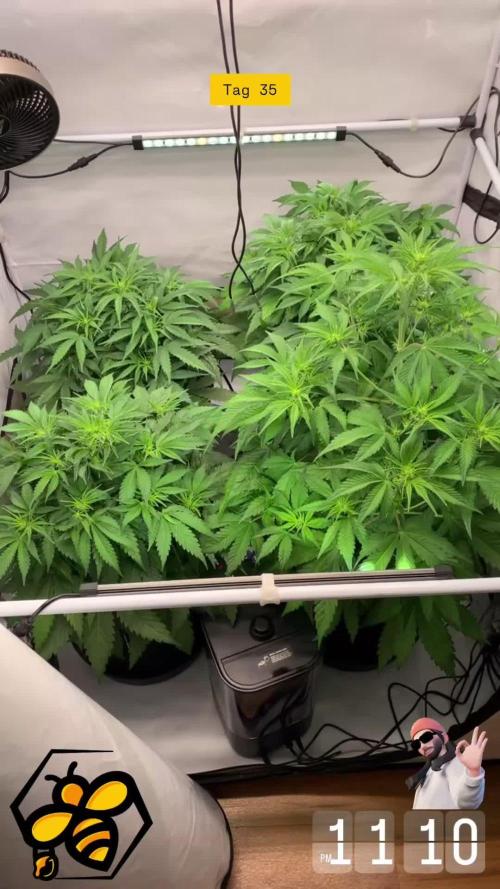
Esta semana pasa a floracion y continua la estimulacion con delta 9 y mañana cambia el fotoperiodo a 12 /12


Likes
5
Share

Likes
8
Share


@treuominieunapianta
Follow
We started the week by transplanting the Orange Groovy F1 into the 3.6L pots filled with our SWA super-soil: we waited a bit more compared to the first 8 transplants just to make sure the roots were strong enough. At the same time we realized that the Orange Groovy F2 was the first plant ready for topping. This week we continued using our Lumatek dimming it at 60%. We are watering them with 1L divided by all 9 of them of osmosis water. On days 16 and 17 we topped every plant (except for Golden Pussies which still need a couple days and the Orange groovy F1 which we will not top because of her smaller size). We noticed that most of our plants presented lightly yellowed tips. We think that this is due to the deficiency of some immobile elements such as Ca, Fe, S. To solve this problem, we will put some decanted water (because it doesn't contain Chlorine which kills our bacterial substrate life) to give them the correct nutrients. We failed topping Orange Groovy F2 because the central apical started to grow even after cutting it but we kept it just to see what is going to happen. Golden Pussy F2 has been topped too and it went perfectly as you can see in the pictures. The plants continue to grow out of all proportion!


Likes
14
Share


@Pot_Portraits
Follow
End of a great autoflower grow with the Royal Gorilla Auto by Royal Queen Seeds. They were fun to grow, very easy to grow plants that never complained. The smell of the final flower is great, reminds me of green apples.
A very well balanced strain with great effects, can recommend the Gorillas for sure. At the beginning of the diary it were 4 plants but I put one outside as soon as they started flowering, so one is actually still outside growing, will be ready in a week.
So the total harvest was from 3 plants.
Likes
14
Share


@Toughpuff
Follow
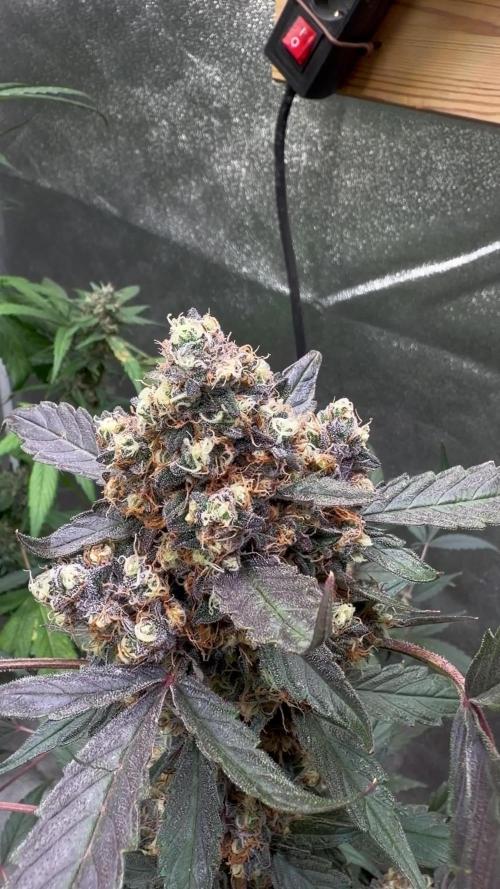
Was an awesome plant to grow and one of my favourite to this day , the smell of it is like you’re a kid again eating purple fun dip it’s unreal . He grew very odd at first but ended up taking off when it was around flowering 💯😁 the look of this girl is so eye catching and I cannot wait to try it out .


Likes
3
Share


@TheGreenGroomer
Follow
We’re kicking off week 3 of veg today, and things are looking up. She seems to be bouncing back nicely from that magnesium deficiency—leaves are perking up, color's evening out, and overall growth is picking up again.
I topped her at the 5th node and gave her some light LST. After about 3–4 days of recovery, I removed a few lower leaves that were sitting in the dirt and getting in the way during watering.
Feeding her 500 PPM at a pH of 5.8

Likes
16
Share


@OrganicPower
Follow
Week 6 flower, half way there! Buds are starting to fill in now and getting some decent frost. A couple of tops are getting more light than others, and fattening a bit more and looking real nice. It looks like there is some purple starting to come out at the tops. She is strong and will go as fast as the soil and environmental conditions will allow her to. Hand watered in Gaia Green Soluble Seaweed Extract 0-0-17, otherwise water drip is running on same schedule. Just using straight tap water that sits in a 30 gallon reservoir with a submergible water pump running 24/7 breaking surface and aerating water. Water comes out the tap @ 7ph and less than 15ppm. So I don’t do nothing to it, I drink it:) Thanks for the view 🤜 Have a great week!

Likes
12
Share


Likes
17
Share


@Zanto
Follow
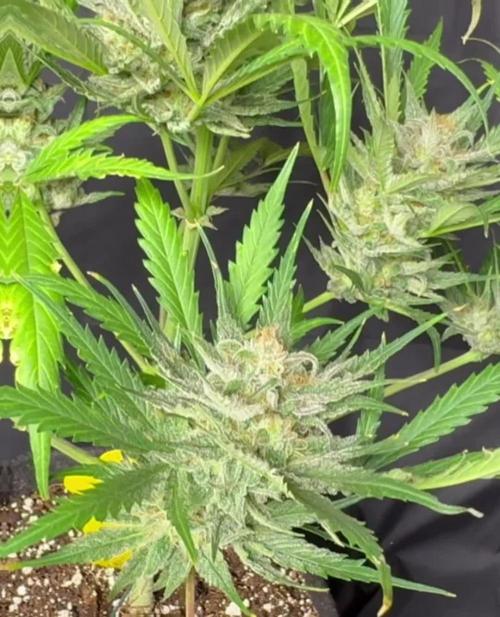
Day 46:
Looking healthy and fresh. Didn’t get fat as expected. Although they are beautifll and full snowed.
Got some trips in the plants so im using Neem Oil and Potasic Soap organic blend.
Likes
42
Share


@Siriuz
Follow
Okkk so we did fimming to this lady
And she responded very well
Now she is all good and growing wild
She is also in a bigger pot plus
We started adding bloom nutes
We hit her with 1500ppm to begin
IT was just 300ml/400ml top
And I believe 50ml of water or more
But its all good tho
Temp is around 23/25 at day
Temp at night lowes to 19 when really cold
And humidity always around 45%/65%
Usually 41 when really dry and 78% when top humid
I always keep them between 50/60
Anyways lights are on around 16/18 hrs per Day and just been using these nutes
Floranova bloom and veggie
Probably will add some big bud
And some other great stuff
Anyways thanks for your support
Blessings and happy growing

Likes
16
Share


Likes
27
Share

@Hempcules
Follow
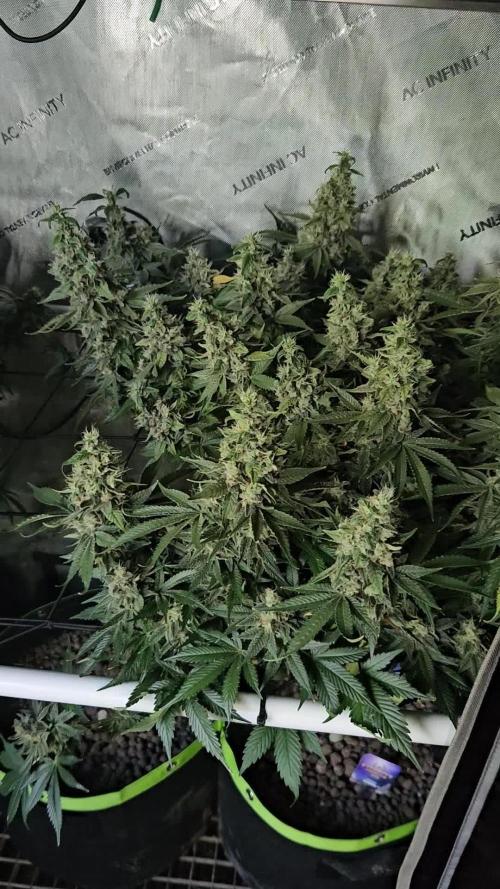
WEEK 16
Everything went quite smoothly this week. Temperatures have dropped a bit, and the plant is looking good.
The flower volume is steadily increasing, though I think it will still take about two more weeks until harvest. The trichomes are mostly still clear and milky.
Other than that, I’m looking forward to a strong final.
PPFD: 1000µmol/m²/s
Water: 1x water 2x nutrient solution
Vpd: 1,8Kpa
With this code, you will receive a 20% discount on your next Zamnesia order:
ZAMMIGROW2024


Likes
3
Share


Likes
15
Share


@gottagrowsometime
Follow
Welcome to my Swiss Dream Rose CBD Auto Diary sponsored by kannabia seed company. Also sponsored by Bella from Spider-Farmer with their new upgraded SE5000.
Seedling Days 0-6 Veg Day 1/D7 Days 0-7
Growing very strong. Really fast turn around. In veg on the 7th day. Is amazing. 30% in growth rate speed. Healthy & Happy. Holding her own in very hot conditions. RH is 60%. As my tent temp is between 31-35c (thankfully stomatas are still open. As co2 intake hasn't slowed. And, they're pushing through the heat. Good week. Light is great. It's rapid seedling growth is very impressive with the right co2 in a tent that just kisses the lights edges. Perfect umol 1125-1437. This lady is about 80cm away as my light is 100% for the 2 late flowering plants and then it'll be lowered to 70% in the next wk. And lower the distance then. No stretch, no mutos. Good healthy girl thus far. Good week.
Diet
Full plagron natural line. Shes in her 11L pot with all the extras from their line. And a few more for flowering. Their new Power Bud. And the norm + PK booster. Everything needed will be plagron. Except calmag (I like to control that separately either with cal powder or Epsom salt. Adding both when one is needed. Well, its not needed. Generally I rarely have cal issues.
Co2 Jargin. (Not an advised read if you've no interest in co2)
Co2 levels are kept within this level. But, I've set on delayed timing. As I need to make sure my plants are eating. So instead of a constant set co2 level. They're eating the level drops as low as 750min 800 (80% when it is dropped before its raised) and this way. I can tell my plants are eating. Its a method of co2 growing. Feed/eat/eat/feed. Its served me well. Saves on co2. But self application can be a bitch so 80% of the times its on fuzzy logic and its resets itself (this hmmmm. Hard to know when your plant is eating. I'll have to get a co2 monitor i can check on my phone. That way, I'll know how often co2 is injected. There's no count. You could of of units used. But, the math on a 10L tank per squirt, (im not that smart) nor would I even attempt it. Yes a co2 calculator can be used. But, that does not account of areas of the tent were the co2 rests on a low level. Co2 intake of the plants/how much they eat. There is a limit I've noticed. In late flowering plants after 10hrs of high co2 use. The intake drops of by about 90%. With autos, they'll eat forever. But id 8 fems and after 10hrs of solid co2 intake 200 ppm every 10m was going down and then late into the cycle they'd eat 200ppm in an hr. So, I'm learning. To know when my plants are eating and not, is just a gift alone. Not having to wait days, to notice an issue. But, it is very demanding. Nutrient 2x-3x the norm and 1-1.5L for fully grown plants twice a day so 2-3L , of which one needs to be nutrients every other day.
Lights
SE5000 seed-harvest. And this pheno has loved every umol from this beauty. So thankful to Bella for this chance to run a high powered light that has great capability for co2 (you don't need 1000w lights) for 3x3. This spectrum is proven itself everyday the plants co2 intake overall improved by 1/3rd possibly more. (Past test plants were under light as co2 rec) big improvement just finishing off my other plants. The fade alone is stunning. And the push these girls are doing from 50-30% faster across the board speaks for itself. Veggin plants in its 1st week. Thanks so much Spider-Farmer "Bella". & to Kannabia for their continued co-operation.
Much appreciation to all who viewed and stopped by. Wouldnt be doing this otherwise. The support is great. And if not given in return ASAP I'll get to it. I'm a lazy pos 🤣. So look forward to getting a chance to see what you got cooking this Summer. Its gonna be a Swiss one for sure.

Likes
1
Share


@braxat420
Follow
For ten days or so, this zebra Stripe was stuffed in the corner of a 3x3 dominated by a 30 gallon pot filled to the brim with Apple Glitter, but now she's free! The environment is unstable and not ideal most of the time, but it's starting to fill out now that I've defoliated and it's not so crammed.
