Likes
Comments
Share


@Plants_of_tayoat
Follow
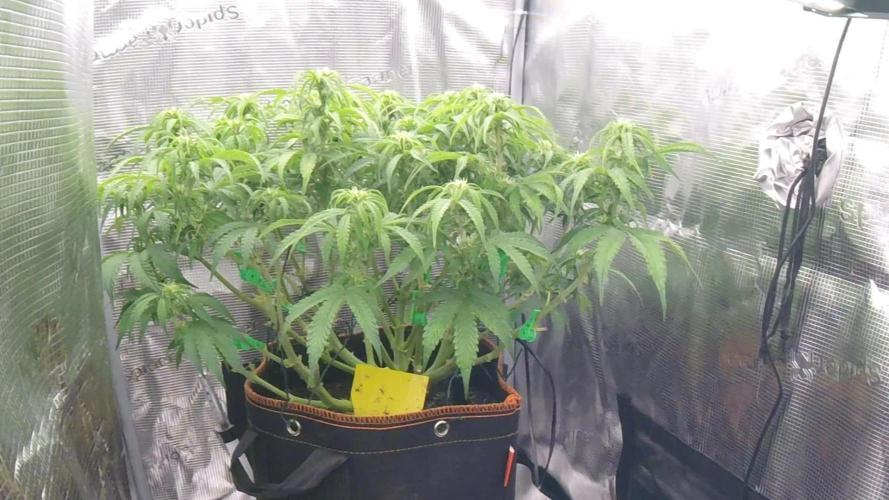
This plant early entered to flowering stage in week 3. Other is nothing special. Thanks.

Likes
31
Share


@JonnyKush
Follow
everything seems to be growing well! seems to have recovered great, is stretching well the color looks great! I have 3 other growing plants that follow the same diet but they seem to have suffered. she, on the other hand, looks very healthy.
Day 40
Flowering begins! I can say I see her healthy. this is because, not having given her a green sensation with water regulated by ph down but only water with ph down, she was regular at 6.5 for all weeks. this suggests the importance of checking the values every time I change something in the power supply.
keep following me to see the progress. I like it and leave an opinion or some advice. good luck and happy day 🌱💚

Likes
18
Share

@YourLocalGrowmie
Follow
Hi!
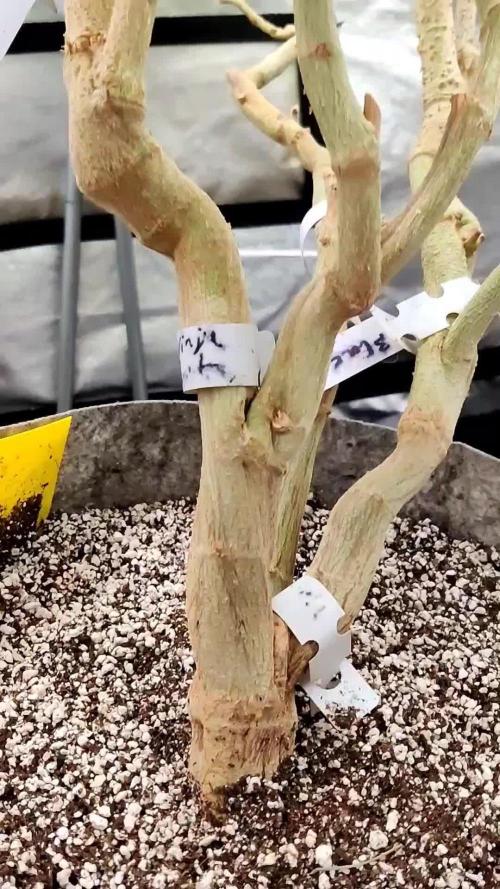
This is Franky the grafting plant again!
All you see here is just one single plant.
It's beginning of week 6 of flowering.
Right now things are going on autopilot.
I barely do anything besides giving water with a bit Epsom salt added once a week.
Every watering now gets green sensation added.
± allways a bit of run off.
Flowers are developing their own identitys now. The differences in the grafted strains are very visible and smell able.
I'm not sure but....it looks a bit like the Tropicana poison is taking longer than as a singular plant. It usually would take 7 weeks with this specific Pheno but it really looks like it will need as long as most of the other strains ATM...
I stopped picking small buds from the bttm half of the plant in preparation of the second defoil and lollipop in week 7.
That's all for now.
See ya next week :)


Likes
7
Share


@Organic473
Follow
The girls are flowering...haven’t watered in 6 days because of the last full moon rain.

Likes
3
Share


@MotherNaturesSon
Follow
fat dense buds numerous and fuzzed out with trichomes. leaf-calyx ratio on point. Stalks tended to lean as flowering progressed so plan for some manner of support if you want. Let her flower as long as she can and she’ll reward you.


Likes
13
Share


@CURATI_DA_SOLO
Follow
E andata da DIO! Questa genetica mi ha letteralmente reso l'uomo più felice della terra😂 i suoi colori sono strepitosi e adesso che ho iniziato il flush abbasserò anche la temperatura di 2-3c in modo da fare uscire ancora più colori😇.... E veramente una varietà spettacolare questa di Fast buds e mi viene l'acqua alla bocca solo a vederla! Ho intenzione di lavare per 7 giorni minimo anche se il substrato è di cocco ma vorrei cercare di avere un prodotto finale veramente pulito (anche se ho coltivato organicamente)....ci vediamo alla prossimo aggiornamento e ricordatevi di aggiungermi su Instagram curati_da_solo🌱🌈💫
Volevo ringraziare BAC per i suoi prodotti da urlo! E spero di poter usare tutta la linea nella prossima coltivazione così da avere risultati ancora migliori! Peccato che non ho avuto un calmag il PROACTIVE e il silicapower ...perché penso che se avessi avuto una tabella più completa sarei riuscito a fare ancora meglio! Ma mi interessa fare vedere che sonusare i loro prodotti così forse posso avviare un progetto più serio con loro! (Prossimo progetto a brevissimo 😇)
Vi lascio al prossimo aggiornamento per il taglio! Spero che piaccia a tutti
FAST BUDS SEI SPECIALE!🌱🌈💫
Likes
20
Share


@eldruida_lamota
Follow
Que hay familia ya traigo la décima semana de floración de estas Lava Cake de Zamnesia.
Vaya color que se marcan todavía, están bastante sanas , los tricomas están pegajosos , tiene unos aromas espectaculares, me tiene enamorado.
Ya estamos en la recta final , se están poniendo a punto de caramelo.
Temperaturas máximas en 27 y mínimas en 25y una humedad estable en torno al 36%.
Os comento que tengo un descuento y para que compréis en la web de Zamnesia de un 20%, el código es ZAMMIGD2023
The discount 20% and the code is ZAMMIGD2023
https://www.zamnesia.com/
Agrobeta:
https://www.agrobeta.com/agrobetatiendaonline/36-abonos-canamo
Mars hydro:
Code discount: EL420
https://www.mars-hydro.com/
Espero que lo disfrutéis, buenos humos 💨💨.

Likes
4
Share


@ledgrowers
Follow
Day13 report. looking much healthier than first run. lots of stretching, flowers coming in starting to bulk up. did lil lst n feed
Likes
13
Share


@Youngicons
Follow
Week 1 of flower complete
I got rid of 4 males this week.
Down to my final 6 females whom I will be harvesting this season. Started with 45 seeds this round.
I bought some flower fuel 1-34-32 I'm going to be using starting week 2 of flower to help these girls produce.
I'm having trouble controlling the humidity so I'm getting a new dehumidifier this week. Also wondering if I should get a bigger tent for these 6. It's only a 2wx4lx5t
Likes
4
Share

@UncleJono
Follow
Whats up everyone?
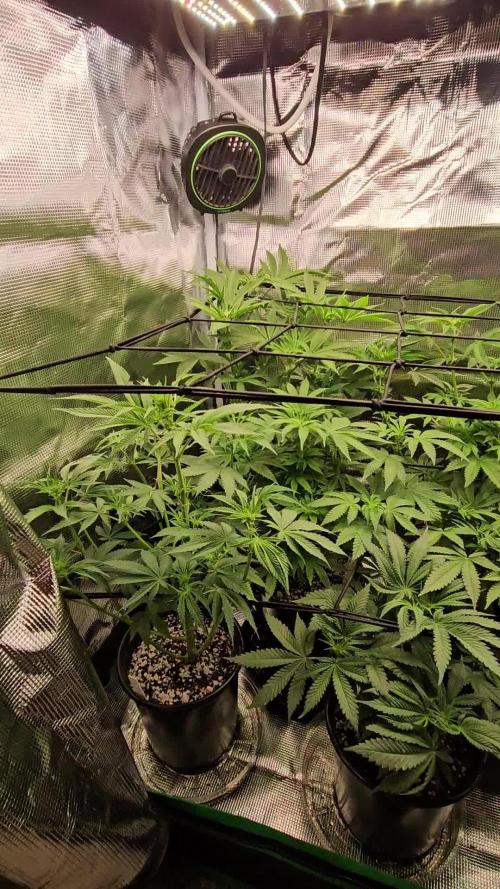
Here is my report at the end of week 3 of flower!
I am now down to 12 plants in the tent because PE #1 showed signs of intersex. This is not a terrible loss as I have two other pineapple express plants in the tent.
Bud crowns are forming well on five plants so far [GDP, Bag Seed, Pineapple Express #3(?), Platinum OG, and Permanent Marker]
The nutrient solution has changed from regular jacks 321 formula to a 2-1.5-1.2-2 solution with the introduction of MKP. This change should have been made sooner but it should be too much of an issue overall.
The grow is starting to feel real with the multitude of bud sites forming! I know that these next 6-8 weeks or so will be make or break for these ladies. We will see if any of them want to finish early but I am planning on giving them extra time to mature and truly ripen...much too early to think about that.
I cant wait to see how they develop from here!
Feedback and tips always welcome
See you all next week!

Likes
5
Share


@Jayndre69
Follow
Well think I'm going to start flush tmr ive had several problems with this run but still really happy with the outcome tho there is alot of room for improvement! I believe I will try soil next I had nothing but problems with ph in coco coir I will put up the outcome of the 3 plants it does look promising:)
Likes
6
Share


@GanjaDjarin
Follow
Days 15 to 17, varying by plant: My journey of experimentation, aiming to refine and perfect my cannabis cultivation methods, continues. This venture’s ultimate objective is to position myself as a preeminent cannabis cultivator in my locale. As I navigate through the labyrinth of regulatory licensing, I’m conducting a trial run with my seedlings under continuous lighting conditions and a minimal nutrient regime. My primary goal during this phase is to identify any potential hiccups that could hinder the growth process and ultimately impact the productivity of my intended commercial operation.
As I delve deeper into this exploratory phase, I draw invaluable insights from the thriving cannabis community, whose collective wisdom informs my decision-making process. Given my geographical location and available resources, I’ve opted for a strategic shift in my cultivation strategy.
Previously, I’ve been procuring seeds at an average cost of $10 to $22 per seed, with a relatively broad success rate variance, ranging from 70% to 85%. However, an alternative presents itself in the form of local cultivators. These businesses offer cannabis plants aged between 2 to 4 weeks, boasting an impressive variety of over 100 strains.
These juvenile plants are offered at a cost-effective rate: an average of $100 for eight plants. With a success rate hovering between 70% and 95%, these plants offer excellent value. Essentially, I can access pre-grown plants at a substantial discount, in turn significantly boosting my chances of success.
Consequently, I am poised to transition away from growing cannabis from seeds to harvesting. By sourcing my plants from local cultivators, I stand to significantly reduce overhead and production time—an undeniably smart move from a business standpoint. This strategic pivot signifies the end of an era and the exciting beginning of a more efficient and cost-effective chapter in my cannabis cultivation journey.
I am currently outlining a plan to expand my cultivation by acquiring several juvenile plants, which should be happening between July 1st and 3rd. The new additions to my garden will include Acapulco Gold, Gelato, White Truffle, and Runtz. These will be cultivated in harmony with the existing growth, which comprises God’s Gift, Northern Lights, and the final surviving F1 Epsilon.
My primary objective is to establish the most efficient and cost-effective supply chain possible. I aim to achieve this through the use of an off-grid system that runs solely on solar power, which will ensure complete sustainability and renewability. From a business standpoint, this approach is advantageous as it allows me to leverage the growth of high-quality plants that are already in the cultivation phase.
The new plants are expected to arrive in about a week. If the growth rate of the currently cultivated plants doesn’t meet expectations, I’ll be incorporating several of the newly arrived plants into the hydroponics systems. This methodical approach aims to ensure an optimal growth rate and the highest possible yield.
I also wish to address the cannabis grower community directly. I hope that my decision to skip the seed-to-plant stage does not cause any offense. My intentions are simply focused on maximizing quality and output, while minimizing our carbon footprint. I believe this approach is in the best interest of sustainability and efficiency, without compromising on the quality that our community values so highly.
As we proceed with this venture, we’re currently in the phase of collecting equipment and navigating through the licensing process. To help lower our overhead and assist with consulting fees, we would greatly appreciate any donations, especially in terms of lighting equipment. Your support in this endeavor will contribute significantly towards optimizing our operation and will be deeply appreciated.
Disclaimer:
Let it also be known I am completely abiding by all state laws, and do not plan on selling any of this current bud. This is for research to avoid future growing "potholes" in the growing part of the business as we have a very small team. My end goal is to help change the current stigma around cannabis and provide a useful service that can help localize and reduce the inflation on cannabis prices in socal by providing a logical supply system. Again I intend on doing all things through the legal route as there is no need to do other wise given the laws on personal use and growing.


Processing
Likes
6
Share


@Mr_nugs_lover_David
Follow
She's responding super good to lst method she looks absolutely gorgeous I would have loved to be able to grow her since march however It was not posible but I keep this wonderful indica in my list. This wonderful pheno of Alien gorilla has started flower the 3rd of August.


Processing
Likes
13
Share


@Terp_Djiny
Follow
Today i flip the light. 12/12 for the bloom.
The bright appearance of the leaves and the slightly reddened stems indicate a nutrient deficit. In this case I would say nitrogen. But I have exaggerated a bit with my fertilizer use. Accordingly, I flushed the plants today. The measured pH was 4.8. I think I slightly salted the floor. Let's see if they recover.
Day 73: On the detail photo you can see very well how the stem turns slightly reddish and the stems on the leaves as well.
Day 74: The plants look better than a few days ago. They are now growing visibly from day to day. Timely flushing saved a lot, I hope.
Day 77: Last day of the first week of flower. It was a strange week. But they still grow.

Likes
56
Share


@Northerngrowers
Follow
Genética de Jack Herer en cultivo 100×100 orgánico, en éste caso con una poda apical realizada y con muy buen resultado.
Grandes flores cubiertas de tricomas hasta el punto de formar gotas de azúcar, es impresionante.
Sabor diferente, muy especiado, con un efecto eufórico y creativo, gran pegada.
Likes
30
Share


@eurorack
Follow
A good week's growth, they are drinking more and I've started to feed, and I think they enjoyed the nutes as they clearly stretched over this last 24 hours.
Likes
9
Share


@Sativa763
Follow
Day 55 of flower.
I think she will need another 2 weeks..
dont know if I should harvest already...I´m scared ... 😱😬
I removed all the leaves with crispy ends
the smell is still amazingly sweet and there willl be a little bit of a yield I just hope she will survive.
see ya next week my friends 👌

Likes
56
Share


@Master_weeda
Follow
Bonjour à tous les padawans et les maîtres jedis
Pour cette semaine 3 au jour 19 ma plante fais 21 centimètres et son septième noeud apparaît je décide donc de pratiquer un LST sur ma plante.
Pour ce j'utilise du fil de fer galvanisé que je plante directement dans le substrat en faisant attention de ne pas endommagé les racines car n'oublions pas que ce qui pousse dessus pousse aussi dessous.
Jour 17 je pulvérise du une solution composé d'une cuillère à café de savon noir mou (marque briochin) dilué dans un demi litre d'eau en prévention d'éventuels nuisibles.
Pourquoi le savon noir mou ?
Savon noir : quelle utilisation pour le jardin ?
Le savon noir est un produit naturel dont les propriétés nettoyantes sont connues depuis l'Antiquité. Utilisé pour l'entretien de la maison et pour les soins corporels, ses vertus antibactériennes et insecticides en font un allié précieux pour le jardinier bio.
Le savon noir est fabriqué à partir de potasse et d'un corps gras de type huils végétale comme l'huile d'olive, de lin ou de maïs.
Produit naturel et biodégradable (s'il ne contient pas d'additifs, comme cela peut-être parfois le cas), c'est un très bon produit nettoyant, pour les sols, la cuisine, la vaisselle, le linge, etc... Très polyvalent, il est également économique, comparé aux multiples détergents classiques du commerce.
Le savon noir se trouve sous forme de pâte molle et brune ou sous forme liquide, dilué avec de l'eau. C'est du savon noir liquide dont on se sert généralement au jardin, car son utilisation est plus simple. Il s'achète dans les magasins bio ainsi qu'en grandes surfaces ou jardineries.
Attention : la recette du savon noir de ménage et celle du savon noir utilisé en cosmétique ne sont pas forcément les mêmes ; les savons noir de ménage (multi-usages) peuvent contenir davantage de potasse afin d'améliorer le pouvoir dégraissant (irritant ou desséchant pour la peau), voire même certains additifs chimiques.
Au jardin, ce sont en priorité les propriétés antiseptiques et insecticides du savon noir qui sont utilisées.
Le savon noir liquide est utilisé pour lutter contre les pucerons, les cochenilles, les araignées rouges, les aleurodes, les psylles et autres thrips. C'est un insecticide de contact ; il tue les larves et nettoie le miellat qui englue les feuilles.
La recette de l'insecticide à base de savon noir (mou pour ma par marque briochin) est simple à réaliser : une ou deux cuillères à café de savon noir mou (briochin) diluées dans 1 demi litre d'eau tiède (dilution à 5 %) ; une fois la préparation refroidie, pulvérisez-la sur les plantes atteintes, en prenant soin de ne pas oublier l'envers des feuilles. À renouveler 1 à 2 fois si nécessaire, pour être totalement débarrassé des indésirables.
Comme il est de mise pour la plupart des traitements, ne pulvérisez pas la solution à base de savon noir en pleine journée, sous le soleil (ni sous la pluie !) ; procédez le matin de bonne heure ou patientez jusqu'à la fin de journée, lorsque les températures sont en dessous de 20°C.
Jour 18 Je corrige mon LST suivant la pousse de ma plante ...
Pour ma par c'est la manière dont je procède mais petit rappel de la technique du LST
Quand commencer à appliquer la technique LST ?
De nombreux cultivateurs commencent la manipulation dés que les plantes possèdent entre 3 et 6 nœuds ou une paire de feuilles. Durant cette première étape de la croissance, le tronc encore flexible est pliable sans risque qu’il ne se casse, même si au fur et à mesure du développement de la plante il sera de plus en plus difficile de le plier. Nous pouvons continuer à guider la croissance des branches durant toute la culture, même durant la floraison, ce qui pour cette étape représente un grand avantage face à la taille, qui n’est pas du tout recommandé une fois que la formation des têtes commence, cela stressera en effet la plante, ce qui aura pour effet de retarder la récolte.
Comment appliquer la technique de guidage LST
Si nous sommes prudents, la flexibilité naturelle des fibres du cannabis permet de plier leur tronc et branches avec une relative facilitée, même durant la floraison des plantes.
En utilisant une corde fine, nous pouvons accrocher la pointe de la plante à la base du pot par exemple ou à un tuteur que nous aurons planté dans le substrat. Nous plierons le tronc avec précaution et nous le fixerons avec la corde, à partir de là, nous pouvons augmenter progressivement la tension de la corde, chaque jour un peu plus, jusqu’à obtenir la position souhaitée. Soyez attentif à la réaction de la plante, essayez de ne pas appliquer trop de pression sur la corde et rappelez-vous que la flexibilité des branches peut varier d’une plante à l’autre.
Pour obtenir de meilleurs résultats, il suffit de suivre quelques règles simples. Pour commencer, nous devons choisir une corde fine mais pas trop pour ne pas blesser les troncs au fur et à mesure qu’ils grandissent et qu’ils deviennent plus gros.
Nous pouvons utiliser des crochets en plastique souple ou de n’importe quelle autre matière flexible pour éviter d’endommager les plantes. Spécialement en intérieur, utiliser des cordons en plastique de couleur (voir les diaries de @Silky) est très pratique pour voir facilement les accroches et faciliter le travail au milieu du réseau formés par les cordes, les tuteurs, les mailles ou les supports que nous aurons dans la culture. Bien entendu, en culture extérieure et surtout en guerilla nous ferons juste le contraire et nous utiliserons des matériaux de couleur qui n’attirent pas l’attention pour que notre jardin reste discret.
Pour stresser les plantes au minimum, la mieux est de réaliser ces manipulations le soir ou juste après que les lampes en intérieur s’éteignent, ce qui leur permettra de se remettre durant la nuit. Normalement, le jour suivant nous pourrons observer comme les pointes des branches que nous avons pliées se dressent de nouveau vers le haut à la recherche d’une source de lumière.
Que la force soit avec vous💪