


Likes
Comments
Share


@Iurius
Follow
По Моему уже Начела Моя Девочка Цветить.. Жду не Дождусь 🙂 А Так В общем Я правда Потресён её Выносливостью. Думаю Что Одна Из Самых Уникальных Стрейнав От @PyramidSeeds ❤️🌱

Likes
8
Share


@DoMoNe
Follow
Following RQS auto guide : https://www.royalqueenseeds.com/blog-how-to-grow-autoflowering-cannabis-n83
WEEK 5: FLOWERING BEGINS#29 12.4. - #35 18.4.
#29 12.4.
-Opened new week with new pics and basic diary structure
-Noticed the temps have gone up to 29'c , raised lamps, will see if i can make the tent cooler by removing some instulations during this week, it should not go to subzero degrees outside anymore.
-Opened the side air intake hatch a bit to give more outside air directly in to tent, also took out the ventilation pipe so that the incoming air now comes in at plant height (not freezing temps anymore)
-Took out few fanleaves again
-Moved temp meter from soil level to middle of the pots
-Topped(or fimmed) the purplematic #2 which is non-LST, unlike the non-topped/fimmed purplematic #1 which is LSTd
-Should water now daily about liter / plant / 24h (with nutes) : Watered 2x 1,75liters with stated nutes
Mostly following https://www.royalqueenseeds.com/blog-how-to-grow-autoflowering-cannabis-n83 on waterings (1ltr/24h, so would mean 4-5liters in my tent)
#30 13.4.
-Opened 'side hatch' fully
-Didnt water, soil was moist
-Hopefully got the in-tent temp now lowered to steady 25'c, outdoors about 0-12'c daily for this week
#31 14.4.
-Once again removed all LST, the form of the plant still stays, might start ScrOG:n next week, possibly
-Added 1½liters Coke bottles to each pot, will see how much the water drains in a 24h, if it really doesn't, ill just lift the bottles tomorrow and let it run.
#32 15.4.
-Nothing here
#33 16.4.
-Removed bottles, added 1,5liters overall to pots and what was left of in each bottle to each pot
-Temps are keeping steady now, also Hum is what it says at the RQS's AF guide
-So far this week about 0,55liters/24h/plant, dunno if i should nor can increase the watering from current rhytm,
will see if i can draw a water line closer to tent so wont have to carry so much water, or get a 20liters containers or something
#34 17.4.
-Nothing here
#35 18.4.
-Water 1,5liter / plant (6liters in total) with normal nutes
-Nice grow after removing LST this week, will start ScrOGin next week
-Also have to defoliate next week way more as the plants are getting a bit too bushy

Processing
Likes
4
Share


@TeamQuality420
Follow
End of week two notes :
Created a gilly web to get everything nicely pulled in a way that is barely stressing the plants . Because all of thebsteings have specail knots as they grow in certain places , it will take stress off other parts of the plant in the webbing . Also increased out solution temperature From 21.6 to 23.8 also we were adding 150 mills of budjuice once a week and then the CO2 to breathe bag would be why we are increasing the temperature in order to get that CO2 to fully Digest it as much as possible without causing any burn or over temperature stress to the plants. They are on the floor , and it being -40C and colder I think that is to contribute to the plants not drinking as much . As you can see there is no sign of nutrient burn or really and disfunction I can see ? Let me know because as always I am always looking to bounce ideas !!


Likes
11
Share


@Chubbs
Follow
420Fastbuds
FBT2303/Week10
Hope everyone is having an amazing weekend. Week 10 update for these twinzies. WOW are they beautiful with flower sites everywhere just covered in trichs. Nice swollen buds that are super sticky as soon as your fingers make contact. Stopped nutes and only ph'd water from here on out until they get the chop. Which I'll guess will be this coming week. All in all Happy Growing

Likes
132
Share


@rhodes68
Follow
12/13
Continuing to leaf tuck and play with the sticks to bring out the tips
Love how its growing as it may be here longer than planned so nuets are now at half grow half bloom early in attempt to keep em in veg longer.
They had zero stress or deficiency in their little lives so far and that's showing in a longer veg period were it not for a new dry and grow coming up I might be tempted to let one finish under the LEDS, liking the new lights loving the coco and Coco-Tek (sole nuet atm)looking for ways to cut my work load 😁
See if I can buy the Stardawg another week or so
Feed set to 825-ish ppm 20% runoff at 2.0 quarts 5.9PH
Almost forgot, getting one of these reptile heat lamps for every tent they are loving the 24hr IR, an island paradise in the frozen north
12/14 Foliar feeding mainly just because I had it made up used as a preventative.
RO water, wetting agent, 1ml CalMag/quart, both plants at lights out.
12/15 Defoliation day - opened them up cleaned up lower end pics later maybe tons going on
12/16 Feed reduced 100ppm to 725ppm due to white tips on new growth, 30% runoff just to be sure.
12/17 Feed was good the white tips seem to be diminishing at least none on new stuff overnight
Removing Bloom nuets so all Grow , see if she flowers now, beginning to think there is something to this as never had an auto go this long in veg.
Foliar of Cal-Mag 1ml/qt +wetting solution as a preventative as seeing some "ghost" signs in some leaves, cant hurt as you really have to look close.
12/18 Guess who is going into flower 24 hrs after removing bloom nuets?
Not completely but its beginning fast, this last week of veg. Folded back in 2ml Bloom
Going to try that seriously on our next auto run but that's months away as two photo grows are on tap.
Likes
20
Share


@DeepRootsGrowTrees
Follow
KRITIC AUTO by KANNABIA
Week #9
Week #6 Flower
No issues this week she's doing 👍 she's really focusing her energy into her buds as the have stared becoming dense they look amazing and smell great!! Stay Growing!!!
Kannabia.com KRITIC AUTO

Likes
49
Share


@masterofsmeagol
Follow
7/25 Did two videos this morning. One where I was only going to water the 3 gallons I had mixed up but it's going to be very hot this week. Didn't want to make the same mistake as last time so I watered everything AT LEAST A GALLON. I need to bump up the volume during these really hot, humid days abd it doesn't get worse then this. Things are getting dusty. Found an inch worm and some minor pest damage. Once it cools down ill spray something. Also noticing small nitrogen deficiency that takes a leaf and moves up the plant a little bit. I'm going to need to start nutes this week. I'll keep this updated. Went back over around one and everything was looking fantastic! Took a few pictures and defoliated a few leaves.
UPDATE: I GOT A MESSAGE FROM DAD SAYING MY PLANTS LOOKED DROOPY. I HADNT MADE IT OVER FOR MY NIGHTLY INSPECTION BUT HAVING WATERED YESTERDAY I WAS THINKIBG OF SKIPPING IT. GOT THERE AND SAW THE FIRST 10TH PLANET DROOPY. ALL THE TENTH PLANETS LOOK RELATIVELY THE SAME BUT ONE OF THEM IS MY "CANARY IM A COAL MINE" AS IT DROOPS WAY BEFORE THE OTHERS. THE TWO BLUE CHEESES IN 20S THAT DRY OUT FASTER GOT TWO GALLONS AS DID MY 10TH PLANET CANARY AND MY BIG BLUE IN THE 50. ITS BEEN 90S AND SUNSHINE AND ITS ONLY GOING TO GET HOTTER. I HAVE THINGS GOING ON IN THE MORNING SO I WONT HE ABLE TO WATER. I NOTICED MORE NITROGEN DEFICIENCY RISING IN THE BLUECHEESE THAT DRINKS ALL THE WATER. OBVIOUSLY ILL NEED TO ADD NUTES SOONER THAB LATER CONSIDERING IM IN FLOWER BUT THE PLANTS ARE STILL A NICE GREEN AMD ONLY LOSING VERY FEW LEAVES. I ACTUALLY SAW A COUPKE BURNT LEAF TIPS ON A COUPKE PLANTS AFTER I WATERED WITH THE KELP ME/YOU. THIS SOIL IS AWESOME. WHAT IS THIS? WEEK 16 AND STILL GOING STRONG. WHEN I DO DECIDE TO START NUTES ILL TEST IT ON THAT BLUE CHEESE THATS FURTHER IN SENESCENCE. I TOOK A QUICK VIDEO ILL UPLOAD TOMORROW.
7/26 Had a bear come around my cage and getting into out bird feeders. Bent the iron shelerds hook all the way to the ground! Getting AMMONIA now to try and keep him away. Bags were heavy this morning but it's going to be really hot again. It'll be on the 90s the next few days so I need to be very careful. After we get through this I'll do an app of BT. Garden looks fantastic!
UPDATE: ANOTHER SCORCHER OF A DAY WENT BACK TO THE GARDEN. NOTHING WAS DROOPING SAVE FOR MY CANARY. THAT AND ANOTHER WERE BONE DRY. THE TWO PLANTS IN THE MIDDLE OF THE CAGE ARE SURROUNDED ON ALL SIDES SO I ASSUME THATS WHY THEY DONT SRY OUT AS QUICK. I GAVE EVERYTHING IN THE GARDEN ONE GALLON EXCEPT THE 10 GALLON PURPLE PUNCH, AND THE TWO IN THE MIDDLE. ONE TENTH PLANET ONE BLUEBERRY CHEESE. I ONLY GAVE THOSE 1/2 TO 3/4 GALLON. THE TWNTH PLANET IN THE MIDDLE IN THE THIRTY LOOKED HAPPY AND WAS STILL HEAVY TOO. I GAVE THAT A HEARTY HALF GALLON AND I WOULDNT EVEN HAVE DONE THAT IF TOMORROW AND FRIDAY WERENT GOING TO BE THE HOTTEST DAYS OF THE WEEK. I DEFOLIATED SOME. I NEED TO DO MORE BUT I HAD TO BEAR PROOF. I SOAKED THE BOTTOM BOARDS OF THE CAGE IN BLEECH. VERY CAREFUL NOT TO GET ANY ON THE PALLETS OR GROW BAGS OR ANYWHERE IT COULD GET TO PLANTS. I TACKED DRIER SHEETS TO THE CAGE. I CUT A COUPLE PILL CASES IN HALF AND SOAKED THEM IN BLEECH AND DROVE THEM IN BY THE WOODS WHERE HE WNTERED AND BY THE FEEDERS HE EMPTIED. PUT UP ANOTHER CAMERA FACING THE OPPOSITE DRECTION SO I CAN SEE HIM NO MATTER WHAT. I WOULD STAY AWAY MR. BEAR.
7/27 Plants are looking FANTASTIC this morning. Soil is still damp this morning and bags are heavy as hell. They look super happy. Obviously my watering situation depends on the weather. Today and tomorrow are supposed to be the hottest days so I wanted to make sure the plants had sufficient water before this. I'll let them dry out totally before watering again. There's another four lined plant big somewhere that sat there and destroyed another leaf. I'm AT LEAST spraying with BT after this heat wave. Supposed to rain a little today with thunderstorms. I haven't got my supports up yet but if i need to I coukd throw my tarps up real quick. Don't think I'll need to though. These are some tough freaking plants and I am super proud of how they've turned out thus far.
UPDATE: WENT BACK OVER AND RE APPLIED BLEECH TO THE RAGS AND ON THE PERIMETER OF MY CAGE. I TACKED A FEW MORE DRYER SHEETS UP. REASON I DID THIS WAS BECAUSE WEVE BEEN GETTING HORRIBLE THUNDER STORMS WITH TORRENTIAL RAIN. THE WEATHER MAN HAD BEEN WRONG SEVERAL TIMES WARNING OF THUNDER STORMS AND WE WOULDNT GET SHIT. THIS TIME IT WAS PRETTY BAD. TOOK A SHORT VIDEO. IT WAS SUPPOSED TO BE THE HOTTEST DAYS TODAY AND TOMORROW. I DIDNT NOTICE ANY BREAKAGE AND I DONT SEE ANY ON MY CAMS. IM SURE ITS NOT THAT MUCH RAIN AND THOSE NAHS WILL DRY OUT SOON. I NEED TO GET MORE PH DOWN AND DECIDE WHAT IT IS IM GOING TO DO FOR NUTES IN FLOWER AND MAKE UP MY MIND.
7/28 Huge thunderstorms all day yesterday and through the night with high wonds. Plants made it through unscathed despite the lack of a trellis. Today is supposed to be the hottest of these days. I think the hear wave ends today. I really need to get my supports up. I'm super lucky to not have had any breaks during the storm. I have a couple of videos I did but I didn't upload them earlier and now that I'm back in the woods I doubt they'll upload now. I'll give it a shot. If not I'll put them up tomorrow. OH! I found that four lined plant bug that had been fucking up my leaves and squished him. Well I hope it was him. If not I killed a sibling at least.
UPDATE: JUST WOW. This morning all drooped over from the storm went over at 4 and its still 90 and they seem to have grown sic inches and jumped forward WAY more into flower. I am amazed. I'll upload a photo or two but I took a video I'll put up tomorrow. Super stoked. Oh and you can give me a red smile face for not using nutes every week @growdiaries but you point out the deficiency then I'll fix it.
7/29 Plants looking fantastic this morning.
UPDATE: PLANNED ON NOT GOING TO THECGROW TOMOGHT SEEING THAT IT HAD RAINED SO HARD AMD THAT WE ARE SUPPOSED TO GET RAIN TONIGHT. I GET THERE AT ABOUT FIVE AND MY CANARY AND A FEWCOTHERS WERE DROOPING! IT WAS IN THE 80S ALL DAY. I GAVE EACH PLANT A GALLON OF WATER. THE GROW BAGS ON THE TEO WORST PLANTS WERE SUBSTANTIALLY LIGHTER THAN THE REST. I HOPE IM NOT OVERWATERING. THE PLANTS SEEMED TO PICK BACK UP AFTER WATERING BUT ILL HAVE TO WAIT UNTIL TOMORROW TO UPLOAD MY PICTURES AND VIDEOS. I NEEDED TO ADD TEMPORARY SUPPORTS TO A COUPLE DIFFERENT PLANTS. IM CERTAINLY GLAD I GOT THE URGE TO GO OVER. WHAT A CHANGE IN A FEW HOURS
7/30 Plants are really growing fast and transitioning quick to flower. We got almost no rain so I'm glad I watered like I was supposed to even though the bags had some heft to them. I'm noticing more pest damage. I'm thinking a bt spray tonight might be beneficial. I'll look through what I've got on hand. I may just give them an application of spinosid but we'll see. I still need to move things and put my supports up. Medical problems have slowed me down.
UPDATE: Went to check the plants around 3 and they looked great. Bags were still heavy and a little bit moist. I think with the added rain some of the plants may have been overwatered. I should have only watered tue bags that felt light. There is only one plant now that looks a little overwatered and even that is looking good. I found some more minor pest damage. Winds were fairly high. I wondered about my trellis netting but it hadn't been sanitized and my plants are very healthy so I decided to wait. I watched them dance like willows in the wind. I know it won't be like that with big ol colas on them but for right now it's working out just fine. Goal for next week is to move the front row back and move things around to better utilize space, possibly spray for pest and add supports for final flowering after I get the plants situated how I want them. If I do it right I may be able to lst some. Also took a 2 minute video but I cant upload until tomorrow.
7/31 I'm wondering about my watering habits. This morning I watered a couple blue cheese and purple punch plants with just a half gallon as they were light and looked drooping. I'm wonderingvif I'm overwatering. Some plants still seem heavy while others are light? I think the plants may have been overwatered due to the torrential rain and my taking less time hand watering. Hopefully I won't come home from this doctors appointment to wilted plants but I really doubt it. 10th planet requires far less water than the two other strains. Even specific phenos require more water and its difficult with the different size containers but im working with what ive got. I need more ph down and I've gotta get these plants supported. These are some massive plants. Store was closed. Dispensary was opened. Showed my buddy the video then it started raining. By the time I got there the plants looked horrible. Everything was droopy but a couple were really bad. A few weren't bad at all. Actually the one in the ten needed it. I think I just need to give more water at a time and document how I water each plant individually. I also need to take into consideration the weather. Hard to do when it's so unpredictable. I'll wait for them to dry out and then I plan to start low doses of big bloom and grow big but I need to wait for them to dry out first. Then next watering they'll get some nutes. It's sunny now so I may go check my plants. I may also put a fan out for a while on the bags. That might help them out.

Likes
22
Share


@weed_be_thy_medicine
Follow
Did some defoliation on the bushy cindy, lower 3rd. Both shooting up well now

Likes
2
Share


@Naujas
Follow
The girl looks amazing!!! The 28th day photo is missing because I went on vacation, I asked my friend to come water her next week, I think when I get back I will find her much older:) I like to just leave them sometimes and see them after about 10 days :) they change very quickly:) good luck to everyone.
Likes
4
Share

@AbbyCat
Follow
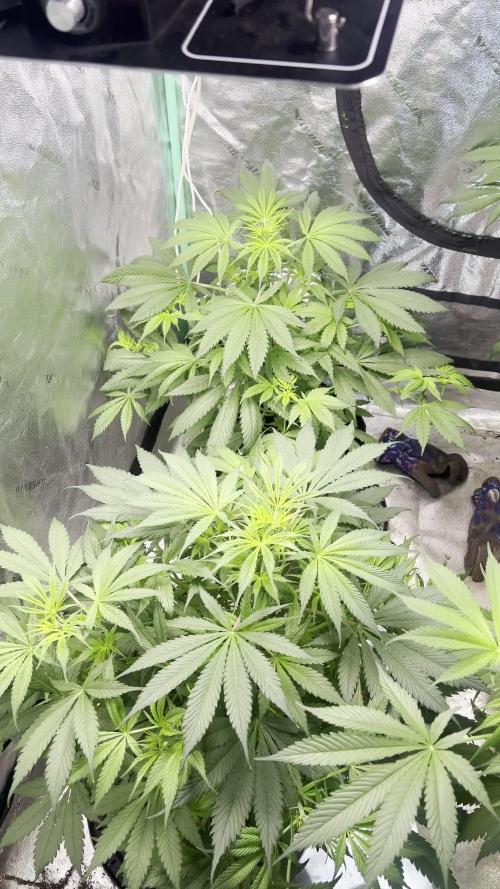
We lost the sick on this week, knew it was coming. Also the RH was staying around 65 to 68 so I pruned a bit on the taller plants which brought it right back down to a happy zone. Also all 5 plants are growing great but my tent is too small so I took the runt out and she is living with my plants in my plant room. We are getting about 12 hours of light a day now and it is good temp and RH in that room. So I hope she will still grow like a weed. This is actually week 3 of flower I misclassified week 6.



Likes
Comments
Share


@SolitudeCorners
Follow
This breeder is a scammer**
I’m going to end this grow diary here. During the later stage, I went through a mental breakdown and kind of lost focus on life for a while. I’ll upload whatever photos I still have, but I didn’t get my friend to help take proper photos because he was dealing with military conscription at that time.
I feel genuinely sorry to the sponsors who provided the seeds. I promised to complete the grow diary for them, and I broke that promise. I tried to save some branches, but they didn’t survive. I don’t have any excuses for this.
If I get another chance in the future, I’ll buy their seeds myself and grow them again properly.
**This breeder held a grow contest and sold a lot of packages for join the contests - seeds-Shirts stuffs and then cancel it after not enough people join him while dealing with his warrant (people talk like he used to be a scammer that famous in cannabis society in 2-3yrs ago) he just rebranding himself and claimed to work with gage geen founder (michael fang) ,I used to respect him and his work but after see him fat shaming people and talk so shit with their customers its just made me see more clearly
Likes
10
Share


@BR1CK_SANCHEZ
Follow
Just chuggin along this week, didn't do much... struggled to keep temperature at stable 68°
Likes
17
Share


@MoneyGrowup
Follow
Things are looking good, started with some lst with my hands at first now I've secured them with ties. The gelato looks like it finally want to start its growth due to whatever stress it was going through. Happy with how things are picking up


Processing
Likes
10
Share


Likes
141
Share


@Tropicannibis_Todd
Follow
💩Holy Crap Growmies We Are Back💩
Well growmies we are almost there , she got flushed so her days are numbered💀💀💀
👉 Shes a short chunky little plant,😉
Lights being readjusted and chart updated .........👍 Even with early major issues due to the soil/medium she's come a long way 👈
👉I used NutriNPK for nutrients for my grows and welcome anyone to give them a try .👈
👉 www.nutrinpk.com 👈
NutriNPK Cal MAG 14-0-14
NutriNPK Grow 28-14-14
NutriNPK Bloom 8-20-30
NutriNPK Bloom Booster 0-52-34
I GOT MULTIPLE DIARIES ON THE GO 😱 please check them out 😎
👉THANKS FOR TAKING THE TIME TO GO OVER MY DIARIES 👈
Likes
35
Share


@Mz876
Follow
First of all I’d like to give a big thanks to Ganja Farmer Seeds for this opportunity to try out their genetics . Also thanks to Mars Hydro for this TS1000 I was able to grow them under . The grow was super fast . These babies were the fastest flowering strain I’ve grown so far . I’ll be back once they’ve dried to give their dry weight and trimmed bud pics .


Likes
19
Share


@CanabisLoverHobbyGrower
Follow
Really packing on the size now, start of week 10 today, smells are amazing like literally amazing, strawberry banana stinks of foam banana sweets, pink lemonade smells just like a glass of lemonade, blackberry's again just like blackberries, gorilla cookies lovely strong gassy but sweet smell and stardawgs look like they've been snowed on they are that frosty,.. cannot wait for these to be done honestly, I've done quite a few grows now indoor and out and the smell of these have amazed me, hats of to fastbuds as usual, roll on next week 👌