


Likes
Comments
Share


@Cultiuherba
Follow
Sin problemas. Siguen muy fuertes, ya no tengo espacio en altura, llegan a 5cms del foco.
Esta semana introduzco un booster orgánico y un potenciador de flora de aptus. Todo orgánico.
Siguen engordando sin problemas, una presenta algunas hojas amarillas, parece insuficiencia de nitrógeno, pero lo veo normal en el momento que estan.

Likes
16
Share


@GrowBeforeHoe
Follow
I'm really not disappointed with the growth this week. All are doing well except the Royal Cheese but she is fighting against the damage.
Keep Growing everyone! 👍


Processing
Likes
4
Share


@FromSierra
Follow
Topped the MK ultra. I think it is needing to be watered more. The leaves on both GC and MK looked a little papery. Gave them a little more water yesterday and some today. Will be transplanting the DP babies soon in to bigger pots.

Likes
80
Share


@Hawkbo
Follow
They're settling in to the pots nicely and the flower tent is about to be cleared out. Need to do some work around the tent before I can move them should be a week or 2.

Likes
Comments
Share


@eldruida_lamota
Follow
Vamos familia, actualizamos la cuarta semana de floración de estas Granny’s Home de Seedstockers, salieron las 2 de 3, 66% ratio éxito.
Aplicamos varios productos de Agrobeta, que son increíbles para aportar una buena alimentación a las plantas.
Temperatura y humedad dentro de los rangos correctos dentro de la etapa de floración.
La tierra utilizada es al mix top crop, por cambiar.
De 2 ejemplares me quede con los 2 para completar el indoor, también cambie el fotoperiodo a 12/12 y aplique una poda de bajos, se ven bien sanas las plantas, tienen un buen color progresan a muy buen ritmo por el momento, las flores están formándose y empezaron a tricomar, hasta aquí todo.
Agrobeta:
https://www.agrobeta.com/agrobetatiendaonline/36-abonos-canamo
Hasta aquí todo, Buenos humos 💨💨💨.

Likes
2
Share


@Theia
Follow
ve repotted into her final 15l auto pot.
The procedure I used is as follows.
Items needed..
Clay pebbles
Hydro coco 60/40 clay pebbles/Coco.
Silicium Flash
Startrex
Mycrotrex
Bactrex
And of course Bio tablets X2.
15l of hydro coco was mixed with 25g of Silicium Flash and 25g of Startrex. Mixed up well to form the main substrate.
I filled the autopots to a depth of 5cm with clay pebbles and then layered up the amended substrate making a nice hole for my 300ml nursery pots.
Into this hole I sprinkled in 5g of Mycrotrex and then dropped the seedling in.
This then gets 2 biotabs pushed 5-8cm into the substrate and 1l of water mixed with 5ml of Bactrex
I need to top feed the autopots for a couple of weeks so the root system can establish before I transfer to my flower room and the gravity feeding trays..🤘🏼👍🏼
I'm keeping temps at a constant 25c and lights are on 24hrs a day. Rh is sitting around 65%.it too low hence the domes but then it goes too high. I'm going to run a couple of days with the 65% but vpd over 1 is a bit high for so early.. we shall see.
I'm more than happy with the purple punch. Considering when she was a sprout she grew out of her Coco plug and I found her flat on the floor...She is doing great. I'm a little concerned she is getting too much light. The others are all happy but punchy looks like she is a bit stumpy compared to the others. I've moved her to a side position in the tent so she gets a little less direct photons..

Likes
12
Share


@GREENPHOENIX6262
Follow
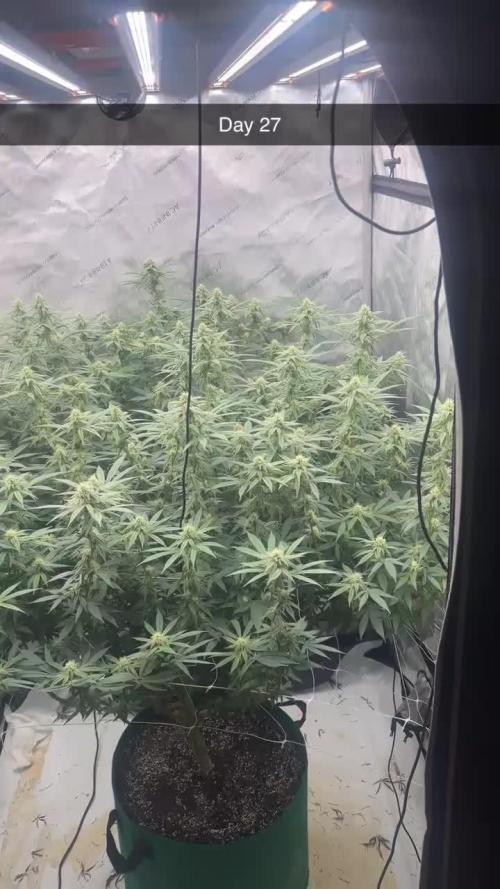
* Week 6 Flower Mimosa (1 -2) - 10/8*
Both Mimosa's are near harvest about a week left, Lotus CarboFlush will begin this week.
Mimosa (1) - 38 Inches - Mimosa (2) - 28 Inches.
Trichomes have set in - Pulled off trellis net this week
* Pre-Harvest set-up - 10/15*
Both plants have been cut down and are drying out accordingly (Day -1)
Dry time will be 9-14 days - Dry temps are 60% Humidity - 62 degrees F.




Likes
17
Share


@Naujas
Follow
She is much prettier than she was a week ago :) I remembered that I have my first grow light, which is more compact and it will give me more space, so I changed my light, now the girl's side branches get light too:) I add a lot of video memes, because I really want to win Iphone16 pro ;) and those who don't take risks don't drink champagne:) good luck to everyone.
Likes
31
Share


@GermanGrow182
Follow
First moldy spots found... 😬 Defoiliated the Moby some more for better airflow.. Hope, the next week's aren't too wet...


Likes
1
Share

@magicbudsgrow
Follow
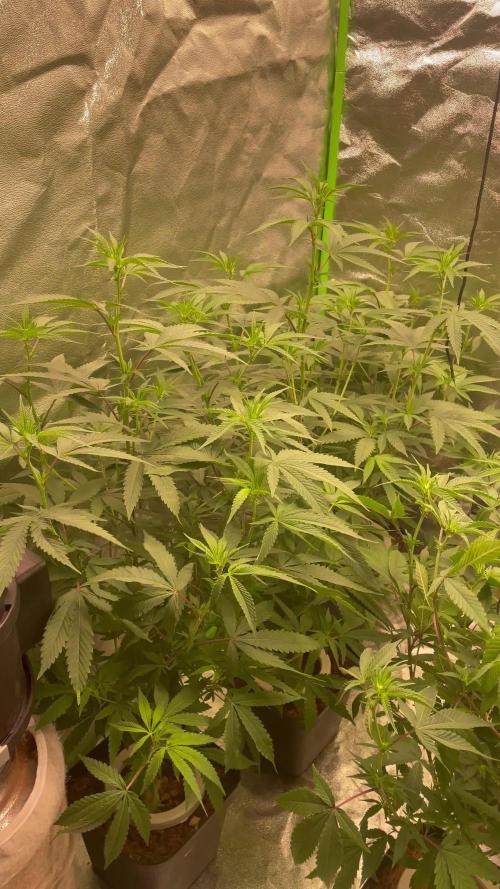
Flora com regime 13/11.
Cultivo sem poda top com Vega curta para fins de seleção genética.


Likes
25
Share


@Tidy_THC
Follow
Pollen will be arriving soon, it is pumping lots of sacks out this week, buds are fattening and smell is increasing with sugar on the buds.. not really any issues.
Likes
10
Share


@SmokieMcPot
Follow
Time for the "Party Weed", the Booshberry. It's a cross of orange push pop and method OG. nicknamed the party weed due to all the colors in the finished flower. Was told it has some different growths with plants reaching WAY out there, it's a light eater, doesn't stretch much, and stinks the whole way through. I can tell ya I smell this little fucker already lol.
Day 1- Starting this one off on a low dose of nutes while it settles in its new home.
5gal water
4mL FloraMicro
4mL FloraGrow
4mL FloraBloom
RES totals - 310ppm @5.8
Day 2- little LST to start spreading it out some. Need more gardening wire ASAP to keep the shoots low for now. Trimmed the lower node off, and placed it in some mineral rich water under a light and dome to keep the strain going in my tent.
Day 3- lil more LST using silicon coated small electronics wire cause I'm broke asf 🤣🤣. Really haven't had the time to get out and get some tbh.. it's like five bucks at lowes. Too busy cooking coke/lsd on Eclipse 🤣.
Day 4- adjust LST and tied her down some more. So far just ph adjusting the RES and topping off if needed. Couple days and this cut is gonna start blowing up. Already stinks like it's in flower... this is gonna be fun



Likes
Comments
Share

@Rare_Terps_5280
Follow
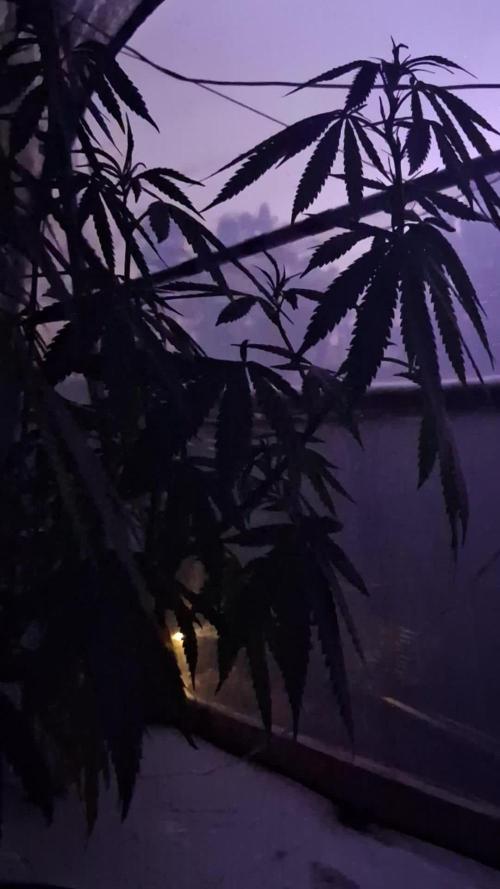
Another week and great growth, expanded nutrient regiments with bat quano and bio-fish. Rode out some big storms this week as well. Shes big, she's bad, hope this trend keeps goin.
Likes
16
Share


@THC123
Follow
Day 71 (September 5th) She’s holding on strong. Brought her in a couple times when we were having really bad storms. She doesn’t seemed stressed though.
Day 76: we’ve had a beautiful weekend. These ladies are loving it!


Likes
2
Share


@MrJac_GHZMono
Follow
6ta semana comenzó el 22/07/2019 esta vez hicimos poda de bajos por la humedad de la ciudad así puede circular mejor el aire y controlamos la presciencia de hongos, no lo queríamos hacer por miedo a la producción final pero las nenas reaccionaron muy bien y se noto en como comenzaron a engordar y a crecer sus flores, en realidad como que lo agradecieron, también esto ayudo a que le llegara mejor la luz a las ramas mas bajas.
Esta vez sumamos al riego los productos de floración de Top Crop en sus dosis bajas (Top Bloom, Top Candy) ya que algunas estaban presentando carencias de Fósforo y Potasio.


