




Likes
18
Share


@dalemac
Follow
October 1 > Harvest morning.
New trick... get up before dawn... cut your plant down and hang her upside down... then go back to bed.
Hehe... I like this retirement stuff. We get smarter as we age. 😎
I did a fair job of plucking fan leaves before harvest morning so there wasn't that much work for me to do anyway on this girl compared to some of the other monsters she grew up with. Took me only about 90 minutes to complete my normal processing and washing. She developed into a wonderful purple color at the end there.
The unique feature of this grow for me was that I never topped this girl. Subsequently she developed a huge single top cola that grew about a foot taller than the rest of the plant. Served as a demonstration of why we top plants in general. Hard for me to imagine what a bunch of these in the wild looks like but this is what WILD looks like.
Diary note > I'll come back later and add weights and things. I threw in a weight of 100 grams as a marker to appease the gods. Total guess.
========================================================================
October 7 > Guess I underestimated my yield a tad... love when that happens. 😁 Ended up coming in at 212 grams buds and 181 grams trim. Woohoo. Another growing season officially comes to a close today. 👌✊
Initially I wasn't sure I wanted to use the Trimbag on this baby... because she was my last plant to harvest this year and I had plenty of time to hand trim her... and I harbored various possibly incorrect assumptions about the Trimbag originally which I have now shed. More on that later.
Let me lay out my personal Trimbag history here as a learning experience for the community...
========================================================================
Originally I won this tool as part of my September 2018 diary winnings... and I looked at it strictly as a tool for fairly large scale growers.. of which I did not consider myself at that time. I grew an amazingingly oversized Durban Poison for a 5 gallon pot and I got lucky I thought. ... Then I took a look at how much herb I processed this summer and I said THANK YOU Trimbag! It saved me more than enough hours of hand trimming to demonstrate it’s usefulness.
(October 12) >> Already slowing down in post-harvest mode hehe... so it looks like I did the same thing as last year diary-wise. Now I have another Trimbag on my hands but all I need is another magnet actually (hehe)... the zippers show no signs of sticking up at this point after me throwing about 2-3 pounds of herb threw the mill, and the overall bag has only lightly been used at this point IMHO. I'm a little surprised I lost that magnet and it's not a great sign for the longevity of the embroidery - so to speak, but other than that it's solid construction. And simple. I’ll be contacting Trimbag to see if I can acquire a new magnet and we’ll see how that goes.
Back to my expectations... I only used this device on stuff I grew outdoors... of which I had enough... more than twice what I grew last summer - but that was by design. If I was to set out a general rule… I would say that I expect the weight of buds to be roughly equal to the weight of trim. This is AFTER I have thrown away any fan leaves plucked on the morning of harvest which are not saved as trim. I stop plucking when buds start to get ripped up if I don’t.
Round 1 >> The first go was the early Amnesia 7 batch (Little Girl flowered early), and honestly, I was unimpressed. I looked at it as maybe I didn't let it dry long enough. I have a ritual of washing all my outdoor grown herb which has generally tended to cause things to dry a tad quicker than what one would expect in the field. I walked away from this initial experience like boy I hope I screwed that up and it works better on round 2.
Round 2 >> Cream & Cheese CBD ... I think this girl did more to confuse me than anything else. The buds were not oversized but she seemed to take forever to dry. Part of this is probably attributable to excess humidity in the first few days - a weird week - we actually had some rain which is very unusual. But even after a week of drying I only managed 63g of shake on this batch (via the Trimbag). I'm going WTF?
Ahem.... I ended up with 269 grams of buds for my Cream & Cheese. After that 63 g shake by bag I added 165 g trim by hand... and I was seriously wondering why this bag thang existed. Turns out C&C was not a good example.... so don't let the bad things weigh you down.
Round 3 >> Next came Northern Lights - and my attitude changed completely. I harvested 319g buds, but the initial run with Trimbag generated 144g trim which I followed with 186g hand trim. NL had very dense buds and large internodal spacing which made trimming EZ. She was a monster… but at the same time I had her trimmed in under 4 hours. Of all the beasties I grew outdoors this summer, this was the largest yield for a single plant - but trimming her was a relative breeze, and it felt like it. I thought I hit the sweet spot for maybe how dry the herb needed to be for the product to work well… but probably only partially correct. Plant structure is significant.
Round 4 >> Next came round 2 with Amnesia. As I noted in my diary I knew I was going to end up with a pound of herb on this particular strain so I tried to beat this particular batch up to minimize my hand trimming and see what the effect was. The end result of this was that I generated a smaller amount of buds from the larger sized pot (Little Girl was in a 10 gallon container and generated 235g buds/ 360g trim and Big Girl was in a 15 gallon container that generated 223g buds/ 493g trim).
Round 5 >> Next came where we’re at in this here diary…Purple Berry Kush. Now originally I wasn’t sure I wanted to run this baby thru the mill. I THOUGHT that maybe because I hadn’t topped this girl and I didn’t put her in a pot bigger than 7 gallons which put her at a direct disadvantage vs my other outdoor girls that the yield would be substantially smaller, but I’ll be damned she ended up with 212g buds. Very satisfied there… and this stuff smells great when I let her get some air.
The key here on trimming for this round was twofold. I let the buds dry longer than I normally would have by a few days… because I had nothing pushing me to make space for reason A… and because stuff was intervening for reason B… golf tournament… Hardly Strictly Bluegrass in SF (Robert Plant was awesome - we share the same birthday and he was 71 in August - I can only hope I’m still rockin’ that hard in 9 years)…you know - stuff.
PBK ended up working out the best of all. 212g buds vs 181g trim. That’s the ONLY variant that ended up with more buds than trim. Part of that was how easy PBK was to maintain. I only did ONE major pruning of internal growth - probably later than I should have - I was trying hard to let her grow as wild as possible. But she was very easy to prune fan leaves off when that purple time came.
It’s seems clear at this point that indica’s are easier to trim than sativa’s with a Trimbag…. but I’m not sure that’s going to be a revelation to anyone. As far as I’m concerned, anything that grows with an inter-nodal spacing that allows you to neatly separate your buds will work better with the Trimbag. DRY is a necessary ingredient for using this device. Probably drier than I am accustomed to… but that’s why somebody invented Boveda packs right?
Anyway… I’m a VERY SATISFIED Trimbag customer at this point. It takes a little work to determine how dry your herb needs to be but even if you have to experiment, the number of hours you save from hand trimming will eventually make it worth your while… and as a newly minted senior citizen I can say that while my time might be free - anything that helps reduce pain - including time spent trimming - becomes quite significant.
NOW —> The other side of this coin is that I will probably NOT use the Trimbag when I get back to indoor growing in early December… because I expect to be growing much smaller plants. Most of the things I’ve grown indoors top out at less than a couple ounces so it’s not clear to me that Trimbag is necessary with a yield that small… but I can test that theory later this winter.
=================================================
hehe… I kinda promised myself “no more winter crops” after last summers bounty but I found that making edibles consumes a significant quantity of herb, and I really like my brownies. So now that I’ve stocked up to solve that problem, I plan to get back to some indoor growing (because growing is FUN)… mainly autoflowers. I actually have better control of temperature for things that I grow in winter as opposed to summer… but I have to add the heat to make that happen. That compares with the difficulty of adequate cooling if I run my lights during daytime in summer - even with night lights summer temps can be a problem with no AC. I don’t have AC in my house. It’s a function of California microclimates. If I lived 15 miles east of here - we’d BAKE with no AC (air conditioning). If it weren’t for coastal fog - this whole place would be a desert. With climate change - we’re heading that way even WITH the fog. We roll the dice here every winter and hope we get enough snow in the Sierra to hold off the firestorms that will come in the fall. We went thru a period of “drought” here in California a relatively short while back but even though we are officially out of our drought phase the fall firestorm intensity seems to be getting worse every year. But this is a clear sign I’ve consumed too much indica for one evening and I’m starting to lose track of.... just about everything.
Anyhow… I think I’m about diaried out for this year. I have a pretty freaking serious vacation planned to celebrate my retirement for late next month…
Las Vegas golf > Joshua Tree National Park camping > Palm Desert resort golf > Beach camping South Carlsbad > Torrey Pines golf > Laguna Beach > Pismo Beach camping > Monterey. It’s been about 30 years since I did anything this crazy (and that was a Grateful Dead tour in 1987 thru Arizona/Utah/California for my 30th birthday). Big difference this time around? Cannabis is LEGAL for the entire trip. I will be well stocked enough to sedate anything that gets near me. See y’all in December.
😎

Likes
49
Share


@XoticGROW666
Follow
🍪🍬⛽️
My first clone I took from seed dosido x f1durb x gushers from purple city genetics legggo!!
Likes
26
Share


@pifflestikkz
Follow
Day 37
06/08/24 Tuesday
De-chlorinated tap water pH 6 today with calmag only.
Pre flower stretch initiated, pre flower female sex pistils forming 😍
All happy and healthy!
Structure of Melonade Runtz and Critical orange is Beautiful.
Pic and vid update
Day 39
08/08/24 Thursday
Feed today using de-chlorinated tap water pH 6 with Plagron PK13-14.
Showing her pre stretch 😍
Day 41
10/08/24 Saturday
De-chlorinated tap water pH 6 today again with calmag.
400ml with run off now.
Day 42
11/08/24 Sunday
End of week
De-chlorinated tap water pH 6 today again with calmag.
400ml with little run off this time
Pistils on pistils now 😁
Starting to see the beginning of bud formations 💚


Likes
23
Share


@adam_pawloski87
Follow
This week went real great , one has been getting flushed and the rest we will start flush Tomorrow! These ladies are doin so amazing! Hope you all enjoy !! Stay tuned for next week! Cheers an happy holidays!

Likes
9
Share

@420DeepGrow
Follow
📆 Semana 7
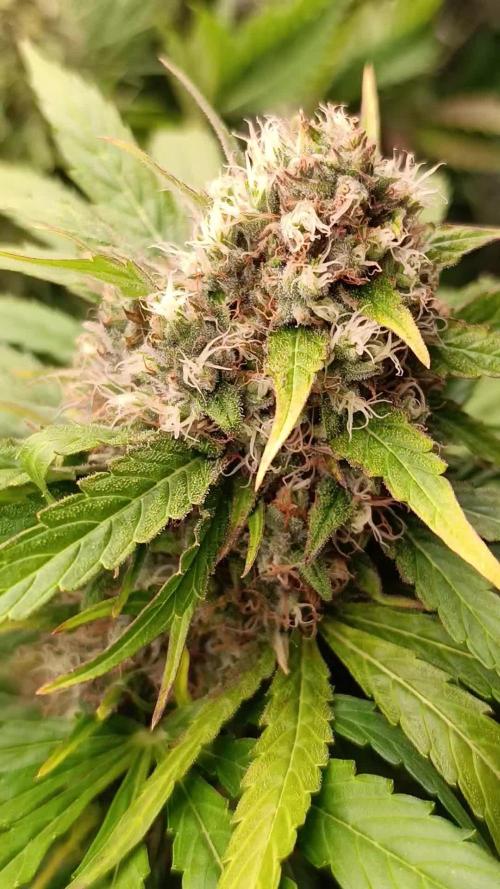
La Mental Rainbow sigue avanzando firme en floración, con cogollos más densos y cubiertos de tricomas brillantes. Los pistilos continúan desplegando colores vivos, mientras el aroma dulce y terroso se intensifica. La estructura sigue sólida y bien aireada, favoreciendo el engorde máximo.
🌿 La genética promete resina y aromas intensos. Al final del día vi algo de brotitis en la punta central.
¡Seguimos creciendo fuerte 💪!

Likes
18
Share


@Yasyjlakh
Follow
This will be the last week before the probably harvest, I’m really happy for the colored buds
She’s smelling really strong and had heavy resin over.
This is the best that I was expecting 😎🤪🤤
Likes
29
Share


@Seldom_Seen
Follow
Day1: Father and child both doing well after a successful and happy birth.
Day 2: The stem stretched a bit further than I would have liked so I’ve added another layer of soil to build up around the stem and I’ve moved the light a bit closer. Looks good now.
Day 3: Continued to use the Force to make the seedling grow. It’s looking happy and healthy. It’s tedious work just standing there 18hrs a day.
Day 4: Another good day of growing. I had R2 telling me dirty jokes to keep me distracted from the monotony of the task. Put some water around the stem just to dampen it down a bit.
Day 5: Nothing to report. It’s already starting to feel like I’ve been here for a light year but Mr.Nelson said he’ll be bringing round some bud soon so that should help with the boredom. He said it’s important that I learn for myself by actually trying it, the difference between Indica and Sativa.
Day 6: Dampened down soil around seedlings 🌱
Day 7: A week down and everything is looking good. Dampened down soil again today around seedling 🌱


Likes
13
Share


@Magical_Surgeon
Follow
So I started seeing some ember with my microscope. So I thought it's TIME TO HARVEST. I prepared the place for it and put it in darkness for 2 days so my girl would feel that it's time for her to give it all she got. And today 17.06 I chopped her and hanged her upside down to dry. Im sooo happy and can't wait to try it. Now I'm facing a big problem... My country became super hot.. and I'm struggling to keep humidity and temperatures correct 😭🌡️
I'm still gonna try my best to give it a long drying process.. then I'll update you on the smells and everything. I havent even checked the wet weight coz I don't wanna disturb the buds. I'll just give it it's time.. and then better I check the weight when I separate every cola and it will be dry enough😊😊😊
The other girl is having the time of her life now.. all the tent is hers now. What she was dreaming of since the beginning :c.she still has some time left before harvest. I'll attach the pictures!! 🤤🤤🤤🤤👿🌲
Likes
116
Share


@bioaccessory
Follow
Как и ожидалось, растение резко увеличивается в размерах, надеюсь я всё правильно расчитал. Идея с кольцом мне всё больше нравится, как только растишка войдет в активную стадию цветения — сделаю дефолиацию.
30/03 PH7,0 PPM860
31/03 PH6,9 PPM790
01/04 Дал Delta9 по листу.
Откалибровал PH-метр, оказывается я невольно кислил компот, а буфер возвращал показатели до нормального значения.
02/04 PH6,1 PPM858 Сделал дефолиацию.
03/04 PH6,0 PPM940
05/04 PH6,1 PPM744
За прошедшее время в моём гроубоксе появились: 3 маленьких горшочка - проращиваю чили-перцы, 2 больших кирпича - в случае необходимости готов опустить на них горшок, а это плюс 10см высоты. В первый раз в жизни покупал кирпичи.😕
Открываю новую рубрику "а знаете ли вы, что":
Green Gelato — Soft Secrets award winner — voted “Best New European Strain for 2019” Grow Champions! 💪
👉Планирую сделать интересный досвет низов по периметру, оставайтесь на связи.
Спасибо, что заглянули, и будьте здоровы! 🙏
Продолжение следует ...😶
Likes
52
Share


@SomeLikeItGrow
Follow
Hey friends! We are growing as hell!! The first week of 12/12 running nice and fast, at start of the week I've used to spray the leafs with CannaBioGen Delta 9 (4ml/l), also mount ScROG as much comfortable as I can :) Cheers! Grow for Love <3

Likes
6
Share

@DogDoctorOfficial
Follow
💙 Project Blue Tent – Week 10
Blue Waffle F1 – Pheno B
🌸 Let Her Do Her Thing
Hello everyone, and welcome back to another chapter inside Project Blue Tent! 💙🌱
If you've been following this project, you'll know that the last few weeks have been full of action.
Long vegetative growth.
Aggressive stretching.
SCROG training.
A second SCROG.
Major defoliation.
Moving the ventilation system.
Raising the LEDs.
Improving airflow.
Adjusting the nutrition.
We certainly haven't been standing around doing nothing.
😂
But this week?
We're doing something very different.
We're watching.
And honestly...
when I look at Blue Waffle F1 Pheno B right now, I don't think she needs me doing much else.
🌿 PHENO B – LET HER DO HER THING
Pheno B is looking absolutely beautiful.
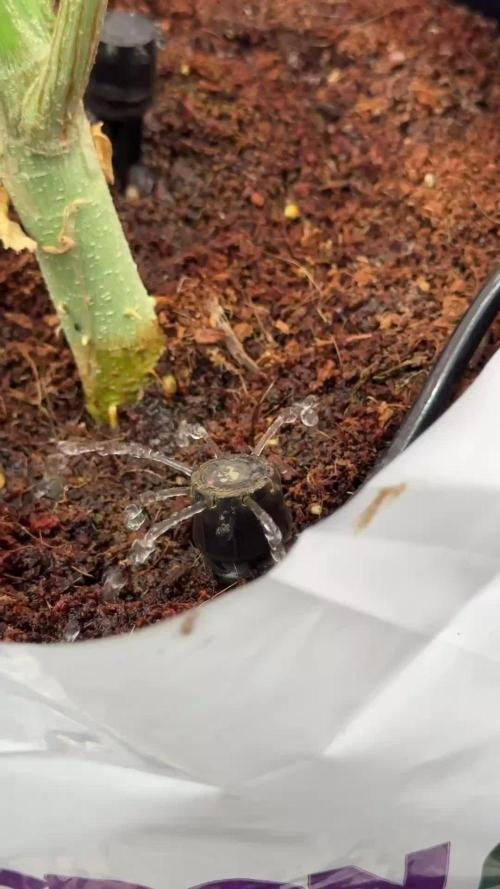
She's sitting at approximately 145 cm and has developed a fantastic flowering structure after the work we carried out over the previous weeks.
And this is where I think patience becomes one of the most important tools a grower has.
We made the big interventions.
We opened the canopy.
We removed unnecessary congestion.
We added the second SCROG.
We created more vertical space.
We improved the airflow.
We gave the branches additional support.
Now the plant needs time to respond.
There is no point constantly changing things simply because we feel like we should be doing something.
Sometimes...
the best intervention is no intervention.
😂💙
So this week, we're letting Pheno B recover, settle into her new structure, and continue putting her energy into flowering.
And she's doing a beautiful job of it.
🌸 THE RESULTS OF THE PREVIOUS WEEKS
One of the most satisfying things about this week is being able to look back at the work we performed earlier and actually see the results.
The heavy defoliation dramatically changed the structure of the plant.
At the time, it was a big decision.
The canopy had become extremely dense, and we needed to create more space between the branches and flowering sites.
But the goal was never simply to remove leaves.
The goal was to make the plant more manageable.
Now we're seeing the benefit.
The structure is much easier to read.
The flowering sites are more visible.
Air can move through the plant more freely.
The branches have room to develop.
And Pheno B doesn't look like she's missing the foliage we removed.
She's simply continuing forward.
That's exactly what we wanted.
🌿
This is one of those moments where you have to trust the work you did several weeks earlier.
You can't rush this part.
You just watch.
💡 INTRODUCING LUMIFLORA UNDER-CANOPY LIGHTING
There is, however, one new addition to the ecosystem this week.
The **LumiFlora 150W full-spectrum under-canopy light** is now officially part of the experiment.
And with Pheno B's size, I think the timing makes perfect sense.
The main LEDs are doing an excellent job illuminating the upper canopy.
But these plants have developed so much vertical structure that the lower portions naturally receive considerably less direct light.
That's simply the nature of a large, dense flowering plant.
So instead of continuing to remove more foliage simply to chase light penetration, we're trying another approach.
We're bringing some light to the lower canopy.
The LumiFlora is a **150W full-spectrum fixture**, with additional red emphasis, and we're positioning it underneath the canopy as supplemental lighting.
The main fixtures remain responsible for the primary light source.
The LumiFlora is there to complement them.
I'm particularly interested in watching how the lower flowering sites develop now that they're receiving additional supplemental light from underneath.
This isn't about replacing the overhead lighting.
It's about giving the lower part of this very large plant another opportunity to receive useful light.
And now...
we watch.
💡🌱🌸
🕸️ THE SECOND SCROG IS DOING ITS JOB
The second SCROG is another part of the setup that I'm very happy with.
Pheno B has a lot of vertical growth, and as the flowers continue to develop and gain weight, having that additional support becomes increasingly valuable.
The first SCROG helped us organize the plant.
The second SCROG is now helping support the flowering structure.
It's a simple concept, but with plants this size, that additional layer of support makes a huge difference.
We're no longer trying to force the plant into a particular shape.
We're simply giving the branches somewhere to rest and something to support them as they develop.
And that's exactly where I want to be at this stage.
🌬️ AIRFLOW – KEEPING THINGS MOVING
The airflow system is also staying exactly where it is.
We've got airflow working above and below the canopy, helping keep the entire structure moving.
That's particularly important now that we've introduced supplemental lighting underneath the plants.
The goal is to keep the lower canopy from becoming stagnant while maintaining good circulation throughout the upper flowering structure.
Again...
nothing dramatic.
Nothing complicated.
Just consistent airflow and a stable environment.
And that's another reason why I'm not changing much this week.
The system is working.
So let it work.
NUTRITION – NO NEED TO CHASE NUMBERS
The feeding program remains consistent as well.
The girls are continuing with the PLAGRON Hydro program:
PLAGRON Hydro A — 2.2 ml/L
PLAGRON Hydro B — 2.2 ml/L
🌱 PLAGRON Hydro Roots — 1 ml/L
🌸 PLAGRON Power Buds — 1 ml/L
pH adjusted as required
The plants are responding beautifully, so there is no reason to start changing things just for the sake of changing them.
They're growing.
They're flowering.
They're drinking.
They're healthy.
So we continue.
That's the approach now.
Consistency.
Observation.
Adjustment only when the plants actually ask for it.
🌸 THIS WEEK IS ABOUT PATIENCE
If I had to describe this week's update in one word, it would probably be:
Patience.
😂💙
We've done so much over the previous weeks that it's tempting to keep doing more.
But the plants don't necessarily need more intervention.
They need time.
Time to recover from the defoliation.
Time to settle into the second SCROG.
Time to continue flowering.
Time to respond to the new lighting arrangement.
And time to show us what all the previous work has accomplished.
That's what we're doing now.
We're watching.
🌿 PHENO B IS SHOWING US THE RESULTS
Looking at Pheno B today, I can see the results of the entire process.
The long vegetative period gave her the structure.
The first SCROG organized the growth.
The flowering stretch tested the limits of the room.
The defoliation opened everything up.
The second SCROG gave the branches support.
The ventilation changes created more vertical space.
The additional fan improved circulation.
And now the LumiFlora is providing supplemental light underneath the canopy.
It's almost like we're finally reaching the point where all those individual decisions are becoming one complete system.
And Pheno B is right in the middle of it.
🌸
She's not asking for another big intervention.
She's asking for time.
So that's exactly what she's getting.
🌡️ CURRENT GROW CONDITIONS
🌸 Flowering: Week 10
📏 Height: approximately 145 cm
💡 Light schedule: 12/12
☀️ Day temperature: 27°C
🌙 Night temperature: 27°C
💧 Relative humidity: 61%
⚗️ pH: 6.01
⚡ EC: approximately 2.49 mS/cm
🌡️ Solution temperature: 26°C
🌱 Substrate temperature: 24°C
🌬️ CO₂: approximately 666 ppm
💦 Watering: approximately 1.6 L per plant / 24h
? Pot size: 8 L
💡 LumiFlora Under-Canopy: 150W Full Spectrum
🔬 SAME ROOM. DIFFERENT PERSONALITY.
This is one of the things I love most about Project Blue Tent.
Pheno B is sharing the exact same environment as her sisters.
Same room.
Same lighting.
Same irrigation.
Same nutrition.
Same environmental targets.
Same cultivation philosophy.
And yet...
she is still Pheno B.
She has her own structure.
Her own rhythm.
Her own way of filling the space.
That's exactly why we're documenting these plants individually.
We don't just want to know how Blue Waffle F1 performs.
We want to see how each individual phenotype expresses herself under the same conditions.
And Pheno B is giving us a very interesting chapter.
🌸 FROM GROWING TO FINISHING
We're now moving further away from the training phase and deeper into the finishing phase.
The structure has been established.
The canopy has been managed.
The support system is in place.
The environment is stable.
The nutrition is consistent.
The airflow is moving.
And now the flowers get to become the main story.
That's why I'm deliberately resisting the temptation to keep changing things.
We've already done the work.
Now it's time to see what the plant does with it.
💡 The LumiFlora gives us one new variable to observe.
Everything else?
We're keeping steady.
Because sometimes the best experiment is knowing when to stop experimenting.
😂💙
🔭 LOOKING AHEAD
Over the next few weeks, I'll be watching Pheno B closely.
I'm particularly interested in:
🌸 Flower development throughout the canopy
💡 Response of the lower flowering sites to the LumiFlora
🌿 How the plant continues recovering from the defoliation
🕸️ How the second SCROG supports the developing flowers
🌬️ How the airflow performs through the mature canopy
How the plants continue responding to the current nutrition
But no major interventions are planned.
The plant looks happy.
The environment is stable.
The structure is where we want it.
So now...
we let her work.
🌸💙🌿
🙏 A HUGE THANK YOU
A huge thank you once again to Zamnesia for making Project Blue Tent possible and for giving us the opportunity to explore these Blue Waffle F1 phenotypes individually.
Thank you to PLAGRON for the Hydro nutrient line and for supporting these girls throughout this vigorous cycle.
A massive thank you to Mars Hydro for the irrigation and drainage system that keeps the ecosystem running smoothly.
Thank you to LumiFlora for the 150W full-spectrum under-canopy light, which we're now introducing into the experiment and watching closely as the plants enter this important flowering stage.
And of course, thank you to GrowDiaries for giving us the platform to document the entire journey.
Most importantly, thank you to everyone following Project Blue Tent.
We've spent weeks training these plants.
We've managed the stretch.
We've opened the canopy.
We've added support.
We've reorganized the room.
We've improved the airflow.
And now...
we finally get to watch the results.
💙🌸
Pheno B doesn't need us to keep pushing her.
She doesn't need another dramatic intervention.
She needs time.
So that's what we're giving her.
Time to recover.
Time to flower.
Time to develop.
And time to show us what she can do.
Until next week...
More flowers.
More observation.
Less interference.
And hopefully...
a whole lot more Blue Waffle F1 magic. 💙🌸🌿
Growers Love, happy growing, and take care everyone! 🌱💙
Likes
6
Share

@World_Breeders
Follow
🌱 Week 5 – Vegetation
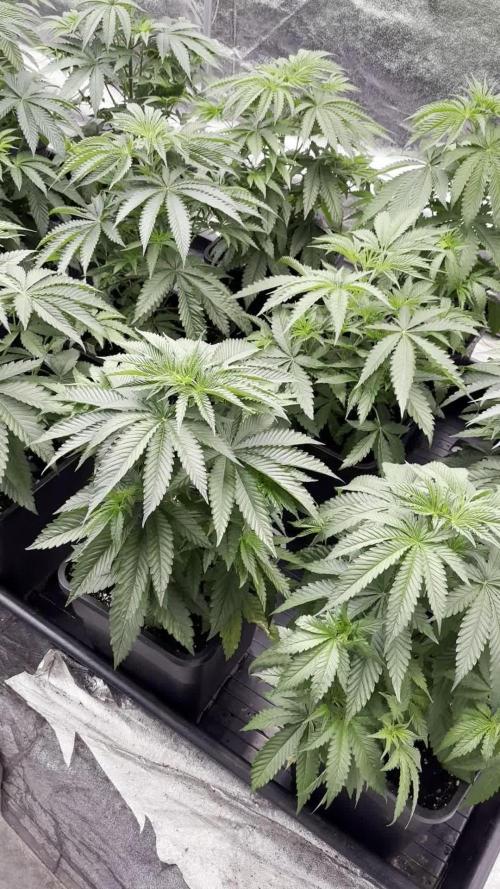
Plants are now in a strong vegetative stage, showing vigorous growth and a well-developed structure. Leaf size has increased noticeably, and the canopy is becoming denser and more uniform across all plants.
Nutrient levels have been adjusted to support higher demand, resulting in healthy green coloration and steady development. Root systems are fully established, allowing for more efficient nutrient uptake.
Environmental conditions remain stable, helping maintain consistent growth without signs of stress. Overall, plants are responding very well and are preparing for the transition into the next phase.
Likes
36
Share


@BrigadeDesTerps
Follow
Pour l’instant la Frosty purple freak a une bonne croissance, les changements de température en belgique n’ont pas l’air de lui posé problème, les feuille sont saines , croissance visible quand tu repasse le lendemain, les limaces sont encore présentes mais ne s’attaque plus au plantes saines, mise à part la vigne à kiwi qui doit être le saint graal de ses bestiole sinon à part ça plus de problème à déplorer

Processing
Likes
5
Share


@Mr_nugs_lover_David
Follow
She looks super healthy and strong too on her second week of life in this crazy world. Let's see how she performs! 💎🌱💚👨🌾

Likes
24
Share


@3lementa1
Follow
This is the 8th week. Thursday will be 9 weeks of 12/12. Some trichs are amber. They just added a good bunch of girth over the past few days, but most of the pistils are red now. The rest of them have been dropping leaves consistenly but the canopy remains full so they must be putting out more leaves.
I just flushed to 80% runoff and found out that I had 1200ppm. I just got an ec meter but my last reading said closer to 600 so idk what happened there.
I flushed until I had runoff ppm of about 150. Now they're back in the grow tent. I don't want to keep assaulting them with my microscope. I think they're ready. Just gonna let them settle another day or two to dry out a bit.
I took one small branch off the small Wedding Cake plant on Thursday and I've just been watching it dry on my counter. It's been 5 days and the stem snaps but still leaves a fiber connecting. I put it into a small jar with a 64RH thing. I just want to try it. It already smells amazing.
The leaves on the big CBD Blue Shark plant are going really yellow and some other colours are starting to come out as well.
The buds all fattened up and got more frosty again. I was worried they were foxtailing but they got more calyxes underneath the peaks and have been making more of a pyramid shape. They're really close to peak. Harvest day will be March 17 or 18.
March 17 1023pm chopped and hung after lights off all day. RH was 65% before I chopped and 50% after I closed the window and cut the plants off the saturated pots. I did a wet trim to prevent mold. The buds are sticky af. Gonna hang them to dry for 7-9 days before curing in jars :)
March 18 : checked the RH when I woke up and it's chilling at 45% 😎
March 19 : just checked to see how they were drying. There are seeds in every plant. RIP
I'll update when I put them in jars and again a few weeks later for final review. Overall it was a good grow despite the rocky start and a good introduction to the mainline technique and my new grow space. Next grow I should have everything pretty well dialed in.
March 23
They were hanging for 3 days. Rh was around 45, then spiked to 65 overnight when I forgot to turn the fans back on. Temp was high at around 26.they felt wet after 2 days, and bone dry after 4 days. The stems still didn't snap but I put them in jars anyway. A day later, jar RH was 50%. I burped all the jars and there was a smell from the new jars. I took all the weed out, washed out the jars, and did a dry trim on the weed.
One of the Wedding Cake plants must have gone hermie. I didn't see any bananas and didn't even realize there were seeds until the very end. The seed pods looked just like calyxes while the plants were growing. Many of the nugs are unusable. Under the sugar leaves are just layers and layers of seeds. Some weren't hit that badly. The CBD Blue Shark is much better off but still has some seeds.
I'm trying to stay positive. It's a bit of a shock though. I'm anxious to try the finished product. If the flowers at least taste good and have a good effect, all is not lost.
Processing
Likes
5
Share


@Stankystan9
Follow
Week 6 had an issue with critical purple decapitating herself over night after I must’ve staked her down too hard. So CP has been topped, with LST. I guess we will see how the yields compare at harvest, eh? The smell is LOUD asf when I unzip the tent as well. Such a beautiful smell to get smacked with. Also started Hindu Kush auto - really lost my mind. 11 plants total with my outside grows. my excitement overruns my anxiety for lack of space right now...


Likes
27
Share


@RDWCGrowing
Follow
3/25/2023
Week 6- Day 1 of Veg (Day 52 overall)
Added my first between changes SILICA Top offs. Was worried that when you add it to pre mixed Nutes that it can make the whole thing turn into a gummy looking substance. I was ready to drain the system and start it over for the week if needed, but no issues adding it to the tank. the Silica going into the Res didn't gummy the system up, it did drop my PH by quit a bit causing me to have to bring it back in balance.
36 Gallons in the Tank
Silica
Add .5mil/Gal = 18Mil
I topped some that needed to be topped, I defoliated some that needs to be defoliated. Since I have moved into Week 6 I have increased the light intensity up to just over 500 maxing it out for Veg Cycle. Next increase will be Week 1 of Flower.
3/26/2023
Week 6- Day 2 of Veg (Day 53 overall)
All conditions looked great. Other than me not putting one of the humidifiers back right which means it didn't work last night so Humidity was lower than I like. But got the Humidifier back on it's stand correctly and it is now pumping away. With that I decided to give the plants a day off from any stresses, no topping, no FIMing, no Defoliation for today. Just some good old soaking up the light rays and the ability to get all the Nutes they would like..
3/27/2023
Week 6- Day 3 of Veg (Day 54 overall)
Looking kind of Bushy today, so I defoliated some, and topped some.
3/28/2023
Week 6- Day 4 of Veg (Day 55 overall)
PH was a little lower than I like 5.74 so I added a few Mil of PH UP and brought it back up to 5.94.
Not much else at this stage, just I topped a little and I defoliated a little.
3/29/2023
Week 6- Day 5 of Veg (Day 56 overall)
Topped a little, Defoliated a little Watched them grow!!
3/30/2023
Week 6- Day 6 of Veg (Day 57 Overall)
Main action today was breaking down my old tent and setting up a new tent and getting my second RDWC system setup and ready for clones. I Topped a little, I Defoliated some and started taking a good look at what I would like to take for clones in the coming days. I have a few bottom branches that look every promising for my clone material on each.
3/31/2023
Week 6- Day 7 of Veg (Day 58 overall)
#3 is at 16" Tall
#2 is at 13" Tall

Likes
18
Share


@xtchill
Follow
Even tho there is a slight defiency they are smelling and looking amazing
Not long until harvest now.
