




Likes
11
Share


@Yellabeard
Follow
So here we are at week 4 and the girls are looking well ..
I started some very very light stress training this week , I’m still newish to Autos and not sure how far i can push them .

Likes
91
Share


@Greenwolvesfarmer
Follow
Me encantó la cepa y su facilidad de cultivo ! Aun que tuve muchos problemas ambientales y climáticos . Me atrasé unas 3 a 5 semanas con estas nenas , pero nos recuperamos bien ! Usamos malla scrog chilena #kanovicultivo , lo mejor que he usado en malla scrog , no se le comparan , su espacio preciso! .
Las 4 comenzaron en pequeños vasos , luego de 1 a 2 semanas , trasplanté a macetero de 5.8lts , finalizaron 3 en maceteros textil 19lts y 1 en macetero de 20lts AirPot !
Comencé a brindarle 20hrs de luz / 4 hrs oscuridad , a la 3era semana 19hrs de luz y a la 5ta semana bajé hasta el 18 / 6 .
Usé un panel QB de 480w regulables , chips marca Samsung de 3500k , chips epistar UV 660nm iR , el mix completo gracias a mi bro MKleds chile ! Se pasó ! De todas maneras recomiendo una potencia mínima de 600w ( QB LED ) para espacio de 120x ..
Usé un bio estimulante chileno , que a mi parecer fue uno de los mejores que he visto y usado ! El grande #trichomemania , te cuento que este producto activa un mecanismo de defensa en la planta (SAR) , haciendo que reaccione y se trate de defender con mayor producción de resina , terpenos y tricomas ! Es increíble ! A los 24hrs tienes resultados , un saludo grande a los hermanos ! El mejor producto 10000000%....
Grande eva seed , buenisima esta cepa , me dí cuenta que si se deja madurar un poco más , su sabor es más frutal candy , exquisita cepa !....
Estamos probando con un papel de blunt organico 100% libre de tabaco marca *jamaican buzz*...al fumarla su efecto es notorio , enseguida viene el efecto psicoactivo y cerebral , se viene a la vista un tanto distorsionado el entorno ...la vision un poco más brillante , y a la vez relajado ..
Hoy 18 de agosto estamos probando con un papel de celulosa organico marca lion rolling circus ( foto al final del album ) , quema bastante bien , al parecer ya está casi en su totalidad secado , combustión lenta , buen sabor afrutado citrico con toques candy diesel ...uuff efecto despues de 3 quemadas ya por los cielos , totalmente cerebral y estimulante , un gusto charlar con amigos !
Al manipular su fruto , la planta expele un olor afrutado con limon maduro y skunk , con finales de candy terra , una delicia , muy buena cepa , ahora mientras escribo me siento un tanto "mareado" con esa mitad de blunt ! Buenisinaaa!...
____
La verdad cuando comencé a cortar cada planta era como llenar "infinitamente" el armario donde dejaría secandola , se llenó casi la mitad y un poco más sólo con 1 planta cortada ! Increíble producción , yo estimo unos 90g por planta aprox , ya he consumido un buen peso además ...veremos en estos días que esté por completo su secado ! Esta riquísima , sus efectos fuertísimos ...100% ...
___
Una cosecha buenísima, muy parecido como obtengo resultados en comparación con el sodio , todo bien me gustó la experiencia !....
Además tuve la oportunidad de hacer extracción en seco de su materia vegetal . Obtuvimos entre un 18 a 20% de retorno ! Para mi primera vez , geniaaaal ! Su utilizó prensa de 12 toneladas , de apretó a 80°C por 4 minutos .
.
.
Usen lemon king ! Una delicia .

Likes
3
Share

@Davesflavours
Follow
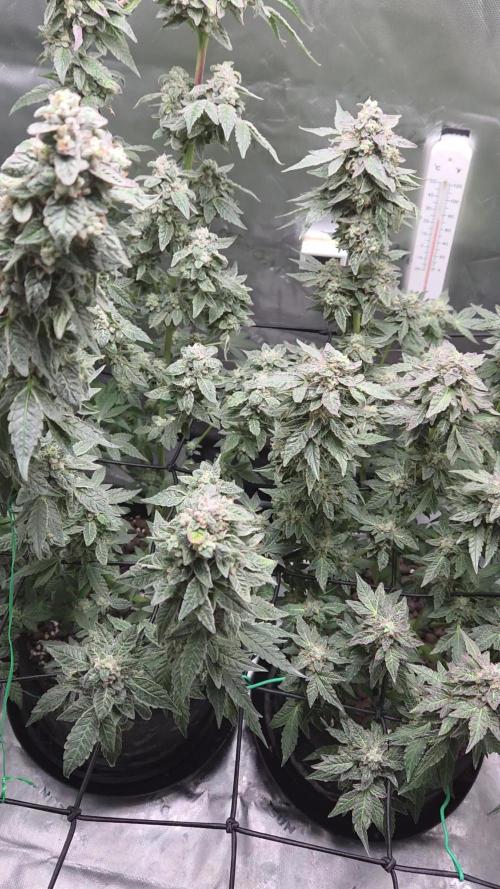
Last week before the flush
This video was actually taken at the end of the week, im pretty sure the plant on the right is very ready for harvest but the trichomes on the left plant don't have as much amber ones as I'd like.
But im going to flush anyway and hope for the best
Thanks for stopping by ✌️

Likes
2
Share


@HighOhioAn
Follow
Fast bud autos are truly my favorite some of the best autos in the world. I won this apple strudel and a contest, and I wanted to put her on the Grow diaries so I can keep track of her growth to be a great sativa And of course it’s Halloween so gotta throw a little creepy love and with the beauty of the plant🔥
Likes
64
Share


@MadeInGermany
Follow
Hi folks :-)
This week it has developed very nicely 👍
The shoots are starting to grow again, and will soon be ready to be tied down again 👍
I wish you all a nice weekend and let it grow 🍀🌱🙏🏻

Likes
14
Share


@Chi_K24
Follow
Update Sunday... hey guys uploaded a security cam footage of the blizt storm in the GTA.... ladies survived somehow... also did top dressing at 30tbs per 15 gal of 444 and 284 gaia green organic amendments. 70/30 ratio. Watered them in with dechlorniated, pH 6.2 and 60mL of molassas to 5 gals of water.
Defoilated and did some maint pruning on growth under the main canopy.
God bless.
Hey folks,
Well I got good new and some bad news. Last weekend, these ladies got thrashed by a thunderstorm.. break some branches along the way. Had enough time to splint the bent stems and they bounced back.
Note that due to the storm, the pots got watered down pretty heavy... but to my surprise I let the ride out from Monday to Friday... and regretted that. I should of watered the ladies on Wednesday or Thursday, but found out the pots where extremely dry (also probable that the fabric pots are drying the medium out allot faster). The plants started to droop Friday afternoon. Also did a little lst but didn't want to over stress the plant that still recovering from the major storm.
Iv watered each pot about 8L of molasas water @ 5mL/L and see how the soil and plant respond. Im going to check on them more frequently and prevent under-watering. Hope you guys enjoy the grow so far. Let's see how far i can push these ladies!
Cheers.

Likes
11
Share


@Professor_Daank
Follow
7/26: Last defoliation for about 4 weeks. Looking good and thick. LST is basically over and I'm going to let this plant do what it wants from here on out. I pulled some stems away a tad more so they grow out of any shadows. Bam!
7/27: Added my Google Home Mini so the girls can listen to classical all day long.
7/28: Pistils are tiny on plant 1, but the other 2 are growing rapidly.
7/29: Ordered a 600w ViparSpectra to add to the grow tent, can't wait. Also ordered some sticky traps. The gnats are not really affecting the plant, (never enough to cause major problems) but I just hate them. They seem to be coming from my shop-Vac (for run-off). I let it dry out, as it never stays full of water. I assume they are attracted to it regardless because of the moisture. I have now moved the shop vac further away from the grow tent and will have sticky traps installed 7/30.
7/30: Day 33. Going well. They love Mozart. Pistils FINALLY on every plant.
7/31: Got the new 600w ViparSpectra in, it's bright... this was a good idea. 600w @ 24inches, 450w @ 20inches
8/1: Pistils on all plants. Pre-flower stretch is real. The new light changed everything. Plant 1 taking half a gallon now.

Likes
1
Share


@walterwhiteee
Follow
Aug 13th transplant day
Using Gai Greens Organics 4-4-4 with worm castings and mykos for root structure
Aug 15th Start of LST
Likes
11
Share


@Grizzly
Follow
The smell when wet trimming the fans off is of sweet berrys, a little bit citrus and musky dank smell is the only way I can describe it.
The drying is coming to an end, at the end of day 13 I broke a bud off that weighed a gram and had a smoke test, the flavours are there and it smooth smoke surprisingly but I think a cure will really bring the terps out.


Likes
10
Share

@Bread_n_Buds
Follow
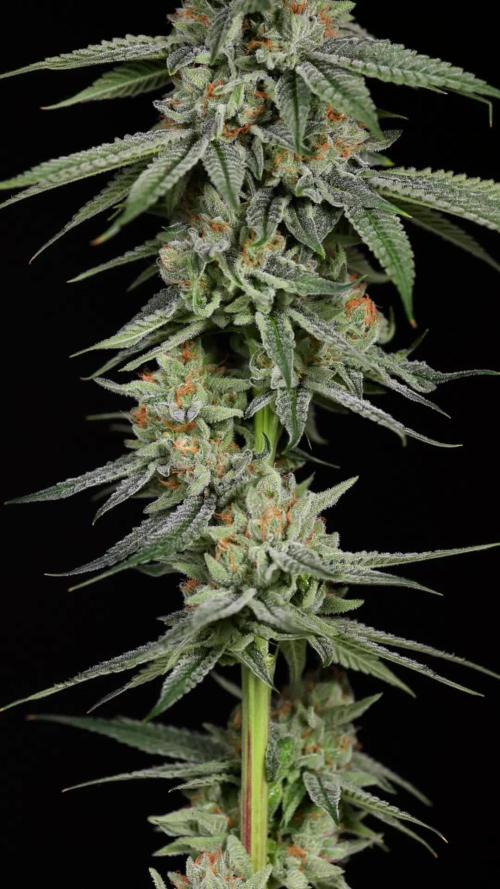
The Lemon Cherry Gelato #2 just harvested from Zamnesia has given us a main cola worthy of the Prince of the Amazon. Jokes aside, we're dealing with the SOTY strain of the year, and even my not-so-huge vegetated plant doesn't really give you a glimpse of what this plant can do, which relies on the extremely high quality of its buds and resin production as its strong points.
The trichomes are particularly large-headed, which is always a sign of great flower quality overall; you can clearly see the potency from the microsphere. They're around 20% Amber, 50% Cloudy, and 30% Clear. The plant is slightly more Indica, and I don't want to let it ripen too much; that's fine with me.
The pistils are very, very ripe, around 90%.
The aroma it releases is truly complex; it's definitely sweet and fruity, but there's also something woody.
It's a plant with well-proportioned, medium internodal spacing.
This strain is much loved; there are many good and famous versions, but ours here at Zamnesia is the best of them all.
We grew it in a classic 11-liter square plastic pot.
The flowers are all top-quality, and the yield is excellent. I think they're 50-70 grams, cleaned and pruned, not a normal-sized plant.
This one was left to grow naturally to see what it does and preserve the main cola we always like.
The soil we chose is the recently launched Plagron Bio LightMix, which will allow us to start with more gradual and consistent watering, without the sudden changes that liquid fertilizers can cause. A week of soil is enough, so don't overdo it.
Choose your favorite style and calculate your results on the website:
www.plagron.com
Z - https://www.zamnesia.io/en/531-growshop
SOTY (Strain of the Year), quality flowers and large trichomes, what can I say... try it.
Z - https://www.zamnesia.io/en/11242-zamnesia-seeds-lemon-cherry-gelato.html
Z - Lemon Cherry Gelato is an extraordinary hybrid capable of offering a complete and satisfying experience to all growers and cannabis enthusiasts. This premium strain is the result of crossing Sunset Sherbet and Girl Scout Cookies, two strains renowned for their high quality and delicious aromas. With a genetic makeup composed of 60% indica and 40% sativa, Lemon Cherry Gelato produces stimulating and dynamic effects. With 26% THC, it infuses deeply relaxing vibrations, keeping the mind clear and alert.
Lemon Cherry Gelato adapts easily to any growing environment. Indoor plants maintain a compact structure, reaching 110 cm in height, making them ideal for limited space. Outdoors, this strain grows up to 140 cm. Extremely adaptable, this strain responds well to growing techniques such as topping and low-stress training (LST), allowing growers to optimize space and increase final yields. Indoors, a minimum of 600 g/m² is possible after a flowering period of 8-9 weeks. Outdoors, plants will reach maturity in September and, in optimal conditions, will produce approximately 1000 g each. Thanks to its innate resistance, Lemon Cherry Gelato is perfect for both beginners and experienced growers.
You already know this, but I recommend it: here you will find many beautiful things, essentially "the best that nature has to offer."
Z - www.zamnesia.com
Music //
www.radionula.com
+ Feng Shui Music

Likes
6
Share


@1Prinz
Follow
Received the SF600 on Tuesday 28.05. First light since 29.05. The days before I brought the Plants outside my balcony and they revived the sunlight (as much as we got and only in the beginning of the day).
01.06 watering with 150 ml each.
03.06-04.06 (night) watering with 270 ml each. Added some soil because the plants started to grow a reached 7cm (frosted Guave) even more. So I added just enough, so the leave are not touching the ground and get more stabilized.
Trainwreck show signs of some stress. Guess I had the spot to close and burned some of the leaves.
The plants start to smell like cannabis.


Likes
1
Share


@Rudy_Ralis
Follow
Week 7 with 3 plants... all three show different characteristics 1 is full n bushy, 2 is short and bushy, 3 is a bit stretched and showing burned tips
Likes
43
Share


@Northern_Ent
Follow
Trip out of town to check on Buddy (As now named by the helper). Plant looked good on arrival but rather a lot of yellow leaves with the nice looking buds.
I removed some of the shaded yellow fan leaves and sprayed the rest with Gaia Green soluble seaweed extract as a foliar spray. Also crushed in one calcium citrate pill. The remaining 0.5 L was watered onto the soil.
Within half an hour you could see the green colour coming back to the leaves. Amazing revival trick it seems.
After giving that some time which lets the potassium do its thing, I then fed it a final round of nutrients in pHed water (molasses, Big Bud, calcium citrate and Epsom salts). K followed by Ca and Mg. Planning to just use water for next two weeks.
It is looking really nice. I had topped it several times during vegetation and consequently there were too many branches/colas happening. Removed four small ones as testers.
Tied branches to cage to provide support and resilience against wind (see videos). Also placed logs to buttress the base so it won’t tip over in a strong wind.
It was good to see Buddy again and I’ll check in her again soon.

Likes
20
Share


@Wolfgreensmoke
Follow
El cultivo a sido muy agradecido. Una cepa bastante agradecida y nada dificil de cultivar. La produccion es bastante alta y la calidad fuera de serie si te gusta el sabor caracteristico de la gorila glue esta es tu cepa.
Si la cultivas en la fase avanzada de floracion tu indoor sera un mar de colores morados y rosas...
Sin ninguna duda de las cepas mas bonitas que e cultivado.
Os animo a probarla y uniros a la familia BSF
NOS FUIMOS!

Likes
24
Share


@GrowGuy97
Follow
Day 42 - Ladies are massive! All are looking extremely healthy, I couldn’t be happier so far! Can’t wait to see how they look in flower😍😍
Thanks for following & happy growing friends✌️🏼🌱

Likes
2
Share


@mck47
Follow
Sprayed her 2x with magnesium + aloe vera in the last week & watered only with rainwater..
This one grows really nice. the structure and the growth is just phenomenal.
Put some old salad & leafs from defoliation on top of the soil for the worms.
Likes
10
Share

@GoodTimesOrganics
Follow
Hi liebe Community and Welcome Back! 🌿💚
Willkommen zur dritten vergangenen Blütewoche!
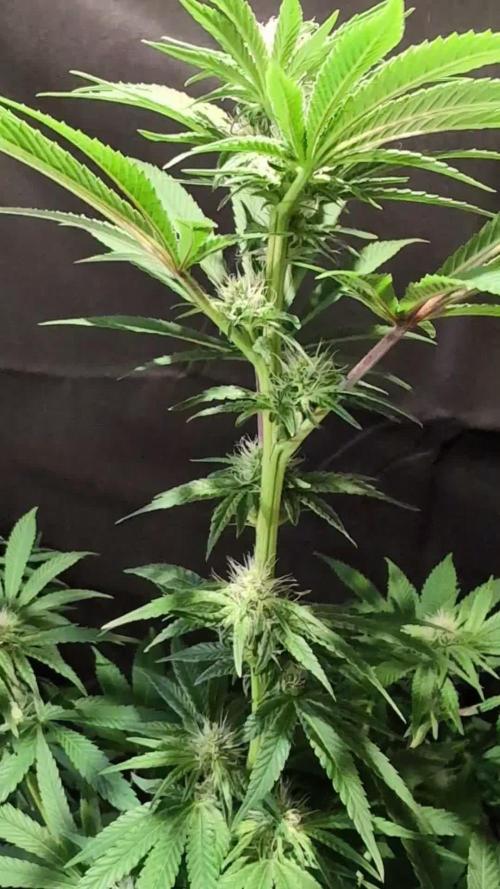
Hier im Bio Tabs NL Grow, erreichen wir aktuell eine höhe von 132cm. Und eine richtig krasse Breite von 68cm.
Die Pflanze hat einen moderaten Stretch hingelegt, welcher jetzt allmählich abklingen dürfte.
Beide Pflanzen sind jetzt tatsächlich gleich hoch.
Es zeichnet sich ein durchgängis schönes und gesundes Wachstum ab.
Allmählich entwickeln sich trichome rund um die Blütenansätze und auch schon sichtbar auf den Leafs.
Da es sich um reguläres Saatgut handelt habe ich die Super Cropping Methode angewendet. Diese Woche das letzte Mal.
Das bedeutet man verletzt die Triebe der Pflanze absichtlich und knickt sie an verschiedenen Stellen ein und ein wenig ab.
An diesen Stellen bilden sich dann strukturelle Verstärkungen, das der Pflanze eine verbesserte Stabilität bietet und wohl auch den Ertrag verbessern soll.
Auf jeden Fall Hilft die Technik der Pflanze, später die schweren Buds (hoffentlich) besser zu tragen, ohne dass Sich die Triebe zu arg runterbiegen oder sogar abknicken.
Diese Woche würde nur mit Wasser gegossen.
Die Umgebungsgegebenheiten sind aktuell gut:
—————
🌞 Temp: 26
🌚 Temp: 18°C bis 19°C
💨 RH: 56%
VPD: 1,10kPa
💡ppfd: 630 mpm
—————
Viele Grüße 👋
Likes
6
Share

