


Likes
Comments
Share


@BobtheBUDbuilder
Follow
-Day 84
Chopped down La Chem1 and TD2. They are drying. They were just starting to amber and GC2 potential needs more room. In the end i am going for yield and starting with 6 i knew a few might have to go early as intended. Last week feedings in ppm were the following. 1200, 700, 900, 800, Since its mainly just three plants a few of those days is double dose of same feed. Added tarantula, it might be late but worth a shot. GC1 is slight foxtail due to the heater blowing heat up under it. They lower leaves of the entire canopy was going brown due to excessive heat and bad circulation. I have since pointed my fans upwards pushing air through the canopy, and so far no complaints. New grower and lots to learn. Also learned that GC2 is a super auto. Being late to the game means late finish with huge yields as predicted. Cleaned trays and started some new seedlings for some outdoor stuff. Happy 420
Day 85
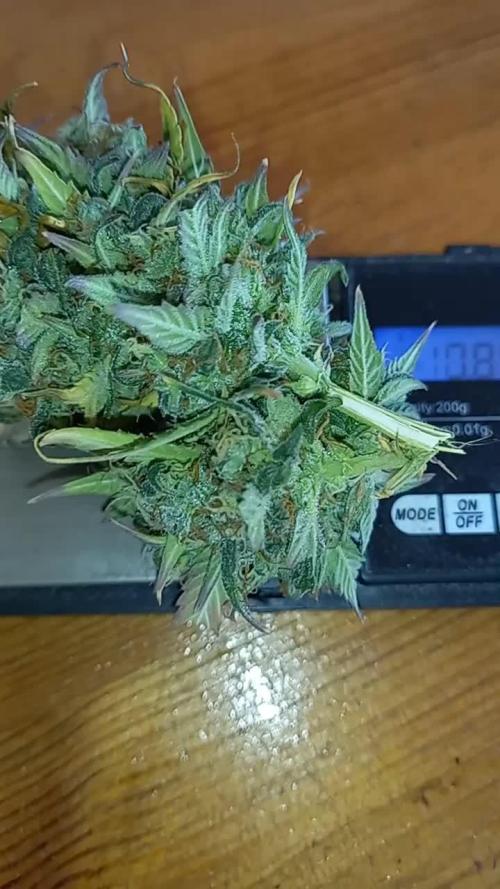
Worked on spreading out GC2, The lower cannopy has already responded in a single day. GC1 still has clear on it but its super dank sticky and smells like melon pie and skunk. Minor trim on TD1 and La Chem 1, Got about 1.5oz of la chem and 2oz of td. will weight it offical later.


Likes
6
Share


@Walter_the_Ragamuffin
Follow
Things are still going strong! I think this is the official halfway point of flowering, and the plants are in high gear bulking up and focusing on creating big, dense buds. I did notice a few brown spots on all of the Cherry Gorilla’s leaves - most notably CG#3 - I consulted some of my local grow buddies as well as the manager of my local store and they gave me some very detailed instructions - I am going to be adding 1/2 teaspoon of Cal-Mag to my water mix until week 7 AND stop diluting my food mixes - my plants are HUNGRY was the official diagnosis! I think that should be a pretty easy fix and am looking forward to the results. So I am told, I should be able to see results from the Cal-Mag flush within a week or so. Also - I was also given some words of encouragement from some long timers who saw the videos of my tent, and they are saying everything looks great and I should be proud! Again - super stoked on the progress. Planning on a big defoliation after next water to get the girls focusing mostly on the flowers, and significantly removing all of the newly developed undergrowth and under canopy buds. Stay tuned for more updates! Appreciate the views, likes and follows!
Likes
32
Share


@Selkot
Follow
my best harvest to date 🙂
I got 196g dry and cured, of which 85g for the biggest one, the one with only 3 colas; no popcorn bud, and a good general density.
A nice smell, not too strong, but it lasts a long time 😏
I took the 85g of the big one + 90g of leaves (from my numerous haircuts) for a second bubble hash experiment (see vid)
this time I reached a ratio of 7.1%, so not huge, but so good and powerful 🤩



Likes
5
Share

@fabialien071
Follow
semana del 4 de abril al 12 de abril 2026, esta semana son 4 dias con Flawless Finish de Advanced Nutrients del 4 al 8 de abril para lavado de raíz y del 8 de abril al 12 con agua unicamente en ph 5.8, se medira ph cada 24 hrs, posteriormente corté
sabado 11 de abril, se le dan 24hrs de obscuridad para el día 12 de abril cortar ✂️ y proceder al secado.
Likes
12
Share


@Kinghaze
Follow
Week 7 of flower
From now on they only get flawless finish from advanced nutrients.

Likes
24
Share


@Newbiegrower420
Follow
UPDATE: Day 1 of week 14- Thursday 19th Nov!!!!
Woop woop! We’re getting close, my magnifying lense arrived and I’ve got my first real good look at the trichomes.. All looking fairly cloudy with about 10-15% ambers coming through.
So as we’re super close now I’ve now started flushing. Not doing a run off as have been using Biobizz soil & Nutes. First flush is done and girls are looking happy. One lady seems to have really heavy colas as she’s struggling to stand up straight. So I’ve staked her to keep her more upright. Think she may bring the best yield of all four girls as it stands so far.
Final couple of weeks now, I can’t believe I’ve made it this far and really can’t wait to try my first home grown bud🍃
UPDATE: Day 2 of week 14 - Friday 20th Nov:
Had to water them early as the girls were very dry after their first flush.. I on average water them every 48 hrs, but they were ready after 36. Already noticing some slight discolouration on the leaves 🍁... Glad I didn’t jump the gun and chop them this week after seeing some amber trichomes..
A bit more LST as they had stretched a little. I’m short on lamp to plant distance but noticed what looked like a little leaf burn on one of the tallest nugs. So did what I could to bring the height of them down just a little 👌
UPDATE: Day 4 of week 14 - Sun 22nd Nov:
As soon as the lights went on today, more water seemed required at around 36hrs since the last flush. The girls seem to be loving it!
Buds do seem to be fattening up a little more each day and I think one girl is slight more ahead than the others as she has mostly orange pistils compared to the other three..
Still need to see more amber trichomes on all four ladies before they’re ready!
UPDATE: Day 5 of week 14 - Monday 23rd Nov:
Small amount of LST to keep the girls as even as poss.. Defo seeing some discolouration in the fan leaves now.. All but one of the four girls have nearly completely orange pistils now which are folding back in to the buds. But Trichomes need to be a little more amber before they’re ready.. The fourth lady however is slightly behind with less orange pistils, some white ones still to turn orange and trichomes are still a mix of milky and clear on the lower buds. When I topped this one it didn’t work as well as the others so she has one really massive cola and all the others are much smaller in comparison to the other three plants..
I think we’ve got a week to 10 days left roughly till harvest.
UPDATE: Day 6 of week 14 - Tuesday 24th Nov:
Another water flush again today.. All seems well, lower small buds still need a few more amber trichomes I think.. But gonna post a question on here to make sure.. Don’t wanna get this wrong.
Sooooooo close now and I’ll be seeing 🤩🤩🤩


Processing
Likes
14
Share


Likes
9
Share


@Chronicbastard
Follow
These girls are done.im just doing the final flush then I will have a smoke report in 3 weeks.im overall pretty satisfied with this grow.my plants would have been better but I had some unseen circumstances.


Processing
Likes
18
Share


@OrganicAlphapak420
Follow
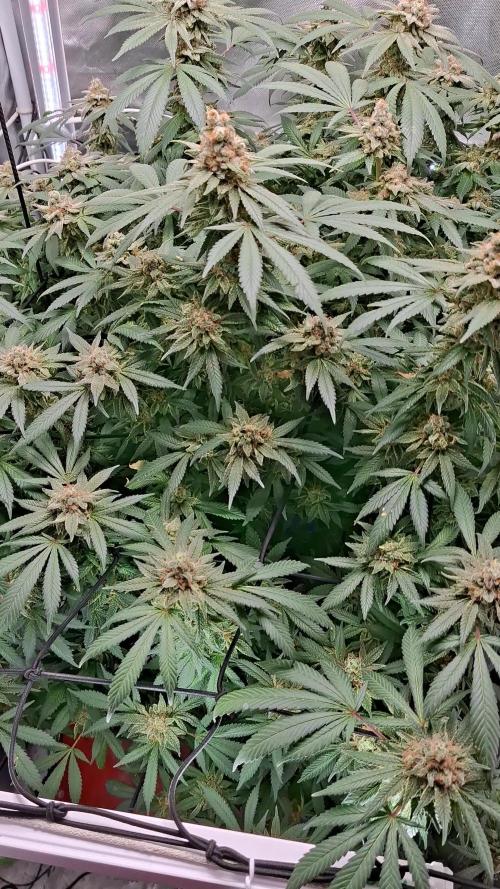
Here she is ! DAWG DAZE at Day 78/ Week 11 from seed. Standing strong at 22 inches tall from top of soil. Using only 2x 100w closet case LED @spectrum_king_led kept at 10 inches from tops. She's grown in a 3 gallon smart pot @smartpots with 2 1/2lb kind soil and filled rest with cocoloco bush doctor soil and fed only tap water every 2 days as needed..kept the daily temps between (day) 80°-65° (night ) and humidity between 30%-45%. My preference. ..did her final minor lst training to get them left side colas in line. She fattening up real good now and her aroma is a strong sweet lemon pine . Great to enjoy everytime I walk in. Shes reaching her final weeks of flowering now. Maybe 2 more solid weeks . Looking forward to it. Will update next week on her organic growth. Enjoy.



Likes
16
Share


@thefrozenking
Follow
starting week 8!
Brrrr its getting frosty in there! :-)
they are really gettting tall.
Likes
5
Share


@Elpicor
Follow
Ho montato una growbox 100×100×200 cm per consentire una migliore areazione e crescita, le piante sentono lo spazio disponibile attorno a sé, quindi questo era il momento giusto, ora si viaggia con una mars hydro fc3000 con dimmer al 45 % a 50 cm, un ottimale 350 ppfd , ppfd aumenteranno a 550 gradualmente in 15/20 giorni, aggiunto il supplento di spettro blu di marshydro, non sembra male per ora stann benissimo😇

Likes
14
Share


@MG2009
Follow
03/13/2022
Love the colors on Grape Skunk #1 others are not as purple, again i forgot Biscotti Skunk and lemon og.
03/14/2022
Uploading Biscotti Skunk pic's
I'm really loving 3 particular girls this run,all plants are exposed to PW intentionally I need girls that can take PW with no issues and three plants are spotless. The first is the only Biscotti Skunk that was female of 5 cloning for outside run but will do great in basement without PW issues. The second is lemon og spotless, and the third is the grape skunk thats got most color the second tallest of the grape skunks, cloning for testing in New England zone 7 should get at least one if not all 3 to finish before cold sets in.

Processing
Likes
47
Share


@SlowerLowerGrower
Follow
One of the elbows on the fixture was loose and lowered a bulbs, getting a few tops a little crispy so I dropped the pot a half inch. Other than that we are trucking along. Probably another 4 weeks to go

Likes
72
Share


@nocluehowto
Follow
I've decided to LST the Black Sugar its getting very bushy hopefully it helps :)


