


Likes
Comments
Share


@Tatts420
Follow
This week I've seen just an awsome burst out of these skunky ducks it's unreal


Likes
38
Share


@Oyziphar
Follow
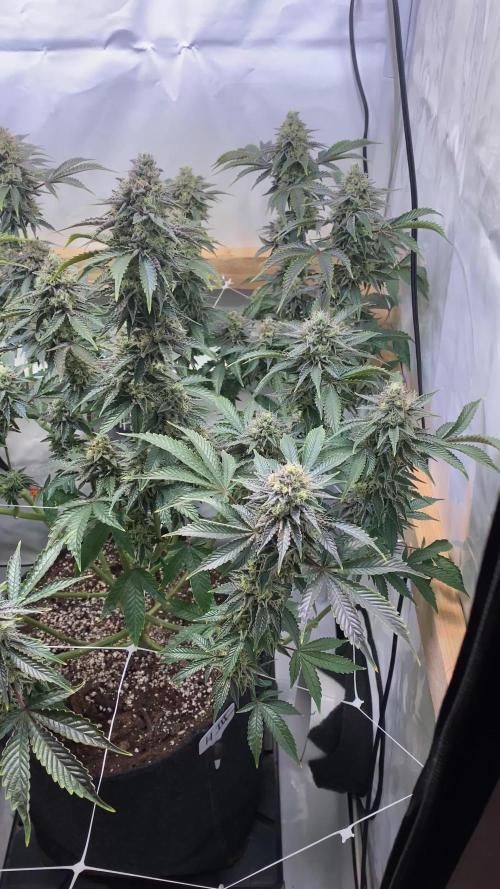
DAY63 WEEK9 = Impatiently waiting till harvest time 😘 Beautiful to enjoy the plants ripening and finishing 😍😍😍
Congrats to BIOTABS, because their tablest are really superb 🙏 I'm super satisfied 😁😁😁
Wedding Gelato, Triple G, and Cookies Gelato are completely ripe.👍😃 All their buds are rockhard 💪😖
👉 Cookies Gelato have become completely purple with beautiful piled buds and orange pistils, and looks delicious. Smells of berries and 😵
👉 Wedding Gelato has round buds (easy to trim) with mixed colors : gold, brass, brown, yellow, red and green colors with orange pistils 😊 Fine and accessible smell, pleasant and no overbearing 😄 🙏
👉 Triple G will be the hardest to trim, because of her quirky shaped buds. She has big internodes and big buds scattered across her tall sturdy stalks. Beautiful buds, a pleasure for the eyes. Her smell is pungent, sometimes narcotic even. She will get you stoned in no time 😋
👉 Liberty Haze could have another week. But she lacks some nitrogen; watch her leaves turn yellow, and make her taste sooo soft 👻 She hasn't any purple or red colors, only green and yellow. Her buds are leafy, not that firm, but volumineus. She's soo sweet, with hints of lime. 😘
I defoliated the plants in week 3 because I had to treat the plants against spider mites. Because of this, the plants had fewer leaves, the light could penetrate much deeper and now the lower buds are ripen as well 🙏. I will continue to apply this technique in the future. 👍👍👍
These will be the last pictures before harvesting 😍




Likes
12
Share


@L_Choppa
Follow
the gorilla cookies came out really good i wish i couldve done more lol the buds were a little air but the potency is really strong im satisfied with this strain i do plain on doin this one again


Likes
8
Share

@Thedibber
Follow
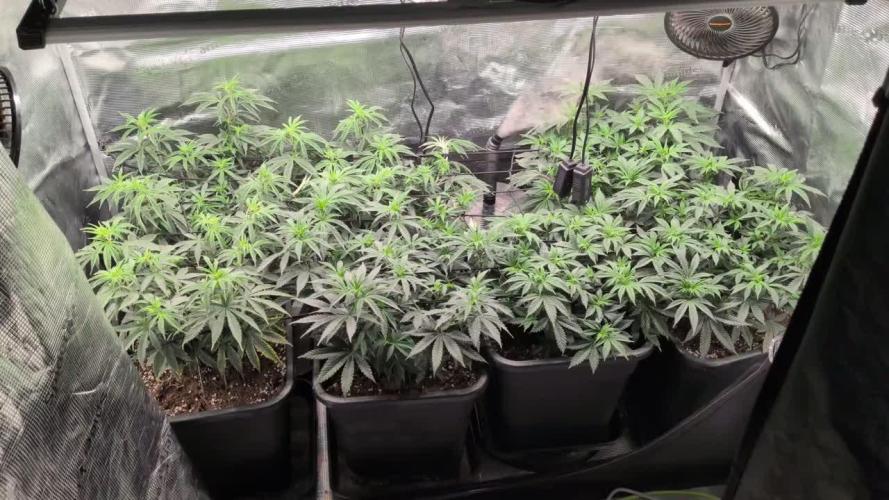
Scrog added 22/01/26 and already recovered the next day filling out well
Likes
13
Share


@GrowIT
Follow
I think we have reached the end of another life cycle, this week I only used water to make the plant properly drain the nutrients in fact the leaves have lost all the green of the chlorophyll. now i think i will turn off the lights for 48 hours and then cut! 💪🏼🤞🏼

Likes
2
Share


@EtnoGrow
Follow
here already a little more grown and applying the techniques lst apical pizzicato experimenting, Seeing how the techniques are manifested, some were done poorly, so their results were somewhat strange or curious, if they did, you judge, errors such as not cutting the apical trying to do the pruning, poe error from fmi and only cut the tiny growing leaves that's why you will see those rare leaves
Likes
9
Share


@NordicCropz
Follow
Day 111, 9 weeks flowering is passed. Currently a nice fade going on. Pistils and trichomes are not really close to ripe, but I'm gonna cut her within the next week anyway because I need the tent.
Lighting hasn't been perfect, since this girl stretched like a weed, while my Harlequin didn't. Gonna be smarter on the next try :) nevertheless, she oozes of brilliant smell and taste.

Likes
5
Share


@Mr_nugs_lover_David
Follow
Healthy looking lady, although she's having to deal with a fungus gnats pest she's growing super fast and "healthy" not as healthy as she should but healthy anyways. She's gonna make a huge change once I apply the nematode called steinernema feltiae to finally get rid of gnats, peace out everybody! 💚❤️💛

Processing
Likes
2
Share


@ajglover217
Follow
my friend said the plants needed some stones for decoration

Likes
8
Share


@MG2009
Follow
01/01/2022
Potting up this weekend I hope 🙏🏻 then on last week of veg feed with coast of Maine Stonington plant food
5-2-4? I think l gotta check that.

Likes
4
Share

@DogDoctorOfficial
Follow
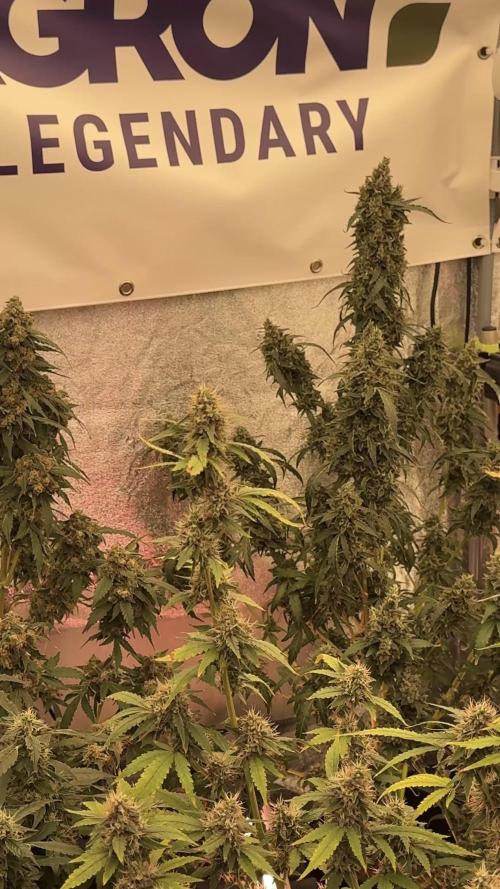
🍑 8×8 Adventure – Week 12
Passion Fruitz by Zamnesia
The Slow Girl Is Still Stealing The Spotlight 🍑👑🌿✨
Hello everyone, and welcome back to another chapter of the 8×8 Adventure! 🌱💚
And here she is...
Our beautiful Passion Fruitz solo survivor.
🍑👑🌿
Still stunning.
Still green.
Still developing.
Still completely herself.
And...
slow as fuck.
😂
There is simply no other way to say it.
She's taking her sweet time.
Her very, very sweet time.
😂🍑
But here's the thing...
She's beautiful.
Absolutely beautiful.
She's developing those gorgeous floral structures.
She's producing beautiful calyxes.
She's covered in fresh white hairs.
She's building her flowers.
She's evolving.
She's just doing it at a pace that is noticeably different from almost everybody else in this room.
And honestly?
I love it.
Because she is such a perfect example of something this entire 8×8 Adventure has been trying to demonstrate:
Same room.
Same environment.
Same photons.
Same general care.
Different genetics.
Different timing.
Different expression.
Different story.
And Passion Fruitz is writing hers at her own speed.
So this week...
we're not rushing her.
We're not comparing her against anybody else's calendar.
We're simply giving this beautiful girl the spotlight.
🍑🌿👑✨
────────────────────────
🌱 WEEK 12 – SLOW AS FUCK, BEAUTIFUL AS EVER
────────────────────────
Passion Fruitz continues to move forward.
Slowly.
😂
Very slowly.
But definitely forward.
And I think that's the important distinction.
She's not stuck.
She's not sitting there doing nothing.
She's developing.
She's just doing everything on Passion Fruitz time.
Look closely at the photographs and you'll see it.
The flowers continue to develop.
The calyxes are becoming more pronounced.
The white pistils are still everywhere.
The floral structures are becoming more defined.
And the plant continues to look beautiful.
She's simply not following the same schedule as some of the other girls.
And that's perfectly fine.
Because plants don't carry calendars.
They carry genetics.
😂🌿📅
And her genetics are clearly saying:
"Relax...
I'll get there."
🍑😂
────────────────────────
👑 THE GIRL WHO REFUSES TO RUSH
────────────────────────
If this girl has taught me anything, it's patience.
😂🍑
I've watched other plants move ahead.
I've watched flowering accelerate.
I've watched flowers begin changing.
I've watched other girls start looking much closer to the final stages.
And Passion Fruitz?
She's basically sitting there with a cup of tea.
"Yeah, yeah...
I'm getting there."
😂☕
And honestly...
fair enough.
Because she's giving us something just as valuable as speed:
A different expression.
She's allowing us to see how the same room can produce completely different flowering rhythms.
That's one of the reasons I love having all these individual diaries.
If you only saw one plant, you might think:
"Why is she moving so slowly?"
But when you see the entire room...
you realize:
She's not doing anything wrong.
She's simply different.
And that's exactly what we wanted to observe.
────────────────────────
🌸 BEAUTIFUL CALYXES, BEAUTIFUL FLOWERS
────────────────────────
The flowers are becoming the real stars of the show now.
And honestly...
they're gorgeous.
🌸🍑
The calyxes are becoming increasingly visible within the developing flowers, creating more definition and texture throughout the flowering sites.
And then you have those beautiful white pistils.
So many of them.
Fresh.
Bright.
Reaching outward from the developing flowers.
They give the plant that unmistakable look of continued floral development.
And I absolutely love photographing them.
Because when you get close...
you start seeing the architecture inside the flower.
It's not just:
"There's a bud."
It's:
"Look at all those individual structures coming together."
Calyxes.
Pistils.
Sugar leaves.
Resin.
Layers upon layers of development.
And Passion Fruitz is doing all of it...
at her own pace.
────────────────────────
? THE WHITE HAIRS ARE STILL TELLING US A STORY
────────────────────────
One of the things I keep coming back to with this girl is her pistils.
They are still beautifully white and prominent.
And that's another visual reminder that she's continuing to develop.
We're not seeing her suddenly race through every stage simply because the calendar says Week 12.
Instead, she's continuing to produce fresh-looking floral structures and pistils while slowly building the flowers underneath them.
That's important.
The plant isn't required to match the visual timeline of another plant simply because they share the same room.
She's showing us her own progression.
And that's what we're documenting.
The white hairs aren't just decoration.
They're part of the visual story of the flowers developing.
And right now...
Passion Fruitz has a very beautiful story to tell.
?🌸🍑
────────────────────────
📸 ANOTHER WEEK, ANOTHER SNAPSHOT IN TIME
────────────────────────
And this is exactly why I love taking these photographs.
Because if you only looked at Passion Fruitz once every few weeks, you might think:
"Well, she looks pretty similar."
But put the photographs side by side...
and suddenly you see it.
The flowers are changing.
The structures are becoming more defined.
The plant is maturing.
The floral sites are becoming more substantial.
The pistils are evolving.
The resin continues developing.
It's not necessarily dramatic.
It's gradual.
And that's what makes documenting a slow phenotype so interesting.
We're capturing the tiny steps.
The small changes.
The subtle evolution.
Week by week.
Photograph by photograph.
And eventually...
those tiny changes become a completely different plant.
────────────────────────
🍑 SHE'S SLOW – NOT STAGNANT
────────────────────────
I want to emphasize this because it's one of the easiest things to misunderstand when comparing plants.
Slow does not automatically mean something is wrong.
Passion Fruitz is a perfect example.
She's slower than many of the other plants in the room.
But look at her.
She's beautiful.
She's flowering.
She's producing pistils.
She's developing calyxes.
She's building structure.
She's continuing to evolve.
So I'm not interested in forcing her to move faster simply because another plant is further ahead.
Her pace is part of her phenotype.
And that's something worth documenting rather than trying to erase.
This is the 8×8 Adventure.
We're not trying to make everybody identical.
We're trying to see what everybody does.
And Passion Fruitz is giving us one hell of a lesson in patience.
😂🍑👑
────────────────────────
🌿 SAME ROOM – COMPLETELY DIFFERENT CLOCK
────────────────────────
This is still one of my favourite parts of this experiment.
Twelve plants.
One room.
Shared environmental conditions.
Shared lighting philosophy.
Shared irrigation.
Shared nutritional foundation.
And yet...
different clocks.
Some plants move quickly.
Some plants take longer.
Some develop one way.
Some develop another.
Some get large.
Some stay compact.
Some stack quickly.
Some take their time.
And Passion Fruitz?
She's operating on her own calendar.
😂📅🍑
But that's exactly what makes her valuable to this project.
She's showing us that "Week 12" doesn't necessarily mean every plant should look the same.
Week number is a reference point.
The plant itself tells the story.
And her story is:
"I'm still building."
────────────────────────
💡 SAME PHOTONS – DIFFERENT RESPONSE
────────────────────────
And of course, the lighting environment hasn't been specially changed for her.
She's receiving the same upgraded room lighting as everyone else.
The two additional Future of Grow Black Series 600W fixtures remain part of the setup.
We're controlling the output rather than simply running everything at maximum.
Approximately:
🔌 59% power from the plug
and approximately:
☀️ 1,500 PPFD across the upper canopy.
That's a lot of available light.
And Passion Fruitz is doing what she wants with it.
😂☀️🍑
The photons don't know she's the slow girl.
They arrive.
Her leaves capture them.
The plant processes that energy.
And she decides where that energy goes.
Growth.
Maintenance.
Flower development.
Everything happening inside this beautiful girl is her response to the environment.
And her response is very much:
"Give me time."
😂
────────────────────────
☀️ MORE CAPABILITY, CONTROLLED OUTPUT
────────────────────────
The additional Future of Grow fixtures have also been a great part of this experiment because they give us more capability without forcing us to use maximum output.
We don't need to run everything flat out just because we can.
We have the capacity.
We can control the output.
We can measure what the plants are receiving.
And we can find a practical operating point.
Around 59% from the plug.
Approximately 1,500 PPFD across the upper canopy.
And Passion Fruitz gets to enjoy the same artificial sun as the rest of the jungle.
☀️🌿🍑
A huge thank you again to Future of Grow for providing those additional Black Series 600W fixtures and allowing us to test them here in the 8×8 Adventure.
It's been fascinating watching twelve completely different plants interpret the same lighting environment.
────────────────────────
🌿 THE PLANT DOESN'T NEED ME TO FORCE HER
────────────────────────
And this is probably the biggest lesson from Passion Fruitz.
At this point...
I'm not trying to make her faster.
I'm not trying to make her look like another plant.
I'm not trying to force her into somebody else's timeline.
My job is much simpler.
Observe.
Check.
Provide what she needs.
Watch the environment.
Monitor irrigation.
Monitor nutrition.
Look at the flowers.
Look at the leaves.
And if something genuinely needs attention...
then we respond.
Otherwise?
Let her grow.
😂🌱
This girl has already shown us that she knows what she's doing.
She just prefers to do it slowly.
Very slowly.
😂🍑
────────────────────────
⚗️ NUTRITION – STARTING TO WIND THINGS DOWN
────────────────────────
As we're moving into the later part of flowering, the nutritional strategy is also beginning to change.
We're starting to reduce the mineral nutrition gradually.
And this is something I personally prefer.
I don't like going from:
"Everything is running normally today."
to:
"Zero nutrition tomorrow."
😂
Especially when working with mineral nutrition.
I prefer a gradual reduction.
A little less.
Observe.
A little less again when appropriate.
And allow the plant to naturally move toward the later stages.
Passion Fruitz is still actively developing.
She's still green.
She's still producing flowers.
She's still producing fresh pistils.
She's still working.
So we're not interested in slamming the brakes on her simply because the calendar is advancing.
We're beginning the reduction progressively and watching the plant.
That's the approach I like.
Controlled.
Gradual.
Observational.
────────────────────────
🌱 WHY GRADUAL REDUCTION MAKES SENSE TO ME
────────────────────────
The important thing here is that we're not treating the end of the cycle like an on/off switch.
Plants don't suddenly stop functioning because we've reached an arbitrary week number.
They continue responding to their environment.
And every phenotype can move through the later stages differently.
Passion Fruitz has already demonstrated that she has her own rhythm.
So it makes even less sense to force her into a rigid schedule.
We're reducing the mineral input gradually.
We're continuing to observe.
We're allowing the plant to finish her own process.
And we're giving her time.
Because if there's one thing Passion Fruitz has taught us...
it's that she's going to take whatever time she damn well wants.
😂🍑👑
────────────────────────
🌿 HER LEAVES ARE STILL DOING THEIR JOB
────────────────────────
Another reason I don't want to interfere unnecessarily is the foliage.
Those beautiful green leaves are still part of the plant's working machinery.
They're capturing photons.
They're supporting photosynthesis.
They're supporting the developing flowers.
They're part of the plant's overall balance.
So unless something genuinely requires attention, I'm not interested in removing healthy foliage simply because we're getting closer to the end.
The plant knows which leaves are useful.
The plant knows which parts are aging.
And we're watching those changes rather than trying to force them.
Again...
observe first.
Act second.
That's becoming more and more important as the grow progresses.
────────────────────────
💎 RESIN, STRUCTURE AND ALL THOSE LITTLE DETAILS
────────────────────────
The closer you look at this girl, the more you appreciate the details.
There's the overall plant.
Then the branches.
Then the flowers.
Then the individual floral structures.
Then the pistils.
Then the resin.
And suddenly...
you're looking at a completely different world.
😂🔬
That's why I love macro photography.
A beautiful plant becomes an entire landscape.
Every flower has its own little architecture.
Every calyx contributes to the shape.
Every pistil adds another layer.
Every trichome adds texture.
And Passion Fruitz is giving us plenty to look at.
Slowly.
Of course.
😂🍑
────────────────────────
👑 THE SOLO SURVIVOR STILL HAS THE SPOTLIGHT
────────────────────────
There are a lot of personalities in the 8×8.
But Passion Fruitz has earned a very special place.
She's the solo survivor.
The patient girl.
The slow girl.
The one who refuses to follow the room's timetable.
And somehow...
that makes her even more interesting.
Because when everybody else is moving quickly, the slow plant gives you a different perspective.
She reminds you that the grow isn't a race.
It's a biological process.
And every plant experiences that process differently.
So yes...
she's slow as fuck.
😂
But she's also absolutely beautiful.
And that's what matters.
────────────────────────
🔮 WHAT COMES NEXT?
────────────────────────
Honestly?
More patience.
😂🍑
We're going to continue watching the flowers.
We're going to continue photographing her.
We're going to watch the pistils.
We're going to watch the calyxes develop.
We're going to observe the resin.
We're going to continue gradually reducing the mineral nutrition as the plant moves toward the later stages.
And we're going to let Passion Fruitz decide how quickly she wants to move.
No rushing.
No forcing.
No trying to make her fit another plant's timeline.
Just letting her be herself.
And that's exactly what this diary is supposed to document.
────────────────────────
💭 FINAL THOUGHTS – LET THE SLOW GIRL SHINE
────────────────────────
Week 12.
And Passion Fruitz is still doing exactly what Passion Fruitz wants to do.
😂🍑
Slow.
Very slow.
But beautiful.
She's taking her time with everything.
The flowers.
The calyx development.
The pistils.
The resin.
The overall progression.
And I'm completely okay with that.
Because when I look at her...
I don't see a problem.
I see a phenotype.
A different rhythm.
A different clock.
A different expression.
She's not the fastest girl in the room.
She's not trying to be.
She's simply continuing to develop at her own pace.
And honestly?
She's perfect as she comes.
Beautiful floral formation.
Beautiful calyxes.
Beautiful white hairs.
Beautiful green foliage.
Beautiful structure.
And an individuality that has become impossible to miss.
🍑🌿?💎
This is why I love the 8×8 Adventure.
We can put twelve plants together.
Give them the same room.
Give them the same general environment.
Give them the same photons.
Give them the same care.
And they will still tell us twelve different stories.
Passion Fruitz is telling us:
"Slow down."
😂
"Look closer."
And when you do...
there's a lot to see.
So let's give this beautiful solo survivor the spotlight.
Let's let her shine.
Let's let her take her time.
Let's keep watching those flowers develop.
Let's keep watching those beautiful white pistils.
Let's keep watching those calyxes become more defined.
And let's see what this slow-as-fuck beauty decides to show us next.
🍑👑🌿🌸?💎☀️🔥
────────────────────────
🙏 THANK YOU
────────────────────────
As always, a huge thank you to everyone following the 8×8 Adventure. 💚🌱
Thank you to GrowDiaries for giving us the platform to document these individual journeys and share the story week after week.
Thank you to Zamnesia for the Passion Fruitz genetics and for giving us this beautiful solo survivor to follow through the entire adventure.
Thank you to Plagron for supporting the garden with the growing media and nutrition throughout this journey.
A massive thank you to Future of Grow for providing the additional Black Series 600W fixtures and allowing us to explore this expanded lighting setup in the 8×8.
More lighting capability.
More control.
More photons.
And twelve different plants showing us twelve different responses.
Thank you to Lumiflora for helping bring additional light into the deeper areas of the canopy.
And thank you to TrolMaster for helping us monitor and manage the environment behind the scenes.
And finally...
thank you to everyone who stops by.
Every comment.
Every question.
Every message.
Every person following these girls week after week.
It genuinely means a lot. 💚
This project continues to remind me that there is no single definition of progress.
Some plants race.
Some plants cruise.
Some plants take the scenic route.
And Passion Fruitz?
She's taking the scenic route with absolutely no intention of apologizing for it.
😂🍑👑
She's slow.
She's beautiful.
She's developing.
She's producing gorgeous floral structures.
She's covered in fresh white pistils.
And she's becoming more and more herself every week.
So let's give her the spotlight.
Let's make her shine bright.
Let's let this beautiful girl take all the time she needs.
And let's keep documenting every step of the journey.
🍑🌿🌸?💎☀️🔥
Growers Love, my friends. 💚🌱
Happy growing, take care everyone...
and I'll see you next week in the 8×8 jungle.
Where some girls race...
some girls cruise...
and Passion Fruitz?
She's still taking the scenic route.
😂🍑👑🌿

Likes
2
Share


Likes
85
Share


@Tropicannibis_Todd
Follow
Start of day 91 ...... January 8 2022 Start of week 13 ........ 65 DAYS INTO FLOWERING
😕 LOOKS LIKE THERE GONNA GO A LITTLE LONGER THEN EXPECTED ? 😕 Gonna be honest , I didn't expect it to go over 85 days but here we are ........
( I BELEIVE IT HAS ALOT TO DO WITH THE SIZE OF MY GROW MEDIUM , AS I AM RUNNING 45 LITERS OF SOIL MEDIUM) ....
( OMG THEY SMELLING GREAT ) !!!!!!!
Check out the full grow video on latest weekly update
Super Exceptional Growth Daily
Still adjusting LST when needed and leaf tucking.......
Water Only when needed but its drinking more every otherday and adjusting lights when needed......
Rain Water Only .......
( DAY 26 AND BOTH NL 1 & NL 2 SHOWED PREFLOWERS )
( DAY 49 AND RESIN PRODUCTION HAS STARTED )
( DAY 57 , EQUIPMENT FAILURE , main FAN , over heated😡 tripped breaker , reset light timers , lost a DAY, REPLACED new Main Fan 😁 back up running 👌)
( DAY 70 DID ITS FINAL FLUSHING TODAY TO GET RID OF ANY BUILDUP )
( DAY 77 AND IT SHOWS A SLIGHT DEFICIENCIE MAYBE A CAL/MAG GETTING CLOSE TO END OF LIFE ) IM ALSO DOING VERY LITTLE, SLIGHT DEFOLIATION
( DAY 93 AND ALL IS GOOD , THERE FATTING UP )
DAY 93 .....NL 1 SHOWS MOSTLY CLEAR TO CLOUDY RESIN HEADS , LOOKS LIKE THERES STILL AWAY TO GO .......
DAY 93 .....NL 2 SHOWS MOSTLY CLOUDY RESIN HEADS , AMBER IS JUST STARTING , GETTING CLOSE BUT MORE TIME NEEDED......
I hope you enjoy my growlog...

Likes
29
Share


@olli0420
Follow
soo one was way more photogenic than the other 😅 also I know I put a lot of videos but I'm obsessed with this strain ok? it's amazing and I'm proud of me😁😁
oh and how DOPE is the timelapse? 🤯🔥🔥🔥🔥
Likes
13
Share


@Fonzi
Follow
Sehr gute Sorte. Sie Bss#1 hat ein etwas organisches leicht limoniges Aroma und die bss#2 riecht sehr stark nach Eukalyptus. Mir gefallen beide aber ganz gut. Vorallem ist die Wirkung ist sehr gut.

Processing
Likes
24
Share


@Grnhead
Follow
Update 1/19 (day 9):
* The plants are maturing a bit more so I increased the light output back up to 100% (up from 75% at the end of last week). I bought a light meter and they are getting about 48.6K LUX at the top of the plants (I checked each plant individually and they are getting the same amount of light). I have mostly been not using the side lighting during veg.
* Still riding the last nutrient swap at the end of last week (with week 2 ratios) at 60% dilution and in a few days I will get them closer to 80%.
* Root development is looking really good for all of them. The biggest plant is getting its second full set of leaves and the others are about 1 stage behind at the moment.
* Humidity has been challenging with winter in full force. I have the humidifier blasting right outside the box but it can barely crack 50% at the moment.
Update 1/21 (day 11):
* The oldest plant started to branch out before I wanted it to so I trimmed off all the small branches yesterday. It didn't seem affected and has been growing strong since.
* Starting to see more vigorous growth.
* Exchanged the nutrient water after a quick flush with only PH'd water. Now nutrients are at about 73% strength and 740 PPM with a 230 PPM base, the highest PPM I plan to go during veg.
Update 1/23 (day 13):
* Discovered that water was increasing in PH to the point I couldn't control it. After some troubleshooting I determined that the CO2 bag was working, and working well. My DWC pump was in the box and pumping CO2 into the water which increased the acidity every day. I have moved the pump to the outside of the box so it is pumping fresh air into the water now.
* Had to replace the water because of the CO2 incident, the water became very cloudy and didn't look right. At about the same strength level as before for nutrients, sitting currently at about 75% strength.
* The Pineapple Skunk is directly next to the CO2 bag and it seems to be working because it is really starting to grow vigorous and is a darker green than the other two. Noticeable differences that correlated with when the water was becoming acidic. I need to buy a CO2 monitor but haven't felt like dropping $100 for it.


Likes
19
Share


@TopNotchBud
Follow
Very easy strain to grow. I grew the White Critical Express previous to this grow, I really liked it and wanted to try growing an Autoflower so I went for the Critical 2.0 and it was worth the grow.


