


Likes
6
Share


@FlowerBloom09
Follow
Plant is doing amazing! This is my first grow & I am so excited , I’m in the process of practicing LST , I am not the best but you learn as you go! Let me know what you all think! Do you think my light should be highered?

Likes
3
Share


@Lazuli
Follow
What an amazing smell she has so lemony. I start overdrive monday (its friday now) so she will be cut in 2 weeks and 2 days

Likes
6
Share


Likes
7
Share


@420DeepGrow
Follow
📆 Semana 9
Las plantas avanzan en la fase de maduración avanzada, con los cogollos ya muy desarrollados, compactos y pesados, centrando toda su energía en el endurecimiento y afinado final.
Los cálices terminan de hincharse y la resina alcanza niveles muy altos, cubriendo bien todas las flores. Los pistilos aparecen mayoritariamente oxidados, aunque aún se mantienen algunos blancos, indicando que la planta está cerca de su punto óptimo pero todavía en proceso de cierre.
Se aprecia un leve foxtailing en algunas puntas, algo sutil propio de esta fase final, sin afectar a la calidad ni a la densidad general.
La absorción continúa ralentizándose, mostrando claramente que la planta entra en su última etapa, enfocada en estabilizar su maduración y perfil aromático.
Seguimos creciendo fuerte 💪!


Likes
7
Share


@eldruida_lamota
Follow
Vamos familia, actualizamos la 4 semana de floración de estas Gelato Olandese de Dutchfem Seeds .
Y es que hasta aquí todo va correcto , están enormes, tienen un buen color, se ven sanas, y van progresando las flores adecuadamente.
La alimentación de Agrobeta la están aceptando muy bien , ya se las puede apreciar.
Agrobeta:
https://www.agrobeta.com/agrobetatiendaonline/36-abonos-canamo
Mars hydro:
Code discount: EL420
https://www.mars-hydro.com/
Las maximas de temperatura no superan los 26 grados y las mínimas no bajan 20, así que no me puedo quejar.
Los niveles de humedad también son los correctos van entre 50%/65% de humedad relativa.
Por supuesto el Ph lo estamos dejando alrededor de 6.
Hasta aquí es todo, buenos humos 💨💨💨.

Likes
6
Share


@I_Identify_As_A_Dan
Follow
Week 9 for Space Panda by Atlasseed,
Was due to transplant both these girls already but still letting the soil cook a little longer, but will have to be soon as i already see growth slowing down on both of these.

Likes
2
Share


@THEFROZEN710
Follow
This phenotype #4 was removed from the grow tent after 2 weeks of veg due to a deficiency I'd never seen before. From what I've researched, it could be sulfur; it didn't seem to be a disease, but it produced excessive resin.

Likes
6
Share


@MisterTree
Follow
Sind in der 8ten Woche aktuell, am Donnerstag den 30.10 wurde die Ladys großzügig entlaubt.
Bin sehr gehyped jetzt auf den Endspurt.
Likes
20
Share


@Bertoxxulous
Follow
I started the flush on Tuesday 4/19. I chopped both plants on Saturday 4/23.
The Trichomes are just about perfect in my estimation: > 5% clear, 10% amber, 75% cloudy.
This is my first time drying the whole plant (I have always wet trimmed in the past). I read a bunch of good stuff about how hanging the whole plant and dry trimming makes better bud, so I'm giving it a shot. My main concern is possible mold with how tightly compact these plants are. I am keeping the humidity between 50% - 55% right now.
I am hoping these plants will be dry enough by next weekend to start trimming and jar curing.

Likes
14
Share


@Organnabis
Follow
They're growing nicely. I've managed to solve the fungus gnat issue without pesticides!!
Just waiting for another node or two and will top them both!


Likes
11
Share


@jonesy_grows
Follow
I've started lollipopping and removing the smallest skinniest branches. I'll do this throughout the week and stop on day 21.
I've picked off a few top fan leaves for light penetration too.
It's awesome to see this many pistils going into week 3.
I'll be posting a midweek update as well.
6/20
Not too much to update, I've plucked off all the small short stems that I don't want, added a 7" oscillating fan, and started working koolbloom powder into my nute regimen.
My clone tent has a pretty bad fungus gnat infestation, so I treated that tent and this one with neem oil.
Happy growing!


Likes
12
Share

@Northern_Ent
Follow
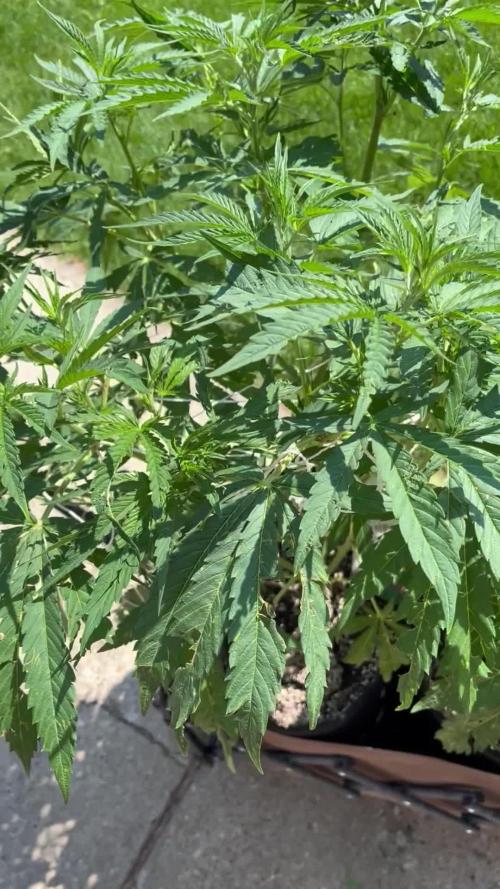
July 18: Plants are recovering from hail damage 7 days ago. Weather is good now but it’s fairly hot reaching 30 C the last couple days and about 21 C overnight which is quite warm for Edmonton.
Starting force flowering tonight. That is 10 h darkness plus 2 h virtual darkness using 730 nm far red light at dusk to initiate dark mode. In garage at 9 pm, few seconds of 730 nm far red and then out of garage at 7 am. 12 h darkness within the ‘26 h day’. Your mileage will vary at different latitudes but that timing works for me here at 53 N.

Likes
21
Share


@DeepRootsGrowTrees
Follow
SATIVA DREAM by KANNABIA SEEDS
Week #20 Overall
Week #5 Flower
This week no issues with this lady she's doing good this week as she continues to add weight to her flower!!
Stay Growing!!
Kannabia.com. SATIVA DREAM
Likes
27
Share


@Bread_n_Buds
Follow
Our Ghost Train Haze is currently the queen of autoflowering, it has reacted very well to mainfolding/mainlining and has become very large with thousands of branches and flowers in construction everywhere.
We have two plants, one left to grow straight that will show you only at the end and some flowers now that it is almost ready but directly in the growbox, those worked with the techniques are much more beautiful and fun to work with.
The plant has an imperial structure, I would dare say also of a symmetrical nature, Wes ANDERSON would put it in his films. Among the many things I have done in my life I have been a graffiti writer and I love to make symmetrical pieces that remind me a lot of these natural structures.
The structure created with mainfoldindg, mainlining, topping and lst vari is very pleasant, the plant has a wide internodal distance and flowers quickly so it is a plant on which I would feel like recommending these techniques which it is true can slow down the harvests but they give a satisfaction to the sight and an unparalleled fun in making them.
We are still using soil, fertilizers and all the additives recommended by Plagron 100% organic. We are still in the early flowering program that maintains the same additives Power Roots, Sugar Royal, Pure Zym and adds the flowering stimulant Power Buds. Obviously the basic fertilizer is now Alga Bloom.
The Green Sensation hero of the end of flowering will arrive and at the same time it will be time to remove power roots and a week later the enzymes. (The plant left to grow straight and early straight has been taking it for a while)
---- Decide on the right soil and calculate your fertilization program based on the soil on the official website. -- www.plagron.com
Try a seed of this strain that drives us crazy..
---- https://www.zamnesia.io/en/12511-zamnesia-seeds-ghost-train-haze-auto.html
Zamnesia Description // From the day its cotyledons emerge from the substrate, Ghost Train Haze Auto will surprise you with its rapid growth and robustness. When it starts to flower, this short sativa will develop long and compact buds with pungent scents of spice, citrus and fuel.
All the best that mother nature can offer is on ---- www.zamnesia.com


Likes
68
Share

@Ultraviolet
Follow
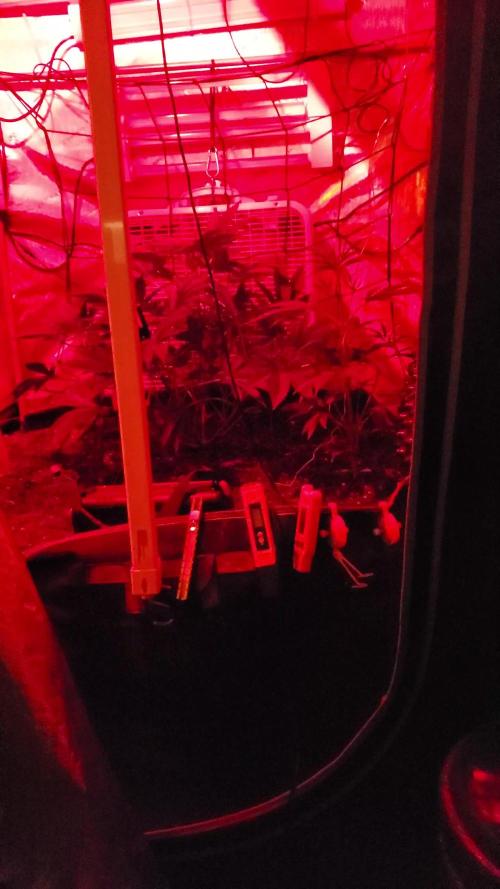
Removed autoflower and put her in her own pot outside the tent.
Foliars applied in strong blue 430nm with 4000Hz tone. 20-minute dose prior to application.
In essence, you're seeing a combination of the infrared light reflected by the plant, which the camera perceives as red, and any residual visible blue light the plant reflects, which results in a purple hue.
I was doing more stretching of the stems, adjusting weights, just a little too much, and it snapped almost clean. I got a little lucky in that it was still connected, wrapped her almost instantly while holding her in place with yoyo's. The core framework is now in place.
If your soil has a high pH, it's not ideal; you want a pH of 6.4, 6.5, or 6.6, which is ideal. If you are over a pH of 7, you have no hydrogen on the clay colloid. If you want your pH down, add Carbon. If you keep the pH below 7, you will unlock hydrogen, a whole host of new microbes become active and begin working, the plant will now be able to make more sugar because she has microbes giving off carbon dioxide, and the carbon you added hangs onto water. Everything has electricity in it. When you get the microbes eating carbon, breathing oxygen, giving off CO2, those aerobic soil microbes will carry about 0.5V of electricity that makes up the EC. The microorganisms will take a metal-based mineral and a non-metal-based mineral with about 1000 different combinations, and they will create an organic salt! That doesn't kill them, that the plant loves, that the plant enjoys. This creates an environment that is conducive to growing its own food.
Metal-based: Could include elements like iron, manganese, copper, or zinc, which are essential nutrients for plants but can exist in forms not readily accessible.
Non-metal-based: Examples like calcium carbonate, phosphate, or sulfur are also important for plant growth and potentially serve as building blocks for the organic salt.
Chelation in a plant medium is a chemical process where a chelating agent, a negatively charged organic compound, binds to positively charged metal ions, like iron, zinc, and manganese. This forms a stable, soluble complex that protects the micronutrient from becoming unavailable to the plant in the soil or solution. The chelate complex is then more easily absorbed by the plant's roots, preventing nutrient deficiency, improving nutrient uptake, and enhancing plant growth. Chelation is similar to how microorganisms create organic salts, as both involve using organic molecules to bind with metal ions, but chelation specifically forms ring-like structures, or chelates, while the "organic salts" of microorganisms primarily refer to metal-complexed low molecular weight organic acids like gluconic acid. Microorganisms use this process to solubilize soil phosphates by chelating cations such as iron (Fe) and calcium (Ca), increasing their availability.
Added sugars stimulate soil microbial activity, but directly applying sugar, especially in viscous form, can be tricky to dilute. Adding to the soil is generally not a beneficial practice for the plant itself and is not a substitute for fertilizer. While beneficial microbes can be encouraged by the sugar, harmful ones may also be stimulated, and the added sugar is a poor source of essential plant nutrients. Sugar in soil acts as a food source for microbes, but its effects on plants vary significantly with the sugar's form and concentration: simple sugars like glucose can quickly boost microbial activity and nutrient release. But scavenge A LOT of oxygen in the process, precious oxygen. Overly high concentrations of any sugar can attract pests, cause root rot by disrupting osmotic balance, and lead to detrimental fungal growth. If you are one who likes warm tropical high rh, dead already. Beneficial, absolutely, but only to those who don't run out of oxygen. Blackstrap is mostly glucose, iirc regular molasses is mostly sucrose. Sugars, especially sucrose, act as signaling molecules that interact with plant hormones and regulate gene expression, which are critical for triggering the floral transition. When sucrose is added to the growth medium significantly influences its effect on floral transition.
Probably wouldn't bother with blackstrap given its higher glucose content. Microbes in the soil consume the sugar and, in the process, draw nitrogen from the soil, which is the same nutrient the plant needs. Glucose is not an oxygen scavenger itself, but it acts as a substrate for the glucose oxidase (GOx) enzyme, effectively removing oxygen from a system. Regular molasses (powdered if you can), as soon as she flips to flower or a week before, the wrong form of sugar can delay flower, or worse. Wrong quantity, not great either. The timing of sucrose application is crucial. It was more complicated than I gave it credit for, that's for sure. When a medium's carbon-to-nitrogen (C:N) ratio reaches 24:1, it signifies an optimal balance for soil microbes to thrive, leading to efficient decomposition and nutrient cycling. At this ratio, soil microorganisms have enough nitrogen for their metabolic needs, allowing them to break down organic matter and release vital nutrients like phosphorus and zinc for plants. Exceeding this ratio results in slower decomposition and nitrogen immobilization, while a ratio below 24:1 leads to faster breakdown and excess nitrogen availability.
Carbon and nitrogen are two elements in soils and are required by most biology for energy. Carbon and nitrogen occur in the soil as both organic and inorganic forms. The inorganic carbon in the soil has minimal effect on soil biochemical activity, whereas the organic forms of carbon are essential for biological activity. Inorganic carbon in the soil is primarily present as carbonates, whereas organic carbon is present in many forms, including live and dead plant materials and microorganisms; some are more labile and therefore can be easily decomposed, such as sugars, amino acids, and root exudates, while others are more recalcitrant, such as lignin, humin, and humic acids. Soil nitrogen is mostly present in organic forms (usually more than 95 % of the total soil nitrogen), but also in inorganic forms, such as nitrate and ammonium. Soil biology prefers a certain ratio of carbon to nitrogen (C:N). Amino acids make up proteins and are one of the nitrogen-containing compounds in the soil that are essential for biological energy. The C:N ratio of soil microbes is about 10:1, whereas the preferred C:N ratio of their food is 24:1 (USDA Natural Resource Conservation Service 2011). Soil bacteria (3-10:1 C:N ratio) generally have a lower C:N ratio than soil fungi (4-18:1 C:N ratio) (Hoorman & Islam 2010; Zhang and Elser 2017). It is also important to mention that the ratio of carbon to other nutrients, such as sulfur (S) and phosphorous (P) also are relevant to determine net mineralization/immobilization. For example, plant material with C:S ratio smaller than 200:1 will promote mineralization of sulfate, while C:S ratio higher than 400:1 will promote immobilization (Scherer 2001).
In soil science and microbiology, the C:S ratio helps determine whether sulfur will be released (mineralized) or tied up (immobilized) by microorganisms.
A carbon-to-sulfur (C:S) ratio smaller than 200:1 promotes the mineralization of sulfate, when the C:S ratio is low, it indicates that the organic matter decomposing in the soil is rich in sulfur relative to carbon. Microorganisms require both carbon and sulfur for their metabolic processes. With an excess of sulfur, microbes take what they need and release the surplus sulfur into the soil as plant-available sulfate
A carbon-to-sulfur (C:S) ratio higher than 400:1 will promote the immobilization of sulfur from the soil. This occurs because when high-carbon, low-sulfur materials (like sawdust) are added to soil, microbes consume the carbon and pull sulfur from the soil to meet their nutritional needs, temporarily making it unavailable to plants.
200:1 C:S 400:1: In this range, both mineralization and immobilization can occur simultaneously, making the net availability of sulfur less predictable.
This dynamic is similar to how the carbon-to-nitrogen (C:N) ratio regulates the availability of nitrogen in soil. Just as microbes need a certain amount of nitrogen to process carbon, they also require a balanced amount of sulfur. Both mineralization and immobilization are driven by the metabolic needs of the soil's microbial population.
Sulfur is crucial for protein synthesis. A balanced ratio is particularly important in relation to nitrogen (N), as plants need adequate sulfur to efficiently use nitrogen. A severely imbalanced C:S ratio can hinder the efficient use of nitrogen, as seen in trials where adding nitrogen without balancing sulfur levels actually lowered crop yields.
Maintaining a balanced carbon-to-sulfur (C:S) ratio is highly beneficial for plant growth, but this happens indirectly by regulating soil microbial activity. Unlike the C:N ratio, which is widely discussed for its direct effect on nutrient availability, the C:S ratio determines whether sulfur in the soil's organic matter is released (mineralized) or temporarily locked up (immobilized).
Applied 3-day drought stress.
Glucose will hinder oxygenation more than sucrose in a solution because glucose is consumed faster and has a higher oxygen demand, leading to a more rapid decrease in oxygen levels. When cells respire, they use oxygen to break down glucose, and this process requires more oxygen for glucose than for sucrose because sucrose must first be broken down into glucose and fructose before it can be metabolized.
In a growth medium, glucose is a more immediate and universal signaling molecule for unicellular and multicellular organisms because it is directly used for energy and triggers a rapid gene expression response. In contrast, sucrose primarily acts as a signaling molecule in plants to regulate specific developmental processes by being transported or broken down, which can be a more complex and slower signaling process.
Critical stuff.
During wakefulness (DC electric current) life can not entangle electrons and protons. During the daytime, the light is sensed as multiple color frequencies in sunlight. Coherence requires monochromatic light. Therefore, at night, IR light dominates cell biology. This is another reason why the DC electric current disappears during the night. The coherence of water is maintained by using its density changes imparted by infrared light released from mitochondria in the absence of light. This density change can be examined by NMR analysis, and water is found to be in its icosahedral molecular form. This is the state that water should be in at night. This is when a light frequency is lowest and when the wave part of the photoelectric effect is in maximum use.
3600
Likes
8
Share


@Max1973
Follow
Day 63 - lookin good.... haha....
um, tanks stabilized, ph 5.8 - ppm 1200 .... she's feedin alot.....
buds are fillin and lotsa white furries....
listed the nutes and amounts etc.., but i'm kinda feeding her as she needs.... so every few days she is drinking
2 lts +- and i'm just mixing up a neut solution in a 2 lt bottle every day or 2 ..... sometimes she just wants abit of water......
Day 64
+vid....shows her deep green and gloss... abit of crystalic :)
Day 65 - vids pics.... trimmed her, and abit of bending....
Added blood and bone.... she's stretching alot, 60cm+ ........
Day 67 took all the early buds on all the stringy 0ff shoots....
Poor lighting vids, but don't want to mess with her flowering, :)
👍😎👊
