Likes
Comments
Share
È stata una settimana molto calda e piena di bellissime giornate, il meteo è meraviglioso questo periodo. Le bellissime autofiorenti dutchfemseeds sono tutte vicinissime alla fase finale della fioritura e alcune sono già pronte per essere raccolte ma aspetteremo un altra settimana abbondante prima di raccogliere tutte le infiorescenze mature in maniera graduale. Molto colorate le mimosa Purple Kush e molto resinose, il resto delle varietà ognuna ha il suo aroma speciale ed inconfondibile,tutte molto resinose e piene di infiorescenze molto dure e cariche di resina appiccicosa. Sono felice perché queste varietà come sempre soddisfano a pieno le mie esigenze e sono spettacolari vederle fiorire nel giardino. Alcune sfiorano il metro ed ottanta centimetri di altezza con infiorescenze ovunque. Manca poco! Un abbraccio a tutti.
Likes
4
Share
Week 1 of my little bulb experiment. Plant is growing pretty well and the early structure seems sturdy. I don’t know what Im going to do for light once it out grows the Feit 9W. May just leave it in the window.
Likes
52
Share
Once again she passes my expectations, late to the show with trichome production. I'm surprised there is purple on the bud, maybe Purpinator does work. I thought I could see hints under the grow lights and thought my eyes were deceiving me, I was just being hopeful. But nah 2 of the 3(under the UV) have developed a beautiful tone of purple. I was never going to bother with a deep freeze but maybe the whole bud will change given conditions, that would be something, fingers crossed. 🤔 was a little skeptical that reducing temps humidity would change density, but it does, buds are solid something I've not been able to achieve before. Rule of thumb is never to surpass 60% RH in the flowering phase and try to progressively reduce it down to 40% in the last 2–3 weeks before harvest. The plant will react as it seeks to protect its flowers, responding by producing denser buds and a higher concentration of resin. Cannabis plants are sensitive to sudden temperature changes, especially in the flowering stage. Extreme heat or cold can impact bud density and overall yields. In nature as a defense mechanism from cold, the plant sensing sudden dips in temperature will attempt to remove the pockets of air within the bud, it achieves this by compacting itself in doing so to better protect itself from cold snaps which are normally indicators in nature that worse weather is on the way. Terpene levels are the highest just before the sun comes out. Ideally, you want as many terpenes present in your plants as possible when you harvest. Cannabis plants soak up the sun during the day and produce resin and other goodies at night. The plant is at its emptiest from "harvest undesirables" so to speak right before the lights on. Boiling cannabis roots during harvesting slows down the drying process. When you boil cannabis roots, it shocks the plant, closing the stomata on the leaves. This prevents massive moisture loss through the leaves, leaving only the floral clusters actively losing moisture at a reduced pace. I've always run a strict 60/60 and it took almost twice as long to dry to a snap than previous grows where I didn't boil for what it's worth. Chlorophyll is good for the plant but not for you. When you harvest the buds, even after you flush them, if you flush them, they’re still filled with chlorophyll. Freshly cut buds are greener than dried buds because they still contain loads of chlorophyll. However, when rushed through the drying process, the buds dry but retain some chlorophyll, and when you smoke it, you will taste it. Chlorophyll-filled buds are smokable, but they aren’t clean. Slow drying gives the buds enough time and favorable conditions to lose the chlorophyll and sugars, giving you a smoother smoke. How the plant disposes of the chlorophyll and sugars by a process of chemically breaking them down and attaching the decomposed matter once small enough to water molecules which then evaporate back into the ether. Time must be given to the process to break down the chlorophyll and sugars. Think of it like optimizing the environment for decay. All the nutrients it could ever need are in abundance, it eats nutrients based on its demand for growth, which is dictated primarily by available light. Plant growth and geographic distribution (where the plant can grow) are greatly affected by the environment. If any environmental factor is less than ideal, it limits a plant's growth and/or distribution. For example, only plants adapted to limited amounts of water can live in deserts. Either directly or indirectly, most plant problems are caused by environmental stress. In some cases, poor environmental conditions (e.g., too little water) damage a plant directly. In other cases, environmental stress weakens a plant and makes it more susceptible to disease or insect attack. Environmental factors that affect plant growth include light, temperature, water, humidity, and nutrition. It's important to understand how these factors affect plant growth and development. With a basic understanding of these factors, you may be able to manipulate plants to meet your needs, whether for increased leaf, flower, or fruit production. By recognizing the roles of these factors, you'll also be better able to diagnose plant problems caused by environmental stress. Water and humidity *Most growing plants contain about 90 percent water. Water plays many roles in plants. It is:* A primary component in photosynthesis and respiration Responsible for turgor pressure in cells (Like the air in an inflated balloon, water is responsible for the fullness and firmness of plant tissue. Turgor is needed to maintain cell shape and ensure cell growth.) A solvent for minerals and carbohydrates moving through the plant Responsible for cooling leaves as it evaporates from leaf tissue during transpiration A regulator of stomatal opening and closing, thus controlling transpiration and, to some degree, photosynthesis The source of pressure to move roots through the soil The medium in which most biochemical reactions take place Relative humidity is the ratio of water vapor in the air to the amount of water the air could hold at the current temperature and pressure. Warm air can hold more water vapor than cold air. Relative humidity (RH) is expressed by the following equation: RH = water in air ÷ water air could hold (at constant temperature and pressure) The relative humidity is given as a percent. For example, if a pound of air at 75°F could hold 4 grams of water vapor, and there are only 3 grams of water in the air, then the relative humidity (RH) is: 3 ÷ 4 = 0.75 = 75% Water vapor moves from an area of high relative humidity to one of low relative humidity. The greater the difference in humidity, the faster water moves. This factor is important because the rate of water movement directly affects a plant's transpiration rate. The relative humidity in the air spaces between leaf cells approaches 100 percent. When a stoma opens, water vapor inside the leaf rushes out into the surrounding air (Figure 2), and a bubble of high humidity forms around the stoma. By saturating this small area of air, the bubble reduces the difference in relative humidity between the air spaces within the leaf and the air adjacent to the leaf. As a result, transpiration slows down. If the wind blows the humidity bubble away, however, transpiration increases. Thus, transpiration usually is at its peak on hot, dry, windy days. On the other hand, transpiration generally is quite slow when temperatures are cool, humidity is high, and there is no wind. Hot, dry conditions generally occur during the summer, which partially explains why plants wilt quickly in the summer. If a constant supply of water is not available to be absorbed by the roots and moved to the leaves, turgor pressure is lost and leaves go limp. Plant Nutrition Plant nutrition often is confused with fertilization. Plant nutrition refers to a plant's need for and use of basic chemical elements. Fertilization is the term used when these materials are added to the environment around a plant. A lot must happen before a chemical element in a fertilizer can be used by a plant. Plants need 17 elements for normal growth. Three of them--carbon, hydrogen, and oxygen--are found in air and water. The rest are found in the soil. Six soil elements are called macronutrients because they are used in relatively large amounts by plants. They are nitrogen, potassium, magnesium, calcium, phosphorus, and sulfur. Eight other soil elements are used in much smaller amounts and are called micronutrients or trace elements. They are iron, zinc, molybdenum, manganese, boron, copper, cobalt, and chlorine. They make up less than 1% of total but are none the less vital. Most of the nutrients a plant needs are dissolved in water and then absorbed by its roots. In fact, 98 percent are absorbed from the soil-water solution, and only about 2 percent are actually extracted from soil particles. Fertilizers Fertilizers are materials containing plant nutrients that are added to the environment around a plant. Generally, they are added to the water or soil, but some can be sprayed on leaves. This method is called foliar fertilization. It should be done carefully with a dilute solution because a high fertilizer concentration can injure leaf cells. The nutrient, however, does need to pass through the thin layer of wax (cutin) on the leaf surface. It is to be noted applying a immobile nutrient via foliar application it will remain immobile within the leaf it was absorbed through. Fertilizers are not plant food! Plants produce their own food from water, carbon dioxide, and solar energy through photosynthesis. This food (sugars and carbohydrates) is combined with plant nutrients to produce proteins, enzymes, vitamins, and other elements essential to growth. Nutrient absorption Anything that reduces or stops sugar production in leaves can lower nutrient absorption. Thus, if a plant is under stress because of low light or extreme temperatures, nutrient deficiency may develop. A plant's developmental stage or rate of growth also may affect the amount of nutrients absorbed. Many plants have a rest (dormant) period during part of the year. During this time, few nutrients are absorbed. Plants also may absorb different nutrients as flower buds begin to develop than they do during periods of rapid vegetative growth. 432 Hz is said to be mathematically consistent with the patterns of the universe. Studies reveal that 432 Hz tuning vibrates with the universe’s golden mean PHI and unifies the properties of light, time, space, matter, gravity and magnetism with biology, the DNA code and consciousness. When our atoms and DNA start to resonate in harmony with the spiraling pattern of nature, our sense of connection to nature is said to be magnified. Another interesting factor to consider is that the A=432 Hz tuning correlates with the color spectrum while the A=440 Hz is off. Audiophiles have also stated that A = 432 Hz music seems to be non-local and can fill an entire room, whereas A=440 Hz can be perceived as directional or linear in sound propagation. Once you adopt the idea that sound (or vibration in general) can have an equalizing and harmonizing effect (as well as a disturbing effect), the science of harmony can be applied to bring greater harmony into ones life or a tune to specific energies. There is a form of absolute and of relative harmony. Absolute harmony can for example be determined by the tuning of an instrument. The ancients tuned their instruments at an A of 432 Hz instead of 440 Hz - and for a good reason. There are plenty of music examples on the internet that you can listen to in order to establish the difference for yourself. Attuning the instrument to 432 Hz results in a more relaxing sound, while 440 Hz slightly tenses up to body. This is because 440 Hz is out of tune with both macro and micro cosmos. On the contrary, 432 Hz is in tune. To give an example of how this is manifested micro cosmically: our breath (0,3 Hz) and our pulse (1,2 Hz) relate to the frequency of the lower octave of an A of 432 Hz (108 Hz) as 1:360 and 1:90. It is interesting to note that 432 Hz was the standard pitch of many old instruments, and that it was only recently (19th and 20th century) the standard pitch was increased. This was done in order to be able to play for bigger audiences. Bigger audiences (more bodies) absorb more of the lower frequencies, so the higher pitch was more likely to “cut through”. One of the oldest instruments of the world is the bell ensemble of Yi Zeng (dated 423 BC), tuned to a standard F4 of 345 Hz which gives an A= 432 Hz. The frequency of 345 Hz is that of the platonic year! Similarly many old organs are tuned in an A=432 as well; for example: St. Peter’s Capella Gregoriana, St. Peter’s Capella Giulia, S. Maria Maggiore in Rome. Maria Renold’s book “Intervals Scales Tones and the Concert Pitch C=128 Hz” claims conclusive evidence that 440 Hz and raising concert pitch above scientific “C” Prime=128 Hz (Concert A=432 Hz) disassociates the connection of consciousness to the body and creates anti-social conditions in humanity. The difference between concert pitch A=440 Hz and Concert A=432 Hz is only 8 cycles per second, but it is a perceptible difference of awareness in the human consciousness experience of the dream we share called existence.
Likes
7
Share
LST, HST and defoliated second time, Fimmed main 1x, fimmed all tops 14 days later, fimmed all resulting tops 3 weeks later. well over 100 tops and counting, removed all tiny branches off the mains. pre loli.. lol Ill let em up in a few days. should be well beyond the 20" circumference of the 20 gal pots. Gonn a flower 2 in the space , and 2 in my newly acquired 48x48x80 tent. Shopping a few Flowering beasts to put in for the next phase. Love to get 2x https://opticledgrowlights.com/products/slim-720s-dimmable-led-grow-light-720w-triple-dimmer-3500k-uv-ir-lh351h-v2. Oh well, we will see. HAppy growing peeps!
Processing
Likes
5
Share
@BettaN
Follow
I've transferred the selected plants to bigger containers. I've noticed that I'm staring them all day and a friend has an unused old GoPro that he was willing to let me have for this grow.... So now the GoPro takes an image every minute. I've started working on a python to script to let me create a time-lapse video, FUN!
Likes
5
Share
@Ninjabuds
Follow
I got rid of one if the gas tax x obama runtz this week it was just not keeping up with the group. I'm already making a few if the plants wait to flower so other plants can catch up the one I killed was 10 days behind the next plant in the tent. On the other hand the plant still alive it's still small but soon as it got topped it reached fir the sky and started trucking along This past week, the plants went from being weak little plants that had just been top and now they are on there way to being nice and sturdy. I could flip them to flower now if I wanted. I plan on letting them grow a few more nodes on each branch before I give them the flip. My hopes is I get longer colas if I let it ride out longer in veg cutting off all the lower growth b4 flower. I have had the light on 25% still but today I raised it up to 3o% I like to have them handling 40% nicely before I turn them to flower
Likes
11
Share
@Chubbs
Follow
420Fastbuds FBT2304/Week 10 Hello grow fam. Hope everyone is enjoying there weekend. Week 10 update on these two beauties. Over all health is great seeing some fading in the leafs but should expect it at this point in flower. They're getting close to getting the chop as I'll start checking the trichs this coming week. Looking for a 90/10 of cloudy to amber. Flowers are nice and dense with a very pungent sweet smell. Loving it. All in all Happy Growing
Likes
10
Share
Day 105. I do not have enough experience to tell if that is a long time to finish for an autoflower. 2 Days ago I added 8 liters of water pH'd at 5.9. I'm also curious of anyone knows if this strain produces amber colored thrichomes. I've read some stuff on the internet that certain strains produce almost none at all. I can't tell of people are telling the truth or I just should have more patience and wait for them to show up. The close-up pictures you see are from day 105. Almost all her sugar leafs are yellowish or completely yellow btw. I forgot to make recent pics of the cola's. I'll add some of day 103. On a sidenote, by the looks of it, the buds are still gaining some nice mass and density. Cheers, DangerMouse --------------- Day 107 ------------------- After 10 days of FloraRipen another batch of FloraKleen. I added pics of the trichomes and some buds. The runoff had an us/cm of 4500... Like I said before, my meter must be broken, right? After 48 hours of flushing I'll just change the water for pH'd at 5.9. Does anyone know what kind of bugs are in the runoff? The video is of the water that came out of the bucket. I've seen them before for did not capture them. The look a bit like springtails but does anyone know? There are none on the plant itself, just in the water. Let me know! Happy growing, DangerMouse
Likes
11
Share
Hey folks coming to the end of week 7 and unfortunately what looks like to me is a bit of a P-K deficiency in one of the flowers, did up the ph gradually to 6.3 and it seems to be holding out as there is only maybe 14 or 15 days left on these baby's am not going to worry that much, so we will see how we get on this week and i'l update yea all again next week, 👍
Processing
Likes
17
Share
Hello growers day 63 red poison is in the net 😁 well what can I say about this incredible strain 60 days from seed I thought was abit of an ask but what do you no it is possible lovely red/ purple colours absolutely stinks my whole house is humm dinging i had them on a 20/4 light cycle from start to finish and I used biobizz allmix soil with biobizz nutrients and didn’t have any problems I will put a smoke report up when the buds are ready so if you’re looking for a very quick strain this is defo 1 for you super easy to look after and rewards you with stinking buds 10/10 from me on speed and smell and colour 👌🏻 And a very big thanks @sweetseeds for sending the beans for me to test much appreciated and big thanks to everyone who checked out my grow hope it’s useful for someone so until next time be safe and happy growing easygrower out✌️
Likes
8
Share
Ci sono più di trenta gradi di temperatura ormai e la notte la temperatura non è più fresca. Poco da dire su queste varietà impeccabili e bellissime e molto abbondanti. Ogni varietà autofiorente della dutchfemseeds è una vera soddisfazione, continuano a riempirsi tutte di infiorescenze appiccicose e profumate e alcune colorate. Continuano a produrre resina e le infiorescenze si stanno gonfiando e indurendo molto. Alcune superano il metro e cinquanta centimetri di altezza, la maggioranza sono più di un metro e molto diramate e piene di infiorescenze. Se continuano così tra un paio di settimane iniziamo a raccogliere le più mature! Resistono molto agli afidi infatti sono meno presenti visto che la resina appiccicosa inizia a dare fastidio a tutti i parassiti quindi è un bene! Un abbraccio a tutti forza Dutchfem
Likes
8
Share
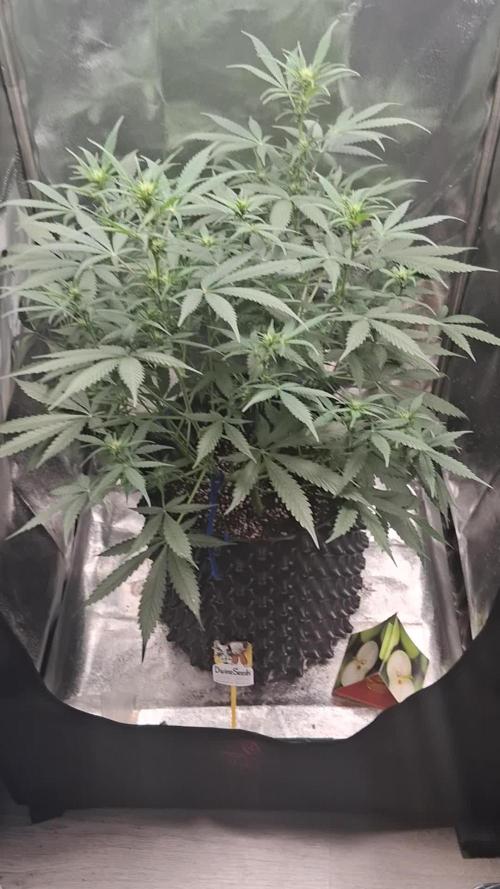
Another week of flower down. The babies have really been stretching. Hopefully the stretch is slowing and they’ll start stacking soon, because they have been CLIMBING toward that light. Hahaha Happy growing, everyone!
Likes
20
Share
evet arkadaşlar hasat tamini alalım biraz tamin yeteneklerinizi görelim tavsiyeleriniz alırım eksik hata yaptığım bir yer varsa
Likes
1
Share
@Mr_Santos
Follow
Infos kommen morgen ! Pflanze steht im Saft. Soweit ist gesagt. Jetzt muss sie sich erstmal von dem Beschneiden erholen und dem zuvor zu hohen EC-Wert. Nährlösung wird momentan nur mit ca 1,0 angefertigt. Anscheinend hat die Oflanze in den Zellen noch genug Nährsalze eingelagert. Ich bin echt mal gespannt wie massiv die Blüten mal werden. Ihr seht ja selber was für Riesen Wurzeln das sind (siehe Video)! Sie macht Sie sich sonst echt gut bis jetzt !
Likes
17
Share
@Farmboy99
Follow
Pls tell me if i can do anything to make it better 😎
Likes
5
Share
🌿 Grow 🤝 Freunde 🌱 Update – Tag 42 in der Blüte Die Lady’s stehen jetzt seit 42 Tagen in der Blüte und entwickeln sich richtig stark: Die Buds sind deutlich verdickt, tragen schon ordentlich Harz und das Canopy ist schön gleichmäßig geschlossen. Die Blätter zeigen ein sattes Grün mit leichten Sugar-Leaves um die Buds herum – genau das Bild, das man sich in der mittleren bis späten Blütephase wünscht. Beim Öffnen des Zeltes kommt einem inzwischen ein leichter süßlicher Duft entgegen, der von Tag zu Tag intensiver wird – sehr vielversprechend für das spätere Aroma. 🌸😋 Die Struktur der Pflanzen ist schön aufgedehnt, viele Blütenstände sitzen im optimalen Lichtbereich und auch die tieferen Etagen bekommen noch genug Power von der Farmlite-LED. Insgesamt machen alle Pflanzen einen vitalen, stabilen Eindruck – der Endspurt in Richtung Reife kann kommen. 🚀🌱 📹 Das aktuelle Video zeigt die Bud-Entwicklung und das voll ausgefüllte Zelt nochmal im Rundumblick – perfekt, um den Fortschritt seit Beginn der Blüte zu sehen. Setup-Details: Beleuchtung: Farmlite LED, ca. 20 cm Abstand, 12/12 Lichtzyklus Topfgröße: 20 L DWC Nährstoffe: Hy-Pro Hydro A/B 5ml7liter l, Epic Boost 0,5ml/Liter Generator 0,15/Liter Wasserwerte: pH 5,9, Lösung 20 °C Klima: 28 °C Tag / 16 °C Nacht, 60% RLF Pflanzen: aus Samen, aktuell ca. 94 cm hoch Alle Updates, Werte und weitere Bilder gibt’s wie immer im Tagebuch: https://growdiaries.com/diaries/288056-grow-journal-by-growerboris Sponsoren & Rabattaktionen 💚 Ein großes Dankeschön an meine Sponsoren: Thomas Benedikt - Green Growery - Hy-Pro Fertilizers - Farmlite Grow Light Bei Green Growery bekommt ihr als Erstbesteller satte 20% Rabatt und kostenlosen Versand mit dem Code GrowFreunde20. Für jede weitere Bestellung gibt es mit GrowFreunde10 noch 10% Rabatt auf das gesamte Sortiment. 🌿💸 #growfreunde #DWC #blütephase #hydropower #greenlovers #budporn #cannabiscommunity
Likes
Comments
Share
Just a little outdoor test run project with minimal maintenance. Smells divine
Likes
42
Share
⛺️ MARSHYDRO 💡VIPARSPECTRA 🍼GREENHOUSE FEEDING BIO GROW 🌱 WEEDSEEDEXPRESS
Likes
47
Share
March14th Smooth sailing here. Plants are getting closer to Harvest Buds are stacking, Pistils get orange, Leaves are fading They smell wonderful Iam so happy with those mini-grows. Girls are sitting in around 10g of Soil Watering // Feeding daily in diving into the Feedingsolution, that has an Ec of 1200