



Likes
14
Share


@MUSRIME_supreme
Follow
Потихоньку растём👍
Все грядки были ухожены и политы) с заботой и лаской конечно же☺️
В эту субботу или воскресенье будет Корневая подкормка NPKMg 16/6/26/2+Меласса
Удобрения и стимуляторы используем от производителя Plantators.com. Так же были закуплены препараты для профилактики от вредителей и остальной никому не нужной дряни!)
До встречи 🤟
Likes
Comments
Share

@GreenEldritchGardens
Follow
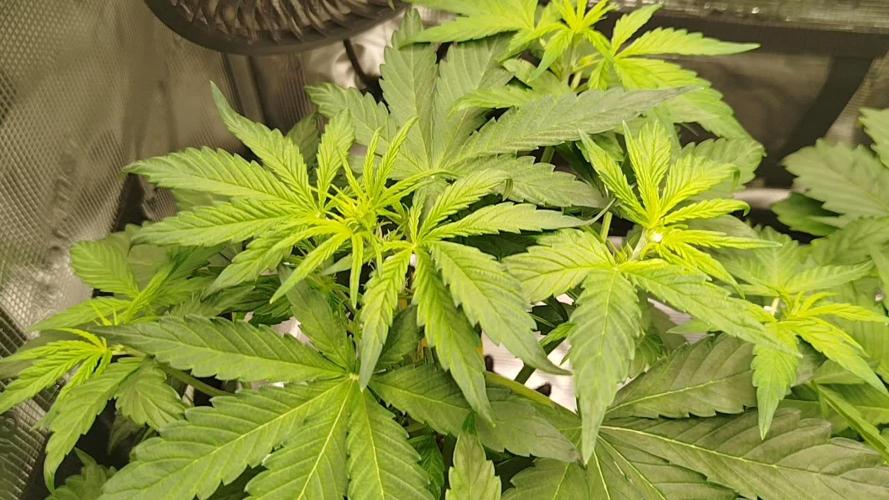
The plant stretched a bit and was this week in pre flower.
I had to move her to a smaller tent with a 100w led, half on what she had before but since she was a new plant, she could not get much light, now she seems happier.
She is still looking a lot like Critical, bushy.


Likes
32
Share


@Fatnastyz
Follow
10/22
She grows! 😁 In the home stretch, just giving water when needed.
Shes so photogenic!
.

Likes
9
Share


@FrostyCloudzz
Follow
Flush flush
Bigger buds buds
Let’s prepare harvest :)
Did the full cycle from the advanced nutrients feeding chart , know I flush and prepare the harvest , planing a late harvest for more cbn and relaxing high - and little bit other terps
Today 16.02.2025 - blooming starts at 20.12.2024 - D59

Likes
52
Share


@Stick
Follow
💣💣💣💣💣 A gigantic ball full of buds 💣💣💣💣💣
Considering the number of colas I'm expecting a few more days than the breeder's schedule.


Likes
12
Share


@Leonweed10
Follow
Día 26 de floración y se ven bien definidas todas las flores,a sólo días de empezar a alimentarlas para su hermoso engorde.


Likes
57
Share


@Ultraviolet
Follow
The cannabis strain Grape Guava can be a purple strain, depending on its specific phenotype and genetic makeup. While not all phenotypes of Grape Guava are purple, some variations, such as the Zatix Grape Guava, are noted for their striking purple appearance due to the genetic expression of anthocyanin pigments.
Grand Cru Genetics is a cannabis seed bank that emerged in 2018 from a group of breeders in Madrid to provide a satisfactory experience to all cannabis users.
"If we do things, we do them well. Due to our experience in the sector and our taste for excellence, we know high quality and we seek it in everything we propose and do."
"We have a “cultivate without giving up” philosophy that we apply to everything we do. We do not give up, we are friends of change, and we adapt as necessary in a still restricted sector."
"We speak relaxed because we know how to relax. We are not intense or preachy; we accept everyone as they are, and we understand that farming is not for everyone. But for those who do, we are here to accompany you. We like to do it and tell it. We are experts in the field because we are the first to do it. We speak from experience and connect with others because we share the passion for cultivation."
"Cannabis has the ability to show us a world of possibilities. When you cultivate and live its growth process, you enjoy a path full of emotions and not just the final destination. At Grand Cru we find beauty in small things. We are attentive, observant, detail-oriented and aware of everyday things, and we savor them without rushing."
In a garden of green, Grape Guava gleams,
With its fruity aroma, enchanting dreams.
Clusters of grapes, guava's sweetness ignite,
A strain so divine, in purple and white.
Euphoria whispers, a lush fruity haze,
Grape Guava's embrace, a tranquil daze.
Off and away.@1400ppm. The increased CO2 allows plants to thrive at higher temperatures, which in turn necessitates higher humidity to maintain the ideal VPD for healthy growth and transpiration. 80F -5F = 75F LST with 70% RH = 0.72 kPa. Higher temperatures and humidity promote rapid growth, nutrient uptake, and photosynthesis while maintaining a lower stress level. Temperature influences the rate of enzymatic reactions involved in aerobic respiration. Enzymes, such as those involved in glycolysis, the Krebs cycle, and the electron transport chain, work most efficiently at an optimal temperature range. In low temperatures, enzymatic activity will slow down, thus reducing the rate of aerobic respiration. In high temperatures, enzymes can become denatured, thus impairing their function and stopping the process of aerobic respiration. Glucose is the primary fuel for aerobic respiration. The rate of aerobic respiration increases with the availability of glucose, as it is the starting point for glycolysis. If glucose levels are low, cells may rely on alternative energy sources such as fatty acids or amino acids , but these processes may yield less ATP or be less efficient. To determine this effect, carbon dioxide volume was measured (as carbon dioxide is an output of aerobic respiration)
18/6 with the 6 being IR. The near infrared (IR-a) borders around 700nm up to 1400nm @ photon par flux density of 1.8 instead of darkness, keeping temps overnight a neat 77F-80F.
I think of my tent as a lung. What goes in must come out. When the rate of air going out exceeds the amount of air coming in, it creates a negative pressure. Tent concaves (bends in). If set up correctly, the RH will begin to drop slowly to the desired level I set, and the extraction turns off when it reaches the desired RH. The plant, as it performs cellular respiration, will always release more water into the air; therefore, the RH% of the tent overnight will increase, as long as oxidative phosphorylation is occurring. As soon as the RH% creeps back up to 55%, the extraction turns back on, over and over. This creates a strong pressure differential, which will work wonders with mass flow. Replicating high and low-pressure fronts in nature. Critical for oxygen diffusion at the critical time of peak cellular respiratory function..
Moisture will not transfer from a saturated atmosphere to another if that air is already at or above its saturation point, meaning the air can't hold any more water vapor. Once I understood that water is produced as a by product during cellular respiration, specifically at the very end of the electron transport chain (ETC) where electrons are finally transferred to molecular oxygen, the higher the RH of the air, the more resistance there is for more moisture to be added to that environment, and effects the ease with which it does so. But none of that water comes from the pot; it's pulled from the air. If you run high daytime RH, your medium/pot is 100% reliant on transpirational root pull to move water. ZERO evaporation happens across the atmosphere if the tent air has high RH%, the medium cannot release its water through evaporation. Once a canopy develops, light no longer slowly wicks and evaporates from the topsoil. The Soil-Plant-Atmosphere Continuum (SPAC) describes the continuous pathway and process of water movement, driven by a gradient in water potential, from the soil, through the plant's roots, stem, and leaves, and finally evaporating into the atmosphere through transpiration. There is evaporation, there is transpiration, and then there is evapotranspiration; Evapotranspiration (ET) is the combined total of two processes: evaporation (water lost directly from soil and surface water into the atmosphere) and transpiration (water released from plants to the atmosphere through their leaves). Evapotranspiration represents the total amount of water that moves from the medium into the air. There is no such thing as a medium with too much water, only a medium that retains too much for too long.
The water must always flow efficiently from one atmosphere(Medium) to another(Air) in a timely manner. Moisture is a critical factor for bacterial growth and decay. Dictating how long it's allowed to sit in any one location for any given period is a key preferred control. To ensure a net reduction in a bacterial population, the rate of removal (ET) must exceed the rate of bacterial growth (decay rate), which is often modeled as a growth rate for the specific bacterium under the given conditions. By optimizing daytime VPD, we also optimize conditions for bacterial growth to explode exponentially above 77°F.. If water is allowed to sit in a medium without an escape within a timeframe, nothing good will happen. IF High RH is maintained overnight as well as during the day, placing 100% of water movement at the behest of daytime transpiration, roots can only pull where they can reach, and if soil is compressed above a certain point, moisture will become trapped in a medium with no way of moving day or night. This will begin the countdown for decay to take hold. When water stagnates in a medium, it loses oxygen, creating anaerobic conditions that foster the growth of harmful microorganisms like bacteria and fungi, which can produce toxins and disease vectors.
Thigmomorphogenesis, the process by which plants respond to mechanical stimuli like touch by altering their growth and development, results in significant morphological changes to improve survival against mechanical perturbations. This complex response involves sensing touch and initiating physiological and genetic responses, leading to changes in form and structure over days or weeks. The process is triggered by physical forces such as wind, rain, or touch. Plants adapt to these stimuli by changing their shape and structure, which may include slower growth, thickened stems, or altered leaf development. Plants possess sophisticated mechanisms to detect even subtle mechanical stimuli and initiate responses. A variety of molecules, including calcium ions, jasmonates, ethylene, and nitric oxide, are involved in signaling these mechanical inputs. Touch can induce the expression of genes that encode proteins for calcium sensing, cell wall modification, and defense mechanisms. A plant exposed to constant wind may become shorter and sturdier. A plant that is touched frequently might grow more slowly to conserve energy and develop thicker cell walls. These changes increase a plant's resilience and ability to survive in harsh environments.
Let's get Thiggy with it.


Likes
29
Share


@TheCannaProphet
Follow
------------------------------------
~SEEDSMAN PEYOTE GORILLA~
------------------------------------
Peyote Gorilla is a cross of Gorilla Glue #4 (Chem Sister x Chocolate Diesel) and Peyote Purple, a colorful phenotype of Bubba Kush. The potent, medicinal effect of the Gorilla meets the stimulating and uplifting high of the Peyote Purple.
With a flowering time of around 70 days Peyote Gorilla has a typically Indica structure, medium-sized with large, broad leaves. Yields are exceptionally good; indoors growers can expect to yield between 500 - 650 gr/m2 while outdoors as much as 1500 gr/m2 can be realized. Resin levels are very high and this means that it is very suitable for making extracts and concentrates with.
This strain's scent is sour with lemon, petrol, earthy and woody notes and these properties are reflected back in the taste. THC production is very high at between 22 - 26% with CBD at just 1%. The effect is a very potent, uplifting high which gradually evolves into a physically relaxing state that will be almost certain to ease any aches and pains.
__________________________________________________________________________________________________________________________________________________________________________________________________________________________________________________________________________________________________________________________________________________________________________________________________________________________________________________
-Strain Characteristics-
BREEDER/BRAND: Seedsman
PRODUCT TYPE: Seeds THC
GENETICS: Gorilla Glue #4 (Chem Sister x Chocolate Diesel) x Peyote Purple (Bubba Kush purple pheno)
VARIETY: Mostly Indica
FLOWERING TYPE: Photoperiod
SEX: Feminised
THC CONTENT: 22 - 26%
CBD CONTENT: 1%
YIELD: Indoor: 450-600 g/m2; Outdoor: 1500 gr/plant
PLANT HEIGHT: 80-160 cm
GROWS: Indoors, Outdoors
FLOWERING TIME: 70 days
HARVEST MONTH: September
MEDICAL CONDITIONS: Fatigue, Insomnia, Pain, Stress
TASTE / FLAVOR: Berry, Earthy, Fruity, Petrol, Sweet
EFFECT: Euphoric, Powerful, Relaxing, Uplifting
_________________________________________________________________________________________________________________________________________________________________________________________________________________________
_________________________________________________________________________________________________________________________________________________________________________________________________________________________
THE SETUP:
~Planted into Jiffy Peat Pellets that were hydrated with de-chlorinated water with SuperThrive added then ph'd to 6.0 @ 80℉
~Grown 100% organic in 10g fabric pots with Mother Earth 70/30 Coco/Perlite medium amended with 2tbs/g of Down To Earth 4-4-4 / 2 cups/g of Earthworm Castings / 1tbs/g of Dr. Earth Flower Girl 3-9-4, 1tbs/g of Dr. Earth Bat Guano, 3/4 cup of Down To Earth Azomite and 1 tsp/g Down To Earth Fish Bone Meal.
~24hr light cycle during Germination / 19/5 light cycle for Vegetation and 12/12 for Flower
~Straight water ph'd @ 6.2-6.8 when needed and weekly Compost Tea's.
__________________________________________________________________________________________________________________________________________________________________________________________________________________________________________________________________________________________________________________________________________________________________________________________________________________________________________________
Weekly Updates:9/20- 💥BOOM!💥 Week Six of flower is here and my girl's in high gear, stacking her flowers and pumping out trichomes!
Today I watered her with 1.5g de-chlorinated water with 5ml/g of Botanicare CalMag+ added, then ph'd to 6.2 @ 72℉. I turned her pot and plucked a couple of yellow shade leaves...the basic daily maintenance.
9/22- I didn't water her yesterday as she looked great and was 'praying' hard. Today she was given 1.5g of de-chlorinated water which was ph'd to 6.2 @ 72℉ which I gave her through her drip pan (bottom chuggin) and I also gave her pot a turn.
She continues to pile on the trichomes and is taking on a exquisite purple hue to her flowers! She is definitely one of the most photogenic cultivar's I've grown and is looking lovelier by the day! 😍
9/24- We're getting close to wrapping up Week Six of flower in a couple of days and she'll be around four more weeks from finishing, with the most exciting weeks yet to come!
I didn't water yesterday and today I went ahead and Top Dressed her with 2 tbsp/g Dr. Earth Flower Girl 3-9-4, 1 tbsp/g Dr. Earth Gold Premium 4-4-4, 1/2 cup Down To Earth Bio-Fish, 1/3 cup Down To Earth High Phosphorus Bat Guano and 2 cups of Worm Castings.
I watered in the Top Dress with 1.5g of de-chlorinated water which was ph'd to 6.2 @ 72℉ and let her enjoy her meal! 😜
9/26- After her heavy watering on the 24th I didn't water yesterday and when I checked her today at 'lights on' and she still had some weight to her pot and her leaves were praying hard so I held off on watering today and will hit her tomorrow with her usual 1.5g watering.
~Thanks for stopping in! Things should be getting a lot more interesting in the coming weeks...Stay lifted and be Blessed! 😎🙏~

Likes
10
Share


@Green_DSL
Follow
WEEK 2 FLOWERING
Since I will use the 7 weeks AN full nutrients program, one week is only 5 days
Plant is doing well leaves are intense green and flowers develops beautifully. I tried to lower the lamp to 30cm but it started burning some leaves tips so I correct the distance to 50cm
Keep doing LST and defoliation every day or two
I am using 100% RO water and give water with nutrients every morning
🌱
Processing
Likes
8
Share


@ThatoneAKguy
Follow
After consulting with a few others working with this strain I have seen that they can have quite a stretch and given the time frame with my other project the time is here to switch to flower. So this is day one and when these photos were taken they had just woken up.

Likes
6
Share


@The_Lonely_Farmer
Follow
All girls have been soaked and awaiting soil apart from the strawberry bannana which is a late comer ✌️ let's hope they are okay as I did originally have 2 of each which I had too reset and decided too do small pots instead ✌️🌱💚
Likes
30
Share


@Togoutouseg
Follow
Cette semaine les plantes ont très bien poussé, je suis très content !!
Je me rends compte que j'aurai dû faire une plus grosse défoliation 1 semaine avant de passer les plantes en floraison. Là les plantes sont très touffues et les plantes utilisent de l'énergie pour des feuilles qui n'arrivent pas à obtenir de lumière malgré le palissage. La prochaine fois, je couperai bien plus pour privilégier les têtes supérieures. J'ai augmenté l'intensité lumineuse et j'ai rapproché la lampe et rajouter de l'alga bloom. Je reste très satisfait de ce résultat avec tous les problèmes que j'ai eus lors de cette culture. J'ai perdu plusieurs sondes à ph ce qui a provoqué des problèmes d'absorption, mais j'ai bien rattrapé le coup.
Plus qu'à attendre les nouveaux bourgeons 😎

Likes
167
Share


@PapaNugs
Follow
Everything is well with this grow. She continues to swell and fatten up. Super excited for the final product as she is starting to smell better and better.
Watering every day and adding water to the self watering pots. She drinks a ton! Like an alcoholic
At 100% power
Here are the lights details:
Medic Grow Mini Sun-2 150W LED
Model: MN150-022
Spectrum mode: V1
Efficacy: 2.8 umol/J
Thanks for stopping by!
You can find the light on Grow Diaries:
https://growdiaries.com/grow-lights/medic-grow/mini-sun-2-150-watts
You can find the light on Medic Grow's website:
https://medicgrow.com/

Likes
4
Share


@Filiaes
Follow
09.06
After some research I think the lightly burn on the leaf tips came from to much light and not from nutrient burn. Anyway, I like how they developed the last week so I guess it wasn't super bad to reduce my scheme. I am now 4 weeks before harvest, I plan to flush the last week, so there is 3 weeks left of nutrients. For this week I will give them some boost with canna pk 13/14 and will remove hesi phospor for the scheme for this week. Tank was cleaned as always and new water with nutrients is prepared for the next week of bloom.
