


Likes
Comments
Share


@AsNoriu
Follow
Day 79 since seed touched soil. Great strain, but i am confused. All sativa dominant usually runs longer, here breeder gives very short 7 weeks flowering period. Think she needs maybe even 3 weeks, will try to push 10-14 days , or chop in a week ;)))
Mars Hydro TSL2000 is doing great job, colas fill in, buds are sparkling, i am happy ;)))
Temps in grow room again off, 26-30 during day, neighbors dont have therapy room, so put heating on ;))))
Day 83. Made video about last watering, tried to show great light, but no space at all, girls too tall for setup. 4 days left and i chop everything.
Happy Growing !!!


Likes
37
Share


@LaGrassaFarm
Follow
Nada, otra semana más engordando un poco más y cambiando poco a poco los tricomas a color ámbar.

Likes
9
Share

@KobraCut
Follow
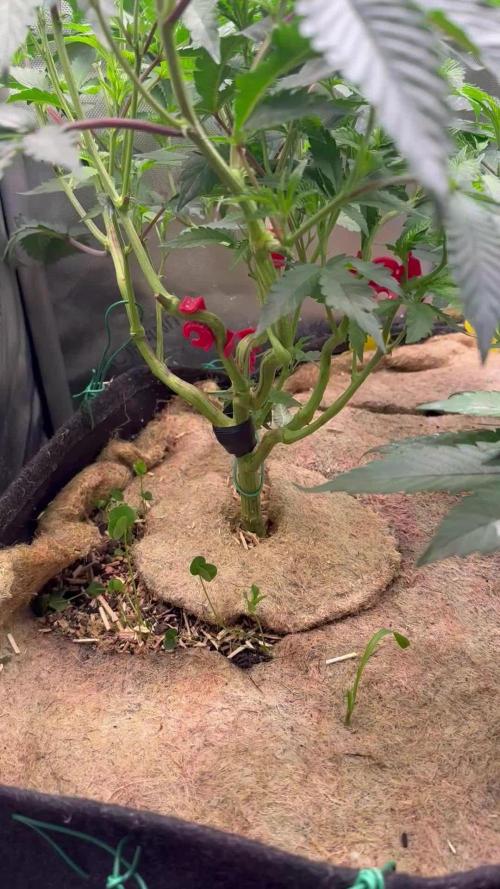
Die Vegetationsphase wurde aufgrund des Mehltaus verlängert. Ich habe bisher einmal mit Netz-Schwefelit gesprüht, aber werde vermutlich nochmal sprühen.
Nächstes sprühen dann mit Purolyt denn der Schwefel erzeugt extrem viel „Dreck“.
Die London Marker wurde an den höchsten Trieben nochmal getoppt um alles annähernd auf die selbe Höhe zu bringen.
Zwischendurch wurde das Beet einmal zu trocken , deshalb habe ich vor 1 Woche nochmal Em1 und Agarvensaft zur Aktivierung des Bodenlebens gegeben .
Ich schicke Sie nächste Woche in die Blüte.
Likes
41
Share


@GermGrowFox
Follow
War nicht viel los. Die Crit stand im Dunkeln und der Topf war furztrocken.

Likes
1
Share


@sunshinegroww
Follow
Few days ago i decided to top one more time and just flip as getting on taller side but her new home its not that tall but anyway looking good and happy so yeah lets flip and wait

Likes
3
Share

@Chrisandweed
Follow
Poda apical hecha y brotes y hojas que no pintan na, fuera, a crecer 4 brotes con fuerza, que de estos sacaremos 8 y así sucesivamente.
Buueno, pues para lo pocha que iba, y se ve que fue, está recuperando muy bien.
Edito domingo 22/02: cambio de armario, de luces y de maceta.
El armario es la leche, se nota la calidad joder jajajajajaja es de la marca Vevor, poco conocida de momento... Pero dadle tiempo, uso también su extractor y de verdad que funciona de lujo y muy silencioso.
Las luces las tengo a 300W ya que es lo minimo pero bastante alejadas, a unos 40/50 cm. Les llega una media de 11,12k de ppfd.
Y lo dicho, trasplantadas a maceta todas.
Likes
15
Share


@CanadianFillmore
Follow
Overall very happy with this plant grow. She was by far the hungriest of the four plants in this grow, but she still developed nicely, loads of sticky sweet smelling buds. Will update in 2 weeks, after the first smoke.
Update! Smoked the first buds from this harvest, the smoke was smooth, light berry/fruit taste, it will get stronger as they cure in their jars. Overall, I am happy with the plant, the bud product and quality. She's not a super heavy indica, but she can still pack a punch!

Likes
14
Share


@TickTockCroc
Follow
So, I harvested my 2 older girls around 4 weeks ago, the 2 younger ones took that extra 4 weeks, just chopped them now! Initially, I was really upset when I harvested the first two - they just looked really bad and loads of fluffy larf. So, I wrote a negative review but I deleted it because when I smoked some, it was really good! LOL. But still just had no good aesthetic. I decided to feed the younger ones way more nutes than I was giving the other ones, and increased the rate of water feeds... and WOW. They responded so well and they came out HUGE!!!! MAN!!! These nugs came out beastly. The older ones 100% were being fed way too low a dosage of nutes, and were not watered frequently enough.
I've only just chopped them all and hung up to dry. Will update with a smoke report when they're ready!
So, the pics im posting are of the two younger plants that were harvested later. I do not have pics of the earlier harvest, unfortunately, but it looked terrible (from my own doing it seems as I mentioned above). As you can see in the first pic, I had to hold her up as she was falling over on her own weight because the nugs were so heavy (actually had to use many ties to keep both the plants from falling in the final 2 weeks).
Not too many pics but just an idea of how they were looking. Dense, big, frosty - not SUPER gassy in smell but still smells good! The side branches were all looking like main colas! Didn't LST or anything, just a bit of lollipopping and let it do its thing! Each pic is of a different bud site. Will also update with more details such as weight when it's dry!
Stay safe, friends!
┏(^0^)┛
-TickTockCroc

Likes
136
Share


@Kitties_and_Colas
Follow
~_~_~_~_~_~_~_~_~_~_~_~_~_~_~_~_~_~_~_~_~_~_~_~_~_~_~_~_~_~_~_~_~_~_~_~_~_~_~_~_~_~_~_~_~_~_~_~_~_~_~_~_~_~_~_~_~_~_~_~_~_~_~_~_~_~_~_~_~_~_~_~_~_~_~_~_~_~_~_~_~_~_~_
1/22/22
6th week of veg!!! 💚💡🌱 Lots of growth in the last 2-3days, color looks great a couple twisted leaves on #4 but nothing major..we've removed a large fan for better light penetration on #1 & #2..temps have been awesome since the weather changed, plants are loving the intense light and mild climate. We have no real game plan for flower (besides not getting overgrown lol) but size will definitely determine when we flip.. I would assume 2 more weeks at this rate of growth but time will tell.. everyone is eating a little with every watering now (water only every 3rd/4th) and things look great! (for now lol)..Thanks as always for dropping by and happy harvests everyone!! 🌱😽💨
⚡Mars Hydro/SP-3000⚡ Specifications ⚙️:
Diodes: Samsung LM301B / Osram 660nm (960 total!)
Driver: Meanwell 300watt 🔌 (300W±5% @AC120V-277V)
PPF: 824umol/S ☢️
PPE: 2.8 µmol/j 〰️〰️
Lifespan: >50k hrs ⌛
Veg Coverage: 3 x 5 ft 🌱
Flowering Coverage: 2 x 4 ft 🌼
Weight: 10.1 lbs (4.6kg)
-The SP-3000 uses an aluminum heatsink (no fan) and the driver can be placed outside the tent 🌡️⬇️
-IP65 waterproof ratings, tolerant to high humidity grow environments 💦 ..
-Up to 15 can be daisy-chained together and all controlled from a single light! 💡~💡~💡~💡~💡
~_~_~_~_~_~_~_~_~_~_~_~_~_~_~_~_~_~_~_~_~_~_~_~_~_~_~_~_~_~_~_~_~_~_~_~_~_~_~_~_~_~_~_~_~_~_~_~_~_~_~_~_~_~_~_~_~_~_~_~_~_~_~_~_~_~_~_~_~_~_~_~_~_~_~_~_~_~_~_~_~_~_~_
1/24/22
We've been running the MarsHydro at 29" this entire grow (found my tape measure lol) and the node spacing is still really tight, I assume there's a lot more red in SP-3000 than lights we've used in the past, at 29" these little plants have side stems as fat as pencils..We plan to keep the light at this distance all thru veg and we'll begin lowering it at the start of flower...plants are coming along nicely, much more growth in the last few days than the previous week. I'm REALLY excited for this grow..I think the SP-3000 will deliver us a half lb or more of Bruce Banger with very little effort..I couldn't be more in love with this setup....
.....until i buy my 2nd SP-3000 that is 😸
~_~_~_~_~_~_~_~_~_~_~_~_~_~_~_~_~_~_~_~_~_~_~_~_~_~_~_~_~_~_~_~_~_~_~_~_~_~_~_~_~_~_~_~_~_~_~_~_~_~_~_~_~_~_~_~_~_~_~_~_~_~_~_~_~_~_~_~_~_~_~_~_~_~_~_~_~_~_~_~_~_~_~_

Likes
13
Share


@TheMightyHermit
Follow
Honey Cream is starting to smell wonderfully, a Sweet almost candy/bubblegum smell, incredible !


Likes
11
Share


@CanabisLoverHobbyGrower
Follow
Well they reacted really well to latest lst and it really worked in helping get as much light as possible to as much as the plant as possible not long now before I flip them into flower roll on next week

Likes
2
Share


@ao_grows1978
Follow
Week 2 for the solo Afghani went smooth. Looked a little slow to develop her first proper set of leaves, but the root development should help speed up her progression. Still feeding off the slow release 444 and is now regularly drinking about 2oz of water every other day. I also spritz the bottom of the outer cup to keep moisture levels high for stretching roots. She's about 36" from the light. Hoping to get a little stretch to make training easier. Added a couple new pics to get the week caught up. Stay tuned, week 3 starts training.
Likes
3
Share


@Gahskel
Follow
Erste Woche der Blüte. Leichte Verfärbungen wirkt wie verbannt an der Spitze an einzelnen Blättern. Kann mir nicht herleiten woher diese kommen? Hat jemand Tipps?
Am 3 Tag waren die erste Anzeichen für eine Vorblüte entdeckt(Video)
Likes
15
Share


@Messypies
Follow
13/07/2020 - growth looking good. Highered lights to try to get plant to stretch
14/07/2020 - plants green and seems to be responding well to nutrients.
15/07/2020 - all looking good


Likes
10
Share

@Chef_LA
Follow
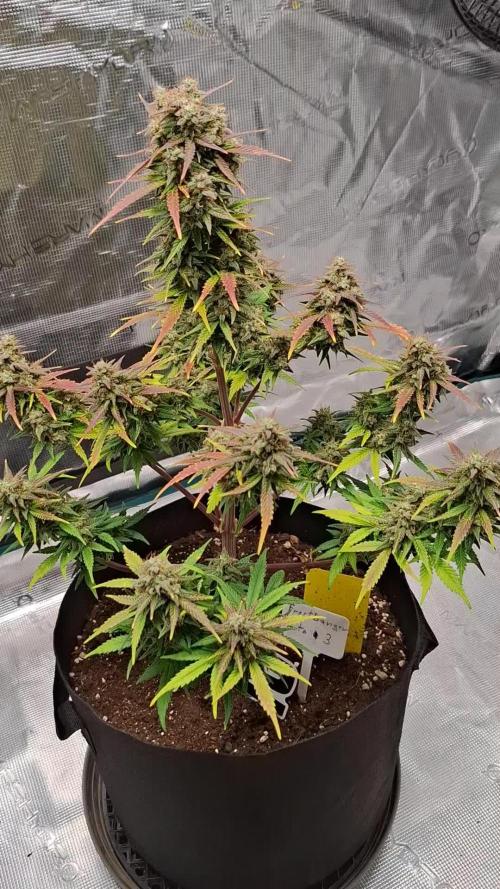
Diese Woche nur gegossen. Licht auf 14 Stunden erhöht. Ab heute Abend bleibt das Licht aus und es wird nicht mehr gegossen. Denke in drei bis vier Tagen wird geerntet 😄.
Likes
7
Share


@Stickygreens420
Follow
1/16/2023 - Day 14: not much new to report. All 6 plants are continuing to look healthy. The Grand Prix seem to be a bit smaller than the Frozen White Runtz and Ice Bath. They all look good though.
1/18/2023 - Day 16: clipped a leaf off each Grand Prix to send it in for a genetic test to determine the sex. I used Farmer Freeman. Nothing else to report at this time.
1/20/2023 - Day 18: watered all 6 plants and foliar fed with the same water. Ph was 6.6, and mixed with ThermX-70, FishShit, Rootwise Micro Complete, Pure Protein Dry organic fish fertilizer, BuildASoil Big 6, Rootwise Enzyme Elixer, Fermented Comfrey Extract, and Yah-Whey Thrive. I know I went crazy, but might as well use it if I have it.
1/21/2023 - Day 19: Plants are looking happy. They obviously loved the feeding yesterday

Likes
6
Share

@Adammmmmmm
Follow
Wassup growers
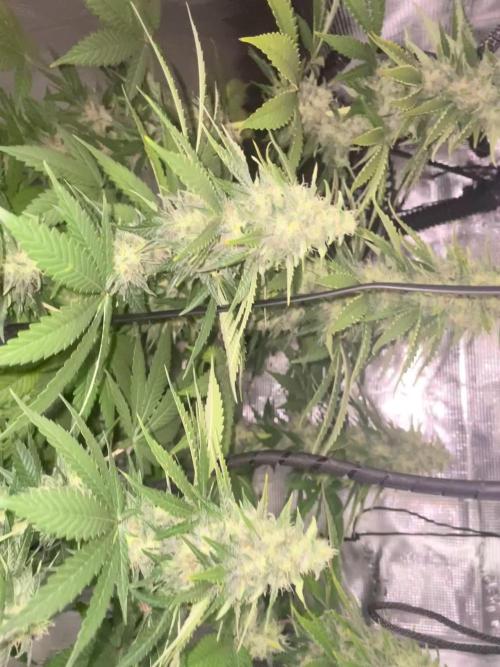
palice jsou brutalni a vune uplne jak mango proste tropical. Vše jde jak má cca 2 tydny sekyro. At to roste
Likes
19
Share


@Ultraviolet
Follow
Yellow butterfly came to see me the other day; that was nice.
Starting to show signs of stress on the odd leaf, localized isolated blips, blemishes, who said growing up was going to be easy!
Smaller leaves have less surface area for stomata to occupy, so the stomata are packed more densely to maintain adequate gas exchange. Smaller leaves might have higher stomatal density to compensate for their smaller size, potentially maximizing carbon uptake and minimizing water loss. Environmental conditions like light intensity and water availability can influence stomatal density, and these factors can affect leaf size as well. Leaf development involves cell division and expansion, and stomatal differentiation is sensitive to these processes. In essence, the smaller leaf size can lead to a higher stomatal density due to the constraints of available space and the need to optimize gas exchange for photosynthesis and transpiration. In the long term, UV-B radiation can lead to more complex changes in stomatal morphology, including effects on both stomatal density and size, potentially impacting carbon sequestration and water use. In essence, UV-B can be a double-edged sword for stomata: It can induce stomatal closure and potentially reduce stomatal size, but it may also trigger an increase in stomatal density as a compensatory mechanism. It is generally more efficient for gas exchange to have smaller leaves with a higher stomatal density, rather than large leaves with lower stomatal density. This is because smaller stomata can facilitate faster gas exchange due to shorter diffusion pathways, even though they may have the same total pore area as fewer, larger stomata. Leaf size tends to decrease in colder climates to reduce heat loss, while larger leaves are more common in warmer, humid environments. Plants in arid regions often develop smaller leaves with a thicker cuticle and/or hairs to minimize water loss through transpiration. Conversely, plants in wet environments may have larger leaves and drip tips to facilitate water runoff. Leaf size and shape can vary based on light availability. For example, leaves in shaded areas may be larger and thinner to maximize light absorption. Leaf mass per area (LMA) can be higher in stressful environments with limited nutrients, indicating a greater investment in structural components for protection and critical resource conservation. Wind speed, humidity, and soil conditions can also influence leaf morphology, leading to variations in leaf shape, size, and surface characteristics. Small leaves: Reduce water loss in arid or cold climates.
Environmental conditions significantly affect gene expression in plants. Plants are sessile organisms, meaning they cannot move to escape unfavorable conditions, so they rely on gene expression to adapt to their surroundings. Environmental factors like light, temperature, water, and nutrient availability can trigger changes in gene expression, allowing plants to respond to and survive in diverse environments.
Depending on the environment a young seedling encounters, the developmental program following seed germination could be skotomorphogenesis in the dark or photomorphogenesis in the light. Light signals are interpreted by a repertoire of photoreceptors followed by sophisticated gene expression networks, eventually resulting in developmental changes. The expression and functions of photoreceptors and key signaling molecules are highly coordinated and regulated at multiple levels of the central dogma in molecular biology. Light activates gene expression through the actions of positive transcriptional regulators and the relaxation of chromatin by histone acetylation. Small regulatory RNAs help attenuate the expression of light-responsive genes. Alternative splicing, protein phosphorylation/dephosphorylation, the formation of diverse transcriptional complexes, and selective protein degradation all contribute to proteome diversity and change the functions of individual proteins.
Photomorphogenesis, the light-driven developmental changes in plants, significantly impacts gene expression. It involves a cascade of events where light signals, perceived by photoreceptors, trigger changes in gene expression patterns, ultimately leading to the development of a plant in response to its light environment.
Genes are expressed, not dictated! While having the potential to encode proteins, genes are not automatically and constantly active. Instead, their expression (the process of turning them into proteins) is carefully regulated by the cell, responding to internal and external signals. This means that genes can be "turned on" or "turned off," and the level of expression can be adjusted, depending on the cell's needs and the surrounding environment. In plants, genes are not simply "on" or "off" but rather their expression is carefully regulated based on various factors, including the cell type, developmental stage, and environmental conditions. This means that while all cells in a plant contain the same genetic information (the same genes), different cells will express different subsets of those genes at different times. This regulation is crucial for the proper functioning and development of the plant.
When a green plant is exposed to red light, much of the red light is absorbed, but some is also reflected back. The reflected red light, along with any blue light reflected from other parts of the plant, can be perceived by our eyes as purple.
Carotenoids absorb light in blue-green region of the visible spectrum, complementing chlorophyll's absorption in the red region. They safeguard the photosynthetic machinery from excessive light by activating singlet oxygen, an oxidant formed during photosynthesis. Carotenoids also quench triplet chlorophyll, which can negatively affect photosynthesis, and scavenge reactive oxygen species (ROS) that can damage cellular proteins. Additionally, carotenoid derivatives signal plant development and responses to environmental cues. They serve as precursors for the biosynthesis of phytohormones such as abscisic acid () and strigolactones (SLs). These pigments are responsible for the orange, red, and yellow hues of fruits and vegetables, while acting as free scavengers to protect plants during photosynthesis.
Singlet oxygen (¹O₂) is an electronically excited state of molecular oxygen (O₂). Singlet oxygen is produced as a byproduct during photosynthesis, primarily within the photosystem II (PSII) reaction center and light-harvesting antenna complex. This occurs when excess energy from excited chlorophyll molecules is transferred to molecular oxygen. While singlet oxygen can cause oxidative damage, plants have mechanisms to manage its production and mitigate its harmful effects.
Singlet oxygen (¹O₂) is considered a reactive oxygen species (ROS). It's a form of oxygen with higher energy and reactivity compared to the more common triplet oxygen found in its ground state. Singlet oxygen is generated both in biological systems, such as during photosynthesis in plants, and in cellular processes, and through chemical and photochemical reactions. While singlet oxygen is a ROS, it's important to note that it differs from other ROS like superoxide (O₂⁻), hydrogen peroxide (H₂O₂), and hydroxyl radicals (OH) in its formation, reactivity, and specific biological roles. Non-photochemical quenching (NPQ) protects plants from damage caused by reactive oxygen species (ROS) by dissipating excess light energy as heat. This process reduces the overexcitation of photosynthetic pigments, which can lead to the production of ROS, thus mitigating the potential for photodamage. Zeaxanthin, a carotenoid pigment, plays a crucial role in photoprotection in plants by both enhancing non-photochemical quenching (NPQ) and scavenging reactive oxygen species (ROS). In high-light conditions, zeaxanthin is synthesized from violaxanthin through the xanthophyll cycle, and this zeaxanthin then facilitates heat dissipation of excess light energy (NPQ) and quenches harmful ROS.
The Issue of Singlet Oxygen!!
ROS Formation: Blue light, with its higher energy photons, can promote the formation of reactive oxygen species (ROS), including singlet oxygen, within the plant.
Potential Damage: High levels of ROS can damage cellular components, including proteins, lipids, and DNA, potentially impacting plant health and productivity.
Balancing Act: A balanced spectrum of light, including both blue and red light, is crucial for mitigating the harmful effects of excessive blue light and promoting optimal plant growth and stress tolerance.
The Importance of Red Light:
Red light (especially far-red) can help to mitigate the negative effects of excessive blue light by:
Balancing the Photoreceptor Response: Red light can influence the activity of photoreceptors like phytochrome, which are involved in regulating plant responses to different light wavelengths.
Enhancing Antioxidant Production: Red and blue light can stimulate the production of antioxidants, which help to neutralize ROS and protect the plant from oxidative damage.
Optimizing Photosynthesis: Red light is efficiently used in photosynthesis, and its combination with blue light can lead to increased photosynthetic efficiency and biomass production.
In controlled environments like greenhouses and vertical farms, optimizing the ratio of blue and red light is a key strategy for promoting healthy plant growth and yield.
Understanding the interplay between blue light signaling, ROS production, and antioxidant defense mechanisms can inform breeding programs and biotechnological interventions aimed at improving plant stress resistance. In summary, while blue light is essential for plant development and photosynthesis, it's crucial to balance it with other light wavelengths, particularly red light, to prevent excessive ROS formation and promote overall plant health. Oxidative damage in plants occurs when there's an imbalance between the production of reactive oxygen species (ROS) and the plant's ability to neutralize them, leading to cellular damage. This imbalance, known as oxidative stress, can result from various environmental stressors, affecting plant growth, development, and overall productivity.
Causes of Oxidative Damage: Abiotic stresses: These include extreme temperatures (heat and cold), drought, salinity, heavy metal toxicity, and excessive light. Biotic stresses: Pathogen attacks and insect infestations can also trigger oxidative stress. Metabolic processes: Normal cellular activities, particularly in chloroplasts, mitochondria, and peroxisomes, can generate ROS as byproducts. Certain chlorophyll biosynthesis intermediates can produce singlet oxygen (1O2), a potent ROS, leading to oxidative damage. ROS can damage lipids (lipid peroxidation), proteins, carbohydrates, and nucleic acids (DNA). Oxidative stress can compromise the integrity of cell membranes, affecting their function and permeability. Oxidative damage can interfere with essential cellular functions, including photosynthesis, respiration, and signal transduction. In severe cases, oxidative stress can trigger programmed cell death (apoptosis). Oxidative damage can lead to stunted growth, reduced biomass, and lower crop yields.
Plants have evolved intricate antioxidant defense systems to counteract oxidative stress. These include: Enzymes like superoxide dismutase (SOD), catalase (CAT), and various peroxidases scavenge ROS and neutralize their damaging effects. Antioxidant molecules like glutathione, ascorbic acid (vitamin C), C60 fullerene, and carotenoids directly neutralize ROS. Developing plant varieties with gene expression focused on enhanced antioxidant capacity and stress tolerance is crucial. Optimizing irrigation, fertilization, and other management practices can help minimize stress and oxidative damage. Applying antioxidant compounds or elicitors can help plants cope with oxidative stress. Introducing genes for enhanced antioxidant enzymes or stress-related proteins over generations.
Phytohormones, also known as plant hormones, are a group of naturally occurring organic compounds that regulate plant growth, development, and various physiological processes. The five major classes of phytohormones are: auxins, gibberellins, cytokinins, ethylene, and abscisic acid. In addition to these, other phytohormones like brassinosteroids, jasmonates, and salicylates also play significant roles.
Here's a breakdown of the key phytohormones:
Auxins: Primarily involved in cell elongation, root initiation, and apical dominance.
Gibberellins: Promote stem elongation, seed germination, and flowering.
Cytokinins: Stimulate cell division and differentiation, and delay leaf senescence.
Ethylene: Regulates fruit ripening, leaf abscission, and senescence.
Abscisic acid (ABA): Plays a role in seed dormancy, stomatal closure, and stress responses.
Brassinosteroids: Involved in cell elongation, division, and stress responses.
Jasmonates: Regulate plant defense against pathogens and herbivores, as well as other processes.
Salicylic acid: Plays a role in plant defense against pathogens.
1. Red and Far-Red Light (Phytochromes):
Red light:
Primarily activates the phytochrome system, converting it to its active form (Pfr), which promotes processes like stem elongation and flowering.
Far-red light:
Inhibits the phytochrome system by converting the active Pfr form back to the inactive Pr form. This can trigger shade avoidance responses and inhibit germination.
Phytohormones:
Red and far-red light regulate phytohormones like auxin and gibberellins, which are involved in stem elongation and other growth processes.
2. Blue Light (Cryptochromes and Phototropins):
Blue light:
Activates cryptochromes and phototropins, which are involved in various processes like stomatal opening, seedling de-etiolation, and phototropism (growth towards light).
Phytohormones:
Blue light affects auxin levels, influencing stem growth, and also impacts other phytohormones involved in these processes.
Example:
Blue light can promote vegetative growth and can interact with red light to promote flowering.
3. UV-B Light (UV-B Receptors):
UV-B light:
Perceived by UVR8 receptors, it can affect plant growth and development and has roles in stress responses, like UV protection.
Phytohormones:
UV-B light can influence phytohormones involved in stress responses, potentially affecting growth and development.
4. Other Colors:
Green light:
Plants are generally less sensitive to green light, as chlorophyll reflects it.
Other wavelengths:
While less studied, other wavelengths can also influence plant growth and development through interactions with different photoreceptors and phytohormones.
Key Points:
Cross-Signaling:
Plants often experience a mix of light wavelengths, leading to complex interactions between different photoreceptors and phytohormones.
Species Variability:
The precise effects of light color on phytohormones can vary between different plant species.
Hormonal Interactions:
Phytohormones don't act in isolation; their interactions and interplay with other phytohormones and environmental signals are critical for plant responses.
The spectral ratio of light (the composition of different colors of light) significantly influences a plant's hormonal balance. Different wavelengths of light are perceived by specific photoreceptors in plants, which in turn regulate the production and activity of various plant hormones (phytohormones). These hormones then control a wide range of developmental processes.
Likes
9
Share


@Bakeryguy420
Follow
At day 10 today 9/19 so fucking excited they are really started to take off now just fed again with some sweet candy added this time fucking love greenleaf nutrients so easy to manage. The price on this stuff is fucking dirt cheap and the results show !!!
C4 first time growing second week looking good healthy green no issues at all. Almost at the end of the week.and I got my little trooper with me. I love when my cat always taking a look into the garden with me. She always been apart of weed since day 1 her birthday is even on 420 :)!