Likes
Comments
Share
@GR0WER
Follow
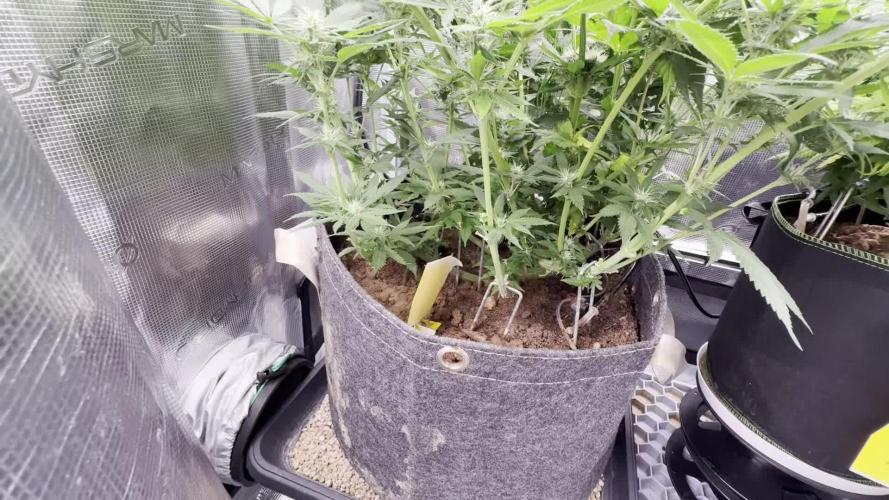
Second week of flowering starts! ☀️01.11.2023 Nearly all is going like it should. 'Nearly', because of lidht signs of magnesium deficiency on the few leafes of one 'Special Queen' plant. I'll try to give them a drop of 'CalMag' before it'll be too late. Therefore, I have a great garden, - it's lovely looking and the budz are forming well. The trichomes developong have started. I'm spraying it with 'Bio Bloom' solution every day. ☀️03.11.2023 Watered two of them today. 'Bio Bloom' spraiyng also. ☀️05.11.2023 'Bio Bloom' spraying only. ☀️07.11.2023 Watering with 50% consentration 'TA Tripart' + 100% 'Bio Bizz CalMag'. Spraying with 'TA Pro Bloom' solution. Week ends.
Likes
17
Share
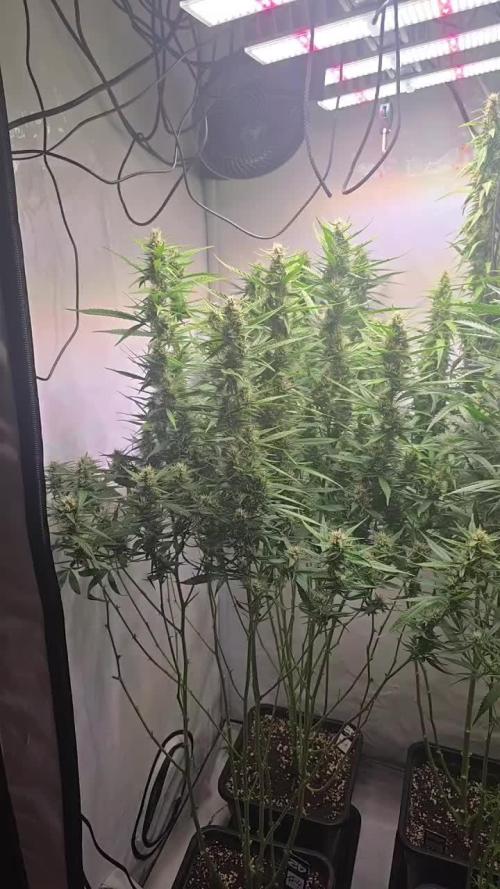
Last week of veg, starting 12/12 tomorrow as I'm starting to worry about space.. hopefully stretching isn't too much of an issue.. we shall see. I'm still not happy with my defoliation, I've been mostly removing large/damaged leaves and sucker branches off the bottom of the plants. I've been experimenting with the fan and scrog placement, placing one large fan oscillating below the canopy and two clip on fans above the tops and mostly using the scrog as a support for branches during flower as I somewhat failed to actually scrog.. Once again, any advice much appreciated and happy holidaze!
Likes
11
Share
What should i say. My fear was reasonable. Even so i sprayed Purolyt and fed Silic Rock, i found mildew on day 75. I gave her another chance and wanted to wait until i woulkd find another place with mildew.
Likes
29
Share
Schwerer rückschlag: sciarid larvae (trauermückenlarven) haben die Hälfte der seedlings angefressen. Nur die Pötte, wo neue pflanzerde drin war, wurden verschont. Diese Mücken legen ihre Eier in feuchtes Substrat und die Larven fressen Keimlinge und junge wurzeltriebe... klassisch Pech gehabt.. tausche jetzt die Erde und setze das dritte mal an diese Saison. Das Zeitfenster für automatics ist noch groß genug 🙂 Aufgeben ist keine Option.
Likes
15
Share
A little pale for my liking, possibly because I start with a weak nutrient solution (EC well below 1 mS/cm) but she's coming along steadily. She got a full tank of nutrient solution this week, where previously I'd been dunking the rockwool in a weak bath of Ionic Grow.
Likes
124
Share
Day 9: they are all looking super healthy and ready to explode! I’ll just veg these fast. Let them grow a node or two more then top them all and wait some days then switch to 12/12. I’m having 9 plants in the same tent.
Likes
1
Share
@MOTB666
Follow
Doing good so far no signs of deficiency or nutrient burn that I can see. Nutrient change on day 58 Had the ac go out for about day so had one day around 80-82 degrees F. Other than that being doing good so far this week
Likes
11
Share
Endlich Erntezeit.😍 Sie hängt momentan bei 21 Grad celsius und 55 Prozent Luftfeuchtigkeit zum Trocknen. Anschließend folgen die Grammanzahl und der Geschmackstest.Ich kann es kaum abwarten. Nach 14 tagen ist es noch ziemlich feucht,wahrscheinlich da die luftfeuchte bei 65 prozent waren.Deswegen tue ich sie nun in einen Karton und wende sie einmal täglich. Bevor ich sie in den karton tue,waren es 23g an Gewicht,nach dem Trimmen.
Likes
27
Share
What’s up guys!! Welcome back. Week 8 just commencing - fully flushed the plants today which took forever - getting the build up of advanced nutes salts took ages, but finally got the EC of the runoff down to the same level as the water going in to the plant. Should start seeing some mad colours coming through now, but the plants are looking super dank - especially the Zkittlez! Going for a two week flush now as the trichs seem to be ready - the runtz may need a few more days than the zkitz - but it looked to be suffering a bit from some nute lockout so I’ve gone for the flush now. Hopefully I’ll see some good signs in the next couple of days! Thanks for checking in 🙌🏼
Likes
142
Share
@Xonidan
Follow
🗓️ 6.4.2026 - Ich musste mein Mädchen außer Planmäßig ernten, da sie gezwittert hat. Ich werde versuchen soviel Samen als möglich zu entfernen. Jetzt soll sie erstmal trocknen und dann sehe ich weiter. Beim Trimmen habe ich schon zahllose Samen entfernt. Ein harter Schlag und ich habe es erst so spät bemerkt. 😔
Likes
141
Share
@Ju_Bps
Follow
Hello growmies 👩‍🌾👨‍🌾🌲🌲, 👋 buds are really fat and frosty, I think the end will be not too much longer, maybe in 2 weeks, I check trichromes each weeks, they're not yet totally milky, see video. 💧Give water each 2 or 3 days 1,5l Water + Nutri NPK Bloom + Sugar Royal 1,5l Water + Nutri NPK Bloom PH @6 - Nutri NPK Bloom 1/2 tsp for 1 gal. 💡Mars Hydro - SP 3000 100% 56 cm. 🔥 Thanks community for follow, likes, comments, always a pleasure 👩‍🌾👨‍🌾💚🌲. Mars Hydro - SP 3000 💡💡 https://www.mars-hydro.com/sp-3000-samsung-lm301b-greenhouse-led-grow-light NUTRI NPK 💥🔥 https://www.nutrinpk.com/product/npk-mix-pak-for-4-to-5-plants-cannabis-fertilizer/ SweetSeeds - Sweet Mandarine Zkittlez XL Auto🌲🌲 https://sweetseeds.es/en/autoflowering-seeds/3233-sweet-mandarine-zkittlez-xl-auto.html
Likes
15
Share
Week 4 for gelato 41, shes been topped at the 4th node & has also been transplanted into 5L pot😎The new growth is coming in hotttt compared to last week.
Likes
128
Share
📅 Week 5 | 🗓️ Days 29–35 – Low, wide, and locked-in 🔸 Growth & structure: Biscotti Gelato is loving life this week. She’s sitting low and proud with a tidy, pancake-flat canopy—tops marching in perfect formation. The main stem is chunky with neat training “knuckles,” and the undercarriage is clean so light and air glide right through. Leaves are a deep, happy green and holding that cute “hands-up” pray—no burns, no drama. 🔸 Training: Kept the LST/manifold rhythm going. Tie-downs are doing their job and everything stays level. I plucked a few interior fans—just enough to let the center breathe and give those fresh tips some runway 🔸 Looking to Week 6: Keep the table-top shape. Only snip leaves that clearly throw shade, and give the ties a gentle retighten so all leaders stay shoulder-to-shoulder. Once the footprint is nicely packed, we’re ready to flip—time to trade squats for stretch. 🌸 📈 Current Conditions: 🌡️ Day: 26 °C 🌡️ Night: 19 °C 💨 Humidity: 60% 🔦 PPFD: 400–500 µmol (18/6 light cycle) 🛠️ Setup: 💡 Spider-Farmer 100 W ⛺ Tent: 120 × 120 × 180 cm 🍯 Pots: 18 L plastic pots 🌱 Medium: Bio-Bizz Light Mix 💊 Nutrients: Advanced Nutrients 💧 Water: Tap water (0.5 EC)
Likes
4
Share
@DankAutos
Follow
I just recently made a growdiaries account and wasn’t able to get one of my Gelato Auto by Fastbuds. But I was really happy with the results and wanted to show it off a bit. I ended up with 105 grams dry from the 1 autoflower plant alone! Also mid grow as I was entering the flowering stage I broke one of the bigger stems during lst so I know for sure I would have pulled a QP off of her alone. Really happy with that and not to mention the quality of nugs I got off of her.
Likes
55
Share
High UV-B radiation can necessitate increased magnesium because it plays a crucial role in mitigating the stress and damage caused by UV-B exposure. High UV-B can lead to the production of harmful reactive oxygen species, and magnesium helps the plant's antioxidant systems and chlorophyll function to cope with this stress, making adequate magnesium supply essential for plant health under such conditions. Why UV? To do with the way anthocyanin is different from other pigmentations in that its colouration is not attached to the cell itself, it's a pH thing, if you force the color through high dose, as soon as she stops being in that environment, it will begin to revert back to chlorophyll, nitrogen deficiency causes anthocyanin to be produced in the first place, and nitrogen is needed to create new chlorophyll. When plants have a nitrogen deficiency, they produce anthocyanins to protect the leaves from stress while they try to salvage remaining nutrients, like nitrogen, before leaf drop. 24:1 C:N carbon&nitrogen ratio in medium will trigger autophagy, which will begin the dumping of nitrogen into the soil to feed micros as they FEED on nitrogen to convert carbon sugars into chemical energy via cellular root respiration (calcium/phosphorous VITAL for sugar processing). Couple the UV with a nitrogen dump for all the colors of the rainbow, and remove the possibility of allowing the conversion back to chlorophyll. 10/14 mimics late autumn, winter is coming, maximizing genetic expressions of desired purple genes if they do exist, I have seen no indications that I'd expect from previous grows. Oxygen is the oxidizer; if a soil cannot breathe, nothing good will EVER happen. Raised UV to lower the dosage. The leaves begin producing a protein hormone called florigen (produced via the Flowering Locus T gene). DELLA proteins. The plant measures the duration of the night by monitoring the amount of Pfr that has reverted to Pr. I imagine it like an egg timer with sand. You can speed up the flow of sand one way or another, determined by what type of red light and the ratio overall. The standard flowering cycle for many indoor plants is 12 hours of light and 12 hours of darkness. By applying a short pulse of far-red light at the very beginning of the dark cycle, a grower can trick the plant's internal clock. Forcing the conversion: A pulse of far-red light (730 nm) rapidly converts the active (P_{fr}) back into the inactive (P_{r}) form, simulating several hours of dark reversion. This amplified "sleep" signal causes the plant to believe the night started hours earlier than it actually did. For a short-day plant, this rapid reset means it can perceive a 14-hour night even though it only received 10 hours of darkness. This allows growers to use a 14/10 light cycle (14 hours of light, 10 hours of dark) without disrupting the flowering of short-day plants, as the far-red pulse makes the night effectively "long enough". This provides plants with more light for photosynthesis and can speed up the flowering process. What about all night? Or a pulse (15-30min)? High Pfr (Far-Red) overnight mimics a short night:If you maintain a high Pfr:Pr ratio overnight, the plant never receives the signal that a sufficient dark period has occurred. This mimics the conditions of a short night, during which Pfr levels remain high. Flowering is inhibited: As a result, the plant will not flower. This is the same effect that is observed when a flash of red light interrupts a long night, which instantly converts any Pr back to Pfr and resets the dark-reversion clock. But it's not that simple, I do not necessarily want a 14/10 for the entirety of the flower. Suppose you give a 12/12 with the pr/pfr conversion to make her more of a 10/14. It may not be the best option for the entirety of flower. A photoperiod cannabis plant will develop differently under a 14/10 light cycle compared to a 10/14 cycle during the flowering phase. The differing lengths of light and darkness trigger different hormonal responses, influencing the plant's growth, final yield, potency, and maturation time. A faster maturation time in flowering cannabis offers quicker harvests and lower potential risk, but can result in diminished potency, lower yields, and a less complex flavor and aroma profile comparatively. The trade-offs depend on the grower's priorities and the specific cannabis genetics. 14/10 physical light cycle with pr/pfr conversion for optimal yield to make the plant think it's on a 12/12. After the first 4/5 weeks of flower, when trichomes ramp up, I will change it to 12/12, keeping the pr/pfr conversion. I should switch her to a more 10/14. Although this is stressful, make sure she is not suffering from undue stress from other areas. If enough stress accumulates, there is a chance the increased levels of jasmonic acid will make her pop a few seeds. Be aware, play it by how she is at the time. If you want to make the 10/14 make sure one also applies a second pulse of far-red light (15-30min) two hours into the dark period. This mimics an even longer night, causing the plant to perceive a very short day of 10 hours and a long night of 14 hours. A pulse of only far-red light during a short-day plant's dark period will not disrupt its sleep. Unlike a pulse of red light, which would actively interrupt the dark period and inhibit flowering, far-red light promotes the biochemical state that signals a long, uninterrupted night. This simulates the shortening days of late autumn/winter and can stress the plant, triggering a defensive response. Some growers report that this low, controlled stress can increase resin and trichome production as the plant works to protect its flowers. This mimics a natural outdoor harvest cycle where days get progressively shorter and nights longer. Reduce relative humidity during the late flowering stage to around 30%. This is another controlled stressor that can boost trichome production while reducing the risk of mold. Unlock the full genetic potential and allow for maximal expression of desired genes during critical times. Autoflowers contain genetics from the Cannabis ruderalis subspecies, which evolved to flower automatically based on a predetermined internal clock, or age that flowers based on age rather than light triggers, red and far-red light do not play a role in initiating the flowering stage. However, they significantly affect other aspects of the plant's growth and morphology. The premise that autoflowers do not use phytochrome red (Pr) to phytochrome far-red (Pfr) conversion for any function is incorrect. Like other plants, autoflowers utilize the phytochrome system to sense their light environment and manage processes like germination, shade avoidance, and vegetative growth, even if the phytochrome system isn't what signals them to flower. Thank you 🙏 Almost time. Sound the horn! Maintaining 12-1600ppm by the morning's compensation point alone. She is consistently experiencing noticeable growth every day. Sulfur is in prior to flower, medium loaded with abundance, CEC charged, as the plant grows, so does its respiratory footprint. The exhaust fan starts to flare up at night far more often. The pH is unlocking hydrogen, allowing the plant to cycle CEC for its needs, which is optimal for soil microorganisms. It is charged with controlled doses of sucrose at optimal uptake temperatures. Full negative pressure diffusion setup linked to RH for nights, with negative pressure linked to daytime heat extraction. Just need to throw in the second net, switch spectral ratio and enjoy the show. The struggle of the butterfly to escape through its caterpillar sac strengthens its wings; without this struggle, it would not be able to fly.
Likes
1
Share
@Kern420
Follow
Z ist etwas hinter unseren Anderen, daher haben wir sie auch noch nicht entlaubt. Sie wächst schön und auch Buschiger. Die ersten kleinen Trichome sind zu sehen aber man sieht das sie ca eine Woche hinter den anderen ist. Nächste Woche wird Z auch entlaubt.
Likes
12
Share
@RapBoy26
Follow
I had to give the first, watering in the week of just water. To flush some nutrients that may have still been in the soil. Then today 23.08 gave the Alien plants some nutes. The blueberry plants, got 1,5 litre water each with some molasses and Epsom slats.
Likes
25
Share
@Kakui
Follow
Comenzando un nuevo cultivo de 12 semillas Jamaican Dream de Eva Seeds. Sustrato 50% turba, 50% vermiculita con un pH de 4.0, por lo cual tuve que agregar dolomita para subir el pH del suelo a 5.5. 1.-Germinando directo en sustrato. 2.-al indoor para aprovechar la temperatura que genera el led, los días están algo helados y debo mantener la temperatura sobre los 20 grados Celsius, aproveche de espolvorear algo de great white sobre el sustrato y agregar más agua. 3.-aun nada, ansiedad x1000 😰, espero que al menos germinen 9 de las 12. 4.- Día 1, Por fin germinaron!!!!, 12 de 12, la ultima está asomando, ya les saque el plastico y les di el primer riego de agua 6.0pH con voodoo juice, tarantula y piranha, 1ml por litro de cada uno. Feliz!! 😁 5.- Día 2, ya están mostrando las primeras hojas de un solo dedo, 2~4cm de altura. Ahora a esperar que salgan las primeras hojas verdaderas para empezar a contar como primera semana de vegetación.
Likes
3
Share
@Mett420
Follow
La defogliazione ha fatto sprigionare un bel po di altezza a tutte e 4 le piante e ora con la rete si punta a ricoprire l’intera superficie di verde. Temperature e umidità ottimali, luce 600w HPs che da problemi, infatti sono ancora con la mh400 , provvederò a cambiarla domani.