


Likes
Comments
Share


@Lukeskywalker
Follow
Before harvest day 😄
Few flowers was attacked by mold, but it's due to a bit too much (and too long) humidity, but due to the conditions it went through, mainly high humidity, it's still great
Thanks @BreedBros, Good work, and truly, truly good genetics, let this song reflect my mood now 😄😄😄🍀🙏https://bit.ly/40tot4B

Likes
10
Share


@blueberrykk
Follow
Amnesia Lemon is nuts!
Love the fresh taste, smell and an amazing kick!

Processing
Likes
15
Share


@eldruida_lamota
Follow
Que pasa familia, volvemos de #GMM20 , y la verdad que entre buenos humos fue un día agradable, ya actualizó esta cepa , crazy cookies de zambezaseeds ya están a punto para cortar, una a tirado al final plátanos y la verdad que no estoy tan contento aun viendo el tamaño.
Ph controlado hasta el final, la temperatura al final algo alta pero sin problemas, Humedad correcta.
Así que hasta aquí es todo , que paseis un buen finde fumetillas.

Likes
11
Share


@w33dfoxPT
Follow
THIS IS NOT GELATO: IS MORE ONE HARVEST OF REST OF OTHER PLANT AND OTHER ONE. BECOUSE CONTESTS I CANT CHANGE IT SO, I WILL WRITE SOMETHING LIKE I HAD DO THERE, IN MARK AS BLUECHEESE THE GELATO ONCE I HARVEST SHE. NEXT TIME I WILL DO A DIARY FOR EACH SEED TO AVOID THIS CONFUSIONS. SORRY
Likes
4
Share


@Hix57
Follow
Le 70e jour s'est écoulé tranquillement. J'espérais pouvoir récolter cette semaine, mais mon projet n'est pas encore prêt. J'ai l'impression que ma plante stagne, elle ne semble pas mûrir comme je l'espérais. Je vais donc lui accorder encore une semaine pour voir si les trichomes se développent davantage.
Remarque : ces deux dernières semaines, il y a eu peu d'évolution. J'ai utilisé les nutriments Final part et Bloom à 100%.

Likes
10
Share


@terpamine
Follow
Very happy overall with this week. Banana Daddy R1 transitioning to veg very quickly! Banana Daddy looking very healthy!

Likes
42
Share


@AutoCrazy
Follow
All I can say is that this thing is a beast. She likely only has a week or two left so I did one last small top dress with dry amendments as well as some ewc and super soil to top it off.
Cant wait to watch this girl really fatten up. She’s already having trouble holding up the colas.
😎🍿🍻🌱

Processing
Likes
6
Share


@Moss420
Follow
Got a new light this week, it's basically a HLG 260 R-Spec except locally manufactured using the same Samsung LEDs. Big Mumma got her 60x60cm tent today and will go in there under one Viparspectra 300W blurple (130w from the wall). I trimmed her, super cropped her main stem and added a scrog net in preparation of flowering her in the next couple of days.
Because my other plants were getting up past 75cm after 7 days of flower (100cm is my absolute max) , I decided to supercrop the canopy back down to about 60-65cm - it was pretty scary and I definitely broke the outer stem on some of them. Also gave them a good trim. Fortunately most bounced back strong the next day which are the most up-to-date photos you see (17/4/20).

Likes
7
Share

@AumShanti
Follow
ॐ
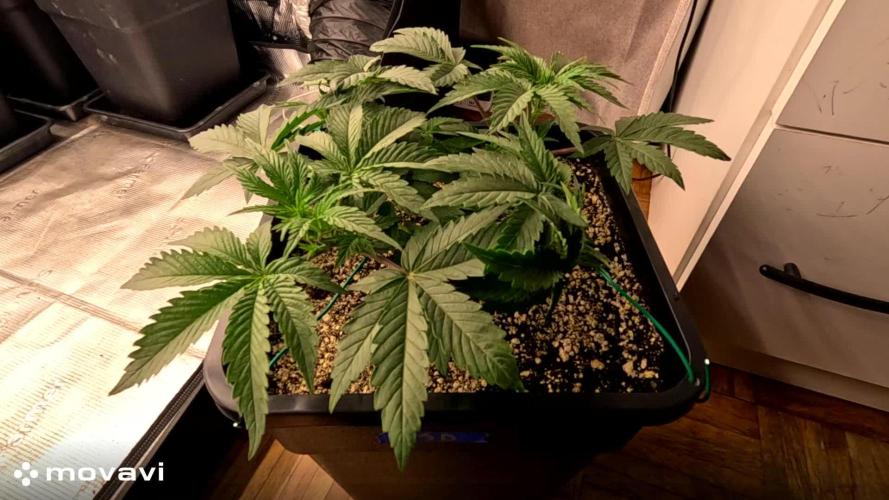
LSD - Barney's Farm
11L pots, 720W led, Remo Nutrients
"Bedroom setup"
3rd week of vegetation from 9.3.2026. to 15.3.2026.
This week i did topping, defoliation, and also wireing,
every day im spreading them by pulling wires.
Girls are healthy and took topping with no issue.
Take care and much love :)
ॐ

Likes
2
Share

@Oldwied
Follow
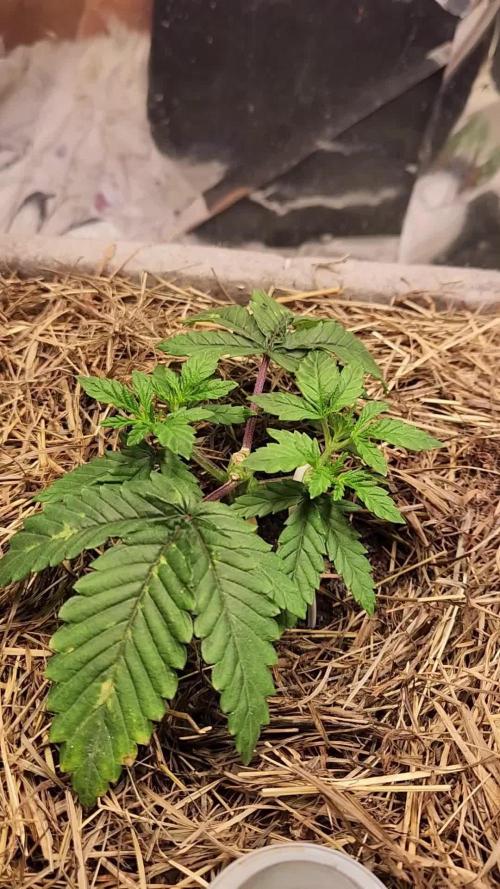
Day 25
Fotoshooting
Topping
Day 30
Fotoshooting
LST
Light Power: 60%
In the beginning of the week I topped the girl above the 2nd node. (The upper internodes did not grow uniformly.)
Since the side shoots were already well developed, the plant was topped twice.
The lush green is returning, and the little one has weathered the stress well.


Likes
105
Share


@StarLorr
Follow
Welcome to my autø Møøn Røck 2 Diary.
In this Diary:
Seeds: Sponsored by Ðivine Seeðs
Media: Pro~Mix HP *•ns
Nutrients: Remo Supercharged Kit *•ns
*•not sponsored
___________________________
Feeding:
Wed 13Nov: 2L Remo/Recharge pH'd 6.3
Sat 16Nov: 2L Remo/Recharge pH'd 6.5
___________________________
Buds are still puffing up and they look so yummy and that pinkish purple hue just turn me on😳😂
___________________________
Thanks for stopping by, likes and comments are appreciated!👊🏻😎
Keep on growin!
Keep on tokin!!!
😙💨💨💨💨💨

Processing
Likes
6
Share


@macrocefalo
Follow
With great joy I will start my second season growing cannabis. I hope to learn from some small mistakes from the first season where I was surprised by my performance as a first-time sailor cultivating the BlueDream strain. This season I left the 4 seeds of GorillaGlue 36hrs in a pot of water to break the dormancy. After that I used the napkin technique for more 42 hrs. So I put each one in a 5-gallon airpot, as they are automatic and go to harvest in the same pot. After 24hrs in the vase the first 2 little leaves came out. I made a homemade dome with a 2-gallon water bottle, cutting it into strips and lining it with plastic with some holes to keep the humidity high during this initial phase. We entered the first week of cultivation and unfortunately due to an oversight I got confused in the fertilizer table and clearly the dreaded overfert happened. I did a watering only with water to try to remove the excess fertilizer let's hope it works.

Likes
7
Share


@GrownyStark
Follow
It's hard to see any upward growth but the buds are getting thicker and ripening. The smell is getting more pungent. The smell eminates and tries to escape the tent when open. The more fresh air she gets the more smell comes out. Idk if I'm burning my trichromes but I have my light at 100 this week but still keeping temps low.
Likes
17
Share


@420DeepGrow
Follow
Gracias al equipo de Kannabia Seed, Marshydro, XpertNutrients y Trolmaster sin ellos esto no sería posible.
💐🍁 Moby Dick 🐋:
Criada a partir de dos parentales icónicos, como es el cruce de White Widow y una Haze pura G13, este choque de titanes provoca un híbrido que golpea a las puertas de las sativas más fuertes disponibles en el mercado.
Estamos ante una criatura impresionante en todos los sentidos, con ejemplares que florecen en solo 9-10 semanas en interior y arrojan un peso en lonja de 550 gr./m²
Al igual que su padre Haze, nuestra Moby Dick ofrece agradables notas cítricas, pero con efluvios de vainilla y eucalipto, una mezcla de aromas que genera una combinación intrigante, que puede llenar cualquier habitación con una fragancia inolvidable.
El sabor es muy parecido a su olor, con toques de limón agrio que harán que tu lengua cosquillee al inhalar, convirtiéndose lentamente en un humo dulce y terroso, con pinceladas de madera e incienso que se adhieren al interior de la boca al exhalar.
💡TS-3000 + TS-1000: se usaran dos de las lámparas de la serie TS de Marshydro, para cubrir todas las necesidades de las plantas durante el ciclo de cultivo, uso las dos lámparas en floracion para llegar a toda la carpa de 1.50 x 1.50 x 1.80.
https://marshydro.eu/products/mars-hydro-ts-3000-led-grow-light/
🏠 : Marshydro 1.50 x 1.50 x 1.80, carpa 100% estanca con ventanas laterales para llegar a todos los lugares durante el grow
https://marshydro.eu/products/diy-150x150x200cm-grow-tent-kit
🌬️💨 Marshydro 6inch + filtro carbon para evitar olores indeseables.
https://marshydro.eu/products/ifresh-smart-6inch-filter-kits/
💻 Trolmaster Tent-X TCS-1 como controlador de luz, optimiza tu cultivo con la última tecnología del mercado, desde donde puedes controlar todos los parametros.
https://www.trolmaster.com/Products/Details/TCS-1
🍣🍦🌴 Xpert Nutrients es una empresa especializada en la producción y comercialización de fertilizantes líquidos y tierras, que garantizan excelentes cosechas y un crecimiento activo para sus plantas durante todas las fases de cultivo.
Consigue aqui tus Nutrientes:
https://xpertnutrients.com/es/shop/
📆 Semana 2:
Fantástica semana, estan creciendo de una forma espectacular gracias a la ayuda de @marshydro, @xpertnutrients y @trolmaster.
Se puede apreciar un tercer nudo aunque la aplicación de cola de caballo y el estar en una maceta pequeña ha influido en el tamaño de ella, se recupera muy rápido 😁.
Esta semana espero trasplantar a la maceta definitiva.
Potencia de la lámpara: 50%

Likes
23
Share


@DevelGrow
Follow
Schöne Pflanze,auf 15-85 geerntet! Big Buds Verströmt einen schönen starken leicht fruchtig aber in Menge stinkenden kush Geruch! Beim Trimmen wer es kennt wie frische Baby 👀💩

Likes
24
Share


@Hawkbo
Follow
Autos are just starting to flower the photos are dying for some bigger pots. I've been trying to bring up the overall plant health in general since moving everything to a basement the temps are a little lower than ideal. I had a space heater delivered today and monitored the temps but they only went up to around 78°f I want it to be atleast 82°f ideally 85. The heater uses 1500 watt and only increased it about 2 or 3°. I dont think it's worth the extra cost for such little boost. I'm thinking about returning the heater and throwing a 1000w hps in one of the other tents and see if that will raise it anymore. Especially with LED and co2 higher temps would be very beneficial in veg and early flower but the room is so big its gunna be tough to pull off without killing me on electric costs. Any suggestions are welcome. I know this room does decent in flower but I havnt done much veg work down here and I'll have some autos growing this round so it's important I get it up.
Likes
1
Share


@BigGGrows
Follow
The buds did seem a little airy and fluffy after dry trim. Granted they were full of trichomes, although i do wish they were more dense. The plant did spend its last 5 weeks of flower outdoors in the greenhouse so possibly the extreme heat could have been the culprit. She is full of dark ember orange/red hairs and has super bag appeal. The smoke is smooth with a high that just smacks you about half way through the joint. The smoke was smooth and the high was very indica dominant with an initial hour of cerebal pleasure proceeding the later heavy high . Very unique and wonderful smell as she cures. The high is very strong and clear minded. Its good for an evening smoke in my opinion. Can be a heavy high but without the couch lock.

Likes
19
Share


@Ixnay
Follow
Couldn't help but take lots of photos this week..
Nuggets are really starting to fill out and the white hairs are beginning to brown.
Lots of new trichomes without heads and a few have turned milky.
Thought this would be done by now and I really need the space for my other girl thats currently stretching due to lack of light.
Considering that and also not wanting to harvest prematurely, I'm trying to decide when to start the 7-14 day flushing period, any advice would be HUGELY appreciated.
Thanks for stopping by 😎
