


Likes
Comments
Share


@KingSalomonsWeed
Follow
17.11. Day 43 Blüte 8
Hallo.
Sie ist jetzt die Größte im Zelt.
20.11. HST in diesem Fall habe ich ihre Makkaroni dicken Äste und Stamm zusammen gedrückt bis es Kracht und splittert.
21.11. Invasion der Thirpse Teil 4..
Die Antwort: Arnold Pyrolitenegger.
22.11. noch 51 Tage Blüte...(oh shit)
23.11. Pyrolytenegger. UND was ne Genetik. Der Stamm ist dick wie eine Maispflanze.

Likes
53
Share


@Roberts
Follow
Merlin Mintz Autoflower is growing great. She just started with her first pistils. She should start stretching very soon. She is looking really healthy, and grow well. I did some selective defoliation in center of the plant. I also been lst on branches as needed. Thank you Aeque Genetics, Spider Farmer, and Athena. 🤜🏻🤛🏻🌱🌱🌱
Thank you grow diaries community for the 👇likes👇, follows, comments, and subscriptions on my YouTube channel👇. ❄️🌱🍻
Happy Growing 🌱🌱🌱
https://youtube.com/channel/UCAhN7yRzWLpcaRHhMIQ7X4g
Likes
6
Share


@Barcelona_Farmers710
Follow
Se nos fue un poco de altura pero intentaremos arreglar el error farmers... al final quedo simplemente en podas apicales y de momento ramas muy finas. Iremos comentando el proceso Farmers!🍁


Processing
Likes
10
Share


@Drtomb
Follow
Just hit day 10 of flower.this net has about 20% touching the 2nd trellis. And about 70% almost touching.
One plant has a very big node spacing. Over all plants are healthy and have been given a second scarecrow method trim.

Likes
14
Share


@ConspiracyFly
Follow
Gorilla Cookies Auto (Fast Buds)
Keep getting fatter
Week 11....6 week of flowering (80 days)
It has 64 centimeters
16L
This Week - Defoliation
Godzilla Cookies (Herbies)
Keep getting fatter
Week 10 .... 3 week of flowering (70 days)
It has 71 centimeters
15L
This Week -
Gorilla Glue Auto (Herbies)
It has 35 centimeters
7 Week...2 Week of flowering (45 days)
This Week - LST - Defoliation


Likes
5
Share

@Phoenix667
Follow
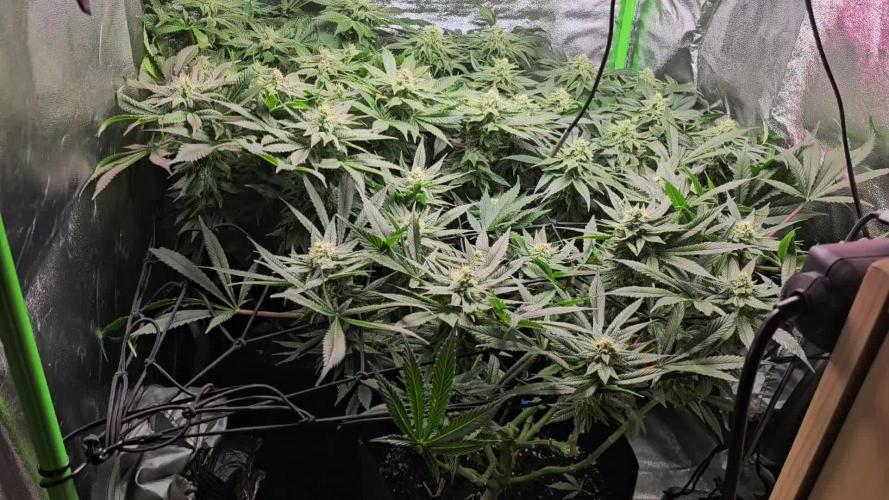
Looking really sexy those 3 ladys
I took the second net out, because ot had till this point, no purpose.

Likes
31
Share


@The_Bearded_Grower
Follow
Welcome to 📅 Day 1 of veg 3/15/2021 as you can see the seedling has grown a lot she had a 1 inch root sticking out the bottom already so I know the root starter was working. If you look close you can see she has her first true leaves and that's when I say day 1 of veg has started. I will do the video tomorrow
germination under the mars hydro TS 1000 was a dream the dimming gives it a hand up over my Aglex light. I am growing the plants side by side this one is under the TS 1000 and the other will be under the Aglex 1200 to see how they compare. I have high hopes for the TS 1000 🌱🌱🌱
Update 📅 Day 3 of veg 3/17/2021: she is coming along very nicely her first true leaves are getting very large. I have the TS 1000 putting out 13253 lux. I'm top feeding her for about the first 2 weeks so the roots get down in the soil far enough for the auto-pot to do its job
Update 📅 Day 6 of veg 3/20/2021 she is growing fast and strong under the TS 1000 the second set of leaves has started and progress is great I adjusted the lux down a bit

Likes
33
Share

@Smoke_Jabat
Follow
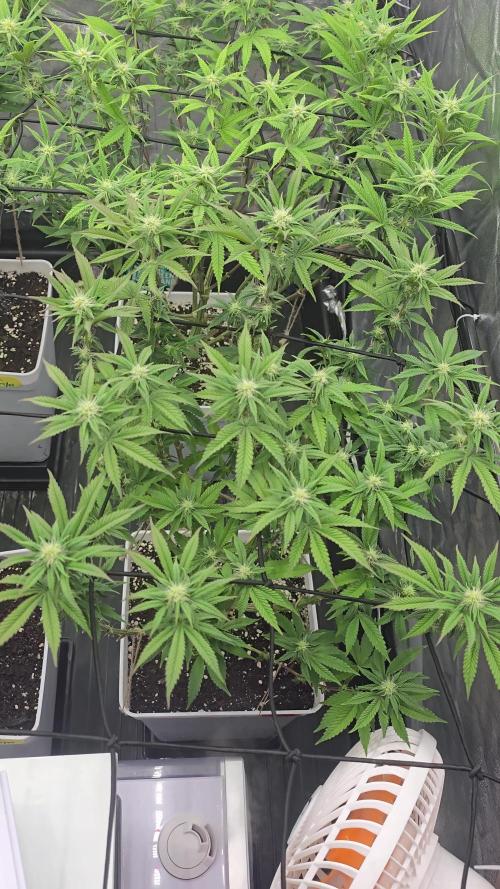
Tercera semana de floración! 🌺
Definitivamente se han dejado de tejer ramas en la red, las flores han detenido su estiramiento 📈 para centrarse en engordar. Se han apartado los ventiladores directos a las plantas y se han dejado moviendo aire por debajo de la red y por encima de las flores. El armario empieza a cojer un ligero aroma🍭.
También se ha realizado la defoliación final y agresiva ✂️ a final de la tercera semana.
Cada vez queda menos! 🐗🌰


Likes
6
Share

@Redweasel
Follow
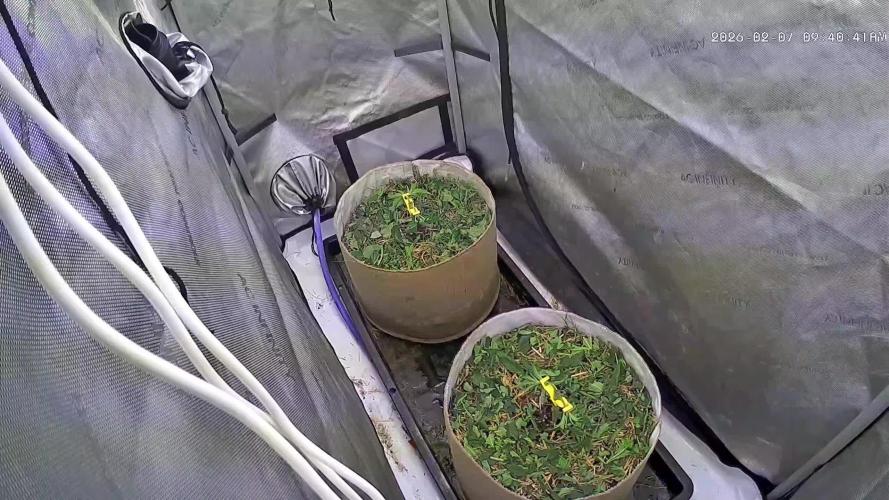
When attempting living soil in smaller containers, replenishing soil nutrients & refreshing biology often is an absolute necessity to keep root expansion & activity from stagnation. I top dress heavily every three weeks.
Total Tent Entry Time-40 min
Cover crop chop & dropped then integrated into existing straw mulch.
Top dress of 2 cups worm castings, 1 cup Build a Flower, 1/2 cup Craft Blend, 1/4 cup Kashi Gold, 2 tbsp Ocean Blend, 2 tbsp Kiss My Frass, blended together & mixed into mulch/cover crop layer.
6 cups of reclaimed & re-ammended soil, with fresh nematodes mixed in, used to cover mulch/cover crop/top dress layer of each pot.
Hand watered each container with 1/2 gallon plain 6.5 ph/11 ppm reservoir water, mixed with 1/2 tbsp each of Azos, coconut water powder, & quillaja saponaria extract powder.
Finally, added a 3/4 inch layer of fresh straw mulch that has been chopped to 1 inch lengths, & soaked in 3/4 gallons reservoir water mixed with 1/2 tsp each of coconut water powder, quillaja, & 1/4 tsp Recharge, giving me Azos at the root zone & recharge at the mulch level while keeping them apart.
DLI raised to 31
VPD raised to 0.90-0.95 kPa
Worm activity high in both containers & even saw some juveniles in the cap layer.
Expression #1
Height-5"
Width-14"×13"
-Week Prior-
Height-3 3/4"
Width-4"
Expression #2
Height-6.5"
Width-12"×11"
-Week Prior-
Height-6"
Width-4"
Week Total Entry Time-41 min
Likes
53
Share


@DogDoctorOfficial
Follow
Hello, my amazing green-thumbed friends! Welcome to the Week 1 flower report for our beloved P.C.R.s. The transition from veg to flower is a magical time, and our plants are already showing signs of their future glory. Let’s dive into the exciting details of this week!
Entering the Flower Stage
Our P.C.R.s have officially entered the flowering stage, and the transformation is already visible. The stretch has begun, and you can see the plants reaching up, preparing to produce those beautiful buds we’re all waiting for. This stage is all about supporting their growth and ensuring they have everything they need to thrive.
NutriSpray Magic
This week, we’ve been diligently spraying Aptus Holland NutriSpray, and the results are phenomenal. NutriSpray is like a spa treatment for our plants, providing essential micronutrients directly to the leaves. It helps with nutrient uptake, reduces stress, and boosts overall plant health. Our P.C.R.s are absolutely loving it, standing tall and proud with their leaves praying to the light.
Nutrient Transition
With the start of the flowering stage, we’ve made some important adjustments to our nutrient regimen. We’ve stopped using StartBooster and replaced it with TopBooster, which promotes flowering and bud formation. Additionally, we’ve introduced P-Boost, a phosphorus booster that enhances root development and flower production.
TopBooster: Encourages larger and more abundant flowers.
P-Boost: Provides essential phosphorus for robust root and flower development.
NutriSpray: Continues to support overall plant health and stress reduction.
Optimal Conditions
Maintaining the perfect environment is crucial as we move into the flowering stage. Our TDS is now at 360, with a pH of 5.9 and a temperature of 21°C for watering. These conditions are optimal for nutrient uptake and overall plant health, ensuring our P.C.R.s have everything they need to produce those beautiful, resinous buds.
Care and Attention
Paying close attention to our plants during this stage is key. Regularly inspecting for any signs of stress or nutrient deficiencies and adjusting care as needed ensures our plants stay happy and healthy. The love and care we put into this process are reflected in the vibrant health of our plants.
In Conclusion
Week 1 of flowering has been all about setting the stage for a bountiful harvest. With the help of Aptus Holland NutriSpray, TopBooster, and P-Boost, along with our careful attention, our P.C.R.s are off to a fantastic start. The excitement is building, and I can’t wait to see how they develop in the coming weeks.
Shout Outs
A huge shout out to @aptusholland, our main sponsor, for their incredible products that keep our plants thriving. Another big thank you to @artgenetix for creating the phenomenal P.C.R. strain. And to the wonderful community at Grow Diaries and all our followers, your support and enthusiasm keep us going. Let's continue to grow together!
Until next time, happy growing, and may your gardens be full with love and green!
Genetics - P.C.R. @Art_Genetix_Team https://artgenetix.world/
Nutricion @aptusholland https://aptus-holland.com/
LED Power @Lumatek and @viparspectra
As always thank you all for stopping by , for the love and for it all, i fell blessed to have you all with me for one more love journey Thank you Thank you Thank you , you guys are great and have been amazing , thank you for everything !
#aptus #aptusplanttech #aptusgang #aptusfamily #aptustrueplantscience #inbalancewithnature #trueplantscience #dogdoctorofficial #growerslove
With true love comes happiness , Always believe in your self and always do things expecting nothing and with an open heart , be a giver and the universe will give back to you in ways you could not even imagine so !
Growers love to you all

Likes
17
Share


@DudeGrowsWeed
Follow
6’-4” & 5’-8” as of today, 6’-0” average height.
These ladies are beautiful! Everyone who comes by the house just stops and stares when they get near my garden. So do I 👍🤣
I had to move some plants outdoors from my indoor grow due to losing the battle to high heat and humidity. Two are super close to harvest, one might get cut over the weekend. Feel free to comment and let me know what you would do. Thanks!


Likes
10
Share


@Chubbs
Follow
Weekly update for these lovely ladies. They smell like a fresh picked Apricot and the flowers are dense to the touch. Half of them are done so they'll be coming out this week to be harvested. I'm excited as the terps on this strain checks all the boxes for me. All in all Happy Growing.
Likes
9
Share


@GrowmieDeLaStreet
Follow
QCS me déçois une fois de plus. Elle a été testé à 12% au lieu des +20% indiqués sur le site. Les fleurs suintait de la gomme à la fin et je ne sais pas trop c'est dû à quoi.
Je les fait fleurir pour 9 semaines, 65 jours et les trichomes apparaissait toujours clair

Likes
128
Share


@PapaNugs
Follow
Constantly taking leaves off all these girls. Trying to make space for those buds! These are some leafy genetics overall but some are starting to change color nicely for week six of flower! I checked some of the trichomes but they aren't close to ready so I didn't snap any pictures of those. But some good trichomes production from them.
Got the UVB 310 in full effect right now at 4 hours. Will be boosting up to six tomorrow and continue to push for the next two weeks.
Now with some updates pictures of the trichomes at day 47. Almost there!

Likes
5
Share


@Lazuli
Follow
She has smaller flowers this time but more dense, purple fade at the end that indicates shes very blueberry


Likes
17
Share

@masterofsmeagol
Follow
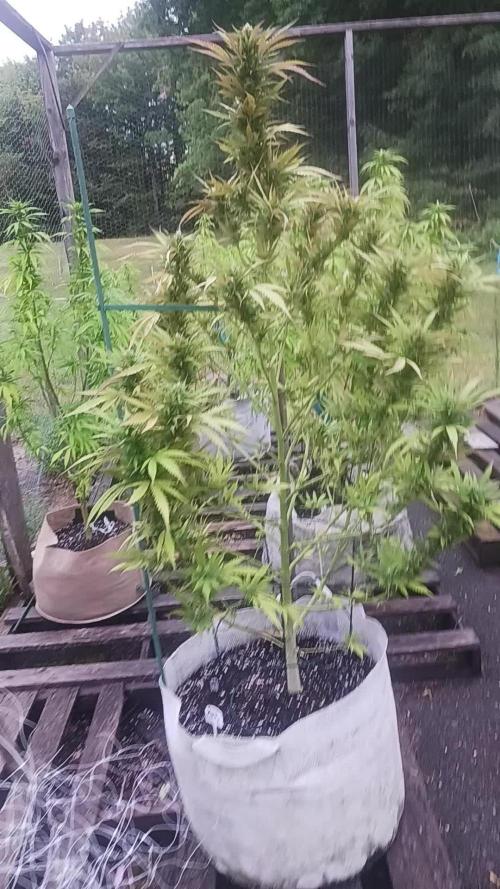
8/23 I WATERED THE NATURAL MK ULTRA AND THE 10TH PLANET IN THE BACK WITH A GALLON AND THE TWO TENS SPLIT A GALLON. It's hotter today and the wind is picking up. I wish I had gotten rid of that plant when I thought to. Oh well. I'm going to have to bite the bullet and treat things. Smell is increases as well as flower size. However I'm noticing more leaves that are yellowing and falling off. Smell has intensified. The special kush in late flower doesn't seem to be producing trichomes like it should. Or maybe it's still early. I see some but by this time I would think it would be frosty as hell! It's rained like once this summer. I've put tons of work into defoliating. I'm not sure if I'll try a controlled spray trying to avoid buds or if I should use a sponge and just hit every leaf. At least I'm seeing that the buds are still expanding and smelling despite these invisible Bastards. It's not like I see them. Even my traps only caught like one. I'll update as I go.
EDIT: WATERED THE TENTH PLANET AND THE LATE SOECIAL KUSH 1 GAL. PLAN ON FEEDING TOMORROW. I DID A SHIT TON OF DEFOLIATION. I DONT SEE ADULT THRIPS BUT I SEE THE EGGS AND SHIT IN THE CREVICE AND SOMETHING IS COMING AND EARING SMALL LOWER FOLIAGE. I RIPPED TWO INTERIOR BRANCHES OFF THE PLANTS I TREATED BEFORE WITH CITRIC ACID BECAUSE I FOUND A COUPLE STOPS OF MOLD ON THE STEM. AFTER RESEARCHING THRIPS WITH A.I. UNTIL IT LITERALLY CHANGED PROTOVAL AND STOPPED HELPING ME SAYING IT DANT HELP CULT8VATE CANNABIS AFTER GIVING ME SEVERAL DIFFERENT INSTRUCTIONS AND OPTIONS. I SCREENSHOTTED THEM THOUGH. I USED THE SAME MIXTURE OF CITRIC ACID AMD DAWN ONLY HALF STRENGTH AND HIT THE 10TH PLANET AND PINK KUSH THAT ARE PATIENT ZERO. THEN I TOOK A SPONGE AND EITHER DEFOLIATED OR WIPED THE LEAVES WITH A SPONGE AND SAME CONCOTION ON THE SPECIAL KUSH IN THE TEN. I DEFOLIATED MORE AND THEN "SPOT TREATED" A FEW LEAVES ON A BOTTOM BRANCH OF THE 10TH PLANET WITH MITE X. I'M WAITING UNTIL THE MORNING TO SEE THE RESULTS AND BEFORE I MOVE FORWARD. I HAVE ORGANOCIDE BEE SAFE AND I KNOW IT WORKS GOOD BUT IT SMELLS LIKE SHIT. IM HOPING ILL FIGURE THIS OUT.
8/24 Didn't have time to do a video or take any pictures. I pit a lot of work in the garden yesterday. I removed a couple small branches that had mold on the stem. If I had listened to my intuition and moved that plant (instead of listening to my dad) I probably could've negated this mess. Windy as hell yesterday. Maybe that's why I don't see mich damage from the thrips. The runt in the 50 has some silver ingredients on it. I'm considering using spinosad. Those are way earlier in flower and that shit WORKS. WATERED TODAY;BIG MK ULTRA 1.5, THREE IN THE BACK ROW, CHEMDOG AND TENTH PLANET ALL GOT 1 GALLON. THE TWO TENS SPLIT A GALLON. I THEN FED EVERYTHING WITH A QUART OF FOOD. I'll keep an eye out on the dosage and see what the can handle. I left out plant doctor as I'm dealing with thrips. Took a leaf that looked like sep off the pink kush in the 50 with half used soil. I didn't have much time to look around but I will when I get back and I'll put some vids/pics up. The plants that I treated with citric acid looked no worse for the wear and actually BETTER than they hadcthe day before. The other 10th planet and the Pink kusg in the ten are the worst. If I can't beat it I may junk them. I'm planning on treatingvtge plants I didn't yesterday tonight. I may use a different treatment I'm not sure.
EDIT: Went back over and took a few pics and a video. I defoliated a SHIT TON of leaves. I can just tell the ones that the thrips have been sucking and laying eggs. It's windy as hell. Plants are going crazy. I'm wondering if the wind will hurt the thrips. Maybe I should've just stood with the wind at my back and throw a buNch of D.E. in the air and have it coat the plants. I'm scared of using d.e. because it absorbs so much water. It's like 80%! The year I had fusarium I put a bunch of d.e. on the soil and it retained water like a mofo. The plants I treated showed no I'll effects. I'm th8nkobg I'm going to remove patient zero and isolate it. And I'm considering using spinosad on the pink kush. What would you do? If you had to use something in the middle of flower or loss your crop which would you choose? I'll probably just use citric acid or the rubbing alcohol. I don't know. I'll keep it updated.
UPDATE: WENT OVER AROUND FIVE AND DEFOLIATED. I CHECKED THE PLANTS I TREATED AND THE ONE IN THE TEN HAD A FEW LEAVES THAT LOOKED LIKE SEP. ITS EXTREMELY WINDY SO I DECIDED AGAINST SPRAYING TONIGHT. I LOOKED ONLINE FOR PREDATORS BUT IT APPEARS TO BE TO LATE OR EXPENSIVE. I MAY LOOK FOR AN OVERNIGHT SHIPMEBT OF LOST COAST PLANT THERAPY OR SOMETHING BUT WILL THAT WORK SUBSTANTIALLY BETTER THAN A DIY VERSION? ILL EITHER ORDER SOMETHING TONIGHT OR PICK UP THE LAST FEW INGREDIENTS I NEED TOMORROW. LOOKING THROUGH THE GARDEN THOUGH EVERYTHING LOOKS GREAT! I WISH THE TRICOMES WOULD DEVELOP A LITTLE FASTER ON THE EARLY SPECIAL KUSH BUT IT IS WHAT IT IS. THESE GIRLS HAVE BEEN THROUGH HELL AND BACK ARE REAL TROOPERS.
8/25 I thought about putting the late flowering special kush in the barn because it looks cloudy and we are supposed to get rain. I chose to wait until I got back but it started raining already. It's not raining right now but it will probably start again. I'm just worried because I haven't staked the branches. It's a strong plant though. I'll check on her when I get back. I'm looking for some Castille soap this morning and the rest of the things to make a diy lost coast plant therapy. The plants look good though and the flowers are really stacking up. I don't see that silvery shit so it doesn't look like it's spreading real fast. The pink kush is in early flower and I'm considering spinosad for them. They have a long ways to go. I'm not sure. I may just use the diy spray. I'm not sure.
EDIT: WENT OVER AFTER SUN DOWN AND MIXED UP THE DIY GREEN CLEANER/LCPT. I USED RUBBER GLOVES AND TREATED THE HUGE MK ULTRA, THE TWO TENS AND THE REVEG 10TH PLANET. I ONLY TREATED FOUR PLANTS. I HAD A PRETTY GOOD METHOD BUT IT WAS SLOW. I PUT THE LEAF BETWEEN MY GLOVED HAND AND SPRAYED THAN RAN THE LEAF THROUGH MY FINGERS TO AVOID FLOWER. ON PLANTS WITH SMALLER FLOWERS I WAS ABLE TO JUST FOLD THE LEAVES UPWARD AND GET THE BOTTOMS. ILL CHECK AND SEE HOW IT WORKED IN THE MORNING AND GO FROM THERE. WE GOT SOME GOOD RAIN TODAY. IM WORRIED ABOUT MOLD THOUGH. THATS WHY IM HESITABT TO SPRAY BUT SOME FLOWER IS BETTER THAN NONE.


Likes
3
Share


@Unculti_responsable
Follow
Bueno esta semana se amoldaron muy bien las ramas a la malla ya se levantaron y están engordando muy bien tiraron bastante resina y bienes muy bien, esta va a ser la última semana se fertilizantes después de esta semana vamos a empezar con el lavado de raíces, esperemos que sigan así de bien !

Likes
10
Share


@TommyBVRSA75
Follow
Veamos, cosas importantes en la semana.
1- Automaticas y sus caprichos. Te dan las indicaciones en los bancos semilleros que del día de germinación al día de cosecha, es X (pongamos 70 días) y pese a que sea un referente de la duración del ciclo, las automáticas por su genética ruderal, hacen la eclosión de floración y ya he tenido casi todo, empezando por grows que han hecho floración en el día 30 (en un ciclo previsto de 70) y en los 40 días finales, cosas tan increíbles como floración mínima a menos de 4 semanas de la previsión de cosecha y después, como que, literalmente "explotan" y forman cogollos impresionantes en 20 días.
2- Otras por su parte, son muy lineares en sus procesos y es incluso, como si pese a su genética ruderal, pudieran tener influencia de exposición luminosa (lo que no ocurre seguramente) y que pasa por los periodos puedan venir a ocurrir de modo muy seguro - un vegetativo para un ciclo total de 70 dias, por ejemplo, que tiene sus 30 días ciertos y después una floración que va hasta el final de ciclo con crecimiento muy firme y en linea al tiempo de duración - los primeros pistilos, después el desarrollo de pistilos y hojas para estructura de calixes y después, engorda de cogollos con resinas y terpenos- pero todo ocurriendo de modo muy proporcional y sin "tirones" de golpe como os dije por ejemplo, en el tópico anterior.
3- También ya he tenido algún que otro grow de automática, que casi no ha tenido expresión vegetativa y después mientras crecía la floración, se produjo también tirón vertical, casi como si el ciclo tuviera un vegetativo de principio a fin (y eso sin por ejemplo, agregarle en nutrición de floración, tan solo un mililitro de nitrógeno, en periodo supuestamente de floración).
4 - Conclusiones : Todavía para mí es complejo, entender la expresión fenotípica de las automáticas, pero para mí algo se vuelve sencillo de observar y concluir y que es la falta tremenda de estabilidad genética que muchas de las automáticas (incluso las de los bancos semilleros "estrella" y que se gastan millonadas en marketing de ventas) y eso pasa, por qué las reglas del juego para los bancos de semillas, es poner a cada medio año, fotos para venta de cogollos a quien les llamo "cogollos hamburguesería" pues en las fotos, los comes por colores y la gente también y de manera muy atontada se pone en grows de muchas de las automáticas que, hoy día venden lo que considero tasas de THC tóxicas, - para mi, una cepa con un THC del 16% y un buen entourage con otros canabinóides, es mejor y más segura para la salud, que cosas que por ahí se "regalan" con tasas de THC muy por encima del 30% y a mí siempre me gustó que el humo, me sea placentero y que pueda desarrollar actividad, en vez de quedarme tumbado y en paranoia delirante.
4 - En los más técnico...semana de defoliación y defoliación muy a critério pues era muy notorio que por las reducidas dimensiones del área de los grows automáticos , en las partes inferiores había una cantidad muy significativa de los que se designan "ramas vampiras" y de hojas fan que en estos momentos no más que eran limitantes a los aportes de oxígeno/dióxido carbónico y concentración de humedad en el limite físico del sustrato con la atmosfera.
A los que están empezando siempre daros la información que solo hay que crear condiciones para que el tercio superior de las ramas pueda al final, convertirse en espacio de floración. Los tercios inferiores de los grows, deben pues estar limpios de ramas finas que no cogen luz ó hojas fan que por el mismo motivo solamente estorban y tienen implicaciones muy serias, en lo tocante a productividad final. Por lo cual, las "vampiras" hay que removerlas cuando las ramas donde estén insertas ya tengan grosor y resistencia para que las "vampiras" sean arrancadas sin por ejemplo haber secado de la rama.
ESTE PROCEDIMIENTO EN INDOOR - RETIRADA DE RAMAS "VAMPIRAS" Y HOJAS FAN EN LIMITE BAJO DEL GROW- ES OBLIGATORIA CARA A OBTENER COGOLLOS DE GRAN CALIDAD Y TAMAÑO (y no confundir defoliación, con FIMming o con cortes apicales pues las automáticas en regla se resienten tremendamente y pueden incluso "cargarse" con maniobras que impliquen alto estrés).
5 - En lo más técnico y por qué no he sido aún muy específico en la forma de nutrición con los nutrientes/aportes de Top Crop:
* De lo que podéis ver en la nutrición, cada uno de los nutrientes solo se usa una vez a la semana y hago en regla una tabla donde a cada día preparo según el grow la solución. Así y por ejemplo;
Lunes - Agua 1L (agua limpia)
Martes - Big One 2ml/L
Miércoles - Top Candy 2ml/L
Jueves - Água 1L (agua limpia)
Viernes - Top Auto 3,5 ml/L
Sábado -Agua 1L (agua limpia)
Domingo - Agua 1L (agua limpia)
Lo de Top Crop en linea del control, se basa muchísimo en las tasas de PH y si la recomendación son tasas del 5,8-6,2, la experiencia me ha enseñando que si, esos son los límites en vegetativo...pero en floración, yo mantengo el limite entre 6,4 -6,7 y para las automáticas, empezar con más de 6,2 y de empiezo de floración a fin de ciclo, el PH ideal es siempre más de 6,6 y nunca sobrepasando el 6,8.
Mucha atención por qué cuando toque a darle:
- cuatro veces en el total de ciclo de grow, el maravilloso Top Mass, por ser uno de los mejores aportes de silicio en el mercado y por su formulación que permite una absorción del silicio de manera muy efectiva
- tres veces en todo el ciclo del Barrier (también silicio y aporte de aminoácidos y quelatos base y muy efectivo para prevención de estrés de todos los tipos y de agresiones de plagas (como siempre preparo suelo con mycorrizas, trichoderma y bacterias de recaptación atmosférica, no tengo memoria de alguna plaga que pueda haber tenido, desde que las mycorrizas y la trichoderma son puestos en el sustrato)
- el CalMag, que por ele tipo de agua se incluye más o menos veces. En regla y en lo que llevo de ciclo, tanto en automáticas cuanto fotodependientes, solo he usado un par de veces. El CalMag cuando hagas uso de aguas blandas (con poca o ninguna mineralización); cuando trabajes sobre todo con coco o otros sustratos en esta linea y con tendencia a gran porosidad y poca retención ó y ahora os explico el por qué del uso esta semana, pues cuando por ejemplo, se hace una mayor inclusión de tasas de PK (fósforo y potasio), el magnesio y cálcio del CalMag, mejoran el rendimiento de la "bomba" de captación del PK y la integración de la mayor cantidad posible de estos dos, es la diferencia entre cogollos bellos, gordos y resinosos ó media docena "vellos" acurrucados.
- Habéis visto a igual que incluso con los nutrientes de Top Crop y su inductor de floración que es el Top Bloom, para mí hay cosas que no cambió ni lo dejo a segundo plano y el Delta 9 de Cannabiogen es muchísimo más que tan solo un inductor de floración más. Es un producto de altísima calidad, con una de las más equilibradas composiciones alguna vez pensada y además una forma perfecta de compensar deficits, pues si formular de aminoácidos, de azúcares y de compensación de macro y micro elementos es inmejorable. A los que habéis ya trabajado y lo conocéis, sabéis cómo se usa y en floración plena, nada de daño vendrá, si en un periodo de un mes a cada diez dias por fertirrigación (en total tres veces) sacáis de riego con Delta 9, vuestros grows.
6 - A lo largo de la semana :
Temp. Maxima (período luces encendidas) : de 23 a 26ºC
Temp. Mínima (período luces desconectadas) : de 20 a 22ºC
Variaciones Humedad Relativa : entre 68% y 89%
Ratio CO2 ambiente : de 406 (min.) a 568 (max.)
Y aquí tenéis lo más destacado de la semana...que el Dios Jah nos proteja siempre de todos los peligros -en grow y fuera de el-
420 siempre y por el derecho al cultivo de recreación sin amago de ganancias y la Cannabis como producto de sustentabilidad; uso médico y de recreación y uso positivo.
Green Greets a todos los hermanos.
Tom