Likes
Comments
Share
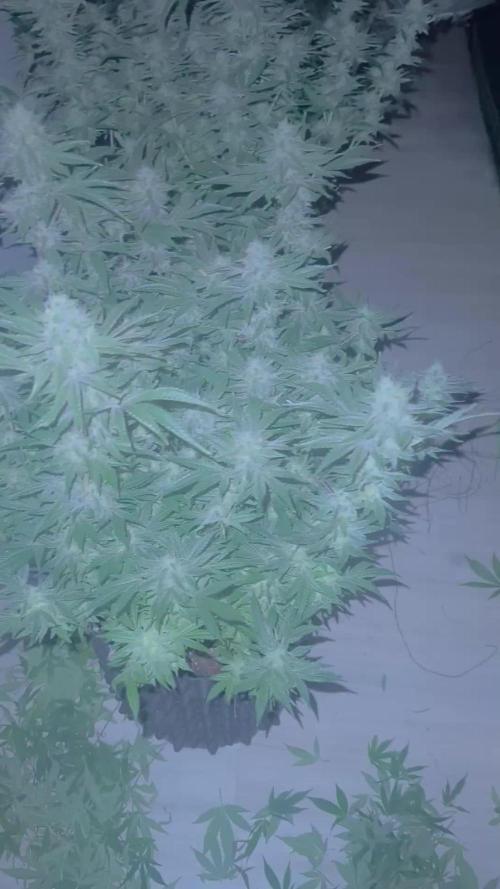
Week 12 for Space Panda by Atlasseed, This one is a hard one for me because i love love her leaf structure/colour, yet her actual growing structure im not a fan of especially for mainlining as she gets barely any side growth. Hopefully after the stress of this last topping she will get her shit together😇😂 Because of the messed up light schedule + massive shifts of temps from 28+ to 6... outside the tent so really for 7 hours their growth is completely stunted, but I'm making due with what I have 😂
Likes
4
Share
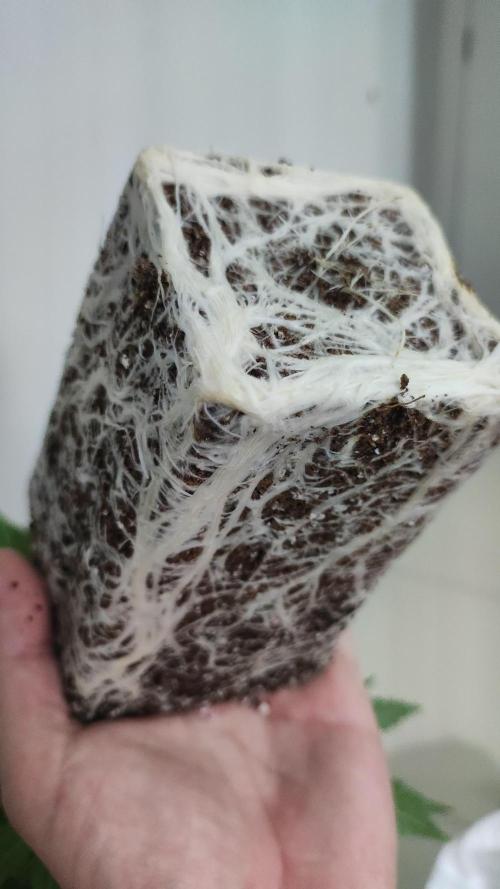
Made hydroponics system myself. Very easy. I should have fed them with voodoo juice if They were in plastic cups. It took the roots so long to grow in regular soil.
Likes
2
Share
Likes
2
Share
@HighWay36
Follow
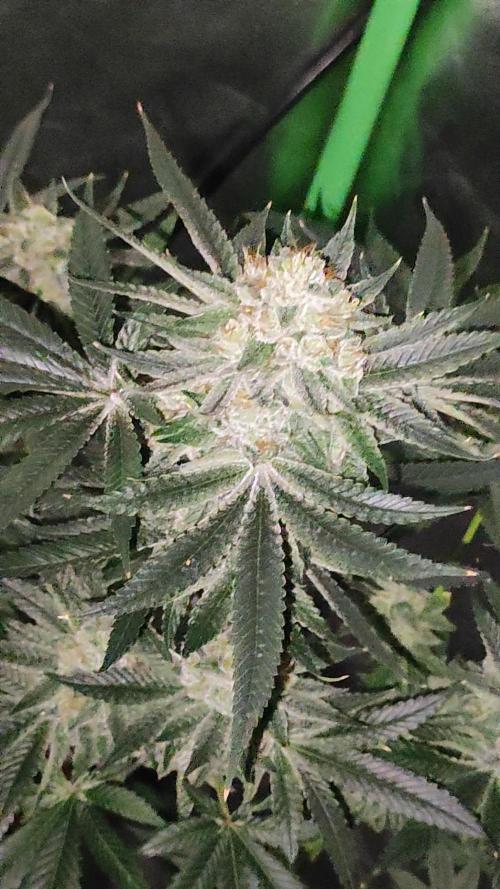
some of the frostiest buds i ever seen, for an experiment, well done. all friends said that its looking amazing, on the nose some erthy terps followed by massiv sweet,acidic and tropical notes.the smoke is light and plessant
Likes
52
Share
Lacewings seemed to have mostly killed themselves by flying into hot light fixtures. I may have left the UV on which was smart of me :) Done very little to combat if anything but make a sea of carcasses, on the bright side its good nutrition for the soil. Made a concoction of ethanol 70%, equal parts water, and cayenne pepper with a couple of squirts of dish soap. Took around an hour of good scrubbing the entire canopy. Worked a lot more effectively and way cheaper. Scorched earth right now, but it seems to have wiped them out almost entirely very pleased. Attempted a "Fudge I Missed" for the topping. So just time to wait and see how it goes. Question? If I attached a plant to two separate pots but it was connected by rootzone, one has a pH of 7.5 ish the other has 4.5. Would the Intelligence of the plant able to dictate each pot separately to uptake the nutrients best suited to pH or would it still try to draw nitrogen from a pot with a pH where nitrogen struggles to uptake? Food for stoner thought experiments! Another was on my mind. What happens when a plant gets too much light? Well, it burns and curls up leaves. That's the heat radiation, let's remove excess heat, now what? I've always read it's just bad, or not good, but when I look for an explanation on a deeper level it's just bad and you shouldn't do it. So I did. How much can a cannabis plant absorb, 40 moles in a day, ok I'll give it 60 moles. 80 nothing bad ever happened. The answer, finally. Oh great........more questions........ Reactive oxygen species (ROS) are molecules capable of independent existence, containing at least one oxygen atom and one or more unpaired electrons. "Sunlight is the essential source of energy for most photosynthetic organisms, yet sunlight in excess of the organism’s photosynthetic capacity can generate reactive oxygen species (ROS) that lead to cellular damage. To avoid damage, plants respond to high light (HL) by activating photophysical pathways that safely convert excess energy to heat, which is known as nonphotochemical quenching (NPQ) (Rochaix, 2014). While NPQ allows for healthy growth, it also limits the overall photosynthetic efficiency under many conditions. If NPQ were optimized for biomass, yields would improve dramatically, potentially by up to 30% (Kromdijk et al., 2016; Zhu et al., 2010). However, critical information to guide optimization is still lacking, including the molecular origin of NPQ and the mechanism of regulation." What I found most interesting was research pointing out that pH is linked to this defense mechanism. The organism can better facilitate "quenching" when oversaturated with light in a low pH. Now I Know during photosynthesis plants naturally produce exudates (chemicals that are secreted through their roots). Do they have the ability to alter pH themselves using these excretions? Or is that done by the beneficial bacteria? If I can prevent reactive oxygen species from causing damage by "too much light". The extra water needed to keep this level of burn cooled though, I must learn to crawl before I can run. Reactive oxygen species (ROS) are key signaling molecules that enable cells to rapidly respond to different stimuli. In plants, ROS plays a crucial role in abiotic and biotic stress sensing, integration of different environmental signals, and activation of stress-response networks, thus contributing to the establishment of defense mechanisms and plant resilience. Recent advances in the study of ROS signaling in plants include the identification of ROS receptors and key regulatory hubs that connect ROS signaling with other important stress-response signal transduction pathways and hormones, as well as new roles for ROS in organelle-to-organelle and cell-to-cell signaling. Our understanding of how ROS are regulated in cells by balancing production, scavenging, and transport has also increased. In this Review, we discuss these promising developments and how they might be used to increase plant resilience to environmental stress. Temperature stress is one of the major abiotic stresses that adversely affect agricultural productivity worldwide. Temperatures beyond a plant's physiological optimum can trigger significant physiological and biochemical perturbations, reducing plant growth and tolerance to stress. Improving a plant's tolerance to these temperature fluctuations requires a deep understanding of its responses to environmental change. To adapt to temperature fluctuations, plants tailor their acclimatory signal transduction events, specifically, cellular redox state, that are governed by plant hormones, reactive oxygen species (ROS) regulatory systems, and other molecular components. The role of ROS in plants as important signaling molecules during stress acclimation has recently been established. Here, hormone-triggered ROS produced by NADPH oxidases, feedback regulation, and integrated signaling events during temperature stress activate stress-response pathways and induce acclimation or defense mechanisms. At the other extreme, excess ROS accumulation, following temperature-induced oxidative stress, can have negative consequences on plant growth and stress acclimation. The excessive ROS is regulated by the ROS scavenging system, which subsequently promotes plant tolerance. All these signaling events, including crosstalk between hormones and ROS, modify the plant's transcriptomic, metabolomic, and biochemical states and promote plant acclimation, tolerance, and survival. Here, we provide a comprehensive review of the ROS, hormones, and their joint role in shaping a plant's responses to high and low temperatures, and we conclude by outlining hormone/ROS-regulated plant-responsive strategies for developing stress-tolerant crops to combat temperature changes. Onward upward for now. Next! Adenosine triphosphate (ATP) is an energy-carrying molecule known as "the energy currency of life" or "the fuel of life," because it's the universal energy source for all living cells.1 Every living organism consists of cells that rely on ATP for their energy needs. ATP is made by converting the food we eat into energy. It's an essential building block for all life forms. Without ATP, cells wouldn't have the fuel or power to perform functions necessary to stay alive, and they would eventually die. All forms of life rely on ATP to do the things they must do to survive.2 ATP is made of a nitrogen base (adenine) and a sugar molecule (ribose), which create adenosine, plus three phosphate molecules. If adenosine only has one phosphate molecule, it’s called adenosine monophosphate (AMP). If it has two phosphates, it’s called adenosine diphosphate (ADP). Although adenosine is a fundamental part of ATP, when it comes to providing energy to a cell and fueling cellular processes, the phosphate molecules are what really matter. The most energy-loaded composition for adenosine is ATP, which has three phosphates.3 ATP was first discovered in the 1920s. In 1929, Karl Lohmann—a German chemist studying muscle contractions—isolated what we now call adenosine triphosphate in a laboratory. At the time, Lohmann called ATP by a different name. It wasn't until a decade later, in 1939, that Nobel Prize–-winner Fritz Lipmann established that ATP is the universal carrier of energy in all living cells and coined the term "energy-rich phosphate bonds."45 Lipmann focused on phosphate bonds as the key to ATP being the universal energy source for all living cells, because adenosine triphosphate releases energy when one of its three phosphate bonds breaks off to form ADP. ATP is a high-energy molecule with three phosphate bonds; ADP is low-energy with only two phosphate bonds. The Twos and Threes of ATP and ADP Adenosine triphosphate (ATP) becomes adenosine diphosphate (ADP) when one of its three phosphate molecules breaks free and releases energy (“tri” means “three,” while “di” means “two”). Conversely, ADP becomes ATP when a phosphate molecule is added. As part of an ongoing energy cycle, ADP is constantly recycled back into ATP.3 Much like a rechargeable battery with a fluctuating state of charge, ATP represents a fully charged battery, and ADP represents a "low-power mode." Every time a fully charged ATP molecule loses a phosphate bond, it becomes ADP; energy is released via the process of ATP becoming ADP. On the flip side, when a phosphate bond is added, ADP becomes ATP. When ADP becomes ATP, what was previously a low-charged energy adenosine molecule (ADP) becomes fully charged ATP. This energy-creation and energy-depletion cycle happens time and time again, much like your smartphone battery can be recharged countless times during its lifespan. The human body uses molecules held in the fats, proteins, and carbohydrates we eat or drink as sources of energy to make ATP. This happens through a process called hydrolysis . After food is digested, it's synthesized into glucose, which is a form of sugar. Glucose is the main source of fuel that our cells' mitochondria use to convert caloric energy from food into ATP, which is an energy form that can be used by cells. ATP is made via a process called cellular respiration that occurs in the mitochondria of a cell. Mitochondria are tiny subunits within a cell that specialize in extracting energy from the foods we eat and converting it into ATP. Mitochondria can convert glucose into ATP via two different types of cellular respiration: Aerobic (with oxygen) Anaerobic (without oxygen) Aerobic cellular respiration transforms glucose into ATP in a three-step process, as follows: Step 1: Glycolysis Step 2: The Krebs cycle (also called the citric acid cycle) Step 3: Electron transport chain During glycolysis, glucose (i.e., sugar) from food sources is broken down into pyruvate molecules. This is followed by the Krebs cycle, which is an aerobic process that uses oxygen to finish breaking down sugar and harnesses energy into electron carriers that fuel the synthesis of ATP. Lastly, the electron transport chain (ETC) pumps positively charged protons that drive ATP production throughout the mitochondria’s inner membrane.2 ATP can also be produced without oxygen (i.e., anaerobic), which is something plants, algae, and some bacteria do by converting the energy held in sunlight into energy that can be used by a cell via photosynthesis. Anaerobic exercise means that your body is working out "without oxygen." Anaerobic glycolysis occurs in human cells when there isn't enough oxygen available during an anaerobic workout. If no oxygen is present during cellular respiration, pyruvate can't enter the Krebs cycle and is oxidized into lactic acid. In the absence of oxygen, lactic acid fermentation makes ATP anaerobically. The burning sensation you feel in your muscles when you're huffing and puffing during anaerobic high-intensity interval training (HIIT) that maxes out your aerobic capacity or during a strenuous weight-lifting workout is lactic acid, which is used to make ATP via anaerobic glycolysis. During aerobic exercise, mitochondria have enough oxygen to make ATP aerobically. However, when you're out of breath and your cells don’t have enough oxygen to perform cellular respiration aerobically, the process can still happen anaerobically, but it creates a temporary burning sensation in your skeletal muscles. Why ATP Is So Important? ATP is essential for life and makes it possible for us to do the things we do. Without ATP, cells wouldn't be able to use the energy held in food to fuel cellular processes, and an organism couldn't stay alive. As a real-world example, when a car runs out of gas and is parked on the side of the road, the only thing that will make the car drivable again is putting some gasoline back in the tank. For all living cells, ATP is like the gas in a car's fuel tank. Without ATP, cells wouldn't have a source of usable energy, and the organism would die. Eating a well-balanced diet and staying hydrated should give your body all the resources it needs to produce plenty of ATP. Although some athletes may slightly improve their performance by taking supplements or ergonomic aids designed to increase ATP production, it's debatable that oral adenosine triphosphate supplementation actually increases energy. An average cell in the human body uses about 10 million ATP molecules per second and can recycle all of its ATP in less than a minute. Over 24 hours, the human body turns over its weight in ATP. You can last weeks without food. You can last days without water. You can last minutes without oxygen. You can last 16 seconds at most without ATP. Food amounts to one-third of ATP production within the human body.
Likes
38
Share
Day 106 12/25/2021 being of a new week and this will be more than likely the last week this lady gets any nutrients thinking Wednesday. After that will start flush with collected rain water. After checking trichomes they were about 85% cloudy about 10% clear and 5% amber which is right where she should be since the end is coming fast. Day 110 12/29/2021- Started flush today and will continue to just feed rain water until next Wednesday. Will cut her down next Friday 01/07/2022.
Likes
6
Share
@Ninjabuds
Follow
This weather's been crazy! We've been stuck in this deep freeze for over a week now. The temperature hasn't climbed above freezing for like 10 days – it's brutal out there. And to make things worse, with all this cold, the humidity's been acting weird. It's really hard on the plants, especially without the sun to help them dry out a Little. Even though they're a little behind the others, those permanent marker plants are looking good. Being so close to the light must be helping them stack up those buds, so hopefully it's just a matter of time before they really start to shine.
Likes
10
Share
@Bncgrower
Follow
One more week and this is the last one before switching to 12/12h, I decided to clean a few more sheets and I'm sure it will recover very quickly.. Happy growing! âœŒïžđŸŒ±đŸŒżđŸ
Likes
9
Share
@pzwags420
Follow
At the end of week 6 the buds are bulking up and the trichomes are going milky with red hairs pulling in will wait for more amber trichs before harvest which I anticipate around week 8-10.
Likes
54
Share
2018.12.13 - Clone Day 74 - Flowering Day 22 I have no idea why #5 is so much taller than the others but whatever, I am NOT complaining! I'm so proud of my little garden {squeee!} 😃
Likes
13
Share
@Lickey
Follow
deluxe slurbet are frosting up nicely and drinking about 2-2.3L of water every 2-2.5 days. The GSC are drinking 1/2 that amount and are showing major signs of what I assume to be cal/mag deficiency. I dished out a lot of cash to go with a more “organic” calcium source with Herculean Harvest (1/2 cost was shipping to Canada) but it doesn’t seem to be cutting it. Maybe the issue is Mg. Maybe it’s a disease 
 as these gsc always seem to have issues.. not sure Fed both cultivars cal mag at day 33
Processing
Likes
56
Share
Day 49 flowering: Hi all , I hope your all well and healthy. I think I have made a few miscalculation errors of flowering weeks here.lol I began timing their flowering period a little later than had been flowering I think. Seeing how advanced the #2 has been the entire grow followed very closely by the #1 , and adding the natural fading and leaves dying off that is very obvious too , these are very near their ripen time. looking back over the diary to when I began timing , the buds are fairly well in process so must have begun earlier but I missed the switch with the other seedling dramas I had going on at the time. oops. I am using the time line to keep the other Gorilla girl (#4) and the switch cheese at least on track timing wise ( sort of .lol) I expect the #2 girl will be ready within 2 weeks now but will show as an early harvest on the days. I have added the Shogun Dragon Force into their feed now for a week ( 2 more feeds at least) and then its a mild feeding of the Megacrop till finish. I do love their products and have been impressed by the dragon forces result on trichs. These Darker Gorilla (#2 +#4) girls are so trich laden already and very tacky to touch with a beautiful fruity smell pushing out too. The pictures just don't compare to the live and direct context with these buds but I tried to catch their best anyway. I haven't seen any pictures on sweets seeds grows of gorilla girls that are this dark purple at all and their examples are more akin to the #1 and #3 i have . I live them appearance of the dark phenos and a sure fire selling point for them ?. @sweetseeds ?. you seen these beautiful girls guys ?. With that said the younger ladies are also doing brilliantly with the #4 starting to swell and frost up similar to her older sister#2. Her structure was set slightly looser than the other 3 to see how it altered their bud production compared. She has wider node gaps that have their own clusters with them and she has grown taller from less ties obviously but , it also created a more airy frame for the density of the buds which is a bonus in a smaller environment. I don't feel as worried about bud rot with her as I do the other 3. I plan to brutal defol one of the next autos being run to see how this affects the final result. using the same strains should be a fair comparison. The Sweet cheese has also allowed me to satisfy my curiosity and try a natural untouched grow. She has some beautiful coloured on her tight single stemmed main and the side branching is attempting to keep up with the main but nowhere near as productive . while she is a capable height , i prefer the L.S.T for shape and working on so far. Being so hands off is a new one for me too.lol Her diesel smell is really evident now and even the lowers are getting a nice chalky appearance of trichs hiding the pink hues she has going on all over. Inhave enjoyed this grow with the sweet girls and only wish I hadn't lost so many of the other strains so early on. A breeder to re visit without doubt. enjoy the pics and video folks . keep well and loved ..
Likes
2
Share
@PapaTerps
Follow
ZkyzcraperZ - N.Y.Ceeds Day 48 🚿 She has been watered with 2L of RO tap water, mixed with the defined nutrients and pH'd to 6.3! I've upped her nutrients to include more bloom nutrients, because she has been moved into the flowering tent and is now on a 12-12 schedule đŸ’ȘđŸ»đŸŽ‰. 🌾 She should start her transition into flower over the next couple of days as she reacts to the new light schedule and will then begin the stretch phase!đŸ™đŸ» ✂ I will not perform any training or defoliation on her, to allow her to focus all her energy on the stretch đŸ’ȘđŸ»
Likes
17
Share
@BLAZED
Follow
Week 14 (1-5 to 7-5) 1-5 Temperature: 28.2 degrees (lights on) 22 degrees (lights off) Humidity: 62% (highest) 46% (lowest) No pictures. 2-5 Temperature: 29.2 degrees (lights on) 20 degrees (lights off) Humidity: 61% (highest) 48% (lowest) Removed the net, and tied down some branches to the pot with some gardening wire. This way i can easily move the pots in and out the tent to weigh them. I also moved the oscilating fan from underneath the canopy to above the canopy. This is because the leaves gets hotter as i increase the light's power output. The Gorilla Kush #2 and the Chemdog #2 are showing some heat stress. Before i watered them i weigh the pots. Dry weight: Chemdog #1: 4.2 kg Chemdog #2: 5.0 kg Added 10L to the reservoir. Opened the reservoir for a couple of minutes. 3-5 Temperature: 26.2 degrees (lights on) 19.9 degrees (lights off) Humidity: 61% (highest) 47% (lowest) No pictures. Increased the light's power output to 75% LUX: 16.000 / 20.000 4-5 Temperature: 26.9 degrees (lights on) 21.2 degrees (lights off) Humidity: 59% (highest) 41% (lowest) Opened the reservoir for a couple of minutes. 5-5 Temperature: 27.6 degrees (lights on) 21.2 degrees (lights off) Humidity: 60% (highest) 47% (lowest) No pictures. 6-5 Temperature: 27.6 degrees (lights on) 20.4 degrees (lights off) Humidity: 60% (highest) 42% (lowest) Dry weight: Chemdog #1: 3.9 kg Chemdog #2: 4.7 kg Added 10L to the reservoir, there was still 2850 ml left in the reservoir so now its almost 13L. Opened the reservoir for a couple of minutes. 7-5 Temperature: 27 degrees (lights on) 19.8 degrees (lights off) Humidity: 57% (highest) 44% (lowest The buds are looking good! Sadly i dont have a timelapse for this week.
Likes
10
Share
Eccoci qui... Siamo quasi alla fine del cultivo, odore, resina e colore ci sono. Attendiamo solo la maturazione delle cime che richiederĂ  1/2 settimane.... NON VEDO L'ORAAAA... Seguiranno aggiornamenti, grazie a tutti per il supportođŸ”„đŸŒČ❀
Likes
74
Share
BlĂŒtetag 66 / Tag 126 – Final Ripening – Kush bereit, Gusher kocht noch Der Dutch Passion Double Run geht jetzt klar in die finale Reifephase. Beide Pflanzen zeigen sehr deutlich ihre genetischen Unterschiede – vor allem beim Reifetempo. WĂ€hrend die Triangle Sherbet Kush schon stark nach Ernte aussieht, lĂ€sst sich die White Gusher 33 noch etwas Zeit. đŸŒĄïž Klima Klimatisch wurde es diese Woche wieder etwas kĂŒhler und feuchter. Das merkt man im Zelt sofort: Die Luftfeuchtigkeit steigt schneller und der VPD wird etwas schlechter. Ohne Klimaanlage lĂ€sst sich das nicht immer perfekt ausgleichen, aber in dieser spĂ€ten Phase dĂŒrfte das die Pflanzen nicht mehr wesentlich beeintrĂ€chtigen. 🌿 Pflanzenstatus Beide Pflanzen befinden sich sichtbar im Endspurt, allerdings mit unterschiedlichem Tempo. Die Triangle Sherbet Kush wirkt inzwischen nahezu ausgereift. Die Buds sind massiv angeschwollen, dicht und schwer. Viel Wachstum passiert nicht mehr – sie konzentriert sich jetzt hauptsĂ€chlich auf Reife und Harzproduktion. Auch die Blattstellung zeigt das deutlich: Viele FĂ€cherblĂ€tter stehen im typischen Kanu-Modus und wirken fast unbeweglich. Die Pflanze signalisiert ziemlich klar, dass sie langsam fertig ist. Die White Gusher 33 dagegen braucht noch etwas Zeit. Sie wirkt insgesamt etwas aktiver und schiebt stellenweise sogar noch leicht nach, obwohl einige Buds schon recht weit aussehen. Struktur / Genetikvergleich Gerade jetzt zum Ende wird der genetische Unterschied besonders sichtbar. Die Triangle Sherbet Kush bringt klassische Kush-Struktur: extrem kompakte, schwere Buds, dicht gestapelt und massiv angeschwollen. Die BlĂŒten wirken fast wie gegossen. Die White Gusher 33 ist ebenfalls sehr frostig und kompakt, wirkt aber insgesamt etwas struppiger und leicht blĂ€ttriger aufgebaut. Zwischen den Buds sitzt etwas mehr kleines Blattmaterial, und durch das leichte Foxtailing wirkt die Struktur lebendiger. Kurz gesagt: ‱ Triangle Sherbet Kush: kompakte, schwere Kush-Buds ‱ White Gusher 33: etwas sativa-lastigere Struktur mit Foxtails 🔬 BlĂŒtestatus / Trichome Bei der Triangle Sherbet Kush sind bereits einige bernsteinfarbene Trichome sichtbar. Viele Köpfe sind milchig, aber noch nicht vollstĂ€ndig durchgehend trĂŒb. Eigentlich wĂ€re sie schon fast im Erntefenster, darf oben aber ruhig noch etwas weiter Richtung Bernstein gehen, damit auch die unteren Buds sauber ausreifen. Die White Gusher 33 ist hier noch etwas zurĂŒck. Milchige Trichome nehmen zwar zu, aber Bernstein ist noch kaum vorhanden. Dazu kommt, dass sie stellenweise weiterhin Foxtails bildet – teilweise sogar an kleineren Buds, bei denen man dachte, sie wĂ€ren schon fertig. Genau das macht das Timing etwas tricky. Was beide Pflanzen aber deutlich gezeigt haben: Diese Woche wurde noch einmal krĂ€ftig eingezuckert. Die Harzproduktion hat sichtbar zugelegt und der Geruch wird zunehmend stechender und intensiver. 💧 Pflege Die NĂ€hrstoffphase ist abgeschlossen. Gegossen wird jetzt nur noch mit klarem Wasser, damit die Pflanzen sauber in die Endreife laufen können. ⏳ Ausblick Jetzt beginnt das klassische Ernte-Timing-Spiel. Die Triangle Sherbet Kush wĂ€re vom GefĂŒhl her eigentlich schon bereit. Die White Gusher 33 braucht dagegen noch ein wenig Zeit. Darum heißt es jetzt: Geduld. Eine Ernte in etwa einer Woche ist gut möglich – es kann aber auch sein, dass die White Gusher noch etwas lĂ€nger stehen bleibt. Viel fehlt auf jeden Fall nicht mehr. 🏁 Wochenfazit Kush ist bereit. Gusher braucht noch. Grow on đŸŒ± Rocko Flower Day 66 / Day 126 – Final Ripening – Kush ready, Gusher still cooking The Dutch Passion Double Run is now clearly entering the final ripening phase. Both plants are showing their genetic differences very clearly – especially when it comes to ripening speed. While the Triangle Sherbet Kush already looks very close to harvest, the White Gusher 33 still wants a little more time. đŸŒĄïž Climate The climate this week became a bit cooler and more humid again. You notice that immediately in the tent: humidity rises faster and the VPD drops slightly. Without an AC it’s not always easy to balance perfectly, but at this late stage it shouldn’t affect the plants too much anymore. 🌿 Plant Status Both plants are clearly in the final stretch, but moving at different speeds. The Triangle Sherbet Kush now looks almost fully matured. The buds are massively swollen, dense and heavy. There isn’t much growth happening anymore – it seems to focus mainly on ripening and resin production. The leaf posture also says a lot: many fan leaves sit in the typical canoe position and hardly move anymore. The plant clearly signals that it’s almost finished. The White Gusher 33, on the other hand, still needs a bit more time. She looks slightly more active overall and in some places she even keeps pushing a little more, although some buds already look quite advanced. Structure / Genetic Expression At this stage the genetic differences become especially visible. The Triangle Sherbet Kush shows classic Kush structure: extremely compact, heavy buds stacked tightly and swollen to the maximum. The White Gusher 33 is also very frosty and compact, but overall appears a bit rougher and slightly leafier. There are more small sugar leaves between the buds, and the light foxtailing gives the flowers a more lively structure. In short: ‱ Triangle Sherbet Kush: dense, heavy Kush buds ‱ White Gusher 33: slightly more sativa-leaning structure with foxtails 🔬 Flower Status / Trichomes The Triangle Sherbet Kush already shows some amber trichomes. Many heads are milky, though not completely cloudy yet. She’s basically already inside the harvest window, but it wouldn’t hurt if the top buds develop a little more amber so the lower buds can fully mature as well. The White Gusher 33 is still slightly behind. Milky trichomes are increasing, but amber is still rare. She is also still producing some foxtails, even on smaller buds where you would think development was already finished. One thing that became very obvious this week though: Both plants got noticeably more frosty. Resin production clearly increased and the smell is getting sharper and more intense. 💧 Care The nutrient phase is finished. From now on the plants are only getting plain water as they move into the final ripening stage. ⏳ Outlook Now it becomes the classic harvest timing game. The Triangle Sherbet Kush feels almost ready already. The White Gusher 33, however, still needs a bit more time. So for now it’s simply about waiting a little longer. Harvest in about one week seems possible – but it could also be that the White Gusher stands a bit longer. The finish line is very close now. 🏁 Weekly Summary Kush is ready. Gusher still needs time. Grow on đŸŒ± Rocko
Likes
3
Share
Skipping ahead a bit. This is almost 3 weeks since I flipped light to 12/12. Slowly going to stop feeding Nitrogen nutes. I start with - FF tiger bloom (2 nitrogen) - TPS cal-mag (4 nitrogen) Then after around the 3 to 4 weeks mark, I'll stop all those and only use nutes that have little no nitrogen. Took all the clips off and defoliated everything up to the top few nodes. Want all the energy to go to the very top. She is growing great with a pretty decent stretch. Leaves are always praying to the light. My tiny MarsHydro 150watt is at 100%