


Likes
Comments
Share


@Stork
Follow
Day 99 Mon
Refresh water add 5L nuts
PH 5.9
EC 1.0
DLI 11h/ 40
PPFD/ 925
Water 19c
Day 100 Tue
Add water
PH 5.5/5.7
EC 1.0/0.8
PPM 460
DLI 11h/ 40
PPFD/ 925
Water 19c
Day 101 Wed
PH 5.8
EC 0.8
PPM 400
DLI 11h/ 40
PPFD/ 925
Water 19c
Day 102 Thu
PH 6.0
EC 0.8
PPM 390
DLI 11h/ 40
PPFD/ 925
Water 19c
Day 103 Fri
Add bloom A&B 2ml
PH 6.0/5.9
EC 0.7/0.8
PPM 370/410
DLI 11h/ 37
PPFD/ 870
Water 19c
Day 104 Sat
PH 5.7
EC 0.8
PPM 390
DLI 11h/ 37
PPFD/ 870
Water 19c
Day 105 Sun
PH 5.7
EC 0.8
PPM 380
DLI 11h/ 37
PPFD/ 870
Water 19c

Likes
9
Share


@Wiebechillin
Follow
This was my first grow and I did a bunch of research but I mostly figured it out as I went and I really enjoyed this strain. It was very resistant and took about 90-92 days from germination to harvest. The strain seemed to bounce back extremely well even after a heavy trimming. Did not really run into any health issues with the strain other than what I diagnosed as Leaf Septoria which is caused from to much humidity and not enough circulation. But overall will grow again and was very accurately advertised by Canuk Seeds.
Ended up with 256grams from this grow which I was pleasantly surprised with. Saved all the shake and made Cannabutter and Bubble Hash. Both turned out okay but with room for improvement in the future.

Likes
121
Share


@NuggetPawn
Follow
They still seem to be growing, although going in the room twice a day, it is difficult to notice unless I look closely or compare photos with previous weeks.
Going to cut off a couple small pieces of calyx's shortly and will post a couple pictures from my scope. Speaking of those, they're starting to give me some nice colours, slight purples, neon greens and yellows, the photos don't really do them justice under the warm lighting but I will try and take a couple pics in some white light when I chop her down in a couple weeks time.
It is also quite difficult to illustrate the size of some of these colas, the one near the back on the right, is about 19 inches long, and about 4 inches wide. Looks like 2 ounces of bud hanging on her and I have had to lasso some string around it and a couple other colas as they were falling down.
Bringing EC slowly down to around 1.2 - I think I will cut nutrient strength down to about 0.8 EC in a few days time to try and hurry her along a bit.
I will only be flushing for 3 days at the end of this grow, they will also be in the dark for 2 days at the end with low temps (mid teens in ºC) to preserve terpenes, oils and other cannabinoids.
Thanks for stopping by!

Likes
8
Share


@Bread_n_Buds
Follow
Here our Gush Mintz are starting to give their best.
In this diary you will find the plant that we will let grow straight, applying only a few techniques that do not require cutting to preserve its speed characteristics. After taking the first fertilizers the plant is really going very very well and we expect great things, the internodes are going very well and we are almost in pre-flowering.
You will find the other one in the next diary worked with Topping / Main Lining / Main Folding
Comparison is the salt of experience.
We have started the Plagron fertilization program, we are in 100% organic configuration, the soil is recycled Promix + 1/3 fresh soil + 10% Perlite + RQS Mycorrhiza Mix (4gr in mix, 1gr under the small fiber pot).
We are administering // 1 ml/l Power Roots - 1 ml/l Pure Zym - 1 ml/l Sugar Royal - 3 ml/l Alga Grow
I have doubts about the compatibility of Pure Zym with mycorrhizae. If in doubt, ask the experts, do not mix too much at random.
https://plagron.com/en
Doubts about the compatibility Pure Zym / Mycorrhizae have been dispelled, they can go well together according to the Plagron experts. If someone tells you that enzymes eat mycorrhizae, which in principle may seem possible, explain to them that it is not true.
https://www.royalqueenseeds.it/growing/452-easy-roots-mix-di-micorrhize.html
Try this strain, it's a top strain of the last few years very high thc level ---- https://www.zamnesia.io/it/11234-zamnesia-seeds-gush-mintz-automatic.html
Brief description of Zamnesia // Gush Mintz Auto is a relaxing hybrid strain that derives from the original Gush Mintz and a high-performance ruderalis specimen. This cross produced a plant with 70% indica and 30% sativa genetics. Her parents have given her a range of interesting traits, including mint and candy flavors and a high THC content of 20%. Smoking these buds provides creative vibes, a sense of euphoria and a pleasant sensation from head to toe. In addition to its enticing flavors and powerful effects, Gush Mintz Auto produces large yields of compact buds in just 9–10 weeks from germination.
Gush Mintz Auto is extremely easy to grow, with plants reaching an average height of 70cm indoors and 120cm outdoors, making her ideal for discreet grows or limited spaces both indoors and outdoors. This strain is well suited to LST (Low Stress Training) and performs best in a ScrOG setup (a technique that optimizes light exposure to maximize yields).
Punching aromas and deeply relaxing effects
As she grows, Gush Mintz Auto's aroma intensifies, releasing sweet and minty notes. This refreshing flavor profile really comes into its own when smoked, offering an inviting combination of minty freshness and sweetness. The effects are deeply relaxing, enveloping the body in a pleasant well-being without being too sedative. Gush Mintz Auto is perfect for those seeking creative inspiration, making writing, painting or music-making sessions smoother and more inspiring.
You can find the whole world of growing on Zamnesia and more, just check out the site and you will find "all the best that nature has to offer" in various shapes and colours.
The new strains are fantastic and the old ones are no exception... p.s. no hermaphrodites so far, can you growers say the same?
---- // www.zamnesia.com


Likes
1
Share

@LokalGrenz
Follow
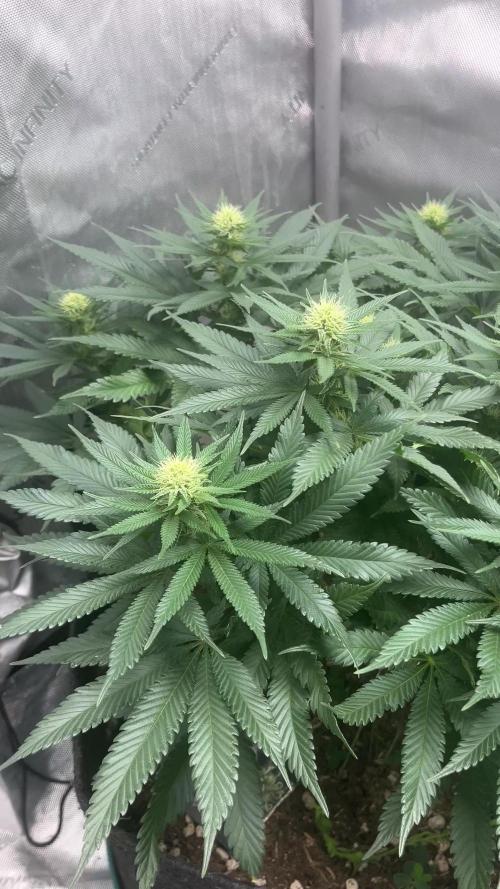
7/28 some light lead pulling removing bottom area and sites that I fill be waste of time taking energy from the tops still RO water and tea every other week

Likes
2
Share


@Grower_Resina
Follow
Infelizmente essa não teve os privilégio de ter uma flora no grow dedicado, agora por fim consegui transferir e veremos as mudanças acredito que ainda dê tempo de aproveitar.
Estou usando somente 120w LM301H

Likes
11
Share

@420DeepGrow
Follow
📆 Semana 10:
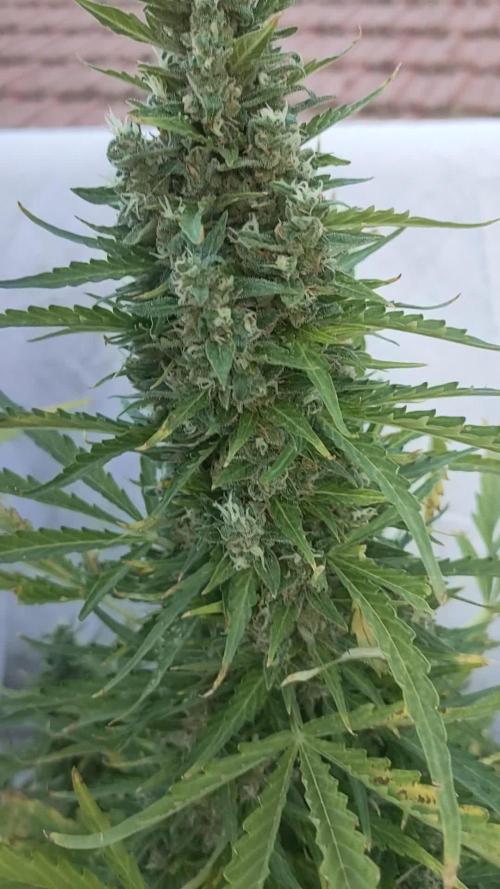
La Candy Bubatz XL entra en la recta final de su floración con una presencia imponente. Los cogollos alcanzan su máximo volumen y firmeza, rebosando resina que cubre hojas y cálices con una textura densa y vidriosa. El aroma se vuelve más penetrante, complejo y maduro, dejando notar su perfil terpenoide característico. Los pistilos ya están en su mayoría oscuros, retraídos, y los tricomas muestran una mezcla equilibrada de tonos lechosos y ámbar, señal clara de que la cosecha está a punto de llegar. La planta mantiene su vigor, sin señales de estrés o deficiencias, completando su ciclo con equilibrio y fuerza.
¡Seguimos creciendo fuerte! 💪





Likes
28
Share


@Ferinky
Follow
I plant 3 seeds out of a pack of 10. They all germinate correctly.
They will be in a 3L pot with AllMix for the next few weeks.
I use osmosis water with PH 7.0 and EC 0.4.

Likes
22
Share


@Selkot
Follow
these 2 seeds from the same pack are definitely different: the topped girl is massive, with multiple heads that are only starting to stop growing (i hope she will finally concentrate on her buds!), while the LST girl has a nice structure with 6 buds that are growing day by day.
one classic, the other with great potential... i love this session. 😊
miscalculation on my part at the beginning of the week: I doubled all the nutrients, confusing the volume of my cans... 😓
coco is not forgiving, the burns appeared the next day;
but fortunately, it is corrected just as quickly: I emptied the bowls and diluted the water in the tank, I performed a haircut on the two girls (one burned, the other a little wilted), and here they are in great shape at the end of the week. The resin appeared on the LST girl this week.
another thing: the bleach has already proved its worth; not a single worm in my water, no more smell of algae in the tank, despite a rather sporadic maintenance... 😏

Likes
6
Share

@Fyno_TH
Follow
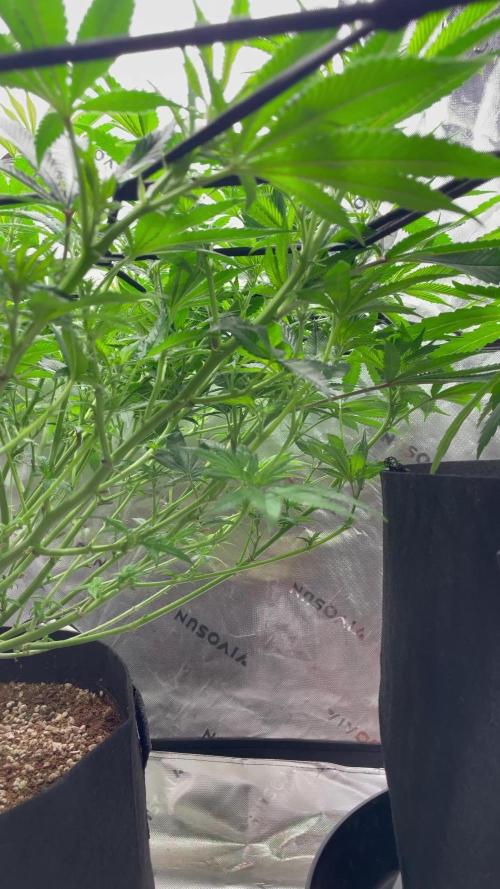
🌸 Flowering Week 1 — first week after flip! Both girls officially entered bloom and are starting to show early pistils. The stretch already kicked in and the canopy is filling up nicely under the Spider Farmer G3000 💡.
This week I noticed the first signs of powdery mildew (PM) 😬 — just a few small white spots on lower leaves and shaded areas. Immediately dropped RH and started preparing to treat it next week with Hydrogen Peroxide 3% (H₂O₂) foliar spray.
Feed mix (per L):
• Corex 1 ml/L
• Terra 0.4 ml/L
• CalMag 1 ml/L
• Mira 0.2–0.5 ml/L (pH adjust)
• Bud Candy 2 ml/L
• Terpinator 5 ml/gal (~1.3 ml/L)
• Florex 0.5 ml/L
• Aurora 0.5 ml/L
💧 Watering around 15L per plant with 10–20% runoff.
PPM ~1350–1450 @ pH 6.0. Plants are still praying strong, no major stress visible 🌿.
🌡️ Environment: 26–29 °C (day) / 23 °C (night)
💧 RH: 50–55%
📝 Observation: PM just appeared this week — I’ll continue with Hydrogen Peroxide 3% foliar spray in Week 2 to kill and control it.
If anyone has other proven PM-fighting tricks for coco grows, feel free to share 🙌.
Excited to see the stretch continue and bud sites start stacking next week 🌿🔥

Likes
25
Share


@Ganjeiro420
Follow
Eai familia, sejam todos bem vindos a mais uma semana de cultivo dessa maravilha da FastBuds.
Nesta semana notei que as folhas de baixo da banana purple punch estavam amarelando e queimada nas pontas e laterais, então fiz uma rega com mais nutrientes e até agora as folhas que estão crescendo novas já estão com a cor bem melhor.
Também fiz uma amarra para controlar o tamanho, e ver se teria ramificações novas já que ainda não tenho um grow e o espaço da sapateira não e grande, até o momento está dando super certo, as meninas deram uma boa engrossada no caule e geraram vários novos galhos.
Acredito que na próxima semana já inicia a pré- floração então dei nutrientes pra elas já se prepararem pra iniciar o crescimento das flores.
Obrigado a todos que estão acompanhando até aqui espero trazer um resultado incrível!


Likes
14
Share


@blackonblackcamo
Follow
Trimmed up the bottoms of the plants after the pics were taken, just forgot to take more. Buds are really starting to pop up everywhere. Currently in NY, and my girlfriend is watching the ladies for a week, so I will try to get her to send me some updated pics. These are from ~5 days ago, and there has been substantial bud bulling since then. They are drinking nutes and water like crazy and get topped off on both every single day lol.
Processing
Likes
17
Share


@Doobiefumes
Follow
ok i finally pinpointed the problem with my plants it was wind burn the 3 plant closest to the fan where moving a lot i thought i was helping them but leaf where curling like crazy i moved the fan away and now they are recovering also i added a humidifier before using it humidity was a 35% now its at 60% since i flushed system yesterday ill be waiting till next week for next flush lets cross finger and hope everything goes well this week prolly lost a week trying to find problem i thought it was a nutrient deficiency at first since wind burn was pretty bad and some leaves had spot from too much wind.full system flush today gonna run reverse osmosis ph water for 1 hour into rdwc then flush again and add nutrient.sometime less is better i went smooth on nutes for this week.switched to 600 watts 6100k plants are much more happy.


Likes
36
Share


@Regenwurm
Follow
Die Bedingungen sind perfekt, ich bin mit der Entwicklung sehr zufrieden. Diese Woche ging es in die Blüte, Lichtleistung wurde erhöht und es wurde heftig entlaubt um den versteckten Trieben Licht zu geben.
Tage der Keimungsphase = 7 Tage.
Tage in Wachstum = 21 Tage
Tage in der Blüte = 7 Tage
Wachstum h Woche 1 Blüte = 10 cm
2 mal in dieser Woche mit Purolyt Mischung 1:25 besprüht
Lichtstärke: 90 %
PPFD: ca. 850 umol
Lichtabstand: 40 cm
Std Tag/Nacht: 18/12
Temperatur Tag: ca. 25 Grad
RLF Tag: 60%
Temperatur Nacht: 21 Grad
RLF Nacht: ca. 60 %
VPD Wert: ca. 0,9
PH Wert Wasser/Düngelösung: 6,3
EC Wert: nicht gemessen
Ventilator Oszillation: Stufe 1
Befeuchter: an
Entfeuchter: aus
Zusätzlicher Entfeuchter: 0 Stk. außerhalb vom Zelt im Raum
Bewässerung: 2* bewässert 1 l/Pflanze mit Dünger mit den o.g. Mengen
1 * pures Wasser mit 2 l/Pflanze
Purolyt Besprühung: 2 mal
Besprühung Fastplantspray : 1 mal
Controlling: Grow Control
Dünger: Greenbuzz Nutrients
Licht: Pro Emit Vollspektrum
Abluft: EC Carbon Active 750 m3
Danke an Zamnesia für die Seeds, den sonstigen Merch und natürlich das Vertrauen in die Kooperation
https://www.zamnesia.com/de/10681-zamnesia-seeds-pineapple-express-f1-automatic.html
Danke auch an Mia von GB:
https://greenbuzznutrients.com/de/
Ihr bekommt 25 % Rabatt bei der Nutzung des Codes auf der GB Homepage
https://greenbuzzliquids.com/de/shop/
Code: GD42025
(Mindestbestellwert 75€)

Likes
3
Share


@mojo1985
Follow
Ja.. die auto moonrock... schönes wuchsbild... wächst fleißig und auch hier keine beanstandung. alles im allem bis jetzt top quali was man bis jetzrt sagen kann von divine seeds... zu empfehlen... ich denke das wird die kommenden wochen so bleiben. schauen wir mal 🙏🙏🙏🙏

Likes
11
Share


@Stifler
Follow
Hello Growers !! How are you ? I spent a whole week without posting updates on my girls, I got very sick, stomach problems and that made me very discouraged and having trouble making better pictures, but next week I will try to test the results !! This is the last week of the cultivation, next week I will carry out the harvest, about 5% of the trichomes are amber in color !! I already stopped with the nutrients and I won't make a flush, since my cultivation was totally organic !! I'm happy with the results and the aroma of citrus mango is wonderful! 😊