


Likes
Comments
Share


@BakingBaked
Follow
This week was all about letting her recover from the cloning. Sadly most clones I took did not made it. Just 2 survived my inexperience hands.
The good news is that miss Daisy it's doing so well I may be able to give it another try before flipping to flower. I have no rush for this harvest so will probably give it a try.
After the cloning and some extra pruning she recovered in no time. The roots look good, just wish the nutrients did not stained them, that way would be easier to sight any root rot if present.
🗓️ Day - 28
⏰ Hour - 8:30 am / 10:00 pm
🌬️Air Temp. - 74 / 77
💦Humidity - % 50 / 54
⛽️ TDC (ppm) - 630 / 650
⚱️Reservoir Tmp. - 73 / 72
⚗️PH - 6.1 / 6.1
🌿 Looks perky and happy after pruning. She’s is recovering very well. Her roots are showing new white hairs so seams she’s liking the higher nutrients levels.
🗓️ Day - 29
⏰ Hour - 9:00 am /
🌬️Air Temp. - 76 /
💦Humidity - % 54 /
⛽️ TDC (ppm) - 680 /
⚱️Reservoir Tmp. - 73 /
⚗️ PH - 6.1 / 6.1
📝 Added 4 Gallons of tap water starting feed for week #5 with higher nutrient concentration so ppm should stay around 600. Also added 10 ml of hydrogen peroxide to the reservoir.
🗓️ Day - 30
⏰ Hour - 8:00 am /
🌬️Air Temp. - 76 /
💦Humidity - % 54 /
⛽️ TDC (ppm) - 680 /
⚱️Reservoir Tmp. - 73 /
⚗️PH - 6.2 /
🌿 Bouncing back very well and has nice new roots coming out.
🗓️ Day - 31
⏰ Hour - 8:15 am / 9:00 pm
🌬️Air Temp. - 75 / 76
💦Humidity - % 61 / 60
⛽️ TDC (ppm) - 680 / 710
⚱️Reservoir Tmp. - 72 / 73
⚗️PH - 6.2 / 6.2
🌱 Two clones left of Sour Diesel show small signs of root development. Other samples did not made it.
🗓️ Day - 32
⏰ Hour - 8:10 am / 11:30 pm
🌬️Air Temp. - 75 / 76
💦Humidity - % 61 / 57
⛽️ TDC (ppm) - 710 / 740
⚱️Reservoir Tmp. - 72 / 72
⚗️PH - 6.2 / 6.2
🗓️ Day - 33
⏰ Hour - 8:10 am / 11:00 pm
🌬️Air Temp. - 73 / 74
💦Humidity - % 49 /
⛽️ TDC (ppm) - 770 / 800
⚱️Reservoir Tmp. - 72 / 72
⚗️PH - 6.2 / 6.2
🗓️ Day - 34
⏰ Hour - 7:30 am / 10:00 pm
🌬️Air Temp. - 74 / 74
💦Humidity - % 52 / 53
⛽️ TDC (ppm) - 820 / 880
⚱️Reservoir Tmp. - 72 / 72
⚗️PH - 6.2 / 6.2
🗓️ Day - 35
⏰ Hour - 7:30 am / 9:00 pm
🌬️Air Temp. - 73 / 74
💦Humidity - % 55 / 52
⛽️ TDC (ppm) - 910 / 960
⚱️Reservoir Tmp. - 71 / 71
⚗️PH - 6.1 / 6.1




Likes
26
Share


@Bread_n_Buds
Follow
Here we are again ready to start again, always under the sign of Zamnesia, we make our fantastic plants and we show you what we are capable of. We have 5 autoflowering strains and 5 photoperiodic ones and now we present them to you.
This time we are faced with an absolute novelty Zamnesia, a plant of the latest generation of an immense series that Zamnesia is bringing out, ready to try them all. Here we have excellent parents the primette result very well, let's try!
To explain my germination method which is a combination of experiences acquired in the field and readings of right advisors, I have chosen to divide it into phases so whoever wants can follow them and understand better step by step.
- Preparatory Phase ---- Check the average temperature in the room, humidity status to understand well whether it is the case to start or wait, I decided for the end of August because the temperatures begin to drop towards the 22-25 degrees recommended for germination.
Then another thing more or less credible depending on the sensitivity is the control of the lunar phases. I believe in it a lot, it is a method that ancient farmers used to understand when it was best to plant depending on the attraction of the moon. To make my life easier I use a simple app that advises you on the right time to plant, harvest and put in a jar (depending on the lunar phases).
- Phase 1 --- Soaking in water. There are many authoritative friends who advise against this method due to the risk of drowning, but I have always been fine and I follow the rule if it opens in water almost certainly the seed is healthy and will come out of the ground 90% normally.
- Phase 2 --- Opening of the seed in water. As soon as the seed opens and the root comes out a little you have to be very very careful not to leave the seed in water open for too long. This is why there is a risk of drowning. So as soon as the root has come out it must be planted. Do not wait for it to stretch out too much, in the absorbent paper you can wait a little longer in water no.
- Phase 3 --- While I soaked the seeds I prepared my pots: I use small biodegradable pots (choose the ones with holes underneath for drainage). A few hours before working with the opened seeds I moistened the soil with water adjusted to the right pH (5.8 - 6.2) and Plagron Power Roots. The small root is now open and we can make a little hole with a toothpick, widen it and insert the seed. Not too deep with the root facing downwards. From Serious Seeds we learned the dome technique: if you put a small dome of soil on the seed the water will settle on the sides avoiding overwatering problems.
- Phase 4 --- The plant emerges from the soil. Up to now I have not put the light on, now I turn it on at minimum after half a day of soil to give direction to the seedlings. The first week the light will be gradually brought from 40% to 60% to go to 70% - 75% in the remaining weeks of veg. During the first week maximum, I keep the cycle of 24 hours to avoid stretching. Be careful not to exceed the first week at least with photoperiodic.
- Germination % --- In water 20/20 seeds have opened for superstition I wait to talk when they come out of the ground but it seems that we are going towards an excellent percentage of germination..."Not too bad"...
- Soil and Food --- The soil used is entirely organic in every part and is the Plagron Promix that will be used with the 100% organic pack provided by Zamnesia complete with all the main fertilizers for your plant buy it at the link --
https://www.zamnesia.io/it/11457-plagron-easy-pack-natural.html
// Strain Description //cross of Alien OG and Rollercoaster Haze, Cosmic Noodles offers excellent yields and extraordinary aromas. This variety is very powerful, contains 25% THC and produces intense and long-lasting effects. Stimulating and relaxing at the same time, Cosmic Noodles causes an energizing cerebral effect that fades over time becoming soothing at a physical level.
- Get a seed of this fantastic strain --- https://www.zamnesia.io/it/10777-zamnesia-seeds-cosmic-noodles.html
- Soil and Fertilizers entirely organic --- https://plagron.com/en
- Growbox --- https://www.secretjardin.com/
- Music and sound --- I made my girls listen to 432hz frequencies and music from www.radionula.com
- Z --- You can find these seeds, much more from the world of cannabis, mushrooms and an incredible series of accessories and gadgets on the reference site not only mine but of many growers ---- https://www.zamnesia.io


Likes
Comments
Share

@Vet_J
Follow
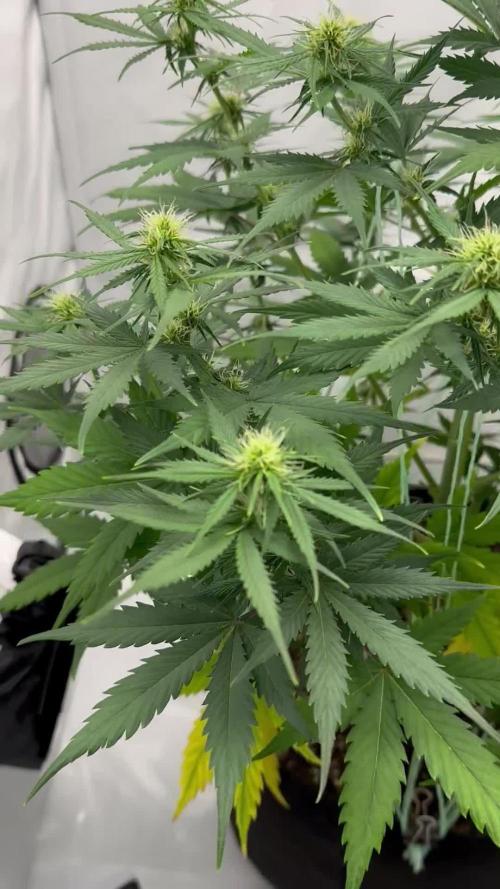
Day 52
The lower leaves of the plant turned yellow
I have two options that could have caused the lower leaves to turn yellow
The first is a lack of nitrogen. In the last two weeks, I have reduced the dose of AD Grow fertilizer from 4 ml to 2 ml which contains nitrogen and i have not added AD B-52 for two weeks
The second option is that I have a low-quality ph meter. I measure the ph with drops I don’t have digital one and there may be an ph error
The plant was unable to absorb the fertilizer and a large amount of salts are most likely accumulated in the soil.
one more detail:He was defoliated a few days ago.
I hope that this problem will be resolved by next week and the plant will continue to grow at a good pace.

Likes
6
Share


Processing
Likes
25
Share


@Cannibalgardens
Follow
Well they are all set and into the forever homes all put into promix soil with added root stimulant ..They are all happy and healthy going to be adding a netting and doing it that way .. These are all maxing breeders with great genetics .. The beast is going to be the @sweetseeds #sanfernandolemonhush she is leaning hard on the sativa side with long branching allready mm can't wait to see how they do in two weeks time ..


Likes
4
Share


@Dark_Shadow_420
Follow
Creciendo fuerte!
Muy bien dividida la fuerza de las ramas, a las más altas desidi hacerles la poda apical, para aumentar el número de ramas y a su vez emparejar la altura.

Likes
46
Share


@KingSalomonsWeed
Follow
Day 106 Flower 64.
17.03.
Hallo Leute.
Hat die an Glitzer zugelegt. 😍
Plus weiterhin Gewicht Zunahme.
Und Volumen.
Der Kohlgeruch ist komplett weg. Es bleibt ein Geruch nach heißem Plastik.
+ 3 Wirklich 3 Gerüche, die ich als Großmeister noch nie gerochen habe.
+ Weed.
PLANET SUHH. Dort ist der Geruch wohlbekannt.
PLANET ERDE. Der Grower ( mich) staunt.
Der Rauch steht noch aus, aber wow.
Sowas von, ja krankhaften ( nicht aufzuhalten, Manisch, enervierend ) WACHSTUM.
Erst pumpen sich Knospen auf, dann werden sie hart, und danach pumpen sie in gleicher Weise weiter.
Also habe ich harte geile Knospen mit bis zu 32 % Thc.
Ohh, das ist viel.
Sehr viel um genau zu sagen.
Hängt auch genug dran. Bin zufrieden.
In, wie nennt es ANESIA?
Psychedelisch.
Oh je.
Habe trotzdem Lust drauf.
Mein Gehirn schreit JAAAA.
Danke fürs liken lesen und alles.
19.03. Day 66 der blüte.
Schnick schnack schnock: DARKNESS für 3 Tage.
20.03 (Pferdewiehern) WIIIHIHIHHHIIII
Leute in meinen Zelt , sind gerade 2 Bomben am trocknen. Diese hier und ne Future 1. Explosive Mischung sage ich nur .
23.03. es ist vollbracht. Gecuttet. Aufgehängt.
Eine Testbund von unten wurde zerkleinert zum trocknen, konsumieren.
Selbst die Stämme waren Gummiartig klebrig.
25.03. Wie die Testbud war? ICH KANN MICH NICHT ERINNERN!😳
Ich habe den ganzen Abend davon geraucht. ... Sandelholz Zitrone Aroma.. das weiß ich noch... Aber Turn... Ähh tut mir leid, ich kann mich nicht erinnern..
😳😂
27.03. geil, ich kann's kaum Erwarten bis alles fertig ist.

Likes
1
Share

@ElCapitol
Follow
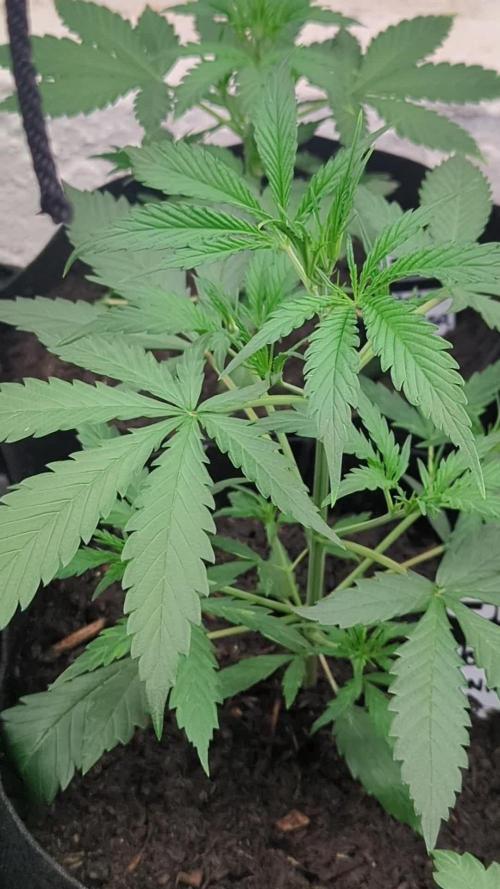
Nice growth in only one week. More than doubled, she seems very happy and strong. Good stem that is thickening up so she can hopefully carry more buds :)
No problems so far.
Likes
5
Share

@AlpenZilla
Follow
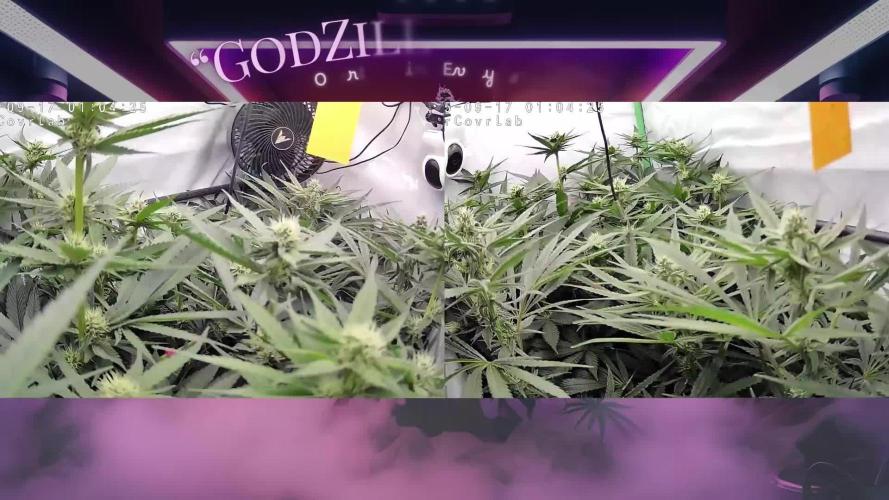
🗓️ Week 9 – Flower Week 5 (MAC n Cheese only)
This week’s focus was all about managing drain EC levels, and MAC n Cheese is still pushing out some salts – nothing critical, but worth keeping an eye on.
💧 Last watering:
• Input EC: ~1.3–1.4
• Drain EC: 1.79 → 1.69
⚠️ Status:
Runoff EC is slowly dropping but still on the higher side. Some light salt buildup is visible, especially on the leaf edges – nothing major yet.
🔧 Adjustment plan:
• Keep input EC steady at 1.2–1.3
• Use supplements conservatively – around 20–30 % of the schedule
• Target runoff EC: gradually bring it down to ~1.5–1.6
Overall, she's handling it well – strong growth and steady development.
Frost levels continue to rise – things are really starting to sparkle. ❄️🌸

Likes
6
Share
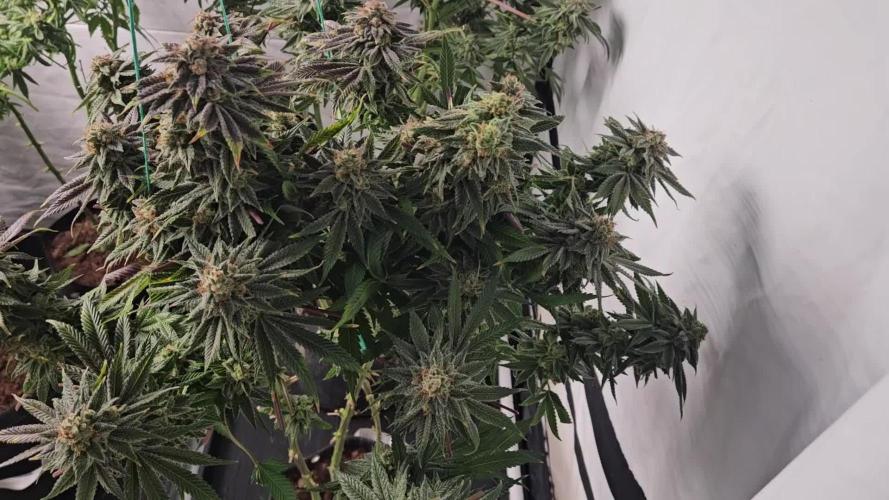

@SkullRipper
Follow
Flushed all week with RO water at 6.2
Humungous big fat bitches are falling all over the place!
Will be harvesting next week.
TTfn Skully

Likes
33
Share


@Hawkbo
Follow
These have been growing kind of slowly but I got the temps up a little this week by adding some extra light and am getting vpd dialed in. These will only be in this tent for a few more days I am just starting to harvest the main tent so once that is done they will be moved to the Gorilla Grow Tent and put under the new Growlightscience LEDs so we can see how the perform full cycle. The autos will have to get moved back into this tent once I flip the main tent but the photos will prob need a few weeks of veg before that happens. Been doing foliars with the Growzyme from greenbuzz as well before lights out every other night which seems to make them happy. I think theyll take off over the next couple weeks.

Likes
7
Share


@Robbaus
Follow
Stanno iniziando a gonfiarsi i fiori, anche se devo dire che mi aspettavo qualcosa di più già a questo punto della fioritura, speriamo che esplodano come si deve da adesso in avanti. Le foglie hanno iniziato a diventare gialle, manca poco, credo che in un mese dovrei raccogliere. Ho messo solo due vasi invece che tre come l'ultima volta, ma penso che continuerò così, credo di riuscire a raggiungere lo stesso risultato in termini di resa, e risparmio decisamente sui fertilizzanti. Vedremo

Likes
17
Share


@CG420
Follow
Tras una última semana de gran crecimiento al fin vimos las primeras preflores en algunas de las plantas en el día 12 ya todas tienen su pequeña bolita .
Ahora empezamos a suministrar top Candy y Green sensation junto a la base de floración alga Bloom .
Seguimos en ello 💪💚.


Likes
9
Share

@Bread_n_Buds
Follow
We are on day 34.
To tell the truth, she is around her 30th and is the second Pineapple Express born a few days later because she was placed a few days later. In fact it is a few days later than the others but no big deal.
We are in the transition phase or, if you want, pre-flowering, the plant reveals its sex with sexy hairs at the internodes. If it's female. If it is male or hermaphrodite, which is impossible with the F1 Hybrids, hairs will not emerge but little balls containing pollen. These will pollinate your ladies, even all of them if things go badly and the result will be lots of seeds. This is one of the main reasons to LOVE F1 HYBRIDS. All the breeders did what they wanted, mixing various genetics several times. All plants are poly hybrids we have f1 hybrids, let's go back to the beginning to avoid all the problems of modern growing.
Now let's see how it turns out, let's see the flowers and then let's talk about everything you want. Look at my flowers first, if you are hesitant or look at my flowers coming soon.
If you have underestimated this aspect of the F1 Hybrid, go back and think about how many times you found the balls on the paint, full of pollen that fertilized your ladies.
Do you like having young ladies impregnate you? Absolutely not for me and this is a very valid reason why you can choose the F1 Hybrid. Really guys suck the seeds and the genetics of the various breeders if they don't do a job like this it means that they are super hybrid poles with genetic traces scattered here and there. Inglourious bastards.
Here we don't want to be Aryan but to cultivate healthy plants with safe results.
Our Pineapple Express F1 HYBRID goes very, very well, even with very slight signs of overfeeding but lighter than the others, almost non-existent. Nothing that affects the final quality and beauty, you will see in the end.
To fix this little thing we go to flush with pH 6.2 and only give Aptus Regulator which should rebalance the plant and soil before delicately moving on to fertilizers for flowering.
Site Description
ZAMNESIA SEEDS - PINEAPPLE EXPRESS F1 HYBRID AUTOMATIC: FRUITY FLAVORS AND ENERGETIC EFFECTS
Combining Trainwreck with Hawaiian, Pineapple Express F1 Hybrid Automatic brings a beloved strain to new heights. This autoflowering F1 hybrid cultivar ensures exceptional uniformity, reliability, and stability, making it well-suited to growers of all experience levels. If you've not checked out Pineapple Express F1 hybrid Automatic for yourself just yet, now is the time.
GROWING PINEAPPLE EXPRESS F1 HYBRID AUTOMATIC
All it takes is 8–9 weeks from germination before Pineapple Express F1 hybrid Automatic is ready to harvest. Thankfully, very little effort is required throughout the growing process, aside from a bit of maintenance, to ensure ample, high-quality harvests. Thanks to its F1 genetics, Pineapple Express F1 Automatic offers superb resilience and uniformity, meaning all plants will have a similar height and appearance, and will churn out comparably large yields. Reaching heights of 50–70cm, Pineapple Express F1 Automatic is not an overbearing plant and can effortlessly slot into any setup. Once ready to yield, growers can see a return in the region of 400–550g/m² indoors and up to 200g/plant outdoors.
AROMAS, FLAVORS, AND EFFECTS OF PINEAPPLE EXPRESS F1 HYBRID AUTOMATIC
Just one hit of Pineapple Express F1 hybrid Automatic treats users to a rich assortment of flavors and aromas. This strain offers strong pineapple notes alongside moments of citrus, spice, and pine, making for a mouth-watering blend that's extremely moreish. Bolstered by 21% THC and an array of cannabinoids, Pineapple Express F1 Automatic showcases an energetic and uplifting high that will have you feeling chatty in no time. So if you've been looking for a strain to enjoy with friends, Pineapple Express F1 Automatic could be just the thing.
As for fertilizers, I'm doing a small comparison experiment to finish off the fertilizers I had at home, it's not 100% indicative, it's only on two specimens but given the stable genetics I decided to try to compare the results of Plagron Vs Aptus , both excellent brands which they will certainly produce beautiful plants which are already of excellent stable genetics. In the next few weeks the comparison will be more evident now the seedlings are still very small and just potted.
So seeds of all brands, in addition to these great F1 Hybrids and the entire Zamnesia line, fertilizers and everything related to the world of cannabis, you should buy them from the best online store in the sector www.zamnesia.io
Likes
64
Share


@Kitties_and_Colas
Follow
~_~_~_~_~_~_~_~_~_~_~_~_~_~_~_~_~_~_~_~_~_~_~_~_~_~_~_~_~_~_~_~_~_~_~_~_~_~_~_~_~_~_~_~_~_~_~_~_~_~_~_~_~_~_~_~_~_~_~_~_~_~_~_~_~_~_~_~_~_~_~_~_~_~_~_~_~_~_~_~_~_~_~_
ok..i'm an idiot 🐱🔫 ..they we're clearly overfed last week and without thinking i gave them our usual "full strength" bloom shot as we decided to flower her (no more space)..she's not too happy with us atm, her top leaves are curling very hard..We intend to give her PH water only until she comes around some...normally we wouldn't flower a plant in this condition, we'd wait for her to straighten out and then flip however, space is critical atm...we moved her to the 3x3 to flower with a couple tiny White OG plants...she's a big plant, we have some room for stretch but not a ton, this might interesting in another week or 2 lol...we setup a dedicated exhaust for this tent and temps have been great, lots of air movement...We'll upload in a few days if her condition changes, thank you as always for taking the time to read and happy harvests everyone!! ❤️💡🌱😽💨
~_~_~_~_~_~_~_~_~_~_~_~_~_~_~_~_~_~_~_~_~_~_~_~_~_~_~_~_~_~_~_~_~_~_~_~_~_~_~_~_~_~_~_~_~_~_~_~_~_~_~_~_~_~_~_~_~_~_~_~_~_~_~_~_~_~_~_~_~_~_~_~_~_~_~_~_~_~_~_~_~_~_~_
Likes
Comments
Share

@GREENPHOENIX6262
Follow
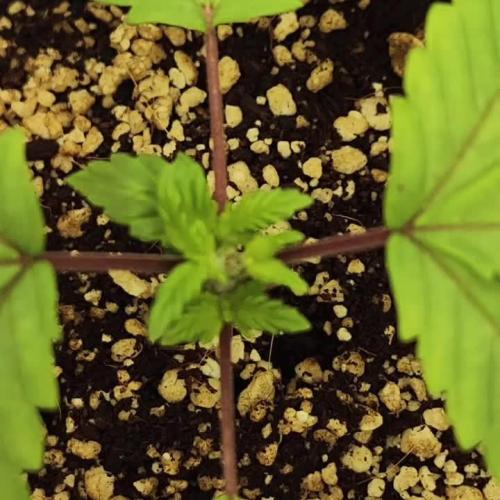
10/19 - 1 week since transplant so for no issues - removed some of the dead growth underneath - running humidifier at 80% with temps at 85 degrees.

Likes
2
Share


@EtnoGrow
Follow
Everything is still fine, the oldest moved to the largest pot of 11 liters or 3 gallons and the one that grew more than the others in the pot of 2 gallons or 7 liters approx, they began to look for pots for the others later. apical pruning will be done to several practicing, as well as LST or something like that experimenting haha