The Grow Awards 2026 🏆 







Likes
Comments
Share
@Salokin
Follow
Hello Growmies,
Red Banana Pudding by Anesia Seeds - Weekly Update
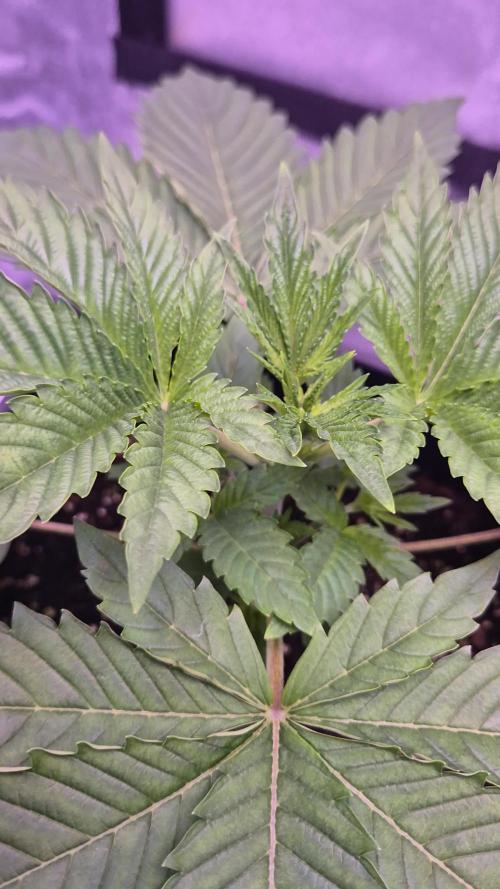
Entering the third week of observing the growth of our Red Banana Pudding plants, we're thrilled to share their progress and the careful adjustments made to optimize their growing environment.
Current Growth Stage: Seedling stage, initiated on 21.01.23
Overall Plant Appearance: The Red Banana Pudding plants continue to thrive, boasting a vibrant and uniform lush green appearance. Their overall health and vitality are evident, maintaining a robust and strong stature.
Growth and Stretch: Over the past week, our Red Banana Pudding plants have exhibited impressive growth, now reaching between 10 and 12 cm in height. This steady progress reflects their positive response to their current environment.
Nutrient Management: While we had initially planned to introduce a mild nutrient solution this week, we've decided to postpone it until the following week. This cautious approach aligns with our commitment to ensuring optimal conditions for the plants before initiating nutrient supplementation.
Watering Schedule: The plants were watered with RO water enriched with Orca and Rhizotonic, using a spray bottle. This gentle watering approach ensures they receive the necessary moisture without over-saturation.
Light Settings: The light intensity has been adjusted to approximately 25-30%, providing an estimated 180 PPFD. This careful adjustment aligns with the increasing growth demands during this phase.
Reflection and Planning: Reflecting on the past week, the robust growth of the Red Banana Pudding plants is a testament to their resilience and the effectiveness of our adjusted care routine. Looking ahead, we plan to introduce nutrients with Plagron Algae Grow next week, considering the pre-fertilized soil. Our focus remains on continuous monitoring, ensuring a nurturing environment for their development.
We're eagerly anticipating the upcoming stages of growth in the coming weeks. Stay tuned for further updates on the Red Banana Pudding journey.
Stay Lifted, Salokin

Processing
Likes
3
Share
@420cfm
Follow
Serious increase in frostiness, smell in the tent, size of the buds. Amazing fresh, fruity smell. Continuing to throw out new pistals and old ones are turning orange. I fucked up my nutrients this week by using my k blaster instead of my monster flower but seems to be ok. Will get this fixed next week and run proper nutes for next two weeks before flipping back to my k blaster. Still learning so much but feel it's getting dialed in now.
Processing
Likes
19
Share
@Mission420
Follow
Nothing exciting happened this week. Even the time lapse is boring as it does not show any growth, its almost as if they have gotten into a time warp. The leaves don't seem to be drooping, or really doing anything. This was the last week of nutes as of yesterday I drained and cleaned the water bucket and they are getting straight water now. I see some of the leaves are getting some spots, so I looked that up and it might be they were getting to much nutrients. Well see in the coming how they fair with no nutrients at all. Even though it has continued to be colder here than normal, the room is keeping a good steady temp and humidity.
I was hoping the buds would start to get fatter, but that is not happening so far and the smell is still not very prevalent in the room. They are very sticky when touched with a lovely smell on the fingers afterwards. I figure 2 weeks now until harvest with another week or 2 of curing. I purchased a humidifier which will arrive this week just in time to keep the room at the right humidity when they are curing.


Likes
5
Share
@braxat420
Follow
First time trying a main-line. I left four growth points so I wouldn't have to top again. Makes sense to me, but I'm not sure if that's proper or not. Looks great today, though.

Likes
6
Share
@Cannabis_ConnectionUK
Follow
Week 1 After Cuttings Potted, Used Dutch Pro Light Mix Soil (Best In My Opinion) Before Potting The Cuttings I Used Great White Shark Rooting Powder In The Hole Were I Place The Cuttings And Looking Good Just Need To Get Soil PH Levels Correct Over The Next Week.
Pictures:
Fullgas (Exodus Cheese x Sherbet OG) Right Side 3 Rows x20 Plants (GREENHOUSE SEEDS)
LPZ (London Pound Cake X Zkittlez) Left Side Back 3 Rows x10 Plants (MEANBEANZ SEEDS)
Sunset Seduction (Sunset Octane x Zaffa) Left Side Front 3 Rows x10 Plants (MEANBEANZ SEEDS)

Likes
34
Share
@Dunk_Junk
Follow
She is getting close to harvest, maybe in the coming week I will take a few colas off if I see any amber trichomes.

Likes
14
Share
@Laviejaescuela93
Follow
Pedir perdón a todos chic@s por no poder realizar el seguimiento bien por covid-19...pero estamos ya de vuelta

Likes
9
Share
@GrowPassionItalyChris
Follow
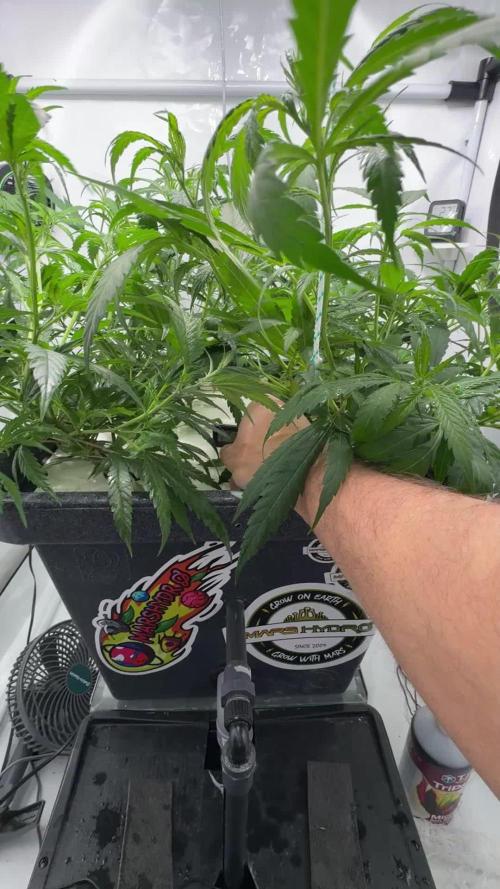
Bellissime,abbondanti e cariche di infiorescenze resinose e profumate! Dimensioni grandi e qualità altissima! È stata una settimana bella e calda e ormai siamo in estate quindi continuano a riempirsi di infiorescenze molto resinose e dure. Ogni varietà è una vera soddisfazione! Grazie a tutte le banche dei semi che hanno creato queste varietà magnifiche! Per alcune manca poco alla raccolta mentre altre ci vuole più di una settimana di attesa anche due settimane. Sono felice, bravissimi tutti.





Likes
15
Share
@Grow_Mary_Green
Follow
Hi meine lieben, 🤗
Die 2. Woche der Wachstums-Phase steht an...
...und die realität schlägt zu.
Hatte versucht diesen Run mit einem höheren VPD-Wert und dadurch ohne zusätzliches CalMag hinzufügen zumüssen, laufen zulassen. Da laut einer Studie, man durch einen erhöhten VPD, kein zusätzliches CalMag unter LED's hinzugefügt werden müsste. Allerdings gieße ich noch mit Leitungswasser.
Also hatte ich mir mal die werte meiner Stadtwerke angeschaut. Und in meinem Wasser habe ich Calcium = 78 mg/l und Magnesium = 5,3 mg/l und somit ein verhältnis von 14:1😰. Was von einer Optimalen versorgung von 2:1 - 4:1 CalMag etwas entfernt ist... 😅
Beste Lösung wäre ein Filtersystem wie der Watertrim zu nutzen. Günstiger ist es Mono-Magnesium (oder bei bedarf Mono-Calcium) zu besorgen und das Wasser im richtigen Verhältnis auszugleichen.
_________________________________________________________
Optimale CalMag-Versorgung in den einzelnen Phasen:
Sämling:
Cal: 50-60 mg/l
Mag: 20-30 mg/l
Wachstum:
Cal: 80-100 mg/l
Mag: 30-50mg/l
Blüte:
Cal: 100-120 mg/l
Mag: 40-60mg/l
______________________________________________________________
Wie mein Ablauf in dieser Woche genau aussah, habe ich auch diesmal für uns Dokumentiert. Ich wünsche dir viel Spaß & Happy Growing 🌱🤗:
_______________________________________________________________
Umgebungswerte der Woche:
- Temperatur: 25°C
- Luftfeuchtigkeit: 65%
- VDP (Room): 1,1
_______________________________________________________________
Tag 8:
- Nur beobachtet 😋
Tag 9:
- Pflanzenhöhe gemessen: 17 cm 🌱
- Stamm-Durchmesser gemessen: 0,57cm = 5,7mm Ø
- Licht Intensität eingestellt - PPFD: 320µmol / DLI: 21 Mol
Tag 10:
Bewässert 👇 (Leitungswasser):
- Volumen: 1000ml
- PH-Wert: 6,15
- EC-Wert: 0,46
- Temperatur: 20°C
Run-Off (Drain) gemessen 👇:
- PH-Wert: 7,0
- EC-Wert: 3,7
- Temperatur: 21°C
- Volumen: 150ml
Tag 11:
- Nur beobachtet 😋
Tag 12:
Bewässert 👇 (Leitungswasser):
- Volumen: 1200ml
- PH-Wert: 6,1
- EC-Wert: 1,52
- Temperatur: 20°C
Run-Off (Drain) gemessen 👇:
- PH-Wert: 6,7
- EC-Wert: 3,24
- Temperatur: 22°C
- Volumen: 265ml
Pflanzen Training: Topping, Vor-Lollipopping
Lampenabstand eingestellt: 50cm
Licht Intensität eingestellt - PAR - PPFD: 285µmol / DLI: 18,5 Mol
Pflanzenhöhe gemessen: 18cm 🌱
Tag 13:
- Nur beobachtet 😋
Tag 14:
Bewässert 👇 (Leitungswasser):
- Volumen: 1200ml
- PH-Wert: 6,1
- EC-Wert: 0,48
- Temperatur: 21°C
Run-Off (Drain) gemessen 👇:
- PH-Wert: 6,42
- EC-Wert: 2,6
- Temperatur: 21°C
- Volumen: 360ml
Pflanzenhöhe gemessen: 22 cm 🌱
Stamm-Durchmesser gemessen: 0,73cm = 7,3mm Ø
Lampenabstand eingestellt: 45 cm
Licht Intensität eingestellt - PPFD: 320µmol / DLI: 20,8 Mol


Likes
29
Share
@GrownwithLED
Follow
The one plant of STRAWBERRY SOUR DIESEL harvested 49,3 gram of EXCELLENT dried bud. That makes her the second lowest yielder of my tent. The buds are GLISTENING with trichomes and the smell is sooooooo sweet snd soooooo delicious, she is mouthwatering! My plant grew tall with long internode distances, so I had to super-crop her in order to control her height. She grew healthy all thru the cycle and had developed very nicely.


Likes
28
Share
@Pogosvk
Follow
COMIENZO LA 6 SEMANA CON OPTIMISMO PERO CON UNAS TEMPERATURAS ALTISIMAS DE 32 GRADOS ( RECUERDO QUE TENGO TODO EN EL TEJADO DE MI CASA EN LOS HUECOS DE ARRIBA JEJEJE) Y ESTA PEGANDO DE LO LINDO Y POR LA NOCHE 14 GRADOS FUERA Y 18 EN MI CULTIVO NO SE Q SALDRA....
dia 37 abro el armario y me encuentro las plantas muriendo hermanos casi lloro estaban a 32 grados hay arriba en el tejado voy a pensar que hago si dejarlo o buscar otro sitio
dia 38 despues de discutir con mi mujer coloco el armario en el baño de la habitacion consiguiendo que mis niñas esten a unos grados constantes y templados sigo con agua fresquita y a ver si resucitan de 32 grados de antes ahora max 26 y minimo 22 yeahhh
dia 39 estan de puta madre joder que alegria las quick one son increiblemente resistentes a todo impresionante jejejeje se las recomiendo para gente extrema como yo jajajjaaja da gusto verlas
dia 40 temperaturas ok , buenos pelos blancos largos poco a poco va fluyendo jejejej ,la kritical le esta costando empezar a florecer pero hay va
dia 41 hoy e vuelto a sufrir con las temperaturas hasta 30 grados dentro del indoor se me apago el intractor de abajo y no entraba aire fresco pero bueno van genial o eso creo
dia 42 se acaba la segunda semana de floracion ,de momento todo ok formandose flores de las quick one y la kritical gb va avanzando a pegado estiron y parece q comienza a echar pelitos o eso creo ejjeje
Likes
12
Share
@RookieGrowerTH
Follow
Week 3 from seed, 1st week of Veg. Transplant to a 5-gallon fabric pot, they will grow in living soil and set up auto drip irrigation by using Netafim Netbow.

Likes
470
Share
@PurpleWorship
Follow
Day 16 : I'm verry confident about this plant ! Every leaf have a perfect shape and colour, she is growing well and fast. I can see new leaves appearing at nodes.
I'm waiting a bit more to perform the topping above node 3, to start a main-lining, for the first time ^^She had her first nutrients feeding this week. 50% of recommended dose.
I will add dirt mixed with homemade composting, just because she stretched a bit too much at the begining. I'm excitied to use my composting ! This will be the first time I'll use it for my cannabis plants. Worked well with veggies already ^^
Day 18 - 19 : I notice the plant is EXTRA happy lol. On the morning, when I take her from the dark to the outside, she's already pointing all the leaves to the sky. I was used to see this with happy plant, after some hours of lights under my led. I'm verry amazed by how much she look good ! And she is growing verry verry fast... I'm going to top her this week (so between week 3 and 4). Probably on day 22.
Likes
13
Share
@Popothamio
Follow
Ya empecé esta semana regando con un litro un día si y un día no y alternando también los fertilizantes un riego con ellos y otro sin. Al poner le el led a la carpa pequeña para el final de la floración ha subido mucho la temperatura pero espero que aguanten.. creo que esta será la última semana que eche fertilizantes como lo veis?


Likes
15
Share
@Mystummyhurt
Follow
They’re getting going! The stretch is over (phew they tend to get long but remained shorter than the last two times) and they’re stacking nicely. Really looking forward to seeing how they continue to grow.
