







Likes
18
Share


@MaxMo8
Follow
I transferred it to a half-gallon pot and I mixed the organic fertilizer with the soil.

Likes
Comments
Share
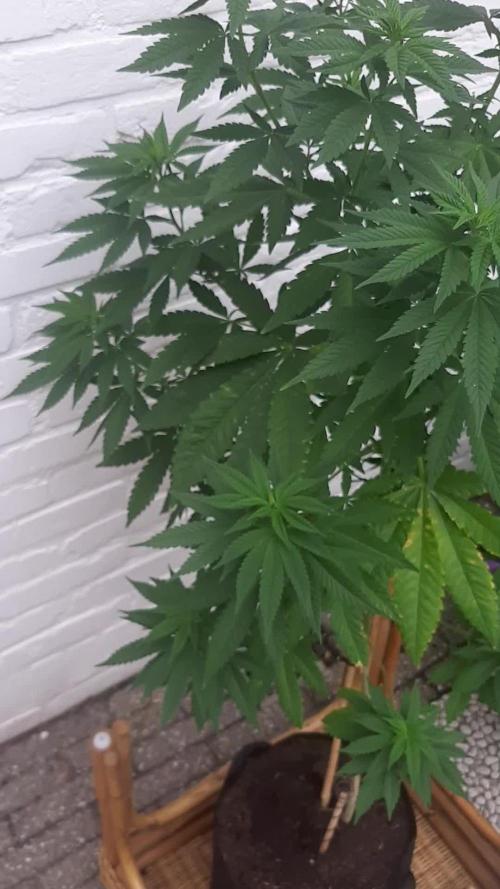

@Wierie
Follow
Day 66
I have not givin her any nutes last week just ph'd water (6.5)
Still white hairs here and there...
Seen milky trichomes but no brown ones on the buds yet..
Im goin for a couch lock kind of high...
I want some milky cloudy and brown trichomes..
Upcoming days she wil get just water 6.5 and we see what happens..
Almost forgot... been givin her les water.. tryin to water stress her a bit and dry her out a bit
Im very happy with how the buds look..
Outdoor super lemon haze growing fine aswel..
Not much to say chek her out 👍
Peaceeeee 🌴

Likes
4
Share


@Relentless-Pressure
Follow
Day 100+
Flushing process is Now activated since a week with Athena fade and calmag pro

Likes
43
Share


@TheCannaProphet
Follow
~ FastBuds PAPAYA SHERBET Photoperiod~
Well here we go on another journey together through 'Canna-land' and this one's kinda special... forget that, it's VERY special because this is FastBuds newest surprise for the community, a FEMINIZED PHOTOPERIOD STRAIN!🤯
I was fortunate enough to score these seeds, of which only 1000 were available and can't wait to see what this strain can do! This Papaya Sherbet, according to FastBuds, is a hybrid with a 9-10 weeks flowering period. For a more detailed and accurate description of this strain the following from FastBuds says it best:
"Combining the massive stature of Papaya (Oni Selection) with the strength and resilience of one of our best keeper cuts (Sunset Sherbet), this strain develops into a big, expansive bush adorned with numerous bud sites that later transform into a generous harvest of medium-sized buds. Papaya Sherbet flowers deliver a signature flavor of premium cannabis with subtle citrus undertones that emerge upon inhaling. During growth, her aroma makes for a sweet yet pleasantly bitter fragrance, giving you an idea of what the smoke will taste like. Notably stress-resistant, Papaya Sherbet is a great choice for growers working in challenging environments. She is very forgiving and rebounds quickly from any adversity, allowing growers the freedom to experiment with confidence that she will take everything like a champion she is. This strain embodies resilience, flavor, and abundant yields in every grow cycle."
Sounds like an epic strain and I personally cannot wait for this lady to strut her stuff!😍
________________________________________________________________________________________________________________________________________________________________________________________________________________________________________________________________________________________________________________________
The Setup:
This is going to be an outdoor grow, but I have started the Papaya Sherbet photoperiod indoors as our weather is still a bit too chilly to put a newly sprouted seedling outside (nighttime temp's dipping regularly into the 40's℉).
The plan is simple... let her grow inside under a 19/5 light schedule until the nighttime temperatures are in the mid 50's℉, which shouldn't be long. After which, she'll be moved outside and transplanted into the soil which I have already setup and inoculated with beneficial microbes, and slow release dry amendments from Gaia Green. Once she's established herself outside she'll be given periodic top dressings of Gaia Green 4-4-4 and 2-8-4 along with worm castings and Compost Tea's. Her grow area is approx. 5'x5' and I have posts and a trellis net set up already for when she gets bigger to aid in training her. Let the fun begin!🤪💚
________________________________________________________________________________________________________________________________________________________________________________________________________________________________________________________________________________________________________________________
Weekly Updates:
5/7- Here we go with the new addition to the FastBuds family, Papaya Sherbert fem photo. I placed one seed in a glass of lukewarm tap water (non-chlorinated well water). Within 24hrs there was a root beginning to show coming out of the seed. I then placed the seed between two moistened paper towels that I then put in a vented plastic container. I put the container in a dresser drawer where it would be warm and dark.
5/9- When I checked on the seed yesterday, there was a substantial root about 1/2" long coming from the seed. I then planted the seed, root first with just the seed head exposed, in a 2" starter pot filled with peat that I pre-moistened with 6.5ph well water. I placed the starter pot in the bottom of a Solo Cup that I had cut in half. I then placed a clear Solo Cup over it to act as a humidome and placed it under the lights in the grow room. Today the little Papaya Sherbert showed her pretty little self and so begins this journey together with her!
5/12- Two days ago the Papaya Sherbet sprouted her first true leaves and today she's really showing some vigor and some impressive growth! Today I went ahead and transplanted her for the first time into a 2qt pot filled with pre-amended coco/perlite. Before placing the Papaya Sherbet into her new home I coated the hole with Xtreme Gardening MYCOS, then placed the Papaya Sherbet and watered her in.
5/15- One week from breaking ground and the FastBuds Papaya Sherbet feminized photoperiod is looking fantastic and doing great with a second set of leaves now out! She's liking her bigger pot and is really beginning to take off now. I should be able to do her final transplant, which will move her outside, next week as our weather is rapidly improving... I can't wait!
Thank you for checking out my diary, your positive comments and support make it all worthwhile! 💚Growers Love!💚😎🙏

Likes
46
Share


@Roberts
Follow
Drunken Bitch Slap is doing okay. Nobtrwining this week. I had to neem oil treat everything. I had a russet mite issue in neighboring grow room. Figured I would treat everything in vegging to be safe. She got her first solution change today. Not much else has changed. She is doing well under the Hortibloom Solux 350 light. Thank you Aeque Genetics, and Hortibloom. 🤜🏻🤛🏻🌱🌱🌱
Thank you grow diaries community for the 👇likes👇, follows, comments, and subscriptions on my YouTube channel👇. ❄️🌱🍻
Happy Growing 🌱🌱🌱
https://youtube.com/channel/UCAhN7yRzWLpcaRHhMIQ7X4g


Likes
152
Share


@SlowpokeFuegobud
Follow
🍪 🍒 🍰🍩 🎀🍪 🍒 🍰🍩 🎀🍪 🍒 🍰🍩 🎀🍪 🍒 🍰🍩 🎀🍪 🍒 🍰🍩 🎀
Welcome to week 12, dear growmies!! 😘
I'm back and everyone survived haha! 😎
From now on only boosters. 💧
Thanks for showing up and supporting me and the girls, bless you, growmies!! 😘 ❤️
Shouts go out to my sponsors @GreenBuzzNutrients, thanks so much for your support!! 💚 💚 💚
If anyone would like to try their amazing organic products, you can find a generous discount code of 25% in my weekly comments! 😜 🙏
If you want a recommendation which product to get first.. BIGFRUITS!! 😍 I love the tasty terps with this one!!
https://greenbuzznutrients.com/
Thanks also of course @Kannabia, for the beautiful genetics!! 🧡🧡🧡
Pouring all my love into this grow, thank you for joining in, growmies!! 💚 💚 💚 😘 ❤️ ❤️ ❤️
Wishing you all the best for your beautiful gardens!🌱 🙏 Grower love!! 💚
_________________________________________________________
Strain Info:
https://www.kannabia.com/en/feminized-cannabis-seeds/break-up-cake
We need to talk
You’ve got to celebrate everything in this life, and that includes love and heartbreak. Since you’re all familiar with Wedding Cake feminised marijuana seeds, we’ve put a Break-up Cake in the oven at the Kannabia Seed Company – because things don’t always go well, and we sometimes need a friendly seed to lean on.
Break-Up Cake has a base of Girl Scout Cookies, one of North America’s best-known strains, which is earthy with a very potent indica effect. And we top it off with a delicious Cherry Pie which, in addition to giving it an elegant dark attire, adds a silky, deeply sweet flavour of cherries and berries. Look no further – it’s the perfect cake.
This seed will be celebrated for its ease of cultivation and abundant production. It’s one of the best investments you’ll make this year. But if it’s going to be memorable for one thing, it’s for its sweet complex flavour that’s full of contrasts. If we have to break up, let’s do it sweetly and amicably, right?
How to: Break-Up Cake
Break-Up Cake is an “all-terrain” marijuana seed, which will adapt to the place you allocate to it. An ode to independence, it’s a plant with only the most basic needs that knows how to grow by itself.
It’s a pale branching plant with tremendous dark green leaves, purple tips, and an icing sugar coating of trichomes. Its immense buds are some of the stickiest ones we’ve found in our seed bank recently.
Indoors, it needs 60 days of flowering to give no less than 600 grams per square metre. Use a Screen of Green method without hesitation, or plant it using hydroponics if you want to obtain the full benefit of its potency.
Outdoors, it reaches two metres in height with a harvest of 800 grams per plant, which is reason enough to give it a go. Like a good break-up cake, this plant doesn’t need to live with a partner, and knows how to live well in a Guerrilla plot. Between 25th and 10th October is its moment.
Taste and effect of Break-up Cake
Very relaxing but not causing lethargy, it’s a good indica-dominant plant. Its effect is mellow (we’re too old for childish games). It calms the consumer but it also gives rise to creative moments. Head on up to the top floor, later to make your way, little by little, down to the kitchen later (where you might want to give in to temptation if you need to stimulate your hunger).
The flavour is full of nuances. It will remind you of a vanilla sponge or cheese cake: you’ll notice a cherry topping, something sweet that you can’t quite distinguish, and an earthy undertone on a biscuit base… You’ve got to sample it to know it.
_____________________________________________________________________
SETUP:
80x80x180 cm Zelsius
240W Full Spectrum LED IR UV dimmable
DW240H-A6-HS
Heatsink color red
LED Chips:
512pcs SAMSUNG LM301H + 24pcs Osram 660nm + 8pcs Osram IR 730nm + 8pcs UV 385nm
Color mix: 2700K + 4000K
2,8umol/J
Driver HLG-240H-C2100B
Coverage: veg 5x3ft / flower 4x2ft
Product size: 628x205x68mm
Green Buzz Nutrients
Shouts go out to my sponsors @GreenBuzzNutrients, thanks so much for your support! 💚 💚 💚
If anyone would like to try their amazing organic products, use code GD42025 for generous 25% discount (for orders of minimum 75€) ✨
https://greenbuzznutrients.com/
Biobizz Lightmix
custom exhaust fan 320/270cm³/h
Carbon Active Granulate 240cm³/h
tab water pH 8 - EC 0,25 with Calmag to 0,5
Advanced Hydroponics pH minus Grow + Bloom to pH 6.2
🍪 🍒 🍰🍩 🎀🍪 🍒 🍰🍩 🎀🍪 🍒 🍰🍩 🎀🍪 🍒 🍰🍩 🎀🍪 🍒 🍰🍩 🎀

Likes
Comments
Share


@BudBrewerz
Follow
She's looking very good imo, growing nice firm buds and allready smelling real fruity and sweet.
Absolutely love this lady,she will deff turn out a looker and a taster too I bet.
Likes
17
Share


@MagicGelato
Follow
I told everything in the pics, smell start to spread in my house so I'm planning buying a grow tent and plug it with a charcoal filter, I'm looking for the best atm
Likes
2
Share


@fabialien
Follow
Lunes 26 de Agosto 2024, segunda semana de vida de estas preciosas, siguen en giffy, próximamente trasplantar a macetita de cartón, iremos a Walmart a comprar sustratito para ese trasplante.


Likes
107
Share


@Tropicannibis_Todd
Follow
ALRIGHTY THEN GROWMIES 😎
REMINDER I DO 2 UPDATES PER WEEK 👉WEEKLYROUNDUP👈👉MIDWEEKLY UPDATE👈
We just hit week 7 and all is well , have to admit she's just killing it super happy with how shes coming along 😃 .......
I'm still training her with LST and it's looking good 👌 And she's filling out the pot perfectly👌 Lots of tops 👈
Have had no troubles with her what so ever, rain water to be used entire growth
Lights being readjusted and chart updated .........👍
I GOT MULTIPLE DIARIES ON THE GO 😱 please check them out 😎
THANKS FOR TAKING THE TIME TO GO OVER MY DIARIES 👍
👉IF ANYONE IS LOOKING FOR A PLACE TO HANGOUT VIA GROWDIARIES AND TALK GROWING AND JUST CHILL AND WHATEVER .....👈
👉I CREATED GROWDIARIES DISCORD SERVER !!!!!!!!!!!👈
LINK IS 👉
https://discord.gg/zQmTHkbejs
AND SEE HOW IT PLAYS OUT !!!!!!!

Likes
13
Share


@GrowerGaz
Follow
Just water and some KNF inputs in the water tank would once. Really beasting now so happy with the lumatek attis.
Really starting to stink now
Kmintz kushy and sweet earthy
Mr X Kush is sweet and gassy
Papaya x THC bomb strange fruit
Monster Zkittles grapefruit
OGKZ kushy and fruity
Cuppa T - sweet


Likes
6
Share


@nuggetheart
Follow
Sorry for the slow upload this week, it has been a heavy rainny week and humidity was off the charts.
Had to get a big dehumid to balance it all out.
Send round of defoliation, didn't take too much off but this will help with the humidity balance.
Did a little Srog netting just for the top buds not to hit the lights too much and burn.


Likes
1
Share


@tigerbomb
Follow
la seconda pianta ossia quella che non era ermafrodita è stata impollinata solo nel ramo in diretto raggio del ventilatore, forse avrei potuto pensarci, comunque ho 12 semi, per il resto non ho trovato molti semi e sono soddisfatto nel complesso, la pianta non ermafrodita ha avuto un esplosione di tricomi, veramente piena, per altro le cime sembravano pesare molto, per adesso stanno seccando, di muffa ne ho trtovata poc e niente


Likes
9
Share


@SelfCultivationGrower
Follow
Start and end of week 4 of veg. Super green and healthy plants. Everyday a couple cm in height.
Likes
6
Share


@KivzBudz
Follow
Die Woche startet mit dem dritten Blütetag, ich hab das Licht am letzten Samstag umgestellt auf 12-12. Heute (03.06) kamen die ersten kleinen Härrchen und sie beginnt sich zu strecken. Ich update Bilder im Laufe der Woche :)

Likes
9
Share


@Milkogollos
Follow
Ha sido una buena semana, la temperatura no bajado tanto como la semana anterior, y he regado cada 2 días para que no se estrésen por falta de agua.
Solamente a la más alta le hice una poda apical, para trata de uniformar con las demás en altura.
Le agregué 1,5 ml/L grotek bud fuel para comenzar a estimular la prefloracion, y aumentare en 2 horas más el período nocturno.

Likes
13
Share


@YOUNGSTERBR
Follow
acho que ainda consegui produzir uns tricomas com as correções da água, mas como o estágio da floração já estava bem avançado, as folhas começaram a descolorir muito cedo, tive que colher 3 plantas precocemente, as outras 3 menos vou tentar seguir mais 2 semanas, não estão mostrando tricomas Ambar ainda!