


Likes
Comments
Share


@Canadian
Follow
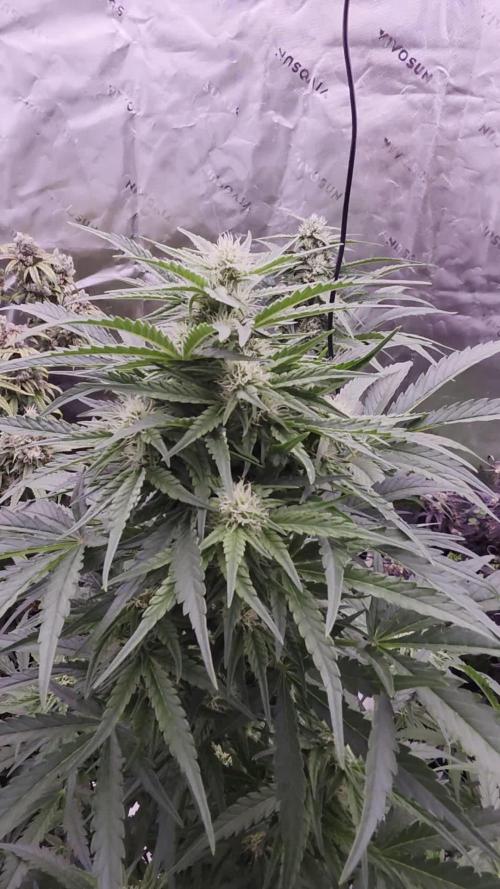
Day 49 the blue amnesia are 44 and 41 inches and the Moby Dick are 39 and 33 inch tall the scrog net is at 29 inches tall from the base of the planters( meaning from the soil measuring upwards). the two plants that were shorter are starting to stretch very fast when the other two plants are just puffing there buds fatter every day and not so much stretching anymore. I thought that the other two that were not stretching as fast as their counterparts we're going to be shorter in size but seems to me they were just maturing at
A different speed. also the Moby Dick smells very sweet very nice. thank you for reading and I will continue updating have a happy grow.
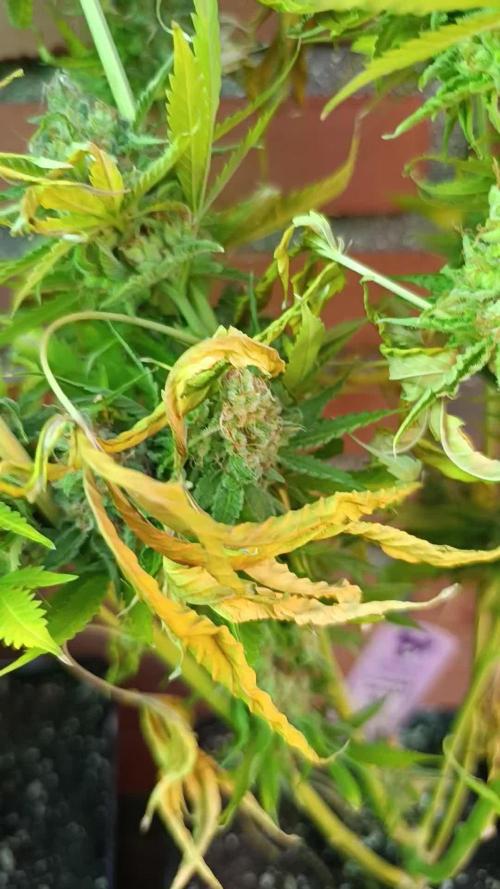
Day 54 it looks like the plans have been struggling a lot with excessive nutrient inside the pot even after Flushing they're showing lots of ( 1000+ to 2300+)PPM per plant so i decided to buy General Hydroponics flushing product for the next watering cycle to clean them out . Unfortunately it takes some time for somebody to learn how to use properly nutrients and to read signs on the plant because of this it seems that one of the movie dick will be getting much less flower than the other plant because nutrient lockout for excessive nutrients that I didn't notice early on for lack of experience D2 blue anessia are pretty much equally growing despite all of them showing signs of nutrient burn they have to suffer in order for me to learn looks like they stop stretching as well and they're focusing only in become fatter what an incredibly resilient plants. Despite all this they are on the road to recovery and seems to be doing well I will continue updating thank you for reading and have a happy grow.


Likes
4
Share

@Kinghaze
Follow
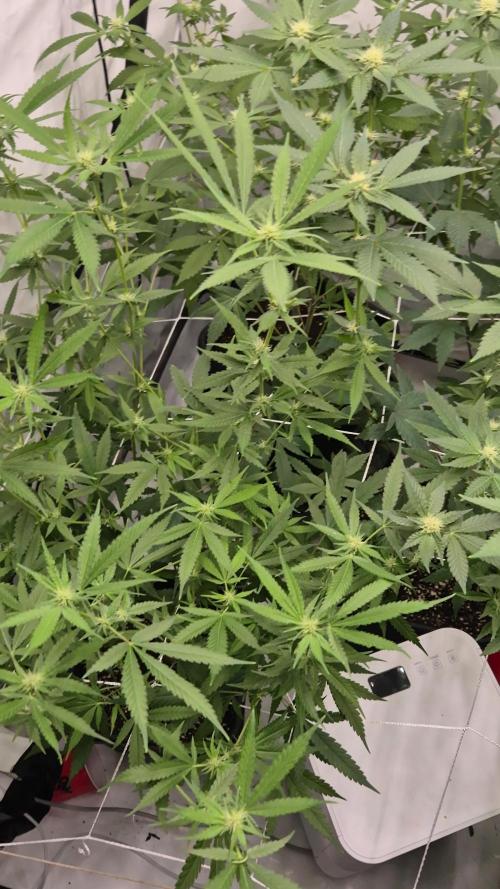
Plants are doing good
Did some defoliation
They are starting to drink a lot .
Give them 1.5L a day


Likes
47
Share


@DreamIT
Follow
⏳🌳The Endless GREEN Garden🌳⏳
________________________________________________________________________________________________
🌳 4.2 ...
🌳 5.2 ...
🌳 6.2 ...
🌳 7.2 Nothing to say, the difference between these dos si dos and the same (mother plant where these clones come from) is immense. The only real difference is the light with which they are growing. I currently use Viparspectra p1500, first a very common cheap pink led bought on amazon. Seeing is believing XD
🌳 8.2
🌳 9.2
🌳 10.2
________________________________________________________________________________________________________
📜👀 A look at the details of what I'm growing 👀📜
✌️Dos-si-Dos 33✌️ 🌞🚜 Barney's Farm 🚜🌞
📋 Details 📋
⚧ Gender
▪️ Feminised
➰ Genes
▪️ 60% Indica / 40% Sativa
🎄 Genetics
▪️ Dos Si Dos x Gelato #33
🚜Harvest
▪️ 800 g/m²
🌷Flowering
▪️ 60 - 65 days
✨THC
▪️28.0%
✅CBD
▪️ N/D
🏡Room Type
▪️ Indoor
🌄Room Type
▪️ Outdoor
🕋Room Type
▪️ Greenhouse
🎂Release Year
▪️ 2019
________________________________________________________________________________
👀📷🥇 Follow the best photos on instagram 🥇📷👀
https://www.instagram.com/dreamit420/
🔻🔻🔻Leave a comment with your opinions if you pass by here🔻🔻🔻
🤟🤗💚Thanks and Enjoy growth 💚🤗🤟

Likes
14
Share


@RakonGrow
Follow
Tag 82:
Hab mich nun doch entschieden , da die Trichome wirklich zu 90% Milchig sind , die Dame am Stamm abzuhacken . (Extra ein kleines Beil gekauft (scherz)) . Dann im Stück einfach Kopfüber . Abluft ist an , Ventilator unter der Spitze . Jetzt noch 4-5 Tage warten (je nach Temp und Feuchte) . Und dann schauen wir mal was es wird .Für mich wichtig , viel Feuchtigkeit im Raum , ich will das sie auch nach dem Trocknen noch kleben . Ergo hab ich den Stoftopf drinne stehen gelassen .
Tag 82-88:
Kopfübertrocknung
+ Temperatur : 21°C - 23°C)
+ Lüftfeuchtigkeit : 52%rH-60%rH
+ VPD kleiner gleich 1.2
+ 4 bis 5 Tage
Ich versuche maximal einen VPD von 1.2 zu halten für ca 4-5 Tage.
Tag 85:
Ein Video hinzugefühgt wo ihr das Trockenzelt sehen könnt. Die LED hab ich genau unter der Abluft angebracht damit kein einseitiger Luftzug entsteht, dafür mit mehr Power .
Tag 86:
Video von der Kopfüberhängenden hinzugefühgt.
Tag 88:
5 Tage lang getrocknet , Blüten vom Stiel getrennt und in Schalen in den Weinkühlschrank mit Silikatgel für die Feuchteregelung.
Tag 90:
Trichome aufgenommen.
CureBoxen geschlossen nach 2 Tagen im Weinkühler
Next Step:
Bouveda 58% , Sauerstoffabsorbierer


Likes
55
Share


@Ultraviolet
Follow
2nd net is up. Early bud formations are promising. holding up to the extremes pretty well, some leaves taking minor damage, but overall, she is holding up, gave her 1 night at 50F see how she would react, stressful. Not advised as it messes with her metabolism, but I want to see if it triggers any anthocyanin response. Love to see her purp up but no signs yet. Remember, For every molecule of glucose produced during photosynthesis, a plant needs to split six molecules of water. This process provides the hydrogen needed for synthesizing glucose and other organic compounds, while oxygen is released as a byproduct.
Homework.
If Rubisco activity is impaired and it cannot properly function or regenerate its substrate, the plant's leaves are likely to turn a pale green or lime green, a condition known as chlorosis. Essentially, Rubisco activity is highly regulated and susceptible to various environmental and metabolic factors that can cause it to become inhibited, leading to an apparent failure in RuBP regeneration due to a lack of consumption.
Rubisco regeneration is intrinsically linked to nitrogen supply because Rubisco is a major sink for nitrogen in plants, typically accounting for 15% to over 25% of total leaf nitrogen. The regeneration phase itself consumes nitrogen through the synthesis of the Rubisco enzyme and associated proteins (like Rubisco activase), and overall nitrogen status heavily influences the efficiency of RuBP regeneration. RuBisCO is a very large enzyme that constitutes a significant proportion (up to 50%) of leaf soluble protein and requires large investments in nitrogen. Insufficient nitrogen supply limits the plant's ability to produce adequate amounts of RuBisCO, thereby limiting the overall capacity for photosynthesis and carbon fixation. Maintaining the optimal, slightly alkaline pH is crucial for the proper function and regeneration of Rubisco. Deviations in either direction (too high or too low) disrupt the enzyme's structure, activation state, and interaction with its substrates, leading to decreased activity and impaired RuBP regeneration. (Lime/yellowing)
Structural Component: Nitrogen is an essential building block for all proteins, and the sheer abundance of the Rubisco protein makes it the single largest storage of nitrogen in the leaf.
Synthesis and Activity: Adequate nitrogen supply is crucial for the synthesis and maintenance of sufficient Rubisco enzyme and Rubisco activase (Rca), the regulatory protein responsible for maintaining Rubisco's active state. Nitrogen deficiency leads to a decrease in the content and activity of both Rubisco and Rca, which in turn limits the maximum carboxylation rate, Vmax, and the rate of RuBP regeneration Jmax, thus reducing overall photosynthetic capacity.
Nitrogen Storage and Remobilization: Rubisco can act as a temporary nitrogen storage protein, which is degraded to remobilize nitrogen to other growing parts of the plant, especially under conditions of nitrogen deficiency or senescence.
Nitrogen Use Efficiency (NUE): The allocation of nitrogen to Rubisco is a key determinant of a plant's photosynthetic nitrogen use efficiency (PNUE). In high-nitrogen conditions, plants may accumulate a surplus of Rubisco, which may not be fully activated, leading to a lower PNUE. Optimizing the amount and activity of Rubisco relative to nitrogen availability is a target for improving crop NUE.
Photorespiration and Nitrogen Metabolism: Nitrogen metabolism is also linked to the photorespiration pathway (which competes with carboxylation at the Rubisco active site), particularly in the reassimilation of ammonia released during the process.
To increase RuBisCO regeneration, which refers to the process of forming the CO2 acceptor molecule Ribulose-1,5-bisphosphate (RuBP) during photosynthesis, the primary methods involve optimizing the levels and activity of Rubisco activase (Rca) and enhancing the performance of other Calvin-Benson-Bassham (CBB) cycle enzymes.
Biochemical and Environmental Approaches:
Optimize Rubisco Activase (Rca) activity: Rca is a crucial chaperone protein that removes inhibitory sugar phosphates, such as CA1P (2-carboxy-D-arabinitol 1-phosphate), from the Rubisco active site, thus maintaining its catalytic competence.
•Ensure optimal light conditions: Rca is light-activated via the chloroplast's redox status. Adequate light intensity ensures Rca can effectively maintain Rubisco in its active, carbamylated state.
•Maintain optimal temperature: Rca is highly temperature-sensitive and can become unstable at moderately high temperatures (e.g., above 35°C/95F° in many C3 plants), which decreases its ability to activate Rubisco. Maintaining temperatures within the optimal range for a specific plant species is important.
•Optimize Mg2+ concentration: Mg2+ is a key cofactor for both Rubisco carbamylation and Rca activity. In the light, Mg2+ concentration in the chloroplast stroma increases, promoting activation.
•Manage ATP/ADP ratio: Rca activity depends on ATP hydrolysis and is inhibited by ADP. Conditions that maintain a high ATP/ADP ratio in the chloroplast stroma favor Rca activity.
Enhance Calvin-Benson-Bassham (CBB) cycle enzyme activity: The overall rate of RuBP regeneration can be limited by other enzymes in the cycle.
•Increase SBPase activity: Sedoheptulose-1,7-bisphosphatase (SBPase) is a key regulatory enzyme in the regeneration pathway, and increasing its activity can enhance RuBP regeneration and overall photosynthesis.
•Optimize other enzymes: Overexpression of other CBB cycle enzymes such as fructose-1,6-bisphosphate aldolase (FBA) and triose phosphate isomerase (TPI) can also help to balance the metabolic flux and improve RuBP regeneration capacity.
Magnesium ions, Mg2+, are specifically required for Rubisco activation because the cation plays a critical structural and chemical role in forming the active site: A specific lysine residue in the active site must be carbamylated by a CO2 molecule to activate the enzyme. The resulting negatively charged carbamyl group then facilitates the binding of the positively charged Mg2+ion. While other divalent metal ions like Mn2+ can bind to Rubisco, they alter the enzyme's substrate specificity and lead to dramatically lower activity or a higher rate of the non-productive oxygenation reaction compared to Mg2+, making them biologically unfavorable in the context of efficient carbon fixation. The concentration of Mg2+ in the chloroplast stroma naturally increases in the light due to ion potential balancing during ATP synthesis, providing a physiological mechanism to ensure the enzyme is activated when photosynthesis is possible. At the center of the porphyrin ring, nestled within its nitrogen atoms, is a Magnesium ion (Mg2+). This magnesium ion is crucial for the function of chlorophyll, and without it, the pigment cannot effectively capture and transfer light energy.
Mg acts as a cofactor: Mg2+ binds to Rubisco after an activator CO2 molecule, forming a catalytically competent complex (Enzyme-CO2-Mg2+). High light + CO2) increases demand: Under high light (60 DLI is a very high intensity, potentially saturating) and high CO2, the plant's capacity for photosynthesis is high, and thus the demand for activated Rubisco and the necessary Mg2+ cofactor increases. Mg deficiency becomes limiting: If Mg2+ is deficient under these conditions, the higher levels of Rubisco and Rubisco activase produced cannot be fully activated, leading to lower photosynthetic rates and potential photo-oxidative damage.
Optimal range: Studies show that adequate Mg2+ application can enhance Rubisco activation and stabilize net photosynthetic rates under stress conditions, but the required concentration is specific to the experimental setup.
Monitoring is key: The most effective approach in a controlled environment is to monitor the plant's physiological responses e.g., leaf Mg2+ concentration, photosynthetic rate, Rubisco activation state, and adjust the nutrient solution/fertilizer to maintain adequate levels, rather than supplementing a fixed "extra" amount.
In practice, this means ensuring that Mg2+ is not a limiting factor in the plant's standard nutrient solution when pushing the limits with high light and CO2.
Applying Mg2+ through foliar spray is beneficial to Rubisco regeneration, particularly in alleviating the negative effects of magnesium (Mg) deficiency and high-temperature stress (HTS). While Mg can be leached from soil, within the plant it is considered a mobile nutrient, particularly in the phloem. Foliar-applied Mg is quickly absorbed by the leaves and can be translocate to other plant parts, including new growth and sink organs.
Foliar application of: NATURES VERY OWN MgSO4 @ 15.0g L-1 in a spray bottle. For those high-intensity workouts when 1 meal a day is just not enough!
Foliar sprays are often recommended as a rapid rescue measure for existing deficiencies or as a supplement during critical growth stages, when demand for Mg is high. Application in the early morning or late evening can improve absorption and prevent leaf burn. The plant was getting a little limey yellow in the centre. Shortly thereafter, she was back in business, green mostly regenerated. The starting point [of creativity] is curiosity: pondering why the default exists in the first place. We’re driven to question defaults when we experience vuja de, the opposite of déjà vu. Déjà vu occurs when we encounter something new, but it feels as if we’ve seen it before. Vuja de is the reverse—we face something familiar, but we see it with a fresh perspective that enables us to gain new insights into old problems.
Confidence is evidence... nothing more. You are confident because you have driven 10,000 times, you are confident because you have spoken 10,000 times. People think confidence is a feeling, but it's not. If you want more confidence, then you need to create evidence, take more shots, collect more data, build more experiences, take more risks; fail, confidence doesn't come first; it is the reward you get for doing the work. no one else wants to do.
Likes
5
Share


@SgtDoofy
Follow
Feb 27
Swapped over to an 18/6 light schedule a couple days back. Getting some really good perking-up during sleep.
Not quite ready for LST yet.
Likes
11
Share

@Growfather1
Follow
Hello everyone,
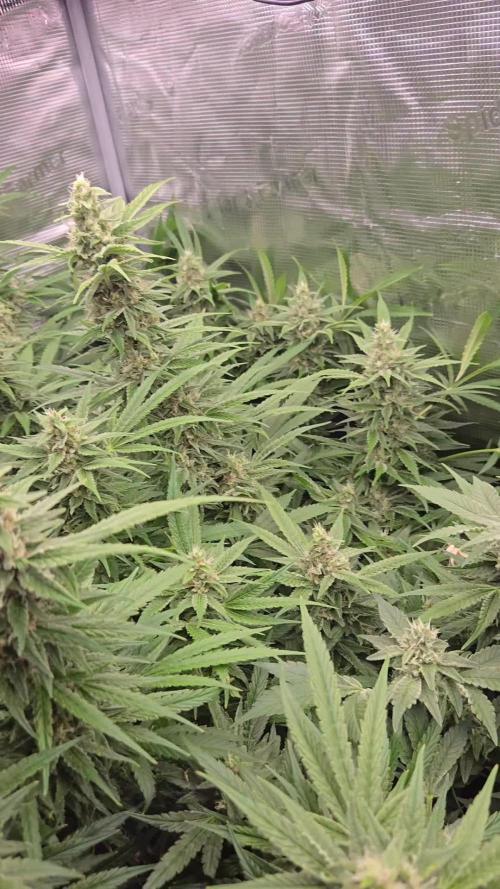
This update is 2 days later, today i going to add more pk13/14 to the plant 30ml in 20 liter water.
This week the temperature outside will reach 36 degrees celsius so that will be a big challenge for me the lights are on from 12pm to 12am airconditioning is already on now and when the temperature is going over 30 degrees i will lower the light intensity to combat high temperature in the tent.
Let's see how things stand next week, thanks for stopping by and have a nice day.
Best regards,
Growfather

Likes
12
Share

@NSABND
Follow
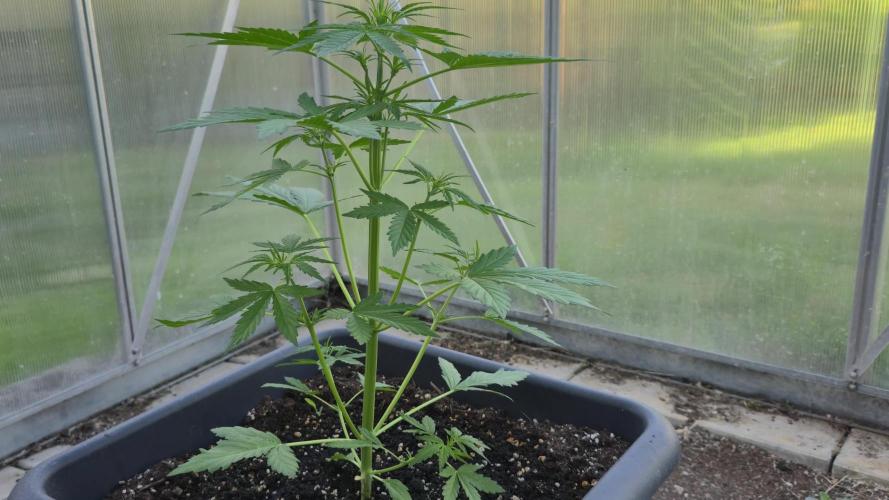
Day 29... afternoon very sunny and warm temp 👍
Day 30 damn hot and full of sun 😎👍
Day31 warm weather with sun in the morning, laters cloudy with high humidity 😃
Day32 totally fucked up weather...rain non stop and cloudy 😕😫😩
Day33 same damn weather then yesterday oh lord 😒😠😵
Day34 cloudy start in the day but then sunny weather 😍👍😏
Day35 normal day with sun and clouds not too hot 😎👌
Enjoy week 5 speed run vid 😉👍

Likes
39
Share


@Mastr
Follow
Hi everyone I'm not very happy I top them very late I should done it 2 days ago or yesterday coz I been very poorly couldn't even get out off bed but I topped all lady today (day16)from 6th node and 1 from 4th node(by accident) I cut the wrong stem then I have to cut rest so hope it doesn't effect yield
Day 21 they are so bushy already 1plant day21 start preflowering
I feed them
1ml silica
2ml biogrow
2ml heaven
2ml activera
1ml alg amic
With 1L ph water each Plant every day
Following week will reduce grow and add some bloom and top max
(Recommended silica liquid for everyone)


Likes
10
Share


@prohbusiness
Follow
Darkness was sketchy but glad I did it. Should have cut plant 1 last week. Plant two looks great. Smells like candy. So stoked. Have two mothers and 4 clones ready to go. Clones went into flower earlier then anticipated had to “reveg” them then back into flower so they look funky. Might do a flower diary to show.

Likes
60
Share


@m0use
Follow
Good week overall, The plants are levelling out and getting extra green with the transplant, no more die back :D Still no word from Gaia Green so I think they just don't care after getting bought out. similar to GHE and scotts miracle grow big brands are taking up smaller independent companies to get every aspect of the market then cheapening the product slowly over time.
I have topped them again and waiting for the new shoots to grow in, I have also removed the lower branches and put them into vials to clone out. Will see how they do and if I want to grow them outdoor this year or give em away. I will be looking for a new home for the 4th plant that survived in the smaller container. But it won't be ready for another few months till the weather improves for outdoors or anytime right now if I know a buddy wants a plant in my area. I also topped my peppers in hopes it will bush them out a lot and get a solid plant. Holy basil is also fine, I feel I am going to need to give it some more food in a bit they will be approaching nutrient depletion soon.
The extras I put in the water this week are the same as any other, fulvic acid, potassium silicate, yucca extract, a bacteria pro bio soil product "NOT LABS" and PH adjusters. Trying out critic, ascorbic and malic acids powders as a alternate to phosphoric acid liquid. If it works its an option for PH down and one I can buy in bulk almost anywhere. 85% phosphoric is hard to source unless you got a grow shop close by. I was also reading that critic has a strong affinity for dissolving calcium and might work better on it vs phosphoric and dies out faster. but this needs more looking into before anything concrete is devised.
O I also made some Brownie Cookies, they turned out well. Chewy on the inside and crunch on the outside. I infused them with 15.5G of flower and a quick butter bath only simmering for 30min, 7g CBG ZeroDue from SeedStockers + 7g Dnamed Kush CBD Auto from Dinafem + 1.5g Strawberry Cola Auto from Exotic Seeds. Strained out all the weed and used the butter in the cookies. I would make them again, all cookies got flaked salt as a garnish, They are very light and I can eat a few of them and still be ok, This is what I want, great with reducing inflammation and relaxing the body. If I want a more THC high I'll eat more of them or take a separate THC edible.
Big shoutout to Medic Grow for sponsoring the lighting in my tent, They have provided me with 2x Mini Sun 2's in the 240w configuration, They use the v1 growing spectrum that is a all purpose seed to harvest spectrum so their is no hassle of switching it mid grow. If you interested in learning more about Medic Grow products please visit the web link below.
https://medicgrow.com/
https://growdiaries.com/grower/MedicGrowLED

Likes
2
Share


It was a nice experience, It helped me with some things that I didn't know before. It was hard at the beginning because the plant was on a bad situation. But thanks to some fertilizers everything changed, also with love and patience. Good production but it could have been more. Next times will be better, now we have to be thankful and ready to continue😜


Likes
12
Share


@OilyEliteOrganics
Follow
Growing feet.
Reaching great height might have to back bud it .
Has some smells.
I can see the oils protruding from the leaves pores leaving a powerful aroma overall stenching up the whole pad.

Likes
8
Share


@Leafy420
Follow
Day 14
After a week from the bottom feed
The pots feels light again
My finger was dry
So i think its time for they first halve dose feed
23c, Ppm 700, ph 6,25
Gave each a dose of 100ml water
Day 16
Last night I saw roots so today I transplanted
Wich didn't really went as plant because something (Hopefully only soil) dropped right before I placed "Jane" into her new home :(
Besides that it went okay
Gave them a good dose of water
Now wait till it dries and then they get their first full feed dose
Day 20
This night they got they first full feed
500ml each
4ml grow A&B
4ml b52, bud candy and voodoo
With a low ph to bring down the ph in soil
Wich is a lil high I qeuss
22,7c 1000ppm 5,8 ph
Day 21
Today we did some LST
Now they lay, next up is sit and then we roll
So far they are cooperating
Day 22
All are now bend and secured and doing well :D
Day 23
Soil was dry gave them some calmag 1ml/l each 700ml 6.10ph

Likes
14
Share


@HanfConnoisseur
Follow
Week 4: Late Flowering Stage
Welcome to the eighth weekly update of our cannabis cultivation journey in Germany! As we enter the fourth week of flowering, our strains—Pulp Friction, Cookies Haze, Eleven Roses, Poddy Mouth, Critical Lemon Kush, and OG Kush—are approaching their final stages of development with impressive bud growth and resin production.
Key Developments:
1. Bud Maturation:
- The buds have continued to swell and mature, becoming dense and resinous.
- Trichomes are now fully developed, with milky-white heads and some turning amber, indicating the approaching harvest window.
2. Environmental Management:
- Maintained stable environmental conditions with temperatures between 20-26 degrees Celsius and humidity levels around 40-50%.
- Continued to ensure adequate ventilation to prevent mold and maintain airflow around the plants.
3. Nutrient and Watering Management:
- Adjusted nutrient levels to support late-stage flowering and maximize resin production.
- Monitored soil moisture carefully, maintaining optimal hydration levels for the plants’ roots.
4. Final Care and Maintenance:
- Continued to support the plants’ structure with stakes and ties to prevent branches from bending under the weight of mature buds.
- Removed any remaining yellowing or dead leaves to promote airflow and redirect energy towards bud development.
Growing Medium and Setup:
- The plants have thrived in a blend of living soil, coco coir, perlite, and clay pebbles, enriched with mycorrhizal fungi cultures for enhanced nutrient absorption.
Next Steps:
- Monitor trichome development closely to determine the ideal harvest time based on desired effects (clear, cloudy, or amber trichomes).
- Prepare for harvest by gathering necessary tools and supplies, such as trimming scissors, drying racks, and storage containers.
- Stay vigilant for any signs of pests or diseases as the plants near maturity.
Stay tuned for next week’s final update, where we’ll discuss harvest preparations and the culmination of our cannabis cultivation journey. Feel free to ask any questions or share your experiences in the comments below!


Likes
14
Share

@420DeepGrow
Follow
📆 Semana 9
Los cogollos llegan al final del ciclo completamente desarrollados, con una gran densidad, dureza y una producción de resina muy elevada. Los cálices terminan de hincharse y las flores alcanzan su máxima compactación y peso, mientras los pistilos se encuentran mayoritariamente oscuros y retraídos.
Los aromas alcanzan una intensidad máxima y el perfil terpénico se muestra completamente definido, mientras el fade avanza de forma natural y la planta concentra sus últimos recursos en completar la maduración de las flores.
Esta última semana estuvo marcada por la evacuación, dificultando el mantenimiento de la rutina habitual de cultivo. A pesar de ello, la planta consiguió completar el ciclo y llegar a cosecha con un resultado muy satisfactorio.
¡Seguimos creciendo fuerte! 💪

Likes
12
Share

@MrGrowDiarie
Follow
Day 49
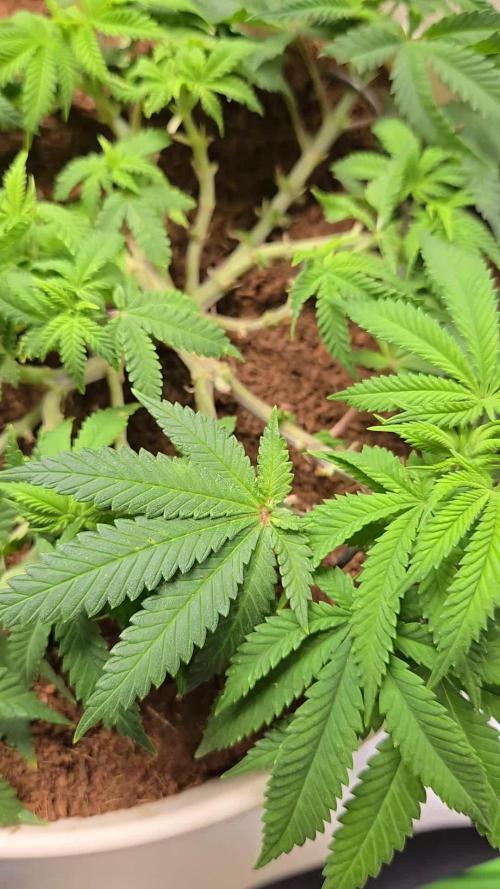
This smaller plant is at day 49 and has clearly been topped earlier in its growth cycle. The topping has encouraged a bushier structure, with multiple main branches now developing evenly. Instead of a single dominant top, the plant is pushing out symmetrical side shoots, creating a wider canopy and setting the stage for multiple bud sites.
The new growth is lighter green, showing healthy development, while the older fan leaves are darker and strong. The plant looks compact and well-structured, with tight internodes and balanced growth. The topping has slowed vertical stretch compared to an untopped plant, but the overall result is a sturdier, more manageable shape.
There are no clear signs of stress or deficiency — leaves are healthy, edges are smooth, and the color is consistent. The canopy is lower and denser than the bigger plants, but that’s expected after topping. With some time, the side branches will continue to catch up, forming a nice even top layer.
This plant is on track for a strong transition into flowering, with the topping already setting it up for a more even distribution of colas and better light penetration.