


Likes
Comments
Share


Processing
Likes
56
Share


@Zannabis7
Follow
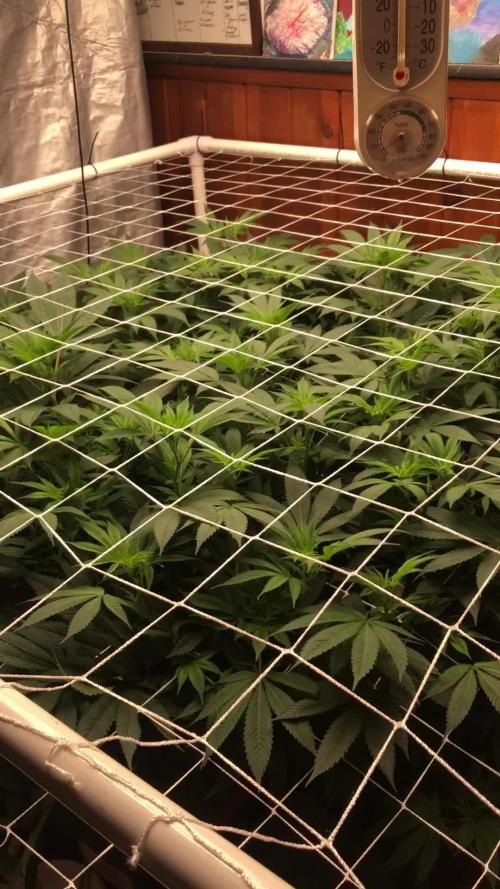
Day 12 of organic grow and all is well. Seemed to have dialed in the conditions and able to keep good air movement, CO2 levels, and consistent temperatures/humidity with the ThruWall Closet Fan (Model TW108 ), and the Holmes Twin Exhaust/Intake Fan (Model HAWF-2041). Humidity is maintained with a Lovoit 6L Ultrasonic Programmable Cool Mist Humidifier (Model# LV600HH). Added a SCROG screen (just a cargo net) and bought the Sample Pack of organic nutrients from Nectar for the Gods (just pay shipping and they will send you the sample nutrients - check out the website). People say their line of nutrients make the buds smell and taste like no other! I have always been an organic Earth Juice nutrient guy, so I am going to experiment with combining the two.
Lights are on 24/0 and she has tight internodal spacing with good vertical growth. Room that closet is in is beginning to smell skunky at times, and like diesel at other times. Will begin light organic nutrients with next watering. If you made it this far, please check out my other autoflower grows.
Day 13 - Watered today with very low strength nutrients added. - Zannabis7


Likes
50
Share


@Reyden
Follow
Ho già cambiato le ore e ho messo 15 accese e 9 spente, tempo qualche giorno è imposto il timer 12/12 😃

Likes
5
Share


@GermGrowFox
Follow
18. November
Die sechste Woche ist angebrochen. Heute keine Einsicht unternommen.
19. November
Die Begleiter kommt so langsam aus der Erde. Sind noch wenige. Spätestens in einer Woche neu nachlegen, falls nicht ausreichend wachsen.
Die drei Damen entwickeln sich prächtig. Stresssymptome durch das schneiden sind kaum noch bemerkbar.
Cookies gelato kommt mit den neuen Hauptrieben sehr gut zurecht. Wachstumstempo hat deutlich zugenommen.
Tropimango sieht deutlich gesünder aus. Auch bei ihr ist endlich mal etwas Tempo im Wachstum spürbar.
Die Runtz fühlt sich aktuell so an als würde sie den Rahmen des Zeltes sprengen wollen, sobald es in den blütestretch geht. Die Triebe haben sehr dicke Stämme, die Blätter sind verhältnismäßig zu den anderen Pflanzen sehr groß. Selbst neu entwickelte Triebe und Blätter starten deutlich größer als ich es bisher gewohnt bin. Aber schaun wa mal was wird… was wird.
Der Fimmingschnitt hat mir einen schrägen Trieb hervorgebracht. Ka was ich damit machen soll. Nächstes Mal halt gerade schneiden 🤝
20. November
Runtz hat ein unglaubliches Wachstumsbedürfnis. Ihre Blätter sind riesig und tiefgrün. Sie verdeckt innerhalb von Stunden erneut ihre anderen Triebe Sie trinkt auch deutlich mehr als die Cookie & Tropi. Hab ihr heute nochmal 3l Wasser mit dem vollem Düngerprogramm zugemutet.
Die anderen beiden kommen gut voran, haben allerdings noch kein Wasser bekommen. Die Töpfe sind noch zu schwer.
Tropimango wuchert in alle Richtungen
Cookies Gelato darf weiterhin an Höhe gewinnen. Ich spiele mit dem Gedanken sie kurz vor dem Wechsel in die Blüte erneut zu toppen. 😅
21. November
Die Cookies gelato wurde mit 3l Wasser versorgt. Zusätzlich gabs noch 1ml power buds von plagron. Kleine Vorbereitung auf die Blüte.
Tropimango hat 2l Wasser mit den normalen düngeschema erhalten.
Runtz wurde gestern mit 3l versorgt, ebenfalls normale düngeschema. Zusätzlich hab ich ihr die großen Blätter genommen, sowie die seitentriebe neu ausgerichtet
22. November
Habe bei der Runtz den schiefen Trieb abgeschnitten. Er ist leider viel zu verstümmelt. Die Idee war dass dieser Trieb dementsprechend der Pflanze Zuviel Energie zieht, die sie an einer anderen Stelle besser investieren könnte. Daher im heute der Schnitt
Cookies Gelato gewinnt an Höhe. Im Verhältnis zur Runtz ist sie unglaublich gut ausgeprägt, ist allerdings auch 14 Tage älter.
Die Tropimango sieht weiterhin merkwürdig aus. Ich kann leider nicht sagen ob ich beim Erde mischen irgendwas falsch gemacht habe. Weiß auch nicht wie ich drauf Einfluss nehmen könnte. Aber sie wächst. Von daher geht’s einfach weiter.
23. November
Die Woche neigt sich so langsam dem Ende zu. Nach ewigem umentwcheiden kam ich jetzt dennoch zu dem Entschluss, die Pflanzen zu Beginn der neuen Woche in die Blüte zu schicken.
Die Cookies gelato hat daher noch ihr letztes topping bekommen. Nachdem sie einen ordentlichen Wachstumsschub bekommen hat, gehe ich von aus dass sie es gut wegsteckt.
Die tropimango gefällt mir immer besser :)
Ich hoffe sie geht in der Blüte nicht unter, da sie eine babygenetik ist.
Runtz (irgendwie hört sich der Name eklig an. Muss da an einen alten Mann denken, der seine Nase hochzieht und dann auf den Boden spuckt) wird so wie sie wird. Der Stamm ist super stabil aber sie ist verhältnismäßig klein für ihr Alter. Dafür produziert sie immer noch riesige Blätter.
Cookies gelato ist nun 39 Tage alt.
Tropimango ist nun 36 Tage alt.
Runtz ist nun 25 Tage alt.


Likes
Comments
Share


Likes
8
Share


@HoddleKing
Follow
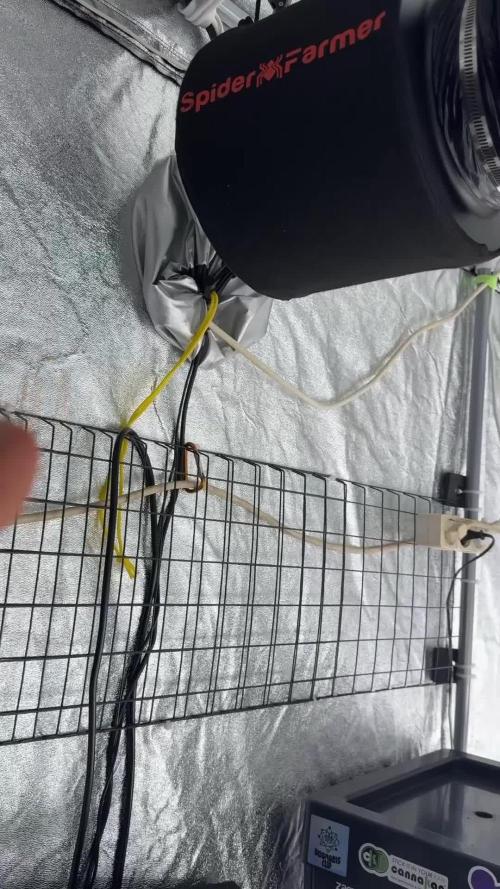
Steady week , bit of defoliation to try and get some light to the bottoms too . Using a 300 watt phlizon which is a great light but not the largest of coverage . De humid working nicely which for the price is a very good thing


Likes
11
Share

@DogDoctorOfficial
Follow
🌱 White Widow – Week 3 | Structure, Strength & Setup
Genetics: White Widow (Zamnesia Seeds)
Light Schedule: 11/13 (Flower From Seed)
Stage: Week 3 – Preflower (no signs yet)
Structure: Compact, Healthy | Heading into 4th Node
Feeding: Aptus Full Recipe
Lighting: ThinkGrow Model One Bars + Future of Grow Black Series 600W
Control: Full TrolMaster Ecosystem
⸻
Three Weeks In – Compact & Confident
Here we are, Week 3, and White Widow is showing us her best early form. She’s:
• Tight in internodal spacing
• Vibrant in color and leaf health
• Low & strong, with no stretching yet
• Just pushing into her fourth node and still no signs of flowering, exactly what we’d hope in this phase, given our light cycle
She’s not rushing—she’s setting her foundation.
In an 11/13 light cycle, some might expect earlier preflower signs, but not all strains respond immediately. And honestly? I’m loving this slower, more intentional rhythm. She’s taking her time, and that usually means she’ll stack smart, not wild.
⸻
💧 Feeding Routine – Gentle, Consistent Support
Even though she’s rooted in a rich super soil blend, we’re continuing to assist her via the feed water with a light, targeted Aptus mix:
Current Feed Recipe:
• Aptus Regulator – 0.15 ml/L
• CalMag Boost – 0.25 ml/L
• All-in-One Liquid – 1 ml/L
• Start Booster – 0.25 ml/L
This isn’t about force-feeding, this is about helping the soil activate and harmonize, giving her what she needs before she starts asking for more. The mix keeps her cell structure strong, supports microbial life, and encourages consistent early root development.
She’s loving it and it shows.
⸻
💡 The Environment – Light & Movement
This week, she’s been bouncing between two active grow zones, as we continue to refine the entire setup. It’s all managed within the TrolMaster ecosystem, offering precision control over both lighting and environment.
She’s currently rotating between:
• ThinkGrow Model One Bars – soft, powerful full-spectrum LED bars with excellent canopy penetration
• Future of Grow Black Series 600W – full spectrum, deep reds for flowering intensity
Both are synced and monitored through TrolMaster, giving us:
• Consistent PPFD targets (250–400 µmol/m²/s for now)
• Environmental tracking for temp, RH, and VPD
• Freedom to adapt space as needed while the grow evolves
🎛️ Why this setup?
Because we’re still dialing in the room and flexibility is everything. She’s adjusting beautifully to these shifts, showing no signs of stress. A real soldier.
⸻
👀 What to Expect / What Not to Expect
Expect:
• More node development, maintaining compact shape
• Flower pre-signs within the next 7–10 days
• Slow, deliberate shift toward stretch (if she chooses to stretch at all)
• Stronger feeding signals as roots fully colonize the pot
Not to Expect (just yet):
• Pistils or heavy flower behavior
• Wild vertical growth
• Deficiency signs (thanks to our balance and microbial boost)
She’s exactly where she needs to be.
⸻
🤝 Gratitude & Shoutouts
Huge thanks to the partners helping this journey become a reality:
🌱 Zamnesia Seeds – for delivering timeless classics like White Widow and keeping the legacy alive
🔧 Aptus Holland – for the precision nutrients that support both living soil and direct feeding
💡 ThinkGrow – for elegant, pro-level light bar systems that keep our canopy even and calm
🚀 Future of Grow – for the Black Series 600W, bringing serious intensity and bloom readiness
🧠 TrolMaster – for letting us control every detail, from light to leaf, with precision and peace of mind
⸻
💚 Final Thoughts – Week 3
This White Widow is more than just a plant, she’s a rebirth after a rough start, a solo performance, and now she’s writing her own pace into this grow.
No rush.
No shortcuts.
Just care, balance, and a slow, steady climb toward bloom.
We’re watching closely, learning daily, and adjusting with love. Thank you for walking this path with us. More to come soon 🌿
#WhiteWidow #ZamnesiaSeeds #Week3Update #ThinkGrow #FutureOfGrow #TrolMasterControlled #AptusPowered #GrowDiaries #11_13FromSeed #FlowerFromSeed #LEDGrow #CannabisCommunity #GrowYourOwn
📲 Don’t forget to Subscribe and follow me on Instagram and YouTube @DogDoctorOfficial for exclusive content, real-time updates, and behind-the-scenes magic. We’ve got so much more coming, including transplanting and all the amazing techniques that go along with it. You won’t want to miss it.
• GrowDiaries Journal: https://growdiaries.com/grower/dogdoctorofficial
• Instagram: https://www.instagram.com/dogdoctorofficial/
• YouTube: https://www.youtube.com/@dogdoctorofficial
⸻
Explore the Gear that Powers My Grow
If you’re curious about the tech I’m using, check out these links:
• Genetics, gear, nutrients, and more – Zamnesia: https://www.zamnesia.com/
• Environmental control & automation – TrolMaster: https://www.trolmaster.eu/
• Advanced LED lighting – Future of Grow: https://www.futureofgrow.com/
• Root and growth nutrition – Aptus Holland: https://aptus-holland.com/
• Nutrient systems & boosters – Plagron: https://plagron.com/en/
• Soil & substrate excellence – PRO-MIX BX: https://www.pthorticulture.com/en-us/products/pro-mix-bx-mycorrhizae
• Curing and storage – Grove Bags: https://grovebags.com/
⸻
We’ve got much more coming as we move through the grow cycles. Trust me, you won’t want to miss the next steps, let’s push the boundaries of indoor horticulture together!
As always, this is shared for educational purposes, aiming to spread understanding and appreciation for this plant. Let’s celebrate it responsibly and continue to learn and grow together.
With true love comes happiness. Always believe in yourself, and always do things expecting nothing and with an open heart. Be a giver, and the universe will give back in ways you could never imagine.
💚 Growers love to all 💚



Likes
Comments
Share

@HighHolidays
Follow
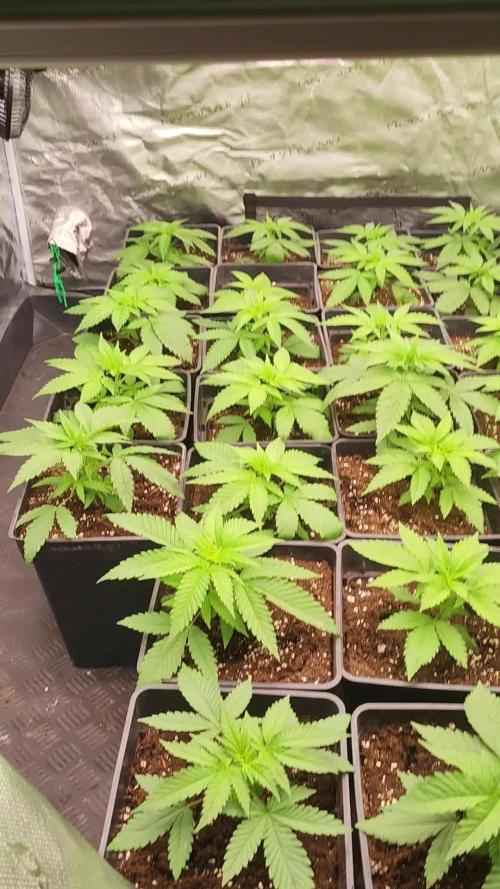
The third week is beginning, and the plants are showing healthy, steady growth. Soon I’ll be moving them into the vegetative stage, where they’ll start developing more vigorously. I’ve added more soil to the pots to give them better support and allow the roots to keep expanding properly. They’re already starting to release a noticeable scent, a good sign that they’re healthy and progressing well.
The leaves have kept their deep green color, and the overall structure looks promising for a strong vegetative phase. I’m also starting to notice early signs of branching and an increase in the size of new leaves.🎅
Likes
3
Share


@Chubbs
Follow
Weekly update on these wonderful girls. They've progressed beautifully, especially considering the day time temps have been in the mid 90's. Not seeing any signs of deficiencies and spraying once a week of either Athena's IPM and stack or PureCrop1 for pest management. So far since being transplanted they've only been fed well water. I'll probably start some Grow A & B nutes and calmag this week. All in all Happy Growing

Likes
24
Share


@BB_UK
Follow
So I’ve been flushing for a week now and shes really transformed and developed some huge buds! Frosty tot he tippety top! I’m so proud of her! Will continue to flush until shes ready for chop


Likes
5
Share

@GermGrowFox
Follow
Blütewoche drei:) die Cookies und Tropimango sieht man die Blüte an.
Die Runtz entwickelt langsam ihre geschlechtsteile. Hinkt gefühlt etwas hinterher. Ich hab wieder eine riesige Trauermückenpopulation im Zelt… Ansonsten alles bis aufs weitere sehr zufriedenstellend.
11. Dezember
Cookies und Runtz haben nochmal 3l bekommen.
Hab mir ne größere Gießkanne gekauft um den Gießvorgang zu beschleunigen. Fand die Cookie glaub nicht so geil.
Ich bin mir nicht ganz sicher…. Aber es steht die Vermutung dass die runtz zwittert…
Hab alle drei Pflanzen 🍭. Runtz wird weiter beobachtet… aber bin mir zu unsicher um sie aus dem Zelt zu nehmen, und zu unsicher sie im Zelt stehen zu lassen 😂
13. Dezember
Tropimango 3l wasser
15. Dezember.
3l cookies und Runtz
Likes
6
Share


@Kardo
Follow
Hat einen sehr starken Haupt Ast und hat viel potenzial sie zeigt sich super
Likes
9
Share


@Rizik86
Follow
Day 1 - TC600 is 36 inches from seedling. Veg 100% Flower 100% 17 hours on 7 off. PAR/PPFD 170 DLI 10.05
Day 2 - Mylar Emergency Blanket DIYed into 2 by 3 foot tent. PAR/PPFD 240 (41% increase) DLI 14.5 (44% increase) Nutrients: Advanced Nutrients 2 mL of each Micro Grow Bloom Base Nutrients and 2 mL BotaniCare CalMag. 3 Gallon bucket filled with 2 gallons of RO water.
No more notes for rest of the week. The TC600 is 260w from the wall. Not 600w.
Likes
23
Share


@CAMOGROWN
Follow
Just waiting for some of the flowers to fully mature . she's swelled nicely now most of the hairs are light brown some deep red, some white.
Smells diesely yet fruity. Should harvest by next week.

Likes
13
Share

@GoodTimesOrganics
Follow
Hi liebe Community and Welcome Back! 🌿💚
Willkommen zur siebten vergangenen Blütewoche!
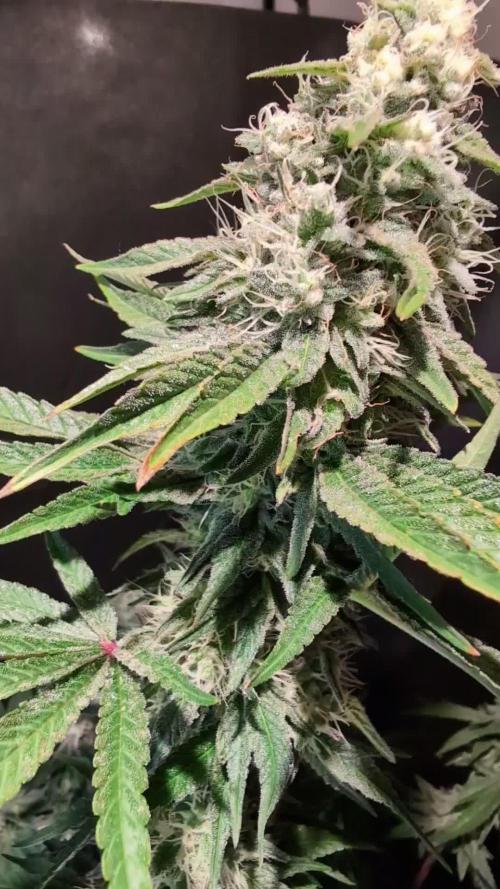
Hier im Bio Tabs NL Grow, erreichen wir aktuell eine höhe von 140cm. Und eine richtig krasse Breite von 69cm.
Die Blütenansätze schwellen weiterhin immens an.
Insgesamt zeigt sich hier in diesem Grow eine stärkere Blütenausbildung, als bei der anderen Pflanze.
Jetzt im direkt Vergleich muss ich sagen dass dieser Phenotyp eine richtig ordentliche Entwicklung hinlegt.
Ein süsslich fruchtiges Aroma verbreitet sich im Zelt und hier schlägt definitiv mehr die GG#4 Genetik durch..
Es zeichnet sich ein durchgängis schönes und gesundes Wachstum ab.
Die Umgebungsgegebenheiten sind aktuell mit Wetterbedingungen etwas hoch in der Luftfeuchtigkeit.
—————
🌞 Temp: 26
🌚 Temp: 18°C bis 19°C
💨 RH: 56%
VPD: 1,10kPa
💡ppfd: 830 mpm
—————
Viele Grüße 👋

