The Grow Awards 2026 🏆
Likes
Comments
Share
Likes
17
Share
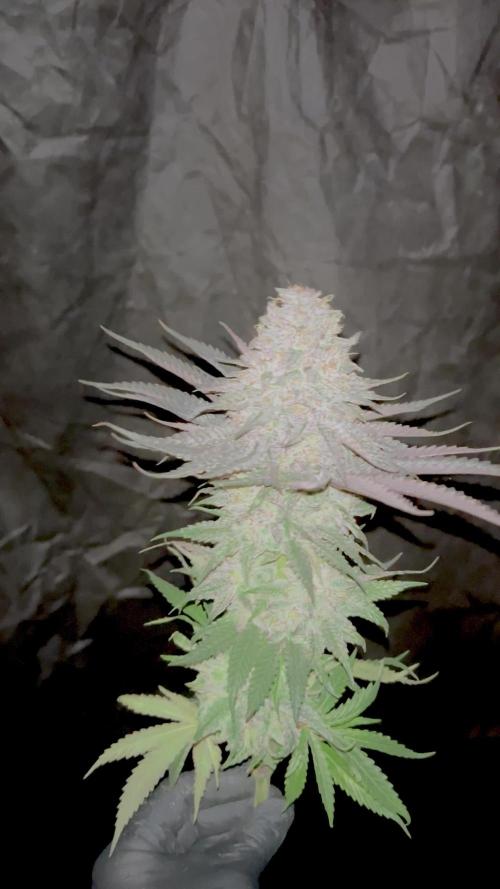
It's been a beautiful strain to work with, the flowrs are definitely worth it after all this time, the quality is definitely high. However this pheno of ak420 smells very different from the other 2 phenos I've grown along with her. The flowrs are beautiful, very solid and frosty nuggets, I smoked a few little nuggets when trimming but I'm excited to taste the big buds, hope you guys enjoyed the process. I want to say that this pheno #1 has a different smell compared to the other 2 phenotypes of ak420 that you can see here on my page as well, so stay tuned guys! Overall result is very nice, good quality, strong weed, sticky, stinky. I can say that it's very great and also you can get them for a very cheap price so it's a very good investment if you're looking for a powerful and affordable strain. Cheers growmies! ❤️💚💛💎👨‍🌾
Likes
8
Share
Here we are! Day 20 of flower and the girls are thriving! I quickly learned that they required a heavier feeding due to some yellowing. Gave them a little extra feeding of the advanced nutrients and the yellowing stopped. This week, I also top dressed with some worm castings. They seem to be taking it well. I think I may double the feeding each week and see how they react.
Likes
36
Share
THURSDAY 11/29: I'm in love with Gertrude. She's in full beast-mode now. Growing a couple inches per day. She's gonna be a producer.👈 Gretyl is growing, but not as quickly as I'd like. Doubt she's ever gonna get very big.. I foliar fed a few times and did a photo session.😍 FRIDAY: Gertrude is still growing vertically, but also packing on the pistils!!!!!!!😁 Gretyl is actually starting to stretch a bit, too. I foliar fed a few times and spun them around. SATURDAY: I fed them today with about 1/3 gallon of bloom nutes, plus a little extra boomerang for the N. Gertrude is the tallest plant in the garden and there's no sign she's slowing down at all! Every one of her branches is growing an inch a day at least. I'm hoping she's a monster, but at the same time, I'm not looking forward to having to supercrop her. I'd so much rather not do any bondage....really uglies up the photos....but I keep growing dissimilar strains and always have an uneven canopy... Gretyl is now directly under the quantum board, and on a throne, so she's about 18 inches from the light. Hoping to kick her into high gear. SUNDAY: Gretyl perked up a little more and might have even grown a little! Gertrude is still stretching! MONDAY: I foliar fed them a few times and moved them around a little. Gretyl must have soil drainage problems..she kinda wilts for a day following every watering...I started probing her pot today and will continue to do so for a few days. TUESDAY: Gretyl looked horrible today. I probed the hell out of her soil again and fed her about 12oz of ph'd water with boomerang, calimagic, kangaroots, and some powdered bat guano. If she doesn't perk up in the next day or so, I'll assume she's rootbound and transplant her into a 5 gallon pot with more perlite in the mix. Gertrude also looks like she has some drainage problems, but not too terribly bad. I probed her soil today and also gave her about 8oz of the same solution.
Likes
32
Share
This strain was a lot of fun to grow, Training was easy, it responded well and rolled with the punches, She was CalMag hungry as that as my only noted deficiency. She was chopped at day 69, would have been 70 but I had mothers day plans with the Ol' lady. The wet weight is everything but the bigger fan leaves (larf galore) I had so much trim. I love the smell I loved growing it, but I do not like how airy the buds turned out, I use quality LEDs and have a white widow in another journal that grew along side it under the same conditions, even the same trainings to the point where there structured extremely similarly, and the White Widow is ROCK SOLID. BUT with that being said, the trichome production was very nice, the sugar leaves will leave me with a lot of hash (half the buds were considered larf but were so sticky and covered in trichomes) and the smell is very sweet, berries and a hint of lemonaid and must. Keep in mind this is a taste after just a couple days of drying a sample bud and no cure. Overall its definitely smokable ill probably give some out but I would rather keep the airy stuff for me to smoke/process because I love it all. I am currently taking the week as a T-break so I can give everyone here a proper smoke report, including myself. Dry bud weight is only 51g BUT all the trim did get me a couple of grams, probably 3 of some incredible hash, The Hash taste like blueberry pie and a glass of lemonaid, the flower is similar but with a bit of a musky punch, the high hit me straight in the head and had me laughing at myself for getting so stoned, literally all i wanted was that pie and lemonaid that's all that I had on my mind. after a bit it mellowed out into a nice relaxing sativa feel, I wasn't nearly as full of energy but I was by no means tired either.
Likes
25
Share
ANTHOCYANIN production is primarily controlled by the Cryptochrome (CR1) Photoreceptor ( !! UV and Blue Spectrums are primary drivers in the production of the pigment that replaces chlorophyll, isn't that awesome! 1. Diverse photoreceptors in plants Many civilizations, including the sun god of ancient Egypt, thought that the blessings of sunlight were the source of life. In fact, the survival of all life, including humans, is supported by the photosynthesis of plants that capture solar energy. Plants that perform photosynthesis have no means of transportation except for some algae. Therefore, it is necessary to monitor various changes in the external environment and respond appropriately to the place to survive. Among various environmental information, light is especially important information for plants that perform photosynthesis. In the process of evolution, plants acquired phytochrome, which mainly receives light in the red light region, and multiple blue light receptors, including his hytropin and phototropin, in order to sense the light environment. .. In addition to these, an ultraviolet light receptor named UVR8 was recently discovered. The latest image of the molecular structure and function of these various plant photoreceptors (Fig. 1), focusing on phytochrome and phototropin. Figure 1 Ultraviolet-visible absorption spectra of phytochrome, cryptochrome, phototropin, and UVR8. The dashed line represents each bioactive absorption spectrum. 2. Phytochrome; red-far red photoreversible molecular switch What is phytochrome? Phytochrome is a photochromic photoreceptor, and has two absorption types, a red light absorption type Pr (absorption maximum wavelength of about 665 nm) and a far-red light absorption type Pfr (730 nm). Reversible light conversion between the two by red light and far-red light, respectively(Fig. 1A, solid line and broken line). In general, Pfr is the active form that causes a physiological response. With some exceptions, phytochrome can be said to function as a photoreversible molecular switch. The background of the discovery is as follows. There are some types of plants that require light for germination (light seed germination). From that study, it was found that germination was induced by red light, the effect was inhibited by subsequent far-red light irradiation, and this could be repeated, and the existence of photoreceptors that reversibly photoconvert was predicted. In 1959, its existence was confirmed by the absorption spectrum measurement of the yellow sprout tissue, and it was named phytochrome. Why does the plant have a sensor to distinguish between such red light and far-red light? There is no big difference between the red and far-red light regions in the open-field spectrum of sunlight, but the proportion of red light is greatly reduced due to the absorption of chloroplasts in the shade of plants. Similar changes in light quality occur in the evening sunlight. Plants perceive this difference in light quality as the ratio of Pr and Pfr, recognize the light environment, and respond to it. Subsequent studies have revealed that it is responsible for various photomorphogenic reactions such as photoperiodic flowering induction, shade repellent, and deyellowing (greening). Furthermore, with the introduction of the model plant Arabidopsis thaliana (At) and the development of molecular biological analysis methods, research has progressed dramatically, and his five types of phytochromes (phyA-E) are present in Arabidopsis thaliana. all right. With the progress of the genome project, Fi’s tochrome-like photoreceptors were found in cyanobacteria, a photosynthetic prokaryotes other than plants. Furthermore, in non-photosynthetic bacteria, a homologue molecule called bacteriophytochrome photoreceptor (BphP) was found in Pseudomonas aeruginosa (Pa) and radiation-resistant bacteria (Deinococcus radiodurans, Dr). Domain structure of phytochrome molecule Phytochrome molecule can be roughly divided into N-terminal side and C-terminal side region. PAS (Per / Arndt / Sim: blue), GAF (cGMP phosphodiesterase / adenylyl cyclase / FhlA: green), PHY (phyto-chrome: purple) 3 in the N-terminal region of plant phytochrome (Fig. 2A) There are two domains and an N-terminal extension region (NTE: dark blue), and phytochromobilin (PΦB), which is one of the ring-opening tetrapyrroles, is thioether-bonded to the system stored in GAF as a chromophore. ing. PAS is a domain involved in the interaction between signal transduction-related proteins, and PHY is a phytochrome-specific domain. There are two PASs and her histidine kinase-related (HKR) domain (red) in the C-terminal region, but the histidine essential for kinase activity is not conserved. 3. Phototropin; photosynthetic efficiency optimized blue light receptor What is phototropin? Charles Darwin, who is famous for his theory of evolution, wrote in his book “The power of move-ment in plants” published in 1882 that plants bend toward blue light. Approximately 100 years later, the protein nph1 (nonphoto-tropic hypocotyl 1) encoded by one of the causative genes of Arabidopsis mutants causing phototropic abnormalities was identified as a blue photoreceptor. Later, another isotype npl1 was found and renamed phototropin 1 (phot1) and 2 (phot2), respectively. In addition to phototropism, phototropin is damaged by chloroplast photolocalization (chloroplasts move through the epidermal cells of the leaves and gather on the cell surface under appropriate light intensity for photosynthesis. As a photoreceptor for reactions such as escaping to the side of cells under dangerous strong light) and stomata (reactions that open stomata to optimize the uptake of carbon dioxide, which is the rate-determining process of photosynthetic reactions). It became clear that it worked. In this way, phototropin can be said to be a blue light receptor responsible for optimizing photosynthetic efficiency. Domain structure and LOV photoreaction of phototropin molecule Phototropin molecule has two photoreceptive domains (LOV1 and LOV2) called LOV (Light-Oxygen-Voltage sensing) on the N-terminal side, and serine / on the C-terminal side. It is a protein kinase that forms threonine kinase (STK) (Fig. 4Aa) and whose activity is regulated by light. LOV is one molecule as a chromophore, he binds FMN (flavin mononucleotide) non-covalently. The LOV forms an α/βfold, and the FMN is located on a β-sheet consisting of five antiparallel β-strands (Fig. 4B). The FMN in the ground state LOV shows the absorption spectrum of a typical oxidized flavin protein with a triplet oscillation structure and an absorption maximum wavelength of 450 nm, and is called D450 (Fig. 1C and Fig. 4E). After being excited to the singlet excited state by blue light, the FMN shifts to the triplet excited state (L660t *) due to intersystem crossing, and then the C4 (Fig. 4C) of the isoaroxazine ring of the FMN is conserved in the vicinity. It forms a transient accretionary prism with the tain (red part in Fig. 4B Eα) (S390I). When this cysteine is replaced with alanine (C / A substitution), the addition reaction does not occur. The effect of adduct formation propagates to the protein moiety, causing kinase activation (S390II). After that, the formed cysteine-flavin adduct spontaneously dissociates and returns to the original D450 (Fig. 4E, dark regression reaction). Phototropin kinase activity control mechanism by LOV2 Why does phototropin have two LOVs? Atphot1 was found as a protein that is rapidly autophosphorylated when irradiated with blue light. The effect of the above C / A substitution on this self-phosphorylation reaction and phototropism was investigated, and LOV2 is the main photomolecular switch in both self-phosphorylation and phototropism. It turns out that it functions as. After that, from experiments using artificial substrates, STK has a constitutive activity, LOV2 functions as an inhibitory domain of this activity, and the inhibition is eliminated by photoreaction, while LOV1 is kinase light. It was shown to modify the photosensitivity of the activation reaction. In addition to this, LOV1 was found to act as a dimerization site from the crystal structure and his SAXS. What kind of molecular mechanism does LOV2 use to photoregulate kinase activity? The following two modules play important roles in this intramolecular signal transduction. Figure 4 (A) Domain structure of LOV photoreceptors. a: Phototropin b: Neochrome c: FKF1 family protein d: Aureochrome (B) Crystal structure of auto barley phot1 LOV2. (C) Structure of FMN isoaroxazine ring. (D) Schematic diagram of the functional domain and module of Arabidopsis thaliana phot1. L, A’α, and Jα represent linker, A’α helix, and Jα helix, respectively. (E) LOV photoreaction. (F) Molecular structure model (mesh) of the LOV2-STK sample (black line) containing A’α of phot2 obtained based on SAXS under dark (top) and under bright (bottom). The yellow, red, and green space-filled models represent the crystal structures of LOV2-Jα, protein kinase A N-lobe, and C-robe, respectively, and black represents FMN. See the text for details. 1) Jα. LOV2 C of oat phot1-to α immediately after the terminus Rix (Jα) is present (Fig. 4D), which interacts with the β-sheet (Fig. 4B) that forms the FMN-bound scaffold of LOV2 in the dark, but unfolds and dissociates from the β-sheet with photoreaction. It was shown by NMR that it does. According to the crystal structure of LOV2-Jα, this Jα is located on the back surface of the β sheet and mainly has a hydrophobic interaction. The formation of S390II causes twisting of the isoaroxazine ring and protonation of N5 (Fig. 4C). As a result, the glutamine side chain present on his Iβ strand (Fig. 4B) in the β-sheet rotates to form a hydrogen bond with this protonated N5. Jα interacts with this his Iβ strand, and these changes are thought to cause the unfold-ing of Jα and dissociation from the β-sheet described above. Experiments such as amino acid substitution of Iβ strands revealed that kinases exhibit constitutive activity when this interaction is eliminated, and that Jα plays an important role in photoactivation of kinases. 2) A’α / Aβ gap. Recently, several results have been reported showing the involvement of amino acids near the A’α helix (Fig. 4D) located upstream of the N-terminal of LOV2 in kinase photoactivation. Therefore, he investigated the role of this A’α and its neighboring amino acids in kinase photoactivation, photoreaction, and Jα structural change for Atphot1. The LOV2-STK polypeptide (Fig. 4D, underlined in black) was used as a photocontrollable kinase for kinase activity analysis. As a result, it was found that the photoactivation of the kinase was abolished when amino acid substitution was introduced into the A’α / Aβ gap between A’α and Aβ of the LOV2 core. Interestingly, he had no effect on the structural changes in Jα examined on the peptide map due to the photoreaction of LOV2 or trypsin degradation. Therefore, the A’α / Aβ gap is considered to play an important role in intramolecular signal transduction after Jα. Structural changes detected by SAXS Structural changes of Jα have been detected by various biophysical methods other than NMR, but structural information on samples including up to STK is reported only by his results to his SAXS. Not. The SAXS measurement of the Atphot2 LOV2-STK polypeptide showed that the radius of inertia increased from 32.4 Å to 34.8 Å, and the molecular model (Fig. 4F) obtained by the ab initio modeling software GASBOR is that of LOV2 and STK. It was shown that the N lobes and C lobes lined up in tandem, and the relative position of LOV2 with respect to STK shifted by about 13 Å under light irradiation. The difference in the molecular model between the two is considered to reflect the structural changes that occur in the Jα and A’α / Aβ gaps mentioned above. Two phototropins with different photosensitivity In the phototropic reaction of Arabidopsis Arabidopsis, Arabidopsis responds to a very wide range of light intensities from 10–4 to 102 μmol photon / sec / m2. At that time, phot1 functions as an optical sensor in a wide range from low light to strong light, while phot2 reacts with light stronger than 1 μmol photon / sec / m2. What is the origin of these differences? As is well known, animal photoreceptors have a high photosensitivity due to the abundance of rhodopsin and the presence of biochemical amplification mechanisms. The exact abundance of phot1 and phot2 in vivo is unknown, but interesting results have been obtained in terms of amplification. The light intensity dependence of the photoactivation of the LOV2-STK polypeptide used in the above kinase analysis was investigated. It was found that phot1 was about 10 times more photosensitive than phot2. On the other hand, when the photochemical reactions of both were examined, it was found that the rate of the dark return reaction of phot1 was about 10 times slower than that of phot2. This result indicates that the longer the lifetime of S390II, which is in the kinase-activated state, the higher the photosensitivity of kinase activation. This correlation was further confirmed by extending the lifespan of her S390II with amino acid substitutions. This alone cannot explain the widespread differences in photosensitivity between phot1 and phot2, but it may explain some of them. Furthermore, it is necessary to investigate in detail protein modifications such as phosphorylation and the effects of phot interacting factors on photosensitivity. Other LOV photoreceptors Among fern plants and green algae, phytochrome ɾphotosensory module (PSM) on the N-terminal side and chimera photoreceptor with full-length phototropin on the C-terminal side, neochrome (Fig. There are types with 4Ab). It has been reported that some neochromes play a role in chloroplast photolocalization as a red light receiver. It is considered that fern plants have such a chimera photoreceptor in order to survive in a habitat such as undergrowth in a jungle where only red light reaches. In addition to this, plants have only one LOV domain, and three proteins involved in the degradation of photomorphogenesis-related proteins, FKF1 (Flavin-binding, Kelch repeat, F-box 1, ZTL (ZEITLUPE)), LKP2 ( There are LOV Kelch Protein2) (Fig. 4Ac) and aureochrome (Fig. 4Ad), which has a bZip domain on the N-terminal side of LOV and functions as a gene transcription factor. 4. Cryptochrome and UVR8 Cryptochrome is one of the blue photoreceptors and forms a superfamily with the DNA photoreceptor photolyase. It has FAD (flavin adenine dinucle-otide) as a chromophore and tetrahydrofolic acid, which is a condensing pigment. The ground state of FAD is considered to be the oxidized type, and the radical type (broken line in Fig. 1B) generated by blue light irradiation is considered to be the signaling state. The radical type also absorbs in the green to orange light region, and may widen the wavelength region of the plant morphogenesis reaction spectrum. Cryptochrome uses blue light to control physiological functions similar to phytochrome. It was identified as a photoreceptor from one of the causative genes of UVR8 Arabidopsis thaliana, and the chromophore is absorbed in the UVB region by a Trp triad consisting of three tryptophans (Fig. 1D). It is involved in the biosynthesis of flavonoids and anthocyanins that function as UV scavengers in plants. Conclusion It is thought that plants have acquired various photoreceptors necessary for their survival during a long evolutionary process. The photoreceptors that cover the existing far-red light to UVB mentioned here are considered to be some of them. More and more diverse photoreceptor genes are conserved in cyanobacteria and marine plankton. By examining these, it is thought that the understanding of plant photoreceptors will be further deepened.
Likes
4
Share
@ogfat
Follow
Very Very nice nugs, lots of aroma. Very relaxating high. Cool for netflix and chill. Easy to grow, proud for a first. But have plan for better quality
Likes
24
Share
@JaeMack
Follow
Ice water flush then 48 hours of darkness. Chopped on 10/24.
Processing
Likes
39
Share
Removed damaged leaves from DinaMed CBD Plus (DC+). Refreshed res'. Using Alaskan Organic Bloom to control my PH till the massive rises stop. Close now. Put another air line and stone into both buckets. Seems to help. Adding Microbe tea (formula below) as well as Hygrozyme and Advanced Nutrients Tarantula. Adding Alaskan Bloom not only helps the PH but feeds the microbes. Brewing tea also helps chelation of the metal micro nutrients as well as converting Humic acid to Fulvic acid which is easier for the plant to uptake. Dinamed Plus from Dinafem Seeds (1) and Blueberry Headband (1)from Humboldt Seeds. https://www.dinafem.org/en/dinamed-cbd-plus/ https://www.humboldtseeds.net/en/blueberry-headband/ Lighting https://www.horticulturelightinggroup.ca/products/260w-qb-v2-led-kit DWC Nutients https://generalhydroponics.com/floraseries FloraGro 1 ml/l FloraBloom .5 ml/l FloraMicro 1 ml/l Diamond Nectar: N/A https://generalhydroponics.com/diamond-nectar Cal Mag: 2 ml/l https://generalhydroponics.com/calimagic SuperThrive: .5 ml/l https://superthrive.com/ https://hylineproducts.com/products/hygrozyme/#one Grozyme: 2.5 ml/ltr Tarantula https://www.advancednutrients.com/products/tarantula/ Epsom salts Root Rot Tea 8 liters RO water 5 ml (1 tsp) organic sulphur free molasses 5 ml Alaskan Organic grow fertilizer (or something comparable) 5 ml Alaskan bloom fertilizer (or something comparable) 5 ml Seaweed or kelp fertilizer Handful of composted horse pucky Worm castings, sea soil, Gaia General Purpose and Bat Guano Phosphate optional * add after brewing 2-4 ml Advanced Nutrients Tarantula
Likes
20
Share
@DrGanj
Follow
Tapering nutes off for the flush. Also added a small amount of Barley as a top dress to help her finish off.
Likes
8
Share
🌿 Woche 5 🌱 Wachstum & Training 🌱 Das Training läuft fantastisch – ein täglicher, stetiger Prozess. 😬✂️ Beide Damen sehen rundum gesund aus, mit kräftig grünen Blättern. 💪🍀 Sogar ein halb abgebrochener Trieb hat sich richtig gut erholt. 👌🌱 Man merkt inzwischen, dass eine der Damen dominanter ist. 👑🔥 Der mittlere Bereich ist hart umkämpft – vielleicht doch ein Ticken zu eng für zwei Pflanzen. 🤼‍♀️😨🌱 Ich habe daher ordentlich entlaubt und ein paar kleinere Triebe entfernt. ✂️🍃🗑️ Langsam füllt sich der gesamte Raum mit einem gleichmäßigen Blätterdach. 🌳💚 Der Stretch hat begonnen – und alle Triebe haben richtig Bock, steil zu gehen! 🚀🌿🎯 💧 Living Soil – Only Water 💧🌍 Wie man sieht: Kein einziger Trieb oder ein Blatt mit Mängeln. ✅🌱👌 Die Vegetationsphase lief absolut problemlos – ganz ohne Temperatur- oder Luftfeuchtigkeitsunterstützung. 🌡️💨❌ Nur mit einer Mischung aus destilliertem Wasser und Leitungswasser. 💧🚰 🔄 Drehbarer Topf 🎥 Ich bin nach wie vor ein großer Fan dieser Lösung! 😄👍 Nicht nur entstehen witzige kleine Videos, sondern es hilft enorm beim Training. 📸✂️ Ich achte beim Formen stets darauf, die Drehfunktion nicht einzuschränken – klappt bisher richtig gut. 🔄✔️ 💡 Licht & Schatten 🔆🌘 Im Laufe der Woche habe ich das Licht auf bis zu 400 PPF hochgedreht. 💡📈 So streben die Triebe weiter aktiv nach Licht – bekommen aber auch nicht zu wenig. 🌞🌱➡️💥 💧 Blumat & Gießen 💧🚿 🕒 Alle paar Tage bei 110 mbar 🚿 Jeweils 2 l Wasser 💦 ☀️ Wetter 🌡️🔥 Die Temperaturen waren (und sind) brutal: 26°–33 °C. ☀️ Scheint aber bisher alles gut zu verkraften. 😌🌿💪 🎶 The Grow must go on! 🌱🎵💚✨
Likes
2
Share
@Ninjabuds
Follow
The strawberry gorilla has come out of the soil and it pushed itself up very well without having to dig it up out the soil. This is one plant I’m excited for I hope it grows to look like the photos The temps are rising around here making it some much easier to start seedling than in the winter with heater on full blast
Likes
2
Share
Topped this girl this week, she’s growing pretty good. Very nice looking plant to my eye.
Likes
9
Share
Flush flush flush Day 62 Purple coming out
Likes
19
Share
Let’s Go Day 67 from seed !! So this week went real great! 2 Ogreberrys an Bruce Banner started getting flushed! The rest will follow up and start flush next week ! Today the 3 will continue getting flushed while the 3 others get there dose of nutrients, PHd at 6.5! Let’s grow lil ladies let’s grow!!! You all have an amazing productive day as well as a a great safe week !! Peace love and positive vibes to y’all Cheers 😶‍🌫️💨💨💨💨🤙🏻If there’s any questions please ask, I’ll be opened up to answer at best of my knowledge! Thank you all have a dank day !!
Likes
16
Share
@Rinna
Follow
I’ll update ya’ll on the smells and tastes after drying and curing! So far both are packed with ice and smell very potent, a little overpowering still, so I want to give it some time before they’re cures and can show their true terpene profile!
Likes
10
Share
Gracias al equipo de Zamnesia, Marshydro, XpertNutrients y Trolmaster sin ellos esto no sería posible. 💐🍁MAC 1: La MAC 1 es una variedad muy solicitada, creada originalmente por Capulator y distribuida solamente a determinados criadores y cultivadores. ¡Pero ahora ya puedes cultivar este tesoro en casa y disfrutar de sus cogollos densos, jugosos y potentes! Gracias a su densa copa y vigor, la MAC 1 es una opción ideal para LST, poda apical y otras técnicas de entrenamiento (incluido el lollipopping). Cuando entra en floración, las plantas de la MAC 1 se estiran bastante y una vez maduras pueden alcanzar una altura de 160cm en interior y más de 180cm en exterior. De media, las plantas feminizadas de la MAC 1 necesitan un total de 9-10 semanas para terminar la floración, momento en el que estarán repletas de cogollos índica pequeños y compactos. 🌻🚀 Consigue aqui tus semillas: https://www.zamnesia.es/10906-zamnesia-seeds-mac-1.html Código Descuento 20%: ZAMMIGD2023 💡TS-3000 + TS-1000: se usaran dos de las lámparas de la serie TS de Marshydro, para cubrir todas las necesidades de las plantas durante el ciclo de cultivo, uso las dos lámparas en floracion para llegar a toda la carpa de 1.50 x 1.50 x 1.80. https://marshydro.eu/products/mars-hydro-ts-3000-led-grow-light/ 🏠 : Marshydro 1.50 x 1.50 x 1.80, carpa 100% estanca con ventanas laterales para llegar a todos los lugares durante el grow https://marshydro.eu/products/diy-150x150x200cm-grow-tent-kit 🌬️💨 Marshydro 6inch + filtro carbon para evitar olores indeseables. https://marshydro.eu/products/ifresh-smart-6inch-filter-kits/ 💻 Trolmaster Tent-X TCS-1 como controlador de luz, optimiza tu cultivo con la última tecnología del mercado, desde donde puedes controlar todos los parametros. https://www.trolmaster.com/Products/Details/TCS-1 🍣🍦🌴 Xpert Nutrients es una empresa especializada en la producción y comercialización de fertilizantes líquidos y tierras, que garantizan excelentes cosechas y un crecimiento activo para sus plantas durante todas las fases de cultivo. Consigue aqui tus Nutrientes: https://xpertnutrients.com/es/shop/ 📆 Semana 2: Gran primera semana, ella ha dado un gran estiron estos días, si sigue así será una gran cosecha. Esta semana se practica defoliacion, poda de ramas bajas y se le agrega Sticky Fingers . La carpa está ocupada al 100%, sigue una floracion explosiva gracias a @Marshydro y @Xpertnutrients y @Trolmaster con esta gran genética 💪. Potencia de la lámpara: 70%
Likes
23
Share
@Vincent11
Follow
Hi all Grow mates. After a difficult last week.With Mag deficiency's. And at the same time over defoliation. My Girl showed some strength And character and now she looks she is going to make it after all I did to her ☹️. Buds starting feeling up nicely. And she looks like a plant in her final weeks off Her live again. Going to Be Look 👀 in to the trichomes closely from now on. Goal-Looking for a few amber trichomes and mostly milky 🥛 clouds to form up. Hope you all enjoy following my Diaries And have fun growing And a Productive week to.