The Grow Awards 2026 🏆
Likes
Comments
Share
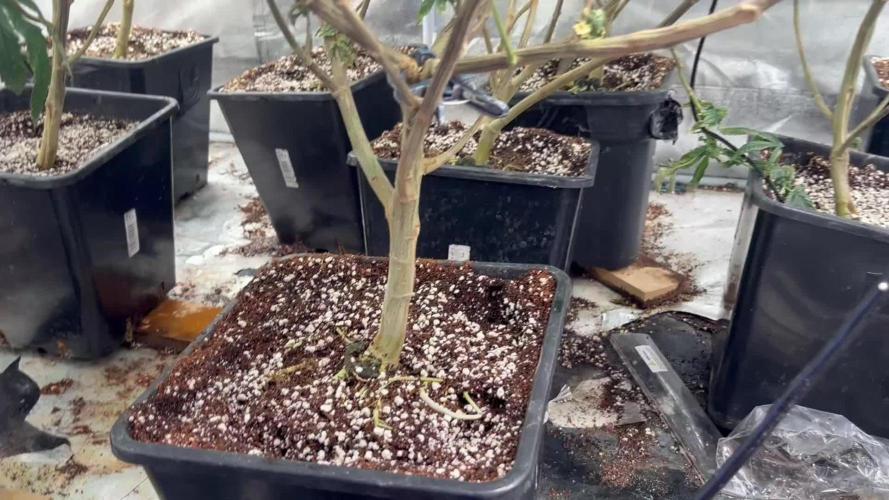
Hi all👨‍🌾👋 Welcome to my another week update Hope everyone keeping well 🧑‍🌾 Week 5 Mar 1 - Mar 7 What a joyful grow. Both girls are almost like twins. Super healthy and strong. Girls are in pre-flower and going head to head in development. Not expecting them to grow super tall but time will show. Considering to let them grow freely and not installing scrog net. This idea may change in coming days. 2 waterings of 2.5 l on Mar 2+ foliar feeding and second in Mar 7. May take another week before first runoff experience. Continously leaves tucking. Girls are responding perfectly to feeding like also to my LST. I am very happy and excited of what's to come 😁🧑‍🌾 Wishing you all a wonderful rest of the week✨🍀 Much appreciate all your likes, follows and comments. 🙏💚❤️💜 Peace and love brothers and sisters 👨‍🌾✌️💚 Stay tuned for new week update soon Links https://2fast4buds.com/seeds/TROPICANA-COOKIES-AUTO https://www.biobizz.com/ https://fishheadfarms.com/
Likes
6
Share
Super easy grow bud is fire was a nice freebie if you got seeds run em
Likes
42
Share
@JohnDee
Follow
Hello all, some pistils are turning brown, a quick google search tells me it could be 3 things 1-Light heat 2-Herm 3-Nutrient burn I would appreciate any opinions Happy growing
Likes
4
Share
Likes
3
Share
@Dysons12
Follow
Day 7 i I transplanted the seedlings in jiffy’s to the DWC basket water level was “just” touching the bottom of the basket which meant there was 1mm- 2mm air gap between the water level and the jiffy’s. The high pressured air in the water to spit when air was released at the top which kept the bottom of the jiffy moist which had minimal roots showing to the exterior of it. Day 7-13 I originally had 7.5 litres of water that was to the bottom of the basket. I replaced the water on the 13th which meant the water was changed after 6 days at such an early stage I will regularly change the water in the buckets. You can change every 7-14days but I am taking no chances. I refilled and added nutrients on Day 13 which was yesterday. And the plants are doing really well and are a nice VEG green colour. Hard to tell on the pictures with the light colour but you can see their progress. When I replaced the water this week I put 6.5L of water in each bucket With nutrients PH’d as close to 5.8 as possible. Some varied from 5.72 - 5.9. I have noted these on each bucket so that I can check if one does better than the others or shows deformities or stress I can amend it to match the others but hopefully not in such a close proximity of 5.8ph with an EC of 700+- The roots are now showing in every pot with the longest being some 6inches. The new Wakyme grow light is top notch so far with VEG button on only. Anyone contemplating buying one it cost me £99.00 from amazon and so far is performing just how I would like. Humidity has been taken care of with a cold air intake fan which is pulled from another area of the building of a cooler environment. Temperatures are spot on where I want them but I do allow a 2degree +- allowance but it does change back to its original temperature quickly enough. 5 more speed bud germinated and 2peyote critical feminised photoperiod germinated. Crystal candy XL auto ordered x10 Gorilla glue, Pineapple Express and Cali Kush waiting in the wings. I have these already If I can be anymore help to anyone let me know. Your diaries are helping me and hopefully I can provide the same to you
Likes
28
Share
WEEK 6 and i am as impatient as i could be. This week should be the moment of truth, when it comes to thickness of the buds! 👽👉14/11 Waterday* I upped the BioBloom and TopMax for PK and less BioGrow for nitrogen. They are FROSTY as ever! Very satisfied BioHeaven 4 BioGrow 2 BioBloom 4 TopMax 4 Rootjuice 1 👽👉 15/11 One of the ladies is very hungry and showing signs of needing PK 👽👉 16/11 Atm because the outside climate has a big influence on my indoor climate, lower temperatures at night have been occuring. Battling the temps by having dehumidifier running with heat 👽👉 17/11 Waterday* They got same feed as last time, but giving a bit more volume now 👽👉 18/11 Christmas coming early, frosty times 👽👉 19/11 I had some buds that got too heavy and fell over, Fixed with some natural thread to hold them up 👽👉 20/11 Close to getting another SCROG to hold them up, but i think its time for harvest soon
Likes
3
Share
Likes
4
Share
*** Encontrarás la traducción a Español al final de la traducción en inglés *** ----- MEDIUM & EQUIPMENT ----- Luminary: HLG 100 v2 3000 k Tent: DR60 - 0.6 x 0.6 m Intractor/Extractor: None Vent: 10W Static Pots: 3 galon textile Nutrients: B.A.C., Advanced nutrients & Atami Soil: BioBizz ----- GROWING DATES ----- Seeds planted on Soil - May the 4th (be with you), I am them father Harvest - June 21th Complete Cycle from Seed - 76 Days Light Hours complete cycle - 19 Hrs ----- NUTRIENTS USED ----- Bases & Stimulators: B.A.C. Additives: Advanced Nutrients Others: ATAMI Bloombastic Cleaning: One Week with Advanced Nutrients “Flawless Finish” ----- GROWING ----- @Techniques, there were 2 plants: A taller one that growed it’s own, she was 1.07 m tall, you can see in the videos how she looks like, itˋs an Auto Beast. A smaller one on where i applied 2 techniques, a double topping (Topping x3), and a bit defoliation as can be shown in the video, she ended up with 0.5 m tall, 4 main colas, and the most dense buds i had among my autos. @Weight: The weight dried was surprisingly equal in both plants, while the bigger plant ended up in 67 gr, the small one was 62 gr and with much more bud density and crystal concentration, anyway both plants were very dense and crystal poblated. On wet, the weights were 276 g vs 226 g the smaller, what is translated wet2dry in a 24,28% vs 27,43% for the smaller one FTW!. That difference is very well appreciated in the density of the smaller plant buds, while both are very dense/compact/strong, the smaller plant buds are really MoonRocks. @Trim: Well well well, this part was awesome, very very very little amount of trim material, i finish the trimming of the bigger plant in about 6 min and 15 for the smaller what is real awesome in both cases, and the quality of the trims was incredible too, very good to ice wash it. @ Final product: The final product is almost equal in both plants, the smallest one acquired a stronger taste and concentration of crystals than the taller one, while both tastes are strong grapefruit, when you smoke buds from the small one is like real eating a grapefruit and it leaves a residual taste to orange some seconds after exhaling it, and when you touch or tear up any of both plants, the smell is also very strong to Grapefruit. My friends were shocked by the strong taste and smell to grapefruit it has, really. Good Job Spliff Seeds!, awesome strain!, I will grow it again for sure. 💪👌👌 ***** ESPAÑOL ***** ----- GENÉTICA DUTCH AUTO (Spliff Seeds NL) ----- Dutch Auto es una genética increíble en todos los aspectos, desde la facilidad de cultivarla hasta el producto final, pasando por la resistencia, la salubridad, el tamaño de la planta y la sencillez del pelado, son todo aspectos increíbles y notables de la planta. Sin podas, toppings ni cortes masivos, la planta ha alcanzado 1,07 m con una cola principal de más de 35 cm y una producción final de 67 gr de un producto espectacular, con un sabor de esos que se te quedan grabados y por el cual pasas a reconocerla de inmediato (lo que ocurría antiguamente (1998) con la Skunk). Los cogollos son compactos, gordos, duros, pegadizos y muy olorosos. El aroma y sabor del producto final es muy cítrico, es muy reconocible el sabor fuerte a pomelo, y en el caso de la planta pequeña deja un suave sabor a naranja en boca después de exhalarlo. ----- MEDIOS Y EQUIPO ----- Luminaria: HLG 100 v2 3000 k Tienda de cultivo: DR60 - 0.6 x 0.6 m Intractor/Extractor: Ninguno Ventilador: 10W Static Tiestos: Textiles de 3 galones Nutrientes: B.A.C., Advanced nutrients & Atami Sustrato: BioBizz ----- TIEMPOS DEL CULTIVO ----- Semilla a tierra - 4 de Mayo Cosecha - 21 de Junio Ciclo completo desde semilla - 76 Días Horas de luz - 19 Hrs ciclo completo ----- NUTRIENTES USADOS ----- Bases y Estimuladores: B.A.C. Aditivos: Advanced Nutrients Otros: ATAMI Bloombastic Limpieza: Una semana con “Flawless Finish” ----- CULTIVO ----- @Técnicas, son 2 plantas: Una alta que ha crecido sin técnicas aplicadas, ha alcanzado 1,07 m de alto, en los vídeos se puede ver cómo es una Auto brutal. Una pequeña a la que le he aplicado 2 técnicas, un topping doble (3 cortes) y una ligera defoliación que se puede ver en el vídeo. Esta planta ha acabado midiendo 0,5 m, teniendo 4 colas principales y los cogollos más densos que me haya dado ninguna auto. @Peso: El peso en seco es sorprendentemente parecido en ambas plantas, mientras que la planta grande ha terminado pesando 67 gr, la pequeña ha acabado en 62 gr y con cogollos más densos y poblados de cristales que la grande, aun así, ambas plantas han dado cogollos compactos y muy poblados. En húmedo los pesos fueron 276 gr Vs 226 gr la pequeña, lo que es una diferencia de húmedo a seco de 24,28% Vs 27,43% la pequeña. Esta diferencia es bien notable en la densidad de los cogollos de la planta pequeña que son como rocas lunares. @Pelado: Bueno bueno bueno, esta parte ha sido increíble, muy muy poca cantidad de restos de corte, acabé el pelado de la grande en unos 6 minutos y unos 15 para la pequeña lo que es increíble en ambos casos. Me he quedado sorprendido por la poca cantidad de material a pelar y la calidad de la misma, excelente para hacer bubble hash. @ Producto final: El producto final es casi igual en ambas plantas, la pequeña ha adquirido un sabor más fuerte y una concentración de cristales superior a la planta grande, mientras que ambas saben fuertemente a pomelo, cuando fumas de la pequeña, es como estar metiéndote un pomelo en la boca además de que deja un ligero sabor a naranja después de exhalarla. A la hora de tocarla o desmenuzar cualquiera de ellas el resultado es igualmente un fuerte aroma a pomelo. Mis amigos fumadores se quedaron realmente impresionados del fuerte sabor cítrico a pomelo que tiene, en serio, es increíble. Muy buen trabajo Spliff Seeds, Dutch Auto es una genética increíble, la volveré a plantar seguro!!! 💪👌👌
Likes
Comments
Share
@Danylo
Follow
Harvest is imminent! I'm basically just waiting for her to drink her last watering. So 1-3 days I guess - my last few "finished" plants basically stopped drinking much at the end, and she seems to be the same. But my last post was about a week ago so one more flowering week report! A few days ago I took off some of the brittle taco-ified fan leafs. My guess is they don't do much for photosynthesis anymore and just prevent lower growth from getting light. Upper leafs by now have turned a pretty violet/plum color! I put a leaf from another plant in the picture for comparison.😊 Structurally there is little change since last week. Smell is still incredible too! She is significantly heavier than three weeks ago so the stems are losing the battle against gravity.. but as she's coming down in a few I'm not gonna go wild with jojos or garden wire. 🤷
Likes
9
Share
Bounced back from the repot and defoliation (to get the light penetrating the lower flower sites). Started giving sugar royal ready to flick to flower. Really happy with the internodal spacing on this strain. Hoping for a decent yield. Will be flipped to 12 hours this week. Excited about the next 10 weeks! 30/11/23 UPDATE Added 2ft tube heater to try and bring the temps up abit. Tied down the girls, training should've started earlier but ive struggled for time. Last day of Veg - tomorrow will be 12/12 Gave a good feed including Power Bud and brought pH up to 6.4 (tell tale signs of deficiency due to possible low pH at the roots)
Likes
18
Share
Green light is radiation with wavelengths between 520 and 560 nm and it affects photosynthesis, plant height, and flowering. Plants reflect green light and this is why they appear green to our eyes. As a result, some growers think that plants don’t use green wavelengths, but they actually do! In fact, only around 5 – 10% of green light is reflected from leaves and the rest (90 – 95 %) is absorbed or transmitted to lower leaves [1]. Green wavelengths get used in photosynthesis. Chlorophyll pigments absorb small amounts of green wavelengths. Light that doesn’t get absorbed is transmitted to leaves that are shaded out from direct light. This means that leaves at the bottom of the canopy get more green light than leaves at the top. A high proportion of green wavelengths compared to other colors tells lower leaves that they are being shaded out, so they are able to react accordingly. Lower leaves may react by opening or closing their stomata or growing longer stems that help the leaves reach brighter light [1, 2, 3]. When it comes to growing cannabis, many cultivators are interested in the quality of light used for the flowering stage. In many plants, flowering is regulated by two main photoreceptors: cryptochrome and phytochrome. Both photoreceptors primarily respond to blue light but can also respond to green, although to a lesser extent. Green can accelerate the start of flowering in several species (although cannabis has yet to be tested) [1, 4, 5]. However, once flowering has begun, it’s important to provide plants with a “full spectrum” light that has high amounts of blue and red light, and moderate amounts of green, in order for photosynthesis to be optimized. Green light mediates seed germination in some species. Seeds use green wavelengths to decide whether the environment is good for germination. Shade environments are enriched in green relative to red and blue light, so a plant can tell if it is shady or sunny. A seed that senses a shaded environment may stay dormant to avoid poor growing conditions [1]. Some examples of plant species where researchers have documented this response are: ryegrass (a grass that grows in tufts) and Chondrilla (a plant related to dandelion) [1, 6]. Although green wavelengths generally tell plants NOT to germinate, there are some exceptions! Surprisingly, green wavelengths can stimulate seed germination in some species like Aeschynomene, Tephrosia, Solidago, Cyrtopodium, and Atriplex [1, 6, 7]. Of course, light is not the only factor affecting seed germination – it’s a combination of many factors, such as soil moisture, soil type, temperature, photoperiod, and light quality. When combined with red and blue light, green can really enhance plant growth [1, 8]. However, too much green light (more than 50% of the total light) can actually reduce plant growth [8]. Based on the most current research, the ideal ratio of green, red, and blue light is thought to be around 1:2:1 for green:blue:red [9]. When choosing a horticultural light, choose one that has high amounts of blue and red light and moderate amounts of green and other colors of light. Not many studies can be found about the effect of green light on cannabis growth or metabolism. However, if one reads carefully, there are clues and data available even from the very early papers. Mahlberg and Hemphill (1983) used colored filters in their study to alter the sunlight spectrum and study green light among others. They concluded that the green filter, which makes the environment green by cutting other wavelengths out, reduced the THC concentration significantly compared to the daylight control treatment. It has been demonstrated that green color can reduce secondary metabolite activity with other species as well. For example, the addition of green to a light spectrum decreases anthocyanin concentration in lettuce (Zhang and Folta 2012). If green light only reverses the biosynthesis of some secondary metabolites, then why put green light into a growth spectrum at all? Well, there are a couple of good reasons. One is that green penetrates leaf layers effectively. Conversely red and blue light is almost completely absorbed by the first leaf layer. Green travels through the first, second, and even third layers effectively (Figure 2). Lower leaf layers can utilize green light in photosynthesis and therefore produce yields as well. Even though a green light-specific photoreceptor has not yet been found, it is known that green light has effects independent from the cryptochrome but then again, also cryptochrome-dependent ones, just like blue light. It is known that green light in low light intensity conditions can enhance far red stimulating secondary metabolite production in microgreens and then again, counteracts the production of these compounds in high-intensity light conditions (Kim et al. 2004). In many cases, green light promoted physiological changes in plants that are opposite to the actions of blue light. In the study by Kim et al. blue light-induced anthocyanin accumulation was inhibited by green light. In another study it has been found that blue light promotes stomatal opening whereas green light promotes stomatal closure (Frechilla et al. 2000). Blue light inhibits the early stem elongation in the seedling stage whereas green light promotes it (Folta 2004). Also, blue light results in flowering induction, and green light inhibits it (Banerjee et al., 2007). As you can see, green light works very closely with blue light, and therefore not only the amount of these two wavelengths separately is important but also the ratio (Blue: Green) between these two in the designed spectrum. Furthermore, green light has been found to affect the elongation of petioles and upward leaf reorientation with the model plant Arabidopsis thaliana both of which are a sign of shade avoidance symptoms (Zhang et al. 2011) and also gene expression in the same plant (Dhingra et al. 2006). As mentioned before, green light produces shade avoidance symptoms which are quite intuitive if you consider the natural conditions where the plants grow. Not all the green light is reflected from the highest canopy leaves in nature but a lot of it (50-90%) has been estimated to penetrate the upper leaves at the plant level ((Terashima et al., 2009; Nishio, 2000). For the plant growing in the understory of the forest green light is a signal for the plant of being in the shade of a bigger plant. Then again, the plants growing under unobstructed sunlight can take advantage of the green photons that can more easily penetrate the upper leaves than the red and blue photons. From the photosynthetic pigments in higher plants, chlorophyll is crucial for plant growth. Dissolved chlorophyll and absorb maximally in the red (λ600–700 nm) and blue (λ400–500 nm) regions of the spectrum and not as easily in the green (λ500–600 nm) regions. Up to 80% of all green light is thought to be transmitted through the chloroplast (Terashima et al., 2009) and this allows more green photons to pass deeper into the leaf mesophyll layer than red and blue photons. When the green light is scattered in the vertical leaf profile its journey is lengthened and therefore photons have a higher chance of hitting and being absorbed by chloroplasts on their passage through the leaf to the lower leaves of the plant. Photons of PPFD (photosynthetic photon flux density) are captured by chlorophyll causing an excitation of an electron to enter a higher energy state in which the energy is immediately passed on to the neighboring chlorophyll molecule by resonance transfer or released to the electron transport chain (PSII and PSI). Despite the low extinction coefficient of chlorophyll in the green 500–600 nm region it needs to be noted that the absorbance can be significant if the pigment (chlorophyll) concentration in the leaf is high enough. The research available clearly shows that plants use green wavelengths to promote higher biomass and yield (photosynthetic activity), and that it is a crucial signal for long-term developmental and short-term dynamic acclimation (Blue:Green ratio) to the environment. It should not be dismissed but studied more because it brings more opportunities to control plant gene expression and physiology in plant production. REFERENCES Banerjee R., Schleicher E., Meier S. Viana R. M., Pokorny R., Ahmad M., Bittl R., Batschauer. 2007. The signaling state of Arabidopsis cryptochrome 2 contains flavin semiquinone. The Journal of Biological Chemistry 282, 14916–14922. Dhingra, A., Bies, D. H., Lehner, K. R., and Folta, K. M. 2006. Green light adjusts the plastic transcriptome during early photomorphogenic development. Plant Physiol. 142, 1256-1266. Folta, K. M. 2004. Green light stimulates early stem elongation, antagonizing light-mediated growth inhibition. Plant Physiol. 135, 1407-1416. Frechilla, S., Talbott, L. D., Bogomolmi, R. A., and Zeiger, E. 2000. Reversal of blue light -stimulated stomatal opening by green light. Plant Cell Physiol. 41, 171-176. Kim, H.H., Goins, G. D., Wheeler, R. M., and Sager, J. C. 2004.Green-light supplementation for enhanced lettuce growth under red- and blue-light emitting diodes. HortScience 39, 1617-1622. Nishio, J.N. 2000. Why are higher plants green? Evolution of the higher plant photosynthetic pigment complement. Plant Cell and Environment 23, 539–548. Terashima I., Fujita T., Inoue T., Chow W.S., Oguchi R. 2009. Green light drives leaf photosynthesis more efficiently than red light in strong white light: revisiting the enigmatic question of why leaves are green. Plant & Cell Physiology 50, 684–697. Zhang, T., Maruhnich, S. A., and Folta, K. M. 2011. Green light induces shade avoidance symptoms. Plant Physiol. 157, 1528-156. Wang, Y. & Folta, K. M. Contributions of green light to plant growth and development. Am. J. Bot. 100, 70–78 (2013). Zhang, T. & Folta, K. M. Green light signaling and adaptive response. Plant Signal. Behav. 7, 75–78 (2012). Johkan, M. et al. Blue light-emitting diode light irradiation of seedlings improves seedling quality and growth after transplanting in red leaf lettuce. HortScience 45, 1809–1814 (2010). Kasajima, S., et al. Effect of Light Quality on Developmental Rate of Wheat under Continuous Light at a Constant Temperature. Plant Prod. Sci. 10, 286–291 (2007). Banerjee, R. et al. The signaling state of Arabidopsis cryptochrome 2 contains flavin semiquinone. J. Biol. Chem. 282, 14916–14922 (2007). Goggin, D. E. & Steadman, K. J. Blue and green are frequently seen: responses of seeds to short- and mid-wavelength light. Seed Sci. Res. 22, 27–35 (2012). Mandák, B. & Pyšek, P. The effects of light quality, nitrate concentration and presence of bracteoles on germination of different fruit types in the heterocarpous Atriplex sagittata. J. Ecol. 89, 149–158 (2001). Darko, E. et al. Photosynthesis under artificial light: the shift in primary and secondary metabolism. Philos. Trans. R. Soc. B Biol. Sci. 369 (2014). Lu, N. et al. Effects of Supplemental Lighting with Light-Emitting Diodes (LEDs) on Tomato Yield and Quality of Single-Truss Tomato Plants Grown at High Planting Density. Environ. Control Biol. 50, 63–74 (2012).
Likes
25
Share
Weather was already cold, she has long flowering for our climate.
Likes
14
Share
10/15 This week saw a few snags. Both gorilla zkittlez girls are showing what looks like a Mg def i.e yellowing between veins and green veins themselves. This isn't the first time they've exhibited these symptoms. Currently the heaviest affected leaves are the lowest fan leaves farthest from the light. Aiming to keep it that way. I think it's pH swinging too low. I need to pay more attention to my feeds but sometimes I don't have the time to pH my water as properly as I should. The reason I say it's that and not a deficiency is because they are also showing signs of over feed (yellow leaf tips) only a one half-strength feed did this. There must be plenty of food left in the pot. I'm thinking the flip is gonna come at the end of the week. I'll clean up some lower foliage tomorrow or Sunday and let them grow the rest of the week. 10 weeks seems like a nice round number to me. More pics coming when I do my defoll. 10/16 added some pics and vids
Likes
23
Share
This week went very well! One will be getting cut an hung to dry while the rest finish up with one more week of flush ! These ladies are smelling so lovely I hope you all enjoy! Stay tuned for next week! Cheers 😤💨💨💨💨💨
Likes
11
Share
@Chow_13
Follow
July 1st germination day Things went well. Started her in paper towel, She split the next day. Had a tap root on day 4 and placed her in her forever home. Popped out of the soil on day 6 and looks very happy. Soil is Vegetable and Herb mix from the store with a bit of perlite mixed in for aeration.
Likes
7
Share
@Dabking
Follow
Chopped on day 98 Produced 27.3 grams (0.98 ounces) of very compact and moderately dense nugs. Very frosty and very pungent. Very simple trimming with the bud structure compared to other strains. It reminds me a bit of their Opium strain (obviously this is their black opium strain so I'm sure it shares a parent), as well as their rapier strain. I've smoked all 3 and they all have a similar scent and taste. I do enjoy it. I've only tested one nug, and will of course update the review once they have cured for about 50 or so days.
Likes
5
Share
@dwotTV
Follow
Harvested the more mature plant, it had lost it's top to the wind, harvested a few days ago and has had a couple spots with a little rot removed. Seems stable enough and mature. Going to let the remaining one run out a bit as it seems a bit slower.