


Likes
Comments
Share


@VeeDro203
Follow
We are having good progress. Took clones of weekend at Garry's and Miami Miami 2 and Purple Marmalade 1

Processing
Likes
7
Share


@Diddo50
Follow
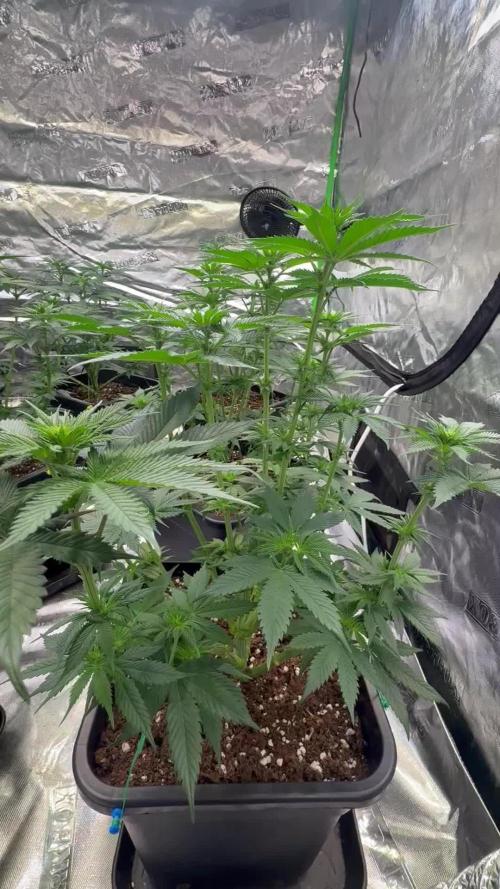
Hi guys,
Week 2 - Done...going onto the 3rd week now...giving them Swamp Juice from tommorrow, first time using this nutrients....so let us see.
Also giving Gator Skin for the stems....

Likes
12
Share


Likes
5
Share


@DixonCider
Follow
Second week of flower. The girls are looking great.
Day 10 - Realizing that I may have waited too long to flip to flower. Plants are over-hanging my table.
Likes
4
Share


@L8bloomr1008
Follow
Still pluckin leaves here and there but overall we’re just watering every other day rotating molasses with recharge.
Light smell starting to come through. Waiting for these pbb’s to start to frost up a little more. But the Candy Candy is showing really good potential. Looking better than last run for sure at this point.


Likes
2
Share


@Little
Follow
Hola a todos!
Comienza la semana 4 de crecimiento para las AK.
Están todas creciendo mas o menos al mismo ritmo, menos la que sufrió quemaduras, que está más lenta que el resto.
Seguramente que esta semana o al principio de la siguiente realizaré la poda apical, depende un poco de la "enana".
Hay una planta que tiene los bordes de las hojas de color más claro, casi amarillo. ¿Qué puede ser? Si alguien lo sabe, le agradezco su ayuda!
Likes
3
Share


@BluntTrauma416
Follow
Finally got a ppm / EC pen , my 50/50 mix of well water and RO water read 174ppm
so not bad what i was doing. I will adjust a bit lower tho. Around 150 or a bit lower. Flowering development seems good. Bubba kush plants are just under 7 feet tall about 80 "
noticed a tiny green worm may b a catipillar.
Might use a catipillar bacteria spray. Altho everything looks good.
Likes
184
Share


@Still_Smoq
Follow
#seedsman420growoff and #SeedsmanSeeds
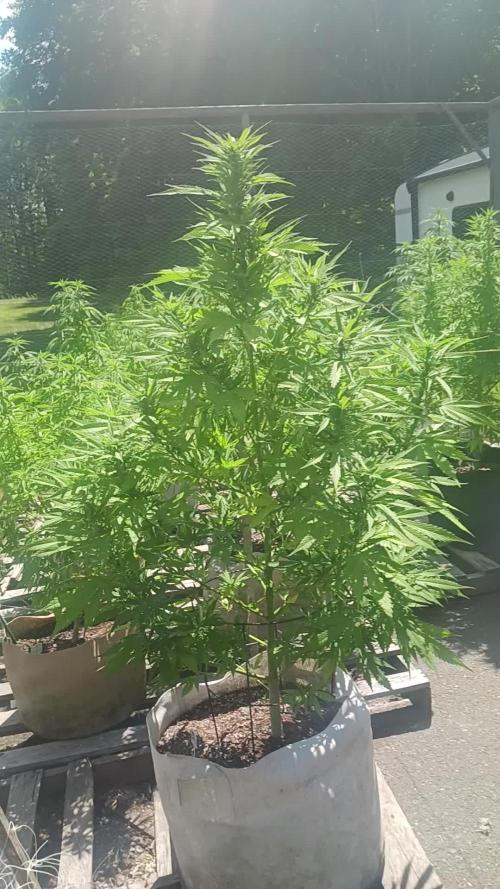
📆 Week 8, 15-21 June 2024
15-21 Jun - Observed and let the plant grow.
📑 This was her first true week of flower. Almost all the pre-flower stretch is over now and it is time to begin the budding. Along with the height of the plant, the DLI has increased to 45 now. With this strain being sativa dominate I expect her to stay in the flowering cycle for about 9 weeks. Time will tell.
🍶 19 June nutrient solution changed
🍽️ 19 June feeding schedule updated
💧 Using reverse osmosis water with EC/TDS at 0
🐉 Nutrient Solution EC 2.6 at 76 degree F
🔆 Light power at 75%, DLI 45 canopy coverage at 12hrs
😤 Using General Hydroponics, HGC728040, Dual Diaphragm Air Pump, 320 GPH
That is it for this week. Thanks for the look, read and stopping by.

Likes
15
Share

@masterofsmeagol
Follow
8/3 Went over to treat the 10th planet that needed water with plant doctor around 10:30. I was in the garden at 6 but didn't have much time. That plant seems to be curled up or "droopy". It DID need water. I defoliated a few sep leaves off it but I didn't see any today. I guess I don't ever really see the leaves "up" or praying like I do with the rest of tge plants. It's starting to flower like the rest though. Today is the day everything is supposed to get its second or third plant doctor dose but I decided to wait until they need the water. I don't think 24hrs will mean much. I've been staying on top of defoliation but I'm seeing some pillar damage. I'd like to spray bt but what my buddy said about spraying with septoria is still in my head. Maybe I can use citric acid. That way it won't "wash away" spores it will just eat them. At least I think. And I hope lol. Birds get most of the pillars but I hand pick some too. I need to pick up nutes. Wondering if I should just get grow big again. I don't use much but plants are switching to flower and leaves are fading. I have big bloom and kool bloom bit neither have nitrogen. I still need some sort of nitrogen. Especially since that could be a deficiency. Not sure if it's the transition or a condition with the sep. I see some interior small leaves bleeding out and some dying. I'm wondering if what I thought was earwig damage years prior was really a combo of sep and they just ate the evidence. I'm super grateful though. I've got some resilient girls and they're doing well. The special kush in flower is gorgeous as well. Looks like I'll have an early plant. Short flowering time on this strain. Smells pungent.
8/4 Treated everything in the garden with plant doctor except the 10th planet I got yesterday. I need to take a closer look at that plant. It rarely looks "happy" like my others. I'll check it again later. 3tsp per gallon and 1gal a plant. The 10s got a half gallon. This seems to be working great. I have some defoliation to do on the tenth planet I was talking about earlier. Everything is in some form of flower. The flowers on that early special kush are getting bigger. I'll update this later.
UPDATE: WENT BACK OVER AT NOON TO TAKE A LOOK AT THAT OTHER 10TH PLANET TO SEE IF IT PICKED UP AT ALL. IT DID. IM GLAD I CAME OVER TO CHECK THOUGH. MAKES ME FEEL BETTER. THE OTHER 10TH PLANET LOOKS HORRIBLE O. FILM FROM ONE ANGLE LOL BUT ITS REALLY A GREAT LOOKING PLANT AND IM USUALLY FILMING AT LIKE 6AM. JIST WANTED TO STICK UP FORCMY GIRL AND HER BAD HAIR DAY. ITS BEEN HIT AND A FEW OF HER LEAVES ARE TACOED. SHE GOT HER FIRST "PREVENTATIVE" DOSE OF PLANT DOCTOR WHICH WAS HALF A TSP/GALLON. IT REALLY SEEMS TO BE DOING SUBSTANTIALLY BETTER. EVERYTHING IS. IM HAVING TO LOOK HARDER AND AM HAVING TROUBLE FINDING LEAVES EFFECTED BY SEPTORIA. KNOCK ON WOOD. IM EXCITED. THIS IS GOING BETTER THAN I THOUGHT. IM STILL GOING TO BE MONITERING LIKE I USUALLY DO.
8/5 Watered the 10th planet I dodnt get yesterday. Looked and didn't see any sep leaves. Phone was dead so I vouldnt do a video. Went back over at like 130pm and did a quick video and checked out the girls. Everything is looking good and transitioning well. I WANT to use a diy Dr. Zymes with citric acid as I've noticed a few pillars. Only reason I've hesitated is because my buddy said not to spray it. But if what I spray it with "eats" it I would think it's ok. But what do I know. Birds get a great deal of them. I watch them on the camera sit on the cage and wait for one to stick it's head up before snatching it up. Still need to get either more grow big or a bloom product with nitrogen. I was able to defoliate that other 10th planet of anything suspect. It's hard work but it's worth it in the end.
8/6 It's like 81 at 4pm. I didn't have time to video this morning but i went back over. WATERED EVERYTHING THIS BUT THE 50 AND THE 10TH PLANET I GOT YESTERDAY. Temps are supposed to pick up soon and it will be in the 90's again. We've had like NO rain. I searched for leaves that had signs of sep to defoliate. I may find one or two but for the most part things are doing great. Overall I'm happy.


Likes
6
Share

@TheRexxx
Follow
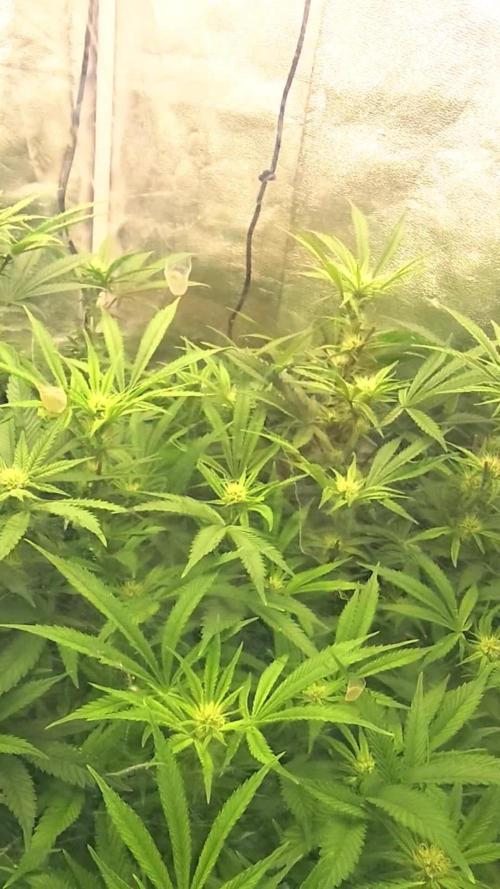
Die Mädels haben offiziell die Ein-Meter-Marke geknackt. Die Papayton führt das Feld mit stolzen 104 cm an. Trotz des massiven Lollipoppings an Tag 14 ist der Vorwärtsdrang ungebrochen. Die Blütenansätze (Puschel) werden von Tag zu Tag dichter und definierter.
Heute Morgen wurde die Intensität auf 319 Watt hochgefahren. Das Ziel ist es, die Photonen-Dichte passend zur Hauptblüte zu maximieren.
Der Luftentfeuchter ist auf 55 % RLF scharfgeschaltet, um Feuchtigkeitsspitzen in der Nacht abzufangen.
Aktuell sind die Lampen am Anschlag. Als taktischen „Joker“ habe ich noch die Bodenisolation im Zelt, die mir bei Bedarf weitere 3–4 cm Puffer liefert, sobald es oben zu eng wird.
Die gestrige Mischung war das erste Mal „Full House“ inklusive dem Turbo-Booster:
Green Sensation: Premiere an BT 17, um die Blütenmasse und den Stoffwechsel zu pushen
Sugar Royal & Power Buds: Für maximale Harzproduktion und zur finalen Stretch-Kontrolle
CalMag (10ml/5L): Als Schutzschild gegen die 319 Watt LED-Power
Nematoden-Einsatz gestern Abend erfolgreich zur Prophylaxe gegen Trauermücken ausgebracht.
Die Vitalität ist brutal die Blätter stehen steil zum Licht („Praying Plants“). Die Kombination aus hoher Wattzahl und dem Green Sensation scheint voll einzuschlagen. Die nächsten Tage wird der Fokus auf dem Lampenabstand zur Papayton liegen. Sobald der Abstand kritisch wird, fliegt die Bodenisolation raus.
Likes
23
Share


@Pemidaisy
Follow
Provided my a full dosage of bio boost and nitro which were 2ml/l and 5ml/l respectively. Will be moving away from the nitro as of next week, just wanted to give the plants their last nitro supplement as they enter flower.
My humidity is fluctuating between 58-64 at the moment, but since added a bigger fan to bring it down as far as possible. I’ll be tweaking things over the next week or so to see if I can bring it down to 50. Don’t have a humidifier and will not be able to get one for this grow so knew this was coming. I have a few tricks up my sleeve but need to test them out not sure if it will work.
The plants are very healthy with no signs of deficiencies at all, other than a few nibbles on the plants which I have since taken care through my tea application.
My focus this week is to:
1. add another light(150 true watts) to my 256 true watts to cover 0.9m2. Need to add a new plug and extend to the cable to do so.
2. Reduce humidity as much as possible
3. Continue LST and tucking of leaves
Will be installing the light on 13/4/2021(tomorrow) as I got all the parts I need.
You can actually notice the brighter spots in the tent is those with the most growth that’s why installing a new light is now priority.
Day 31 - added additional light but now my temperatures has increased. It looks like it’s settling on 30-31 degrees Celsius.
Day 32 - starting to dial in with the temp and humidity. Open some vents in the tent to lower temp but has increased humidity. However switched my lights off time from 12-5pm so that my temp doesn’t exceed 29* Celsius
Day 35 - humidity and temp seems to be under control now. Getting between 45-55 humidity which I’ll gladly accept.
Have a small concern for one of my plants. It’s displaying my symptoms of underwater or windburn but will keep an eye on it.


Likes
6
Share


@Mr_nugs_lover_David
Follow
This gorilla cookie by fast buds is freaking awesome guys, I'm really in love with this genetic, very strong smell, trichome glands everywhere, and 2 out of the 3 plants that I'm growing are going to develop full purple buds!! Amazing autoflower plant man, I'm not disappointed at all, I hope to get a nice amount of buds with the 3 Gorilla cookies because I cannot wait to taste those buds! Let's keep on working! 💓💚💛👨🌾
Likes
60
Share


@m0use
Follow
Plant #3 yellow hermied and pollinated the tent :(
Can see some of the seeds in the bud closeups as well as the pollen and mini sacks of the plant on lower growth.
Not a big fan of this, It was the one plant closest to the tent door zipper and only happened on the lower growth. Almost wondering if there was a light leak or if it was just the plant. Will test for light leaks when the plants are chopped and I can crawl in and manage it.
The liverwort from last grow survived outside and is making weird spiky umbrella like things. Looks to be its flower for lack of better understanding and how its going to release a lot of spores for the next generation to grow.
Big shoutout to Medic Grow for sponsoring the lighting in my tent, They have provided me with 2x Mini Sun 2's in the 240w configuration, They use the v1 growing spectrum that is a all purpose seed to harvest spectrum so their is no hassle of switching it mid grow. If you're interested in learning more about Medic Grow products please visit the web link below.
https://medicgrow.com/
https://growdiaries.com/grower/MedicGrowLED

Likes
31
Share


@ThrashedTV_BakedByGlaze
Follow
NEW HEMPER DAB RIG UNBOXING! https://www.youtube.com/watch?v=OtbngkBE6yw
Lots of @GlazedGrow content coming to the new YouTube channel: THRASHED TV 🙏 https://www.youtube.com/c/Christhrash
Cannabis Content + Metal/Music + Interviews & more!
Biggest yield yet! 75 grams of great, non-larf flower.
Over 100 grams of pure frosted sugar leaves mostly from Plant One. The very classic sativa pheno + the lights and Advanced Nutes Big Bud + Overdrive.
With the other plant in the Bruce Banner harvest: https://growdiaries.com/diaries/105959-grow-journal-by-glazedgrow
The final bud weight is 103 grams, just 10 grams shy of a Quarter Pound 😱 + over 100grams of pure frosted sugar trim.
Lights: @ViparSpectraLED XS1000 + P1500
--
Become a @ViparSpectraLED partner for testers and commission here: https://partners.viparspectra.com/create-account?ref=378
Worth the buy: https://www.viparspectra.com/?aff=378&utm_source=affiliate or use discount code GLAZEDGROW.
IG: @GlazedGrow @Glazed_Grow @ChrissThrash @ThrashedShop
YouTube: https://www.youtube.com/c/Christhrash
Twitter: @GlazedTweets @GlazedGrow @ThrashedTV @ThrashedShop
Likes
10
Share


@StickyFingah420
Follow
Extrema producción de tricomas de esta variedad! Gran parte de los frutos lo usaré para extraer rosin, su resina se ve ideal para este propósito.
Fragancia exquisita a ponche de fruta dulce, con notas ácidas y un fondo de especias.
Como mencioné anteriormente dejaré la parte de la reseña de efectos, sabores y sensaciones para cuando los cogollos estén secos y curados, por ahora solo puedo apreciar lo que mi vista y olfato me permiten captar.
Totalmente conforme por la calidad de estas flores y agradecido de los amigos de Sweet Seeds por la confianza.
Será hasta la cata entonces, buenos humos!


Likes
54
Share


@GarciasGarden
Follow
Well let me start out by saying DONT LISTEN TO YOUTUBE BULLSHI** .. LOL almost lost all of my plants to nutrient burn it completely ate my Blueberry #1 and took out one of my washing machines.. I have my (WM) chilling out in the 2 gallon pot still and probably will flower it in there.. good thing is I got more space now for my other babies!! We flushed the 2 gallon pots completely and transplanted as soon as we could to stop any more damage from happening. Thankfully saved 8 of the 10 girls and brought them back to full health . I can definitely tell how much it slowed them down because now that they have the right climate and feed they’ve been exploding in growth ..///I wanted to do my own thing when it came to training so I had a couple experiments 🧐 I honestly can’t wait for this grow to finish because I’m bringing in an auto pot system for the next run I’ll be running some fire (Wet Betty seeds from exotic genetics) well anyways here they are!!


Likes
48
Share


@MG2009
Follow
Start of week 8,flowering, looking for amber trickomes,took off a branch at day 52, trickomes,were mostly milky some clear. I want to know the sweet spot for this girl if you know what I mean. I will post other pics of early cut latter.
Also I switched to blue spectrum light only, supposedly it gets more UV light and packs on more resin(higher T H C ) ,Not that it needs more, but in the name of science I am willing to put in the extra effort. 🔎😎

Likes
5
Share


@Marshydrots1000
Follow
Everything went good. Had some issues with build up but first time in coco and autopots so was bound to be something! Haha but over all was easy !