The Grow Awards 2026 🏆 














Likes
Comments
Share
@902EastCoast
Follow
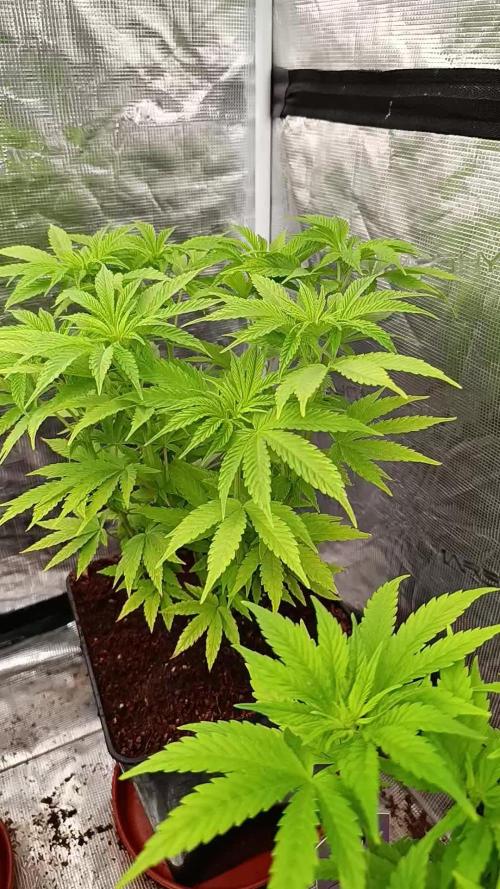
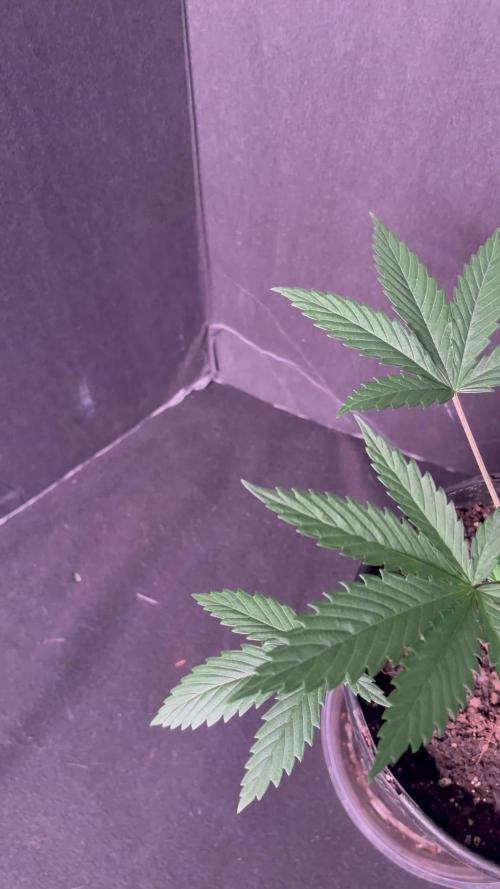
Ladies are looking awesome! They have a week or more left but will see tomorrow when I check the trichs. They smell so good , mouth watering and they chunked out. I see worms in my organic living soil which is pretty neat.

Likes
6
Share
@macrocefalo
Follow
With great joy I will start my second season growing cannabis. I hope to learn from some small mistakes from the first season where I was surprised by my performance as a first-time sailor cultivating the BlueDream strain. This season I left the 4 seeds of GorillaGlue 36hrs in a pot of water to break the dormancy. After that I used the napkin technique for more 42 hrs. So I put each one in a 5-gallon airpot, as they are automatic and go to harvest in the same pot. After 24hrs in the vase the first 2 little leaves came out. I made a homemade dome with a 2-gallon water bottle, cutting it into strips and lining it with plastic with some holes to keep the humidity high during this initial phase. We entered the first week of cultivation and unfortunately due to an oversight I got confused in the fertilizer table and clearly the dreaded overfert happened. I did a watering only with water to try to remove the excess fertilizer let's hope it works.

Likes
6
Share
@420DeepGrow
Follow
📆 Semana 2
El estiramiento se intensifica, con crecimiento vertical marcado y buena respuesta general. La planta mantiene color sano, turgencia correcta y una estructura que acompaña el aumento de altura sin perder equilibrio.
Raíces activas y absorción estable durante esta fase de expansión. Sin intervenciones agresivas, se sigue priorizando estabilidad y control del entorno.
Seguimos creciendo fuerte 💪!


Likes
38
Share
@Homegrown93
Follow
These ladies have started their final stretch. Pink kush will be the first one I harvest, I’m just waiting for her to put out a few amber trichomes and so far she has none maybe within the coming week. Canna-cheese has maybe 2 weeks left. She has the nicest fade I’ve seen so far out of the plants I’ve grown, but she for sure needs to get fatter. Strawberry Skywalker is short but thick, she’s barely starting to fade so I thunk maybe in 3 weeks she’ll be done, still no amber trichs and I’m sure she will get much fatter. Alien berries has surprised me. She was the runt and although a slim plant in veg, she’s putting out some fat knuckles, maybe in 3-4 weeks she’ll be done. Over all good conditions except for a couple spikes in heat a few days. Still no intense smell either.


Likes
30
Share
@TerpTurtle
Follow
Full blood moon harvest
9 day dry @ 58-63RH 60-65F | Glass Jar Cure with inert gas
Shadow realm potency, Taste just like apple cider
Fast finisher, stays small & tight node spacing


Likes
22
Share
@Robbaus
Follow
E voilà! Dopo 120 giorni e ben 7 ore consecutive di pulizia oggi finalmente ho raccolto. Aspetto di pesarla tra due settimane ma ad occhio è stata la volta migliore di sempre, non ho mai riempito 6 livelli della rete per l'essiccazione e non ci ho messo mai 7 ore a pulirla tutta. Bene. Le più scarse sono state sicuramente le due Peyote Critical, mentre la Blue sunset Shebert e le due Tropicanna Banana molto abbondanti. Non vedo l'ora di pesare 🤩😍🤩😍🤩😍🤩🍀🍀🍀🍀🍀

Likes
2
Share
@Ninjabuds
Follow
It’s day 27 from seed for all the plants in the photo sea of green. Let’s call it the battle of the strains summer 2025. All of the plants are starting to have visible differences. I’m already starting to tell witch plants are more sensitive than others.
Likes
2
Share
@Cannabot
Follow
love this strain,pleasure to grow.the smell is incredible,responds very well to lst.colas are bulking up nicely,loving the sun atm.heavy feeder,il up the doses on the next feed


Likes
14
Share
@eldruida_lamota
Follow
Vamos familia quinta semana de floración de estás Tropical Zmoothie de SeedStockers.
Que ganas tengo de ver el progreso de esta variedad, las plantas están sanas, se ven con buen color.
La cantidad de agua cada 48h entre riegos.
Esta semana añadimos nutrientes de la gama Agrobeta.
Las plantas están bastante bien y eso que subió par de grados la temperatura que en mi tierra hace mucho calor.
Me pasé un poco de mano con la comida pero apañaré ahora con agua destilada.
Estas próximas semanas veremos como avanzan y progresan las flores.
Mars hydro:
Code discount: EL420
https://www.mars-hydro.com/
Agrobeta:
https://www.agrobeta.com/agrobetatiendaonline/36-abonos-canamo
Hasta aquí todo, Buenos humos 💨💨.

Processing
Likes
2
Share
@QoverQ
Follow
Hi guys
Its the 3rd week of Flowering its doing much better than in Veg! The smell is starting to get intense :)
Im slowly adding some Big Bud into the nute mixture as it gets more flowers
The light is on 100% about 300W‘s


Processing
Likes
8
Share
@420cfm
Follow
First week of 12/12 aka the transition week. Stretch has begun and canopy is filling in nicely. Have been doing a lot of pruning, defoliation and lollipopping to get the small shit cleaned up and solid airflow. Steady as she goes!!


Likes
73
Share
@HinduGod
Follow
WOW LOOK AT DAT!! DAT PLANT IS NOW HARVESTED!!! IT HANDLED THE OUTDOORS VERY VERY GOOD!!!! I WOULD LIKE TO THANK DA THOUSANDS OF PEOPLE WHO STOPPED IN AND VIEWED DA GROW!!!!! A SPECIAL THANKS TO THE ONES WHO LEFT COMMENTS YOU ARE VERY VERY KIND!!!!! I WILL HAVE A SMOKE REPORT AFTER DA DRY AND CURE!!!!!😎
PLEASE COME AGAIN!!!!!
Likes
25
Share
@JohnnyBarrel
Follow
Week 17
Nothing really moved this week. It’s something like between low tide and high tide: not my favorite moment … waiting for blossoms and flowers 🙄🙏.
Good point is that every plants are healthy ( except a parasite problem on Psicodelicia) and well
prepared for flowering.
For now it’s bad weather outside: 20 degrees max, with lot of wind and rain (cf video). The green house is the best option despite of less exposure.
Morning soon I moved the plants outside to sprayed them with potassium soap (natural insecticide). I cleaned the grow space inside the greenhouse (didn’t touch spiderwebs…good insecticide too).
I removed the automatic watering and get a few liters of rain water during this days.
Watering 1L every 3 days
-Calmag + Cannazym + Alga mic + Root booster
-Flora Series: preflowering quantities.
Daylight 14h30: 6h50/21h20
Psicodelicia is still a pretty plant but I saw some bad leaves covered by white spots… behind I notice some little light yellow grubs: it’s certainly a thrips attack.
I treated the plant with potassium soap and wait before the Neem oil.
The numbers of blooming sites are well identified and growth is totally fixed.

Processing
Likes
13
Share

Likes
2
Share
@Madman2020
Follow
Week5 Vegetative steering
Day 29
————-
4 minute shots(220+-ml).
50-60klux
68 leaf temp
Defoliated/Lollipopped
Plants seem to be inefficiently spaced. I moved them all closer and they are now positioned better under the lights
————
Day 30
VPDis about a .95
Vegetative steering schedule for 3gal who drink a little over a quart a day
220 P1
440 P1
660 P1
880 P1
1000 P1
1220 P2
1330(1%)P3
I achieve runoff at end of P1 then do a maintenance shot and finish the day off with a watering.
P1 waters every 15 min starting 1.5hours after lights on
Plants are swelling. But not as well as when i use CO2. I think plants in flower still need co2 so that we can get these lights closer.(as long as the leaf(temp does not go over 80 and vpd stays good)
Also, i found a plant to have hermied in week 2 so i removed the pollen sac and rubbed some pollen on 2 plants. Seems like they are just starting to take form on the flowers.
**need to check for hermies beginning week 2** Am happy to get seeds from these ladies as this was very isolated in the grow
________________
Day 31
Plants are starting to frost.
Group1 has swelled the most
Group 2 has average growth and nice frost
Group 3 looks like it was over dosed.
*Bras&MJ study shows that MJ does mot need to be sprayed with Bras as it will over stress the plants.
Brass was completely fine to spray without having adverse reactions.
MJ seems to decrease yields but is a worthy tradeoff(will continue to use)-*
—————
Day 32
Sprayed 2 plants with MJ(they now have been sprayed both week 4&6)
Sprayed 3 with bras(also have been sprayed twice in flower)
Finally frosting On the plants


Likes
5
Share
@Staffedition
Follow
Привет друзья!
Вот и прошла ещё одна неделя!
Растение здоровое, чувствует себя комфортно.
Потихонечку тяну ветки, что бы все шишки были под светом.
Всем добра и хоршего роста!!!
Processing
Likes
21
Share
@JuicyFruit
Follow
Day 58 - 07/02/20
About 70% or more pistils are amber and ive harvested the inner stems of the plant yesterday and today and trimmed it all down to individual buds before putting it in the net to dry for a week :)
The inner stems had such thick and dense buds on them that it was blocking some light from the buds on the outer stems and preventing them from reaching full maturity. They are now getting all the light they need for a few more days during the flushing week.
I will also be reducing the light from 18/6 down to 12/12 this week as its not possible for me to isolate the plants in total darkness for 72h. I was told that no light right before harvest will mean more THC production, any time i knock the lights back before harvest my buds always look frosty and covered in trichomes.
I cant wait until i have a smaller veg tent and another tent so i can isolate the plants for the full 72 hours.
Anyways i had a little problem over the last 2 weeks with my PH pen being cheap and nasty, it constantly needs calibrated but still its doing a basic job and preventing more serious PH issues until i get a replacement. i also think i might have flushed the plants at that time before calibrating the PH meter and they were not happy about it :) Everything looks okay now in my tent and im just giving this one only Phed tap water until harvest :)
I added a few photos of the Cayenne pepper plants harvest, the pepper plant was in one of my older grows i think maybe my first... could be the quick one diary, with minimal care and a little water i grew some monster peppers, i wanted to give them thier own diary but im not sure how GD would react hahah. so i posted them here, These peppers were all grown under the same light in the exact same conditions as i grow my weed with no bugs 🐜 or problems with mould, id strongly reccommend giving it a go and use up that grow space, especially as its bad for the environment to indoor grow! make the most of it folks!
Anyways happy medicating for this week and check out my other diaries if you all get time :)
Day 60 - 09/02/20
Added a video of a few buds from the inner stems drying on my drying net. I trimmed the fan leaves off and chopped the tips of the sugar leaves which had no trichomes on them. most of the test buds got all the visible stem removed but i left a few of the chunky tops to dry just to see how they turn out.
Anyways im going to flush for a few more days before chopping the rest down and getting it ready to dry :)
Keep on growing folks!
Likes
121
Share
@NuggetPawn
Follow
Left and right have both been topped for the second time on D31.
Increased the EC and the plants seem to be growing very well!
Have started to train the plant in the middle out, the other two I am not going to train until D33.
Likes
12
Share
@Crimm
Follow
Buds are starting to get really fat on 3 of the 4 plants. No amber on the trichomes yet so it will be a few more weeks till harvest at a minimum. The one that did the most stretching is just starting to thicken up on the buds. Been having issues with my drainage system causing a bit flooding in my tent. I see a few signs of deficiencies on one of the plants but I can't properly have access to it to see what is going on. The 4x4 tent has proven to be just too small for these thicc ladies. After this grow I'll be getting a much bigger tent. Any recommendations?