


Likes
Comments
Share


@ROY4L_GU4RD
Follow
Day 53 of flower today. I filled the reservoir from empty and stopped using the macro. I replaced it with General hydroponics Ripen at 5ml a gallon. Everything is frosty and smells good. As far looks I like the RC the best and the PE the least. I'm going to end up with a sheet ton of it out of the 3 so I hope I'm wrong! 😆
I'm going to do a lower defoliation mid week to get more air flowing. RH is stable but I just want to be careful 🧐 being this close to the finish line. This is definitely one of the easiest runs I've had. It seems PE is pretty maxed when it comes to nutrition but LMC and RC could take a bit more. My PE phenotype is super stretchy compared to them as well.


Likes
6
Share


@rvabudman
Follow
Started my first round of topping this week. The Gold Leaf is looking healthy.

Likes
20
Share


@AsNoriu
Follow
Added first time molasses during feeding will be doing it for last 3 weeks before flush.
For couple plants with redish leaves stems gave epsom salt. Thinking to give it to all of them.
To me they look too skinny, but its aftermath of strech i quess ...
Would love to have one more hlg 240 ...

Likes
37
Share


@Whitey307
Follow
Hi all back with another week all goin good hopefully. flushed both plants with small nutrients dose on advice as tips getting a bit yellow plus new growth .it looked like nutrient burn 🔥.plus when did runoff ec was 1.6 so dropped it all back and with a bit of look i caught it early but to be honest they look amazing and loving life so fingers crossed all going good. as it my first time ever tho seen them in flesh. they could be in a bad state and need chopping down and me thinking I'm doin a alright job 🤣🤣🤣that's why I put it up on here is well just incase im a cabbage wasting me time on 2 apple trees or something haha main reason is ta get as much help as I can.love this site any free time going through all your grows amazing 👏 plus to all that have help me so far honestly it well appreciated and if yous see anything or find anything I'm doin stupid from now please let me
Day 42:defoliated and gave a little hair cut ✂️ like lst hadn't a clue what i was doin and that work well I think so fingers crossed.
Marshydro ts1000 on 75 percent at 50 cm.move to 80 percent in few days see how they react.Good luck all and
Keep growing and blazing till we stoned

Likes
35
Share


@Pot_Portraits
Follow
Week 5, now we are talking, she is stretching and the roots are growing at a really nice rate.
Feeding is almost at the recommended max without her showing signs of overfeeding, I always increase and try to push the plant but you need to go slow,
step by step and see how she reacts, always give her 48 hours to see how she copes with the new dose, If she looks healthy stick to dose for the week and increase the following.
A good trick to see if you plant wants more of less fertilizer is reading the ppm and check when the res level is lower after 3 days or so, if the ppm rises but the water level doesn't go down quick she has to much feeding.
If the PPM stay the same or drop with quick water intake means she takes it in very happy and maybe can take more.
Will continue to rise the dose till we reach the recommended max of 2.5ml/l, might play with the ratio later on.

Likes
25
Share


@Kakui
Follow
Veg54, riego con 6.2 pH y EC 1.5, drenaje de 2.0 EC y pH 6.3, todo ok. Las plantas ya alcanzaron entre 25~30cm, en 2 días más comenzará la pre floración.
Veg56, están casi de 30 centímetros de altura, último día de vegetación, mañana entrarán a pre floración, necesitan una defoliación.

Likes
42
Share


@GanjaReaper
Follow
Spotted some budrot again. This time I had enough of it and didn't want to risk further rot, so I decided to harvest them and not let them flower for another week.
Forgot to take pictures before the trim, they look silly now without the support from the copperdreads and rubberwires haha.
They had 8 weeks of flowering, I'm glad that 1 out of 2 came out nicely. The other one is just another regular looking outside plant lol.
I always give them a first trim, so the buds can dry better, faster, safer. After some days or maybe at the end of drying, i will trim them again.
You can expect the final update with pictures between 7 to 14 days from now.
ps, Somehow the beautifull colors from the better plant doesn't show properly when filming or taking pictures, neighter am I a professional photographer.
But ill promise to take better ones, once the buds got the final trim and got dried.


Likes
35
Share


@Hiroots420
Follow
04/06/2021 (F DAY 7)
Todas las plantas están espléndidas, ya comenzamos la flora y empezamos a observar el estirón de flora!

Likes
1
Share


@Kern420
Follow
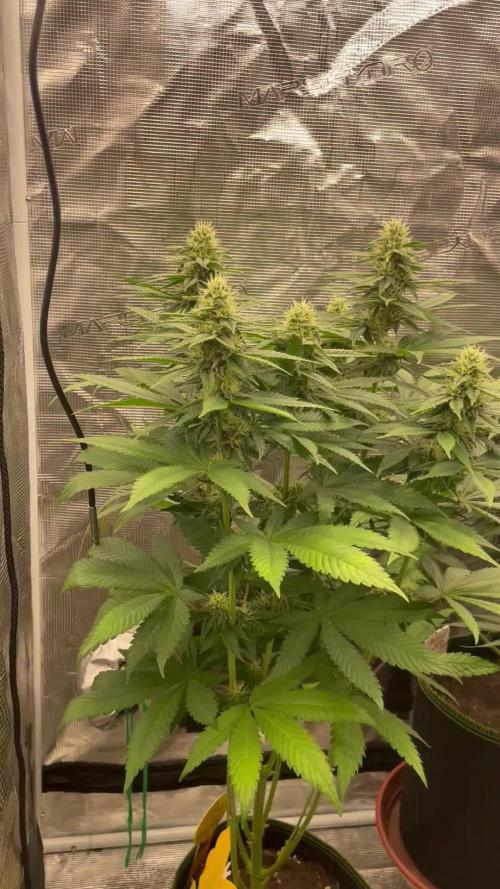
Die Woche über haben sich die Blüten weiter entwickelt. Die Trichome wurden mehr und man fängt an erste Terpene zu riechen.
Wir haben Donnerstag (BT 21) stark entlaubt und schauen jetzt wie die Pflanzen wachsen.
Wir gießen weiterhin durchschnittlich alle 4 Tage 1,5 L


Likes
4
Share

@Budette_Botanics
Follow
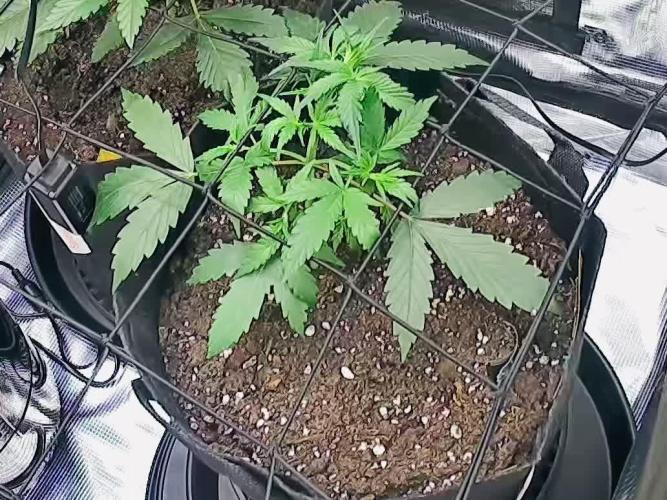
Much better week of growth, applied some LST, which helped a lot. The net has helped continue to help the light reach the new growth, and also even out the canopy. She was getting quite over crowded, a lot of leaves were shading the new nodes, and tucking leaves was doing more harm than good.. so we had a defoliation. Hopefully that will help going forwards. I’m very intrigued to see what I end up with come harvest, it feels like it could go either way at this moment. Time will tell!
Likes
7
Share

@Organic473
Follow
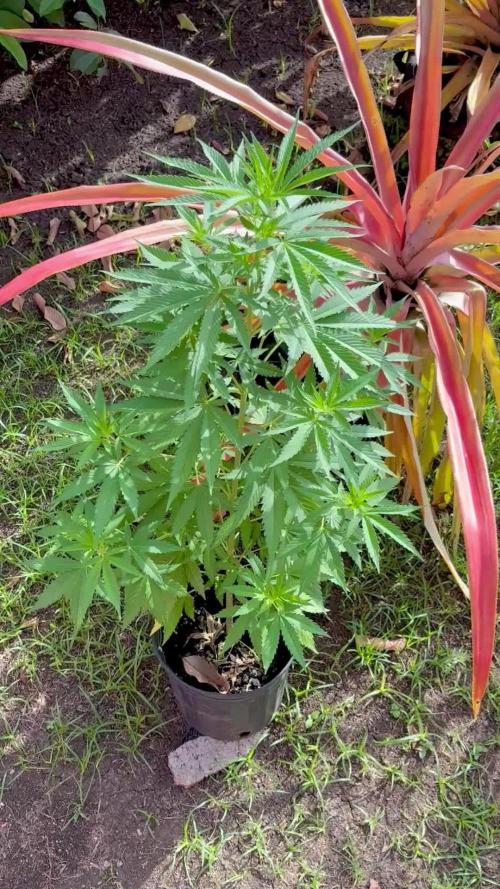
This girl is taking flight with her speed and height. Her branches are forming and soon would be transferred to a 5 gallon pot.


Likes
5
Share


@TheGreenGroomer
Follow
Yooo what’s up!
Today marks Day 2 of Week 5 in flower and maaaan, things are coming along perfectly. The aromas right now are on a whole different level – every time I open the tent it’s like getting hit with a wave of dank fruity funk. Buds are stacking up beautifully, trichomes are starting to glisten, and the structure is lookin' solid.
Only thing I’m wishin' I did different is spreading her out a bit more or doing a bit of defoliation earlier. She’s packed in and some of those lowers aren't getting all the love they could be. But hey – lesson learned for next run: don’t get greedy with the amount of tops! Quality over quantity, always. Gonna aim for a cleaner canopy next time, fewer but fatter colas.
For now, I’m keeping the feed around 1000 PPMs, just to keep things steady without overdoing it. She seems happy, leaves are praying, and everything’s right on track.
Let’s gooo! 💨🌱🔥

Likes
19
Share


@BlaKX
Follow
Gorilla Punch Auto 🦍 🥊:
30.6 - 7.7 = 35 cm +0,5cm
Mimosa Cake Auto 🍹🍰:
30.6 - 7.7 = 53,5 cm +1,0cm
Nothern Light Auto 🌌🌠:
30.6 - 7.7 = 64cm +1,0cm
Woche 8 ist rum und die Buds beginnen zu Reifen und immer dicker anzuschwellen. Alle Trichome sind milchig aber noch keine Bernstein Farbe zu entdecken. In der 9 Woche werde ich die Dünger gabe halbieren und erst spülen wenn ich Bernstein Farbe erblicken so 10% der Rest schön milchig.
Würde schätzen maximal noch 14 Tage dann sind sie reif die Gorilla Punsh wahrscheinlich eher !
Oder was sagt ihr Growmies?


