


Likes
Comments
Share


@ThePifferyAndCo
Follow
Week 7 of Veg. 4x4 filled out very nicely. Added in a 2nd 500W light and spread the plants out a bit more to allow more airflow/light penetration. Now the fun begins :D


Likes
9
Share


@Xabii
Follow
Starting this week I will also add Oxygen granulate (KMPS, CAS-70693-62-8, 2KHSO₅ * KHSO₄ * K₂SO₄) I use this once a day to reach ~250 mV on my ORP meter, it is not calibrated so it more of a good guess, adding this helps to keep the reservoir stable even with higher nutrient temperatures in summer and it also adds a little Kalium/Potassium for the plants.
The ORP probe is not calibrated and values are to be taken with a grain of salt.
Values are average of the day.
DATE - °C - RH% (Tent Temp/RH)
20240725 25.2 52.4
20240726 25.7 61.0
20240727 25.1 63.6
20240728 24.4 57.2
20240729 25.5 55.2
20240730 27.2 54.4
20240731 27.2 61.7
DATE - PH
20240725 6.16
20240726 6.05
20240727 5.88
20240728 5.90
20240729 5.92
20240730 5.94
20240731 5.95
DATE - ORP (mV)
20240725 20
20240726 23
20240727 23
20240728 19
20240729 18
20240730 18
20240731 15
DATE - EC(us/cm)
20240725 1990
20240726 2060
20240727 2137
20240728 2119
20240729 2152
20240730 2186
20240731 2211
DATE - CF
20240725 19.90
20240726 20.60
20240727 21.37
20240728 21.19
20240729 21.52
20240730 21.86
20240731 22.11
DATE - °C (Reservoir)
20240725 21.6
20240726 22.0
20240727 22.4
20240728 21.4
20240729 21.6
20240730 22.4
20240731 22.5


Likes
31
Share

@shwable
Follow
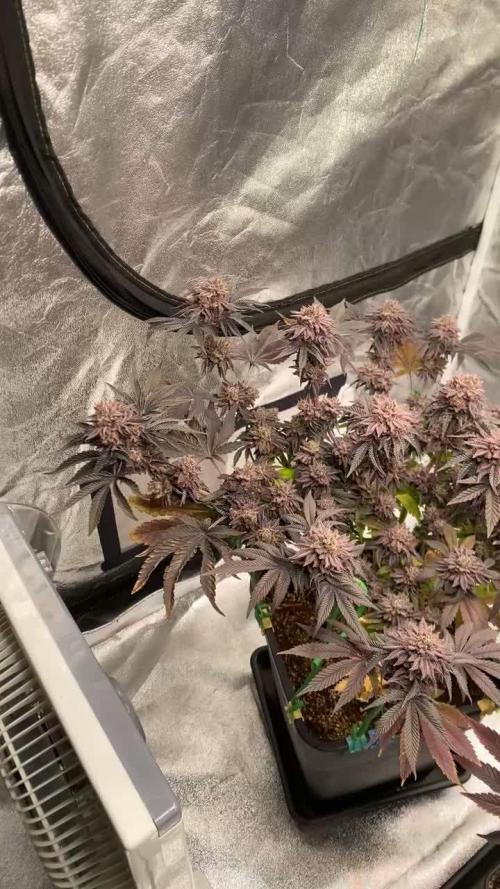
I'm in love with these ladies, just beautiful and so crazy terps I can't even comprehend this aroma.
It's like a permanent marker mixed with multi fruit juice and earthy notes at the end. Just amazing!


Likes
48
Share

@Natrona
Follow
Strawberry Trop Cherry - Strng Seeds
W7 12/21-27
Nutrients:
12/23 1.5 ltr each
Aptus Regulator 1.5ml
Aptus strtbooster 2.5ml
Flora micro 5ml/g
Flora grow 5ml/g
Grow Time 5ml/g
Plant Juice 2 TBSP/g
6.41ph, 931ppm, 62.4
12/24 when transplanting added Dynomyco and Mychoreaza in the planting hole. The soil base is 50/50 Fox Farm Happy Frog and Coast of Maine. I watered the lower portion of the new pot with 1.5 liters then added the plant and more soil.
12/25 1.5 ltr
Aptus Regulator 1.5ml
Calmag 2.5ml/g
Recharge 2.5ml/g
6.04ph, 463ppm, 62.6f
12/27 1.5 ltr each
Aptus Regulator 1.5ml
Aptus strtbooster 2.5ml
Flora micro 3ml/g
Flora grow 1ml/g
Flower Time 7.5ml/g
Plant Juice 2 TBSP/g
6.45ph, 831ppm, 62.2
The Strawberry’s received 1.5 liters 3 times this week. A big week for defoliation and lollipop. It is evident that topping an asymmetrical plant does nothing to create more tops. The 6 Strawberry plants are huge for 7 weeks. Originally, I was planning to wait until January to transplant, however, the roots were showing out of the bottom of the pots, and every plant is over a foot tall and half are over 2 feet.
I believe the CO2 Exhale bag makes a difference in the speed of growth and development.
These are heavy feeders. All showed some nitrogen deficiency earlier on and I’ve increased feeding. I planned to use grow dots extended for photo period plants when I transplanted them to 5 gal. I asked Santa in early November, and he kept sending notice that the order had been delayed. So, I decided to use TPS1 for this grow. I flipped to 12/12 on 12/28 and will water only this week. I hope to reduce the stretch during the first 2 weeks of flower.
I must admit; I took on more than I can handle. I started these in November expecting them to be much smaller at 6 weeks. But no, these gals have grown with vigor. I had these 6 huge plants and 4 autos in the 4X4 tent. They grew faster and bigger than the autoflowers am used to growing. Christmas week was hectic with 5 harvests, 6 transplants and defoliation. I had to have my husband assist in the transplant to hold the plant as I held the fabric pot open.
A side note: I’m taking applications for Spring & Summer cabana boy positions when I go to the beach. Strawberry Cadillac has the big fans needed for the job.
12/28 Strawberry Cadillac #1 36” #2 26“
Strawberry Trop Cherry #1 26” #2 16”
Straw-Lectric Lemonade #1 18.5” #2 18
Important dates
11/9 Germination
11/25 Transplant to 1.5 gal,
12/1 Topped, Pinned and removed 2 large center leaves
12/5 Repositioned pins and removed lowest fan leaves
12/16 Topped 4 tops on each plant except Cadillac1 (first topping) and put manuka honey on the cut.
12/24 Transplant to 5 gal
12/27 Defoliate all
12/28 Flip to 12/12
Stay green, growers love 💚🌿
💫Natrona💫
Likes
6
Share


@IQuSX
Follow
It was a total of 15 day break.
During this time, there were two defoliations, 4 washes, one mesh tension.
Also one fertilizer change and VooDoo Juice Plus supplement (see photo).
Now there will be a translation 12/12 ...
Let's see their potential!

Likes
22
Share


@bypado_farm
Follow
Day 49:
Watered each plant with 1L with nuts
1568 ppm, 3345 us/cm, 3.3 EC (purple punch, strawberry banana, wedding Cheesecake)
1573 ppm, 3346 us/cm, 3.3 EC
It wasn't me who did the feeding
(gorilla cookies)
2 different feedings for the 10 plants
Day 51:
Watered each plant with 1L with nuts
1562 ppm, 3325 us/cm, 3.3 EC (purple punch, strawberry banana, wedding Cheesecake)
1514 ppm, 3293 us/cm, 3.2 EC
It wasn't me who did the feeding
(gorilla cookies)
2 different feedings for the 10 plants
Day 53:
Watered each plant with 1L with nuts
1632 ppm, 3472 us/cm, 3.4 EC (purple punch, strawberry banana, wedding Cheesecake)
??? ppm, ??? us/cm, ??? EC
It wasn't me who did the feeding
(gorilla cookies)
2 different feedings for the 10 plants
Day 55:
Watered each plant with 1L with nuts
1655 ppm, 3521 us/cm, 3.5 EC (purple punch, strawberry banana, wedding Cheesecake)
2142 ppm, 4557 us/cm, 4.5 EC ?
It wasn't me who did the feeding
(gorilla cookies)
2 different feedings for the 10 plants

Likes
4
Share


@Growyourownathome2x2
Follow
Thursday 16th march day 59 Harvested a couple days earlier then planned as my humidity was getting a bit high and worried about risking mold I decided to chop, have to get a good dehumidifier soon, everything looking lovely, nice and dense with very strong fruity potent smell definitely the best looking plants I have grown to date not the biggest buds but they look quality, chopped plants whole gonna do my best to keep the temp and rh% in the dry room as close 60/60 as I can to get a nice slow dry, 🍁😎 I only took the wet weight from 1 plant back left plant was 270g with large fan leaves removed

Likes
3
Share


@Doobster42
Follow
This was a tough diary post as the G.cookie plant died off due to an over watering issue coupled with a 22 hour power outage due to storms :( So I posted the last picture I had of her *RIP*. On the up side the Cherry Cola has taken off as you can see in the photo
Likes
Comments
Share

@SubliminalSociety
Follow
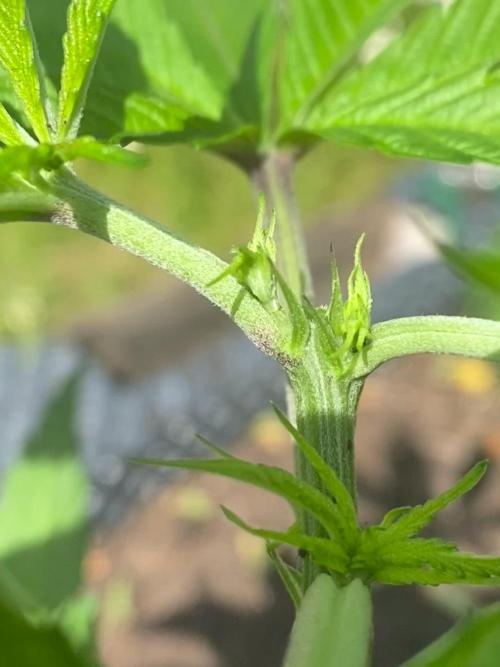
She’s doing great. She’s turning towards the sun so her growth is more diagonal. But I’m not intervening for now.Topped this week after getting feedback from my insta community. Looks good.
Weather was warm and a little cloudy.
Likes
18
Share


@bradleycherry
Follow
She is just beautiful she smels like a banana and strong weed wil need around 4-6 more weeks

Likes
18
Share


@VI_Cannabis
Follow
June 7 - We ordered some new lights last week, they are 240w kingbrite samsung lm310h with uv/ir, 3000k, and meanwell drivers.
We setup the new room and moved the girls into there. After a bit of LST and a watering (with nutrients) at roughly 7ph, they were ready to go under the 2 new lights and the same SF-1000 we have been using in this grow.
The new room is a 12 ft enclosed trailer. I moved everything from the small tent into this. I put clear poly on the walls, floor and ceiling. I put poly on the shelf I am going to be keeping in there as well. I bought 50ft of 6mm mylar and lined the floors, roof and sides with it. I plan to get some reflective tape to seal everything and to cover the wood. I did not get much of a chance to watch temp's today as they it was later in the evening after all was said and done. The inline fan blowing in air from outside.
June 8 -
9 AM i checked the plants, they were at 25.2 and 50% RH. Late through the day I had checked and we had gotten up to around 32 degrees. So I moved the inline fan to the closer vent, hooked up to that, and had the air blowing out of the trailer with the inline fan sucking it from above the lights.
I then added oscillating fan and had it blowing air on the left side of the room so it would somewhat circulate once I closed the doors. I then checked at about 9pm and we were at 22 degrees. Definitely noticed a decent amount of growth already. I have the lights on a 22/2 cycle as I was worried about the heat at night time.
June 9 -
Some great growth from the girls, still having problems controlling the temps in the afternoon. I decided to prop the door open a bit to have a constant breeze throughout the day while I am at work. Decided to do some more LST and also a bit of defoliation. I took about 25% of the leaf's that were blocking the new growth as it was getting a bit bunched up. I was then told the leaf's are almost solar panels for them. So from now on I will be trying to just do some tucking unless needed. The leaf's I removed were most of the damaged leaf's, I am not to sure if that makes much of a difference. I gave them a watering with only water as there is a potential I am getting a bit of a nutrient buildup along with the PH problem. Or potentially the reason for the ph problem is nutrient buildup. After watering with A PH of 7 I got some run off and tested it. The smaller plant gave me a PH of about 5.5 where the bigger one is around 5.0.
June 10 -
Plants are looking happy and showing tons of growth. Seems to be trying to stretch outwards. Not a ton of sign of PH issues showing so potentially getting it under control. Still a bit of damage to previous leaf's but it is what it is! The last few days I have been leaving the door open a bit in order to keep the temps down. I decided to test something and turn the lights off (automatically) at 11AM and back on at 5PM so light schedule has now changed to 18/6 and it seems I may have figured out the issue. We haven't had lots of sun the last couple days so it hasn't been to hard and I have yet to know if it truly fixed the heat issue for now. (I will be looking into a ac unit as well since it typically gets to around 30-35 around here.
June 11 - Pulled some of the branches back down and added a few more LST spots. Seems we have a good amount of growth from the smaller plant out of the 2 topped spots. Unfortunately it looks like I fucked up on the bigger plant and only one of the nodes seems to have new growth. I will continue to monitor that but I think I cut the node to low and also to soon. Other then that, the girls are doing great. They seem to be absolutely loving these new lights. I gave them some nutrient water today as well. roughly 3L each. They seem to be A hell of A lot more thirsty under these new lights.
June 12 - The girls are doing great , they are still just doing growing away. Lots of progress everyday. I am going to be getting a go-pro so I can set-up a time-lapse for the rest of this grow. I received my new inline fan, I got A ac infinity CLOUDLINE T4 with the temperature humidity controller. I am going to be having one fan pushing fresh air in and one fan pulling out the hot air. I will be doing that tomorrow since I have to work today.
June 13 - I ordered another 50ft of mylar and that showed up today. I have decided to remove the shelf and add another 3+ feet to the grow space. So today I installed more poly, mylar, the ac infinity fan. I have it set-up to pump in air if it gets to warm. I am thinking of switching it to the output that way if it gets to hot or to humid I can have that air pulled out of the trailer. Right now my other inline fan is the outtake and I just have it set on full. Overall I think everything is set-up a bit better and more accessible. I will be putting my 2x2 tent in there at the left of the doors so I can have a veg room when these 2 are in flower. I plan to have 4 in veg and 4 in flower for the next grow. Still waiting on JOTI seeds, ordered 3 weeks ago and still have not been shipped. I will be getting those going the moment they arrive.
The girls seem to be happy still, did a bit more LST to try to keep everything even, mainly I'm just pulling down on the spots I already have tie wire on.
Likes
36
Share


@GYOweed
Follow
Harvested after 3 days flush and two days night after recommended 9 weeks. Got 2 phenos. One better and more representative of the strain description which i kept a clone of to S1 and stabilize.
As usual uploading here is a pita it didnt upload my videos again really annoying, but pics show the better strain is stronger bramches, stretchier, and better buds.
I cut them in the video so no one cries i didnt harvest lol. Smell is from sourish sweet to sweet and mossy like a green slurpy or something. 6 week testers were potent and frosty already so i cant imagine after proper harvest and cure.

Likes
6
Share

@Kumba1190
Follow
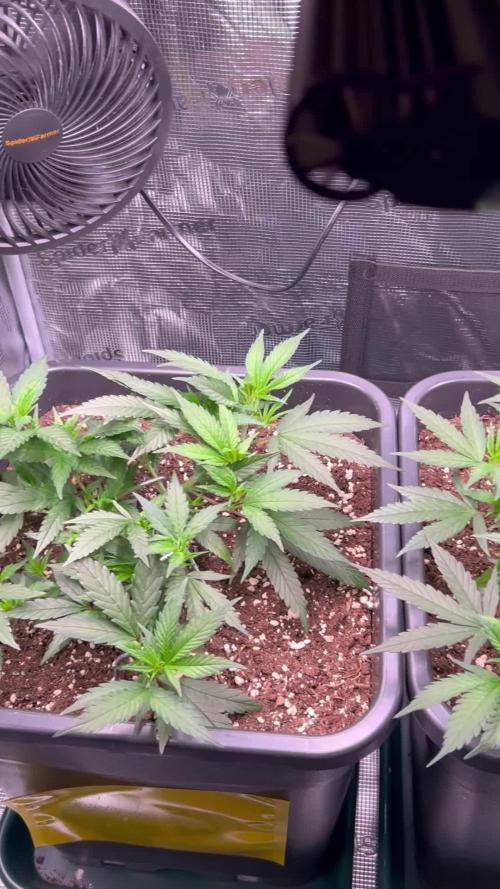
Die Woche vier beginnt.
Die Pflanzen machen sich super. Das LST wird gut verkraftet und die Pflanze geht gut in die Breite.
Ich werde das LST weiterhin durchführen.
Es bleibt spannend.

Likes
8
Share


@FirstTime97
Follow
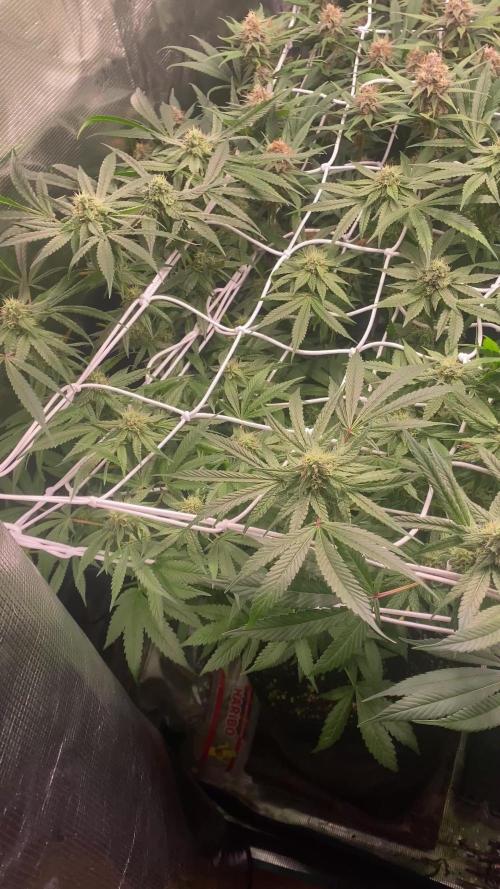
Done abit of lst this week on a few of the big ones
First timer not really got a clue what to do so trying trial and error
One half the back of tent got a trellise over them the other half have had the fam leaves tucked under and the ones you see under the smaller light have been tied down about 90 degree angle
Also a few showing signs of maybe nutrient deficiency of some sort could anybody give a hand as to what this is also something I’ve noticed over the last week a lot of the leaves look almost chewed off complete fan leaves gone only the stem left this is a indoor grow first time I can’t seem to see anything in the tent or any signs of snails or slugs and I’ve put it down to water landing on the leafs and burning them away completely (pot head conspiracy ) any help would be much appreciated please

Processing
Likes
10
Share


@YAKDADDYDWC
Follow
I found seed foeming and bananas so i decided to cut my losses before it got out of hand im just glad they got to where the are now first time grow first time using dwc and i fucked this shit up for a first timer you beauty
Likes
88
Share


@No_Clout
Follow
08/08/18 - Day 22 looking good especially after the minor bump in the road, the wire I bought for the LST is doing it’s job for the time being but I will be buying some proper stuff on the weekend. ✌️🏻
10/08/18 - did more LST last night and their responding well except one, I did some minor defoliation of some fan leaves hogging the 💡
11/08/18 - plant #3 is finally getting into feel of the LST and is looking a lot happier, but girl #1 & #2 are just going with the flow and killing it, my first time doing LST like this and I wish I started doing it two harvest ago 😂👌🏻
13/08/18 - watered each plant with 2 litres each 💧plant number #3 has a slight kink in it from the LST it has been a pain for it the main stem has hardly any flexibility but the other two are 👍🏻
Likes
4
Share

@The_Doctor_Green
Follow
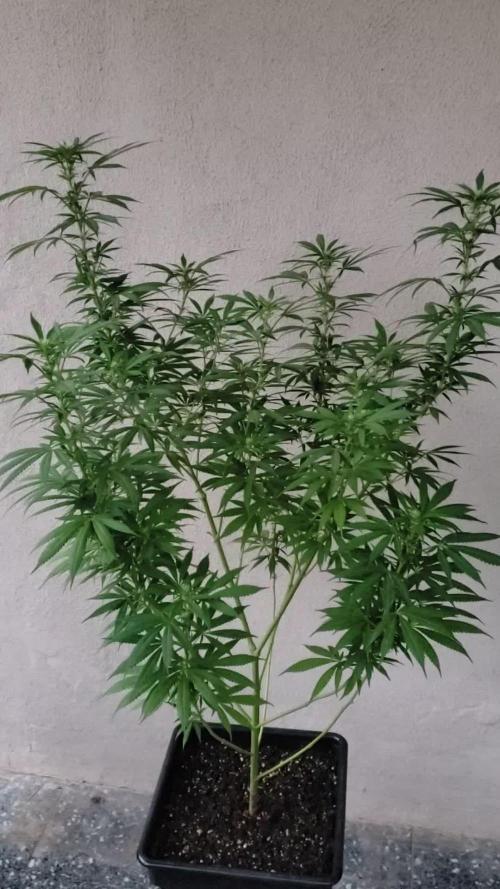
Hola a todo el mundo!!!, haciéndose los días más cortos, tomo como la primer semana de floración 🍀🤪.
Ha comenzado a desarrollar las tan ansiadas flores🙌😃.
Ya noto algo débil, un olorcito🤩🙌.
Esta semana he regado con tricomas de Namaste, y tambien con un poco de top bloom.
El ph lo vengo manejando en 6.2....6.3
Debería de medir la EC, pero aun no lo hice😣
Creo que eso es todo amigos!.

Processing
Likes
6
Share


@yuhknowwudimean
Follow
The flowering stretch seems to have slowed down and most of the growth is going into the buds now. The buds are forming up into long colas, and trichomes are forming up to frost the buds a little bit. One of the buds in the middle of the canopy grew into the light on f26 and got a little bit burnt. Otherwise coming along well and getting pretty smelly when touched. I trimmed off some of the lower branches towards the end of the week, and will probably be trimming more off on res cleaning day.