


Processing
Likes
6
Share


Likes
43
Share


@TheCannaProphet
Follow
~ FastBuds PAPAYA SHERBET Photoperiod~
Well here we go on another journey together through 'Canna-land' and this one's kinda special... forget that, it's VERY special because this is FastBuds newest surprise for the community, a FEMINIZED PHOTOPERIOD STRAIN!🤯
I was fortunate enough to score these seeds, of which only 1000 were available and can't wait to see what this strain can do! This Papaya Sherbet, according to FastBuds, is a hybrid with a 9-10 weeks flowering period. For a more detailed and accurate description of this strain the following from FastBuds says it best:
"Combining the massive stature of Papaya (Oni Selection) with the strength and resilience of one of our best keeper cuts (Sunset Sherbet), this strain develops into a big, expansive bush adorned with numerous bud sites that later transform into a generous harvest of medium-sized buds. Papaya Sherbet flowers deliver a signature flavor of premium cannabis with subtle citrus undertones that emerge upon inhaling. During growth, her aroma makes for a sweet yet pleasantly bitter fragrance, giving you an idea of what the smoke will taste like. Notably stress-resistant, Papaya Sherbet is a great choice for growers working in challenging environments. She is very forgiving and rebounds quickly from any adversity, allowing growers the freedom to experiment with confidence that she will take everything like a champion she is. This strain embodies resilience, flavor, and abundant yields in every grow cycle."
Sounds like an epic strain and I personally cannot wait for this lady to strut her stuff!😍
________________________________________________________________________________________________________________________________________________________________________________________________________________________________________________________________________________________________________________________
The Setup:
This is going to be an outdoor grow, but I have started the Papaya Sherbet photoperiod indoors as our weather is still a bit too chilly to put a newly sprouted seedling outside (nighttime temp's dipping regularly into the 40's℉).
The plan is simple... let her grow inside under a 19/5 light schedule until the nighttime temperatures are in the mid 50's℉, which shouldn't be long. After which, she'll be moved outside and transplanted into the soil which I have already setup and inoculated with beneficial microbes from BioTabs and slow release dry amendments from Gaia Green. Once she's established herself outside she'll be given periodic top dressings of Gaia Green 4-4-4 and 2-8-4 along with worm castings and Compost Tea's. Her grow area is approx. 5'x5' and I have posts and a trellis net set up already for when she gets bigger to aid in training her. Let the fun begin!🤪💚
________________________________________________________________________________________________________________________________________________________________________________________________________________________________________________________________________________________________________________________
Weekly Updates:
6/24- The FastBuds Papaya Sherbet photoperiod is now going into Week Seven from seed and is going strong! She has definitely increased her height and continues to sprout new growth! Her color and vigor also remain excellent having gotten past her early episode of getting her leaves chewed on.
Today I top dressed the Papaya Sherbet photoperiod with 2 cups of Gaia Green 4-4-4 along with 1 cup of Down To Earth Bio-Fish 7-7-2 and 1/2g of Wiggle Worm castings. After top dressing and working the amendments in by hand I replaced the straw coating over the soil and watered them in with 3g of straight well water via garden hose as usual.
6/26- Our summer is here and we're under an early heat wave this week with daytime temp's hitting the mid to upper 90's ℉ with heat indexes in the low 100's ℉... in short, IT'S FNG HOT!🔥🔥🔥
I'm watering the FastBuds Papaya Sherbet photo daily now with 5g of straight well water from the garden hose. I'm watering at sundown so that the water will have some time to soak down into the soil before the heat evaporates it. The coating of straw that I previously spread over the soil around her base has helped a lot as well.
6/28- Our weather is HOT now with heat indexes over 100℉ so I'm watering the Papaya Sherbet photoperiod every day with 5g of straight well water from the garden hose in the late afternoon once the plant is in the shade.
Other than the ever present leaf hoppers, which love the leaves but leave the flowers alone, and an occasional Japanese Beetle, there aren't any serious pest issues currently. The FastBuds Papaya Sherbet photoperiod continues to have excellent color and vigor, continuing to add new growth and increase her height, it seems daily!
6/30- The weather continues to relentlessly bake everything outside... And so, the daily watering continues!🌱🚿
Another healthy week for the FastBuds Papaya Sherbet photoperiod and I hope to see many more ahead!
Thank you for checking out my diary, your positive comments and support make it all worthwhile! 💚Growers Love!💚😎🙏

Likes
62
Share


@masterofsmeagol
Follow
6/28 I had to water deeply despite watering thoroughly yesterday. This heat wave is supposed to pass today. We have had temps in the 90's. Ihate it but the girls seem to love it. RH is super high and controlling pm is a pain in the balls. When my connection is better I'll add my vid and photos. Still need a follow up preventative spray. BT is really awesome but super narrow and I've found random stink bugs, earwigs, crickets and grasshoppers as well as easily identifiable leaf damage. I'm thinking Spinosid. Save my PM stuff for PM. Tried checking my PH with a soil meter. The bags are basically just roots. The only two plants it read came to 6.5 which is strange because I usually run around 7.3. I'll certainly take it. If it's correct that is. RH 64 TEMP 84
6/29 Didn't water this morning due to a torrential downpour last night. Nothing broken after first glance. The thunder and wind woke me last night. This storm was horrific yet my plants still seem unaffected. Need to rearrange the cage. It will be a pain to have to move that ice cream cake. Maybe I could find a way to modify the cage outwards. I also need to move the plant in the tote in the back. Luckily I got back and watered before plants dried out. Noticed a FEW dead or yellow leaves on the middle interior of some plants. I upped dosage of growbig last feed and fed a little earlier. I'll go back to my normal feeding schedule and see what happens. Thing is the plants are getting huge so I would think increased nutes would help. Couldn't he lockout. Too much water. Maybe nutes in the soil are leaving? I'll figure it out. I temporarily pulled the stalk on the ice cream cake back and tied it to the posts to get it off the fence.
6/30. 90s again today. I deeply watered and noticed a couple more yellow leaves (bottom middlish). Only thing that was changed was feeding. I may go back to original schedule. Funeral today so I'll have to check things out later. UPDATE: Went back maybe sux hours after watering to find the grow bags dry. I reached my hand in the side and it's pretty much all roots. These high temperatures and wind are drying my plants out. No droop but the soil WAS dry. I watered again and plan to check again tonight. When temps go down I'll probably do a preventative Spinosid spray.
7/1 Watered and fed two gallons. Grow big at 1 1/2 tbsp. Still some yellow leaves on the interior. I'm talking like maybe five. Accidentally destroyed lace wing eggs. I knew it was something to keep an eye out for but I mistakenly thought it was BAD. Oh well it was just two eggs. I'm sure there are more. Tried measuring PH with soil meter but the only two plants that registered were 6.5 and 6.6. I believe the PH to be a bit higher. The bags are so full of roots it's hard to get a measurement. I know my soil and water WAS on point before my gauge broke. However I leave the 7.3 as that was about what the big ones tested at last time measured.
7/2 These are some resilient strains. Currently 54 degrees at 9am. It had been 80 or 90 in the last few days. Perfect rain today. A light shower all day. Obviously didn't water. Found a few yellow leaves but the plants look so good. The also seem to be stretching but it's far to early for the preflower stretch. I'll keep an eye out. Things are looking pretty good. Still need to move that plant in the back.
7/3 Watered today. Looks like it might rain but top soil was a little dry. Also noticed this site measures teaspoons not tablespoons which is how I measure. I'll need to adjust that. There's tell tale damage from a variety of pests (leaf hoppers, pillars, grasshoppers ECT.) So I think I'm going to do a spray within the next couple days. Im leaning towards Spinosid but Dr. Zymes supposably helps the PM as well. I'll do more research and update.
7/4 54 degrees and raining. Haven't checked the girls out yet today.


Likes
58
Share


@MadeInGermany
Follow
Hey everyone :-).
On the 63rd day of flowering after the time change to 12/12 the harvest was carried out after 48 hours of darkness 😍.
I love this black pheno 👍.
After the harvest, everything was laid out on nets where it is allowed to dry at 62% for the next 8-14 days before fermenting with 62% boveda packs in glasses 😍.
The entire system was cleaned immediately for the next round. I wish you all a lot of fun with the interim update and we'll see you at the end 😅👍.
Stay healthy and let it grow 🍀
You can buy this Strain at :
www.Zamnesia.com
☝️🏼☝️🏼☝️🏼☝️🏼☝️🏼☝️🏼
Strain
Gelato clone from mother (Zamnesia )
☝️
Genetics: Wedding Cake x Gelato x Gelato 33
👍
Vega lamp: 2 x Todogrow LED CXB3590 COB 55 W
1 x Sanlight S2W 62 W
💡
Flower lamp : 2 x Todogrow LED CXB3590 COB 55 W
1 x Sanlight S2W 62 W
💡 ☝️
Grow Aero System : Growtool 0.8
☝️
Fertilizer:
Canna Aqua Vega A + B , Canna Aqua Flores A + B , Rizotonic, Cannazym, CANNA Boost, Pk 13/14, Canna Cal / Mag, Canna Ph - Grow, Canna Ph-Bloom
☝️🌱
Water:
Osmosis water mixed with normal water (24 hours stale that the chlorine evaporates) to 0.2 EG. Add Cal / Mag to 0.4 Ec Ph with ph- to 5.2 - 5.8
💦 💧

Likes
44
Share


@RakonGrow
Follow
Note :
+ jegliches Zubehör wird in der GermniationsWoche aufgelistet . Zeitraffer Videos folgen immer nachträglich.
+ videos werden so geschnitten das nur ein geschlossenes Zelt erscheint , ergo Fehlen paar reale Minuten (ca 1 Std) .
Day 64:
Die Nacht war kalt und die Ventilatoren an . Ergebnis , der Hauptrieb der viel ventilation abbekommt ist wunderschön dunkel geworden.
Bilder hinzugefühgt um mal den Vergleich zu haben , beide haben die gleiche Bedingung , sowohl Dünger als auch Licht . Nur das Zoe mehr Wind abbekommt und damit halt eine kältere Nacht erhalten hat .
Wir sehen das es wohl keine wirklichen defiziete. Es ist ein verhalten auf die Kälte.
Day 65:
+ 1.75 Liter Flaschenwasser
+ + Dünger für Blühte
+ + + Canna Terrar Flores (Achtung wirkt wie PH-)
+ + + Canna Boost
+ + + Cannazym
+ + + Canna Rhizotonic
+ + + Canna PH+
+ + PH 5.91
Day 66:
Das viele Licht zeigt wie es aus allen Seiten der Buds wächst . Das ist nicht gerade ein Qualitätsmerkmal , eher ein Quantitätsmerkmal . Aber ich möchte auch wissen wie stark sich das auf die Qualität auswirkt .
Die Schwester hinkt zwar kräftig hinterher wegen ihrem Wasserschaden, aber zum Rauchen allemal gut .
Leichte Cal-Mag Probleme werden sichtbar .
Day 67:
+ 2 Liter Flaschenwasser
+ + Spülung
+ + + Canna Boost
+ + + Cannazym
+ + + Plagron PH-
+ + PH 6.0
Day 68:
keine besonderen Anzeichen , die Luftfeuchtigkeit ist so zwischen 60% bis 64% . Geht gerade nicht anders . Ist jetzt aber zum abreifen auch nicht Schlimm . Dafür sind die Temperaturen bei konstanten 26°C
Day 69:
Alles läuft nach Plan. Kein defizit, ergo , es wird nur rest Dünger in der Erde abgebaut.
Day 70:
+ 2 Liter Flaschenwasser
+ + Dünger für Blühte Generative Phase III
+ + + Canna Terrar Flores (Achtung wirkt wie PH-)
+ + + Canna Boost
+ + + Cannazym
+ + + Canna Rhizotonic
+ + + Canna PH+
+ + PH 5.91


Likes
4
Share

@Zuzugrowz
Follow
Adding some flair*
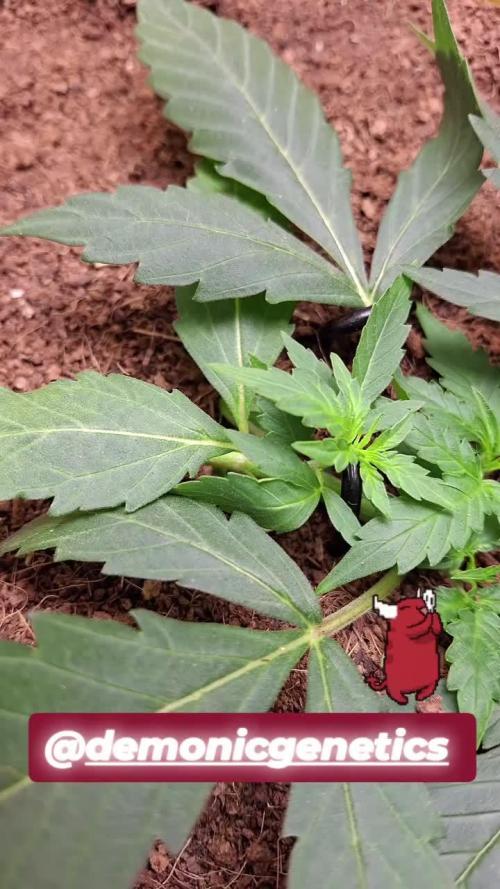
Double the fun, double the gains! Both are getting trained to perfection with 9 gauge wire, and the results are about to get lit!
@demonicgenetics is bringing the heat with "Unleashing hellish gains!" - demonic genetics, aggressive growth, and noticeable changes every single day.
@fastbuds420, on the other hand, is infusing her grow with a dash of Irish magic, and her strength in veg crazy!
Likes
16
Share


@TerpTurtle
Follow
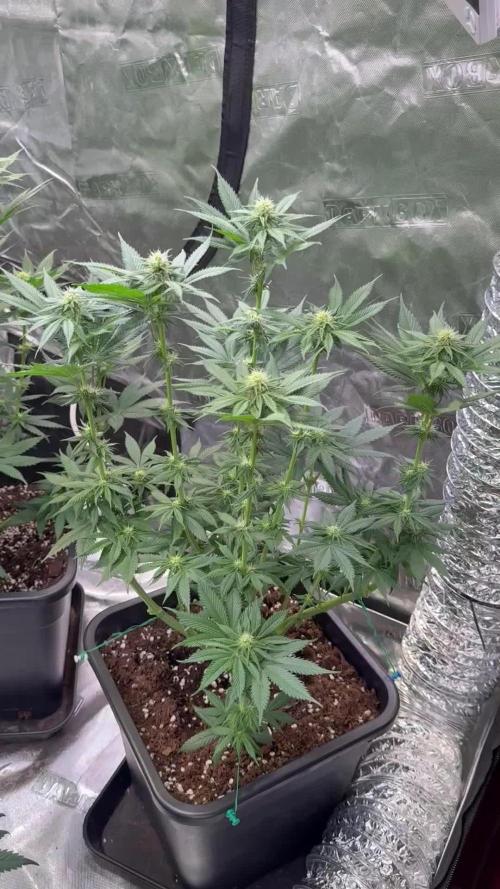
Stretch has been slow and easily managed. Defoliating a little daily.
Plant in back is a clone of Blackcherry sherb, you can find more pictures in that diary. I add more as I grow the clones out instead of starting a new diary of same strain



Processing
Likes
5
Share


@Christmas
Follow
The branching beast is doing well, but it's time again to bring her in a good shape.
Also I'll set the LST new cause of the fast growing one of the branches started splitting up.
So see ya next week when I maybe repot her in a bigger pot and cleaned her up!
Likes
2
Share


@Keep_it_Cleannabis
Follow
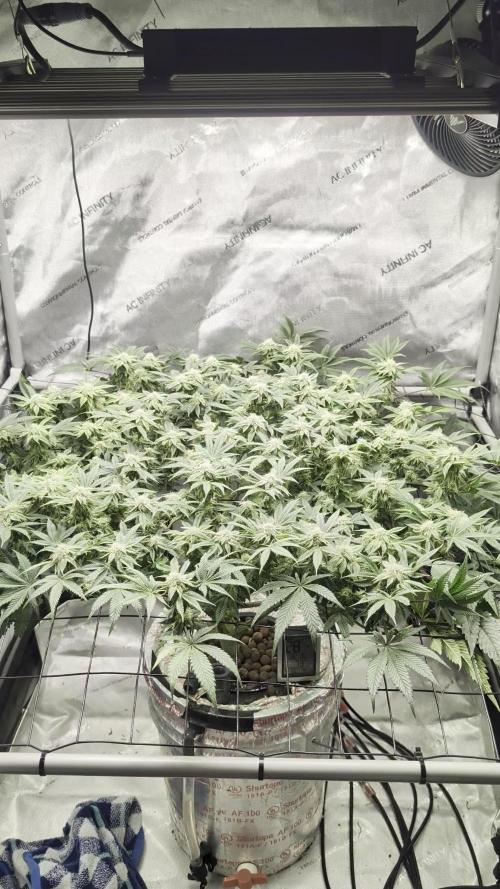
This is my favorite smoke, had this cut for about 2 years. Came from the best bag of runtz I ever bought, got a few ozs and 3 big nugs each had 1 seed. And I got this, im excited to actually document it. Only one of these got trained. I cut the top off for a clone and spread her legs lol. Rest are straight up clones.


Likes
43
Share


@inversi0n
Follow
Hello, readers!
Pretty good growing week.
I did defoliation couple of times this week. Still, don't understand is it too much of too few leaves. Seems to be ok.
I noticed PPM raised to 1600 Oo I added water to the solution, it became 1450 ppm. So i decided to change solution again. Last time i was doing it 10 days ago, I hoped not to do it this week 😁
Taste of smell is the same, but it's getting much more concentrated.
Feeding:
(Kinda Micro) NPK20, B 0.01, Cu 0.02, Fe 0.04, Mn 0.01, Mo 0.002, Zn 0.002 - 0.25 gr/liter.
(Kinda Grow) N 15.5 CaO 26 - 0.22 gr/liter.
(Kinda Bloom) NPK 0 0 51 + So3 34 - 0.34gr/liter
(Kinda Bloom) NPK 0 52 34 - 0.32 gr/liter.
Orthophosphoric acid 85%(H3PO4) - 0.06 ml/liter
Processing
Likes
41
Share

@MadeInGermany
Follow
Hi everyone 🤗.
It was rinsed slightly 3 days ago and now only gets water with 0.4 EC.
From tomorrow on she won't get any Canna Boost anymore, because I'm not the fan of giving it to the end :-)
It always looks more beautiful and more beautiful 😍. You can see how she removes the last nutrients from the leaves and slowly comes to an end 😇.
From next week the trichome pictures will also be added 👍. I can't wait to try them 🤣
I wish you all a nice week, stay healthy 🙏🏻 and let it grow 🌱
You can buy this Strain at :
https://sweetseeds.es/
Sweet Seeds Cup 🏆
Type:
San Fernando Lemon Kush
☝️🏼
Genetics:
OG Kush x Kosher Kush
👍
Vega lamp: 2 x Todogrow Led
Quantum Board 100 W
💡
Bloom Lamp : 2 x Todogrow Led
Cxb 3590 COB 3500 K 205W
💡💡☝️🏼
Earth: Canna Bio
☝️🏼
Fertilizer: Canna Bio
☝️🏼🌱
Water: Osmosis water mixed with normal water (24 hours stale that the chlorine evaporates) to 0.2 EC. Add Cal / Mag to 0.4 Ec Ph with Organic Ph - to 6.0 - 6.3
💦💧


Likes
7
Share


@RizlaZA
Follow
1st major defoliation end of week 1 flower.
Girls are looking all kinds of healthy.
#1 is leaving #2 behind now in the stretch, root mass and overall look.
Streching very nicely, almost doubled in size over 2 weeks.


Likes
10
Share


@StickyFingah420
Follow
Extrema producción de tricomas de esta variedad! Gran parte de los frutos lo usaré para extraer rosin, su resina se ve ideal para este propósito.
Fragancia exquisita a ponche de fruta dulce, con notas ácidas y un fondo de especias.
Como mencioné anteriormente dejaré la parte de la reseña de efectos, sabores y sensaciones para cuando los cogollos estén secos y curados, por ahora solo puedo apreciar lo que mi vista y olfato me permiten captar.
Totalmente conforme por la calidad de estas flores y agradecido de los amigos de Sweet Seeds por la confianza.
Será hasta la cata entonces, buenos humos!
Likes
5
Share


@OnlyTomatoes
Follow
[ Information ]
For all information on this grow, including strain and room details, please see the first week of veg.
[ Updates ]
Day 10 - Watered today, 1.2ec feeding of mainly organics (Fulvic/Humic, Kelp, Molasses, Big Bloom) with runoff. 6.8ph. Group one is stretching much harder due to plant density, I will be adding a net soon.
Day 13 - Watered today with the nutrients listed for this week. 2.2ec at 6.5ph. 80gals total. Added a small dose of Open Sesame for the first time today as bud sites are starting to form on all plants. Added a net to Group 1 yesterday, I will add the nets for Group 2 in a couple days. Group 1 plants are 38-40 inches, group 2 plants are 32-34 inches. I may adjust net height, this isn't normally how I run a cycle; I'm trying a few different things side-by-side. The "one plant per square foot of canopy" group has consistently shown that even with a short veg period there is far too many wasted growth nodes on the sides of the canopy. The plants around the edge tend to branch out instead of up, as they're naturally trying to find sunlight. My last attempt at using these side branches with heavy topping of the middle nodes resulted in a higher yield, as expected as the light footprint was 5x5 instead of 4x4, which defeats the purpose of "one plant per square foot of canopy" anyways. A better test would have been to stunt the growth of all middle nodes enough to weave the side branches into the main canopy, though this seems to be a waste of time without much gain. I'm much happier with Group 2 which has 1 plant per 2 square feet of canopy space. While it also has side branching, the difference in height at the canopy level of the sides and middles are not nearly as different as Group 1, which means a more even light distribution without the need of a net. As overgrown as the room is getting, they still have 7-8 days before they're defoliated a final time.
