Likes
Comments
Share


@Ctrellis90
Follow
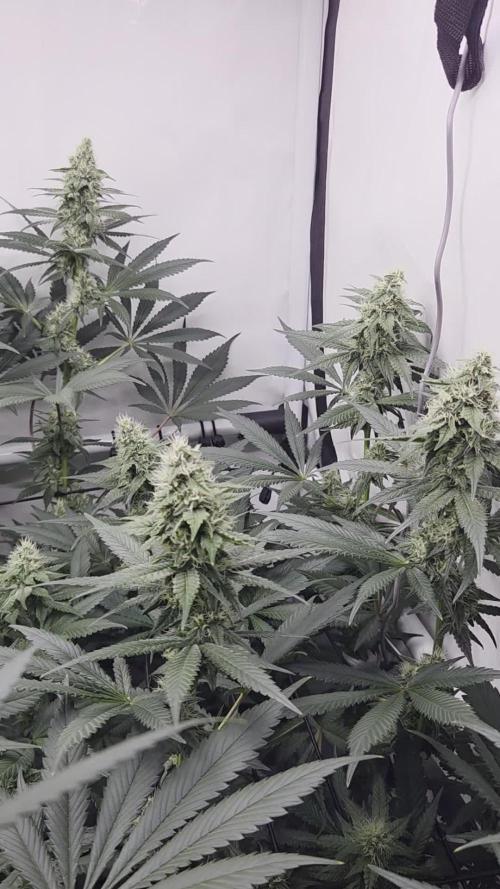
End of week 2, veg.
This little lady is finally catching up to the others in the tent. She has a typical sativa look to her for being so young, which is cool. After doing this for so long you kinda get a feel for seedlings.
We watered with alfalfa Ferment as usual and these girls are in love lol. Seriously though, this stuff cuts my veg time in almost half! Highly recommend.
Not much else to report on, just taking it day by day.
Thanks for stopping by and we'll see ya next week.

Likes
5
Share


@Fefa128
Follow
Alright Week 4 and end of treatment , start of flower... Maybe it's not just there for calling it flowering week one... But still... Videos still in Spanish. See you next week!


Likes
49
Share


@AsNoriu
Follow
Day 57. Girls okeish except damaged leaves by thrips and by my sprays with most probably too much neem oil in it.
Lady bugs all over plants, so i think i should beat problem easy till first heavy flowering training session...
By book its 50 bugs vs one LadyBug a day, i imagine that they will start to starve like tomorrow latest ;)))
Day 62. Yesterday got more help to fight thrips and ordered new variety of natural predators to keep on ...
With such dense canopy fight is very hard, in smaller tent all is sorted, in this one i still see damaged leaves and sometimes thrips still ....
Anyway, even with those issues they are really nice girls, will do heavy training on Tuesday or Wednesday ...
Idea is to do hard defoliation and then introduce new army of predators, i will loose some during training 4 sure...
I still see lady bugs and and i released larvae already, will give them 4 more days to get hungry ;)))
Happy Growing !!!

Likes
42
Share

@squalino
Follow
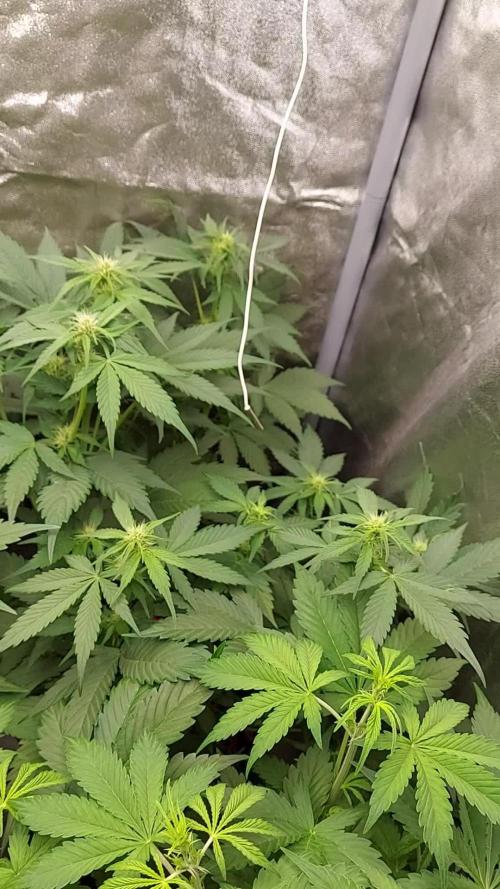
Journal de Culture : Frost 1 (Semaine 5)
Génétique : Frostbanger (F2 Perso) | Système : Autopot 20L
📣 Remerciements
Un immense merci à toutes les personnes qui suivent ce journal depuis le début ! Un merci tout particulier à @MIA_BIOTABS et à Mrs_Larimar pour leurs précieux conseils et leur accompagnement. Merci à tous pour votre soutien !
🛠️ Configuration Technique (Rappel)
Éclairage : Lumatek ATS 300W Pro (réglé à 75%)
Distance lampe/canopée : 75 cm
Climat : Jour : 25°C / Nuit : 21°C
Humidité (HR) : 50%
Tente : 1m80 de hauteur
📅 Évolution & Entretien : Structure et Patience
plante 1:
64 centimètres (+31 )
une croissance incroyable
les têtes se développent à toute vitesse
les photos et video parle d'elle même.
me manque de la hauteur dans la tente et de la place .
NUTRITION
que de l'eau Ph 6,3 du réservoir Autopot.
encore 1 semaine et elles auront de la place et je pourrai mieux m'en occuper.
PS:
I NEED HELP
MES AMIS J'AI BESOIN DE VÔTRE AIDE ET DE VÔTRE SOUTIENT .
VENEZ LIKER LE POST DU CONCOUR 《《DRYROCKET 》》S'IL VOUS PLAÎT. J'EN AI BESOIN LES AMIS MERCI À TOUS

Likes
11
Share


@Dirtysouthgrower27
Follow
Sorry guy I’ve been very busy ... but my girls are still looking healthy
Likes
3
Share


@Unculti_responsable
Follow
Unos días antes de mandar a flora hiciamos las últimas podas de bajos y apicales la dejamos recuperarse unos días y hicimos el último trasplante a 10 litros , con eso ya listo empezamos con los nutrientes de preflora , hicimos unos riegos foliares 15 días antes de mandar a flora , el mismo día q mandamos a flora y lo tenemos que hacer 15 días después de mandar a flora , con esto ya estamos más que bien para las primeras semanas de floración después de la segunda semana vamos a empezar a fertilizar con guano de murciélago y unas cucharaditas de melaza , después ya con el engorde , pero para eso faltan unas semanas , ahora vamos a ir viendo como le va en sus primeras semanas de floración

Likes
28
Share


@AlpAge_Cino
Follow
2024/01/19 : plant looks healthy, 5th node is deploying, I can see 6th, even tiny 7th... so I decided to top.
Back to 10 cm...
2024/01/20 : mainlining starts today,
2024/01/22 : ML's going on, watered with elycitor (1 g/L).
2024/01/23 : sprayed with Foliar Spray from B.A.C. last night to help a little
2024/01/24 : blueberry takes all this like a champ, it has 2 bodybuilded main stems. Now waiting for 4th nodes on each stem for 2nd top...
2024/01/25 : watered with molasses (1 mL/L), I can see baby 3rd nodes...😀


Likes
9
Share

@DogDoctorOfficial
Follow
💜 Purple Haze by Zamnesia – Pheno B Week 8 | The Bush With Her Own Rhythm
Welcome back to another chapter of the 8×8 Adventure!
Last week I talked about how remarkably similar the two Purple Haze sisters had been looking.
Well...
That story has changed. 😄
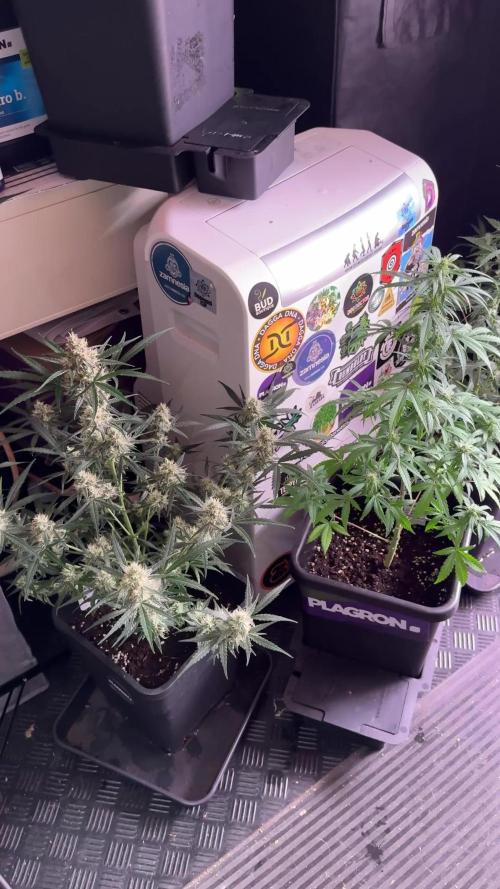
This week, Purple Haze Pheno B is making it very clear that she has her own personality.
While her sister has developed a different structure and expression, Pheno B has settled into something completely different:
She's a bush. 🌿💜
Compact.
Dense.
Lush.
Full of life.
And absolutely comfortable being exactly what she is.
This is one of the reasons I love growing multiple phenotypes from the same genetics. You can give two sisters exactly the same environment, exactly the same nutrition and exactly the same light...
And eventually, genetics starts whispering:
"Let me show you who I am."
And this girl is definitely talking.
🌱 One Project. One Environment. Twelve Unique Stories.
If you're new to the diary, welcome!
This plant is part of my ongoing 8×8 Adventure, where twelve different cultivars are being grown together using the 12/12 From Seed technique.
From the beginning, every plant has received the same opportunity:
• The same lighting schedule
• The same Plagron nutrition
• The same AutoPot irrigation system
• The same Future of Grow lighting
• The same TrolMaster-controlled environment
• The same temperatures
• The same humidity
No individual feeding.
No special environmental treatment.
No different light schedule.
The genetics are the variable.
And now, eight weeks into flowering, those genetic differences are becoming increasingly obvious.
That's the beauty of this project.
One environment. Twelve stories.
And Purple Haze Pheno B is writing hers in a very different handwriting from her sister.
🌿 The Compact Purple Haze
If I had to describe this phenotype in just a few words, I would say:
Compact. Bushy. Lush.
She's not trying to become the tallest plant in the room.
Instead, she's building herself outward.
Her branches are packed closely together, her foliage is abundant, and flowering sites are appearing throughout that dense structure.
Looking at her now, I can see why she has developed into such a compact plant.
There is simply a lot of plant packed into a relatively small space.
And I love it.
She has created her own little ecosystem.
Everywhere I look, there are leaves.
Behind those leaves, more branches.
And behind those branches...
flowers. 🌸
This is a phenotype that seems much more interested in building density than chasing height.
And that's perfectly fine with me.
🌸 Week 8 – The Flowers Are Taking Shape
The flowering sites are becoming much more established now.
The delicate little clusters from the earlier weeks have developed into recognizable young flowers, with pistils continuing to emerge from the developing calyxes.
There is still plenty of time for these flowers to swell and mature, but the direction is becoming very clear.
She's flowering.
She's stacking.
And she's doing it everywhere.
One thing that really stands out in the photographs this week is just how much healthy foliage surrounds the flowers.
The plant remains intensely green and full of vitality.
There is no shortage of leaves here.
In fact...
there may be a few too many. 😄
Which brings me to what's coming next.
✂️ The Defoliation Is Coming
Until now, I've deliberately allowed this girl to keep her healthy foliage.
I wanted to see how she developed naturally before deciding how much intervention she actually needed.
And I'm glad I waited.
Because now I can see exactly what I'm dealing with.
She's lush.
Very lush.
The canopy is becoming increasingly dense, and as flowering progresses, I want to make sure the developing flowers have enough space, airflow and light penetration.
So I believe next week will probably be the right moment for some selective defoliation.
Not a dramatic haircut.
Not stripping the plant bare.
Just a thoughtful cleanup.
Removing selected leaves that are:
• Blocking developing flowering sites
• Creating unnecessary layers of foliage
• Restricting airflow inside the bush
• Sitting in places where they provide little additional benefit
The goal isn't to change who she is.
The goal is to help her express what she's already built.
And honestly...
I think she's going to shine after it. ✨
🍃 Keeping the Plant Healthy
One thing I continue to appreciate about this phenotype is the overall quality of her foliage.
The leaves are broad, healthy and strongly developed.
The plant has maintained excellent colour and structure, and there are no major signs that she's struggling with the demands of flowering.
This is particularly important at this stage.
A plant can be large and impressive while still being stressed.
That's not what I'm seeing here.
Instead, she looks comfortable.
She's growing at her own speed.
She's building flowers at her own speed.
And she's maintaining her own balance.
That's exactly what I want to see.
💧 Feeding for Week 8
As flowering progresses, the feeding program continues to support the plant through this important period of flower development.
This week's Plagron feeding consists of:
• Terra Bloom – 2.2 ml/L
Supporting the nutritional demands of flowering and continued flower development.
• Power Buds – 1 ml/L
Supporting the transition and development of the flowering sites.
• Green Sensation – 1 ml/L
Providing additional support during the flowering phase as the flowers continue developing.
• Sugar Royal – 1 ml/L
Part of the flowering nutrition strategy supporting the plant as she progresses toward maturity.
• pH Plus – 0.03 ml/L
• Lemon Kick – 0.03 ml/L
Used as required to bring the nutrient solution into the desired pH range.
The current nutrient solution is sitting around EC 2.0 mS/cm, with a solution temperature of approximately 24°C.
And, as always...
every plant in this project receives the same recipe.
The phenotype decides how she responds.
💡 Light From Above and Below
The combination of the main Future of Grow lighting and the Lumiflora under-canopy lighting continues to be particularly interesting with this phenotype.
Because Pheno B has such a dense, bushy structure, the additional light lower in the canopy becomes especially relevant.
The upper canopy naturally receives the strongest illumination.
But with a plant this compact, there are flowering sites developing throughout the interior and lower portions of the structure.
The under-canopy lighting provides another layer of illumination in those areas.
Again, I'm not expecting miracles.
It's simply another tool in the ecosystem.
And as I selectively remove some of the excess foliage next week, I'm particularly curious to see how the combination of improved airflow, better visibility of the flowering sites and additional lower-canopy light affects her development.
🌡️ A Stable Environment
The room continues to provide a consistent environment for all twelve phenotypes.
Current conditions for this update:
• Flower Week: 8
• Height: 111 cm
• Light schedule: 12/12
• Day temperature: 20°C
• Night temperature: 25°C
• Relative humidity: 60%
• pH: approximately 6.0
• EC: approximately 2.0 mS/cm
• Solution temperature: 24°C
• Substrate temperature: 21°C
• CO₂: 636 ppm
• Watering: approximately 1.2 L per plant / 24h
• Pot size: 15 L
Note: the temperature values are recorded exactly as shown in this week's GrowDiaries data.
Consistency continues to be one of the most important parts of this experiment.
The environment stays consistent.
The feeding stays consistent.
The plants don't.
And that's exactly what we're here to observe.
📷 This Week's Gallery
This week's photographs really tell her story.
The wider shots show a plant that has become incredibly dense and compact, with foliage filling almost every available space.
The closer photographs reveal something even more interesting.
Behind that wall of leaves are flowering sites developing throughout the plant.
The pistils are fresh.
The flowers are forming.
And the resin production is already becoming visible across the developing structures and surrounding sugar leaves.
She's not trying to be her sister.
She's not trying to be the tallest.
She's not trying to follow the same path.
She's simply being Purple Haze Pheno B.
And I think that's beautiful.
🔮 Looking Ahead – Time to Let Her Shine
Next week may be an important little turning point for this girl.
After allowing her to develop naturally for so long, I think she's finally reaching the point where a selective defoliation will benefit the structure she's created.
I'll be looking for the leaves that are doing more blocking than contributing.
I'll open some of the interior.
I'll improve airflow.
I'll give those developing flowers a little more breathing room.
But I won't take away her personality.
That bushy structure is part of what makes this phenotype interesting.
The goal isn't to turn her into her sister.
The goal is to help this phenotype become the best version of herself.
And I have a feeling that once we open her up a little...
She's going to surprise us.
💜 Different Doesn't Mean Less
One of the biggest lessons from this 8×8 Adventure continues to be that there isn't just one definition of a great plant.
Purple Haze Pheno A and Purple Haze Pheno B may share the same genetics.
They may share the same room.
They may share the same nutrients, lights, irrigation and environmental conditions.
But they're telling different stories.
And that's exactly what makes phenotype hunting so fascinating.
Pheno B has chosen a different path.
She's compact.
She's dense.
She's incredibly lush.
She's building her own little world instead of reaching for the ceiling.
And honestly?
I'm loving her for it. 💜
Every phenotype deserves the opportunity to shine in its own way.
And next week, when we carefully open this beautiful bush and give those flowers a little more room to breathe...
I think we're going to see just how much potential has been hiding underneath all that green.
💚 Thank You
Thank you so much for following another chapter of the 8×8 Adventure.
This project continues to remind me that growing isn't about forcing plants to become identical.
It's about creating the right conditions...
Then stepping back and watching genetics tell its story.
A huge thank you to:
💚 GrowDiaries — for providing the platform where growers from around the world can document, share and learn together.
🌱 Zamnesia — for the Purple Haze genetics that are giving us these fascinating phenotype differences to explore.
💜 Plagron — for supplying the nutrition supporting the plants throughout this journey.
💡 Future of Grow LED — for providing the lighting powering this project.
🌿 TrolMaster — for helping maintain the stable environment shared by all twelve phenotypes.
✨ Lumiflora — for bringing the under-canopy lighting into this experiment and giving us another variable to observe.
And finally, thank you to everyone following these diaries, leaving comments, asking questions and enjoying this adventure with me.
Last week, I thought these two Purple Haze sisters were following almost the same blueprint.
This week, Pheno B looked at that blueprint and apparently said:
"Nah... I'm doing my own thing." 😂💜
And you know what?
That's exactly what I wanted to see.
Different phenotype.
Different rhythm.
Different story.
Same beautiful genetics.
Growers Love! 💜🌿
Processing
Likes
6
Share


@Ferenc
Follow
I spend less time with them my friend usually look after them. She went on holiday so I will be with them lucky ones. They are okay big plants flowering nicely I constantly removing old yellow leafs. All the same they do well :).


Likes
17
Share
@DogDoctorOfficial
Follow
Animal Mints — Legends of the Frozen North ☃️
Part 1 — The Harvest Begins
Before we begin this harvest report properly, we once again want to apologize for dividing this journey into multiple parts. Just like we did with the Legends of the 12/12 Galaxy series, the harvest, drying, trimming, curing, smoke review, and final strain analysis will happen across different weeks and different reports.
But honestly… this is the only way we can truly document everything properly.
We do not want to simply show the final dry buds and disappear. We want to show the process. The details. The decisions. The mistakes, the observations, the science, the emotions, the beauty, and the philosophy behind the work. Educational growing deserves time and space, and these girls absolutely earned it.
So today marks the beginning of the final chapter for our Animal Mints — Legends of the Frozen North.
And what a chapter this is.
⸻
From seed to harvest, these girls proved once again why 12/12 from seed continues to fascinate us so much. The morphology is incredibly efficient. Plants stay relatively compact compared to traditional long-vegetative runs, but what they lose in height, they repay with density, structure, resin production, and flower efficiency.
The result?
Compact giants.
Dense towers of medicine.
Heavy branches unable to support themselves anymore.
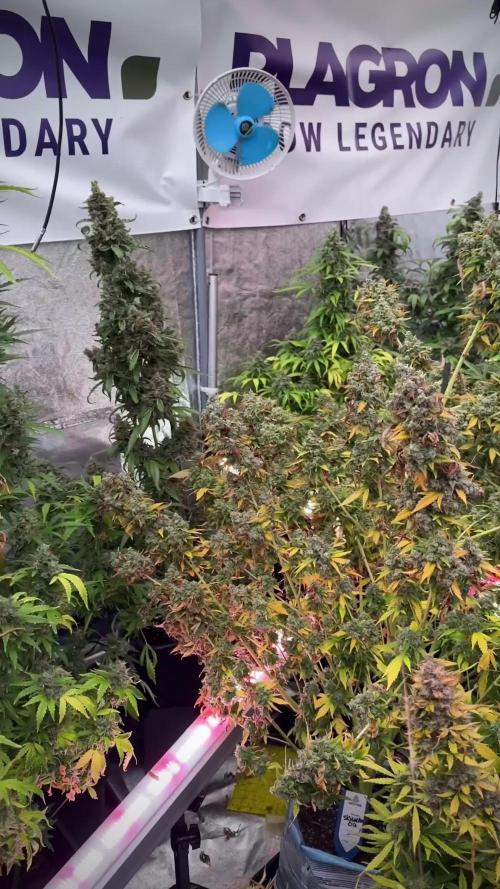
Massive flowers held up by yo-yos because gravity simply started winning the battle.
And honestly… this room became absolutely beautiful near the end.
The senescence was fully setting in. The fade was impossible to ignore. During daytime photos and nighttime photos alike, the room transformed into a palette of autumn colors:
* bright yellows,
* faded lime greens,
* soft oranges,
* reddish and brownish tones,
* curled leaves,
* dry fans,
* exhausted but fulfilled plants reaching the end of their biological cycle.
And this is important to explain.
A lot of growers panic when they see plants fading late in flower, but in many cases, especially near harvest, this is completely natural senescence. The plant understands its lifecycle is ending. Nutrients stored inside the leaves are being mobilized and redirected. Chlorophyll breaks down. Colors emerge. The plant slowly consumes itself while finishing resin and flower production.
To us, this is one of the most beautiful moments in cultivation.
Not death.
Completion.
⸻
As always, we also harvest in darkness.
Once the lights go off for the final night… they do not turn back on again.
The plants remain in their night cycle until harvest. We personally prefer this approach because the plant is already in its resting metabolic state. The environment is cooler, calmer, and less stressful, and we avoid “waking the plant back up” only to cut it down shortly after.
Before harvest, we also stop watering completely.
We allow the substrate and the plant itself to dry naturally during the final stage. This helps reduce excess moisture inside the flowers and assists with the beginning of the drying process after harvest.
⸻
And speaking of flowers…
These buds are enormous.
Absolutely stacked.
Rock solid. Frost-covered. Dense from top to bottom.
The yo-yos became mandatory near the end because several branches simply could not support their own weight anymore. Every cola looked like it was carrying the entire weight of winter on its shoulders.
Animal Mints truly lived up to its name.
Frozen flowers.
Heavy resin.
Cold-looking trichome coverage everywhere.
And despite the density, airflow management remained extremely important during the entire run. Defoliation timing, environmental control, humidity balance, and branch spacing all played a major role in making sure these flowers could mature safely without issues.
⸻
Of course, while removing dead leaves and cleaning the plants before hanging them whole for drying… something magical happened once again.
Charas.
That beautiful living resin slowly started building up on the fingers.
And for those unfamiliar:
Charas is one of the oldest forms of hashish production in the world. Traditionally associated with India and regions like Malana, charas is made by gently rubbing living cannabis flowers with the hands until the resin accumulates on the skin, later rolled into small resin balls by hand pressure alone.
Unlike dry sift or modern extraction methods, charas is made from living plants. The resin is still alive, fresh, fragrant, warm, and incredibly aromatic.
In places like Malana, ancient traditions surrounding charas still survive to this day. Entire generations preserved these techniques for centuries, often connected spiritually to Lord Shiva himself, who in Hindu mythology is deeply associated with cannabis.
So every time we feel that resin slowly coating the gloves and fingers while handling living plants, it feels less like waste… and more like participating in something ancient.
Something human.
Something sacred.
⸻
The girls are now hanging whole.
Full plants.
Slow drying, exactly the way we prefer.
For the first couple of days, humidity stays around 45% to help pull initial excess moisture away safely. After that, the environment stabilizes around:
* 60% RH
* 18–20°C
And now begins one of the most important parts of the journey:
patience.
Over the next 7–10 days, chlorophyll will continue breaking down slowly, moisture will redistribute through the flowers, aromas will evolve, and the entire profile of the medicine will begin transforming.
This is where harvest stops…
and curing truly begins.
⸻
But this is far from the end.
The next reports will focus deeply on:
* drying observations,
* trimming,
* resin collection,
* finger hash,
* curing methods,
* storage,
* aromas,
* textures,
* smoke reports,
* and the final strain review itself.
And honestly… we still do not know how many parts this journey will require.
Maybe two more.
Maybe three.
Maybe even four.
But these girls deserve every detail.
⸻
As always, thank you to everyone following this journey and helping make these projects possible.
Thank you to:
* Zamnesia for the genetics,
* Plagron for the nutrients and support,
* F.O.G. for the lighting,
* and everybody supporting this educational approach to cultivation.
And of course…
thank you to every grower, every reader, every silent observer, and every curious mind still exploring this incredible plant with respect, patience, and love.
The Frozen North still has more stories to tell.
As always, this is shared for educational purposes, aiming to spread understanding and appreciation for this plant. Let’s celebrate it responsibly and continue to learn and grow together.
With true love comes happiness. Always believe in yourself, and always do things expecting nothing and with an open heart. Be a giver, and the universe will give back in ways you could never imagine.
💚 Growers love to all 💚
Processing
Likes
21
Share


@Dunk_Junk
Follow
Doubled her height this week! Now she's 13cm tall.
She was repotted a day short of 3 weeks into a 20 litre airpot with fresh compost that has been flushed.
I had concerns about her being rootbound....
In reality she was far from it, could have gone easily another week.
On she goes!

Likes
4
Share


@Aeonium
Follow
Día 37: Riego con Sensizym 2ml/l
Día 39: Riego con Base Sensi Bloom A+B 2,5 ml/l, Big Bud 2 ml/l, Bud Candy 2ml/l, B-52 2ml/l y Super Silver de Agrobeta 0,1ml/l.
Día 41:Riego con Base Sensi Bloom A+B 2,5 ml/l, Big Bud 2 ml/l, Bud Candy 2ml/l, B-52 2ml/l y Super Silver de Agrobeta 0,1ml/l.


Likes
24
Share


@Suemchen
Follow
🌶️ Harvest Report – Diablo Rojo Auto
Harvested today! 🔥🌶️
What a beautiful plant! Diablo Rojo developed some absolutely stunning flowers with incredible frost and amazing purple/red colours. The buds are nicely covered in trichomes and became really dense and colourful towards the end.
The plant showed some beautiful autumn colours during the final stage, with the leaves turning deep purple, red and yellow. The trichomes were mostly cloudy with some amber, so I decided it was the perfect time to harvest.
The flowers look very promising – dense, extremely frosty and full of colour. I'm really happy with how this one turned out! 😍
Now it's time for a slow and careful drying process. I can't wait to see how the aroma develops during the cure.
Very happy with this grow! 🌶️💜🔥
Overall rating: 9.5/10 ⭐
Likes
4
Share

@Barzenegger
Follow
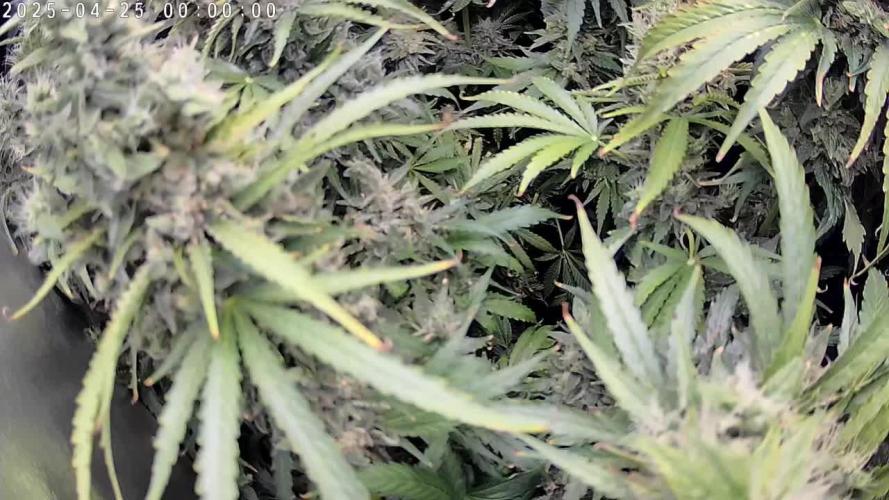
This is the last week, I've given them another tank filling, but the Chem Beyond Diesel CBD was chopped on day 69F, which was the second day of the week, SAD CBD, and NYC Diesel CBD followed on day 73F. I left the for a couple more days, but also chopped it on day 76F, which is already the next week, but I won't be creating another diary entry for that one as it was 3 days long and nothing happened.
The foxtailing makes it look like there are still a lot of white pistils, but most of the inner/lower ones are finished, the trichomes look ok, and I am growing impatient again.


Likes
6
Share


@JBOrganix
Follow
Super burnt lol. Ooops I'll still finish her off and hope for the best. Should still be some decent smoke 👌
For sure a shame she's a bigger girl too.
Processing
Likes
Comments
Share


@Hexus
Follow
Days 78-84 - Been lax in updates, but I still log every week to completion. Back injury in addition to The Nineteen, Rona Style, has been a bit of a pain in the posterior. (That means ass) Plants are gigantic and sassy. Had Dangergirl come out and defoliate/lollipop the bottoms out of the girls, saving me painful labor and increasing my yields, so yay for her! Plants are happy, pompoms are getting thick, and everything looks good. Switched FF01 to flower on day 84.

Likes
1
Share


@Mr_Motalovah
Follow
Hello Growers & Tokers!
Roots, roots, roots.
At the beginning of the week they got transplanted into their final pot, 11L fabric.
Medium used was Light Mix from BioBizz.
Synergy from Grotek nutrients was blended in the medium to help out the roots.
They were a bit down after transplanting but by the end of the week they were doing better.
I'll leave her be for a week then I'll be topping to spread that canopy out and have loads of colas.
Or at least that's the idea but two of them seem to be growing faster than the others so I might have to die those tops down.
Take care out there and happy growing!
Likes
25
Share