The Grow Awards 2026 🏆
Likes
Comments
Share
@sjrseid
Follow
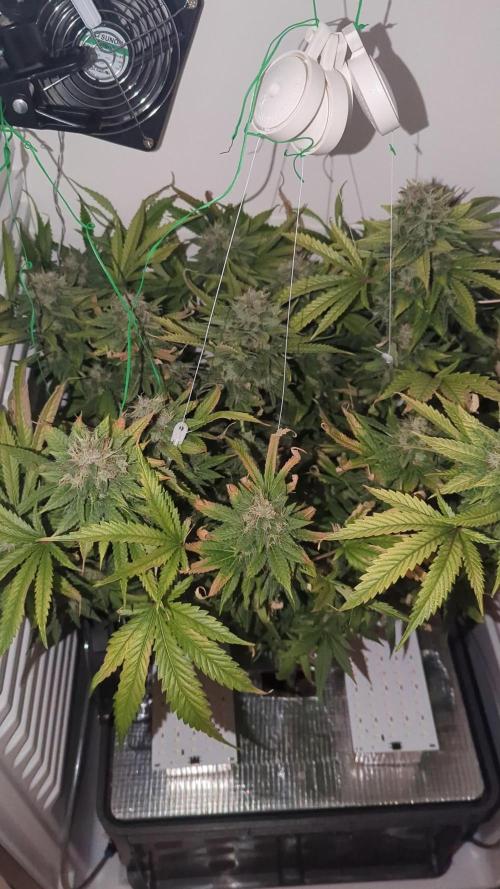
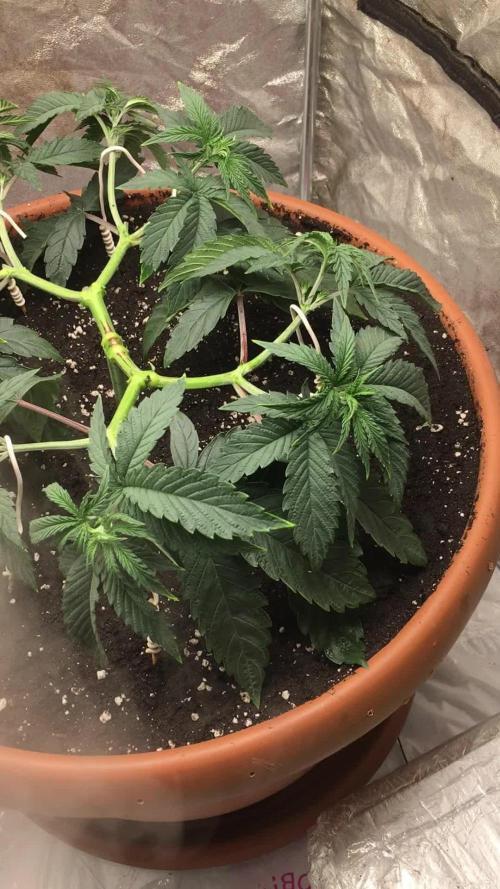
Some high-stress training was required. Fartbutt (the plant on the right) outgrew the container again, so I intentionally snapped the top to prevent further upward growth (I left it attached so it could still form a central cola.
Likes
1
Share
@Lynx_361
Follow
28.07.2025 Something is wrong with the stretchy pheno. She is already finishing up. The Flowers are still small. And she looks hardly overfed.. I'll give her one ore two more days and hut her down. the other two look and smell great!
Likes
5
Share
Lot of defoliation must have plucked 400+ leaves
Likes
15
Share
@BigDaddyK
Follow
CHange Thursday One at back still showing signs of nutrient issues
Likes
199
Share
Hello everyone , Farmers friends I had to bend my sweet little girl because she approached too much to light .... the result? An explosion of ever seen colors !!! This is my first red genetics and it's great to see these gems color himself
Likes
45
Share
@BodyByVio
Follow
Beautiful flower full of trichomes. Smell and test fantastic. Very fast flowering. She was done on day 49 but I cut her down few days later. I love the strain, the only thing that I will like this strain to have is a better yield. Beast quality buds I ever grew.
Likes
22
Share
@Njaak
Follow
Microscope shows the telltale amber in some of the trichomes :). Did a full system clean with H2O2, long rinse, and the new solution is just pH balanced water and FloraKleen. Some crispy leaves at the moment but I'm not worried. Harvest is coming soon! Next post will be a harvest post and early smoke report 🙃
Likes
77
Share
Hi guys, So week 4 now and all 5 should be in flower/preflower stage by next week, the gelatocake are doing brilliant im not so sure about the sherbert mimosa. 2 lights running now so bloomplus bp2500 for gelatocakes and marshydro tsl2000 for the mimosa 550watt actual in ghe room now I Will update the the week and add pics. I have popped 2 x dark phoenix inhouse genetics and 2 x blue cheese from big buddha all 4 photo fems and will be vegging them in the back of this little room lol. Wish me luck and happy growing people. 💚💪
Likes
14
Share
@Broffel
Follow
The start of week 6 and the Girls are going in to flower so i switch the Light to flower and everything is going good The midlle of week 6 and no problems Almost the end of week 6 and the Girls are doing some nice stretching The end of week 6 and the Girls are doing great. The only difference i can see between airpot and the normal pot is that the lady in the airpot is drinking a little bit more thn the normal pot
Likes
8
Share
Nute burn on older growth. Slight yellowing of new growths’ tips; Larry OG originally started in a rock wool cube and was then transplanted into soil. The Larry og is very small and yellow with major bleaching; Raised light height by 3in. (15in. -> 18in.)
Likes
12
Share
By the third week of flower we are getting excited because we see the buds really bulk up. It is early on and we are seeing these top nodes take shape into colas. Here is the work put in this week: -Prepare each plant with 1 gallon of lukewarm water with 3 tsp Big Bloom, 2 tsp of Grow Big and 2 tsp of Tiger bloom. Oh and 5 mLs of Cal Mg. -pH the water to 6.5 and pour. -Shop Vac runoff. -Before tent lights turn on at 7AM, spray all 3 plants from top to underneath to the bottom to top of soil with GrowSafe. If you don't know what it is, look it up. Here is the solution concentration: 3.75 mL GrowSafe in 1 cup of H20. This is a preventative measure ;-) Then after that it is cleaning up the lower growth on the stems. Some people call it Lollipoping. I'm leaving virtually all fan leaves above 1/3-1/2 of the way up the plant. I tightened up the plant arrangement as well by placing them in a triangle shape. I believe this will help the two plants that were living at either end of the lights (where the light might not have been ideal) closer to the center. Now each plant has an even amount of light exposer. I also adjusted some branches with foam garden wire in such a way that evens out the height and width of canopy. The sour diesel buds grew the quickest at first. The do si dos buds are stacked under a lot of leaf growth. And the gelato buds, which started out as the smallest and slowest growing, sped up by the end of the week, almost catching up to the size of do si dos's buds. Thanks for reading my post :-) -
Likes
14
Share
I had lots of issues with this as it was my first grow essentially and I kept running into VPD issues, whether it be too high of a temperature or humidity, but that is not the fault of the plant or genetics, just have a tiny cabinet to grow in so it's hard to dial things in. There is not much of a smell, it's kind of like a Michael's craft store, or potpourri? It's very subtle and kind of sweet, but it does not stand out. Hopefully, the smell will come out more once it's dried and starting to cure? We'll see. Also, I have no idea the amount of wet weight harvested, I just sort of cut the whole plant at the base and then hung it upside down. 😅
Likes
31
Share
@Dunk_Junk
Follow
She grew 13cm this week. Not bad. She's looking good. Tent is a little bit too overcrowded for her at the moment but in a few days the situation will be better.
Likes
39
Share
@Roberts
Follow
Bubba OG Gum auto is doing good. I think I have a pest problem. It was starting to move its way to her. So I sprayed her down with neem oil mix and rinsed her off after about a half hour. Hopefully it eliminates them all over the course of the week treating her. It is last minute, but I want to get it done so the neem oil don't effect the taste of the bud. I also lollipopped the canopy today. Thank you Ganja Farmer, Spider Farmer, and Athena. 🤜🏻🤛🏻🌱🌱🌱 Thank you grow diaries community for the 👇likes👇, follows, comments, and subscriptions on my YouTube channel👇. ❄️🌱🍻 Happy Growing 🌱🌱🌱 https://youtube.com/channel/UCAhN7yRzWLpcaRHhMIQ7X4g
Likes
18
Share
Actually top dressed with DTE about a week ago before flip. Also top dressed with a few tbsp of worm castings from the back yard.
Likes
7
Share
@hitzaza
Follow
In this week Ive been on vacation so I have just few photos. But when I came home the smell is incredibly strong.
Likes
55
Share
What's in the soil? What's not in the soil would be an easier question to answer. 16-18 DLI @ the minute. +++ as she grows. Probably not recommended, but to get to where it needs to be, I need to start now. Vegetative @1400ppm 0.8–1.2 kPa 80–86°F (26.7–30°C) 65–75%, LST Day 10, Fim'd Day 11 CEC (Cation Exchange Capacity): This is a measure of a soil's ability to hold and exchange positively charged nutrients, like calcium, magnesium, and potassium. Soils with high CEC (more clay and organic matter) have more negative charges that attract and hold these essential nutrients, preventing them from leaching away. Biochar is highly efficient at increasing cation exchange capacity (CEC) compared to many other amendments. Biochar's high CEC potential stems from its negatively charged functional groups, and studies show it can increase CEC by over 90%. Amendments like compost also increase CEC but are often more prone to rapid biodegradation, which can make biochar's effect more long-lasting. biochar acts as a long-lasting Cation Exchange Capacity (CEC) enhancer because its porous, carbon-rich structure provides sites for nutrients to bind to, effectively improving nutrient retention in soil without relying on the short-term benefits of fresh organic matter like compost or manure. Biochar's stability means these benefits last much longer than those from traditional organic amendments, making it a sustainable way to improve soil fertility, water retention, and structure over time. Needs to be charged first, similar to Coco, or it will immobilize cations, but at a much higher ratio. a high cation exchange capacity (CEC) results in a high buffer protection, meaning the soil can better resist changes in pH and nutrient availability. This is because a high CEC soil has more negatively charged sites to hold onto essential positively charged nutrients, like calcium and magnesium, and to buffer against acid ions, such as hydrogen. EC (Electrical Conductivity): This measures the amount of soluble salts in the soil. High EC levels indicate a high concentration of dissolved salts and can be a sign of potential salinity issues that can harm plants. The stored cations associated with a medium's cation exchange capacity (CEC) do not directly contribute to a real-time electrical conductivity (EC) reading. A real-time EC measurement reflects only the concentration of free, dissolved salt ions in the water solution within the medium. 98% of a plants nutrients comes directly from the water solution. 2% come directly from soil particles. CEC is a mediums storage capacity for cations. These stored cations do not contribute to a mediums EC directly. Electrical Conductivity (EC) does not measure salt ions adsorbed (stored) onto a Cation Exchange Capacity (CEC) site, as EC measures the conductivity of ions in solution within a soil or water sample, not those held on soil particles. A medium releases stored cations to water by ion exchange, where a new, more desirable ion from the water solution temporarily displaces the stored cation from the medium's surface, a process also seen in plants absorbing nutrients via mass flow. For example, in water softeners, sodium ions are released from resin beads to bond with the medium's surface, displacing calcium and magnesium ions which then enter the water. This same principle applies when plants take up nutrients from the soil solution: the cations are released from the soil particles into the water in response to a concentration equilibrium, and then moved to the root surface via mass flow. An example of ion exchange within the context of Cation Exchange Capacity (CEC) is a soil particle with a negative charge attracting and holding positively charged nutrient ions, like potassium (K+) or calcium (Ca2+), and then exchanging them for other positive ions present in the soil solution. For instance, a negatively charged clay particle in soil can hold a K+ ion and later release it to a plant's roots when a different cation, such as calcium (Ca2+), is abundant and replaces the potassium. This process of holding and swapping positively charged ions is fundamental to soil fertility, as it provides plants with essential nutrients. Negative charges on soil particles: Soil particles, particularly clay and organic matter, have negatively charged surfaces due to their chemical structure. Attraction of cations: These negative charges attract and hold positively charged ions, or cations, such as: Potassium (K+) Calcium (Ca2+) Magnesium (Mg2+) Sodium (Na+) Ammonium (NH4+) Plant roots excrete hydrogen ions (H+) through the action of proton pumps embedded in the root cell membranes, which use ATP (energy) to actively transport H+ ions from inside the root cell into the surrounding soil. This process lowers the pH of the soil, which helps to make certain mineral nutrients, such as iron, more available for uptake by the plant. Mechanism of H+ Excretion Proton Pumps: Root cells contain specialized proteins called proton pumps (H+-ATPases) in their cell membranes. Active Transport: These proton pumps use energy from ATP to actively move H+ ions from the cytoplasm of the root cell into the soil, against their concentration gradient. Role in pH Regulation: This active excretion of H+ is a major way plants regulate their internal cytoplasmic pH. Nutrient Availability: The resulting decrease in soil pH makes certain essential mineral nutrients, like iron, more soluble and available for the root cells to absorb. Ion Exchange: The H+ ions also displace positively charged mineral cations from the soil particles, making them available for uptake. Iron Uptake: In response to iron deficiency stress, plants enhance H+ excretion and reductant release to lower the pH and convert Fe3+ to the more available form Fe2+. The altered pH can influence the activity and composition of beneficial microbes in the soil. The H+ gradient created by the proton pumps can also be used for other vital cell functions, such as ATP synthesis and the transport of other solutes. The hydrogen ions (H+) excreted during photosynthesis come from the splitting of water molecules. This splitting, called photolysis, occurs in Photosystem II to replace the electrons used in the light-dependent reactions. The released hydrogen ions are then pumped into the thylakoid lumen, creating a proton gradient that drives ATP synthesis. Plants release hydrogen ions (H+) from their roots into the soil, a process that occurs in conjunction with nutrient uptake and photosynthesis. These H+ ions compete with mineral cations for the negatively charged sites on soil particles, a phenomenon known as cation exchange. By displacing beneficial mineral cations, the excreted H+ ions make these nutrients available for the plant to absorb, which can also lower the soil pH and indirectly affect its Cation Exchange Capacity (CEC) by altering the pool of exchangeable cations in the soil solution. Plants use proton (H+) exudation, driven by the H+-ATPase enzyme, to release H+ ions into the soil, creating a more acidic rhizosphere, which enhances nutrient availability and influences nutrient cycling processes. This acidification mobilizes insoluble nutrients like iron (Fe) by breaking them down, while also facilitating the activity of beneficial microbes involved in the nutrient cycle. Therefore, H+ exudation is a critical plant strategy for nutrient acquisition and management, allowing plants to improve their access to essential elements from the soil. A lack of water splitting during photosynthesis can affect iron uptake because the resulting energy imbalance disrupts the plant's ability to produce ATP and NADPH, which are crucial for overall photosynthetic energy conversion and can trigger a deficiency in iron homeostasis pathways. While photosynthesis uses hydrogen ions produced from water splitting for the Calvin cycle, not to create a hydrogen gas deficiency, the overall process is sensitive to nutrient availability, and iron is essential for chloroplast function. In photosynthesis, water is split to provide electrons to replace those lost in Photosystem II, which is triggered by light absorption. These electrons then travel along a transport chain to generate ATP (energy currency) and NADPH (reducing power). Carbon Fixation: The generated ATP and NADPH are then used to convert carbon dioxide into carbohydrates in the Calvin cycle. Impaired water splitting (via water in or out) breaks the chain reaction of photosynthesis. This leads to an imbalance in ATP and NADPH levels, which disrupts the Calvin cycle and overall energy production in the plant. Plants require a sufficient supply of essential mineral elements like iron for photosynthesis. Iron is vital for chlorophyll formation and plays a crucial role in electron transport within the chloroplasts. The complex relationship between nutrient status and photosynthesis is evident when iron deficiency can be reverted by depleting other micronutrients like manganese. This highlights how nutrient homeostasis influences photosynthetic function. A lack of adequate energy and reducing power from photosynthesis, which is directly linked to water splitting, can trigger complex adaptive responses in the plant's iron uptake and distribution systems. Plants possess receptors called transceptors that can directly detect specific nutrient concentrations in the soil or within the plant's tissues. These receptors trigger signaling pathways, sometimes involving calcium influx or changes in protein complex activity, that then influence nutrient uptake by the roots. Plants use this information to make long-term adjustments, such as Increasing root biomass to explore more soil for nutrients. Modifying metabolic pathways to make better use of available resources. Adjusting the rate of nutrient transport into the roots. That's why I keep a high EC. Abundance resonates Abundance.
Likes
15
Share
@BUZIMAN
Follow
Everything's fine, each one has really distinct flowers and the smell is starting to get quite strong 🤤. They drink plus minus 2 liters a day. I water them once with the pH Perfect mix, another time simply with Green Sensation(1ml/L), and once only with water at a pH of 6.5. I've been doing this cycle since last week with the Green sensation. (I think I could water them more to help them gain weight, but they seem very happy as they are, so I'll continue like this.) 😎✌️