The Grow Awards 2026 🏆 








Likes
Comments
Share
@MeaCulpa
Follow
Day 51.
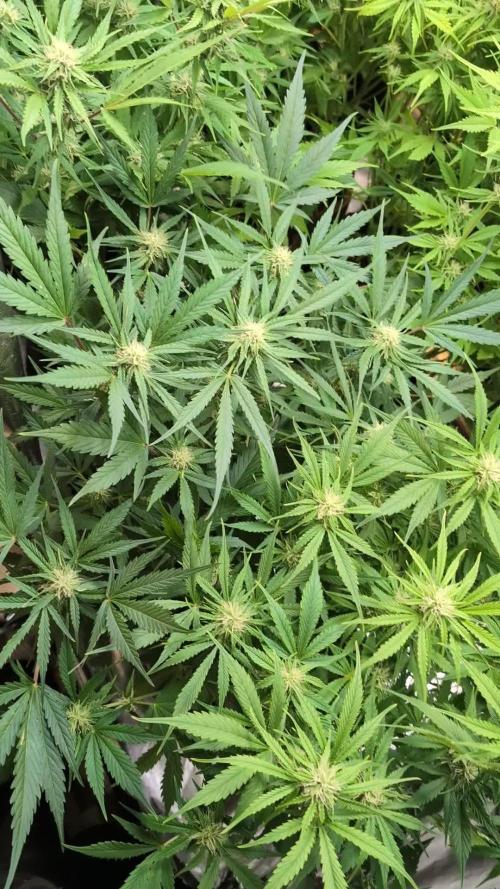
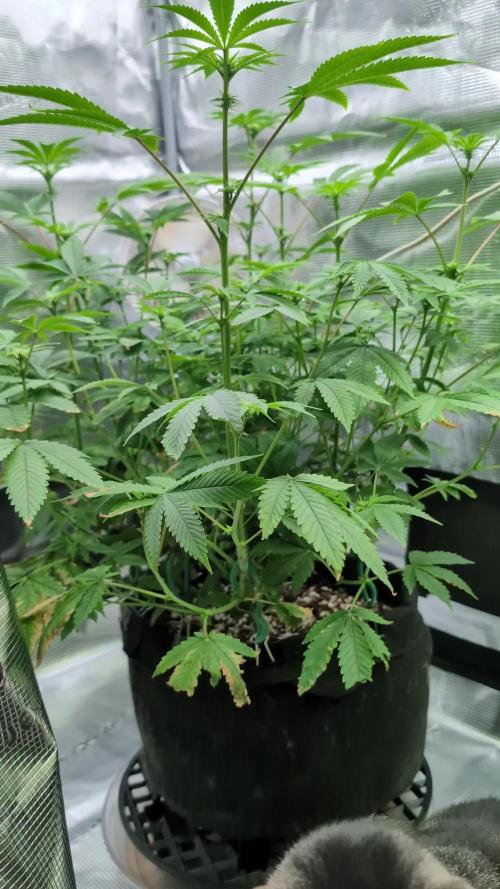
2 ladies are a little too yellow for me. Otherwise I like everything quite well.
"Iris' had another defoliation today. It was just a mess of leaves.
Have a nice weekend @all.

Processing
Likes
8
Share
@eldruida_lamota
Follow
Esa familia, de nuevo e vuelto para actualizar las candy caramelo, también trasplantamos a su maceta definitiva, amarillean las hojas de abajo porque ya pedían un trasplante, y hasta que se amolden al nuevo sustrato.
Ph controlado temperatura 22/26 y humedad algo baja 60% aunque pronto cambiaremos el ciclo lumínico.
Hasta ahora esto es lo que hay y mientras catamos la cosecha anterior, os iré actualizando demás diarios con sus respectivas cosechas fumetillas, un saludo y hasta la próxima semana.

Likes
17
Share
@valiotoro
Follow
Hello everyone week 4 of flower has passed for this Cinderella Jack auto 👸🏼
For the feeding schedule i stopped feeding Power Roots and Pure Zym and started feeding Green Sensation 0,5/l
Mars hydro SP-6500 power 75%
have a great day and wish you all happy growing 😎👨🌾🏻

Likes
11
Share
@Sawyer_grow
Follow
Hello guys !
Hope you are doing good ! New weeks and the girl is now totally focusing on her buds !
It's a very nice moment of the flowering, you are discovering every day the shape of the buds growing.
You start to notice the smell everytime I open the door.
Can't wait to see what's coming next.
Take care
Sawyer

Likes
5
Share
@CannaIGrow
Follow
Still just trying to be patient, waiting for harvest time, hopefully I don't go past the harvest window that I'm looking for. Wanting Milky tricomes.
Likes
Comments
Share
@smoking_hills9
Follow
Very happy I went Original Sensible Seeds beens this grow. 🤩 All 3 autos from some special american line, and o boy , they don't disappoint.🔥 Bangers genetics 👏🏻 all trees are huge with 100s of well structured and close to each other bud sites. All very frosty for this stage already. The smell is quite stable on most , sweet creem and lemon pine. I like it a lot 💚

Likes
73
Share
@Fatnastyz
Follow
Day 64 - Day 17 - 9/16
- 18" today
- 483 ppm @ 6.0 ph, gave 4000ml, runoff was 600 @ 6.0ph.
- Added Power buds, slf, and royal rush to this batch
Day 65 - Day 18 - 9/17
- 19"
- Gave a calmag flush today. 4000ml of RO and 2ml cal mag, 190ppm @ 6.1 ph. Runoff 550ppm @ 5.9ph.
Day 66 - Day 19 - 9/18
- 20" tall!
- 493 ppm @ 6.0 ph, Runoff after 4000ml is 617 ppm @ 5.8ph.
- Still stacking, guess I'll go back down on the ppm
Day 67 - Day 20 - 9/19
- 20.5"...only a half inch...whaaaat?!
- 422 ppm @ 6.0 ph. Gave 5 liters! yeah...a lot! Runoff 575ppm @ 5.8ph.
Day 68 - Day 21 - 9/20
- 21.5"....an inch! Whooo
- 411ppm @ 6.0ph, 3000ml, runoff 48 ppm @5.7 ph.
- Still needs lower...
Day 69 - Day 22 - 9/21
- 23"...yes!!!
- 409 ppm @ 6.1 ph. 4000ml, runoff 527ppm @ 5.8ph
- closer....still needs lower
- Week 4 starts today!!!
Day 70 - Day 23 - 9/22
- 24"
- 386 ppm @ 6.0 ph. 3000ml. Runoff 512 ppm @ 5.7 ph.
- Will still go lower tomorrow.
**So, the Terra is for nasty-ass dirt LOL, and its running hot in my coco, having a hard time getting it low enough for her. Seems she doesn't like above like 300ppm right now. Will keep lowering.
Need to start a bit of Green Sensation soon and she still need a defoil lol. She's pretty bushy. Will get to that hopefully Sunday.
August Midnights is being his typical adorable self! Always wanting to play! Love this kitty soooo much! He was meant to be our baby. A year ago, just 2 weeks into October, someone posted this little black kitty free to good home. I never even get posts from this group on my feed....but for some reason, there it was! Terrified, and in disbelief that someone would offer a free black kitten so close to Halloween, I knew he was meant for us! And...on top of that, he was actually born in August, so the name I wanted for my next kitty was PERFECT, then him being solid black....I had my perfect Swiftie Cat name! August Midnights. Can't believe he's a year old now. He just grew up so fast, crazy how time flies.



Likes
10
Share
@Skinnytalls420
Follow
Day 8-15/04/22 everything looking good been giving her plain water since the begging will start to add some nutrients next watering!!!!
-
Day 11-18/04/22 gave her some root juice yesterday and looking very good


Likes
5
Share
@Acid_joker
Follow
Новая. Неделя. Пошла майя красотка !!!!) Кто. Што. Пасаветует. Мужики? буду рад за. Помашь
Likes
7
Share
@GrowmieDeLaStreet
Follow
First off, that mf holds it's name very well. The smell on that strain is phenomenal. Much of fruity citrus and earthy notes and that's without the curing.
I smoked a bit to get a taste. Smoke and taste quite harsh but that should go away with the curing.
I harvested 634g wet, including a lot of stems, and ended up with 121g dried. they lost 80% of their mass and I might have over-dried them since I expected to get more tbh. However that's more than enough to get me through next harvest.
The 3 plants turned out to be pretty different phenotype. All over pretty great but one could have used denser buds. They don't have the same maturity which means I got buds for all occasions.
Kept the trimmings in the freezer for an hour and also harvested 0.67g of kief with a 220 micron bag. A lot of impurities but that was to be expected.
I don't think the calcium problem has had a significant impact.
Overall very happy with the product and the experience.

Likes
4
Share
@Bossman
Follow
I ran into some issues with the pan dragon f1. I fried her with nutes as you can see by the leaves, but the rest are fine. I’ll be taking them down day 70
Likes
3
Share
@BRLGrow
Follow
Yellowing advancing brow spots, some leafs drying and falling off.
One girl I will flush tomorrow to cut on the weekend.
The other 2 have more one week or 2.
Is these yellowing hurt on the stage the girls are?

Likes
10
Share
@Gatterzzz
Follow
Plant is stretching a bit with some appearance of Pistils, started bloom nutes for pre-flowering, but still has a way to go. Plant is quite low as I trained her that way (accidentally 😅) hopefully won’t affect yields too much.
Update following question: general consensus is that light meter app is unreliable so Im using the PAR chart from the grow light as a measurement.
Boost Buddy CO2 bag added to the tent with a good effect.
Plant seems to be doing well in all, one browned tip and no other seemed to appear.
Likes
38
Share
@gottagrowsometime
Follow
Plant has done really well these past 2 weeks. Buds have packed on weight. Smell developing into some really fruity and exotic. Bud development is really good. Fast-Flowering has really kicked in these past 2 weeks. Another 7-10 days to go and I'll be pulling her. Nutrients will be lowered this week and she'll be prepped to put into my drying room.
Xpert nutrients have worked really well again with this crop. Some light signs of early bud rot. Leaves started to die from within/outwards.
Happy with my 1st Fastbuds Fast-Flowering.
DISCOUNT CODE FOR XPERT NUTRIENTS
20% OFF, CODE:GGST
THANKS TO ALL MY SPONSORS and to those above m who's support has been essential to getting sponsors much appreciated to all them and whomever stop by.
Likes
218
Share
@ClubRiot
Follow
Start week 10 , Bio Bloom 4 ml/L + Sensi Cal-Mag Xtra 2 ml/L + CarboLoad 2 ml/L + Top Max 4 ml/L + Overdrive 2 ml/L (Ph 6.7).
Likes
2
Share
@Franco123
Follow
this week the plants have started flowering and I notice that the two that previously were more leafy are yellowing I try to increase the fertilizer slightly and see if they settle but everything else seems fine to me
Likes
8
Share
@Alkaline_Water
Follow
Nute burn on older growth. Slight yellowing of new growths’ tips;
Larry OG originally started in a rock wool cube and was then transplanted into soil. The Larry og is very small and yellow with major bleaching;
Raised light height by 3in. (15in. -> 18in.)


Likes
24
Share
@Kirsten
Follow
Watermelon 🍉 is maturing very well. Nice and dense, frosty buds! She's finished growing now, so concentrating next on just flower nutes.
The plant is very small due to my terrible attempt at LST! 😅
27.2.25:
Watermelon 🍉 and Purple Lemonade 💜🍋 are both far below the scrog net, they've definitely stopped stretching now.
My LST on these was much worse than even just using the net. 😅 That was certainly a valuable takeaway.
I'm sure Purple Lemonade 💜🍋 will be good.
Watermelon 🍉 was so stunted. It's not a tall strain, usually either, but nevertheless, the buds there are looking very frosty and are very, very sticky! 😅
Should be a good smoke, eventually, 🤗 just won't be much to bag unfortunately.