


Likes
Comments
Share


@Naujas
Follow
The girl is fantastic :) she looks strong, healthy and happy :) next week, I will defoliate her to give energy to the flowers, and at the same time improve air circulation closer to the stem :) everything is going smoothly and well :).

Likes
10
Share


@MadeInGermany
Follow
Info:
Unfortunately, I had to find out that my account is used for fake pages in social media.
I am only active here on growdiaries.
I am not on facebook instagram twitter etc All accounts except this one are fake.
Have fun with the update.
Flowering day 40
since time change
to 12/12.
Hey everyone 😊.
It gets more beautiful from week to week 😍.
The buds are getting thicker and thicker and already smell very good :-).
The time has come when she no longer puts her strength into growth but into the flowers :-).
It was poured 3 times this week with 1.2 l each time.
When watering, there was 1 g of GHSC enhancer per liter of water as every 2 weeks 👍.
Of course, as always, the tent was cleaned every day and the humidifier refilled.
The complete filter system was also checked again.
I filled the tank with fresh osmosis water for the coming week.
I wish you all a nice week.
Stay healthy and let it grow 🙏🏻👍
You can buy this Strain at :
https://www.zamnesia.com/de/5165-zamnesia-seeds-kalini-asia-feminisiert.html
Type:
Kalini Asia
☝️🏼
Genetics:
Black Domina x Purple Kush
👍
Vega lamp:
2 x Todogrow Led
Quantum Board 100 W
💡
Bloom Lamp :
2 x Todogrow Led
Cxb 3590 COB 3500 K 205W
💡💡☝️🏼
Soil :
Canna Coco Professional +
☝️🏼
Fertilizer:
Green House Powder Feeding
☝️🏼🌱
Water:
Osmosis water mixed with normal water (24 hours stale that the chlorine evaporates) to 0.2 EC. Add Cal / Mag to 0.4 Ec Ph with Organic Ph - to 5.5 - 5.8 .
Likes
50
Share


@DogDoctorOfficial
Follow
Eternity Grow Cup - Week 7 Veg Report
Another week down, and what a week it has been! Our Runtz ladies are thriving, pushing forward in their vegetative stage with strength, beauty, and some seriously impressive root development. This week, we officially transplanted them into the Autopots, and let me tell you—the roots are stunning.
Root Health & Mycorrhizal Magic
The mycorrhizal fungi have been doing their thing, and it's truly a sight to see. When transplanting, I could clearly see how beautifully the roots had colonized the medium, forming a healthy, snow-white network that fully surrounded the pot. The Aptus Holland Mycormix is once again proving itself as an absolute game-changer in root development. Strong, well-established roots mean better nutrient uptake, stronger resistance to stress, and overall improved plant health. If you’re serious about growing, this is something you don’t want to overlook.
Aesthetic Update – Pink Vibes!
Yes, I know, I know—the pink background is still here, and I’m absolutely loving it! It’s giving the photos that extra pop, bringing out the vibrancy of the plants, and making every shot feel unique. Hope you all are enjoying these visuals as much as I am!
New Home - TrolMaster Ecosystem
This week also marked another major move—the plants officially transitioned into the TrolMaster Ecosystem. And guess what? They are absolutely loving it! With optimized climate control, precision automation, and a perfectly dialed-in environment, these plants are thriving under their new conditions.
Current Environmental Conditions:
Room Temperature: ~20°C
Relative Humidity: ~67%
CO2 Levels: ~1400 ppm
Light Intensity (PPFD): ~300
A balanced combination of temperature, humidity, CO2, and light intensity ensures that the plants continue to grow at their full potential. The high CO2 levels combined with the moderate PPFD allow the plants to photosynthesize efficiently, maximizing growth while keeping stress minimal.
Nutrient & Watering Program
Right now, I’m sticking with the Aptus Holland Clean Program, which consists of:
Regulator
System Clean
RO Water Conditioner
All-in-One Liquid
The water parameters are as follows:
EC: 0.55
pH: 5.86
Water Temperature: 15°C (a bit cold, but still manageable)
Ensuring clean, well-balanced water with optimal nutrient availability is essential for healthy root development and vigorous vegetative growth. With this setup, they are getting everything they need to flourish!
Shoutouts & Thank Yous!
Huge shoutout and thank you to all the amazing sponsors who help make this grow possible:
Aptus Holland – Premium plant nutrition
TrolMaster – Intelligent environmental control
Cannakan – Precision germination & planting tools
Grove Bags – Advanced curing & storage solutions
Ziggi Papers – Innovation in rolling technology
And of course, a massive thank you to Zamnesia, Plagron, and GrowDiaries for putting together this incredible Eternity Grow Cup!
Final Thoughts
Week 7 has been phenomenal—our girls are thriving, adapting beautifully to their new environment, and setting the stage for what’s to come. The next phase is going to be exciting, and I can’t wait to share every step of the journey with you all!
A big thank you to the community—whether you’re watching, supporting, learning, or even just stopping by out of curiosity. Lovers or haters, you all have a place in my heart!
Stay tuned for the next update and don’t forget to check out the exclusive content on Instagram and YouTube—let’s grow together!
Until next week—happy growing, and good luck to all competitors! 🌱🔥
Genetics - Runtz https://www.zamnesia.com/6000-zamnesia-seeds-runtz-feminized.html
Nutrients - Plagron https://plagron.com/en/hobby
- Aptus Holland https://aptus-holland.com/
Controls - Trol MAster https://www.trolmaster.eu/
LED - https://www.futureofgrow.com/en
LED - https://www.thinkgrowled.com
Soil - https://www.promixgardening.com/en
Germination - Cannakan https://cannakan.com/?srsltid=AfmBOopXr-inLXajXu3QFgKXCXXos4F1oEvScjMKIB5MR5dk8-GJ-F49
DOGDOCTOR 15% off
Smoking Papers - https://ziggioriginal.com/
Terpene saver - https://grovebags.com/
As always thank you all for stopping by, for the love and for it all , this journey of mine wold just not be the same without you guys, the love and support is very much appreciloved and i fell honored with you all in my life
With true love comes happiness Always believe in your self and always do things expecting nothing and with an open heart , be a giver and the universe will give back to you in ways you could not even imagine so
As always, this is shared for educational purposes, aiming to spread understanding and appreciation for this plant. The journey with nature is one of discovery, creativity, and respect. Let’s celebrate it responsibly and continue to learn and grow together!
Growers Love To you All 💚
#EternityGrowCup #RuntzHunt #GrowersLove #CannabisCommunity #AptusHolland #ProMixSoil #TrolMaster #Zamnesia #Plagron #ZiggiPapers #Grovebags
Eternity Grow Cup episode 08 uploaded at 720P ,4K will came out on youtube
Likes
15
Share

@masterofsmeagol
Follow
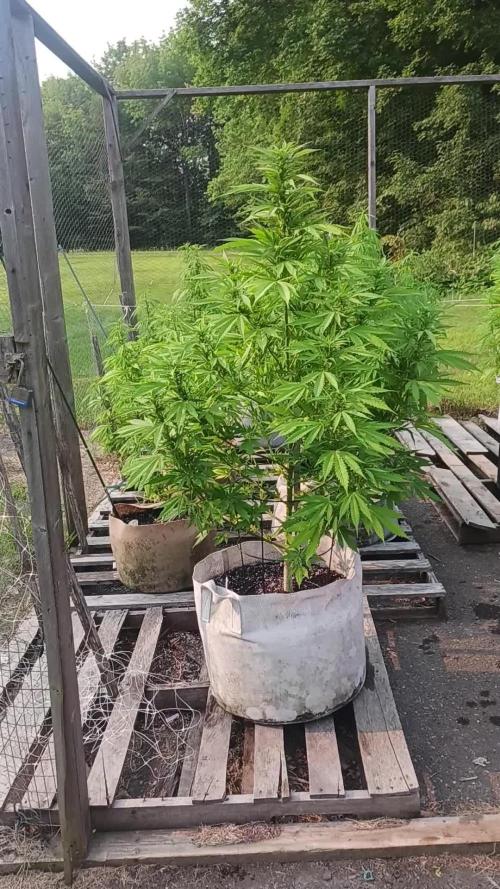
8/3 Went over to treat the 10th planet that needed water with plant doctor around 10:30. I was in the garden at 6 but didn't have much time. That plant seems to be curled up or "droopy". It DID need water. I defoliated a few sep leaves off it but I didn't see any today. I guess I don't ever really see the leaves "up" or praying like I do with the rest of tge plants. It's starting to flower like the rest though. Today is the day everything is supposed to get its second or third plant doctor dose but I decided to wait until they need the water. I don't think 24hrs will mean much. I've been staying on top of defoliation but I'm seeing some pillar damage. I'd like to spray bt but what my buddy said about spraying with septoria is still in my head. Maybe I can use citric acid. That way it won't "wash away" spores it will just eat them. At least I think. And I hope lol. Birds get most of the pillars but I hand pick some too. I need to pick up nutes. Wondering if I should just get grow big again. I don't use much but plants are switching to flower and leaves are fading. I have big bloom and kool bloom bit neither have nitrogen. I still need some sort of nitrogen. Especially since that could be a deficiency. Not sure if it's the transition or a condition with the sep. I see some interior small leaves bleeding out and some dying. I'm wondering if what I thought was earwig damage years prior was really a combo of sep and they just ate the evidence. I'm super grateful though. I've got some resilient girls and they're doing well. The special kush in flower is gorgeous as well. Looks like I'll have an early plant. Short flowering time on this strain. Smells pungent.
8/4 Treated everything in the garden with plant doctor except the 10th planet I got yesterday. I need to take a closer look at that plant. It rarely looks "happy" like my others. I'll check it again later. 3tsp per gallon and 1gal a plant. The 10s got a half gallon. This seems to be working great. I have some defoliation to do on the tenth planet I was talking about earlier. Everything is in some form of flower. The flowers on that early special kush are getting bigger. I'll update this later.


Likes
7
Share


@misspikapoka
Follow
Planted 4 seeds of AK48 Auto directly in the soil. I used toilet paper rolls as cups.
The first seed sprouted on Day 6.


Likes
6
Share


@BLAZED
Follow
Week 16 (Harvest)
30-1 First day of darkness.
Temperature: 27.9 degrees (lights on) 18.8 degrees (lights off)
Humidity: 65% (highest) 48% (lowest)
31-1 Second day of darkness.
Temperature: 24.5 degrees (lights on) 19.5 degrees (lights off)
Humidity: 65% (highest) 50% (lowest)
1-2 Drying day 1
The Saparot is ready to be harvested!
Before chopping her down, i took a lot of pictures.
I was able to remove most of the soil to see the rootball.
I hang plant as a whole to have a slow dry.
The exhaust fan is on setting 4.
2-2 Drying day 2
Temperature: 19.1 to 17.5 degrees
Humidity: 62% to 57%
I changed the exhaust fan to setting 2 because setting 4 was a bit high in my opinion.
3-2 Drying day 3
Temperature: 19.9 to 18 degrees
Humidity: 62% to 59%
I changed the exhaust fan to setting 1, as someone told me that it was enough air movement for drying.
4-2 Drying day 4
Temperature: 19.8 to 18.5 degrees
Humidity: 62% to 59%
5-2 Drying day 5
Temperature: 19.9 to 18.8 degrees
Humidity: 62% to 59%
Today i checked on the drying plants and the buds are shrinking a bit, they are getting a little bit crispy on the outside aswell,
I hope they wont dry as fast, and i aim for a 12/14 day dry.
Cant find the temps for 6-2 to 2-13.
I do have a video when she was at the half of the dry process.
14-2
Trim day, yay!
She was easy to trim, the buds are nice and dense, and there was not a too high bud/leaf ratio!
She dried for 14 days.
End results:
Dried buds: 81 Grams.
Dried Trim: 18.5 Grams.
I am really surprised how good these genetics are! If you like CBD, i really suggest trying JYM Seeds out!
The Saparot smells very fruity almost like a fruity coctail. The buds are super dense, and very bag appealing.
After some months of curing the sweet fruity smell changed to a more sour smell, but still smells amazing!
To be honest, i cured her a bit poorly, burped too less, and because the buds are so compact she holds moisture better then normal, so she tastes harsh, but thats on me.
I have a pack of JYM's Sour Fruit aswell, so i will for sure try it out again! And my hope is already very high :D
Thanks for following my diary, and feel free to check my others out aswell!
See you at the next one!
Likes
11
Share


@MG2009
Follow
06/17/2020
I'am not sure how she will produce,but the smell is intoxicating! Wow that's all I can say. Better than any gg I've smelled thank you Fast Buds! In fact I love it so much I have decided to selectively pollinate some buds with Red Sky male , that should make for some freaky flavor combos!
I think she is stretching and filling out she looks happy!
I do have powdery mildew on the stem need to clean it up oh yeah did I tell you I love the smell! Lol

Likes
20
Share


@Lazuli
Follow
Final 2 weeks maybe 3,
Therese so many flowers on this plant its insane haha
A heavy blueberry smell she got
Likes
15
Share


@Messypies
Follow
13/07/2020 - growth looking good. Highered lights to try to get plant to stretch
14/07/2020 - plants green and seems to be responding well to nutrients.
15/07/2020 - all looking good


Likes
23
Share


@HideAndFly420
Follow
I’ ve been really really excited in growing this 🍊. I really loved it to do ti in grow diaries. Community helped me and I hope I’ll be doing always better.
I think next time I’ll do a foto to play a little bit more with structure of the plant.
Buds smells like orange and cotton, chocolate pinus. Can’t wait to try it.
I’ll update in some days when I’ll have some nice buds a also le to sm
oke🕹️
Thanks to all the people the followed me and that helped me with important suggestions


Likes
4
Share

@carlitoshaze44
Follow
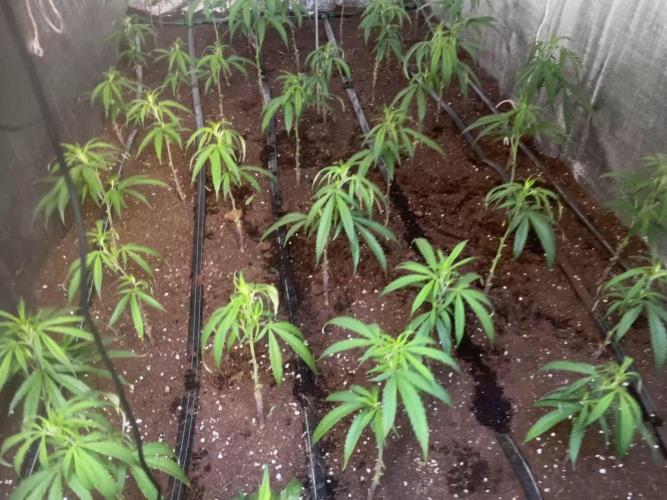
Comenzamos la semana de floración con una gran poda de bajos dejando estas con forma de palmera o Chupa Chups.
En el día de hoy le bajé dos horas al horario de vegetación de 18/6 a 16/8 en los siguientes días bajo dos horas así hasta alcanzar el 12/12 de manera gradual.
Hoy se aplicará un riego de vitaminas y entaizante.
Likes
3
Share


@SolitudeCorners
Follow
🌿Week 4: Defoliation & SCROG Setup
Week 4 was all about structure and airflow.
The canopy was getting bushy fast, with a ton of inner growth, so we went in for a solid defoliation session across the board. Lower fans, overlapping leaves, and shaded internodes were cleaned up to let light penetrate deeper into the canopy and reduce potential humidity traps.
Right after that, we finally dropped the SCROG net, stretched out gently across the canopy to guide the branches horizontally and prep for flower stacking. Some of these phenos are already reaching for the sky, so the timing felt just right.
Captured a full-time-lapse clip of the defoliation + netting process. It’s super satisfying watching the chaos turn into clean lines. Nature meets intention.
Feed Bloom since 20/6
22/6 Defoliation
🌱 Plant Response:
After defol, they bounced back fast. Tops are perky, leaves are praying, and stretch is continuing in a controlled way. The structure’s more open now — better airflow, better light distribution, better everything.


Likes
92
Share


@Roberts
Follow
The grow was going great till the air stone stopped. I got root rot in process and it hurt final size. Super stick, and strong smell or a earthy fruity scent. I had the polyploidy mutation in this plant. I started a clone and have a diary for it on here. I used a Spider Farmer SE5000 light, and New Level Hydro bucket. I also used hygrozyme. Thank you Spider Farmer, New Level Hydro, and Amsterdam Marijuana Seeds. 🤜🤛💪❄️🌱
Thank you grow diaries community for the 👇likes👇, follows, comments, and subscriptions on my YouTube channel👇. ❄️🌱🍻 Happy Growing 🌱🌱🌱
https://youtube.com/channel/UCAhN7yRzWLpcaRHhMIQ7X4g
Www.amsterdammarijuanaseeds.com
SE5000
https://amzn.to/3qFpAML
Spider Farmer Official Website Links:
US&Worldwide: https://www.spider-farmer.com
UK: https://spiderfarmer.co.uk
CA: https://spiderfarmer.ca
EU: https://spiderfarmer.eu
AU: https://spiderfarmer.com.au
Coupon Code: saveurcash (is stackable in most cases)
Www.newlevelhydro.com
Www.hygrozyme.com

Likes
19
Share


@BOMbolenath
Follow
The girls were harvested at 94 days. I didn't weigh it, but I believe they yielded around 30 to 40g for both. I am very satisfied and happy to have achieved a very good result, being my first time growing. A cycle closes and a new will come soon with new soil assembly, new genetics and more experience.
Thanks to Shiva for tending and blessing the crop, and to all friends here who have sent messages of support and encouragement. I gained another family.
Happy 2023 to all, may it be a year of much evolution and beautiful flowers.
Om Shanti
