


Likes
Comments
Share


@420DeepGrow
Follow
Gracias al equipo de MSNL y XpertNutrients sin ellos esto no sería posible.
💐🍁 Forbidden Fruit Auto:
Forbidden Fruit Autoflower, llamada así por sus deliciosos sabores, es un cruce entre Cherry Pie, Tangie y Siberian Ruderalis. Esta variedad ofrece efectos estimulantes y relajantes con un sabor afrutado, cítrico y a pino. Ideal para quienes buscan un dulce escape.
🚀🌻 Consigue aqui tus semillas:
💡TS-3000 + TS-1000: se usaran dos de las lámparas de la serie TS de Marshydro, para cubrir todas las necesidades de las plantas durante el ciclo de cultivo, uso las dos lámparas en floracion para llegar a toda la carpa de 1.50 x 1.50 x 1.80.
https://marshydro.eu/products/mars-hydro-ts-3000-led-grow-light/
🏠 : Marshydro 1.50 x 1.50 x 1.80, carpa 100% estanca con ventanas laterales para llegar a todos los lugares durante el grow
https://marshydro.eu/products/diy-150x150x200cm-grow-tent-kit
🌬️💨 Marshydro 6inch + filtro carbon para evitar olores indeseables.
https://marshydro.eu/products/ifresh-smart-6inch-filter-kits/
💻 Trolmaster Tent-X TCS-1 como controlador de luz, optimiza tu cultivo con la última tecnología del mercado, desde donde puedes controlar todos los parametros.
https://www.trolmaster.com/Products/Details/TCS-1
🍣🍦🌴 Xpert Nutrients es una empresa especializada en la producción y comercialización de fertilizantes líquidos y tierras, que garantizan excelentes cosechas y un crecimiento activo para sus plantas durante todas las fases de cultivo.
Consigue aqui tus Nutrientes:
https://xpertnutrients.com/es/shop/

Likes
209
Share


@BioBuds
Follow
Great to see you and I missed you, I had some time so I created a video to thank our lovely foster company, who were so kind to let us try their light in return for a review. Now, most of you don't know I'm also into making music, mostly Techno but I also love HipHop and Gangster rap, mainly 90's Westcoast, although I'm fond of East Coast and a little dirty South, so this was an excellent time to showcase one of my tracks.
So please check my Autumn-themed, not commissioned, or approved by Mars Hydro, visualization video in thanks for @MarsHydroLED.
The grow has been going great! If you don't count the about a thousand fungus gnats I have been fighting. I'm manually manifolding and training the girls, into the desired shape, which is a bit hands-on but I see it as a collaboration more than a 50 shades approach to training. You can't just bust out a rope and domination on girls like that. We ease it in there, going to the limit every time, making them stretch and curl underneath the touch of our tender but firm hands. And when they are used to a little groping and fixation, we might bring out a few ropes here and there to spice it up a little. Anywaaaays.... I'm getting carried away here, back to the grow.
I had bought some coco-peat, after leaving none for the top layer as I suggested to all of you in the previous weeks of my grow (if you missed it, click one week back for a full recipe (the yellow image) for everyone in Europe) left me with enormous amounts of fungus gnats.
Its seems to alleviate the problem already. As it did with my previous grow the Gelato 33 Golden Canopy from Heaven.
In the meantime I notice my temperatures going down so Im trying to fix that too. All in all it had been a good week and this Orange Hill Special is promising to become something special!
Thanks for visiting again, see you soon!

Likes
2
Share

@RebelSeedBank
Follow
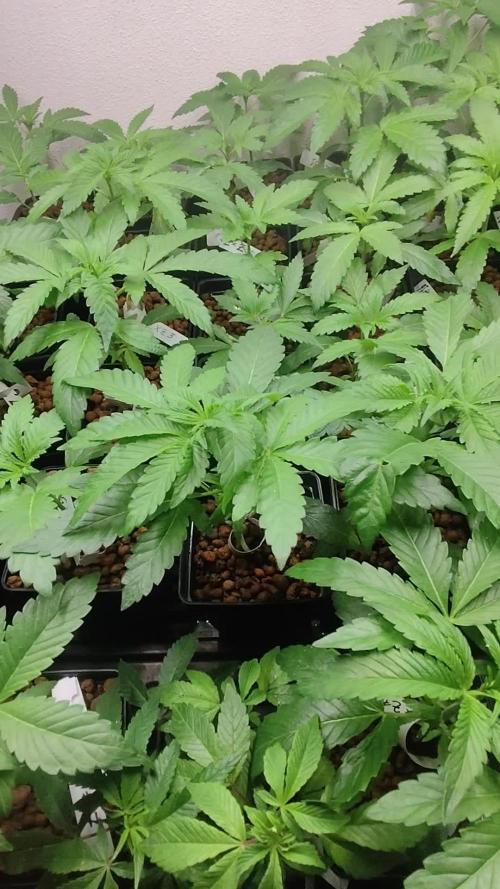
Week 7 il phenohunting procede bene
35piante tra cui #1 e #15 stanno mostrando una vigorosita esplosiva 5/5
N4 e 6 4/5
N23 3/5
Ma non scarto le altre...
Profili terpenici e flawor sono la mia priorità
Likes
39
Share

@PhinolaGreen
Follow
Harvest
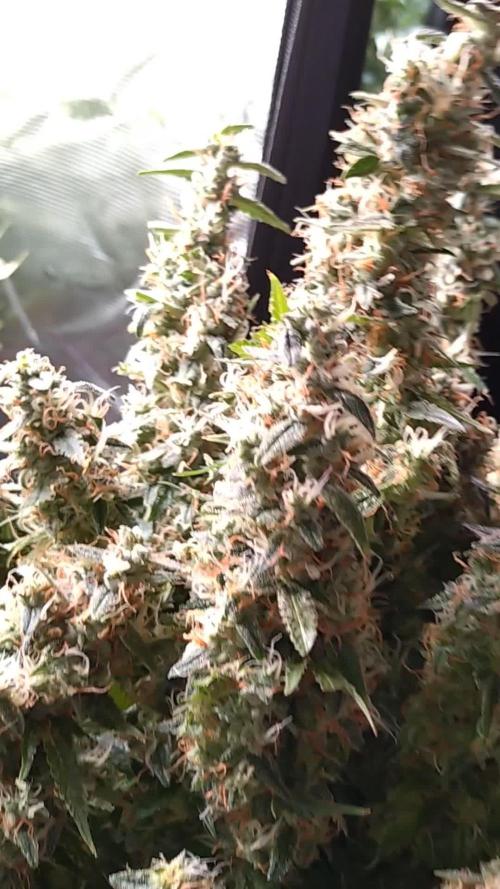
Was ein Biest, auf der Topfgröße wird es wohl erstmal ein Rekord für mich werden hihi. Bin echt gespannt, wie viel sie am Ende auf die Waage bringt, kann das immer schwer Einschätzen aber sind schon paar ordentliche Glocken 😄 😉

Likes
5
Share

@Sundancers
Follow
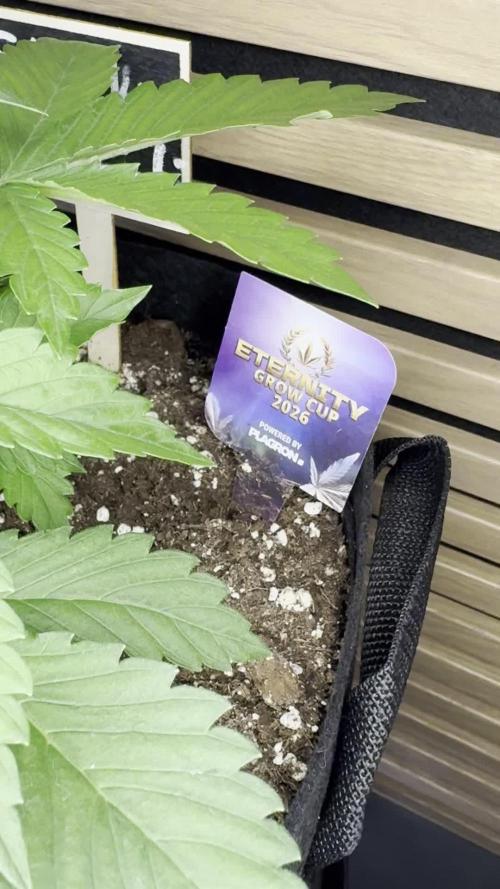
In Woche 3 hat die Sticky Broccoli ordentlich an Blattwerk und Biomasse zugelegt und zeigt sich insgesamt sehr vital. Die gesunde Blattfarbe bestätigt, dass sie sich rundum wohlfühlt und das Indica-typische Wachstum klar durchkommt. Getoppt wurde sie etwas später als üblich, was dem kräftigen Wuchs aber keinen Abbruch getan hat. Zusätzlich haben wir Cropping angewendet, um die starken Triebe kontrolliert nach unten zu biegen. Ganz ohne Drama ging es dabei nicht, ein kleiner Knacks war leider dabei, aber nichts, was die Pflanze ernsthaft beeindrucken sollte. Die Triebe sind inzwischen weit genug entwickelt, um mit dem Mainlining zu starten. Aktuell bleiben drei Nodien mit insgesamt sechs Trieben stehen. Insgesamt ein sehr solider Stand in Woche 3 mit viel Potenzial für eine saubere Struktur in den kommenden Wochen.

Processing
Likes
220
Share


@CRiSPrGrow
Follow
Week 2 Mr.B's Six shooter
so this one is doing fine, still no water needed since last week, literally no maintenance required, just spraying the soil with 0.25 ml / 250ml organic amino acid concentrate. You know how canna boost smells like soy sauce, well this one smells like that kinda except when i open it my whole basement smells like a chineese wok restaurant lol . Six shooter looks like i got three phenos , this one is an indica pheno looks like , let's see how she grows ! added cal mag to the foliar spray, once only this week, on day 5. amino spray on the soil is daily, until the 10 day mark. still only going to be plain water and secondary nutrients like CO2 and micronutrients . that's the plan anyway. VPD tappering off towards 1.1 as humidity is creeping down from a high of 42 to the high thirties now. going to plant my in soil ppm reader before i water for the first time since transplant lol... maybe not even this week ! low maintenance? will update 🚀

Likes
2
Share

@ViherPeukalo
Follow
This diary is going to be semi experimental grow from seeds that i have found and collected from my earlier grews.
List of wonders for the diary:
1.Are all seeds going to be females.
2.is there going to be more or less seeds, than the original run
3.is the yeld going to be bigger/better when seeds are from my own grews.(because their motherplants had same enviroment and care) 2 seeds/strain and strains are Trainwreck, gorilla and moby dick.
original(mother)seeds have been produced by fast buds company.
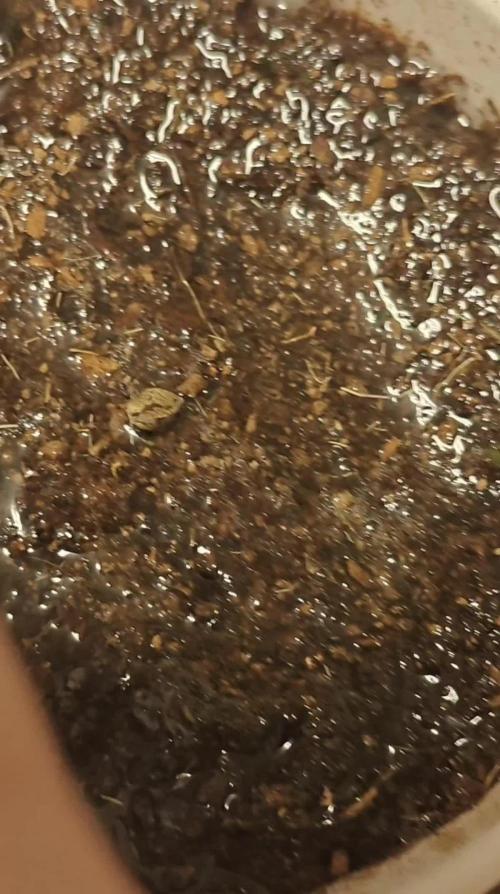
Starting the grow by filling 6 disposable cups and filling them almost to the top with coco coir and water so the coco in cups are clearly moist. 1 seed in eatch cup, little poke and seed is covered with coco. desided to put all the cups on one tray and cover it with another one on top. trays i lifted on top of the growtent for now. lets see if anything starts to happen....
Processing
Likes
35
Share


@Ironlungs
Follow
Week three is here and it has been pretty damn warm. Some leaves are curling on the edges but overall not too bad. Thankfully, it is starting to cool down a little bit


Likes
4
Share


Likes
Comments
Share


@Card1Cultivations
Follow
April 21 - 28
This week was a fun week of auto pilot watching the buds fill in and the plants stretch.
Drizella has been the beast of the grow and stretched the most. But the 2nd row of netting helped keep things under control.
Carol Anne is far below that second net tier. She is for sure dealing with life as a short stunted plant. Hoping for the best outcome for her, but I’m sure she ain’t gonna look so pretty when it comes time to chop n hang her to dry.
Anastasia is beautiful and I think also dealing with stunted growth a little. Either that or her phenom is wildly different than her sister Drizella. She is just reaching the second net tier and is very bushy with more compact bud zones and colas.

Likes
19
Share


@Lazuli
Follow
i started feeding 1000ppm now, she eats a lot, the frost is coming crazy just need a bit weight to the buds now, i think she got 4 weeks left from here
Likes
11
Share


@blasterw32
Follow
Two watering and 1 feeding this week. They received their last dose of Flora Micro (3ml/ gal) and higher doses of Bloom (10ml/gal)
I've also defoliated them for the last time
-------------
CBD will be ready for harvest sooner, probably ~5 days. Thus, she'll receive only water this week
Moby Dick still 10~14 days, so she'll receive more heavy nuts this week
Gorilla Glue needs 7-10 days, so she'll also receive more heavy nuts.
It'll be difficult to harvest them in different batches due to space constrains, so I'll probably chop them next week (in 6 days)


Likes
8
Share


@Chronicbastard
Follow
Man she is growing faster than any of my other previous grows.i am using a 50 50 blend of peat moss and coco coir now.this is the only thing new.i have to say I do like my new blend better than soil.i feel like its just healthier for my girls.peace out .hope you like my video
Likes
6
Share

@PapaTerps
Follow
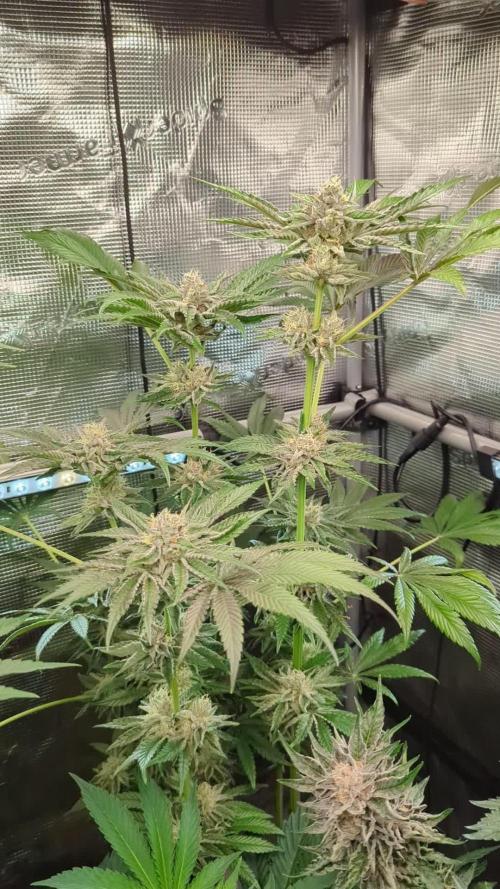
ZodaZa - Umami Seed Co.
Day 90
🚿 She was twice this week watered with 3L of RO tap water, with defined nutrients, mixed in order and then pHd to 6.3. I've increased her BioHeaven and Acti-Vera nutrients to help boost her metabolism 💪🏻
✂️ She has been working hard on bulking her flower again this week!
No work required on her this week, as her internodal spacing and low leaf count has made her super easy to manage! 🙌🏻
🌸 Her flower has grown well but still requires bulking! But you can see her other worldly appearance starting to show, with shades of dark green contrasted with the white pistils and dark purple on her sugar leaves - she really is spectacular!! Her aroma is also present, with notes of grapes and candy 👌🏻


Likes
6
Share

@thclover066
Follow
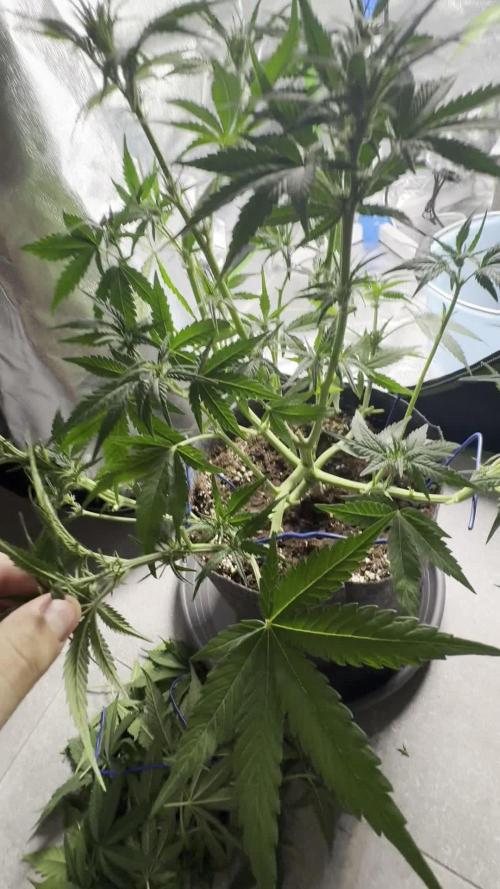
The plants have officially started flowering and are looking strong and healthy! 🌸 Unfortunately, I ran into a nutrient lockout in the soil, so I flushed each pot with about 20L of pH-adjusted tap water. This brought the runoff PPM down from around 2000 to about 900.
For this next watering, I’ll be giving only plain water and checking the runoff again. Based on the readings, I’ll decide whether to resume nutrients on the following watering—and if so, whether to start with a half dose or go back to a full dose.
So far, the plants seem to be handling everything perfectly, and I’m excited to see how they develop through bloom. 🌱💪

Likes
37
Share


@GYOweed
Follow
Harvested after 3 days flush and two days night after recommended 9 weeks. Got 2 phenos. One better and more representative of the strain description which i kept a clone of to S1 and stabilize.
As usual uploading here is a pita it didnt upload my videos again really annoying, but pics show the better strain is stronger bramches, stretchier, and better buds.
I cut them in the video so no one cries i didnt harvest lol. Smell is from sourish sweet to sweet and mossy like a green slurpy or something. 6 week testers were potent and frosty already so i cant imagine after proper harvest and cure.

Processing
Likes
12
Share


@Silverback_Guerilla
Follow
12/31:
They are both coming along nicely.👍
Today was the first day in which I fed them some Big Bloom and Boomerang along with humic acid, pH'd to 6.1.
1/3:
I've been letting them dry out a bit for the last two days. They've got roots coming out the bottoms now...I'll probably transplant them into 5 gallon fabric pots tomorrow or the next day.
I ordered a 4' 180w tube light with 578 LEDs..it has a 360 degree beam with 3000k and a bunch of 660nm. It's waterproof, so no worries about keeping it beneath my canopy to illuminate the lower branches and hopefully increase the density of those buds that never get much top-lighting.
Today, I mounted my two new 24w UVA LED lights (395-405nm) to my frame. I'll run them 6 hours a day from the time I put the plants into my closet, until harvest. It is my understanding that exposure to UVA, particularly during the vegetative stage, triggers many different plant defense hormones, which speed growth and can increase heartiness to withstand constant exposure to UVB without suffering as much cellular damage as usual.
I'm also ordering a 2' Solacure FlowerPower UVB (285nm-310nm) next week to use during flowering to stress the plants and increase trichome production.
1/4:
I did a few foliar feedings with big bloom and fulvic acid today.
1/5:
Transplanting day. I dusted their roots with magic dust and transplanted them into 5 gallon pots today. I had some excellent compost with biochar and myco that I mixed into their soil, too. I watered them in with about 2 quarts of their first taste of full strength veg nutes, plus mycorrhizal fungi, trichoderma, beneficial bacteria, and humic acid, then I sprayed them with biotabs boomboom spray when finished. The were moved into the closet under the quantum boards, UVA's, and a pair of MiracleLED blue bulbs. I'll start adding far-red spectra to the equation in the next few days.


