


Likes
14
Share


@BillMonroe
Follow
It's about week 6 I guess, I don't know.
Pheno 1: 2 short ones with great smelling medium sized buds. Fast
Pheno 2: looks like a nice producer, very frosty, nice growth, keeping an eye on this one. Slowest of the bunch but not a slow plant by any means
Pheno 3: woah, THC bomb! The frostiest plant in the house. Also seems like a fast one
Great smells
Quite excited for these awesome plants from Zambeza!
Catch you before harvest time for some nicer pictures




Likes
156
Share


@StarLorr
Follow
Helloing 👋🏻friends and visitors.
Welclone to my Clone diary🙃
Buds got a bit chunkier since last week,
Spotted more amber trichomes, probably gave their last feeding today and will harvest later on this week.
Feeding:
Tue 02Jan 3L each w/Flawless pH'd 6.5
Fri 05Jan 3L each w/Flawless pH'd 6.5
Mon08Jan 3L each w/Flawless pH'd 6.5
_____________________________
Thanks for stopping by, likes and comments are appreciated.
Keep on growin!
Keep on tokin!!!
😙💨💨💨💨💨

Likes
12
Share

@Northern_Ent
Follow
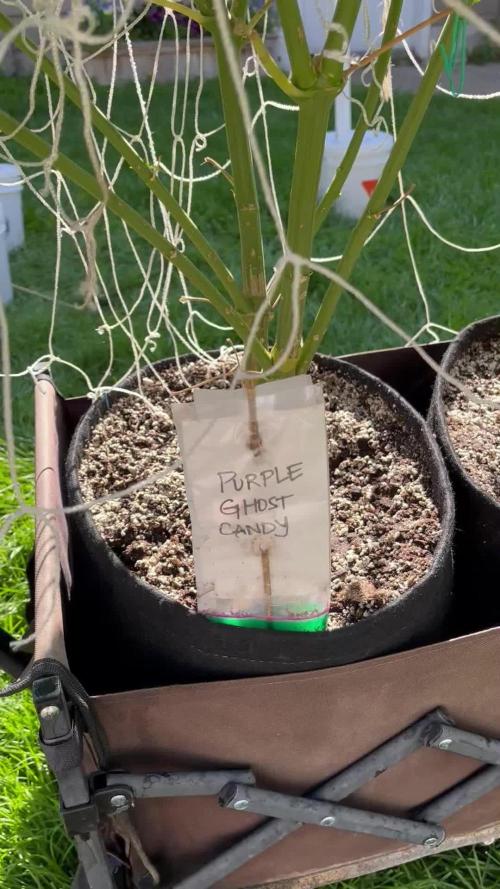
Aug 15: Purple Ghost Candy seems very happy these days. She is the tallest of the four plants and has the most sativa like structure. Good shape from the manifold and the scrog nets and flowering is going fast. The Plagron nutrients seem to be working nicely.
Here at 53 N latitude the strength of light, particularly UV light, drops quickly after mid-August. The AC Infinity UV lights come out on days when there is no chance of rain. The setup and teardown of the lights is quick and easy so it’s not much hassle to do this.

Likes
12
Share


@Bluemels
Follow
Tag 123: Die Fat Banana riecht sehr süß. In einer Woche ist schon ernte! 😁

Likes
6
Share


@GoldenWeedGrower
Follow
Legend
Timestamp: 📅
EC - pH: ⚗️
Temp - Hum: 🌡️
Water: 🌊
Food: 🍗
pH Correction: 💧
Actions: 💼
Thoughts: 🧠
Events: 🚀
Media: 🎬
D: DAY, G: GERMINATION, V: VEGETATIVE, B: BLOOMING, R: RIPENING, D: DRYING, C: CURING
______________
📅 D22/V18 - 07/05/24
⚗️ EC: 0.7 pH: 5.3
🌡️ T: 22 °C H: 50%
🌊
🍗
💧
💼
🧠
🚀
🎬 1 TL video
______________
📅 D23/V19 - 08/05/24
⚗️ EC: 0.7 pH: 5.3
🌡️ T: 22 °C H: 50%
🌊
🍗
💧
💼 Topping and LST
🧠
🚀
🎬 1 TL video of grow and one of the topping
______________
📅 D24/V20 - 09/05/24
⚗️ EC: 0.9 pH: 5.4
🌡️ T: 19 °C H: 50%
🌊
🍗
💧
💼
🧠
🚀
🎬 1 TL video
______________
📅 D25/V21 - 10/05/24
⚗️ EC: 0.9 pH: 5.4
🌡️ T: 19 °C H: 50%
🌊 12 L
🍗 Calmag, Grow A-B, B52, Hydroguard, Rhino Skin, Bud Candy
💧
💼
🧠
🚀
🎬 1 TL video
______________
📅 D26/V22 - 11/05/24
⚗️ EC: 0.9 pH: 5.4
🌡️ T: 19 °C H: 50%
🌊
🍗
💧
💼
🧠
🚀 Out of Home
🎬 1 TL video
______________
📅 D27/V23 - 12/05/24
⚗️ EC: 1.0 pH: 5.3
🌡️ T: 20°C H: 50%
🌊
🍗
💧
💼
🧠
🚀 Out of Home
🎬 1 TL video
______________
📅 D28/V24 - 13/05/24
⚗️ EC: 1.0 pH: 5.2
🌡️ T: 20°C H: 50%
🌊
🍗
💧
💼
🧠
🚀 Out of Home
🎬

Likes
10
Share


@coriander
Follow
Pretty simple first week! Seed took 3 nights for the taproot to pop and it was planted in its final pot on day 4. On day 6, it finally popped through the soil and on day 7 the little sprout is starting to grow up. There is a small piece of seed casing left attached. Going to leave it for a day or two. If it doesn't fall off, I'll do it myself.
Thanks for stopping by! 🥦

Likes
2
Share


Likes
149
Share


@CBD_Sweden
Follow
Hi all the happy people here in GrowDiaries.
This is my second cultivation ever and it will be fun to try a bigger space than my closet grow.
First, I'm just going to say I'm done with the construction of my new growroom.
I put some pictures on the construction here in week one.
The room is 2.14 meters by 1.7 meters and has a ceiling height of 2 meters.
It provides a floor area of 3.6 square meters.
I use a 54 Watt Lightwawe T5 for germination and 2 Pcs 400 Watt HPS lamps.
I have a channel fan that replaces the room air about 40 times an hour to get a comfortable theme in the room, the air enters a fresh air intake from the outside.
The air is purified through a carbon filter to then leave the room to the rest of the basement.
Then I use that heat to heat the rest of the basement.
I will use 8 pcs 15 liter Autopots to grow with and a 100 liter water tank that supplies the pots of water and nutrition.
I will grow completely organically in soil and will watercure my buds to get the best possible medicine for me.
But there are no cultivation rooms to be displayed here, so I continue with what is most important.
Today I have put my seeds in my moisture dome and hope the seeds have germinated within a few days.
I am very excited to see how the new growroom will work and how this Blue cheese Auto from Royal queen seeds will turn out.
Blue Cheese automatic cannabis seeds are a cross of Blueberry Automatic and Cheese Automatic that has been perfected over five years of breeding and careful selection. The result is a feminized, autoflowering strain with superior yield, flavor, and effects to either of its distinguished parent strains.
THC: 16%
CBD: Low
Yield Indoor : 325 - 375 gr/m2
Yield Outdoor: 60 - 110 gr/plant
Height Indoor: 40 - 70 cm
Height Outdoor: 60 - 110 cm
Flowering: 7 - 8 weeks
Harvest month: 9-10 weeks after planting
Genetic Background: Blueberry x Cheese x Ruderalis
Type: Sa 35% In 40% Ru 25%
Effect: Cerebral and uplifting
Climate: Mild
..............................................................................................................................................................................................................................................................................................................................................
Update 2017-08-15. All 4 seeds have germinated and planted in small pots inside the humidity dome.
I'm so glad it worked so well and now it's just hoping they'll start growing and become 4 big healthy girls :)
...............................................................................................................................................................................................................................................................................................................................................
Update 2017-08-16. I have mixed my own soil today. Its 40% sieved peat harrow H2-H4 0-30 mm, 45% sieved peat harrow H4-H6 0-30 mm. 5% sand and 10% of compost soil. And i use 15% of perilite and mix it all together.
................................................................................................................................................................................................................................................................................................................................................
Update 2017-08.20. Nr1 and 2 grow and thrive.
Number 3 just got rid of the seedpod and is folding out the sheets.
Number 4 is a bit shy and can only be seen if you look carefully into the soil.
.........................................................................................................................................................................................................................................................................................................................................
Update 2017-08-21. Nr 1 and 2 is doing well. Nr3 is trying to catch up and Nr4 is still shy.
--------------------------------------------------------------------------------------------------------------------------------------------------------------------------------------------------------
2017-08-23. Transplanted 2 girls from humidity dome and the small germinating pots to 15 liter autopots. The other 2 girls have to wait a little more before transplant to the autopots.
................................................................................................................................................................................................................................................................................................................................................................................
2017-08-27. The girls have settled in to there new home of the 15 liters autopot after a little transplant chock. Now the real week 1 starts for me and the girls.
--------------------------------------------------------------------------------------------------------------------------------------------------------------------------------------------------------
2017-08-28. New pic and movies.
---------------------------------------------------------------------------------------------------------------------------------------------------------------------------------------
2017-08-28. Nr3 is transplanted in 15 liter autopot.
-------------------------------------------------------------------------------------------------------------------------------------------------------------------------------
2017-08-29. New movie of the girls. Its no water for 3 days now for Nr1 and 2 so the roots develop more and match the plant above the soil. The temp controlled fan is awesome, its easy to set what temp you like to have in the room. Right now its 28 celcius. And humidity is 56%.
------------------------------------------------------------------------------------------------------------------------------------------------------------------------------------------
2017-08-29.
Hello to you who read my diary, I just want to say that I am pleased that you have chosen to check in with me and in my diary.
I just want to say that I do this for myself and for a steady flow of my medicine.
Everything you read and see in my diary is 100% honest and I will never distort or beautify anything here.
I document my crops so that I can learn from my mistakes and also to look back at those different crops.
I try to update with pictures every day and with text if something special has happened in the garden.
This is my strainhunt for the best medicine and the beginning of my journey with cannabis and the cultivation of it.
-----------------------------------------------------------------------------------------------------------------------------------------------------------------------
2017-08-30. Cleaned the room this morning, just vacuuming and cleaning with chlorine solution. Im testing the fan to control temp and humidity, it works great.
Added some pics with measurements and movie. Everything is looking great right now.
---------------------------------------------------------------------------------------------------------------------------------------------------------------------------
2017-08-31. New pics and videos.
---------------------------------------------------------------------------------------------------------------------------------------------------------------------------------
2017-09-01. New pics and videos. Gave each of the girls with 2 ml Alg-A-Mic, 4ml Bio-Grow, 4ml Bio-Heaven and 10 ml Formulex mixed in 2 liters of water.
I hope they like it :)
-------------------------------------------------------------------------------------------------------------------------------------------------------------------------------------------------------------------------------------------
2017-09-02. New pics and the girls liked the water and nutrients yesterday.
-------------------------------------------------------------------------------------------------------------
2017-09-03. New videos of the girls this morning. Nr1 and 3 looks great and nr 2 is looking a little funny, maby a little stressed.
Kl. 16.00. Did some defoliation on the girls. Added video.
Kl.. 23.00. New videos, defoliation and leaftucking.
-----------------------------------------------------------------------------------------------------------------
2017-09-04. Kl. 11.00. Week 3 starts. Trying to LST the girls and defoliate/leaftuck. New picks.
KL 23.00. New video.
--------------------------------------------------------------------------------------------------------------
2017-09-05. KL 08.00. Cleaned the room this morning, just vacuuming and cleaning with chlorine solution.
KL 12.00. The girls got 2 liters of water each with nutes in it, added a video.
----------------------------------------------------------------------------------------------------------------
2017-09-06. KL 08.00. The girls woke up after their beauty sleep, the leaves are always a bit down after 6 h of darkness, but they will stretch now when the HPS lamp starts.
Everything looks good and I keep trying to tuck the leaves so they get the maximum amount of light where needed. Added pics and video.
The Nr 3 girl is still a little bit behind the other 2 girls and all the 3 girls look like there 3 different pheno of the same plant.
KL 23.30. Did some LST.
----------------------------------------------------------------------------------------------------------------------
2017-09-07. Day 21 from sprouting, Nr3 is 17 days from sprouting. I have never tested PH in my grows, when growing organic in soil iv learned that it adapt PH by it self. But im curious by nature so i had to test.
Kl 10.00 Tested PH in the soil, it was 6.9 and tested my tap water and it was 6.8. Added a video of the girls, its 10 H after defoliation, LST and leaftucking. I think its looking good.
Kl 22.30. New pics.
Processing
Likes
21
Share


@Fullmeltalchemist
Follow
5.23 F60
5.27 F65 - Everything has been going well this week. The plants went through a feed cycle that should carry them through flower no problemo. Started with the AACT Tea, then a bokashi drench with Fish Shit from Fishheadfarms and plain water from here on out. They are drinking quite a bit. 1.5-2 gallons a plant every 3ish days. The terps in my tents smell out of this world. The ScrOG and 3x3 are like a candy store. Passion Berry has mango/guava citrus terps while Deadstar v2 has strawberry watermelon terps. The 4x5 is much more varied, but in general the sweet pink dominates with it's grape candy terps and the dread bread cuts through with it stanky gassy lemon while the prayer pupil smells like moth balls and a bit of GMO. Very lucky to get to experience this much variety.
5.29 F67


Likes
17
Share


@HowtoBubatz
Follow
We’ve now reached the third week of flowering, and I’m thrilled with how well my plant is doing!
I adjusted the nutrients recently, and it’s definitely made a difference. The plant seems to be thriving, and the leaves are showing a vibrant green, indicating that it’s getting exactly what it needs.
Even more exciting, the trichomes are starting to form all over the buds, and there’s no shortage of them!
It’s amazing to see so many trichomes developing this early on, giving the plant a frosty look already.
The overall growth is still going strong, and the buds are getting fuller.
I’m really happy with the progress so far and can’t wait to see how things continue in the coming weeks.
I hope this nutrient adjustment keeps everything on track for a great harvest!💚🌱
Likes
14
Share


@Ozeola
Follow
She’s been adding allot of smaller fans and starting to show sex. To cut down on humidity I decided to cover my 100% perlite grow media with coco and perlite mixed aprox. 50/50
Running a small oscillating fan going to add another soon. Also adding a carbon filter and inline to scrub the air. I wish I could just have a closed loop system with co2. My lights aren’t that strong so I wonder if some co2 sup would help.
Likes
422
Share


@Crashoverite
Follow
Hi all 😁
Welcome to my 🍌💜👊 week update.
Hope everyone keeping well and having a great week.
Thank you so much for your all support on this bananas journey 💜💚💜💚
What a amazing week. Very little to work around those beauties. The smell is so delicious already. They smells like sweet berries. Buds are loaded with trichomes, very sticky and hard as rocks especially on Athena. Trichomes are mainly clear and some parts milky. Absolutely love power of LST and how it worked on this strain. If you won't look under net it's almost impossible to see which cola belongs to main stem.
Week 11
Dec 25 - Dec 31
Dec 25-26
Joyful observation
Dec 27
Selective defoliation and
First watering for this week. Nutes adjusted, almost 8ltr between both. Runoffs PH on both at 6.2. I am finding this PH level for this strain as perfect. Girls are looking super healthy and drinking they mixture like crazy.
Dec 28-30
All is going smoothly. I can see more and more weight each day.
Dec 31
Secomd watering foe this week. 8 ltr beetwen both.
It's the last day of this week and also end of 2023!!
See you in the new year 🍾🥂🍀
Peace and love brothers and sisters ✌️💚
Links
https://2fast4buds.com/seeds/banana-purple-punch-auto
https://plagron.com
https://www.biobizz.com/
https://fishheadfarms.com/
Likes
44
Share


@nerdz
Follow
Day 64 to 70
On autopilot. I have been light on the nutrients so bumped up the nutes to 810ppm this week.
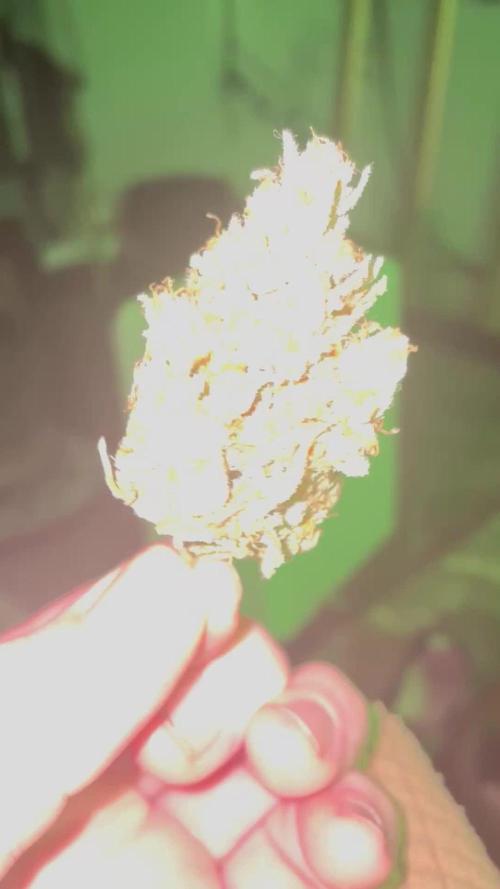
Forbidden Runtz 1 is coming close, the buds are getting THICC and hard. I'm keeping a close eye on the trichomes. It's almost go time.
I predict 2-3 more weeks for the rest but I don't know anything
Feeding around 750ppm this week.
Lightening up on Nutes for FR1 at ~350ppm.

Likes
3
Share


@Dargaville_Dukes
Follow
Another good week. Gave the plant its first topping and it looks happy. No issues at all with this plant so far.
Likes
70
Share


@Santica_Garden
Follow
So after 10 days of Drying, I have trimmed up the ladies.... Well 3 of them, 1 I Have other plans for her..... Nothing there to trim. Not gonna lie guys even the smoke is not all that. 😑

Likes
Comments
Share

@LandraceCBDLover
Follow
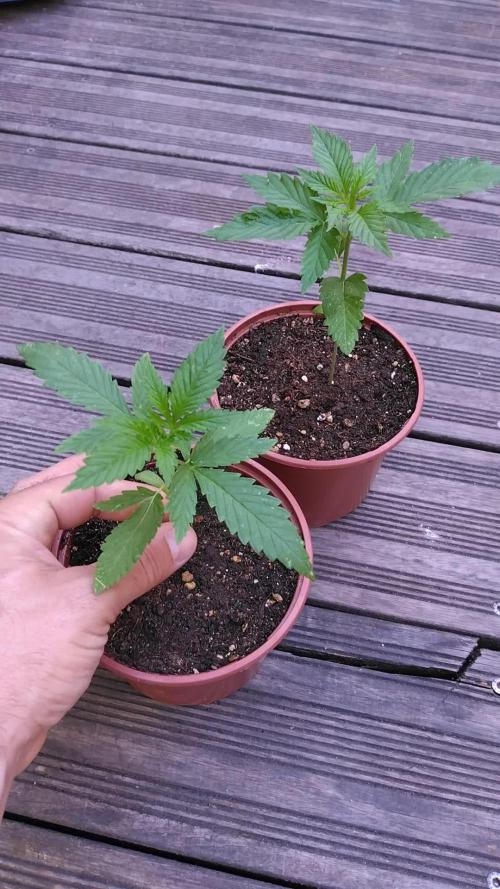
Rien à signaler, à part que tout va bien 😉
Bientôt le passage en pot de 15 litres.


Likes
15
Share

@Sadhus
Follow
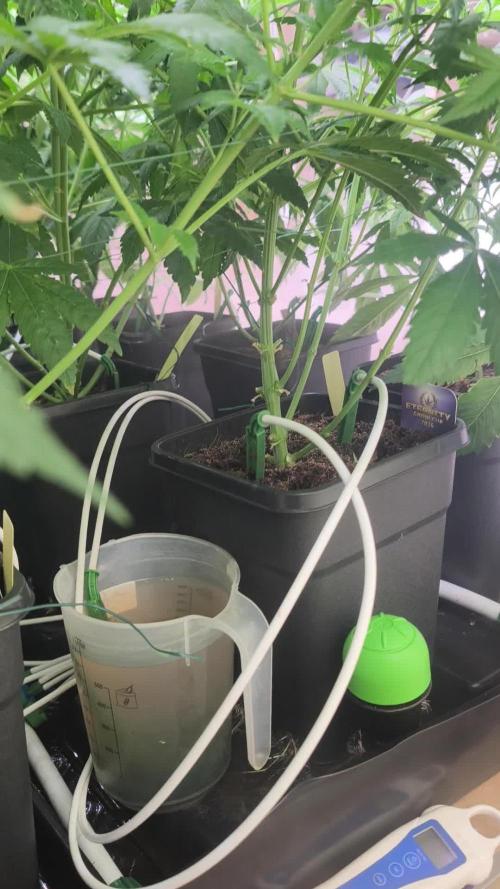
# Journal de Culture Cannabis - Eternity Grow Cup 2 (Zamnesia x Plagron) 2026
**Grower :** @Sadhusfrgrow
**Localisation :** Luxembourg
**Strain :** Sticky Broccoli (Zamnesia Seeds) - Féminisée
**Description de la variété :** Sticky Broccoli est une variété indica dominante (90 %), avec un THC à 23 %. Elle se distingue par ses arômes sucrés, épicés et floraux persistants, des plantes compactes et résineuses, offrant des rendements élevés en culture optimisée.
**Setup général :**
- Substrat : 100 % coco Plagron, pour un drainage excellent et une oxygénation racinaire.
- Pots : Définitifs de 5 litres.
- Irrigation : Netafim Drip automatique, cycles de 2 min/h × 14 (ajusté pour steering génératif : runoff réduit à 10-15 %, VWC bas ~30-40 %, dry back 20-25 % pour focus floraison).
- Contrôle : TrolMaster full setup (climatisation, humidificateur/déshumidificateur, chauffage, extracteur/intractor, ventilateur, pompe à eau avec chauffe/bulleur/agitateur, pompe eau usée, table drain DIY, barre UV/IR).
- Nutrition : Plagron Coco (A&B, Power Roots, Pure Zym, Green Sensation) ; ajout CalMag (début carence repéré sur autres plantes) et silice pour renforcement cellulaire. EC tank 2,0-2,5 mS/cm, pH 5,8.
- Éclairage : 12/12 (20:00-08:00), auto-dimming à 820 PPFD cible, UV/IR intégré.
- Objectif : Optimiser floraison pour rendement max ; clones pour préservation.
- Mises à jour : Intégration de l'app GrowOps (assistée par IA) pour optimisation : Analyse données TrolMaster, suggestions climatiques/nutritives (ex. ajustements VPD, DLI basés sur algos IA), tracking visuel (photos IA-annotées pour déficiences). Photos jointes montrent GrowOps (paramètres flo week 1/2 : leaf temp 25-27°C, temp 27-28°C, VPD 0.8-1.2, hum 68-78 %, PPFD 820, DLI 35), TrolMaster week 6 (PPFD 751.6 avg, VPD 1/0.88), temp/hum (day 25.0/68.75 %, night 20.8/64.31 %), graphs (pH/EC/temp/hum stable avec cycles dry back ; full params incl. CO2/VPD/light).
## Semaine 6 : Deuxième Semaine de Floraison (22-28 février 2026)
### Contexte et Objectifs de la Semaine
Deuxième semaine de flo avec steering génératif maintenu : Runoff réduit, VWC bas pour stress hydrique contrôlé, dry back accru favorisant buds denses. Nutrition stable avec ajout CalMag (0,5-1 ml/L) pour corriger début carence (jaunissement bas sur autres plantes ; préventif ici) et silice (0,5 ml/L) pour robustesse tiges/cellules. Pulvérisation foliaire Boom Boom Spray (Biotabs) au jour 36 pour booster bio-stimulants (acides aminés, hormones naturelles) et améliorer absorption foliaire. Pas d'intervention physique sur plantes (repos post-lollipop). Intégration GrowOps IA : App analyse données TrolMaster en temps réel, propose optimisations (ex. baisse RH nocturne pour VPD idéal, alertes carences via photos). Objectifs : Gérer stretch final (~+20 cm/semaine), observer formation buds, maintenir santé sans pests.
**Tips Éducatifs sur Réglage Hauteur Lampe, PPFD et DLI :**
- **Hauteur Lampe :** Ajustez pour uniformité PPFD (mesurez au canopy avec capteur PAR) ; trop bas = brûlures (feuilles curlées), trop haut = étirement (tiges faibles). Règle : Augmentez de 10-20 cm pendant stretch flo pour DLI constant.
- **PPFD :** Flux photosynthétique (µmol/m²/s) ; cible flo 700-900 pour Sticky Broccoli (évitez 1000 sans CO2). Mesurez multiple points canopy.
- **DLI :** Intégral lumineux quotidien (mol/m²/jour) = PPFD avg × heures lumière × 0.0036 ; cible flo 30-40. Optimisez via dimming/auto (comme TrolMaster) pour efficacité énergétique/santé plante.
### Observations des Plantes
- **Jour 36-38 (22-24 février) :** Stretch vigoureux ; plante strong atteint 80 cm haut × 55 cm large (l'autre ~75×50 cm). Buds sites gonflés, pistils abondants. Pulvérisation Boom Boom Spray : Réponse positive (feuilles plus vertes, vigueur accrue). Ajout CalMag/silice : Pas de carence visible (préventif réussi). Plantes saines, sans nuisibles (IPM efficace). GrowOps IA suggère baisse RH pour VPD optimal ; implémenté.
- **Jour 39-40 (25-26 février) :** Croissance forte (+5-7 cm/jour) ; canopée dense post-lollipop. Clones enracinés ~50 % (vigoureux, prêts repiquage). Pas d'intervention ; monitoring via GrowOps (alertes IA sur VWC bas pour génératif).
- **Jour 41-42 (27-28 février) :** Hauteur max 80 cm ; buds formés, résine précoce. Santé excellente, vert profond ; steering génératif booste densité.
### Paramètres Environnementaux (Analyse des Données TrolMaster)
Basé sur captures week 5/6 (jours 31-35, mais étendu à week 6 via graphs 23/02-01/03). Graphs montrent stabilité : pH jaune ~5.8-6.0, EC violet ~2.0-2.4, temp rouge 19-28°C (drop nuit), hum verte 60-77 % avec dry backs prononcés (drops 20-25 % post-shot). Full graph (temp/hum/CO2/VPD/light/pH/EC) : Cycles jour/nuit clairs, VPD stable, light cyclique. GrowOps intègre ces données pour IA-optim (ex. leaf temp 25-27°C, VPD 0.8-1.2, DLI 35). CO2 non mesuré (ambiant).
- **Température (°C) :**
- Moyenne Jour : 25.0 °C (graphs stable, leaf temp 25-27).
- Moyenne Nuit : 20.8 °C.
- Max Jour : 27.9 °C ; Max Nuit : 22.1 °C.
- Min Jour : 19.2 °C ; Min Nuit : 19.0 °C.
Stabilité : Graphs rouge lisse, adapté flo.
- **Humidité (%) :**
- Moyenne Jour : 68.75 % (GrowOps 68-78).
- Moyenne Nuit : 64.31 %.
- Max Jour : 77 % ; Max Nuit : 72.9 %.
- Min Jour : 63 % ; Min Nuit : 60.6 %.
Observations : Graphs vert cycles irrigation ; baisse progressive pour flo.
- **Intensité Lumineuse (PPFD) :**
- Moyenne Jour : 751.6 PPFD (GrowOps 820 cible).
- Moyenne Nuit : 0 PPFD.
- Max Jour : 835 PPFD ; Max Nuit : 0.
- Min Jour : 9 PPFD ; Min Nuit : 0.
Notes : Graphs light jaune cyclique ; auto-dimming actif.
- **DLI (mol/m²/jour) :**
Calcul : PPFD avg 751.6 × 12 h × 0.0036 ≈ 32.5 (GrowOps 35 ; optimal flo mid).
- **VPD (kPa) :**
- Moyenne Jour : 1 kPa (GrowOps 0.8-1.2, live 0.89).
- Moyenne Nuit : 0.88 kPa.
- Max Jour : 1.34 kPa ; Max Nuit : 1.05 kPa.
- Min Jour : 0.51 kPa ; Min Nuit : 0.6 kPa.
Analyse : Graphs cyan stable ~0.9-1.0, idéal pour flo sans stress.
- **CO2 (ppm) :**
- Moyenne : Non mesurée (---).
- **Nutrition et Irrigation :**
- EC : 2,0-2,5 tank (graphs violet stable). pH : 5.8 (jaune constant). Runoff : EC/pH inférieurs (~1.8-2.2 / 5.7). Ajout CalMag/silice.
- Irrigation : 2 min/h ×14, dry back 20-25 % ; VWC bas (graphs vert drops prononcés). Temp sol ~21 °C.
### Problèmes et Ajustements
- Aucun problème : Plantes saines, pas nuisibles ; CalMag/silice préventif efficace. GrowOps IA optimise sans intervention.
- Ajustements : Pulvérisation Boom Boom Spray réussie ; monitoring stretch.
### Plans pour la Semaine 7
- Légère défoliation ; retrait petites branches inutiles.
- Maintenir steering ; possible PK boost.
- Évaluer clones ; photos buds.
Ce journal sera mis à jour hebdomadairement. #GrowLegendary #Zamnesia #Plagron #EternityGrowCup2
Bonne continuation en flo !
