


@VfB752
Follow
Beleuchtung auf 100%
Düngen bei jedem zweiten gießen
Sind alle 3 die gleichen samen aber die vordere ist gegenüber den anderen zwei sehr dunkel wieso auch immer aber sieht verdammt schön aus 😍


@MrWolfe
Follow
Smells are getting prettt strong tbh, PKB is very grapey and gassy, washing machine is pure black licorice, BCS doesn’t have much nose and blue dream is creamy blueberry pastry.
Spotted some stamen on the top of the blue dream, I’ll see how she finishes out. I love the smell and bud size and next round is being topped properly instead of just supercropping.


@Mac_and_Cheesy
Follow
Shes having her last flush today on her day 75.
Its a late journal im totally new here and at growing too since i started this new passion on late december 2019 so 6 months ago or already 2 harvest ago lol.
Just to let everyone know that this is my first time ever growing automatics too and wont be the last cause ill go again in auto mode next run. 1st run was fem seeds from crop king too the blue cookie.
No lst or defoliation on this run cause im too new to this and i tried in my first run and i made so many mistakes lol. Not this time oh no :D
I gave myself a chance to learn about my plants and how to feed well this time.


@Holy_Guacamole
Follow
hey friends 👋 today is the start of the 5th week. in a few days she will be 1 month old and i couldn't be happier 😄
she performs well, showing her rapid growth. she stretched for 25 cm only for 1 week i couldn't imagine her full potent, lucky for me the grow tent is big enough 😄 😄
started to add bio bloom and top max along with bio grow - she eats everything u give. alongside this nutrients also add some Calmag
forgot to say some words about smell - it's becoming intense and start to hesitate me, so i'm planning to buy carbon filter soon.
everything good. wish everyone a good week, and will be glad to see you 👍 and comments here 😊


@Dendegrow
Follow
Radical Juice – Week 4 of Flowering
The Radical Juice is looking amazing! 🌿 The buds are starting to form beautifully, and the scent is becoming more noticeable with every day! 🌸 The plants are doing great and are getting more and more frosty as time goes on. The first trichomes are appearing, and I’m already excited about the upcoming harvest! ✨
The stretch seems to be slowing down now, and the plant is focusing more on bud development. Everything is progressing as expected. I’m still only using water, and I’m letting the soil and the microorganisms do the work. 🌱
As for the clone trial, the clone that received my homemade fertilizer with every watering is noticeably bigger and healthier than the other clones that didn’t get it. It’s really interesting to see the results! 📈
Stay tuned for more updates, and don’t forget to follow so you won’t miss anything! 😎
---
Radical Juice – Woche 4 der Blüte
Die Radical Juice sieht einfach großartig aus! 🌿 Die Buds beginnen sich wunderschön zu entwickeln, und der Duft wird mit jedem Tag intensiver! 🌸 Die Pflanzen machen sich bestens und werden von Tag zu Tag frostiger. Die ersten Trichome sind bereits sichtbar, und ich freue mich schon sehr auf die Ernte! ✨
Der Stretch scheint jetzt langsamer zu werden, und die Pflanze konzentriert sich mehr auf die Budentwicklung. Alles läuft wie erwartet. Ich gieße immer noch nur mit Wasser und lasse den Boden und die Mikroorganismen die Arbeit erledigen. 🌱
Was die Klon-Versuchsreihe angeht, ist der Klon, der bei jedem Gießen meinen selbstgemachten Dünger erhalten hat, deutlich größer und gesünder als die anderen Klone, die ihn nicht bekommen haben. Es ist wirklich spannend, die Ergebnisse zu sehen! 📈
Bleibt dran für weitere Updates und vergesst nicht zu folgen, damit ihr nichts verpasst! 😎


@LACREME
Follow
E aí vamos nós!
Quero agradecer a toda a equipe da Fastbuds por me mandar essas seeds.
Em meu país é muito difícil encontrar genética boa de verdade, então foi uma benção para mim.
Essa Kosher eu resolvi fazer no kokostec e usarei GH com Fórmula de Lucas, knf e micorrizas. Nesse inicinho aplico apenas enzimas e microorganismos benéficos para a raíz.
Enfim, acompanhe, e qualquer sugestão ou critica, fala comigo!




@Ultraviolet_
Follow
Remember that, however you are played, or by whom, your soul is in your keeping alone. Even though those who presume to play you be kings or men of power, when you stand before God, you cannot say, 'But I was told by others to do thus,' or that virtue was not convenient at the time. This will not suffice. Remember that.
Day:18
84°F and 65% RH (VPD) for the vegetative stage. Approximately 1.15kPa(assuming leaf temperature is about 2°F cooler than the air), which falls right into the ideal vegetative sweet spot (0.8kPa to 1.2kPa). At 1.15kPa, plants can draw water and nutrients efficiently without risking stress or wilting. It keeps the leaf pores (stomata) open, allowing for ideal carbon dioxide intake and maximizing vegetative growth. VPD is determined by the leaf's temperature, not just the ambient air. Because leaves usually run 1° to 3°F cooler than room air under bright grow lights, my actual VPD will be slightly lower, closer to the 1.0kPa mark. As she transitions from vegetative growth to flowering, one can gradually lower the humidity (to around 45–60%) and drop temperatures slightly to prevent disease from settling inside dense buds when they appear.
Night:6
At 70°F and 60% relative humidity, Vapor Pressure Deficit (VPD) is 0.86 kPa. This is right on the cusp of whats optimal for the vegetative stage. During the nighttime, plants generally close their stomata and undergo cellular respiration rather than photosynthesis. Transpiration slows to a near stop, making VPD less critical at night than during the day. However, maintaining a nighttime VPD between 0.8 and 1.0 kPa is highly beneficial in that it ensures the air is dry enough to prevent powdery mildew or bud rot, but moist enough to keep the plant from undergoing unnecessary stress. This range keeps the environment comfortable for cellular processes and prevents large atmospheric swings. Keeping it all flowing.
(Not pushing them yet, these are photoperiods)
The optimal soil (root zone) temperature for cellular root respiration and nutrient uptake in cannabis is between 68F & 72F This narrow range balances biological energy production (cellular respiration) with the dissolved oxygen levels in the soil, maximizing plant growth and health. Warmer soils hold significantly less dissolved oxygen. When soil temperature exceeds 74F oxygen depletion occurs, inhibiting cellular respiration almost entirely, At 68-72F root cells generate optimal adenosine triphosphate (ATP) via respiration to power root-tip elongation and the active transport of water and nutrients.
Too Hot (Above 78F) Root respiration increases, demanding more oxygen, while the water's oxygen-carrying capacity drops. This creates a prime environment for anaerobic pathogens and Pythium (root rot).
Too Cold (Below 60F) Root metabolism and cellular respiration slow to a crawl. This severely impairs nutrient and water absorption, leading to yellowing, wilting, and phosphorus deficiencies.
A lot depends on whether it's automatic or photoperiod; with photoperiod, there is not as much of a need to push "hard" as the real countdown only begins once the flower is initiated. Automatics, on the other hand, the chronological "clock" begins ticking the moment the seed germinates. It is of critical importance that the seedling growth gets off to the races, understanding that early growth is like compound interest, which will pay off come harvest. This reality is why getting autoflowers "off to the races" early on yields such exponential benefits. The "compound interest" is directly related to the surface area of the leaves. Larger, faster-growing seedlings process more light and build bigger root networks early on, which translates into an explosion of vertical and lateral growth during their short vegetative window.
The margins for error are so thin with autoflowers; this early-stage momentum depends on several critical practices. Seedlings exposed to increased atmospheric CO2 levels early in life will develop at an increased rate. To effectively "extend" or optimize the capacity of Photosystem II (PSII) for increased photosynthetic efficiency. In standard oxygenic photosynthesis, Photosystem II (PSII) is naturally limited to the red-light spectrum, peaking at 680nm. Extending its light-harvesting capacity past 700nm into the far-red region requires bypassing the natural limits of standard chlorophyll a. Adding 730 nm (far-red) LEDs alongside standard red/blue lights has been shown to increase canopy photosynthesis by 20–30% in several crops by acting synergistically with shorter wavelengths. However, the limitation is that excessive, pure IR/Far-red light (without accompanying red light) can trigger the "shade avoidance response," causing plants to grow tall, weak, and spindly rather than robust. Utilizing infrared light (specifically the 700-750 nm far-red range) is a viable method to boost photosynthetic efficiency. It acts as a bridge to allow PSII to utilize a broader spectrum of light, breaking the traditional 700 nm barrier. UVR8-mediated signaling (often in conjunction with CRY proteins) triggers protective mechanisms that maintain the stability of the photosynthetic apparatus (including LHCII and reaction center proteins), thus ensuring that the efficiency of Photosystem II remains higher in UV-B-exposed plants compared to plants lacking this receptor. ΦPSII indictates the rate of electron transfer from water to plastoquinone, which drives the production of ATP and NADPH. There is a close link between ΦPSII and the true rate of CO2 fixation (Φ*co2).
ETR stands for Electron Transport Rate. It measures the speed at which electrons are moved through the thylakoid membranes in a plant's chloroplasts during the light-dependent reactions of photosynthesis. Infrared light (particularly Near-Infrared or NIR) improves cellular energy by interacting directly with the electron transport chain (ETC) in mitochondria. This process boosts adenosine triphosphate production, which acts as a metabolic coefficient multiplier by accelerating enzyme activity dramatically.
Extend then multiply.
Far-Red photons interact with plant photoreceptors to accelerate the plant’s biological "clock" or trigger a shade-avoidance response. Autoflowers don't use the plant's biological clock, although the IR will initiate a shade avoidance and make them stretchy. You can just add equal measures of 660nm-680nm to negate the shade avoidance effect. Replacing nights' "darkness" with a combination of IR+ and 660nm. Because autoflowers don't require a dark period to flower, many growers just blast them with light. 18/6 24/0. However, this ignores the plant's metabolic rhythms, where daytime photosynthesis (light reactions) must be perfectly balanced with nighttime carbon fixation and assimilation (Calvin cycle) to avoid bottlenecking plant development. Cellular respiration is a 24/7 process, but it can only function while the plant has the free oxidative capacity to do so. A 100% photosynthetically active leaf cannot perform cellular respiration. The viral trend of defoliation of every leaf that isn't "getting enough light" is of great detriment overall, putting 100% of the cellular respiratory "workload" and responsibility on the 0/4/6 hours of darkness in sub-optimal conditions for enzymatic activity. Photosynthesis captures nearly 100% of the initial energy as carbon, while cellular respiration is the process that unlocks 90% of that captured energy into usable ATP so the plant can use it. Respiration is considered roughly 30% to 40% efficient. It captures enough of the potential energy in glucose to synthesize around 30 to 38 ATP molecules per glucose molecule. The remaining 60% to 70% of the energy in the sugar is not captured in ATP; instead, it naturally escapes into the environment as heat, which helps regulate plant temperature. In plants, the primary enzymes of the Electron Transport Chain (ETC) and the ATP synthase complexes are typically adapted to function optimally in warmer temperatures (roughly 25°C to 35°C depending on the specific plant strain). As temperatures rise within this physiological range, molecular collisions increase, speeding up respiration and ATP production. The cannabis plant has a branched respiratory pathway. During heat or cold stress, plants activate Alternative Oxidase (AOX). AOX burns sugars to dissipate energy as heat rather than coupling it to ATP production. This pathway actually functions optimally at elevated temperatures to help protect the cell from the damaging build-up of Reactive Oxygen Species (ROS) during heat stress. Enzyme activity generally scales with heat; there is a strict biological limit. If canopy temperatures in a grow room exceed 40°C, the enzymes and their supporting lipid membranes lose stability. Not saying you need to go crazy, just optimize nights the same as we optimize days.
Phosphorus is the driving force behind early seedling development. It acts as the "energy hub" of the plant, directly driving cell division, robust root growth, and the creation of DNA. Without an adequate, easily accessible supply early on, the plant's overall growth potential and final yield can suffer permanently.
E=MC2 looks like a simple multiplication problem; it describes a fundamental physical truth: mass and energy are the same thing. The equation doesn't just calculate a value; it reveals that mass is effectively "congealed" energy. Energy is just numbers. Energy isn't a physical "substance" you can hold or touch. It is essentially an abstract, calculated number that we assign to a system to predict how it will change, interact, or move. A numerical label we attach to matter to track how it behaves. Because the universe runs on laws of symmetry (specifically, that the laws of physics don't change over time), a single global number must be conserved. We call that number "energy".
We don't grow; we facilitate energy conversion.
How well a seedling grows is essentially down to how much knowledge one can acquire to increase the level of conversion to occur. Applying knowledge effectively requires intuition, which comes from hands-on experience. A seasoned stoner learns to read subtle signs—like a slight change in leaf turgor (stiffness), subtle color shifts, or the specific texture of the soil—before a textbook diagnosis can be made. Ultimately, growing is the application of botanical science blended with active observation. Knowledge dictates your potential, but adaptability and attentiveness to the plant's immediate environment determine your results.
1.618 nature mathematically optimizes quantum energy transfer and light absorption efficiency within the photosynthetic machinery, as it naturally dictates energy scaling hierarchies and resonance dynamics. External vibration or electromagnetic wave that perfectly matches a plant's natural frequency directly influences plant growth. Low-frequency sound waves and targeted electromagnetic fields stimulate cellular processes and boost photosynthetic efficiency
Does it produce better yields?
How long is a piece of string? As long as you cut it. But isssss the juice worth the squeeze? The quantum framework of the IVM seems to think so. Good enough for the quantum firmware, good enough for the DNA software. Genetics are not dictated; they are expressed; the rate of that expression is dictated by the environment in which growth occurs.
Quantum Coherence in Photosynthesis occurs When a photon of sunlight strikes a leaf, the energy it carries must travel to a reaction center to be converted into chemical energy. This process operates at nearly 100% efficiency. If the energy moved in a traditional "bunching" or random hopping manner, a large portion of it would be lost as heat. Instead, plants utilize quantum superposition. The energy particle (exciton) doesn't just take one path; it exists in a wave state and explores multiple pathways simultaneously. It essentially "chooses" the most efficient route to the reaction center simultaneously. Research shows that molecular vibrations and the specific network arrangements of chlorophyll molecules (like the naturally evolved Chlorophyll A & B ratios) actively protect against energy overflow, optimizing light capture across different light intensities. Enzymes are the biological catalysts that speed up chemical reactions within a plant's cells, allowing them to grow, metabolize, and repair. Rather than relying solely on the classical kinetic energy of molecules colliding, plants use quantum tunneling. Subatomic particles like electrons and protons (hydrogen ions) can literally "teleport" through energy barriers that they normally wouldn’t have the energy to climb over. This makes vital metabolic reactions happen far faster than classical physics could ever explain.
Chloryphyll b has peak absorption at 460nm (Blue) and at 647nm(Red). If we take the blue peak wavelength 460nm and a UV-B, UVR8 peak absorption wavelength 285nm, Tryptophan-285 (W285) Sensing protein. 460/285=1.618 Φ If we take chlorypyhll b's Red absorption peak 647nm and a UV-A of 400nm, we get 647/400=1.618 Φ. "Structure of light". The cryptochrome photoreceptor (CRY) is a UV-A/blue light receptor that shares this dual sensitivity with several other biological structures and functions, including significant sequence similarity and a common evolutionary ancestor with DNA photolyase enzymes. These are light-activated enzymes that use blue/UV-A light to repair DNA damage caused by UV-B radiation in plants. Synergistic. But Shhh, it's a secret.
Effective quantum efficiency of photosystem II, often denoted as ΦPSII, represents the proportion of light absorbed by Photosystem II (ΦPSII) that is actually used in photosynthetic electron transport. It is a key indicator of how efficiently a plant is using light for photosynthesis, as opposed to losing it as heat or fluorescence. ΦPSII (effective quantum yield of photosystem II) functions primarily as a "multiplier" (a coefficient of efficiency) rather than an additive factor when estimating the overall photosynthetic electron transport rate (ETR). Multipliers are considered far more beneficial than additions because they generate exponential growth, leverage existing resources to their full potential, and create sustainable, self-multiplying capacity, rather than just incremental, linear increases. This fascinating observation is rooted in the intersection of subatomic geometry, fractal scaling, and quantum dynamics. In specific molecular arrangements—such as in conjugated polymer networks or biomolecular architectures—the Golden Ratio (PHI) naturally dictates energy scaling hierarchies and resonance dynamics. Mathematically tied to the fine-structure constant, which defines the strength of the electromagnetic interaction. The Golden Ratio can be mapped geometrically as the Golden Angle (137.5 degrees) in atomic structures, linking the charge of the electron to fundamental quantum constants like Planck's constant.
Electromagnetic.
The Golden Angle (137.5): This angle is derived from the Golden Ratio (1.618). It is the smaller of two angles created when a circle is divided such that the ratio of the arcs equals the Golden Ratio.


@Pallanzo122
Follow
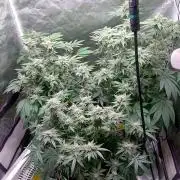
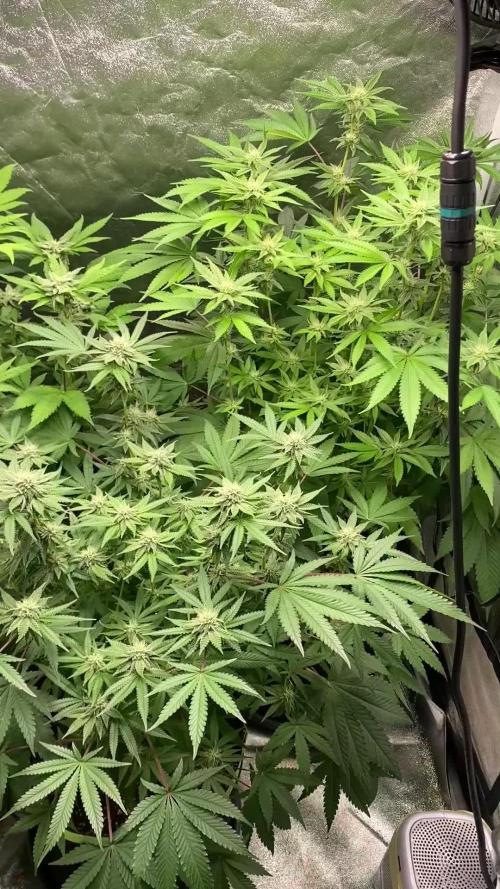
À la jamaïquain les poto la Good weed en gwadalouper toum toum visiteurs regarder la bonne




@Njanne
Follow
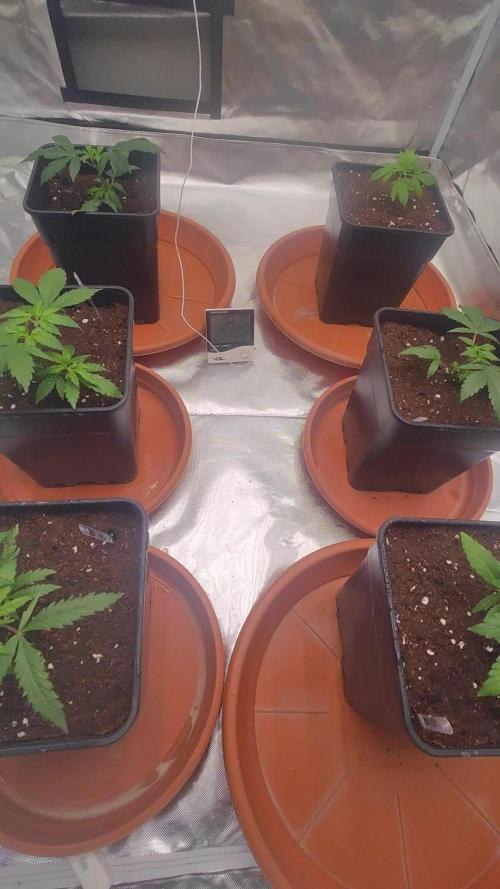
Here is a video tour of my back yard jungle. I am in the process of a huge clean-up now that the plants are ripening up and the buds are getting heavy. I'll post some photos tomorrow once the work is done. Some of the fan leaves are coming down now to promote light penetration and air circulation... don't want mildew.


@Chrisandweed
Follow
Poda apical hecha y brotes y hojas que no pintan na, fuera, a crecer 4 brotes con fuerza, que de estos sacaremos 8 y así sucesivamente.
La estructura que va teniendo esta planta está genial, se la ve muy sana.
Edito domingo 22/02: cambio de armario, de luces y de maceta.
El armario es la leche, se nota la calidad joder jajajajajaja es de la marca Vevor, poco conocida de momento... Pero dadle tiempo, uso también su extractor y de verdad que funciona de lujo y muy silencioso.
Las luces las tengo a 300W ya que es lo minimo pero bastante alejadas, a unos 40/50 cm. Les llega una media de 11,12k de ppfd.
Y lo dicho, trasplantadas a maceta todas.


@eldruida_lamota
Follow
Vamos familia con la octava semana de vida y cuarta semana de floración de estás Cereal Milk de RoyalQueenSeeds.
La temperatura está en 25 y la humedad actualmente está en 50%.
La cantidad de agua cada 48h entre riegos no cambia, y por supuesto controlando el Ph entre riegos alrededor de 6.5 - 6.2.
Ya se ven bien sanas estas 5 cereal milk, tienen un color y una salud espectacular, vemos como siguen progresando y van formándose las flores estas próximas semanas.
Mars hydro:
Code discount: EL420
https://www.mars-hydro.com/
Agrobeta:
https://www.agrobeta.com/agrobetatiendaonline/36-abonos-canamo
Hasta aquí todo, Buenos humos 💨💨💨
shorts_status_processing


@Grower_Zuko
Follow
This week I kept low stress training the ladies.
Am watering them approximately every 4 days.
As you can see they are doing mighty fine.
Gorilla (front left) is getting really bushy.
Solomatic (front right) is looking nice, but small.
Stress killer (back) has recovered and is stretching.


@Elpicor
Follow
To get higher temperatures I placed the growbox near the radiator, dimmer still at 25%, boiled tap water also this week, this guaranteed me an ideal for the beginning, from now on I will use mountain water which will allow me to use less fertilizer.


@eldruida_lamota
Follow
Familia, vamos actualizar la segunda semana de estas Zkittalicious de Exotic seeds.
Van formándose las flores , poco a poco iremos viendo este progreso.
Se las ve bien sanas , van con buen ritmo y aun haciendo defoliación de bajo siguen formándose .
Tengo muchas ganas de ver los resultados de esta variedad leí buenas reseñas de ella.
Agrobeta:
https://www.agrobeta.com/agrobetatiendaonline/36-abonos-canamo
Mars hydro:
Code discount: EL420
https://www.mars-hydro.com/
Las maximas de temperatura no superan los 26 grados y las mínimas no bajan 20, así que no me puedo quejar.
Los niveles de humedad también son los correctos van entre 50%/65% de humedad relativa.
Por supuesto el Ph lo estamos dejando alrededor de 6.
Hasta aquí es todo, buenos humos 💨💨💨


@Jays_Not_Here_Man
Follow
This is a great strain from a great seed company in Canada, 34 street seeds. I have had great results from germination to harvest with their strains and these Cookies are no different. Nice tight nugs, some great tasting hard hitting smoke 💨
They grew easily enough, no disease or weirdness that couldn’t be solved by proper NPK. This would be a great strain for beginners looking for an easy harvest, with some good bud to show. I definitely did not maximize the potential of this strain this go around, but I still have 2 seeds from the 5 and it will make it back to my garden again. ❤️🇨🇦😎💨


@RivenWaters
Follow
Girls are starting to flower, we’re on a 12/12 light schedule now, I let the girls dry out at the beginning of the week. I’ve been watering them with 1/2 gal per day per 5 gal pot. Will start checking soil and weight twice a day now that they are flowering


@BB_UK
Follow
Well these beauties are stood at a whopping 42" and are now working on their flowers in full effect! I'm quite sure at this point all these clones are the same strain of sugar bomb punch 😁 so ending up with the favourite in their! She reminds me of runtz muffin because of the orange punch in her genetics!


