The Grow Awards 2026 🏆
Likes
Comments
Share
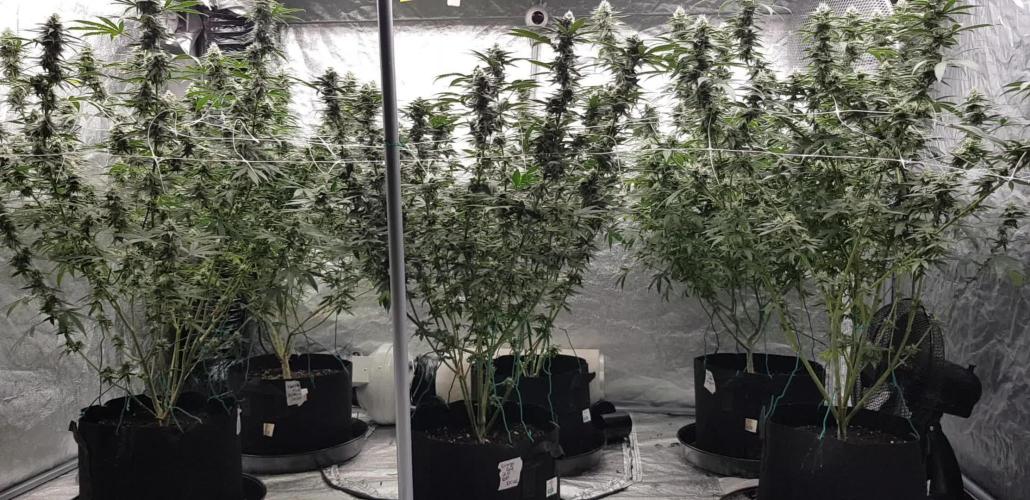
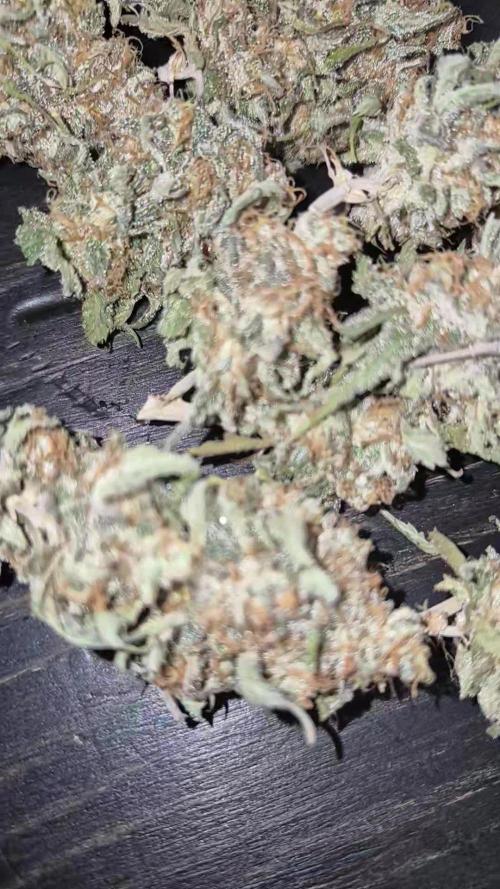
Gracias al equipo de Kannabia Seed y XpertNutrients, sin ellos esta magia no seria posible. 🍁💐 Runtz (Auto): Si esta cepa se ha ganado su popularidad a pulso, esta versión autofloreciente es digna heredera de sus atributos. No es de extrañar que nuestros criadores hayan acertado con su programa de reproducción, al combinar dos de las cepas más fascinantes de la actualidad: Zkittlez y Gelato. planta resistente y robusta, de cuerpo esbelto y fuerte ramificación lateral, que se puede cultivar prácticamente en cualquier entorno; pero prefiere los veranos largos y cálidos, tal y como quiere la madre naturaleza, donde bañada por el sol se eleva hasta los 120 cm. para producir unos rendimientos muy gratificantes de 100-150 gramos por planta. En interior, y tras solo 70 días desde la semilla, también recompensará con cosechas abundantes de hasta 500 gr./m² Inmediatamente después de encontrarte con ella, lo primero que notarás es su aroma descaradamente afrutado, con un toque tropical cortado con reminiscencias terrosas y amaderadas, que se entremezclan de forma agradable para ofrecer un combo que hace salivar las papilas gustativas. Ofrece un sabor confitado, refrescante y similar a sumergirse en una piscina de frutas cítricas y flores de fragancia intensa. Al inhalar, obtienes la bondad de la dulzura; al exhalar, el humo se convierte en suave y cremoso, dejando suficiente profundidad en cada bocanada para satisfacer a aquellos que buscan los matices más complejos. ⛽ XpertNutrients: es una empresa especializada en la producción y comercialización de fertilizantes líquidos 🍶y sustratos🐛, que garantizan los mejores resultados y cosechas de la más alta calidad. A través de una cuidadosa selección de materias primas y un proceso de producción avanzado, sus productos son sinónimo de resultados confiables. 🛒 Consigue aqui tus fertilizantes: https://xpertnutrients.com/es/sobre-nosotros/#:~:text=Xpert%20Nutrients%20es%20una%20empresa,de%20la%20m%C3%A1s%20alta%20calidad. 📆 Semana 13: Gran semana aunque algo tarde, los cogollos siguen engordando y aparecen nuevas flores, ella sigue cargada de resina y su aroma citrico y dulce es celestial . Aplico una dosis de nutrientes y agua hasta el corte

Likes
29
Share
@BigDaddyK
Follow
Totally surprised by the height and density , I’ve never had such a small plant yield so much , the smell is just fantastic , it’s VERYSTRONG - I cant smoke this in morning .. pros = very strong , relaxing , suitable for lower heights , consistent Cons = VERY SMELLY , takes longer to finish
Likes
33
Share
@BADKUSS
Follow
Hello everyone, the plants are still very good, no deficiencies in sight and canopee rather homogeneous. the stretch is soon over and I'm going to be able to stop the growing fertilizer, for which is knitting, I finished and let nature now play ... Now place to photos ...
Likes
4
Share
*English below* La planta está terminando su sexado, comenzando flora, día 2. El stretching fue una locura, de una planta de 70 cm (que use la mitad para hacer esquejes), en solo 15 días crecio arriba de 1.5 m. La primavera en buenos aires acompaño con un clima perfecto los últimos dos meses. La planta tuvo 70 días de vegetativo. 2 day blooming, the stretching was massive, the plant was 75cm and now it's more than the double of that size. Half of the plant was used for clons, so in 15 days of stretching, 35 cm of plant became this.
Likes
5
Share
5/12/2024 happy Mother’s Day to all the ladies and buds 5/15 super frosty sugar leaves. I can visually see them standing, that they are so tall 5/18 end of week 4
Likes
31
Share
Hello Ladies and Gentlemen😎 So my grow is coming closer to an end and so far it has not been so bad for a winter grow. As of 3 days ago I completed the partial harvests to the LSD-25, Gorilla Cookies and the Girl Scout Cookies. The late blooming Gorilla Glue will go for another 2-3 weeks and the six shooter should get the chop next week marking 13 weeks since breaking ground. I trimmed some of the 1st half of the partial harvest last night and the Gorilla Cookies seemed to have preformed well with nice sticky dense buds. I hope you all enjoy the diary entry and happy growing ✌️🏼
Likes
6
Share
no hermies or nanas so that's something to be happy about especially for me as I always seem to f***k things up in the flowering stage lol, looking forward to trying this strain shortly
Likes
37
Share
Hello Growers and Tokers! 👋 👩‍🌾 🧑‍🌾.🔥💨 Pretty good week. She's grown a full 10cm this week, new growth is coming up. She's mainly still filling in space but still stretching. I'm impressed how fat her stalk is getting and her stems are quite strong, no need for support yet. 💪 I noticed that she is drinking really fast and was a bit limp some days. So I increased the amount of water a lot this week total of 600ml. So far I'm constantly adding a little bit more every feed. Currently feeding 1,5L each, every other day. Will be increasing as they ask for more. How do they ask for more? When feeding if the soil is drier than normal I give a 150-200ml increment of water. I do that until they stop feeding so much then i just maintain that amount. I start reducing if it takes longer to dry. That works good for me. The old finger in the dirt trick. 👍 Nothing like knowing exactly what your ladies need first hand. No particular smell yet. Buds are just starting to form. Stay tuned for next week's update. Take care and stay safe! One love!
Likes
47
Share
2nd net is up. Early bud formations are promising. holding up to the extremes pretty well, some leaves taking minor damage, but overall, she is holding up, gave her 1 night at 50F see how she would react, stressful. Not advised as it messes with her metabolism, but I want to see if it triggers any anthocyanin response. Love to see her purp up but no signs yet. Remember, For every molecule of glucose produced during photosynthesis, a plant needs to split six molecules of water. This process provides the hydrogen needed for synthesizing glucose and other organic compounds, while oxygen is released as a byproduct. Homework. If Rubisco activity is impaired and it cannot properly function or regenerate its substrate, the plant's leaves are likely to turn a pale green or lime green, a condition known as chlorosis. Essentially, Rubisco activity is highly regulated and susceptible to various environmental and metabolic factors that can cause it to become inhibited, leading to an apparent failure in RuBP regeneration due to a lack of consumption. Rubisco regeneration is intrinsically linked to nitrogen supply because Rubisco is a major sink for nitrogen in plants, typically accounting for 15% to over 25% of total leaf nitrogen. The regeneration phase itself consumes nitrogen through the synthesis of the Rubisco enzyme and associated proteins (like Rubisco activase), and overall nitrogen status heavily influences the efficiency of RuBP regeneration. RuBisCO is a very large enzyme that constitutes a significant proportion (up to 50%) of leaf soluble protein and requires large investments in nitrogen. Insufficient nitrogen supply limits the plant's ability to produce adequate amounts of RuBisCO, thereby limiting the overall capacity for photosynthesis and carbon fixation. Maintaining the optimal, slightly alkaline pH is crucial for the proper function and regeneration of Rubisco. Deviations in either direction (too high or too low) disrupt the enzyme's structure, activation state, and interaction with its substrates, leading to decreased activity and impaired RuBP regeneration. (Lime/yellowing) Structural Component: Nitrogen is an essential building block for all proteins, and the sheer abundance of the Rubisco protein makes it the single largest storage of nitrogen in the leaf. Synthesis and Activity: Adequate nitrogen supply is crucial for the synthesis and maintenance of sufficient Rubisco enzyme and Rubisco activase (Rca), the regulatory protein responsible for maintaining Rubisco's active state. Nitrogen deficiency leads to a decrease in the content and activity of both Rubisco and Rca, which in turn limits the maximum carboxylation rate, Vmax, and the rate of RuBP regeneration Jmax, thus reducing overall photosynthetic capacity. Nitrogen Storage and Remobilization: Rubisco can act as a temporary nitrogen storage protein, which is degraded to remobilize nitrogen to other growing parts of the plant, especially under conditions of nitrogen deficiency or senescence. Nitrogen Use Efficiency (NUE): The allocation of nitrogen to Rubisco is a key determinant of a plant's photosynthetic nitrogen use efficiency (PNUE). In high-nitrogen conditions, plants may accumulate a surplus of Rubisco, which may not be fully activated, leading to a lower PNUE. Optimizing the amount and activity of Rubisco relative to nitrogen availability is a target for improving crop NUE. Photorespiration and Nitrogen Metabolism: Nitrogen metabolism is also linked to the photorespiration pathway (which competes with carboxylation at the Rubisco active site), particularly in the reassimilation of ammonia released during the process. To increase RuBisCO regeneration, which refers to the process of forming the CO2 acceptor molecule Ribulose-1,5-bisphosphate (RuBP) during photosynthesis, the primary methods involve optimizing the levels and activity of Rubisco activase (Rca) and enhancing the performance of other Calvin-Benson-Bassham (CBB) cycle enzymes. Biochemical and Environmental Approaches: Optimize Rubisco Activase (Rca) activity: Rca is a crucial chaperone protein that removes inhibitory sugar phosphates, such as CA1P (2-carboxy-D-arabinitol 1-phosphate), from the Rubisco active site, thus maintaining its catalytic competence. •Ensure optimal light conditions: Rca is light-activated via the chloroplast's redox status. Adequate light intensity ensures Rca can effectively maintain Rubisco in its active, carbamylated state. •Maintain optimal temperature: Rca is highly temperature-sensitive and can become unstable at moderately high temperatures (e.g., above 35°C/95F° in many C3 plants), which decreases its ability to activate Rubisco. Maintaining temperatures within the optimal range for a specific plant species is important. •Optimize Mg2+ concentration: Mg2+ is a key cofactor for both Rubisco carbamylation and Rca activity. In the light, Mg2+ concentration in the chloroplast stroma increases, promoting activation. •Manage ATP/ADP ratio: Rca activity depends on ATP hydrolysis and is inhibited by ADP. Conditions that maintain a high ATP/ADP ratio in the chloroplast stroma favor Rca activity. Enhance Calvin-Benson-Bassham (CBB) cycle enzyme activity: The overall rate of RuBP regeneration can be limited by other enzymes in the cycle. •Increase SBPase activity: Sedoheptulose-1,7-bisphosphatase (SBPase) is a key regulatory enzyme in the regeneration pathway, and increasing its activity can enhance RuBP regeneration and overall photosynthesis. •Optimize other enzymes: Overexpression of other CBB cycle enzymes such as fructose-1,6-bisphosphate aldolase (FBA) and triose phosphate isomerase (TPI) can also help to balance the metabolic flux and improve RuBP regeneration capacity. Magnesium ions, Mg2+, are specifically required for Rubisco activation because the cation plays a critical structural and chemical role in forming the active site: A specific lysine residue in the active site must be carbamylated by a CO2 molecule to activate the enzyme. The resulting negatively charged carbamyl group then facilitates the binding of the positively charged Mg2+ion. While other divalent metal ions like Mn2+ can bind to Rubisco, they alter the enzyme's substrate specificity and lead to dramatically lower activity or a higher rate of the non-productive oxygenation reaction compared to Mg2+, making them biologically unfavorable in the context of efficient carbon fixation. The concentration of Mg2+ in the chloroplast stroma naturally increases in the light due to ion potential balancing during ATP synthesis, providing a physiological mechanism to ensure the enzyme is activated when photosynthesis is possible. At the center of the porphyrin ring, nestled within its nitrogen atoms, is a Magnesium ion (Mg2+). This magnesium ion is crucial for the function of chlorophyll, and without it, the pigment cannot effectively capture and transfer light energy. Mg acts as a cofactor: Mg2+ binds to Rubisco after an activator CO2 molecule, forming a catalytically competent complex (Enzyme-CO2-Mg2+). High light + CO2) increases demand: Under high light (60 DLI is a very high intensity, potentially saturating) and high CO2, the plant's capacity for photosynthesis is high, and thus the demand for activated Rubisco and the necessary Mg2+ cofactor increases. Mg deficiency becomes limiting: If Mg2+ is deficient under these conditions, the higher levels of Rubisco and Rubisco activase produced cannot be fully activated, leading to lower photosynthetic rates and potential photo-oxidative damage. Optimal range: Studies show that adequate Mg2+ application can enhance Rubisco activation and stabilize net photosynthetic rates under stress conditions, but the required concentration is specific to the experimental setup. Monitoring is key: The most effective approach in a controlled environment is to monitor the plant's physiological responses e.g., leaf Mg2+ concentration, photosynthetic rate, Rubisco activation state, and adjust the nutrient solution/fertilizer to maintain adequate levels, rather than supplementing a fixed "extra" amount. In practice, this means ensuring that Mg2+ is not a limiting factor in the plant's standard nutrient solution when pushing the limits with high light and CO2. Applying Mg2+ through foliar spray is beneficial to Rubisco regeneration, particularly in alleviating the negative effects of magnesium (Mg) deficiency and high-temperature stress (HTS). While Mg can be leached from soil, within the plant it is considered a mobile nutrient, particularly in the phloem. Foliar-applied Mg is quickly absorbed by the leaves and can be translocate to other plant parts, including new growth and sink organs. Foliar application of: NATURES VERY OWN MgSO4 @ 15.0g L-1 in a spray bottle. For those high-intensity workouts when 1 meal a day is just not enough! Foliar sprays are often recommended as a rapid rescue measure for existing deficiencies or as a supplement during critical growth stages, when demand for Mg is high. Application in the early morning or late evening can improve absorption and prevent leaf burn. The plant was getting a little limey yellow in the centre. Shortly thereafter, she was back in business, green mostly regenerated. The starting point [of creativity] is curiosity: pondering why the default exists in the first place. We’re driven to question defaults when we experience vuja de, the opposite of déjà vu. Déjà vu occurs when we encounter something new, but it feels as if we’ve seen it before. Vuja de is the reverse—we face something familiar, but we see it with a fresh perspective that enables us to gain new insights into old problems. Confidence is evidence... nothing more. You are confident because you have driven 10,000 times, you are confident because you have spoken 10,000 times. People think confidence is a feeling, but it's not. If you want more confidence, then you need to create evidence, take more shots, collect more data, build more experiences, take more risks; fail, confidence doesn't come first; it is the reward you get for doing the work. no one else wants to do.
Likes
25
Share
HEAVY 🌲 🍼Greenhouse Feeding BioGrow ⛺️MARSHYDRO The ⛺️ has a small door 🚪 on the sides which is useful for mid section groom room work. 🤩 ☀️ by VIPARSPECTRA (models: P2000 & XS 2000)
Likes
29
Share
@Libanese
Follow
I switched the timer on 12/12, i will do not defoliation for 2-3 days and after i will do it, no too massive but i want have as much light i can in the second bloom week. Half week: I modified the layout of grow room, I putted the vertical net behind the tube to earn more space for plants. End week: I did the first of the last 3 defoliation . The plants has a lot of shoots, it hard to arrive to cut the 3 plants on the back, i decided to cut only the leaves and try to have more shoots possible
Likes
11
Share
Let’s Go Day 47 of 🌺!! These girls are looking so amazing for the most part , on the other hand we got a lil bit of a deficiency on one of the Dirtyblondes, hopefully it’s not too much to worry about so probably gonna go ahead an start flush on the 2 Dirtyblondes and one of the pre98 s this weekend cause they are looking pretty close to being done, hopefully they should be fine! I hope you all enjoy an have an amazing productive day as well as a great upcoming weekend! peace love an positive vibes to all y’all Cheers 😶‍🌫️💨💨💨💨💨🤙🏻
Likes
3
Share
Likes
17
Share
March 15- 22nd: Weather was sunny and overcast throughout the week causing minor stress to 3BOG. Overall she stood strong and next watering cycle I plan to use Atami Bloombastic to produce her bigger yields and more aroma/ terpenes. No special techniques. Still windowsill grown.
Processing
Likes
12
Share
@GrowGuy97
Follow
Day 35 - Ladies are way taller than I could have ever imagined & starting to get extremely dark pruple😍 make sure to check back for daily updates & happy growing friends✌️🏼🌱
Likes
16
Share
@Naujas
Follow
From today, the girl is turning 12-12:) she is really different from the ones I have already had to grow:) she is small, but has quite a lot of branches, weak, and I cut off the hidden branches so as not to save the plant's energy in vain:) beautiful girl looks healthy, drinks 3 liters every second day :) good luck to everyone:).
Likes
77
Share
@Krisis
Follow
03/10/25. Start week 2 flower or day 8 Again…going with these definitely are based off candy and not size. She’s stretched 8 inches already. Her sister, Mellow yellow, is the same height. As usual she’s still yellow lol. Both seem to be more shy than their friends about showing some buds. Lots of white hairs sprouting all over. I’m sure they’ll be showing up any time now. These things are so bushy and leafy they almost look like some kinda big plant that you’d just see near some piece of art in the corner of your house. Anyhow, they’re drinking a gallon and a half about every 4 days. Usually feed every other water but these were getting a bit of spots around leaf edges.. that I’m thinking is potassium deficiency. So, didn’t skip feeding and actually increasing by going early with green sensation at half dose. The bottle says 4 weeks and up, but if they’re lacking, what can it hurt? I’ve increased light intensity to about 75% and they’re currently 13 inches from it. Going to raise it up some in the morning, as this seems a bit close for the moment. That about covers it for now. ✌️✌️