


Likes
Comments
Share


@Sickone
Follow
Ab geht es in die nächste Woche!
Auf Empfehlung habe ich BioBizz Alga Mic Und Acti Vera zu meinen Plan hinzugefügt um die Ladys etwas zu retten.
Zusätzlich habe ich der Lady etwas unter die Arme gegriffen indem ich alle vertrockneten Blätter entfernt habe.
Ich lasse mich mal überraschen wie sie sich auf den letzten Metern machen.

Likes
27
Share


@Mr_weed_pt
Follow
Last day of light today next 2days will be of darkness and then I will harvest all plants. They are looking good and strong smell . Cheese buds are hard as rocks and the ogkush smell sting diesel smell. Very happy with this grow..

Likes
68
Share


@I_and_I
Follow
I had fun with this barneys gorilla zkittlez, although it seems like it was ready around 7 weeks, its as if the plant has been in the early stages of self seeding when I've harvested on day 54~ of flower.. Can't think any other reason why this would've happened
Anyway overall the bud is 95% amazing, just a slight sadness at the miniscule seeds forming close to the stems in the centre of some buds that takes away from the taste a little

Likes
10
Share


@MichaelMan
Follow
At the end plants didn’t drink anymore. Don’t know why.
Im very pleased with the results. Expected about 200g but got way more.
Grow went well. Exept I should have ordered scrog et way before bc when it arrived it was too late and i couldnt train them anymore.

Likes
15
Share


@Jan1512
Follow
Ich habe mich mal mit LST probiert. Habe es einfach mal aus dem Bauch heraus gemacht. Ist bestimmt nicht optimal aber es gibt ja immer Luft nach oben ;)

Likes
15
Share

@GoodTimesOrganics
Follow
Welcome Back!💚
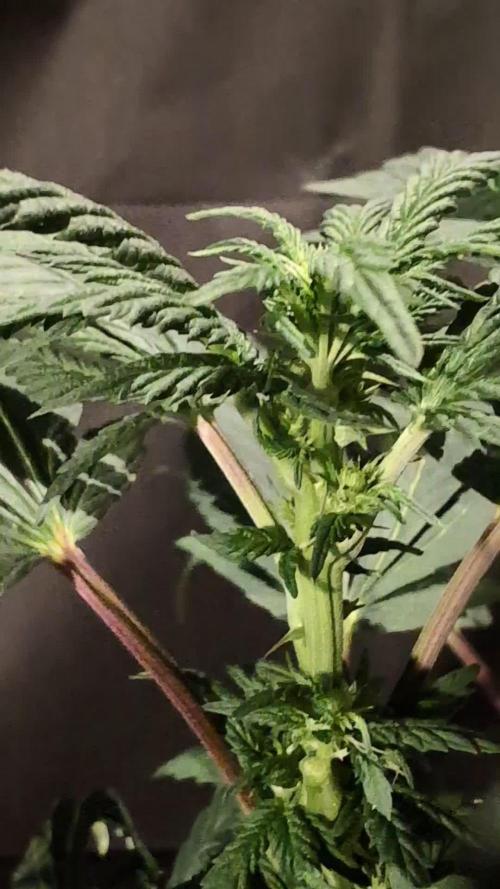
Nach der zeiten Blütewoche sieht man allmählich die Blüten/Stigmenansätzen.
Ich bin mir noch nicht sicher ob auch männliche Polenansätze zu sehen sind.
Sollte dass der Fall sein wird mein besonderer Freak leider dass zeitliche segnen müssen.
Ansonsten habe ich die Pflanze nun Mal stark ausgedünnt, damit die besser gewachsenen Triebe besser beleuchtet werden.
Die Struktur der Pflanze ist sehr knotig und fest.
Sie ist bisher echt der krasseste LowGainer, den ich seit ich Growe gesehen hab.
Mal schauen ob die Pflanze in der Blüte noch was reißt 😁
🙈
Die Umgebungsgegebenheiten sind top:
—————
🌞 Temp: 23°C
🌚 Temp: 18°C bis 19°C
💨 RH: 51%
VPD: 1,05 kPa
😎 PPfD: 630 mqm
—————
Viele Grüße 👋
Likes
14
Share

@benmcintosh
Follow
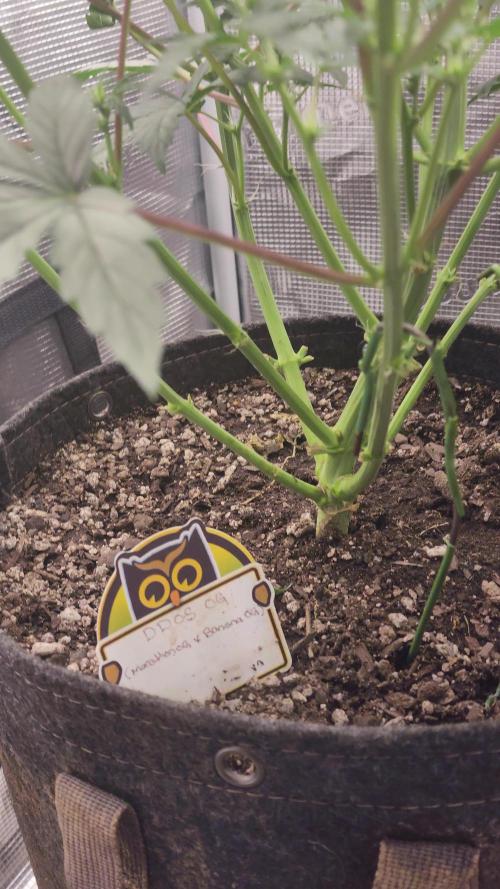
The girls are starting the stretch. Did alot of defoliation, and lst. Got net put up and canopy evened out. The trop pop is on day 35 and other 2 are on day 31. Got my light set at around 650ppfd withba DLI around 40
Likes
5
Share


@GrowinMyOwn
Follow
I like my grows to be simple, clean and efficient. The Mars 2000 plus RQS top-shelf genetics, combined with the super-simple RQS organic "Easy" line of nutes is making this beautiful grow! 6 strains, 6 healthy, thriving girls. I intentionally set 2 seeds at 3-4 intervals so I can rotate air space and have 2 harvested every 4 weeks.
The organic Easy line of nutes is simple to use, clean, organic and delivers lush, healthy growth. No more mixing liquids. I feed sparingly but always give cal/mag with all waterings/feedings. I pH down water ONLY at the beginning (before feeding starts) or in between if pH runs high and I won't be feeding within 2-3 days. Feeding drops pH in coco and as nutes are consumed pH rises back to coco's neutral 7.0. Simple. I rarely water "till runoff". Lighter feedings mean less buildup. Clean. Abundant, tasty, smooth harvests is my goal and this combo delivers! I'm still enjoying last Fall's harvest of Green Gelato 😎


Likes
34
Share


@AshBrand
Follow
12/22/21 - The plants look great! We have taken some fan leaves off. Keeping the airflow moving to avoid any powdery mildew. We are going to make topical salve with trim and popcorn nugs. We usually make butter for edibles but we’ll try something new.
12/23/21 - They look really good. Today we have fresh water for a semi flush. We will begin with nutrients and then flush 10 days before harvest.
12/24/21 - The humidity is finally on our side, ranging between 40-50%. We are very happy and excited as the buds continue to grow!
12/25/21 - Merry Christmas! The plants look great! Lots of neat colors in there. Each strain is showing off its own color. Check out todays pictures.
12/26/21 - They look really good today. Humidity is at 45%. Harvest is coming up pretty quick and we are excited.
12/27/21 - Looking good today. Just feeding them and letting them flower away. The buds are getting pretty big and dense.
12/28/21 - They look insane. Going to feed them the last of the nutrients listed above and next week start plain water/flush until harvest. Check out the two videos above!


Likes
Comments
Share
@GoodTimesOrganics
Follow
Hi liebe Community and Welcome back! 💚
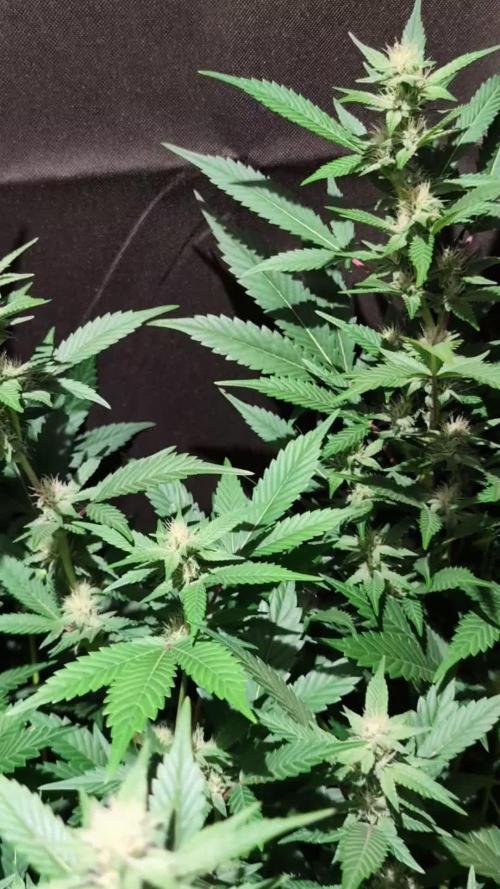
Ein schönes Wuchsbild verreint mit einem doch unterschätzen Stretch! Die Pflanze hat innerhalb der letzten 3 Wochen einen starken Stretch von knappen 23 cm hingelegt.
Das bedeutet, das die Diesel Sativa Gene jetzt voll durchgeschlagen haben.
Nach dieser Woche kommt der Stretch jedoch zur Ruhe und Mann sieht der Pflanze an, das sie sich jetzt auf die Blütenbildung konzentriert.
Die Trichome fangen an zu sprießen und ein säuerlicher Geruch sticht langsam hervor, so wie es gewünscht ist.
Auch die Blattform wird an den oberen Trieben immer schlanker.
Die Blütentriebe bilden sich immer stärker aus und die Stigmen fangen richtig an zu sprießen.
Bei diesem Genotypen, ist das Wuchsverhalten weitgehend ähnlich, nur die Hauptwuchsphase war mit etwas kürzeren Internioden abständen geprägt.
Der Stängelabrieb duftet schon stark nach säuerlichen, dieselartigen Nuancen, mit einen etwas GMO typischen Aroma.
Die Wachstumsbedingungen im Growzelt sind aktuell wieder super!
———————
🌞 Temp: 22°C
🌚 Temp: 20 °C
💨 RH: 53%
VPD: 0,91 kPa
😎PPFD: 830 mqm
———————
Stay Tuned! 💚
Likes
11
Share


@ButterfliesLittleFarm
Follow
Hello Diary,
Purple Lemonade has reached the end of its journey, its last week because I harvested it two days after taking the photo.
73 days since I put the seeds in the ground.
65 days since the start of the vegetation.
Really very fast, although that has somehow become the standard on my little "Farm".
But I am still fascinated by how quickly a plant goes through its cycle when it has the most ideal conditions.
I don't necessarily mean myself here, I try to give the plants the best I can and know how.
As you can see in the photos, the result is impressive.
The flowers are large and showy, the branches bend under their weight.
The main cola is especially noticeable because it is covered in flowers full of trichomes that create a frost effect.
The smell is very intense at this stage, the whole room smells like plants when I open the grow box.
Watering was standard, every three days.
This week I stopped adding nutrients, I just lower the p.H. to 6.0 and water the plants with clean water.
After taking the photo, it was in the grow box for two more days to drink all the water from the soil so that the drying would be more efficient.
Before cutting, I removed all the leaves from the plant to also make drying easier and have less work to trim the dried flowers.
But also to prevent the formation of potential mold.
After cutting, I left it upside down in the grow box to dry.
Now there is that last step to see how much Purple Lemonade really rewarded me. See you when that happens.
Here's what the last week looked like.
19/09/2024 - Day 57.
Watering.
I prepared 9 liters of water, lowered the pH to 6.0 and used that amount to water all three plants on the farm.
22/09/2024 - Day 60.
Watering.
I repeated the same procedure as three days earlier.
24/09/2024 - Day 62.
I watered them all with 1.5 liters of water each plant so that they were fresh for the photo shoot.
25/09/2024 - Day 63.
End of the last, 9th week since Purple Lemonade began its journey. Photo shoot.
27/09/2024 - Day 65.
Purple Lemonade has been harvested.
That's almost all from me for this diary, there is still the final report that follows after drying and testing.
Thank you all once again for your support and comments.
Processing
Likes
18
Share


@Manic
Follow
Beginning of week 5 and I finally started to LST the lady's. Had to give time for blueberrys recovery from getting FIMed lol. To be honest I'm gonna let them grow another week and transplant week 6 into there final pots. So this week will be the start of a very long and dedicated process of maintaing a good canopy. Overall I think flowering should be 3 weeks away. Not trying to have a monster harvest on my first go around. My focus is to just succeed at my first grow and be proud of my personal stash at the end of this awesome journey. I plan on starting a new grow after this one so I know what to expect and plan bigger and better, this is more of a test run to see if I can grow good weed indoors. So far so good.
Day 30- Topped Alaskan purple.
Likes
14
Share

@MrGrowDiarie
Follow
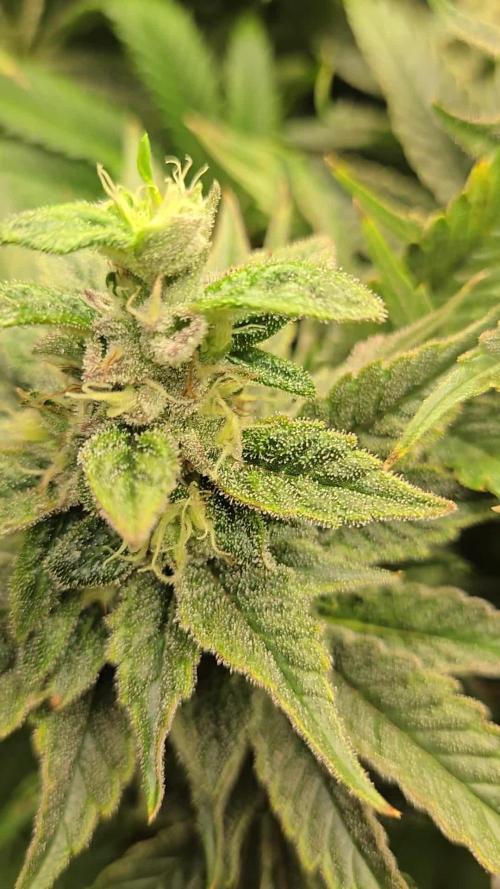
Day 120
On day 120, the plant appears to be in a very advanced stage of flowering, with large, dense clusters of buds forming across the entire canopy. The flowers are heavily coated with a thick layer of crystal-like trichomes, giving them a frosty and mature appearance. The leaves near the top remain mostly green, though some show subtle fading, while the lower leaves display more pronounced yellowing, creating a clear contrast between the upper and lower sections of the plant. The overall structure is wide and full, with many branches carrying well-developed buds. The environment’s reflective surfaces emphasize the size and texture of the flowers. The plant looks robust and visually mature, showing the typical signs of nearing the very end of its life cycle.

Likes
17
Share


@CG420
Follow
Tras una última semana de gran crecimiento al fin vimos las primeras preflores en algunas de las plantas en el día 12 ya todas tienen su pequeña bolita .
Ahora empezamos a suministrar top Candy y Green sensation junto a la base de floración alga Bloom .
Seguimos en ello 💪💚.
Likes
21
Share


@BlackDragon22
Follow
Day 52:
La mia adorabile cream cookies è entrata finalmente in fioritura, sicuramente avrò avuto qualche parametro sbagliato, ma sembra andare tutto bene anche questa settimana, tardiva ma comunque soddisfacente. Adesso nessun errore e si comincia a volare 😍💚
Likes
21
Share


@Hazeberg
Follow
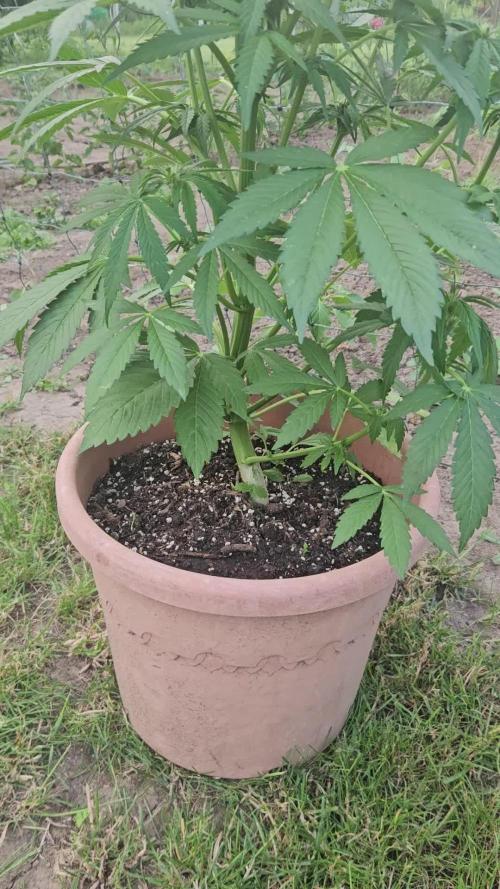
Day 57: Welcome to week 9. I defoliated a bit again. Nothin else to do today.
Day 58: Nothing to do today. This week I aim for a VPD of 1.1 kPa.
Day 59: Time to upgrade. The new AC Infinity S22 has arrived. Now there are 2 of them and both should support her pretty well. Let’s see, how she will finish.
Day 60: With the second light in the tent, the temperature is quite high and around 25° C and I was not able to get the humidity to 60 % because the fan was running to fast and I don't want to use a humidifier in the flowering phase. So I decided to raise the temperature and humidity max levels. Let's see, how she likes this and what the avg. VPD will be at the end of the week.
Day 61: Nothing to do today.
Day 62: I removed some fan leafs. Also I noticed some days before, that she needs a bit more nutrients, so I added a bit more today to the reservoir. Maybe she has a bit of light stress. 2 of the S22 and at the nearest point only 20 cm is maybe a bit too much. So I lowered them to 80%. I hope that helps in addition.
Day 63: Last day of the week. I hope lowering the LED to 80% helps her during the next week. It looks like light stress. Today I cleaned the reservoir and refilled it.
--------------------------------------------------------------
You also like to get some seeds from Fast Buds?
You like a 15% discount?
Just use the following code on your next order: CSYIJC
Happy growing
--------------------------------------------------------------
🙏 Thanks for visiting and follow for daily updates 🌱

Likes
1
Share


@MN-Frozen420
Follow
Day 49
about as high as its gonna get. starting to fill out buds. nice stacking.
Likes
8
Share


@Ambz_1990
Follow
I'm at the end of week 8! Just gave a feed of water and so on for the next week
Any advice on them but I know they're near. All trichomes are mostly milky, sugar leaves have amber on them but I'm not judging by