


Likes
Comments
Share


@Roberts
Follow
Divine indica is growing really well. She is definitely bulking up and getting frosty. She has a earthy smell coming from her. I am afraid to mess with her, she is growing so well. Don't fix what isn't broken is the saying I keep telling myself. She has had a minor nitrogen deficiency working it's way up from the bottom. I increase nitrogen a little, and added a lot more bloom nutrition. I am curious to see how much she bulks this week. There is nothing more to report. Thank you Spider Farmer, and Divine Seeds. 🤜🏻🤛🏻🌱🌱🌱
Thank you grow diaries community for the 👇likes👇, follows, comments, and subscriptions on my YouTube channel👇.
❄️🌱🍻 Happy Growing 🌱🌱🌱
https://youtube.com/channel/UCAhN7yRzWLpcaRHhMIQ7X4g

Processing
Likes
1
Share


@Mnmgrwer420
Follow
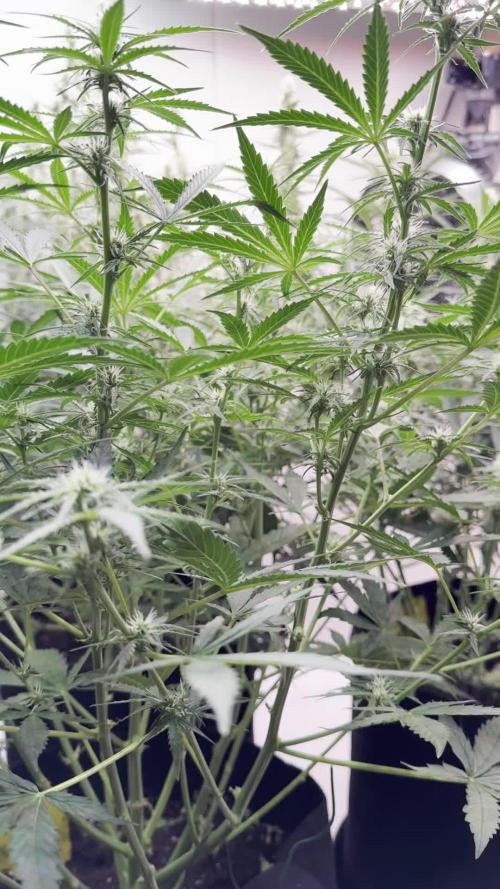
The ladies got new shoes today. The went from 3 gal to 5g. In this soil mix is based with nectar of the gods #4 soil with added mykos, azos, recharge, roots organics terp tea mix, potassium silicate, fresh worm castings.
Likes
22
Share

@Sundancers
Follow
Die Buds wirken kommpakter, größer und „fertiger“. Außerdem zeigt die Lady nun eine wunderschöne Farbentwicklung: Einige Blätter verfärben sich in Richtung Gelb-, Orange- und Lilatöne, was optisch fast wie ein Herbstwald wirkt und typisch für eine spätere Phase
Im Vergleich zur letzten Woche wirkt sie buschiger, voller und insgesamt homogener. Die Triebe bilden jetzt eine kleine „Blütensilhouette“, fast wie eine Miniatur-Stadt aus Türmchen.
Jetzt sieht sie stolz aus und zeigt, was sie kann. 🌿✨

Likes
Comments
Share

@Nickeluring
Follow
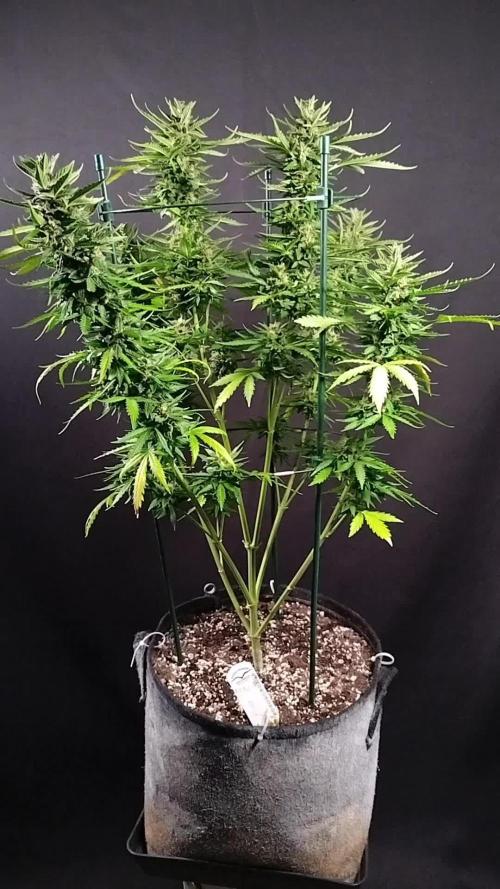
She is showing some unhappy leaves due to heat stress, but she looks fine anyway. The buds are developing beautifully and we have some nice long colas. I´ve added some support to help the branches keep the heavy buds up.

Likes
13
Share


@IQuSX
Follow
Hi, topman!
It’s 21 day from seeding, so this the third week!
They will be have a new 8 liters pot to next week.
Its now we added new booster - Bud Candy by Advanced Nutrients!
What is doing?
1. Carbohydrates nourish beneficial microbes, creating ideal conditions to expand the roots for ample yields. (C)
2. Magnesium supports optimal conditions for chlorophyll production that can increase photosynthetic ability. (C)
Also, adding to Advanced Nutrients of words: we are use it for of mushrooms and mikariza food adds.
See you…
…keep an eve on this!

Likes
14
Share


@BabaHase
Follow
Freu mich wenn das stinken ein Ende hat...
Habe inzwischen die ersten bernstein farbenden trichome entdeckt, denke das nächstes Wochenende die ernte ansteht 🤩

Processing
Likes
17
Share


@Silverback_Guerilla
Follow
1/21:
I rotated the edge plants and foliar fed with big bloom a few times today.
1/22:
I fed them about 3/4 gallon each after top-dressing their pots with a heaping tablespoon of happy frog cavern culture( bat and seabird guano). That will make some P and K available to them over the next 2 weeks as they begin to flower. Aside from that, I went with full strength veg nutes because I'm still seeing some yellowing and som cal-mag deficiencies. I also added some more liquid molasses. They're gonna need the energy as they start their stretch. I foliar fed a few times throughout the day with big bloom.
1/23:
EXPLOSIVE GROWTH last night...love it...everybody is stretching...pretty sure the 14/10 photoperiod is working!!
I foliar fed with big bloom a few times today.
1/24:
These girls all look to be very indica in leaf shape and are outpacing everything else in the garden.
1/25:
I tied down the main of the tallest one today, then watered with about a half-gallon each including cal-mag, humic acid, bembe, armor si, and signal.
1/26:
Damnit these bitches are gonna be a pain in my ass. They are growing so much faster than all the other plants., and if everybody else doesn't catch up in the next couple of days, I'll have no choice but to supercrop all their branches.
1/27:
That's it for week 5-

Likes
56
Share


@MrGrow
Follow
11.10.2022
130 giorni dalla germinazione al raccolto
70 giorni fioritura in totale
Pianta molto bella, sexy, 2 semi su 2 germinati con successo.
di due piante, ho avuto 2 fenotipi leggermente diversi, entrambe le piante mostrano una struttura ibrida tendenzialmente sativa,
con rami lunghi e boccioli densi e duri, ricoperti da tricomi. Ho laciato le piante crescere con un Lst applicato un po in ritardo, ma entrambe le
piante hanno reagito benissimo e formato delle belle chiome a cespuglio.
Profumo tendente al dolce, note di lavanda ed erbe aromatiche, una delle 2 in fase avanzata di fioritura profumava di ananas maturo, semplicemente uno spettacolo!
La resa sembra buona, le cime sono di ottima qualita, aggiornerò con peso tra poche settimane!


Likes
14
Share


@JustChillTHC
Follow
Week 3 - Pre-Flower
Good a little nuteburn I quess, this week only pH'd Water.
I think the Nuteburn is because I used Root Juice for a longer time then advertised, so yeah.

Likes
7
Share


@Car1bGrow
Follow
This week went well, cut, dried and I began to cure the second plant in potting soil. The third and final one is doing really well showing nice bud formation. Will let it go until the end of the month just to see if the buds will fatten.
Likes
Comments
Share

@soil2bud
Follow
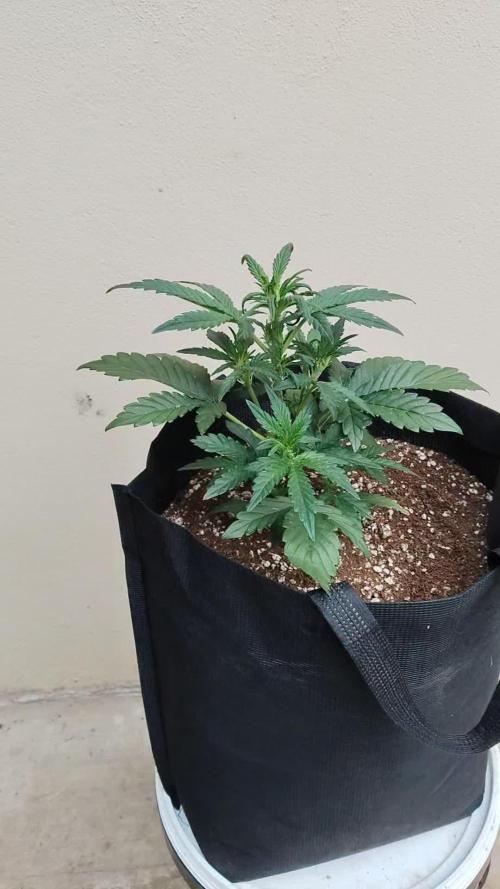
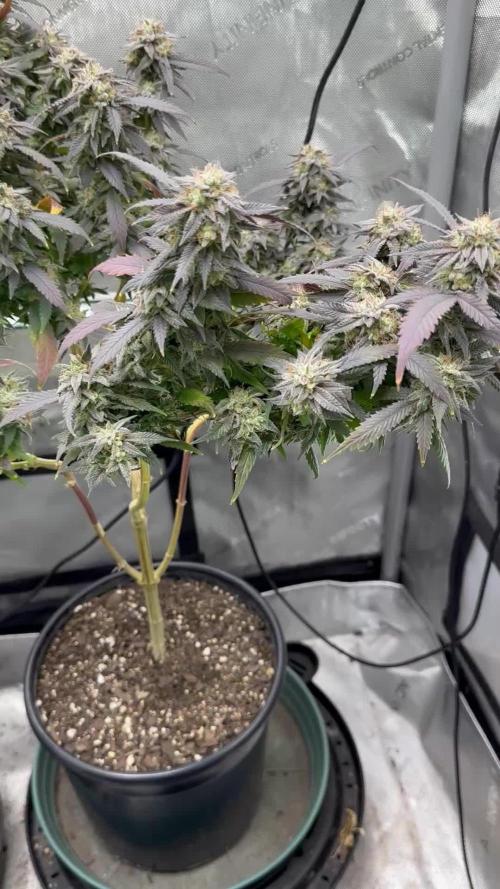
Oh my , things are moving along very quickly. The untrained one looks a bit lacking. The trained ones are doing great 👍 👍 👍

Likes
14
Share


@DrJoint
Follow
I was not expecting to harvest that much as she was a tiny and quite slow girl, but the final yeld was very good! It was exciting to grow and finally harvest this amazing strain :)


Likes
41
Share


@UnorthadoxDude
Follow
Hello and welcome to week three for Enigma.
Day 15: She is a bit sad today. I dropped her yesterday she took quite a jolt, and I think I overwatered her, so I upended her and waited until some drips came out, and then stuck a straw down to the bottom of the pot and blew air into the medium. She became a little less droopy within an hour of that, I am keeping an eye on her. It is going to be really hard to manage feeding her without over-watering her. I have certainly set myself a real challenge with this pot.
Day 16: Enigma is hungry but over hydrated. The only thing I can think to try is making a special extra-strong nutes just for her.
Day 18: Starting to find the balance of moisture. This is not easy at all.
Day 19: Decent bit of growth today. Overall this lady is showing strong signs of being severely restricted by the pot size. No training at all intended, let's just see what happens.
Day 20.5: She's perked up quite a bit since the photo. My extra strong nute regime seems to be paying off. She is maintaining a narrow form I am starting to wonder if roots act a bit like a cats whiskers? A cat's whiskers grow to the width of the cat's widest part... and they use them to know if they will fit through something. In observing these various cannabis plants, I am beginning to notice a correlation between plant width and pot width. This is bolstered by the evidence of transplanted plants rapidly stretching in width when introduced to a much wider pot.
If my working theory has any basis in reality then an optimal pot would be short and fat rather than tall and narrow. I am probably going to test this theory with some clones.
A second note of interest pertains to the quick shockingly rapid growth of both Misty and Nesia. These plants are even way ahead of where Citronella was, and I have been consistently delighted with Her Majesty. Is it simply starting them in bigger pots from seed? That has some impact I'm sure. Nevertheless I feel not enough impact to explain the massive difference. I think it's the nutes. Time for an admission, I have been being very lazy with the fertigation. I mix up 10l of nutes based on the stated dosages for the eldest plant (Karen)....and then I feed all of the plants with this even the ones that are much younger. So both Misty and Nesia got nutes for a plant in week 4 from seed and each week they increased. Could it be that the key to organic nutes in coco is to massively over-nute? Hmmmmmmmmmmm.
Day 21: Weekly summary: some problems early this week but corrected and she's much happier today.
Likes
43
Share


@TheCannaProphet
Follow
~ GG4 SHERBET FAST FLOWER by FastBuds ~
Well fam, here we go again with another epic strain from FastBuds Fast Flowering stable. After having such tremendous success growing their Gorilla Cookies Fast Flower outdoors last year, I've decided to run another of their fast flowering strains outdoors this year... GG4 Sherbet Fast Flower!
The best description of this awesome cultivar comes directly from my friends at FastBuds which is as follows:
"Bred from extremely potent and flavorful Gorilla Glue and Orange Sherbet genetics, GG4 Sherbet FF (Fast-Flowering) takes all the best traits to the next level, offering a high-yielding strain that can produce up to 600 g/m2 in a 7-week flowering time. This super resilient Indica-leaning hybrid thrives indoors and outdoors, and in all types of climates while producing mouth-watering sweet, fruity, spicy and earthy terps that translate into a delicious sugary hazelnut aroma. Expect an extremely relaxing and overall happy effect that’ll leave you with a huge smile from ear to ear. It’s the perfect strain for growers of all levels of experience seeking low-maintenance yet highly productive photoperiod varieties that deliver quality and quantity without extra effort.
GG4 Sherbet FF grows chunky buds with long dark orange hairs and spade-shaped calyxes that get encrusted with trichomes by harvest time, giving them a gorgeous silvery-white appearance. This medium-sized photoperiod can reach up to 200 cm in height and yields up to 650 g/m2 while developing that typical hybrid structure. GG4 Sherbet FF grows with a stocky, bushy appearance, developing one sturdy main cola and fat side branches that support huge yields without much effort. This super-fast variety produces distinctive light-green buds with a high bud-to-leaf ratio, making your trimming sessions a breeze. It’s a top-notch resin producer that doesn’t need much maintenance and will thrive in almost every climate, rewarding growers of all levels with extremely flavorful resin that makes for outstanding hash end extracts."
________________________________________________________________________________________________________________________________________________________________________________________________________________________________________________________________________________________________________________________
The Setup:
This is going to be an outdoor grow, but I have started the GG4 Sherbet Fast Flower indoors as our weather is still too cold to put her outside (nighttime temp's dipping regularly into the 30's℉).
The plan is simple... let her grow inside under a 19/5 light schedule until the nighttime temperatures stay above the mid 40's℉, at which point she'll be moved outside and transplanted into the soil which I have already setup and inoculated with beneficial microbes, and then let the fun begin!🤪💚
________________________________________________________________________________________________________________________________________________________________________________________________________________________________________________________________________________________________________________________
Weekly Updates:
9/4- Here we go into Week 6 of flower for this epic GG4 Sherbet Fast Flower from FastBuds and she is on fire!🔥 I'm praying that our weather stays cool and dry for as long as possible for this gorgeous lady!
9/6- I have switched my watering schedule to mornings now with the GG4 Sherbet Fast Flower, I want to do whatever I can to keep the nighttime moisture levels as low as possible in order to help prevent mold from forming on the flowers as they are huge and dense. I am also checking her trichomes every other day to try to dial in the ideal time to harvest her.
9/8- I'm continuing to water in the mornings on days that we do not get any substantial rain with well water via the garden hose. Today I went through the plant and removed as many old dead leaves as I could along with any shade leaves that were yellow.
9/10- I checked the GG4 Sherbet FF's trichomes today and they are getting very close, and I anticipate that she will be ready in the next few days!
There's another week of flowering done for the GG4 Sherbet Fast Flower and she is just about ready to be harvested which will, from the looks of her trichomes, will be in the next 4-5 days... I'm so excited!🤩
Likes
6
Share

@SecretHerb-Sanctuary
Follow
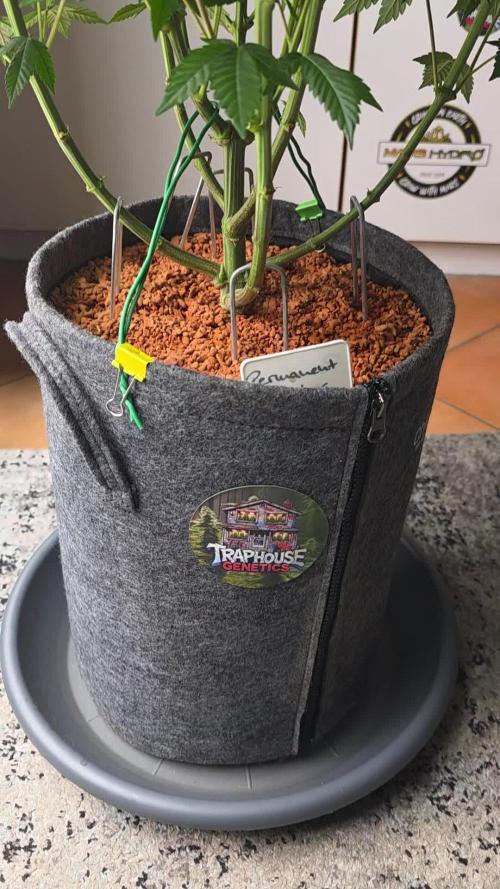
In der zweiten Blütewoche der Permanent Marker zeigt sich die fortschreitende Internodienelongation deutlich im Zelt, was der Pflanze zusätzliche vertikale Präsenz verschafft. Während das vegetative Strecken noch anhält, differenzieren sich an den Triebspitzen bereits die ersten floralen Cluster, die eine gleichmäßige generative Entwicklung über das gesamte Blätterdach einleiten. Dank der stabilen Strukturvorgabe durch das Training erfolgt der Übergang in die Blütenbildung äußerst homogen, was die exzellente Vitalität dieser Genetik unterstreicht.
Likes
15
Share


@Chubbs
Follow
420Fastbuds
FBT2313/Week1
Week 1 update on these new sprouts. Been a week since they sprouted and so far seems good. I did switch from misting the top soil with my sprayer to feeding 500ml of water and 1/4tsp/gal strength General Hydroponics Calimagic about every other day. Started seeing some rust spots so I'll keep a close eye and make sure it doesn't get any worse. Over all Happy Growing
Likes
5
Share


@dauntless
Follow
Week 4 starts Sunday July 17, 2022
Plants seem really nice and healthy. I really like Flora Nova, its a great product. 300ppm and the plants love it, even though the Gaia Green is in the mix, it seems to just love this combo, ever since I repotted with the amendments in the soil, and watered with Flora Nova Bloom (mix it crazy well before using) the plants just look really happy and green. It's not an organic product, maybe like 30% organic -- just like me haha.
I think by week's end we will be caught up and ready to intensify lights, threw the SF1000 in the tent finally for more light, but so far just keeping only the Phlizon white light full spectrum COBs on and the RB lights off, and not using the SF-1000 at all even though its mostly white. Despite what Phlizon says, the COBs are great during veg, the RB not so much. I like the COBs so much better than the smaller LEDs for veg.
July 19, 2022
Turned on the SF-1000 to 60% and measured light, I'm happy with it. I have another strain growing next to these and the extra light will help during flower as a side light but it will most likely hit the canopy too. The growth is vigorous right now. Added pics, today is day 28 since they were dropped into water
July 23, 2022
Tomorrow starts week 5, growth is super green, no funky yellow or leaf drama. Stalks are getting much thicker and stronger. Turned the lights up this week, added the 2nd COB, and temps are just fine! Who knew. Anyway, they look like they are very close to pre-flower. Added some tent mates for a future grow, check out the grow area vid. Maybe I forgot to mention added worm castings this week...
Likes
4
Share


@Rko41
Follow
Changement de box je passe sous cmh. Je dois laisser la box pour prochain run les plantes apprécie le cmh petite defo au passage!!!

Likes
3
Share


@agustinnnv
Follow
Buena semana para todos!! Esta planta también surgió de un esqueje que intercambié. Al momento de recibirlo tenia 1 mes de vida y lo pasé a una maceta "Air Pots" de 10L. Tuvo 40 días de vegetación en esta maceta, se le hizo podas apicales y Supercrooping para regular su altura. Al día de la fecha (29/5) lleva 17 días florando. Está hermosa. Calculo que en 3 semanas más estará para corte. Saludos y buenos humos.

Likes
14
Share


@danwho
Follow
9/15/2024
Stretch is moving along nicely. Only bummer is that the tops are crowding the light fixture and reducing the total light penetration. Working to keep the PPFD and DLI in a reasonable range and even across the canopy.
First day of week 3 bloom nutrients. Both plants are looking incredible and moving along nicely into flower. Working hard to keep Plant A from overcrowding plant B.
9/17/2024
Adjusting fan setup to promote better circulation around the tent. Continuing to move the light over plant A an inch at a time. Running out of room slowly and will likely be forced to supercrop. Added 40watt bar light over plant B to offset the take over from plant A.
9/21/2024
Discovered herm signs all over plant B during trimming. Decided to cull it to avoid issues with plant A. Going to work to tailor the tent setup to push plant A going forward. The empty bucket will remain in the tent but is disconnected from its feed line and return line to the reservoir.
Due to the herm in plant B, I left a lot more plant material on Plant A than I initially planned. With more room, it should hopefully bush out even more! Flower development on plant A is good with great stacking thus far. Still stretching, but slowing down. Any more stretch will require super cropping to avoid burning as I turn the lights up over the next two weeks, Planning to add lower lighting now with the additional space.