Likes
Comments
Share


@TechDCo
Follow
Week 3
15/06/2024
Lights On!
Switching to flower next week; maybe sooner!
16/06/2024
Lights On!
Time to get on the skateboard
June 16, 2024
The defoliated fan leaves. I'll just leave these here!
17/06/2024
Lights On!
I can't go any higher than 300watts in this small tent. I packed the sativa tent away.


Likes
3
Share


Likes
23
Share


@Antifame
Follow
My new babies from Divine Seeds have arrived. 🙏😇 I gave them a cozy new home.
Looking forward to seeing their little heads poke out. 😊
Boobies for scale. 😋
Origin:Afghanistan / Colombia / Canada
Type:Indica/ Sativa/ Ruderalis
Flowering:60-63 days
THC:25%
Harvest:800-1000 g/m2
Height:130-165 cm
Black Opium Day-Neutral is, generally speaking, a violet version of Opium. Its beauteous coloring comes from crossing Opium with a rare population of Colombian Sativa, both purple-colored and rich in THC. After numerous selection cycles, the result was stabilized to be now presented as Black Opium Auto-Feminized – a tremendously potent Indica with shocking resin production rate and delicious berry aroma. At present, this strain belongs to top most exotic Indica varieties in the world!
A perfect choice for professional growers, while beginners can recklessly enjoy handling these non-demanding vivid plants. Just as its older brother strain, Black Opium fits well for indoor growing as well as outdoor plantations, it has also shown amazingly rich productivity in green houses. With massive resin production and, consequently, aggressive stench, Black Opium marijuana can ward off most insect plants. Appropriate training methods are restricted to non-stress techniques such as LST or ScroG, which allow to multiply your yield almost by 1.5x sometimes. Dense colas, colorful and glistening with crystals are a rich source of extra-potent hasheesh with glamorous berry-like flavor.
Those seeking for extra-potent cannabis should definitely give Auto Black Opium a try! Traditionally such mighty Indica is regarded for solo-use, noticeably restricting users in communication and motion when taken in average portions. The impact of Black Opium smoke creates an immobilizing stone effect for 3 hours, often accompanied with psychological revelations, insight thinking and daydreaming with the feeling of quiet bliss in the background. A highly efficient painkiller and anti-spasmatic agent, eliminates nausea or stress, stimulates appetite and helps forget any trouble. More appropriate for night use.

Likes
124
Share


@Still_Smoq
Follow
📆 Week 11, 30 June - 6 July 2024
30 June - 6 July - Observed and let the plant grow.
📑 All is great with this little lady. She is entering her final week of flower, just before a flush. The smell is very strong, leaves are fading nicely, and buds have swollen. The pistils have turned brown and trichomes are almost at 10% amber. She is at her peek of ripeness.
🍶 nutrient solution not changed
🍽️ feeding schedule not updated
💧 Using reverse osmosis water with EC/TDS at 0
🔆 Light power at 50%, DLI 40 canopy coverage at 18hrs
😤 Using PYPABL, Air Pump, 400GPH
That is it for this week. Thanks for the look, read and stopping by.
Likes
4
Share


@CannaIGrow
Follow
This plant was the first of the 4 to come up, it also basically exploded out of the shell in the germination process. While she was still in water I could already see green leaves lol. She’s really plugging along. This is a cross made by a friend of mine and is the first time it’s being grown.
Likes
9
Share


Likes
5
Share


@Audacissimus
Follow
Hey all
On the 4th week, they are starting to show signs of flowering, next week will go full on bloom nut.
Didn't increase ppm this week because some yellow spots appeared on a few leafes and didn't want to risk overfert.
Thay are still adapting good to my low skill training 😂
Also added some wannabe artistic pictures, just because I love to spend time just watching them 😍


Processing
Likes
154
Share


@CBD_Sweden
Follow
@FAST_BUDS,
Hi all the happy people here in GrowDiaries.
This is my second cultivation ever and it will be fun to try a bigger space than my closet grow.
First, I'm just going to say I'm done with the construction of my new growroom.
I put some pictures on the construction here in week one.
The room is 2.14 meters by 1.7 meters and has a ceiling height of 2 meters.
It provides a floor area of 3.6 square meters.
I use a 54 Watt Lightwawe T5 for germination and 2 Pcs 400 Watt HPS lamps.
I have a channel fan that replaces the room air about 40 times an hour to get a comfortable environment in the room, the air enters a fresh air intake from the outside.
The air is purified through a carbon filter to then leave the room to the rest of the basement.
Then I use that heat to heat the rest of the basement.
I will use 8 pcs 15 liter Autopots to grow with and a 100 liter water tank that supplies the pots of water and nutrition.
I will grow completely organically in soil and will watercure my buds to get the best possible medicine for me.
But there are no cultivation rooms to be displayed here, so I continue with what is most important.
Today I have put my seeds in my moisture dome and hope the seeds have germinated within a few days.
I am very excited to see how the new growroom will work and how this new secret CBD plant from @FAST_BUDS, will turn out.
..............................................................................................................................................................................................................................................................................................................................................
Update 2017-08-15. Both seeds have germinated and planted in small pots inside the humidity dome.
I'm so glad it worked so well and now it's just hoping they'll start growing and become 2 big healthy girls :)
...............................................................................................................................................................................................................................................................................................................................................
Update 2017-08-16. I have mixed my own soil today. Its 40% sieved peat harrow H2-H4 0-30 mm, 45% sieved peat harrow H4-H6 0-30 mm. 5% sand and 10% of compost soil. And i use 15% of perlite and mix it all together.
....................................................................................................................................................................................................................................................................................................................................................
2017-08-21 The 2 sisters are doing great, Nr2 is a bit after Nr1 . Some new pics.
............................................................................................................................................................................................................................................................................................................................................................................
2017-08-23. Transplanted from humidity dome and the small germinating pots to 15 liter autopots.
................................................................................................................................................................................................................................................................................................................................................................................
2017-08-27. The girls have settled in to there new home of the 15 liters autopot after a little transplant chock. Now the real week 1 starts for me and the girls. 4 new pics.
---------------------------------------------------------------------------------------------------------------------------------------------------------------------------------------------------------
2017-08-29. New movie of the girls. Its no water for 3 days now so the roots develop more and match the plant above the soil. The temp controlled fan is awesome, its easy to set what temp you like to have in the room. Right now its 28 celcius. And humidity is 56%.
--------------------------------------------------------------------------------------------------------------------------------------------------------------------------------------------------------------------------------------------------
2017-08-29.
Hello to you who read my diary, I just want to say that I am pleased that you have chosen to check in with me and in my diary.
I just want to say that I do this for myself and for a steady flow of my medicine.
Everything you read and see in my diary is 100% honest and I will never distort or beautify anything here.
I document my crops so that I can learn from my mistakes and also to look back at those different crops.
I try to update with pictures every day and with text if something special has happened in the garden.
This is my strainhunt for the best medicine and the beginning of my journey with cannabis and the cultivation of it.
-----------------------------------------------------------------------------------------------------------------------------------------------------------------------
2017-08-30. Cleaned the room this morning, just vacuuming and cleaning with chlorine solution. Im testing the fan to control temp and humidity, it works great.
Added some pics with measurements and a movie. Everything is looking great right now.
-----------------------------------------------------------------------------------------------------------------------------------------------------------------------------
2017-08-31. New video of the girls.
-------------------------------------------------------------------------------------------------------------------------------------------------------------------------------
2017-09-01. New pics and videos. Gave each of the girls with 2 ml Alg-A-Mic, 4ml Bio-Grow, 4ml Bio-Heaven and 10 ml Formulex mixed in 2 liters of water.
I hope they like it :)
-------------------------------------------------------------------------------------------------------------------------------------------------------------------------------------------------------------------------------------------
2017-09-02. New pics and the girls liked the water and nutrients yesterday.
-----------------------------------------------------------------------------------------
2017-09-03. Video of the girls this morning.
Kl 16.00. Did some defoliation on the girls. Videos added.
KL. 23.00. New video.
Processing
Likes
Comments
Share


@Nziaz4Twenty
Follow
Ultima semana de la etapa vegetativa, próxima semana empieza fotoperiodo 12/12
me impresiona la asimilación de nutrientes de la G13 que no muestra ninguna deficiencia y gran frondosidad, se hace destacar entre estas sativas
una planta sumamente vigorosa con un crecimiento increíble tiene bien puesto su nombre. High Level 😍

Likes
4
Share


@TheGreenGroomer
Follow
Grow Diary Update: Week 4, Day 2 🌱
Everything is going great today! The plants are really starting to take off, and the canopy is coming along nicely with the LST (Low Stress Training) and topping I’ve been doing. I did have to flush the other day because the PPMS were way too high for this stage, but that’s all sorted now—running at 438 PPMS on the way out, so they're much happier now. 😊
Looking at flipping to flower by the end of Week 5, maybe Week 6 at the latest. The plants are getting no more than 500 PPFD right now, typically hanging around the high 400s, which seems to be working well for them at this stage. In a couple of days, I’ll be increasing the light intensity and boosting up my feed to prepare them for the transition to flower. 🌸
Overall, they’re on track and looking strong. Can’t wait to see how they develop over the next couple of weeks! ✌️
Processing
Likes
22
Share

@CBD_Sweden
Follow
Week 19, day 6. Second week after switching to 12/12 lighting.
Nr 1 is 159 cm tall from top of soil.
All video and pics is taken when the girl had 11.5 h of no lights and just got watered.
The stretch on these girl after starting 12/12 light was not that much like my other plants. It have stretched about 25 cm the last 2 weeks after switching light schedule.
So fare this has gone smooth as silk and no problems at all despite temperatures over 30 degrees Celsius for the last 45 days.
I have manage the heat by having between 85-95 % of RH in the room all the time.
Added picks and videos.

Likes
27
Share


@Lady_NugWitch
Follow
So we are ready for harvest on the middle girl...maybe this weekend I'll do the chop. The other girls are right behind. I will have to harvest them on a weekly basis as my herb dryer machine can only, hopefully, hold one plant.

Likes
64
Share


@MrJones
Follow
Cataclysmic Cookies
🍃🌿🌱🌾 🍃🌿🌱🌾
79 DAYS - Above Dirt
💬 Sunday 11.12.23 - Fed the lady's compost tea this morning, they are really starting to fatten up, we have another 5 weeks of flower and they should just get enormous!
💬 Friday 11.17.23 - Just a quick end-of-week update, the ladies are fattening up slowly, and the buds are looking amazing!
🍃🌿🌱🌾 🍃🌿🌱🌾
📝Cataclysmic Cookies
Right in time for Halloween, here's a real creeper of a cross. Mr. Crowley Matterhorn reversed into Massgrowers special gal, Black Cookies Cake Linda Cut. The first thing that jumps out when you first see these girls is that spectacular dark bloody purple color. All phenos but one are as purple as purple gets, the terp profiles range from Christmas trees to bright sour rhubarb. Medium to medium tall frame, moderate foliage, with beautiful spire-shaped flowers that are sticky as a fly trap. Distinct and easy to grow, they'd make a great addition for anyone looking to add some serious color to their garden
🍃🌿🌱🌾 🍃🌿🌱🌾


Likes
28
Share


@SooSan
Follow
Dans l'ordre :
Blueberry
Dutch Passion
Blueberry
00 Seed
Blueberry
PEV Seed
Blueberry
Bulk Seed
Animal Cookies x Blue Monkey
Exotic Seed
Red Hot Cookies
Sweet Seed
DoSiDos x Purple Punch
PEV Seed
Purple Shot
Exotic Seed


Likes
Comments
Share

@Drtomb
Follow
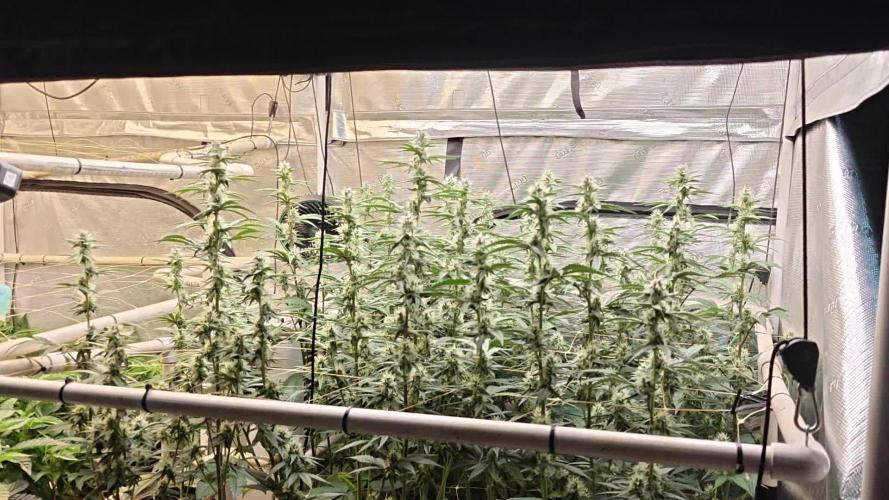
Im around day 26 of flower and now that the other side has been harvested the smells are sure sticking out from the lava cake. Smells a lot like someone has some cake in the oven. The flower pistols are really starting to stretch out and set the path for the bud to expand into
Likes
38
Share


@IbeBryBry
Follow
Throwing out those tones of purple like there is no tomorrow. I'm impressed as this is my first fastbuds grow, already ordered 2 more 3 packs from them. Definitely excited!!!!
Both are seeming to love the lst and trellis!!!
✌️ ❤️ 🌳
Likes
7
Share


@JayBane
Follow
Day 58 - Started on making a natural intake box
Day 59 - Isolated and sealed the natural intake box + added beter sealing on grow cabin doors & cabin
Day 60 - Semi-automated intake.
Likes
4
Share


@OHighOBoyz
Follow
Plant decided it wanted to switch to flower so I guess week 4 is officially flower for her. there’s a smell beginning to linger as well hard to describe but very delightful.

Likes
3
Share


@Hempcules
Follow
WEEK 4 (Day 22-28)
These Runtz are growing really well. I'm thrilled with this Barneys genetics.
I applied two different topping techniques to my two plants. The larger plant was topped once after four nodes to create eight main shoots, while the second plant was topped at the second node to create four shoots and then topped again to reach eight. That's it for cutting now. I think the plants are handling it very well and will continue to thrive beautifully.

Likes
10
Share

@LandraceCBDLover
Follow
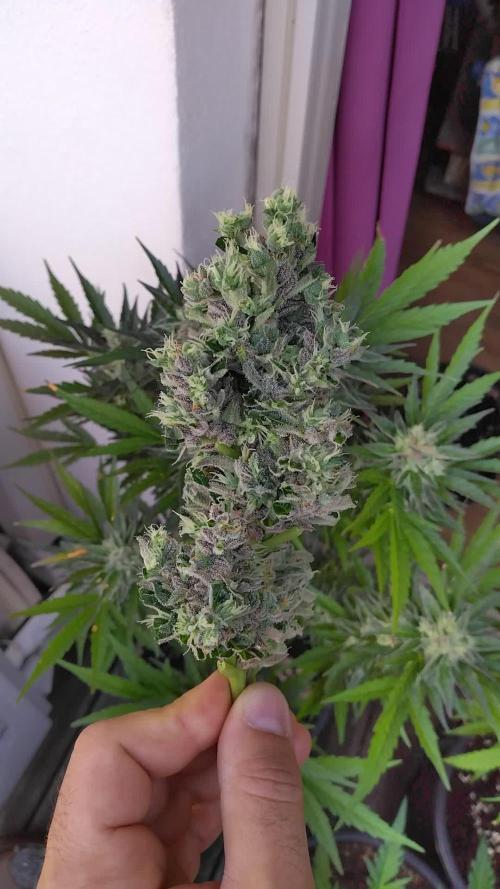
Comme la semaine dernière, on peut observer une importante refloraison sur une des deux Mazar (la n°2 est plus discrète), et sur l'Afghani#1.
Les trichomes ne sont plus ambrés. Patiente donc....
J'ai eu l'impression que la tête principale de la Mazar était en train de moisir. Du coup séchage et fumage ;)
Les landraces (Sinaï et Libanaise) continuent leurs floraisons tranquillement 🐫