


Likes
Comments
Share


@Hempface86
Follow
Hey fellow growers .. today is day 55 of flower or 130 total .. she's a Jamaican landrace so I'm guessing 3 more weeks ... Today was her first flush so no more nutes.... her trichomes are getting swollen and they are everywhere on the nugs themselves... especially for a full sativa .. she is going to be worth the wait... Thanks to everyone for checking her out..it's been a pain updating with this crap phone so I apologize for the subpar pics and videos.. God bless everyone and happy growing ✌️

Likes
12
Share

@Grow_for_Happiness
Follow
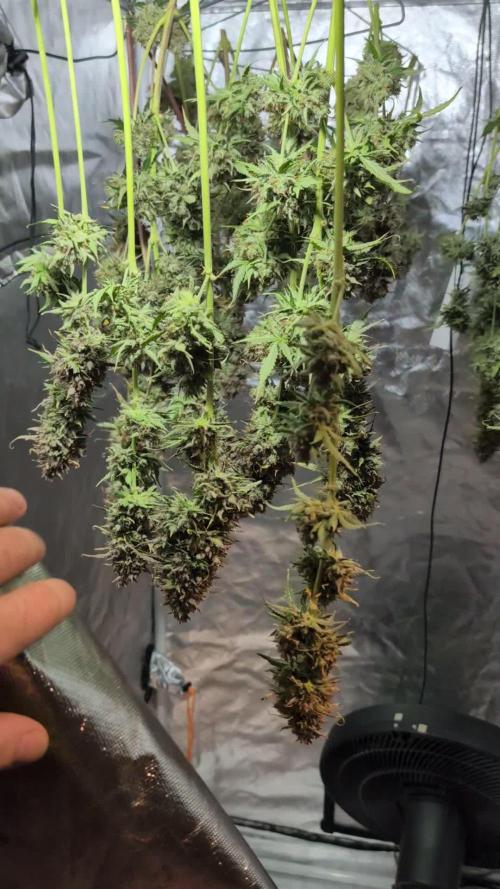
Well that's it folks, the time has come where we get to see the fruits of our labour and get ready to start another adventure.
The girls were great just cruising through their last 5 days since update. They were harvested on day 82 from planting seed in soil. Solid buds ranging from golf ball to baseball size, lots of hues of blue and purple. Absolutely packed with trichomes and dense as ever. Cleanup was easy, just hung upside down and stripped the fan leaves, then broke into large sections to hang in the old 4x4. Dr Greenthumb prescribed 58-60% RH and lots of air movement for the next two weeks and they'll be ready to sample before curing for a month.
Ended up with 472g dried trimmed bud and 120g of trim.
Well the dry is all done and the buds are looking, smelling, and tasting amazing! Can't imagine how much better they will be after a few weeks of curing. Golf ball size and larger buds, super dense and solid when squeezed very little to no compression. Very Crystal packed and tons of red hairs. During trimming buds maintained shape and had very little size loss. Taste is great, nice sweet and fruity with an undertone of earthy blueberries. Great buzz, nice and relaxed body with a clear but mellow mind. Easy way to waste a day away chillin while melting away the after work muscle pains and anxieties. I do love blueberry strains, and this one is no exception.
Likes
5
Share


@KushAllDayLong
Follow
Alright Growmies!! So this Purple Ice Water is a bag seed I got from an amazing strain i had and was lucky enough to find hidden gem inside one if the beautiful nugs!! I think I have a photo in my Google photos I'll look for a picture of the flower the seed came from!!
Anyway, I was going to enter the 16oz solo cup challenge but I didn't realize time was running out and so i had already planted the seed by then and of course she popped and I grow attached to them when that happens so here we are!! Not to mention, this is my first indoor grow and so I'm not thinking or planning as I should be and so guess what problem I ran into next...well my tent was now in flower so lights were kn 12/12...so 3 days into the new seed I planted, i need more hours of light for her and so you'll see my solution in the photo or video..my lady thought it was hilarious when she walked into the bathroom to get ready in the morning and a baby cannabis plant was handing from the light fixture lmao!! 🤣🤣🤣🤣 this is only temporary fix and she is only hanging up there for a few hours then I place her back into the tent to give her that much needed light!! I could always do the window trick but hey this was too fun!!
1st week is going amazing, as it can go lmao!!
Between day 5 and 6 I added some rain water. It rained for almost 3 days straight here in Arizona so it was nice to be able to capture some rain water for my girls for once! Those days are few and far between unfortunately!!
Likes
Comments
Share


@PatriciaGant
Follow
Dane, We all should help one another.
Human beings are like that.
We should live by each other’s happiness - not by each other’s misery.
We don’t want to hate and despise one another, share the Joint.
And mother earth is rich and can provide for everyone.
We can Grow enough Happiness, In this paradise, there is room for everyone.
We only exist to bring joy into the world and The way of life can be free and beautiful,
but we have lost the way.
Grow High and Give the world A smile.
At the end we own nothing more then all our memories, lets make them amazing for everyone,
nothing to loose only everything to win.
A last kiss goodby, a second one, softer and long as a sign, that you are woth it.
That Everyone worth who loved and give.
Enought Hippie Talk, now have a nice day and an even better grow, thx for watching by.
((From Seed 🌱
week report:
i love the "banana split" in the leafes

Likes
6
Share


@Growers313
Follow
purtroppo ho saltato la 2 settimana di fioritura perché ho merso le foto/video.

Likes
7
Share


@Cthoff
Follow
Fed Flower Girl Tea this past week 1x.
One plant has reached 28in and there are plenty of bud sitings all around.
Defoliated a lot (did my version of lollipopping), I wanted to isolate the bud spots for maximum light.
Watering every 2 days, plants are drinking up real quick!


Likes
18
Share


@Onlygrow99
Follow
Empezamos la 4ª semana de floración y llevamos ya 65 días desde la germinación, estamos a 27/03/23
He vuelto a subir la luminaria y espero que haya sido ya la ultima vez xd
Las forbidden están en plena floración, en pleno engorde y las autos ya formando tremenda porra.
Las forbidden de gb a granel me están sorprendieron muchas... no fallo ninguna en germinación y a demás todas son super frondosas desde el primero momento, fuertes y parece que van a tener grandes flores.

Likes
38
Share


@TrueNorth
Follow
Bud ignitor in full affect. Same with the bud candy. Both from Advanced Nutrients. Amazing change daily. Super happy with the frostyness. Can not wait to see the final. Lollipop lollipop oh lolli lollipop!

Likes
Comments
Share

@TooMuchTIm
Follow
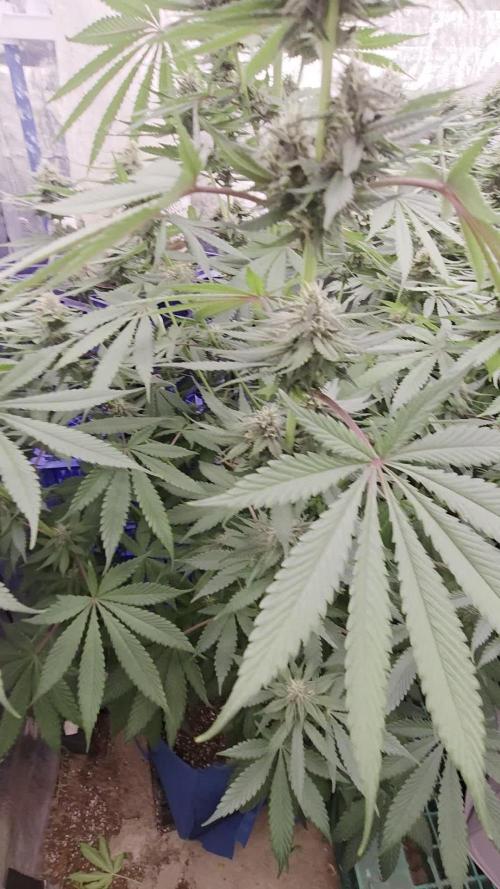
Cracking away now.. UVB up to 1.25hrs a day. Zero stress, just juicy, fat buds really starting to stack.. Unfortunately, while they are supposed to all be Purple genetics, it's only showing in 1 plant.. Anyone know if this is normal, or the result of clear bag seeds? Anyway, they're looking happy, healthy & dusted in sugar! Sweeeeet! Happy grows, everone!
Likes
2
Share


@Gardens_of_Of
Follow
3rd week of Flowering is over and the stretching stopped. She received a big defoliation and bottom half is lollipoped. She just enjoys life and keeps growing her buds. Frosting slightly started.

Likes
22
Share


@Ton_Trichomen
Follow
Seeding March 16
Germination 21-25 march 🇱🇺🌱🤩
Day 65 from seeding, flower in full progress
Grow method 12/12 from seed-
Sea of green
Hey Growmy's,
everything looks more than good to me, 2-3 women are running a bit behind, but that will be fixed by itself so let it go, yesterday I increased my ec to 1.8 and my ladys liked it as you can see, think also hanging my lights in a couple of days to 30 cm above my cutys now they are on 46 .. but more from me in a few days again 😇
⚠️⚠️
Short info about my Humidity:
as you can see my humidity sensor from my CT grow system that I have is around 80% RH, but that is not right, my humidity is around 49-52% my sensor gets 24 hours fully blown by my humidifier onto the sensor no matter where I hang it because my ventilation is all around and is blown from top to bottom and a box fan lets everything circulate through the growroom so my old hygrometer is hanging in there againe and everything is fine
Amnesia by & for
@Superstrains Official
Runtz by & for
@Zamnesia Webshop came in 1 week later
Sour Diesel by & for
@Inseedious NL
Cobalt Haze by
@Sensi Seeds &
Arjans Strawberry Haze by
@Greenhouse Seeds for
@Amsterdam Seed Center
Under & for @Mars Hydro Factory
Nutes by & for @Hy-Pro Fertilizers
Soil:
Atami light mix &
5mm broken puffed clay &
16mm puffed clay on the bottem
of my 5.5L. pots
Temp: 24,56 °C
temp outside 15°C
Lights: 12/12
Humidity: 49-52 %
Vpd kpa: 1.3-1.4
Roots 17.50°C
Ph : 6.2
Tds/ec 1.8
Water: 0.8L. p.plant 23°C
CO²: No Mercy Tabs & boost bucket
Nutes by Hy-Pro Fertilizers
HyPro : Spraymix 0ml by 1L.
HyPro : Terra vegi & bloom 4.5ml by 1L.
HyPro : Rootstimulator 5ml by 1L.
HyPro : Generator 0.16ml by 1L.
HyPro : Epic Bloom 0.5ml by 1L.
HyPro : Cal-Mag 0.8ml by 1L.
Light distance:
=46cm to plant
= 42 cm to CTgrow sensor
dimmer on 100% = 1091.5umol/m²PPDF +-10
Gear all controlled by @ctgrow
1x MarsHydro TSW3000
1x MarsHydro TSL 2000
Air Van: 900m³ Prima Klima on 45%
Filter: Prima Klima 660m³ for seed& veg stage &
660m3 CanLite for bloom stage
3 l water cooling airco Diamant...
3.3l humidifier
1.8l dehumidifier
My grow room is variable in size
120cmx120cm² Custom Grow space for sog
150cmx150cm for scrog
Big THANKS to my lovely sponsors :
Super Strains, HyPro Fertilizers, Amsterdam Seed Center, Zamnesia, Inseedious, BTB Grow Supplies, Mars Hydro & CT Grow Systems


Likes
10
Share


@WorldPeas
Follow
Gave her a haircut at the beginning of the week, buds are fattening up quick. Im seeing noticeable changes daily. Increased light on time by 3 hours to 23 hours on. Feed has changed with the addition of Cycos swell (2.5ml/L) and Supa Stiky (2ml/L) and removal of potash plus. All to aid in the development of the phattest buds possible 😁
End of Week: Noticed rust spots on some fan leaves ref grow question. Gave her a flush of PH'D water and Kleanse as it was time to anyway dialed the Bloom A + B back a little to 2ml/L. Let's see how she picks up. Just starting to notice frosting on some of the sugar leaves.


Likes
12
Share


@Skunkiest_bender39
Follow
Umzug hat geholfen, gehen endlich gut weiter voran mit denBlütenständen.
Likes
198
Share


@DevilsBud
Follow
New week in the marshydro set-up
4'x4' tent
FC-4800 lamp
Got a new toy this weekend so i can read out how much PPFD it will produce still learning to use the thing but it will come
Not a lot to say see you next week getting winter frost up in here 💪🏻
30/11/21 made a video today enjoy
Of the beauty's 🤘🏻😎🤘🏻
visit www.marshydro.eu
for your best gear and use the PROMO CODE: DEVILSBUD
Some info about the Marshydro FC-4800
Superb Quality LED Chips: The whole light is composed of 1206 pcs Samsung lm301b and Osram 660nm chips. More than two times as many LEDs are used to drive the grow lights at low currents and to avoid overdrive. Quality is guaranteed and efficiency is up to 2.8 μmol/j.
Even PAR Distribution and High PPFD Output: The multi-light bar design and the densely distributed light chips enable the LED grow lights to achieve the optimum PPFD required for plant growth over the entire effective coverage area.
Specifically Designed Spectrum: To ensure even plant growth, blue and red light are enhanced on the basis of a full spectrum combination. Not only does this accelerate plant growth, but it also improves the yield and quality of the plants at the same time.
Dimming Daisy Chain Function: The dimming function saves on electricity costs and enables brightness from 10% to 100% for the different stages of plant growth. A single master light can connect up to 30 lights in a daisy-chain system.
Business LED Grow Light: The light's wavy heat sink dissipates heat quickly and the IP65 waterproof allows the light to operate in humid conditions. 180° collapsible feature for easier installation. All these features provide favorable assistance for commercial cultivation.
And some tent info
●【Lock All Light Insid】MARS HYDRO Grow Tent Interior is made of diamond mylar. Non-toxic to the environment, no harm to plants. High-quality 1680D canvas being double stitched, (ALL OTHERS BRAND grow tent is 601D canvas) which is tear-proof for perfect light locking, No light leaks or rips at all.
●【Durability Grow Tent】Stable Metal corner adapters and poles are the trustful supporters of the tent. No rusting nor paint-falling. Quick easy tool-free installation. Carries strong heavy-duty SBS zippers, double layer lining to create a light-proof seal.
●【Easy Observation of your Plants】Special peeks window made by double layers of cloths. Observe the growing conditions of your plants without opening the tent and avoid disturbing plants. The peek window also serves to dissipate heat and ventilate air.
●【Removable Tray Keep Clean】The package includes a removable waterproof floor tray to hold soil and fallen leaves. The tray can be taken out easily to wash. Removable and water-proof makes cleaning easy.
●【Good Ventilation&Fast Assembly】 Circular double-sleeved vent holes with adjustable nylon strap for air circulation by exhaust fan, ducting, carbon filter, or reflector. Better allows proper light, heat, and airflow. Quick tool-free installation. Reinforced by a sturdy metal frame to ensure security and stability, supports up to 140lb. Perfectly safeguard your plants to thrive even in winter


Likes
13
Share


@NuttyYeti
Follow
It smells very skunky and diesely, kind of burned my eyes while harvesting it was so strong. Very excited because this was my first grow and my first harvest and it went very well.

Likes
19
Share


Likes
76
Share


@TheFattyMcCoy
Follow
Hey yall!
Thanks for tuning in this week.
Had a great look under the microscope of my soil, I just ordered a camera for my scope so next week look forward to seeing and identifying some beneficial microbiology!
Another round of compost tea, I added Kiwi 🥝 😋 Fermented Juice, to this round of tea. Also adding food for the bacteria (simple sugars) and for the fungi (complex carbs). I suggest using diverse food for increased biodiversity.
The mycelium network is really established at this point. Which is why I highly recommend to keep reusing your soil, and the larger the pot size the better. I am in 10 gallons for now. Once I move into our house will be into living beds, 100 gallon +
If you can't be in a bed, use 25 gallon. You will benefit in time.
So at this point only using inputs I have made from organically grown plants, mostly grown in house. Anything else was wildcrafted, sustainably, so if I take something from nature I am replacing it with something else. Balance in all things.
Added the fruit for pushing the flowers. Pistol hairs are growing.
This strain is a sativa dominant, and thus my flowers are not as compact and "looser" than indica dominant strains I have always grown.
Review on this sativa dominant cultivar is: harder to grow than most strains, longer flowering time is also a pain while increasing my costs with more days with the lights on.
Getting COAs on the finished flowers and I will post on here, I am hoping for higher levels of THCv, let's get into the rare cannabinoids and higher terpenes!
