


@DeeDeeKushner
Follow
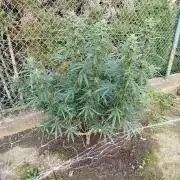
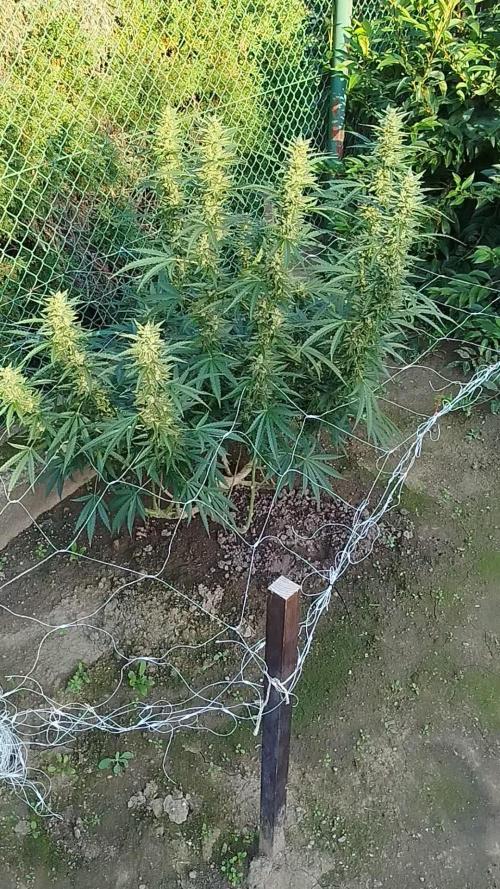
Been ghost for a little while but now I’m back. Been dealing with a lot of personal stuff but I've been maintaining my focus on this girl. She’s grown a lot in the past 4 weeks. Did some LST, topping, and some super cropping. Started her outside but brought her inside the tent because she was reaching her full potential. She’s doing great now! I’ve been fighting a fungus gnat infestation but I got it under control now. She’s in her 3rd week of flower and is moving along nicely.







@Trippin66
Follow
Hi growmies
well found, today the vadi are still full of water so no watering
pheno 2 mimosa is demonstrating her hulk genes too bad pheno 1 can't do the same too much stress for her two feline attacks were too much even runtz suffered only one but in a too premature phase by the way yesterday while I was trying to make it open a little I patched it the plant shows that it is not elastic perhaps a little silica would do me good but I will use it in the next stressful event in another race I implemented on Monday when I watered green sensetion and sugar royal for the two mimosas that the small runtz and the zenzation are now flowering which is doing well even if in two weeks back it reacts well to the lst I hope it can reach large sizes in the next week and then start flowering when it wants
for runtz and zenzation the usual mix remained, calmag 4mlxlt, rizotonic 40mlx10lt and whiteshark 2 spoon x 36lt ph 6.2/6.3 added the scrog net in which the mimosa is having a lot of fun
I'm very sorry about how the other plants have suffered from stress, the feline demon has been banished from the room where the girls sleep
but I won't give up, I'll bring the result home in mid-December, we'll see what nature and my ability are able to do
have a good week and cultivation everyone thanks for the comments and likes never stop growing👍🏼✅


@Canna96
Follow
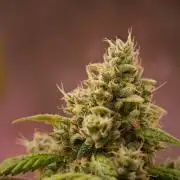
This week went very well, she is still stacking on flowers, and Piglet is now being fed about 5 gallons per day, with about 1 gallon of runoff, she feeds five times per day, every 3.5 hours with lights on, and then once in the middle of the dark period. She is still just being fed Armor Si, CaliMag, powder Maxi Bloom, and a PK liquid bloom booster. I use the runoff mixed with dehumidifier water to feed my tomatoe plants, and they absolutely love it. I have found that using dehumidifier water in a reservoir leads to funk within only a few days, even when using food grade Hydrogen Peroxide, so I only use it for instant feedings and for the tomatoes. I am still cleaning the reservoir once per week just to keep her and the pump/lines in good shape, and it only takes me about 10-15 minutes per week. I also added another bag of CO2 inside the tent and have a bag sitting in front of each air intake screen, as well as one hanging about the plant., I have also added several tubs of mushrooms growing both inside and outside the tent, with a breather on each one, so she is getting plenty of CO2. The heatwave is over for now and weather looks great for the next 8 days. I am estimating that she has about 2 weeks left to stack flowers, and then 2 weeks to ripen, so I am hoping to harvest her around the end of June but will have to wait on the trichomes to be sure. I plan to flush her for about 4 or 5 days before harvest with just plain water. Overall, I am very impressed with Ethos Genetics, and I now understand why everyone was recommending them to me when I wanted to try a photo period plant. I hope everyone had a weekend, stay safe, and Blaze On!!!



@DogDoctorOfficial
Follow
💙 PROJECT BLUE TENT – WEEK 14 💙
🥒 PICKLE LEMON HAZE F1 – PHENO B
🍂 BEAUTIFUL FADING, DENSE FLOWERS, AND ANOTHER GIRL APPROACHING THE FINISH! 🌸❄️
Hello everyone, and welcome back to another chapter of Project Blue Tent! 💙🌱
My friends, here we go again!
Another week, another beautiful girl, and another opportunity to spend far too much time inside the tent taking photographs! 😂📸
Today, we're giving Pickle Lemon Haze F1 – Pheno B her individual spotlight.
And honestly, what a beautiful girl she is!
We're now at Week 14 of flowering, and just like the rest of the room, she's showing increasingly noticeable changes as she progresses towards the final stage.
The flowers are looking beautiful, the fading is becoming more pronounced, and we're seeing some lovely colour transitions throughout the plant.
The structure is established, the major training work is behind us, and we're firmly in observation mode.
No new structural interventions.
No unnecessary changes.
Just maintaining the established environment, observing the flowers, and enjoying the final chapters of this adventure.
We've also moved to plain water, with an EC reading of approximately 0.2 mS/cm and a natural water pH of 6.8.
Our under-canopy lighting experiment continues, we're working on some interesting 3D-printed irrigation accessories for the next run, and Matilda has returned for another little photographic adventure!
😂🕷️
So, even though we're repeating some of the same environmental updates across the individual diaries, there's still plenty to appreciate.
Because Pheno B has her own expression, her own characteristics, and her own story.
Let's get into it!
💙🥒🌸
🌱 A QUICK RECAP – WHAT IS PROJECT BLUE TENT?
For everyone joining us for the first time, let's quickly introduce the project.
Project Blue Tent brings together four individual plants from two different Zamnesia F1 cultivars.
🌈 BLUE WAFFLE F1 – PHENO A.
🌈 BLUE WAFFLE F1 – PHENO B.
🥒 PICKLE LEMON HAZE F1 – PHENO A.
🥒 PICKLE LEMON HAZE F1 – PHENO B.
Four plants.
Two cultivars.
One shared ecosystem.
All four girls share the same general growing environment, irrigation system, reservoir, overhead lighting, and supplemental under-canopy lighting.
Throughout the project, we've documented their development individually, from their early stages through transplantation, topping, training, SCROG, defoliation, and flowering.
We've experimented with different lighting arrangements, environmental settings, irrigation equipment, and nutritional approaches.
And now, we're approaching the end of this particular adventure.
One of the most interesting aspects has been observing how different plants develop under the same general conditions.
Although they share the same environment, their individual expressions aren't necessarily identical.
That's precisely why we've kept separate diaries for every plant.
We want to document what each girl actually shows us, rather than assuming that four plants growing together will follow exactly the same timeline.
And today, it's Pickle Lemon Haze F1 Pheno B's turn!
💙🌿
🌸 WEEK 14 – PHENO B IS LOOKING BEAUTIFUL!
Let's start with the obvious.
SHE'S LOOKING FANTASTIC!
😂💙
Pheno B continues to impress with her compact structure, beautiful flowers, and increasingly noticeable colour transitions.
The flowers are looking dense and well developed, and the overall appearance of the plant is changing as we move further into the final stage.
One of the things I particularly enjoy at this point is looking back at the photographs from the earlier weeks.
Remember when we were concentrating on building the canopy?
The topping, training, SCROG, branch positioning, and defoliation?
All those interventions happened much earlier in the project.
Now, we can appreciate the structure that developed throughout those weeks.
The branches are established, the canopy is in place, and the flowers are the main attraction.
We're not trying to reshape the plant anymore.
We're simply observing her development and documenting the changes.
And honestly, that's one of my favourite parts of the journey.
You spend so much time working with the plants that eventually you reach a point where you can step back, grab your camera, and appreciate what you've been building.
That's exactly where we are with Pheno B.
💙📸
🍂 THE FADING – ANOTHER BEAUTIFUL COLOUR TRANSFORMATION!
Now, let's talk about something particularly noticeable this week.
THE FADING!
As with her sister and the other girls sharing the room, Pheno B is showing increasingly visible colour changes.
We're seeing lighter green foliage, yellowing leaves, and warmer tones appearing throughout the plant.
And I absolutely love this stage!
The green appearance of leaves is primarily associated with chlorophyll.
As chlorophyll levels decline during natural plant development, other pigments that were already present can become more visible.
Carotenoids contribute yellow and orange tones, while anthocyanins are responsible for many of the red, purple, and blue colour expressions we sometimes observe.
Genetics play an important role in determining how individual plants express these colours, while environmental conditions can also influence their appearance.
And this is particularly interesting when looking at our four girls.
They're sharing the same general environment, yet their individual colour expressions and progression are not necessarily identical.
Pheno B is developing her own beautiful palette, and the photographs capture some lovely transitions throughout the foliage.
It's also worth remembering that fading alone doesn't establish whether a plant is ready for harvest.
We're looking at the complete picture, including flower development, trichomes, pistils, and the overall maturity of the plant.
We're not trying to force a particular colour or use fading as a harvest indicator on its own.
We're simply observing and documenting what happens.
And Pheno B is giving us plenty of beautiful details to photograph!
🍂🌈💙
❄️ THE FLOWERS – DENSE, BEAUTIFUL, AND FULL OF DETAILS!
Now, let's get closer!
The flowers are looking absolutely beautiful.
Their density and overall development are among the first things that catch my attention when looking at Pheno B.
The structure is established, and we're now appreciating the flowers developing throughout the canopy.
The photographs show different perspectives, from the overall plant structure to individual flowering sites and close-up details.
And that's something I always want to preserve in these diaries.
A photograph of the entire plant tells one story.
A close-up of an individual flower tells another.
And when we get into macro photography, we discover an entirely different level of detail.
The trichomes.
The pistils.
The textures.
The intricate structures of the flowers and surrounding sugar leaves.
It's fascinating how much there is to appreciate when we take the time to look closely.
The visible frost is beautiful, and the flowers certainly deserve their photographic attention.
We're continuing to observe their development without making assumptions based on appearance alone.
No rushing the conclusion.
No inventing a harvest date.
Just appreciating what we're seeing and documenting the progression.
📸❄️💙
🌿 THE INDIVIDUAL EXPRESSION – PHENO B HAS HER OWN STORY!
One of the most interesting parts of Project Blue Tent has been comparing the two Pickle Lemon Haze F1 sisters.
Both girls share the same cultivar and grow within the same general ecosystem.
Yet their individual development and appearance can still differ.
Their structure, flower formation, colour expression, and progression through flowering are all worth documenting separately.
And that's exactly why we don't want to turn these individual diaries into identical room reports.
The environmental conditions may be shared, but the observations belong to each plant.
Pheno B is showing her own characteristics, and we're continuing to record them as she progresses.
The same applies when comparing the Pickle Lemon Haze girls with our Blue Waffle F1 plants.
Different genetics can express different characteristics, and individual plants can progress differently even when grown under comparable conditions.
We're not trying to invent differences or attribute every characteristic to a single variable.
We're simply documenting what we actually observe.
That's the value of keeping individual diaries.
Every plant deserves her own chapter.
And Pheno B certainly deserves hers!
💙🥒🌱
👃 THE AROMA – THE ROOM IS GETTING INCREDIBLY AROMATIC!
Now, my friends, let's talk about something that photographs cannot capture.
THE SMELL! 😂🌸
The aroma throughout the room is beautiful, and spending time around these girls has become an increasingly enjoyable experience.
It's one of those things that makes the final weeks particularly special.
We can capture the colours, the flower structure, the visible trichomes, and all those intricate details with our cameras.
But the aroma?
That's something you need to experience yourself!
I'm not going to invent a detailed terpene profile or assign specific aromatic notes without proper testing.
What I can tell you is that the room smells incredible, and Pheno B is contributing to that wonderful experience.
Sometimes, the best part of a grow isn't something you can show in a photograph.
😂💙🌸
💡 UNDER-CANOPY LIGHTING – CONTINUING OUR EXPERIMENT!
Now, let's talk about one of the most interesting experiments inside Project Blue Tent.
Our LumiFlora under-canopy lighting arrangement!
As many of you already know, we're using two LumiFlora 150W full-spectrum fixtures positioned beneath the canopy in an X-cross configuration.
These fixtures supplement our main overhead LEDs, which provide the primary lighting from above.
Throughout this project, we've been interested in observing how the lower flowering sites develop under this additional illumination.
And now, during these final weeks, we're getting some interesting visual observations.
One thing we've noticed is that some of the areas receiving supplemental illumination are showing more pronounced reddish colour expression.
It's particularly interesting when comparing photographs from different positions throughout the canopy.
We're also observing relatively fast progression towards the finish across the room.
However, I want to make something clear.
We're documenting observations, not claiming that the under-canopy lighting or its red spectrum alone is responsible for the colour changes or the finishing timeline.
There are multiple variables involved, including genetics, plant maturity, environmental conditions, and the overall lighting arrangement.
To establish a direct relationship, we'd need controlled comparisons and appropriate measurements.
For now, we're documenting the setup and observing what happens.
That's the purpose of this experiment.
We want to explore supplemental lighting, understand how it fits into the overall environment, and learn from the results.
The fixtures remain in their established X-cross arrangement, and we're continuing to monitor the plants.
I'm particularly interested in reviewing the photographs and environmental records once the entire project is finished.
A massive thank you to LumiFlora for making this experiment possible!
💡🌱💙
💡 OVERHEAD LIGHTING – THE MAIN LEDS REMAIN AT THEIR ESTABLISHED SETTING
The main overhead LEDs continue providing the primary illumination for the canopy.
As discussed in the previous reports, we've been gradually reducing their output as we approach the final stage.
Our previous reference setting was approximately 90%, with gradual adjustments rather than sudden changes.
The idea is to maintain a balanced lighting environment while observing the plants.
The main fixtures and the supplemental under-canopy lights work together as part of the overall arrangement.
We're not assuming that increasing or decreasing one particular setting automatically produces a specific result.
Instead, we're documenting the configuration and observing the plants as they progress.
At this stage, the canopy is already established, and our attention is on the final development of the flowers.
No unnecessary changes.
Just the established lighting arrangement and plenty of photographs!
💡💙
🌡️ THE ENVIRONMENT – OUTSIDE FEELS LIKE SPRING!
Now, something interesting is happening with the weather!
The outside temperatures have increased again, and we're seeing readings around 22.4°C even after midnight!
My friends, is autumn taking a holiday? 😂🌸
It almost feels like spring outside!
Fortunately, we're adapting to these warmer conditions.
Our air conditioning is helping us maintain the established indoor environment, allowing us to keep the room within our intended operating conditions despite the changes outside.
Our current reference conditions are:
🌡️ Day air temperature: approximately 25°C.
🌙 Night air temperature: approximately 20°C.
💧 Relative humidity: approximately 55%.
💧 Solution temperature: approximately 21°C.
🌱 Substrate temperature: approximately 21°C.
🌫️ CO₂ level: approximately 666 ppm.
These are our reference operating conditions, rather than temporary readings that might appear while we're inside the room working or taking photographs.
The important thing is maintaining consistency and adapting to the outside conditions without making unnecessary changes to the indoor environment.
The girls are sharing the same general conditions, and Pheno B continues progressing within that established ecosystem.
Outside: spring vibes.
Inside: beautiful autumn colours.
I think we're enjoying both seasons at once!
😂🍂🌸
💧 IRRIGATION AND DRAINAGE – THE SAME ESTABLISHED SYSTEM
The automatic irrigation and drainage system continues operating as part of our shared ecosystem.
All four plants share the same reservoir and irrigation arrangement.
Our recorded watering volume remains approximately 1.6 litres per plant over 24 hours.
This is our reference measurement, while actual water demand can vary between individual plants.
We continue monitoring the system and observing the plants rather than assuming every girl consumes exactly the same amount.
At this stage, we're not introducing unnecessary changes.
The irrigation arrangement is established, and our attention is increasingly focused on observing the final development of the flowers.
And speaking of irrigation, we're already experimenting with something new for the next adventure!
More about that shortly.
💧🌱
⚗️ NUTRITION – PLAIN WATER, AND A DIFFERENT APPROACH TO THIS EXPERIMENT!
Now, let's talk about one of the most important changes in the current stage.
We've moved to plain water.
Our current readings are:
💧 EC: approximately 0.2 mS/cm.
💧 pH: approximately 6.8.
And I want to make an important distinction here.
The EC reading represents the water we're currently using, not a nutritional solution.
The pH of 6.8 is the natural pH reading of that water.
We're not adding additional nutrients or adjusting the water simply to chase a particular number.
There is no PLAGRON Hydro A.
There is no PLAGRON Hydro B.
There is no Power Buds.
There is no Green Sensation.
We're currently using plain water, without additional nutritional products.
Now, why are we doing this?
Well, this is where I want to explain a little about the approach we're taking with this particular project.
🌱 ORGANIC GROWING VS. MINERAL NUTRITION
One thing I always like to distinguish is the difference between growing in an organic living-soil environment and working with a mineral-based hydroponic setup.
They're different approaches, and they shouldn't necessarily be treated in the same way.
When working with organic living soil, the idea is to maintain and support a functioning biological environment.
The soil contains a complex ecosystem involving microorganisms, organic matter, and nutrient cycling.
You're working with a system where biological processes play a major role in making nutrients available to the plant.
Trying to chase every number, constantly force changes, or manipulate the system unnecessarily isn't necessarily beneficial.
Sometimes, the best approach is to establish a healthy environment, support the soil biology, and allow the system to function.
Mineral-based hydroponic nutrition gives us a different level of direct control over the nutrient solution.
We can measure EC, monitor pH, adjust concentrations, and make changes to the composition of the solution.
That doesn't mean every adjustment is necessary, or that chasing numbers automatically produces better results.
It simply means we have a different set of tools available.
And in this project, we're using that flexibility to explore different approaches and document what happens.
For this particular final stage, we've chosen to move to plain water.
Not because we're trying to force a particular outcome.
Not because we believe plain water magically removes nutrients from the flowers.
And not because every grower needs to follow the same approach.
It's simply the method we've chosen to document in this run.
We enjoy experimenting, observing, and comparing the results.
And that's what Project Blue Tent is all about.
Different systems, different approaches, and continuous learning.
💙🌱
🖨️ 3D PRINTING – MORE EXPERIMENTS FOR THE NEXT RUN!
While the girls are enjoying their final chapters, I'm already thinking about the next project!
And this time, we're getting creative with the 3D printer.
I've been working on some prototype irrigation accessories designed to improve water distribution across the coco surface.
The idea is to create a small distribution plate that sits beneath the watering point.
Instead of allowing water to fall directly onto one concentrated area, the design aims to spread it across a wider surface.
I've printed different versions and have been testing how the water behaves with each design.
We're looking at the distribution pattern, the dimensions, and whether the shape needs further adjustments.
These are still experimental prototypes.
We're not calling them finished products yet.
The objective is to evaluate the designs, identify potential improvements, and see which version might be suitable for the next run.
And honestly, I love these little side projects!
Cultivation isn't only about plants.
It's also about equipment, problem-solving, experimentation, and finding practical ways to improve the overall setup.
Sometimes a small modification can make a big difference to how convenient a system is to use.
We'll share more photographs and updates as the prototypes develop.
For now, it's another little experiment happening behind the scenes while the girls approach the finish.
😂🖨️💙
🕷️ MATHILDA RETURNS – ANOTHER LITTLE PHOTOGRAPHIC ADVENTURE!
And now, my friends…
LET'S TALK ABOUT MATHILDA!
😂🕷️💙
Our little spider friend has returned for another appearance!
This week, we decided to bring Mathilda into the tent for a little adventure and let her explore while we captured some photographs.
Nothing too serious.
Just a bit of fun, some interesting macro photography opportunities, and a chance to appreciate another tiny creature from a completely different perspective.
And honestly, she's a fantastic little photographic subject!
When you get close enough with a macro lens, the details become fascinating.
The legs.
The body structure.
The tiny features.
The way she moves around and explores her surroundings.
It's incredible how much detail we can discover when we take the time to look closely.
I've included several photographs from this little session because I wanted to share the fun with everyone.
Mathilda isn't part of our growing experiment, of course.
She's simply our unexpected photographic guest!
😂📸
And I think she's becoming quite comfortable in front of the camera.
Welcome back, Mathilda!
You're officially part of the Project Blue Tent photographic collection.
🕷️💙
📸 PHOTOGRAPHY – DOCUMENTING THE LITTLE DETAILS
As always, photography remains one of my favourite parts of these projects.
During the final weeks, there are so many beautiful details worth capturing.
The flowers.
The changing colours.
The trichomes.
The textures.
The individual characteristics of every plant.
And, of course, our little spider friend!
I'm continuing to enjoy macro photography and focus stacking, experimenting with different perspectives and trying to capture as much detail as possible.
Focus stacking allows us to combine multiple photographs taken at different focus distances to create a final image with greater depth of field.
It's a fantastic technique for documenting small, intricate subjects.
And between the flowers and Matilda, we've certainly had plenty of opportunities to experiment!
I hope you enjoy the photographs as much as I enjoy taking them.
Because these diaries aren't simply about recording measurements.
They're also about creating a visual history of the entire adventure.
📸💙
🔭 THE FINISHING LINE – WHAT HAPPENS NEXT?
We're getting closer, my friends!
Looking at the four plants together, it's becoming increasingly interesting to compare their individual progression.
The Blue Waffle girls and the Pickle Lemon Haze girls are showing their own characteristics, and we're observing how their development unfolds under the same general conditions.
Pheno B is showing beautiful fading, dense flowers, and an increasingly mature overall appearance.
We've moved to plain water, and we're continuing to monitor the plants rather than deciding on an exact harvest date in advance.
We'll keep observing the trichomes, pistils, flower development, and overall maturity.
And if the plants don't finish together, that's perfectly fine.
Each girl has her own timeline.
That's one of the most important lessons from documenting multiple plants individually.
We shouldn't assume that sharing a tent means sharing an identical finishing date.
Maybe we'll have a staggered harvest.
Maybe the girls will finish closer together than expected.
Let's see!
For now, we're enjoying the final chapters and keeping the cameras ready.
💙🌸
💙 FINAL THOUGHTS – ANOTHER BEAUTIFUL CHAPTER FOR PHENO B!
My friends, Pickle Lemon Haze F1 Pheno B is looking absolutely beautiful.
The flowers are dense, the frost is impressive, and the fading is becoming increasingly noticeable.
She's showing her own colour expression, with beautiful transitions throughout the foliage as she progresses through the final stage.
We're maintaining the established environmental conditions, continuing with the same irrigation arrangement, and using plain water with an EC of approximately 0.2 mS/cm and a natural pH of 6.8.
Our under-canopy lighting experiment continues to provide interesting observations, while the 3D-printing experiments are already preparing the way for the next adventure.
And let's not forget Matilda!
😂🕷️
This week hasn't been about making major changes.
It's been about observation, documentation, and enjoying the individual characteristics of this beautiful girl.
Sometimes, that's exactly what a grow needs.
The major work is behind us.
The canopy is established.
The flowers are developing.
The colours are changing.
And we're getting closer to the moment when we'll finally be able to document the end of this journey.
Four plants.
Two cultivars.
One shared ecosystem.
Different expressions.
Different finishing timelines.
And four individual stories worth telling.
Thank you for following another chapter of Project Blue Tent.
And thank you for taking the time to appreciate this beautiful girl with me!
💙🥒🍂🌸❄️
💬 COME JOIN THE DOGDOCTOROFFICIAL DISCORD COMMUNITY!
If you're already part of our Discord family, thank you for being there!
And if you haven't joined us yet, you're more than welcome!
We've built a community where growers can share their experiences, exchange knowledge, discuss equipment, show their gardens, share photographs, and learn from each other.
We organize community photo championships, giveaways, and plenty of activities throughout the year.
You don't need to be an expert.
You don't need an enormous garden.
You don't need expensive equipment.
Everyone is welcome!
Come and introduce yourself, share your photographs, join the conversations, and become part of the adventure.
💙 JOIN US HERE:
https://discord.gg/dogdoctorofficial
Growers helping growers.
Sharing knowledge.
Learning together.
And having a little fun along the way!
We'd love to see you there!
🙏 A HUGE THANK YOU – THE PEOPLE BEHIND PROJECT BLUE TENT!
A project like this doesn't happen alone, and I want to take a moment to thank everyone who has been part of this adventure.
A massive thank you to ZAMNESIA for providing the genetics and making it possible for us to document these beautiful Blue Waffle F1 and Pickle Lemon Haze F1 plants individually.
Thank you to PLAGRON for the Hydro nutrient line supporting the girls throughout their journey.
A huge thank you to ZAMNESIA for the Phytonaut LED lighting, curved scissors, and clip fans that continue playing important roles in our setup.
Thank you to MARS HYDRO for the irrigation and drainage equipment helping us maintain consistency throughout the tent.
A special thank you to LUMIFLORA for the two 150W full-spectrum under-canopy fixtures. We're enjoying exploring this supplemental lighting arrangement and documenting everything along the way.
WELCOME TO HEMP HOOKS!
Thank you for joining our adventure and for providing our community with a discount code.
🌐 https://hemphooks.com/
Discount code: DOGDOCTOR
Enjoy 15% OFF your entire order!
We're looking forward to exploring more of your products in upcoming runs and sharing our experiences with the community.
Thank you to GROWDIARIES for providing the platform where we can document our plants, share photographs, record our observations, and learn from the entire process.
And, of course, a massive thank you to everyone following Project Blue Tent, reading our reports, enjoying the photographs, and supporting the journey.
Your encouragement and support mean a lot.
Until the next chapter, my friends…
Keep growing.
Keep learning.
Keep experimenting.
Keep documenting.
And never forget to enjoy the journey as much as the destination!
GROWERS LOVE, HAPPY GROWING, AND TAKE CARE EVERYONE! 🌱💙🥒🍂🌸❄️


@eldruida_lamota
Follow
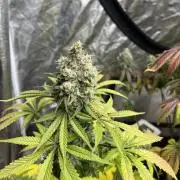
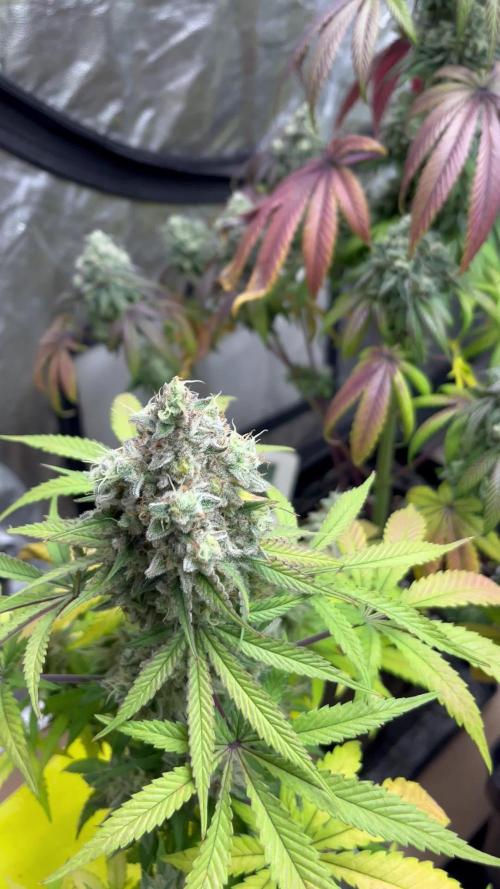
Que pasa familia, vamos con la novena semana de floración de estas Gomu Gomu Mango feminizadas de HighBreed.
Vamos al lío ,se colocaron en macetas de 7 litros definitivamente.
El ph se controla en 6.0 , la temperatura la tenemos entre 24/20 grados y la humedad ronda el 50%.
El ciclo de Floración puse 12 horas de luz, el foco está al 100% de potencia.
De momento va creciendo, tiene buen color, van madurando guay, ya van desprendiendo aromas dulces.
Comentar que superaron el estrés hídrico porque subí par de grados por la noche y va volvió a comer normal .
Gracias a Agrobeta por el kit para la temporada, unos jefes, siempre apoyando 💪.
- os dejo por aquí un CÓDIGO: Eldruida
Descuento para la tienda de MARS HYDRO.
https://www.mars-hydro.com
Hasta aquí todo, Buenos humos 💨💨💨


@HinduGod
Follow
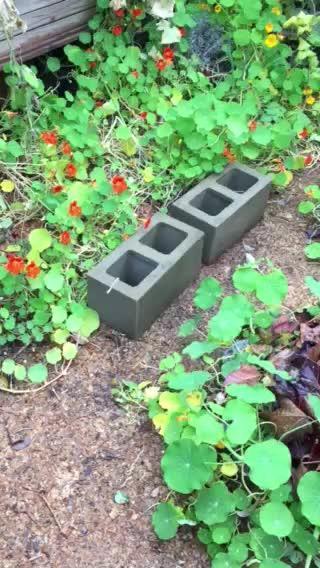
WOW LOOK AT DAT!! DAT PLANT IS NOW HARVESTED!!! IT HANDLED THE OUTDOORS VERY VERY GOOD!!!! I WOULD LIKE TO THANK DA THOUSANDS OF PEOPLE WHO STOPPED IN AND VIEWED DA GROW!!!!! A SPECIAL THANKS TO THE ONES WHO LEFT COMMENTS YOU ARE VERY VERY KIND!!!!! I WILL HAVE A SMOKE REPORT AFTER DA DRY AND CURE!!!!!😎
PLEASE COME AGAIN!!!!!


@Gram_Solo
Follow
WEEK 8
These banana purple are looking 🔥🔥
2 plants now starting to show that amazing purple colour 1 more is also coming along with some hints. I will be buzzing if they all go purple lol.
Had some issues with PH last week so they have had fresh nutes and adjusted PH to 6.5 now. It was on 7.5 because of uncalibrated pen.
Sticking to the advanced nutrient feeding chart for autoflowers atm
I may do a week flush yet just to get rid of any excess buildup and start again on bloom and boosters.
A couple of these are behind by a couple of weeks I think. I took off a few more leaves that were barely getting and light and a few nodes at the bottom. Just to keep that airflow going between stems and the top.
The Rest are powering through it! So no more defoilation on the late ones💪
Buzzing with results so far!
Update next week 👊


@Cultivate
Follow
Struggled keeping humidity up I think it’s my filter but I don’t know. Tried most tricks in the book and had to invest in a humidifier ( not the best either). I know it’s frowned upon to use foliage spray sometimes as it can cause mould/light burn but my humidity levels are some what in the middle


@0Education
Follow
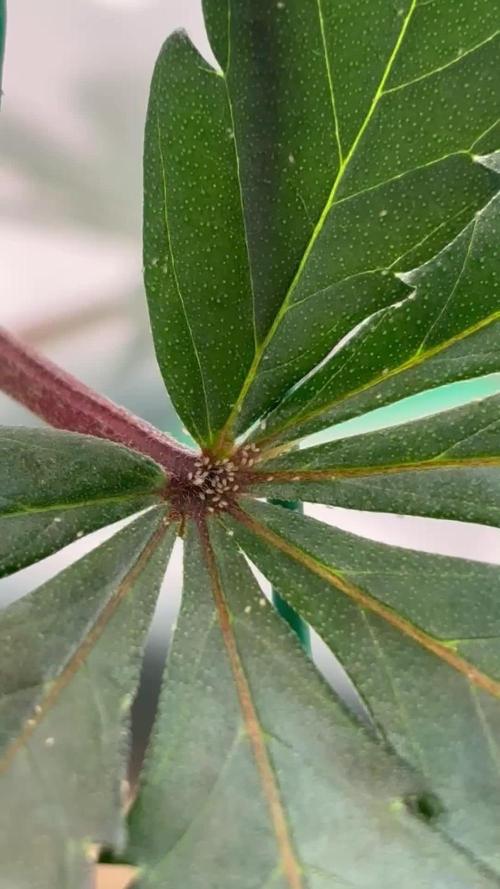
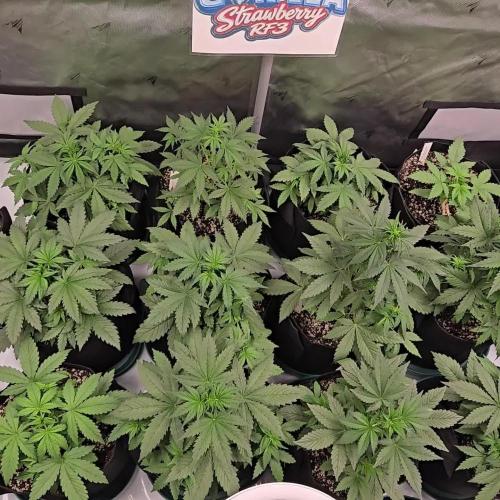
Focusing on training. ZDF looks perfect. The Grandpas cookies did have a slow start, and leaves aren't as healthy as the ZDF, but she is picking up speed. Gonna flip soon. Flip 6-10







@Chubbs
Follow
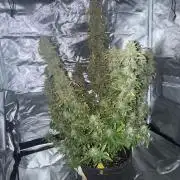
What up Fam, weekly update for these ladies. This week's pretty quite, nothing crazy happening. They getting 16oz of feed about every two days. Still just calmag and ph'd water. I will be giving them there first defoliation this coming week as well as add some bloom nutrients as I think this will be the last week of veg. All in all Happy Growing.

@Stacy_smokez
Follow
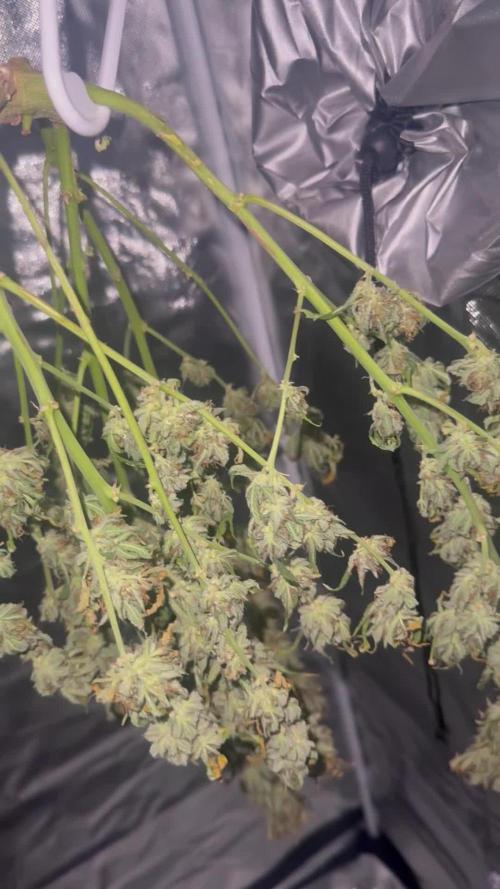
WDrying waiting weight it . This was a good grow to get back into a rhythm overall great I will like to rerun using different soil and nutrients as well as switch up my training as well . I will update my journal once it’s completely dry trim and everything like that with better numbers and better information. The genetics were pretty good and solid overall I’m happy with my girl.



@georgesa
Follow
Cloning/topping time!
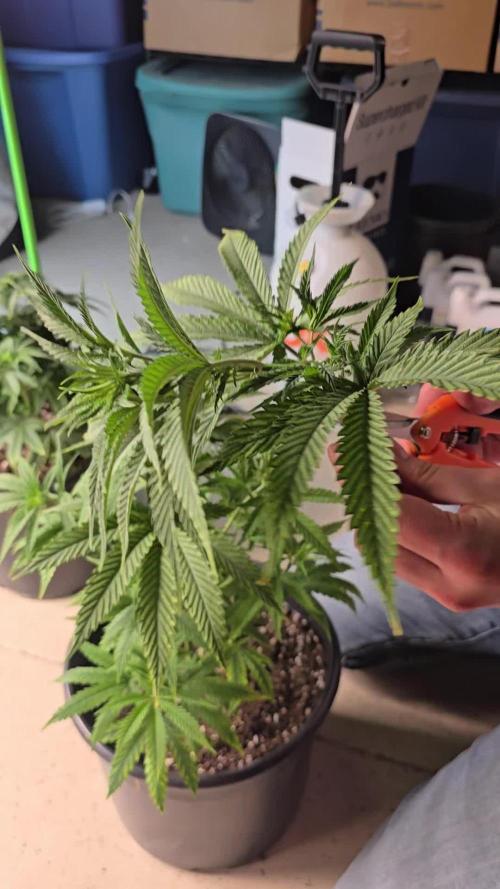
All the plants are looking excellent. One SNJ stands out as being super short, bushy and dense, despite its very sativa roots. Looking forward to crossing that with one of the regs in the tent, either a Hindu Kush (for a heavy indica to balance it out), the Thai/PBB from Trident seeds, or perhaps even one of the Enfield Green Streets! Let's see how they all flower out!


@Roberts
Follow
Gushers is looking good with the Spider Farmer G5000/UVR40 lights. She got the usual training today. Nothing else is really going on. Thank you Spider Farmer, Athena, and Royal Queen Seeds. 🤜🏻🤛🏻🌱🌱🌱
Discount code: GROWERS20
Thank you grow diaries community for the 👇likes👇, follows, comments, and subscriptions on my YouTube channel👇. ❄️🌱🍻
Happy Growing 🌱🌱🌱
https://youtube.com/channel/UCAhN7yRzWLpcaRHhMIQ7X4g
Spider Farmer Official Website Links:
US&Worldwide: https://www.spider-farmer.com
CA: https://spiderfarmer.ca
UK: https://spiderfarmer.co.uk
EU: https://spiderfarmer.eu
AU: https://spiderfarmer.com.au
G5000 Light Amazon Link:
amzn.to/4643esa
UVR 40:
https://www.amazon.com/dp/B0BR7SGTHS
Discount code: saveurcash (Stackable)


