


Likes
Comments
Share


@Roberts
Follow
Casey's Rollex OG is still making progress. I neem oil treated after last update. I did twice 4 days apart from one another. It should of killed or sterilized any critters. Time will tell if I got them. She is still making progress. Possibly a little stressed from neem oil. Hopefully the pest are gone. If not then I am gonna get a Insecticide soap. I need to have this resolved prior flower starting in a few weeks. Everything else is going well. Thank you DutchFem Seeds, and Spider Farmer. 🤜🏻🤛🏻🌱🌱🌱
Thank you grow diaries community for the 👇likes👇, follows, comments, and subscriptions on my YouTube channel👇.
❄️🌱🍻 Happy Growing 🌱🌱🌱
https://youtube.com/channel/UCAhN7yRzWLpcaRHhMIQ7X4g


Likes
199
Share


@CRiSPrGrow
Follow
Do you see that SWAMPMONSTER in the corner of the tent there ?? The Queen towers above the canopy and the rest of the plants lol. It's really interesting from using the Smart Proteins, i think how they work is that the plant is able to process them and compensate any kind of slight deficiency which means that each plant that gets the proteins is able to grow to it's maximum potential and at the same time grow to its **individual** potential... that's why each of these plants has so much "character", because if you look closely it's less a question of phenotype but more like "individual expression".... INTERESTING !!! Anyway that's about the visual... my main concern about these is how loud they f-ing smell !!! ITS PROBLEMATIC, so be conscious of that if you plant to grow these one day ! REALLY REALLY LOUD, honestly there should be an additional category on GD like "problematic" which is beyond the "strong smell" category. I have two large carbon filters on two 1330m3/h fans and it's a problem. Hope you understand how unusual that is for a plant in veg lol... I think the smart protein probably affects how strong the plants smell because all the plants seem more smelly than expected... TBH i'll fix the smell issue but hopefully it's a good sign and an indicator of the quality i can expect by harvest time? These also got two rounds of defoliation , and i flipped them to flower like 4 days ago. This was an exciting veg to me, but now is when it gets interesting, let's see how beautiful these flowers are !! Test genetics always have that little bit of mystery to them right? By the way, I'm often visiting this site, so drop me a message about whatever, especially if you have advice ! Thanks for following along with me, i appreciate it really ! ITS FLOWER TIME FOLKS LETS SEE! 🚀

Processing
Likes
27
Share


@LockDownGrow
Follow
Ok so I'm going too only feed pH water from here on out too force the plants too use up all that's in the soil , I am hoping I can carry them on now for the next 2 weeks like this before they are ripe ,

Likes
5
Share


@DaddyPrime2
Follow
5/25 this plant is starting to gain some vigor finally. Has some real nice healthy color and I'm happy with where she is and/or where she will go once flowering commences. I was worried that she wasn't going to grow into much of anything. This seedling has been fighting since day
5/26 top dressed. She's taking off
Also her very main top, keeps branching off weird, it's like 3 at a node almost. Its been having weird mutations like parts of leaves missing and odd shaping of
Likes
17
Share


@CzAlmighty
Follow
Další týden a už jen trénink . Hned jak zaplnim. Cely prostor přidám ještě síť a přepnu. Have nice day my Green friends 🍀❤️

Likes
7
Share


@Mr_nugs_lover_David
Follow
Beautiful looking seedling, very healthy and developing at a fair pace, let's see what awaits us in this diary!! She's developing super fast each day just like her sisters in this run, let's see how she keeps developing! I only use pure water and watch them grow thanks to the amazing living soil blend that I'm working with called FLO Living soil blend, very recomended to all the organic gardeners out there!! I have Transplanted this big girl after just 17 days since she was planted, she is very well developed and so ai took the decision to transplant her and all her sisters in this run, let's see how she performs! 💚❤️💛👨🌾🔝

Likes
19
Share


@Chubbs
Follow
420 Fastbuds
FBT2306 Week 7
What up Grow fam. Week 7 update on these amazing plants. Looking nice would be an understatement for these two. The flower sites are a thing of mesmerizing beauty when gazing upon them. You'll see shades of purple, pink, and white. Definitely a sweet smell to them. Still feeding nutes every 3rd water with water and calmag in between. Over all been easy Growing with no special treatments needed. Happy Growing
Likes
47
Share


@GanjaReaper
Follow
Hello Everyone 👏,
As you can see, are all Cherry Colas growing, they all have a tightrips in their pots for now, for recognition.
Will make nicer pictures of them in a few days.
They are now 4 days from germination🙏.
The humidifier had been added, so I had to adjust the room a lil bit.
Seedlings don't need much nutrients, neighter do autoflowers. with normal soil I would recommend to only give water for 1-2 weeks, since it holds nutrients in it as well.
But since I'm using Cocos for this grow, I might have to add some basic nutrients in the upcomming week.
For this week I gave/give only water turns and Startbooster turns.
Update day 5:
- Lowerd the lights to avoid stretching. they are now at 75cm distance from lamp to pots.
I want them at 40-50 cm, but I don't want to rush it.
- Added another layer of cocos to avoid the soil from drying up therefore the roots from dying.
This will happen because of lowering the lamps down, the soil will get exposed more to heat.
As you can see, the humidifier is doing his thing haha. Pictures and videos where taken without the lights + fans on.
because of that, it will look like this. Still fun thought.
Enjoy 🙌
Likes
12
Share


@DripDrop88
Follow
This is week 3 I only gave this plant just a tab of nutrient and it sent her into a growing frenzy. She has a slight scent and is already showing signs of flowering. Is this normal help!!

Likes
5
Share


@biologischNL
Follow
27th jan:
Topped and Started LST. Plants are looking fine. Expecting slowed growth. Looking to baby these plants with the LST not looking to break any stems so slow and steady wins the race, especially when you only have 2 plants . Minimal lollipopping as Im making sure to leave them bushy
Im not sure if I have said this already but I abandoned the main-lining idea, good for when you have a lot of space but I need to keep it under 30cm for flower, I need that bushy plant as instead ill have lots of stem taking up space instead of colas. I might try mainlining next run.
31st jan:
theres a possiblity I might have a 2 meter tall tent, in which case I really shouldnt be training these plants that hard. But im still training for 15cm until veg.
#1 really hates me and is just trying to increase in height. (not stretching i dont think) So I upped my game and really took a few minutes to delicately tuck those leaves out.
#2 im not sure whether its having a hard time recovering from the initial top, but it literally hasnt increased in height at all. Interesting
2nd feb:
note: keep lights at 50-60 % through veg. Plants were 31c at 75-80% and started canoeing (heat stress)
#1 seems to be vegging much faster than #2, probably the reason why it has developed some sort of deficiency. I assume potassium. #2 is a bit slower but seems perfectly healthy, seems to be growing out more bushy and doesnt really care about vertical growth.
3rd feb:
added 60 grams of 248 (bloom 1) fertiliser to top dress for each plant over 1.5 liters per plant. This water also had some banana peels I let brew over 2 days. Not sure if it will do anything but we will see.


Likes
120
Share


@DogDoctorOfficial
Follow
Welcome back to another thrilling update on our Lego Ninja Tropical Tangie Run. Week 7 has been an exhilarating journey of rapid growth and breathtaking canopy development. Our Tangie is proving to be an extraordinary ninja superstar!
Last week, we embarked on an exciting transplant adventure. Our fearless Tangie had outgrown her previous home, so we bravely transferred her to a spacious 25-liter fabric pot. With the assistance of Aptus Holland Mycor Mix, we ensured a smooth transition, providing her with beneficial mycorrhizal fungi. These underground helpers are like her very own ninja squad, supporting her root system and establishing a strong foundation.
To continue supporting her growth and development, we incorporated the incredible Aptus All-in-One Pellets into the soil. These pellets act as potent ninja power capsules, packed with essential nutrients. Each watering session delivers the perfect dose of nourishment, fueling our Tangie's journey to greatness. She's thriving with optimal health and vitality.
And let's not forget our loyal companions, the trusty Lego Ninja buddies. They have remained steadfast by our side throughout this green adventure, offering both moral support and an unwavering display of ninja vibes in the grow room. Who would have guessed that little plastic warriors could be such fantastic companions?
After the successful transplant, it was time to introduce our Tangie to the art of scrogging. We skillfully installed a scrog net, creating a framework for her to weave her way through. This setup resembles a challenging ninja obstacle course, encouraging her to grow horizontally and maximize her bud production. It's truly remarkable to witness her impressive moves as she gracefully and sexily fills up the space.
Of course, proper nutrition remains crucial for our Tangie's ninja training. Instead of using Aptus Holland Veg Watering Mix and All-in-One Liquid separately, we have now transitioned to solely relying on the pellets. These convenient premixed pellets integrated into the soil eliminate the need for additional liquid NPK. This simplification allows us to focus on other essential aspects of her training.
To ensure she remains pest-free, we have been diligently conducting leaf picking sessions, which also serve as an opportunity to check for any unwanted visitors. So far, our Tangie has passed with flying colors, and her vibrant 9-fingered leaves are a fantastic sign of her overall health.
As our Tangie continues her epic ninja journey, she basks in a PPFD of 600. These photons act as her loyal ninja training partners, stimulating robust photosynthesis and fostering explosive growth. With each photon absorbed, she becomes increasingly formidable, ready to take on any challenge that lies ahead.
In summary, Week 7 has been an absolutely exhilarating chapter in our Lego Ninja Tropical Tangie Run. The successful transplant, the magic of Aptus products, the support of our Lego Ninja buddies, and the installation of the scrog net have all played vital roles in our Tangie's remarkable progress. We owe a tremendous SHOUT OUT to Aptus Holland, Dutch Passion, and Grow Diaries for their continued support and exceptional products for the love and for it all, without them nothing we see here wold be possible.
Join us for the next update, where we will delve deeper into the fascinating world of ninja training techniques and witness the unfolding of our Tangie's extraordinary ninja powers. Until then, continue cultivating with joy, embrace the indomitable ninja spirit, and remember that every plant has the potential to become a botanical ninja superstar!
As always thank you all for stopping by, for the love and for it all , this journey of mine wold just not be the same without you guys, the love and support is very much appreciated and i fell honored and blessed with you all in my life<3 <3 <3
#aptus #aptusplanttech #aptusgang #aptusfamily #aptustrueplantscience #inbalancewithnature #trueplantscience #dutchpassion #dogdoctorofficial #legoninjago #growerslove
With true love comes happiness <3 <3 <3 Always believe in your self and always do things expecting nothing and with an open heart , be a giver and the universe will give back to you in ways you could not even imagine so <3 <3 <3
Friendly reminder all you see here is pure research and for educational purposes only
<3 <3 <3 Growers Love To you All <3 <3 <3

Likes
17
Share

@Mr_nugs_lover_David
Follow
It's been a beautiful strain to work with, the flowrs are definitely worth it after all this time, the quality is definitely high. However this pheno of ak420 smells very different from the other 2 phenos I've grown along with her. The flowrs are beautiful, very solid and frosty nuggets, I smoked a few little nuggets when trimming but I'm excited to taste the big buds, hope you guys enjoyed the process. I want to say that this pheno #1 has a different smell compared to the other 2 phenotypes of ak420 that you can see here on my page as well, so stay tuned guys! Overall result is very nice, good quality, strong weed, sticky, stinky. I can say that it's very great and also you can get them for a very cheap price so it's a very good investment if you're looking for a powerful and affordable strain. Cheers growmies! ❤️💚💛💎👨🌾


Likes
5
Share

@Gewaltmann
Follow
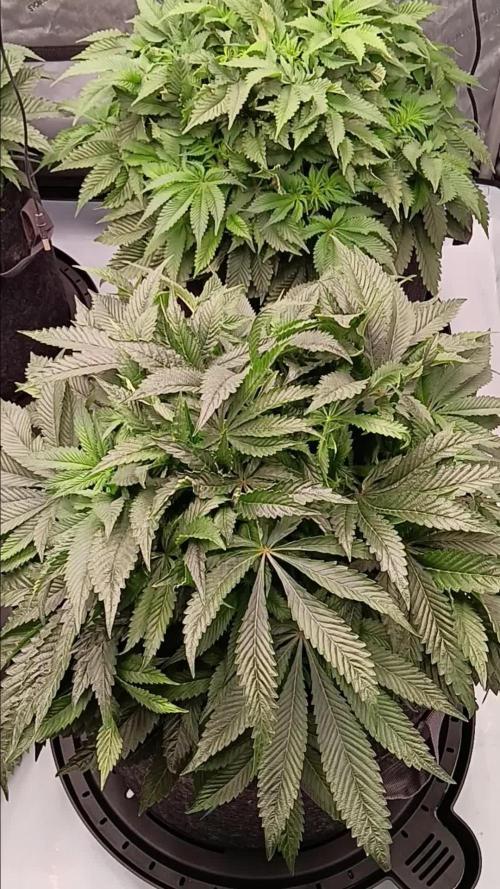
Ja, ich hoffe dass es nicht mehr allzu viel nach oben kommt und der Stretch demnächst dann vorbei ist. Weil momentan kommt nicht mehr viel nach oben.
Ein paar Blätter wurden entfernen die unterliegende Blüten mit Schatten bedecken. Ein zwei kleine Triebe, schon von Haus aus, die überhaupt nichts werden würden, entfernt.
Ansonsten gab es schon einen kleinen Schuss PK 13 14. Ich hoffe die Blüten freuen sich. Denn ich habe heute auch schon den ersten Zucker entdeckt. 🤡
Schauen wir wohin die Reise gehen wird. Hoffen wir auf saftig dicke fette Buds 🙈
Likes
9
Share

@TeDcz
Follow
Zdarec, týden v květu za námi a holkám se daří. Dnes výměna aktivního zavlažování za systému vysoce absorpčních knotů od AC Infinity, tak uvidíme jak to bude fungovat.

Processing
Likes
41
Share


@Silverback_Guerilla
Follow
12/15:
Some plants are taking too long to transition and stretching beyond my space constraints, so I dialed the photoperiod back to 12/12.
12/16:
Fed today and rotated edge plants. Added another 150w of 3000k below the canopy.
12/17:
Worked on ventilation...no A/C necessary now, as I'm using another AC Infinity 6" fan to intake outdoor air into the closet whenever temps reach 75f..and it's been cold as hell outside.👍
The final trick will be to replace the 6" exhaust fan with an 8" so as to be able to fully exchange the closet air faster ...but that's gonna have to wait til next season.

Likes
14
Share


@LokalGrenz
Follow
Got a dehumidifier it’s reading different from what mine controller 69 is saying but I have it set at 40% it’s the lowest so it’s going pull humidity regardless right now it’s about 53% which is okay would like it to get down to the 40’s I also changed the light schedule today to 20/4 the humidity raises at in my tent when lights are out so I figured change it to 20/4 instead of the 18/6 I’ve been running so if humidity does go over it won’t be for as long as before hopefully this works just trying to avoid any mold situation
So far the Amneisa Haze 2 is at stretching she’s going be big I can but the haze 2 is done seems to just be flowering the sour diesel is looking good as well so far I’m happy with its looking like left town for two days and the auto watering pots worked!

Likes
21
Share


@JKent19
Follow
What a harvest! Did not expect the size or quantity of buds. The previous issues did not seem to bother them at all, I just can't believe how much flower there is! Got it all drying, hopefully in a week I will be able to do the final recap and give a dry weight. Big shout out to Sweet Seeds, I don't want to overestimate it but I think we all will be shocked by the amount of dried bud I have next week!
