


Likes
Comments
Share


@Hattiwatti
Follow
Hola 🐴
This diary must be doomed 🤣
Auto kabul seems not to flower properly under 24h of light at day 60 . I think its not auto. More likely "early". Overgrowed closet so it's time to move on and give stage to next warrior.
Hopefully Auto Kabul is now growing in greener fields 🙏
With lot of hope and trust for next try 🤣
Lets go KANNABIA 🤝





Likes
3
Share


@StickyFingah420
Follow
Día 43 desde semilla y se ha comportado bien, pienso que el frío nocturno pueda haber afectado en la velocidad de su desarrollo, el siguiente riego lo haré agregando overdrive a la Mezcla para potenciar el engorde de flores, ha producido resina de un olor bastante peculiar con tonos dulces y algo parecido al perejil 🤷♂️🏽, el tono morado comienza a notarse desde el interior de las hojas.

Likes
6
Share


@Bernie1767
Follow
Has some external high temperature lead to temp rise inside causing some tip burn my fault ! , had a lazy few days stretching of plants was more than intisapated not normal for led but got high as 31f inside grow tent , then weather changed high humidity now settling at 24f humidity 45/50
Hopefully lots of flowering to go 🙏

Likes
Comments
Share
@Calismoove
Follow
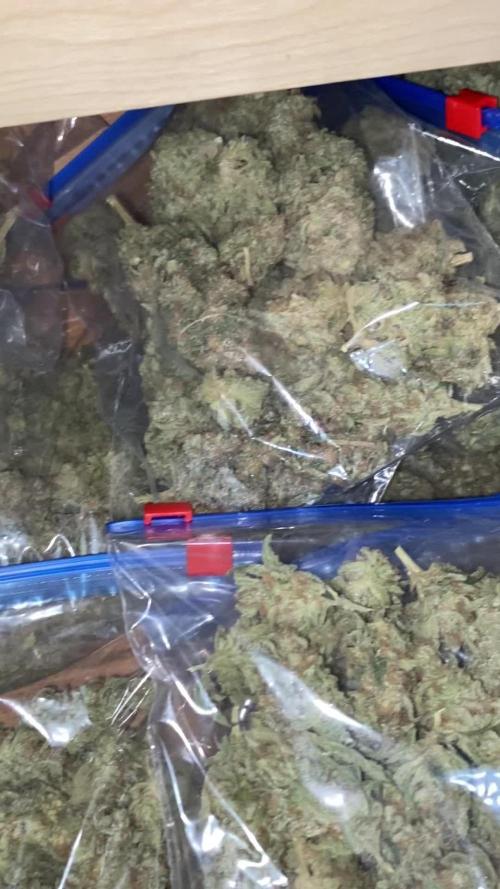
Got a decent harvest not the best looking buds I have grown but they have a nice little fruity taste and get you baked with a really nice head high dry mouth and munchies fantastic only used as personal smoke for my self and family so it works, beautiful smell to the bud too and the bud was strawberry sunset from holy smokes seeds which I got really cheap on a Xmas offer
Likes
16
Share


@DeepSouthDank
Follow
All plants are down! I am stoked with how the grow went and this strain has performed well. Terps are out of this world - candy - jelly babies, sour worms, Fanta grape and bubblegum stinking up the room.
Some pheno's are more forsty then others but it seems we have found a couple keepers to re-test.
Next post will be nug shots, weight once all dry.
We will also do full cannabinoid testing to determine the potency of some of the phenos which we think are worth testing. Look out for that! It will be the final entry on this log :)
Happy growing fam

Likes
11
Share


@Troy_Farms
Follow
Entering week 10 and she is still pretty fluffy pistils wise. Gradually fattening up and looks like she has a good two weeks left. Seeds developing nice. Noticed the pollinated bud produced trichome's shortly after being pollinated, quicker then the surrounding buds. Waiting for the other buds to ripen up. They are still filling in and getting bigger. Still easy couple weeks out.

Likes
9
Share


@Cestlaweed
Follow
Se realizo podas de bajo y comienza segunda semana de LSD 25.
Gran estirón al final de la semana.
Temperatura se comienza a elevar hasta valores de 31 grados.

Likes
7
Share


@I_Identify_As_A_Dan
Follow
Week 10 for Lemon OG by SSSC,
Even though he started off really slow indoors she's actually seems happier outdoors... didn't show any heat stress even with these crazy temps. Maybe she will start taking off now she's happier? We'll see, would be great to remove her from my runt list😂
Going to train her a little bit more again as 1 of the tops is a little slower than the rest & seems to be getting left behind. So going to try pull them down all to the same height.

Likes
19
Share


@TopNotchBud
Follow
Very easy strain to grow. I grew the White Critical Express previous to this grow, I really liked it and wanted to try growing an Autoflower so I went for the Critical 2.0 and it was worth the grow.


Likes
2
Share


@Shefman93
Follow
Growth rate is a little slow by comparison, still have high hopes for this pheno as it's purple...I love color in my tent.

Likes
1
Share


@GnomeMoe
Follow
Flowering nice.
Madarin Cookies are two in back and one in center
Silver Kush are two up front.
I ran out of room for scrogging branches in back, letting them just strech.
Unfortunately that has me keeping the light higher than Id like.
Since S.K. are shorter, the one at right side is 30" from light, while stretched branches in back are 12" from light.
Averaging 18" overall from lights....
Hope i dont get light bleaching!
UPDATE:
Added 2nd screen on Day2 to keep stretchy branches lower
Cookies are flowering nice, one of the silver kush is just starting to flower while the other hasn't started yet.... hmmm
2-3 gallons water/nutes per 5 plants, alternating with plain water (just calmag, malassis, Ph. 6.4) every other day.
Ph.6.4


Likes
2
Share


@GermanGrow182
Follow
Fail. Diese 3 Apple fritter Auto haben 9 Tage nach Keimung einen Wetterwechsel nicht überstanden. Von 16°C und trockenem kühlen Wetter zu 28°C mit hoher Luftfeuchte innerhalb von 16h. Direkt über der Erde hat sich der Spross stark zusammengezogen, wie ausgetrocknet und ist umgefallen. Vermute irgend einen Pilz. Eine kleine hat noch gelebt, als ich das bemerkt habe. Habe um die Schwachstelle etwas Boden angehäuft, um sie zu stützen. Nach 2 Tagen hab ich nachgeschaut, der Stamm ist genau wie bei den anderen zusammengeschrumpft. Also schreib ich die ab. Hab heute 4 purple punch auto als Ersatz in den Topf gesetzt. Dieses Tagebuch endet hier leider 😑 danke fürs verfolgen ✌️. Hab wieder dazugelernt und die andern 28 und 4 neue sind ja noch da. 😉


Likes
11
Share
@Pete_vs_Nature
Follow
|
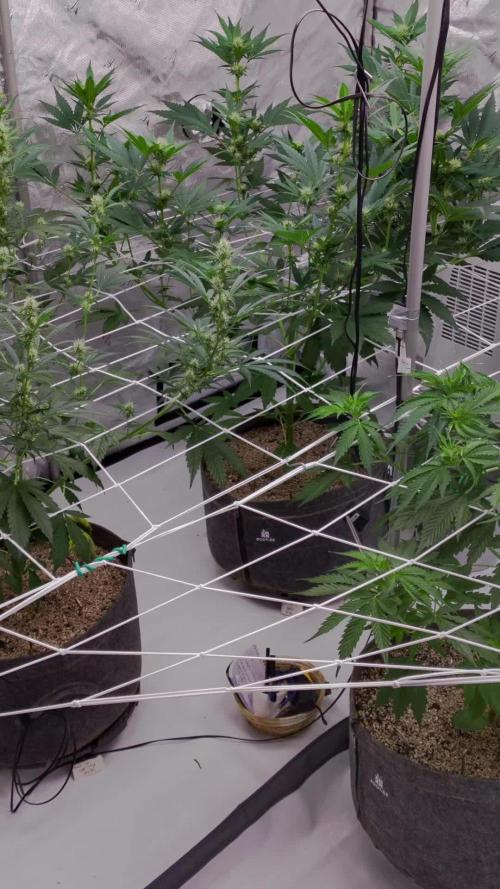
Week 6 is finished and we are looking pretty good on Super Orange and Apollo Haze.
Terps:
-------
Orange has started to fairly loudly emit her incredible, warm, mandarine-candy (no sours, bitters) fumes. The terpinolene is playing tricks on me, never fully grasping the exact fruit or likeness in the profile. A warm, sweet & thick mandarine-syrup mixed into your local humidifier would likely emanate a similar scent. Apollo is trying to dominate the tent, but Orange has taken over with surpisingly intense trichome expression.
The fact that the tent smells of her mostly means these terpenes are evaporating at present temperatures. I can either keep the temps stable (my week 6 choice), accept that many sensitive terps escape as they are built, but focus on a relaxed environment for the cultivars; or, I could just drop the temps right now and target high limonene / monoterpene retention (one of the secret sauce Haze effect ingredients).
Cool distinctions we can make these days, huh?
Apollo still retains a fairly 'rude' veg spice smell. It is detailed, balanced and tuned around an umami like sellerie, and most definitley not fruity. I was already afraid I would suffer another pheno or genetic expression as with 505 Headbanger (no fruit smell besides some citrus, heavy eucalyptus and mint notes, sweet after cure, some pine here and there)
I did however happen to crush some trichomes on accident and to my surprise I got a heavy citrus-palette that is almost pure lemon juice. Think of all the citrus fruits you know mixed in a lemon juice cocktail, take a whiff and feel your nostrils burn!
She is able to conserve the citrus contents well apparently, so I am hoping for more suprises as she ages and shifts focus and am happy with her state.
Auto Cinderella Jack
------
ACJ still is a bit quieter and usually smells like fresh leaves.
She unfortunately endured many invisible stress factors, like over-watering or wind & climate events (see those curled up, dry leaf tips?). Those interfered with the HST super-cropping / scrogging timing. As a result, instead of starting her flowering stretch, she turtled up. Every big leaves acts as a cup for growth underneath, she went from relaxed expansion to safety via density.
In no way will she not flower happily at some point, but her situational difference decided over success of the training technique employed.
Note: This cultivar often has a bushier pheno, but I have seen her do great and she would stretch nicely when -everything- was correct.
Nanners:
-----
The shocker this week was the discovery of undisputed nanner structures on BOTH SOH and AH. They developed exclusively on lower node branches, where you would usually see isolated bracts / calyxes covered with trichomes and 2 pistils or so.
I removed what I could, but mentally, this now puts me in an awkward position. Now, the fun is out. Stress management is everything, forget about maximum plant performance.
I wonder why this is. So far, I grew 9 42FB cultivars with zero nanners; and up to this point 5 Mephisto cultivars, out of which 3 produced nanners. But that is not enough data: All Mephisto cultivars displaying nanners have been leaning sharply into the landrace-sativa type. Only one cultivar was assumedly stress-pressured into hermaphroditism (OSHM / Mango, consistent light burn).
Perhaps the plants felt their environment was a bit lacking in population density and sensing other females around, 2 cultivars started shedding pollen from their lower structures, leaving most flower-sites ready for actual outside pollination. Or, this is just wishful thinking.
We'll see in week 7!

Likes
8
Share


@JeyGanesha
Follow
La poderosa runtz forbidden sta per arrivare a maturazione.. ancora un paio di settimane più o meno e ci siamo...forse la lascio anche qualche giorno in più per farle creare un po' più di: CBN😜💪👍
Likes
16
Share


@bigbootybotanist
Follow
Sheba was starting to accumulate so many trichomes next time i need to make sure the humidity doesn’t fluctuate too much
Likes
Comments
Share

@Black_Widow
Follow
Привет садоводы !!!
Вот и подошла к концу история на улице
Вроде все прошло хорошо
выросли 3 симпатичных куста
к сожалению четвертый куст ,в связи с небольшой путанницей оказался не autoflower и он еще не зацвел,а если и зацветет , то в любом случае не успеет дожить до конца из-за погодных условий
А в ощем не плохо
цветы не заплесневели и за 11 недель успели созреть
можно и еще было оставить их на недельку, но обещали дожди и я решил их срезать
кстати попробовал смолу с ножниц после маникюра
вставляет хорошо
Спасибо SSSC за прекрасные цветы !!!
Likes
49
Share


@masterofsmeagol
Follow
6/1 I'm anxious to get my plants in their final homes. Another 90 degree day today and then it will be cooling off with some showers. I plan to take advantage and utilize that to make the transition. I have some small burns on a couple plants bit considering the weather we've had its nothing. Temperature swings 50 degrees. I hope these girls do OK outside. I was tired and stoned last night and I accidently topped a plant I had already FIMed. Oh well. Transplants soon. Supports screwed in after the heat. Plants have been handling this weather like a champ. Big thick healthy stalks.
UPDATE PUT THE PLANTS IN AROUND 730. Cutting down on light hours I'm poverty close to where we are. It was 95 today. Plants have suprisingly little burning. My fan was taken so they go without that tonight too. In the next few days it's going to cool down and that's when I'll transplant. Only thing left before transplant is sanitizing trellis and supports. Easy peezy. Especially if it's supposed to be in the 50s. And people dent climate change lol. I'm hoping that all this adversity makes my flower a higher quality. I'm glad to have the quantity to pick the best phenos for the BIG POTS. Im trying to stay excited but it's just so dumb hot. Oh well. If the plants can do it so can I. I'm planning to give them some kelp me kelp you next watering and may start some light organic nutes.
6/2 Phone doesn't like uploading my videos. Broke record high temp yesterday 95 and tomorrow we will break the record low 50. Plants withstood the heat well and are doing great. Transplant soon. They were a little light but I held off on the water. Plan on it tomorrow. May transplant tomorrow. I have several videos that haven't uploaded. I thought they did but I was wrong. Oh well.
UPDATE: Forgot to water. Some were light and others could've held off. Did the half a powerade bottle ahain. A litt ke less on the heavier ones. However I'm looking to transplant into final homes tonight and into this weekend. I sanitized a fifty and a forty so my bags and two pots are sanitized. Cage is sanitized and ready and pallets are sanktized and in place. The 40 and 60 fit PERFECT in the small space left from the pallets. Plus the plants always lean the opposite direction so things should go smooth. Only thingvleft is sanitizing stakes, bamboo, plastic garden stakes and all the other plastic training stuff. I'll just soak it while I transplant. Gotta mix the soil first too though.
UPDATE. Heat went higher than expected and hit 90. I figured I'd go back around three and screw in suppirt stakes and begin getting everything ready for transplant (i.e. supports, mix soil, sanitize trellis) before I transplanted tomorrow MORNING was what I had planned. Unfortunately we got a huge thunderstorm with a shot ton of rain and it's gonna continue throughout the night. I think this is God's way of telling me to take a break. I can get up early and get those support stakes screwed in. Then when I get back from the wife's doctor's I can do the transplants. I'm trying to break the labor up into manageable chunks. Looking at my other diaries I can see that my plantscare fine in their three gallon homes. It'd a little disheartening seeing such big clones that I started so much earlier on the other diaries. However I always was fighting SOMETHING (usually more than one thing) and last year was a shit show. At least this year I stay away from anyone else's cannabis any clones and I'm extremely cautious. I've seen my cousin out perform me multiple times with healthy plants like this I'm excited to see how it goes. I really needed the break anyway but tomorrow morning the stakes will be in. Hopefully they'll be outside.
6/3 Broke the record for low days after breaking record for highs. I saw it 94 yesterday and the day before. On the way to my grow at 6am it was 44 degrees and it's not warming up much. Fifties at best. Rainy. I left the door closed. The big door on the otherside got opened as the other end of the garage neededcto he used. If the rain let's up I'm going to set up the grade stakes so I can transplant in the morning and throughout the day. I think I'm going to light dep a couple of them and leave them in the 3's. We'll see.
UPDATE: At 12:30 the temp today was 44. Yesterday it was 94. I can't believe this. Plants are doing great though and are in the garage under lights for the day. The BIG door was open part of the day. Didn't take any pictures (or even enter the grow area) as I sanitized the last 40 gallon pot and a bunch of grade stakes. I drilled the grade stakes to the pallets in the front. The first row is done. Just need to sanitize the plastic trellis itself and finish attaching the other grade stakes. I don't need the fill trellis up by transplant. I just need the bags to not knock over and have SOME support. I'll be back over there either to tonight to put more supports in or tomorrow when I actually plan to start transplanting. I'm getting excited. After dealing witb the stiff that I sanitized I didn't dare go fuck with my plants so I looked through the window. I'll finish sanitizing the net tomorrow. These plants look great. I'm wondering if doing the two diagonal I poles with zipties actually works. It would save me some kone for sure. I'll definitely update in the morning.
6/4 It's warmed up to a balmy 44 degrees. My plantsxare in the garage still. Weather sucks this whole week but after this heavy rain it should be perfect weather to transplant these girls. A little to chilly but it will warm up and I need to get this shit done. I'm trying to do to much at once. I need to just out dirt in bags and get them outside. I'm glad I waited until after this craziness. Breaking temp records for high one day then breaking it for low the next can't be good for the plants. I'll update what gets done today. I may mix soil or I might wait until tomorrow. It will let up some then. Plants still look fabulous 👌
6/5 50 degrees still raining like hell. Rain until Friday. Plants are inside under the onecworking light. Lots of indirect light through the massive windows though. I'm planning on mixing soil today and tomorrow and getting bags and pots half filled. Just trying to break the labor up into manageable pieces. It's probably a good thing I didn't put them in their huge containers before all this rain.
UPDATE: MIXED SOIL 1/3 of each (FOX FARM OCEAN FOREST, HAPPY FROG, AND ROOTS ORGANIC 707). I prepared I believe 11 containers for transplant. I need to sanitize two more containers and I'm good. I got a lot done. Might go back over. Set up extra cams too. I'm excited. Talked to my commercial buddy amd he motivated me. No reason my plants can't handle this shit. I've just had massive personal shit going on. Friday is the next GOOD day but these girls might go out earlier. I'm checking the forecast. I'll sanitize the other containers in the morning and fill them.
6/5 Today is usually my watering day but shit still seems heavy so I'm going to hold off. Despite that i need to transplant. I think they're wet enough. I could do it today. Plants are looking good and weather takes a better turn Friday. It's not raining hard though. It's just sprinkle right now. I may transplant some today depending on how things go. I'll keep the diary updated.
UPDATE: I went back over with the intent to just mix soil and let it acclimate. I decided to try to transplant one. I grabbed a 10th planet and started to go. I had done a bunch of manual labor already so i wasn't thinking. Of course the fucker was dry and didn't wanna come out ofcthe pot and the root ball pretty much decintigrated in my hand so I'm not sure how that will go. Tried again with the Blueberry Cheese Cake. I thought the roots just might not have been rootbound abdcthat could've been the case. After having another rough transplant I recognized I was tired, all the hard stuff is done and it's gonna keep raining until Friday. I wanted to transplant three and put them outside but with the wind and rain and the difficult transplant I let them sit under the light in the garage in indirect light. I had the doors open for a while. Should be open now but i don't want to have to go back over and shut it. Plus I'm not to keen on getting water on my light. Let's hope for a better day tomorrow. This was the only thing I had going good. Phrple punches are still behind. I've decided I'm oing to light dep ttwo of the plants in the 3 gallon pots. The two shittiest or smallest plants (probably purple punch will be light deped.
WENT BACK OVER AT FIVE AND IT APPEARS EVERYTHING IS ALRIGHT. WILL HAVE CHECK IN MORNING. Vid won't upload. Tried multiple times. I'll try again tomm.
6/6 Waiting for a doctor's appointment when I should be transplanting buy whatever. Everything is looking really good. Despite me disint9grating the rootball in my hands the two transplants look great! When I get back I'm planning to get some more work done. It's still lightly raining off and on but the door is up. I'm lettingvthe soil mix acclimate a little bit too. Hard labor is mostly done. Now the intricate part. Wish me luck. Not sure if it will be today bit I'm hoping.
WENT BACK OVER CAUSE IT WASNT RAINING BUT AS SOON AS I WAS CLOSE IT STARTED POURING SO THE PLANTS ARE UNDER THE ONE WORKING 150HPS AND THE AMBIENT LIGHTING FROM THE WINDOWS. TOMORROW IS TRANSPLANT DAY. I WONT HAVE A VEHICKE SO IT WILL BE TRICKY BUT IM GONNA MAKE IT HAPPEN. Opened doors at 530. Video still didn't upload
6/7 Still raining. It's off and on and a nice rain though. It's 53 degrees at noon. I transplanted two 10th planet's into 20 gallon pots. I transplanted these two a little differently. I put the bags in there final spot I side my cage andctransplanted in the misting rain. The first one came out and seemed to be heavier on the bottom and broke off. I tend to "throw" them in the hole before they collapse. With my anxiety I suck at transplanting. Plus these plants haven't filled the 3 gallon pots with roots yet but i want hem in their final homes and its time to go outside. I transplanted the other two plants indoors and let them have days in the garage with the door open and the light on then protection from the elements at night. I've been doing this for awhile. They would all be outside if the weather wasn't so shitty. This rain is supposed to stop. I'm curious as to what will be the fate of the two plantsci transplanted and left outside. I'm praying and hoping for the best. I also put my back tarp up so I have a wind break between rhe buildings. I stopped working because I didn't want to fuck anything up. Anxiety disorders suck. TOOK A BUNCH OF VIDS BUT THEY WONT UPLOAD. GOES FROM 9% TO 65% BUT ALWA7S TURNS RED "FILE FAILED TO LOAD". I'LL KEEP THE DIARY UPDATED. ESPECIALLY IF I GO BACK OVER. WAS ABLE TO LOAD A COUPLE VIDEOS. I GUESS ITS NOT AS BAD AS I THOUGHT. AT LEAST I HOPE. WENT BACK OVER AT 3 AND CHECKED THINGS OUT. THE TWO REXENT TRANSPLANTS I LEFT OUTSIDE SEEMED TO BE IMPROVING. DESPITE THE FACT I DUMPED A SHIT TON OF SOIL ALL OVER ONE OF THEM. IT SNAPPED A LITTLE BRANCH CLOSEST TO THE SURFACE. ITS STUFF I'LL REMOVE ANYWAY BUT STILL. IM REALLY CROSSING MY FINGWRS AND PRAYING THESE GIROS WILL MAKE IT. With everything i have going on tjis is my respite.IM GOING TO TRY TO SEE WHAT I CAN ACCOmplish TOMORROW. SOME OF THE PURPLE PUNCHES ARENT READY FOR TRANSPLANTING THOUGH. I ALSO ADDED TEO TARPS TO THE CAGECTO COVER THE WIND TOWER BETWEEN THE TWO BUILDINGS. THIS IS GOING TO BE A GOOD YEAR! Shut the door at seven. For some reason the two 10th planet's I transplanted (that fell all over the plant and I thought mightve broke it) look awesome lol. Despite the ridiculous pouring rain. It's going to let up soon and we are do fir some good weather. I'm trying to get everything (that isn't getting light depoed) into the cage. Four transplanted. Ten (I mean 8 more) to go.
Processing
Likes
17
Share


@Hoodoo
Follow
2020-08-11 Another week gone by... Plant 01 is still fattening up, drinking normally. Plant 02 has been completely choked out of the lights so it's not doing very well. Keeping the nutrients the same as they are both pretty steadily drinking. Some death amongst the lower leaves on plant 02 and the buds are getting trichomes but not getting very fat. Plant 01 is very dense and sticky af. Excited to harvest in a couple weeks!
The tent is definitely ugly as hell and the vegetative state clearly went on for about 2 weeks too long (first time grower) while I messed up the nutrients and other things that caused them to grow slowly. The 2nd plant never really recovered. I have continued defoliating and super-cropping plant 01 away from the light and keeping the distances even... It's an ugly canopy, can't wait for the next one so I can get it right!!
